Review by Gerhard Clausing •
How much of a country’s culture can we discover in a shop interior, a worn work shirt, or a face glimpsed on a train? Walker Evans: Now and Then, edited by David Campany, invites us to examine how Evans made such encounters significant. His photographs preserve the appearance of American life while revealing the habits and values embedded in its everyday arrangements. The artistry lies in his ability to make these details expressive through careful framing, attention to surfaces, and an unusual sensitivity to what people leave behind. Even his most factual pictures reflect decisions about where to stand, what to include, and which elements to bring into relation.
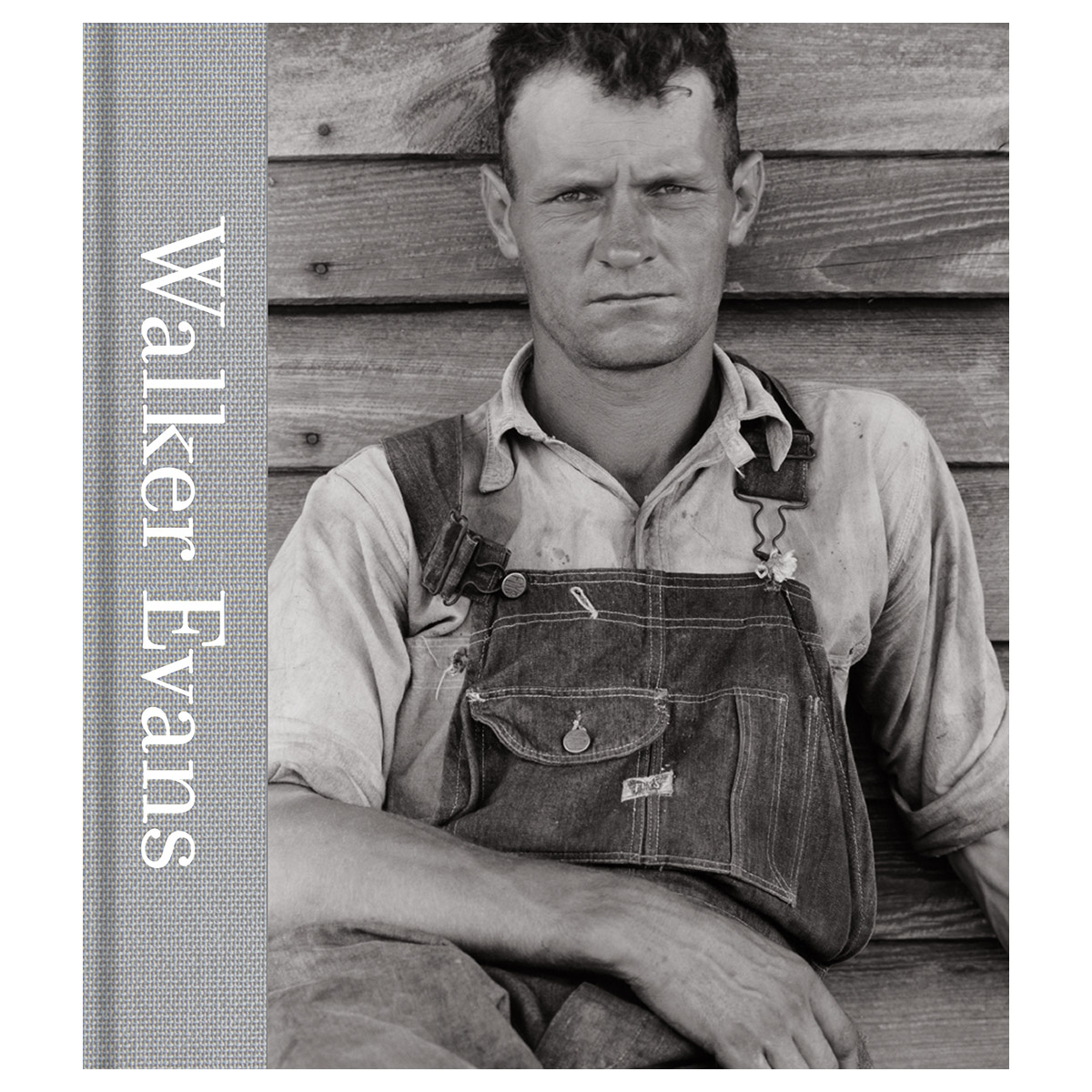
The portrait on the cover establishes this approach immediately. The man’s direct gaze meets ours against the horizontal boards of a wooden wall. The grain of the wood and the seams and folds of his overalls give the photograph a strong tactile presence. His face remains its emotional center, however, holding our attention without yielding an easily summarized story. We can recognize the circumstances of labor in his clothing, yet his expression resists our desire to explain him. Evans preserves that distinction between what a photograph shows and what we imagine we know.
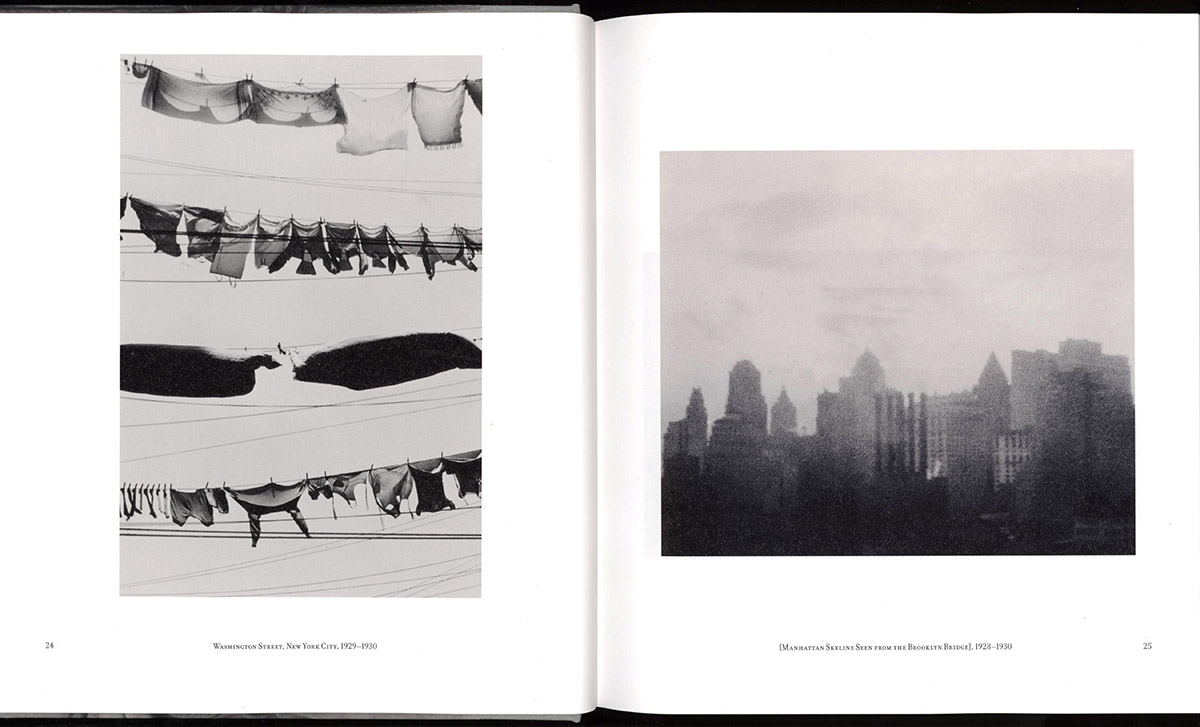
Let us look at some other select photographs. On pages 24–25, as shown below, laundry suspended above Washington Street faces a hazy Manhattan skyline. This photograph is a masterful composition: clotheslines divide the sky into irregular horizontal bands, with garments becoming an animated arrangement of light and dark shapes. Paired with it is an image of buildings emerging as a distant, almost dreamlike mass. Together, the pictures let us consider the city at two scales: the intimate work of maintaining a household and the collective ambition expressed through architecture. Evans’s eye finds visual excitement in both; household chores become as worthy of attention as the city skyline.
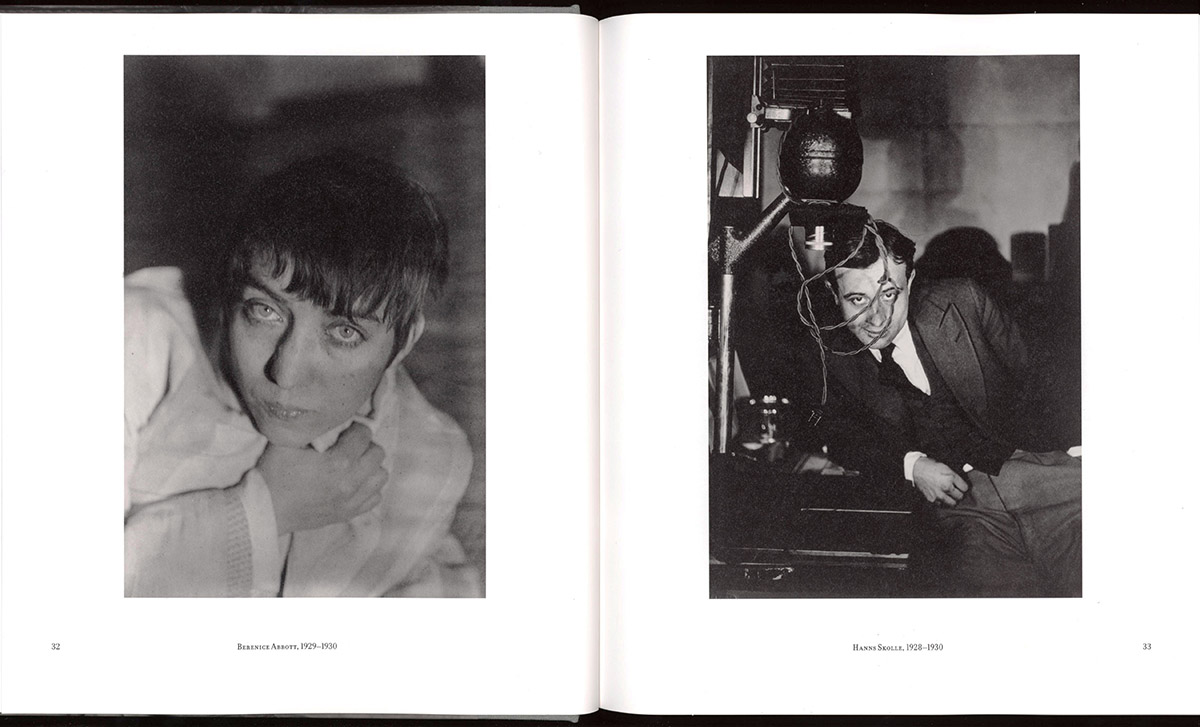
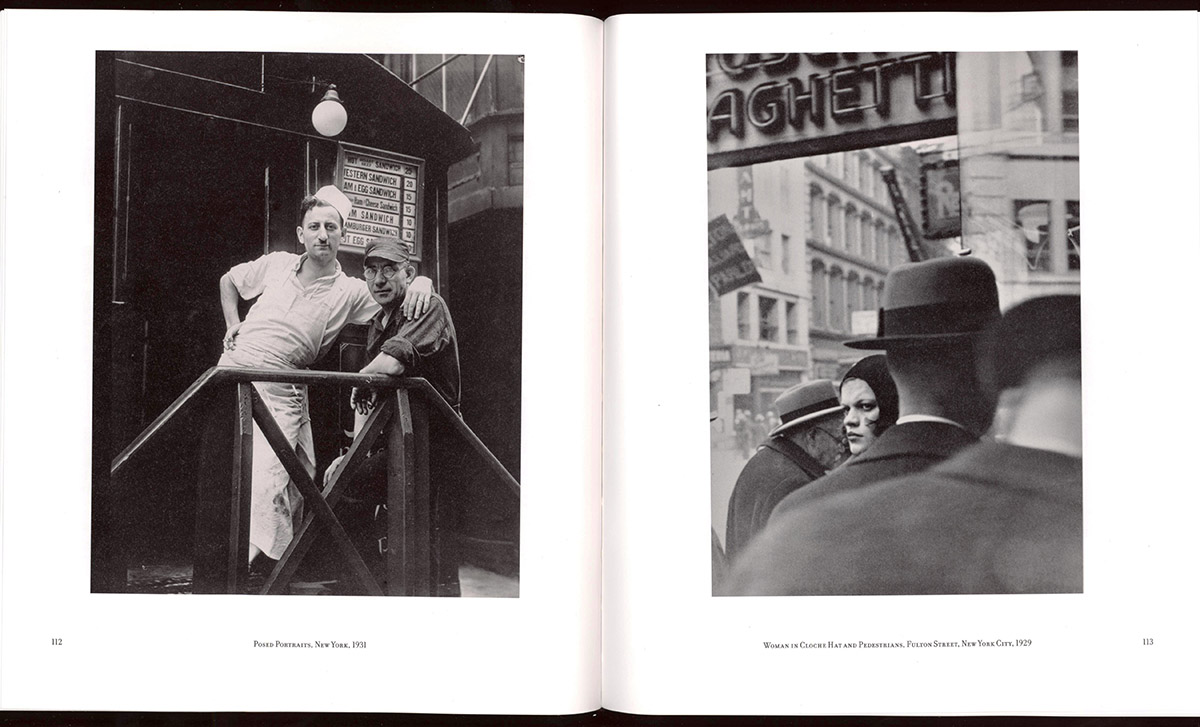
His photographs of people show a comparable range. On pages 112–113, two men pose like companions at a railing, while the facing image catches a woman’s face between the hats and shoulders of pedestrians. The railing gives the posed portrait an emphatic geometric structure; the crowded street photograph depends on obstruction and a brief opening in the moving bodies. Each picture makes a different relationship with the viewer possible. The men offer themselves to the camera, while the woman remains part of an unknown assemblage of pedestrians.
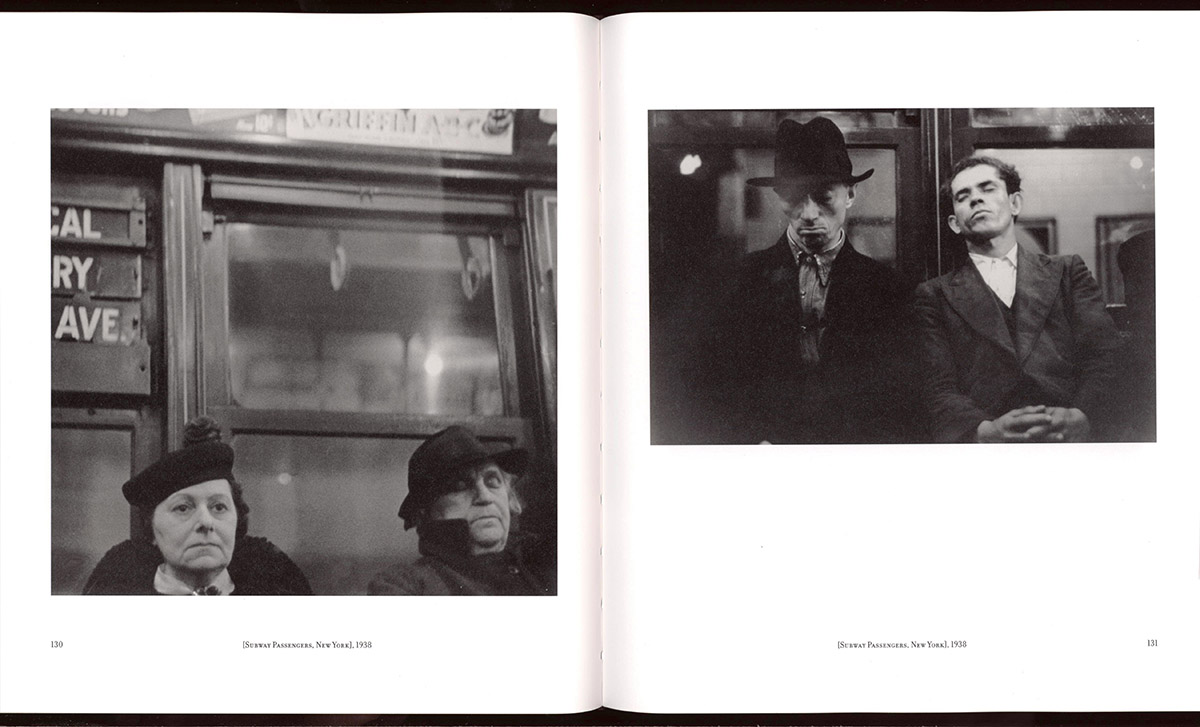
The subway photographs on pages 130–131 bring this sense of partial access into particularly close focus. Hats, clasped hands, and the tilt of a head become small indications of private states of mind. Windows and other subway details establish a rigid framework around faces that remain difficult to read. The passengers share a public space while appearing absorbed in separate worlds. Evans photographed subway riders with a concealed camera, a method that also raises questions about their lack of participation in the encounter. Their unguarded presence gives these images both intimacy and uneasiness.
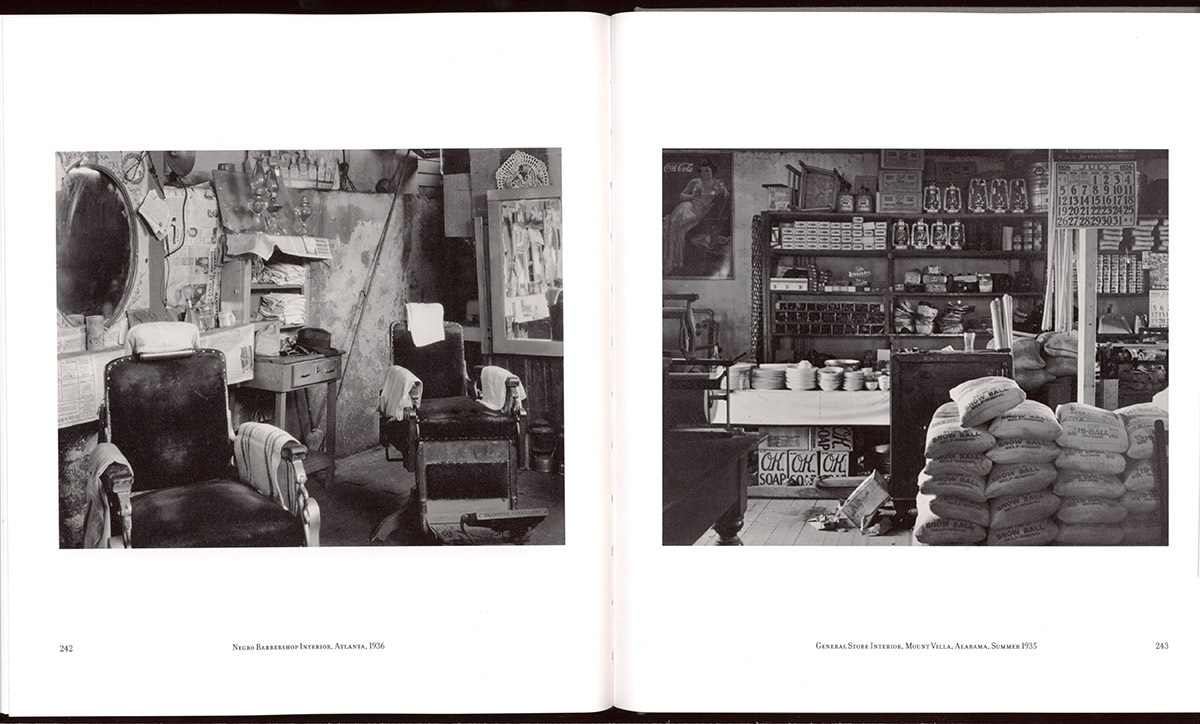
America’s commercial interiors are equally revealing. On pages 242–243, an Atlanta barbershop faces a general store in Moundville, Alabama. Barber chairs, mirrors, shelves, packages, and stacked sacks establish intricate rhythms within the two photographs. Evans makes crowded spaces intelligible while retaining their density and particularity. We can almost inventory the practical business of living. Printed labels and advertising bring the language of commerce into the compositions, allowing familiar goods to tell us something about consumption and popular taste.
These interiors also require historical attention. The barbershop’s period caption identifies it through the racial terminology of its time, placing this ordinary workplace within the divisions of US society. Looking carefully means recognizing those circumstances along with the photograph’s formal accomplishments. Evans’s America contains work and ingenuity under unequal conditions. The attraction of worn surfaces and old furnishings can encourage nostalgia today, but the photographs reward a more demanding engagement with the lives that gave those objects their meaning.
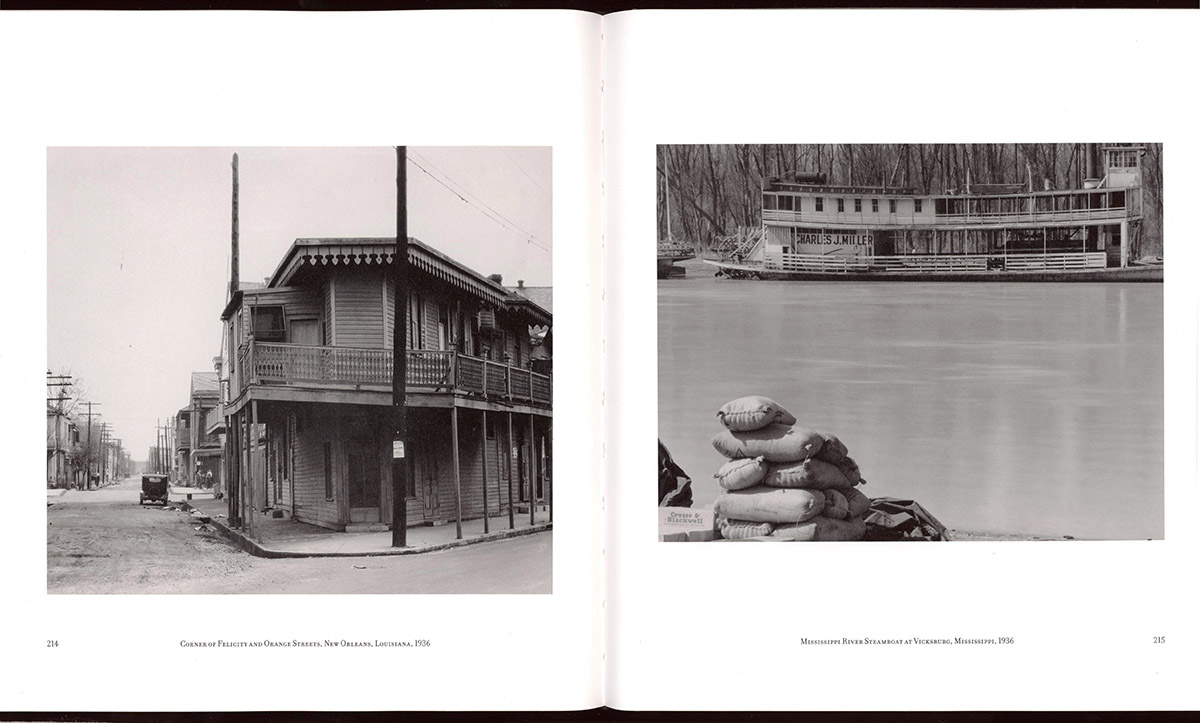
The architectural studies extend this attention to the spaces people inhabit. On pages 214–215, the repeated posts and balcony rails of a New Orleans corner building find an echo in the long decks of a Mississippi steamboat. Both images allow us to study structures shaped by local use and history. Evans’s control of the viewpoint turns their construction into a clear visual order. These places have character because of their specific proportions and accumulated details; through the photographs, we begin to understand how regional culture becomes visible.
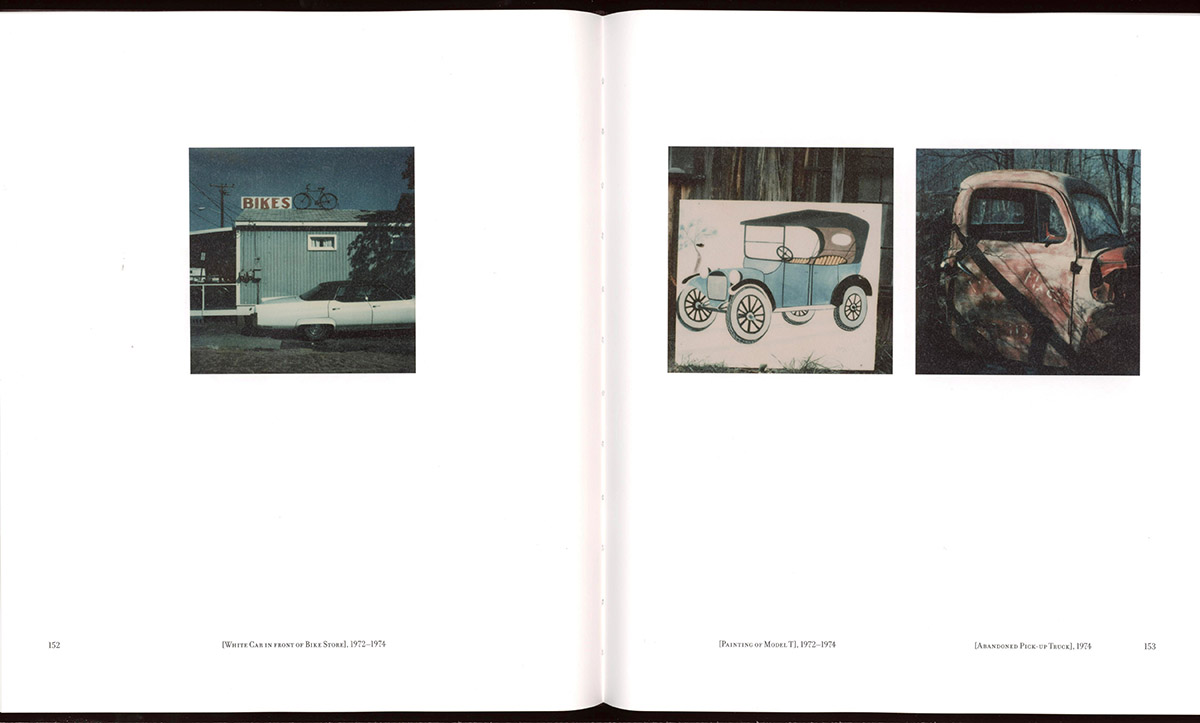
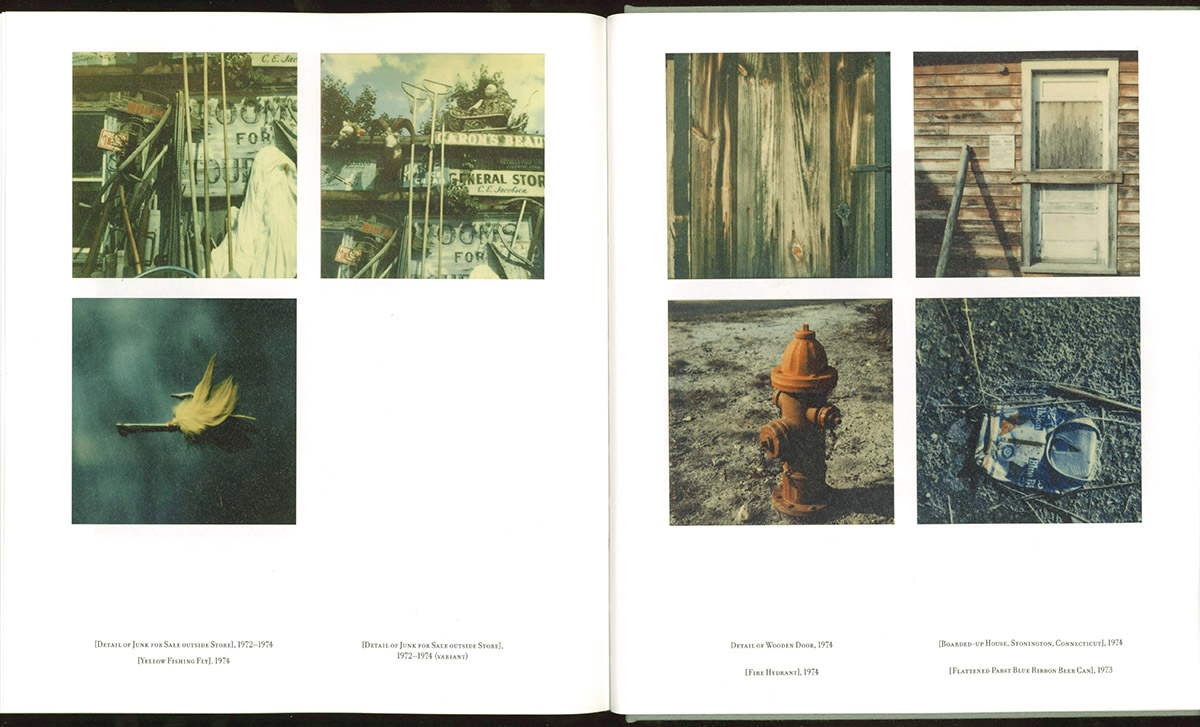
The late color work adds another dimension. On pages 152–153, a white automobile outside a bicycle shop is followed by a painted Model T and an abandoned pickup truck. The grouping proposes a wry meditation on mobility, representation, and obsolescence. In other Polaroids, a boarded door, a fire hydrant, and a flattened beer can receive similarly concentrated attention. Color makes weathering newly palpable. Rust and faded paint become part of the record, showing how manufactured things acquire individual histories through use and neglect.
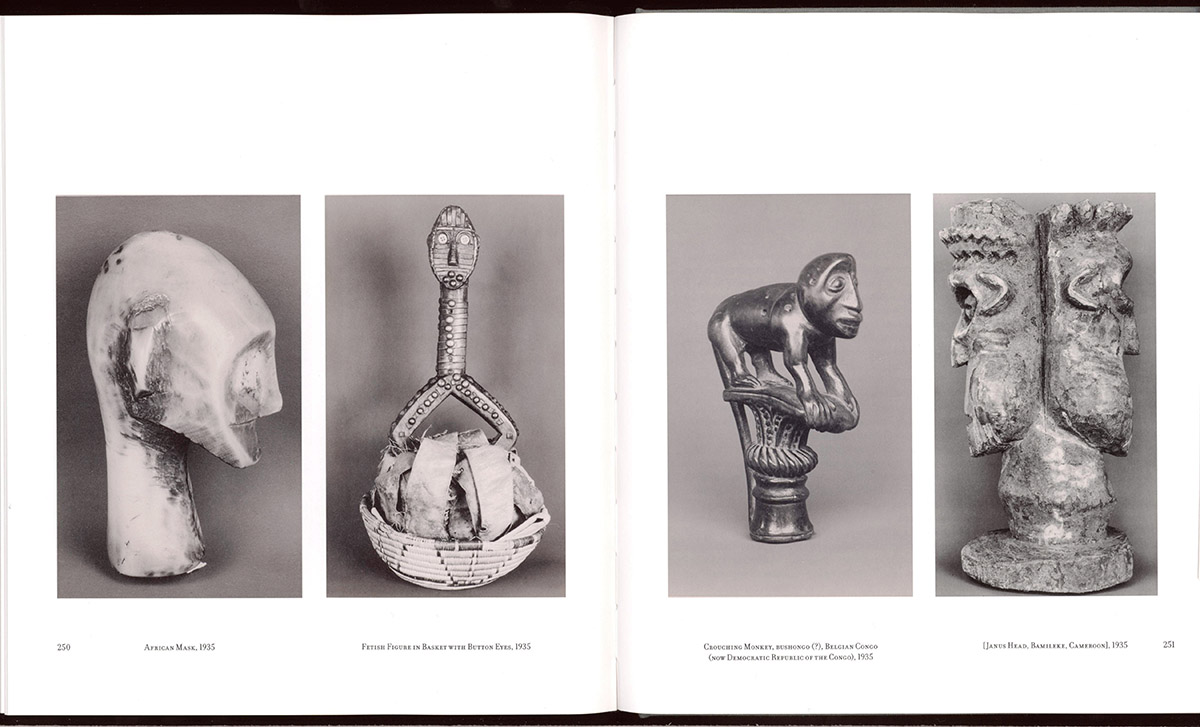
The spacious layouts are printed on high-quality paper and support this kind of looking. Generous margins give individual pictures room, while the pairings encourage comparisons across subjects and periods. Campany’s presentation allows us to recognize recurring visual concerns that connect moments that are decades apart. We move between faces and objects, learning to look for cultural meaning in both. The texts by David Campany, Sara Ickow, and Stephanie LaCava provide valuable background information and further analysis.
Viewing the photographs of Walker Evans is especially rewarding because the distance between Evans’s time and ours keeps changing as we look. The clothing and storefronts may belong to the past, yet the relationships between people, public spaces, and consumer goods remain familiar. Evans asks for sustained attention to the particulars. His photographs give those particulars a lasting form, and leave us to consider how much of our own culture we pass each day without really seeing at times. An intriguing photobook, indeed.
____________
Gerhard (Gerry) Clausing, Editorial Consultant of the PhotoBook Journal, is an author and artist who investigates the role of culture and memory in visual art.
____________
David Campany, Editor – Walker Evans: Now and Then
Photographer: Walker Evans (1903-1975; born in St. Louis, Missouri, died in New Haven, Connecticut)
Texts: David Campany, Sara Ickow, and Stephanie LaCava
Language: English
Publisher: Thames & Hudson; © 2026
Hardbound, with illustrated cover; 320 paginated pages with 200 images, 9 x 10.2 inches (23 x 25.8 cm). ISBN 978-0-500-03165-0
____________
Articles and photographs published in the PhotoBook Journal may not be reproduced without the permission of the PhotoBook Journal staff and the photographer(s). All images, texts, and designs are under copyright by the authors and publishers.


Leave a Reply