Review by Brian O’Neill ·
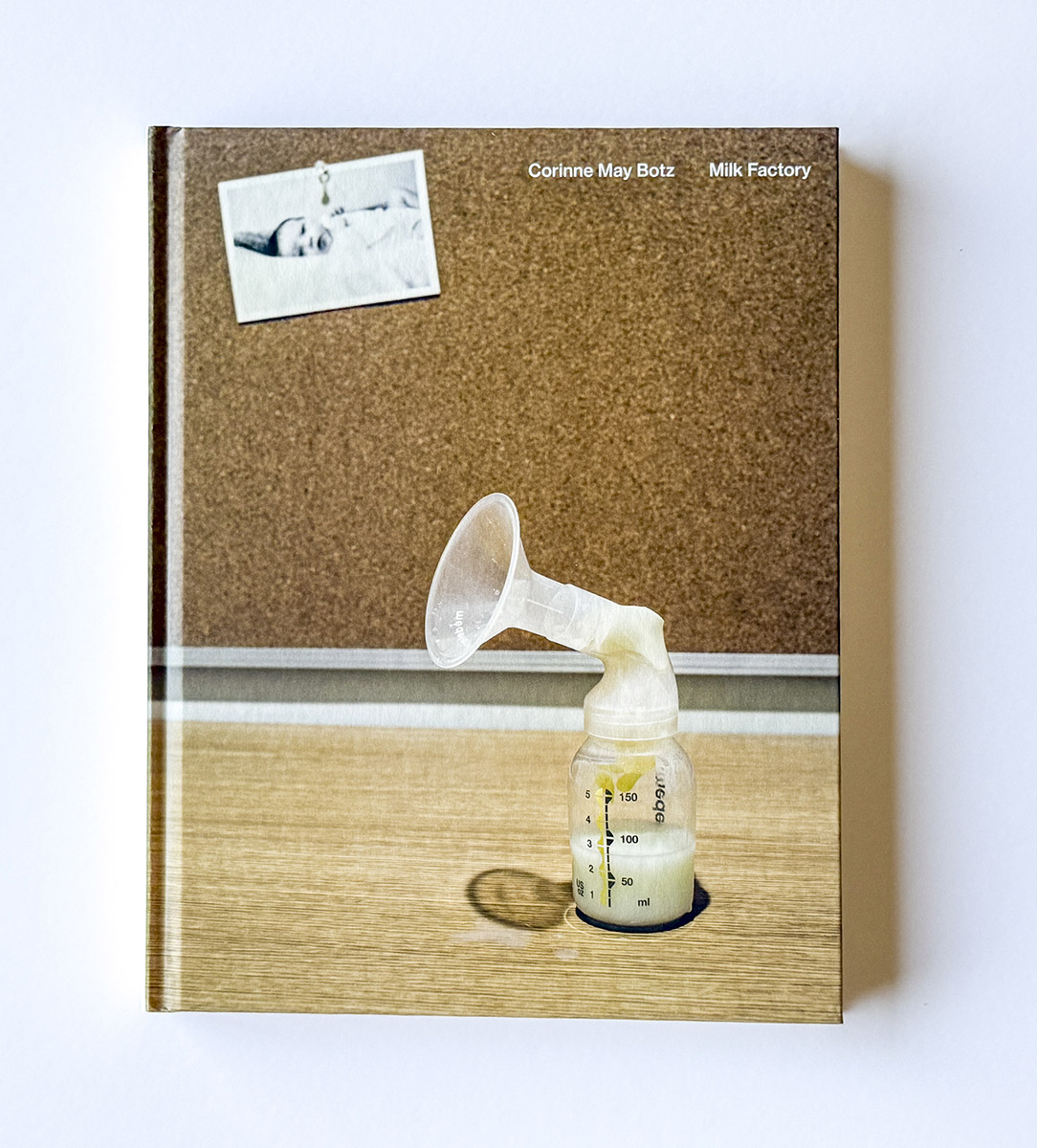
The concept of labor is typically understood in terms of something that is connected to the results of a creative process. Human beings brings things, often conceived as “products,” into existence as a result of active thought, intention, the use of resources, and other factors. In so doing, they actively work through their capabilities and expertise. In photography, aspects of the labor of making an image might involve pre-visualization, planning, building rapport with subjects, and even simply waiting for the right conditions and light. An enduring form of labor, that also challenges some of the aforementioned normative understanding of that term, and that is specific to women at a certain time of life, is the capacity to provide nutrition to children. In light of other labors, connected to one’s economic potential and responsibilities, as well as social expectations, the basic labor of lactation and feeding often remains invisibilized. Photographer Corinne May Botz has trained her lens on these dynamics in her latest book project, Milk Factory, published with Saint Lucy Books.
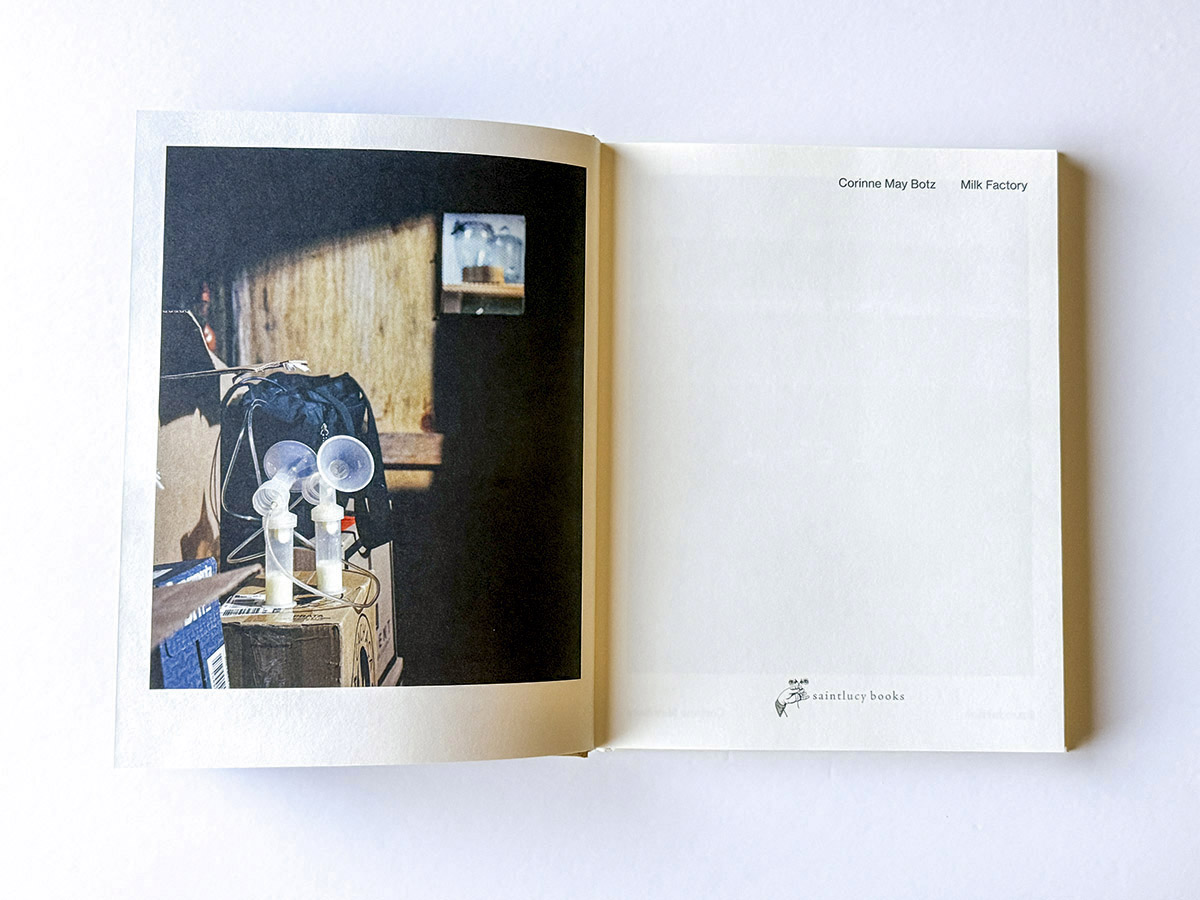
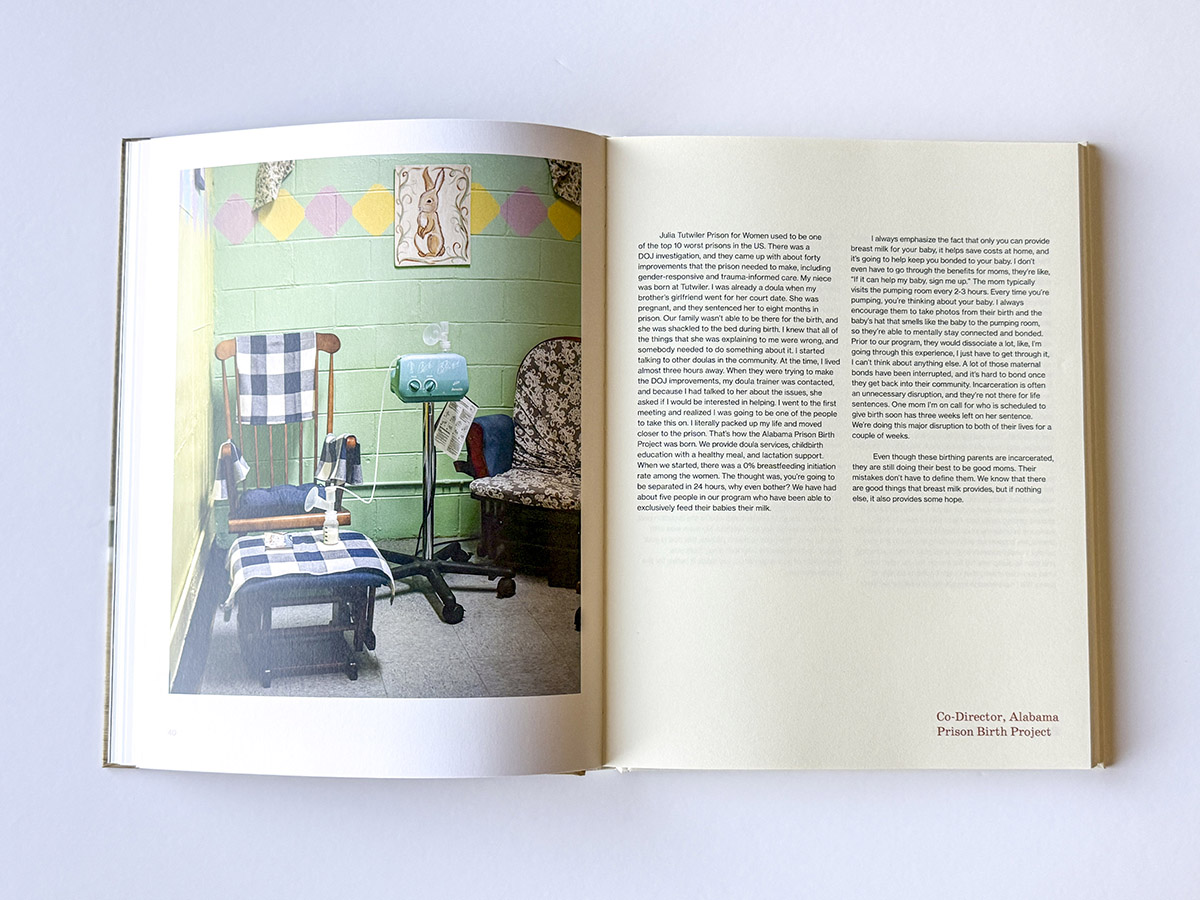
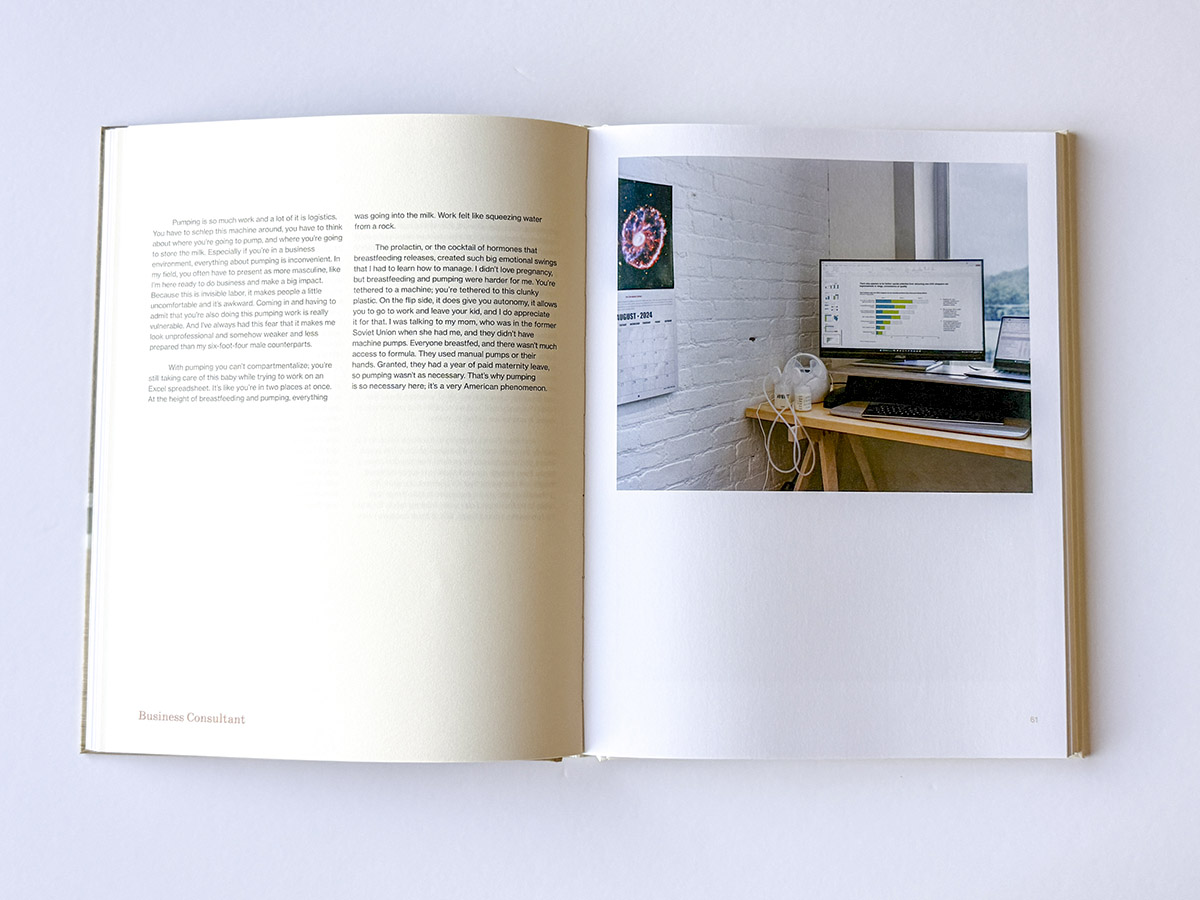
The Spectra S2 Plus Double Electric Breast Pump is an eight inch by eight-inch bulbous shaped pink and white object with a handle on the top of it. With suction pressure, it extracts nutritional fluid from women to be stored in 8-ounce bottles and plastic bags when plugged into an electrical outlet. At the cost of about $200, I know about this machine, because I was able to call my wife’s health insurance to get one paid for and sent to our home when my son was born. There are more than a few Spectra machines across the pages in Corinne May Botz’s Milk Factory. As her images reveal, though health insurance might cover some of these, rarely is there any other meaningful, and specifically supportive infrastructure (in the broadest sense of that term) made available for women to use the technology. And let’s not forget, that milk needs to be kept cold. With equipment sometimes blending into the environment, and sometimes sticking out, Botz’s pictures offer windows into the lives of women and their strategies to care for their young families.
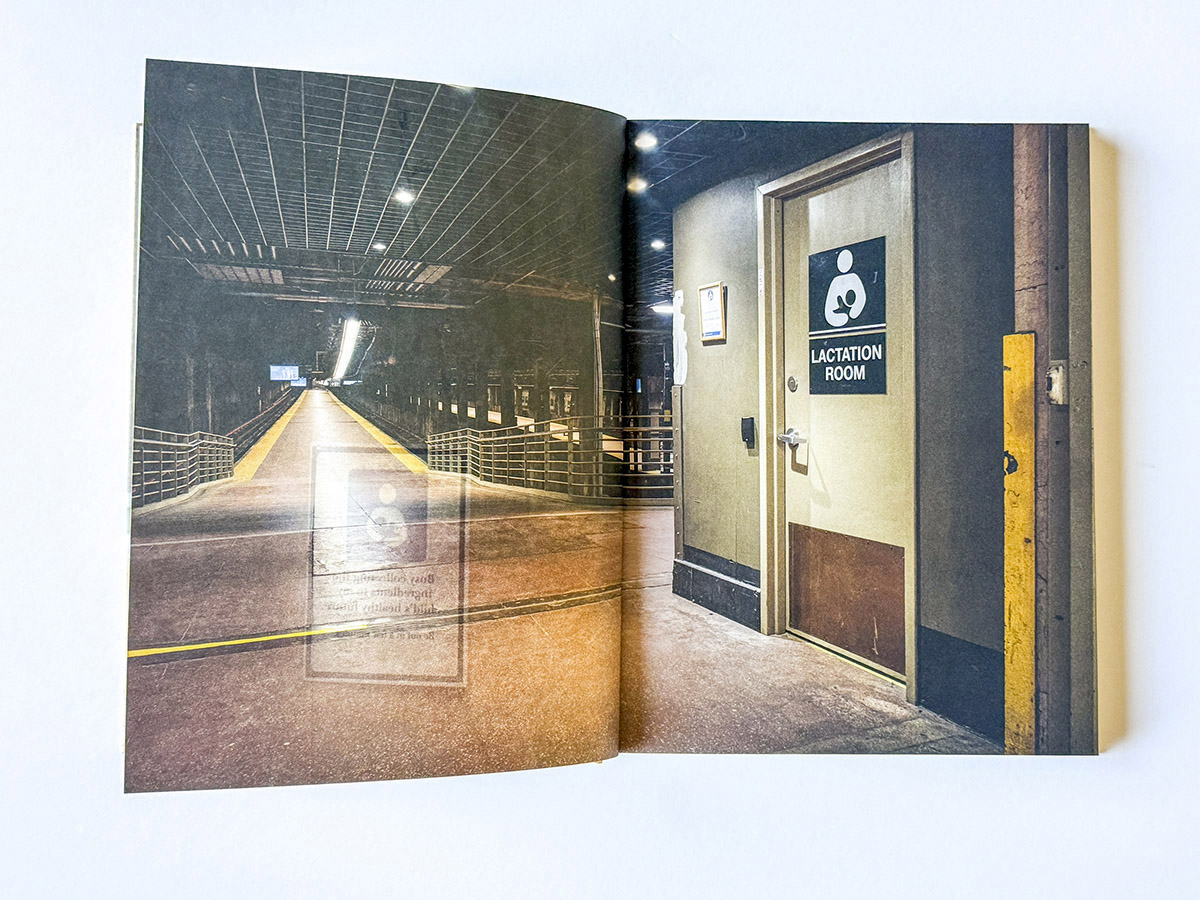
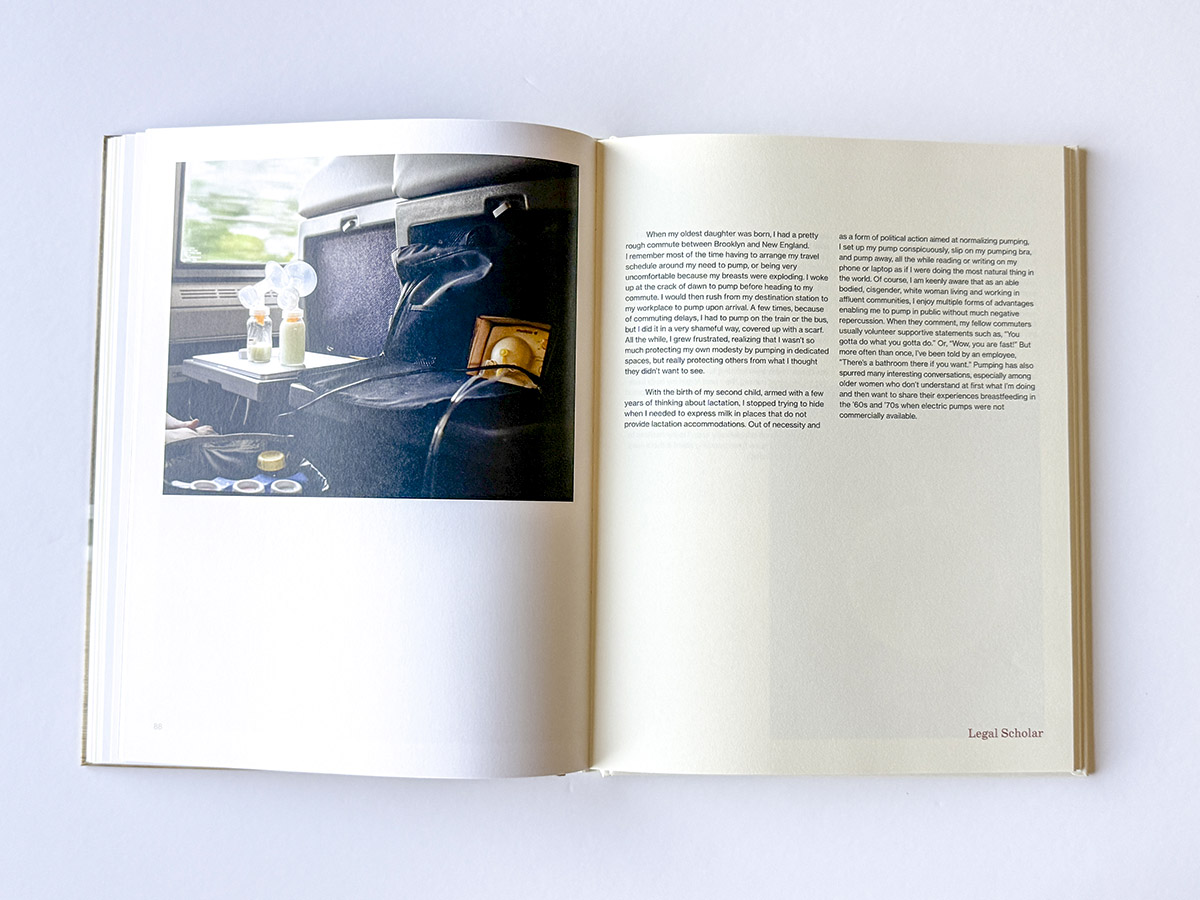
The book begins by introducing the reader to lactation through the places where one likely has not noticed such a practice taking place before: a transit station, an agricultural field, the back end of a restaurant. The eponymous Milk Factory is everywhere and nowhere (the excellent essays Hettie Juddah and Mathilde Cohen also speak to this and provide a level of analytical context that is uncommon to most photobooks). Sometimes rooms have been set up in advance, but more often, the space has to be creatively made to lactate.
Whatever the case, it is not uncommon for the process to be a hurdle to clear in the midst of one’s other labors. As Botz herself explains: “during lunch breaks I had to rush from my third floor classroom, where I was teaching, across the street to another building where the school’s government mandated lactation room was mandated, and get the oversized key to the lactation room, which the guards often struggled to locate” (page 10). As the reader learns, it is this experience of Botz’s that began to generate the idea for this book project. Going further, Botz did not want to just have images of women breastfeeding, for as she describes, much of the representations of women in that state reflect a male gaze that views breastfeeding as an unproblematized form of motherly love.
Instead, Botz has reframed breastfeeding with an eye to the tensions that actively surround it. Here we see something on which society relies, yet towards which it offers little in the way of support. As Botz describes it: “ironically, the sterile, often hospital-like qualities that define many lactation rooms are inconsistent with what mothers need to lactate – to feel relaxed and bonded to their children” (page 13). And yet, through this labor, there is a kind of intimacy between mother and child that remains, and perhaps, Botz even seems to suggest that a connection can sometimes be deepened in the process. Or at least, what arises out of the disconnection that is required of working mothers is a sense of pride that breastfeeding is still possible (page 12).
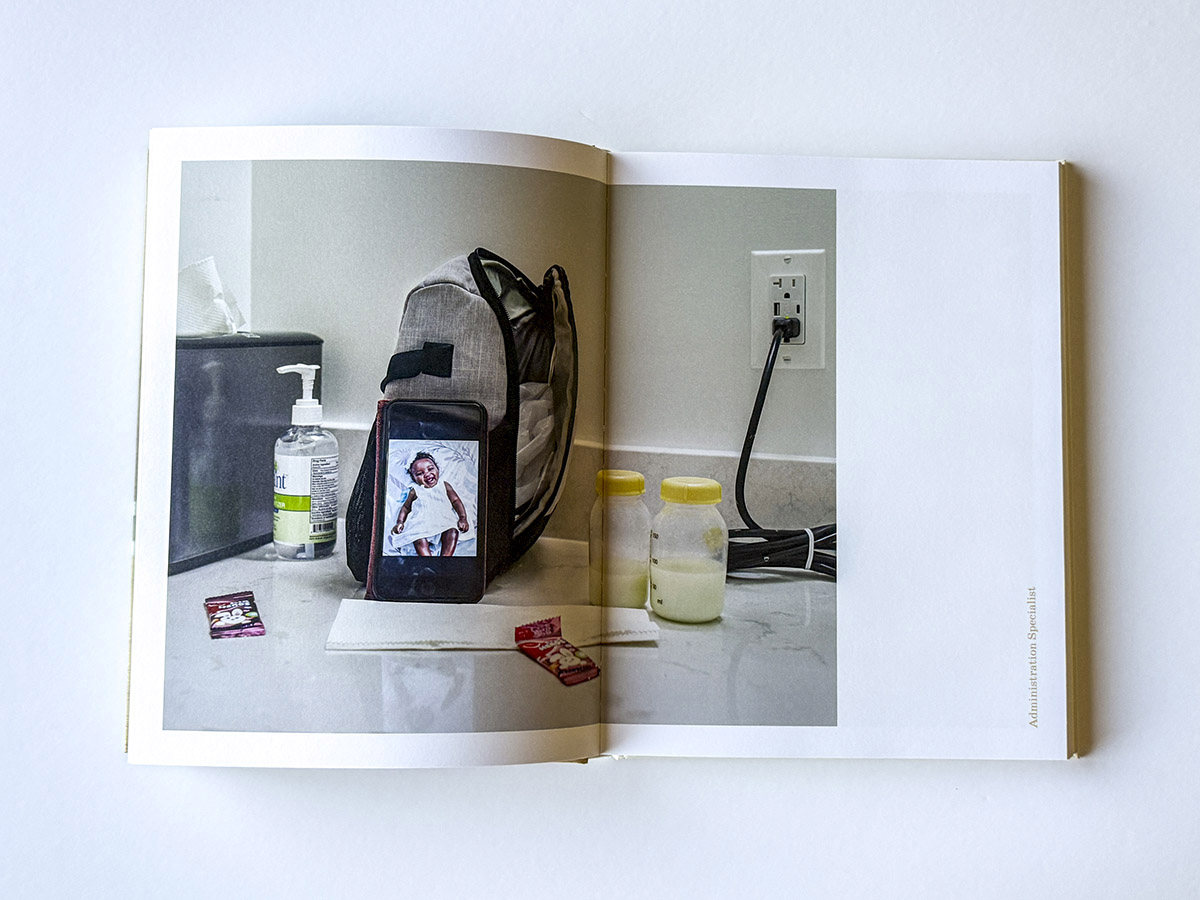
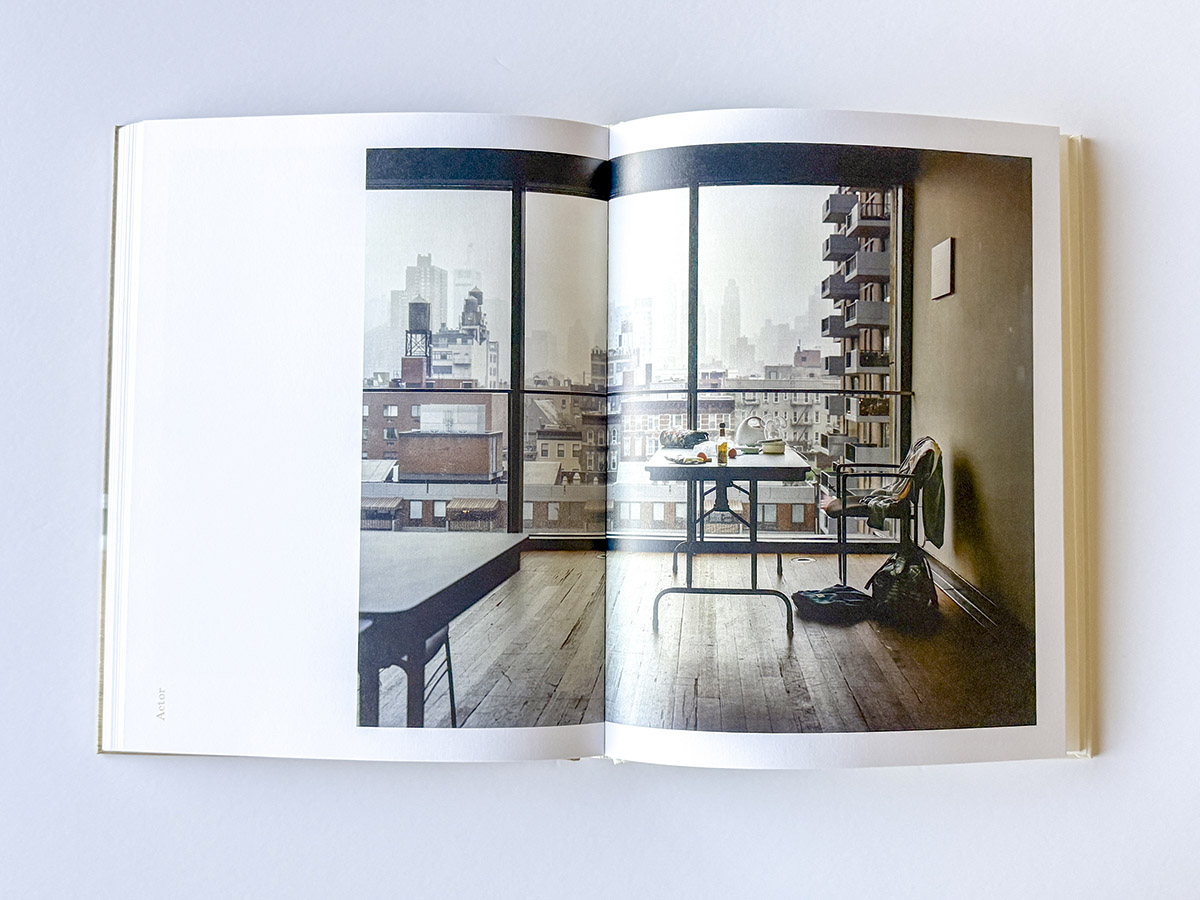
Botz’s photographs reveal a tremendous variety of lactation spaces and the ways in which mothers make them their own. We see multi-colored sticky-notes that might help exculpate feelings of isolation at LaGuardia airport. On a dairy farm, a mother has set up her spectra machine right inside the driver’s seat of her tractor. Elsewhere, an artist’s studio desk becomes the platform for lactation equipment. Presented as a series of considered still-lifes, the images across Botz’s Milk Factory reveal ingenuity on the part of the mothers, as well as an insight into the life, work, stories, and personality of each individual. Recurring themes across the portraits include photographs of the babies that the mothers keep with them, either in printed form or on their phones, setting them on tables or propped up on lactation machine bags. Cookies, clementines, and other snacks abound. And across Botz’s Milk Factory, we learn about the lives and challenges of school teachers, nurses, actors, milk donors, scientists, publicists, singers, and more as they navigate the complex responsibilities and emotional factors of pursuing breastfeeding while they develop their careers.
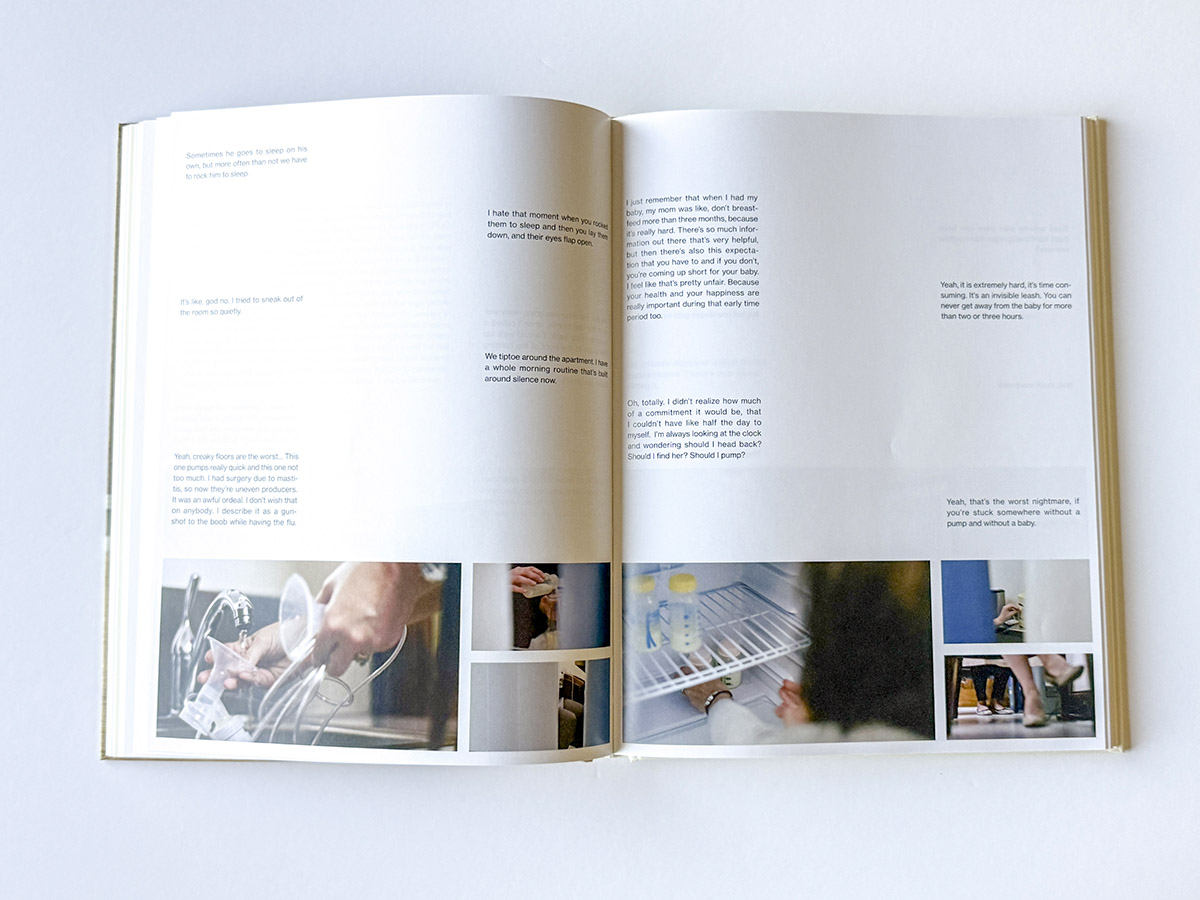
The images themselves are a pleasure to view and unpack, but the rigor of Botz’s approach shines through when taking the images in with their connection to the biographical vignettes that are reported. Usually taking a page or two, each piece of writing offers something more to the images that are given in the book. And furthermore, the stories are not didactic, whereby one image accompanies one section of text. Instead, the choice of withholding images in some instances, and not providing texts in other cases enhances the capacity for the reader to expand their imagination of what is being made visible and invisible in each case, making for a dynamic experience for the reader. And while each story is not providing a life history, what Botz is capturing here is an emotional depth that mirrors her images.
For the most part, these are provided in the first person, emphasizing a sense of directness and urgency. For example, a lawyer describes her experience in the following way: “With my first baby, I was paranoid about my production dropping off a cliff. Part of that is because my mother lost her production when I was 4 months old, and I wasn’t sure if it was genetic. My mother lives with me when my son was born. I was in a custody battle and there were parallels between our experience that we would spend a lot of time talking about. I started feeling like my story was her story. It took a while for me to separate out all the differences” (page 59). These stories are not just of that between women and their children. Each one is multifaceted, often involving family history, tensions about career paths, and a multitude of anxieties that each woman navigates in their own way.
An interesting feature, and probably one of the most expensive decisions made with this book, is the use of various forms of paper to signal different types of information. The stories are represented on cream-colored matte paper. Botz’s poem that is included in the book, “Pulling Milk out of Thin Air,” uses a glossy, cream-colored paper that has a sheen to it, reflecting the surrounding light. Most of the image pages use a semi-gloss paper that helps to give the images precision and depth. And then, about 2/3 of the way through the book, some lightweight magazine style pages appear that provide an in-depth portrait of the Longworth House Office Building in Washington DC. There, we learn about the lives of women using the lactation room. There, we see the confines of the space, as in the rest of the book. However, the section reads more as a reportage.
I imagine that most photographers would balk at the possibility of including the variety of forms of presentation that Botz uses. A book of still-lifes, sure. A book of portraits, okay. A book following the lives of a few subjects, certainly. But, what about blending all that together? The result is both a faithful representation of the realities facing breastfeeding mothers, but also one in which the reader can appreciate these women’s lives in the contexts of all the diverse situations with which they are faced.
The Longworth House section is particularly effective because it is presented as a kind of sample day in the life of these women. We see how they have to navigate their workplace, but also how they support one another. As a result of the context provided in this section of the book, we also learn more about the politics of breastfeeding. For example, while it might be easy to praise the rise in the number of lactation rooms, Botz explains that this is the result of policy and societal failure: “the United States remains the only high-income country in the world that does not offer mandated paid family leave” (page 70). And so, while Botz finds power in the resilience of the women’s lives she enters with her camera, she also finds a way to point to the fact that more work needs to be done. Her hope is that, as she herself indicates in the book’s opening pages, Milk Factory might be a document one day of an outdated way of life. A world should be imaginable in which women and the unpaid labors they provide are valued and supported.
Milk Factory is a beautiful book object with a tremendous variety of stories that productively combines images, texts, and numerous materials to portray a thought-provoking portrait of the often unseen dimensions of women’s lives. The book is photographically robust as a result of Botz’s expert compositions that engage the eye, while also providing a real richness with the numerous narratives of child-rearing that articulate the realities of Botz’s subjects. Throughout, due to the combination of writing, poems, and photographs, a real empathy also shines through.
While Botz has used a strategy here that is common to some photojournalistic projects, portraits paired with stories, Milk Factory offers important and more subtle insights into the lives of the women, but also the spaces that they inhabit and the politics of breastfeeding. This is not just a book therefore that will appeal to women with children, but one that is a fantastic example of an original approach to the photographic monograph that respects its subjects and offers genuine insight into important problems, questions, and possibilities in the 21st century.
Brian F. O’Neill is a photographer and sociologist based in Phoenix, Arizona.
__________
Corinne Botz – Milk Factory
Photographer: Corinne Botz (based in New York)
Publisher: Saint Lucy Books (Baltimore, Maryland)
Design: Luminosity Lab, Caleb Cain Marcus
Printing: ABC Tipografia Firenze
Text: Hettie Juddah and Mathilde Cohen
Hardcover; sewn binding; 9 × 11.5 inches; 130 pages; ISBN 979-8-9899602-4-8
__________
Articles and photographs published in the PhotoBook Journal may not be reproduced without the permission of the PhotoBook Journal staff and the photographer(s). All images, texts, and designs are under copyright by the authors and publishers.


Leave a Reply