Review by Brian O’Neill ·
Published in the Journal of Photography in 1974, photographer Lewis Baltz wrote as follows about his work, The Tract Houses:
“Typical locations: Previously unimproved land. Proximity to freeways and airports is of primary importance. Secondary consideration is given to the availability of rail and marine transport.
Typical considerations in site selections: Flat land requiring a minimum of grading and which poses no unusual problems in soil or foundation engineering. Typical choices are valley bottoms or the flood plains of rivers. As this type of land is originally often agricultural, the development of one or more large industrial areas may cause severe dislocations in the local economy, such as have occurred in parts of Orange and Santa Clara counties, where agriculture has been almost completely supplanted by the development of industry.”[1]
One year later in 1975, Baltz would show work alongside Robert Adams, Bernd and Hilla Becher, Joe Deal, Frank Gohlke, Nicholas Nixon, John Schott, Stephen Shore, and Henry Wessel in “New Topographics: Photographs of a Man-Altered Landscape,” organized by curator William Jenkins, running from October 1975 to February 1976 at the George Eastman House in Rochester, New York. As has been well documented, the show’s reception was somewhat cold. It was a departure from dominant strands of fine art photography that tended to romanticize landscapes. Building on Jenkins own interpretation of the show, cultural geographer Wendy Cheng identifies that the work had a “double premise that one can portray landscapes in an objective manner, and read the landscape for meanings; as a document, the landscape is viewed as a repository of cultural, human truths.”[2] In so doing, the show problematized the extent of neutrality in photographs, about their place within an ever expanding field of images and image-making (e.g., advertising), and about the connections between photography and methods of social, cultural and political documentation.
Today’s photographers are the inheritors of these tensions. Interestingly, a central point of epistemological connection between the work emerging in the 1970s and photographers that now derive inspiration from that tradition is the idea of decoding, as mentioned by Cheng. That is to say, there is a semiotic concern happening at some level. If semiotics is broadly concerned with how images, as symbols, are made to signify things or ideas other than what they themselves are, then photography may be a useful tool in offering a contemplative, even analytical, stance from which to puzzle out meaning(s). Indeed, as Geographer James S. Duncan identifies, whatever specific theoretical semiotic tradition one might prefer (e.g., Baudrillard, Barthes, Derrida, etc.), underlying them is a shared “recognition of masked ideological content.”[3] In this vein, Jenkins helped attune his audience, perhaps as much as the photographers he gathered in Rochester, to the idea that photography might offer just such a critical lens of interpretation, or even a certain kind of analysis that could be socially and political engaged, while simultaneously drawing upon the kind of contemplative stance with which classic landscape photography attempted to imbue its imagery.
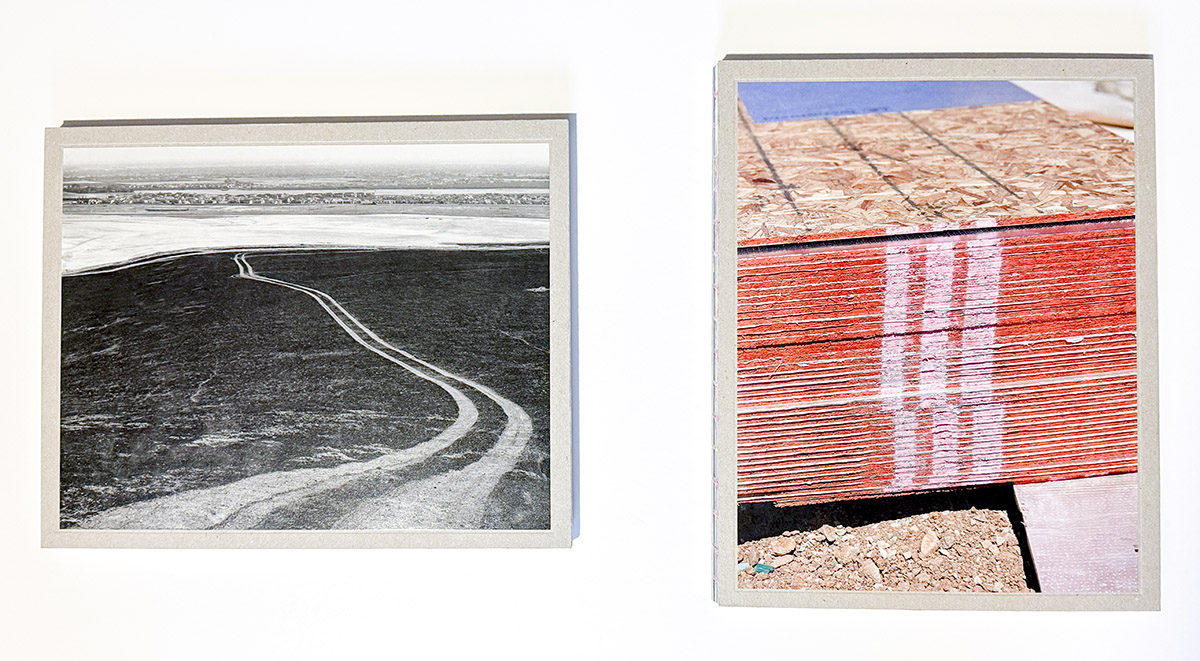
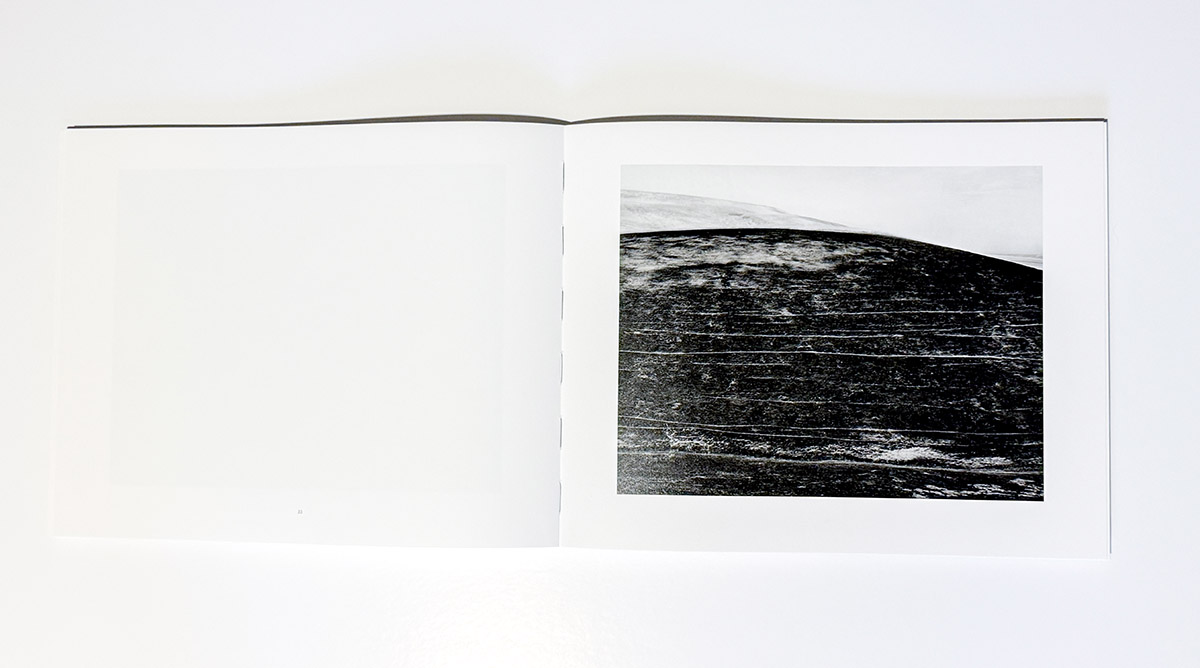
I began reflecting on Baltz’s essays that surround his early works concerning the landscape and culture of the American West, and California in particular, when I was encountering Ryan McIntosh and Yogan Müller’s 2026 book(s) Tracy Hills. In terms of timing, the book appears precisely on the 50-year anniversary of the work. The combination of an American and European photographer echoes some of the scope of the original show as well, although Tracy Hills is focused on a new housing development of the same name in San Joaquin County. Other connections with Baltz and other New Topographics work abound. For example, opening to McIntosh’s work, the echoes of the New Topographics are immediately apparent: dusty monochrome landscapes, sad looking retention ponds, an endless sea of tractor tracks carve their way through a territory. Elsewhere, plywood, particle board and stucco craft a new vision of reality. One easily imagines that the considerations Baltz identified: “unimproved land,” “originally agricultural,” and “requiring a minimum of grading,” have remained as coordinates in decision-making.
However, what is distinctive about McIntosh and Müller’s Tracy Hills is that they endeavor, not to replicate, but update the concerns of the New Topographics. In Tracy Hills, one identifies that it is not just humans, or “man,” that deserves our attention, but perhaps other more specific themes and social categories. The desire for expansion into the peripheries of the urban landscape is increasingly speculative, just as it seems to go on with no clear end in sight. That speculation relies on some of the same old tropes that were present in Baltz’s period: of the heteronormative nuclear family, of two-story homes with green grass, etc. Most importantly, edge city expansion, as the phenomenon is sometimes called, relies on the supposedly American dream of property ownership, precisely as Greg Foster-Rice describes in his accompanying essay to McIntosh and Müller’s book(s). After all, as the Tracy Hills developer’s website proclaims, “At Tracy Hills, The Answer is always YES.”[4]
And so, while there are some clear continuities in Tracy Hills with the New Topographic idea, the challenge for the reader of this book is similar to that faced by McIntosh and Müller: how to build upon it? In what ways, then, can we decode Tracy Hills the place, and the book project?
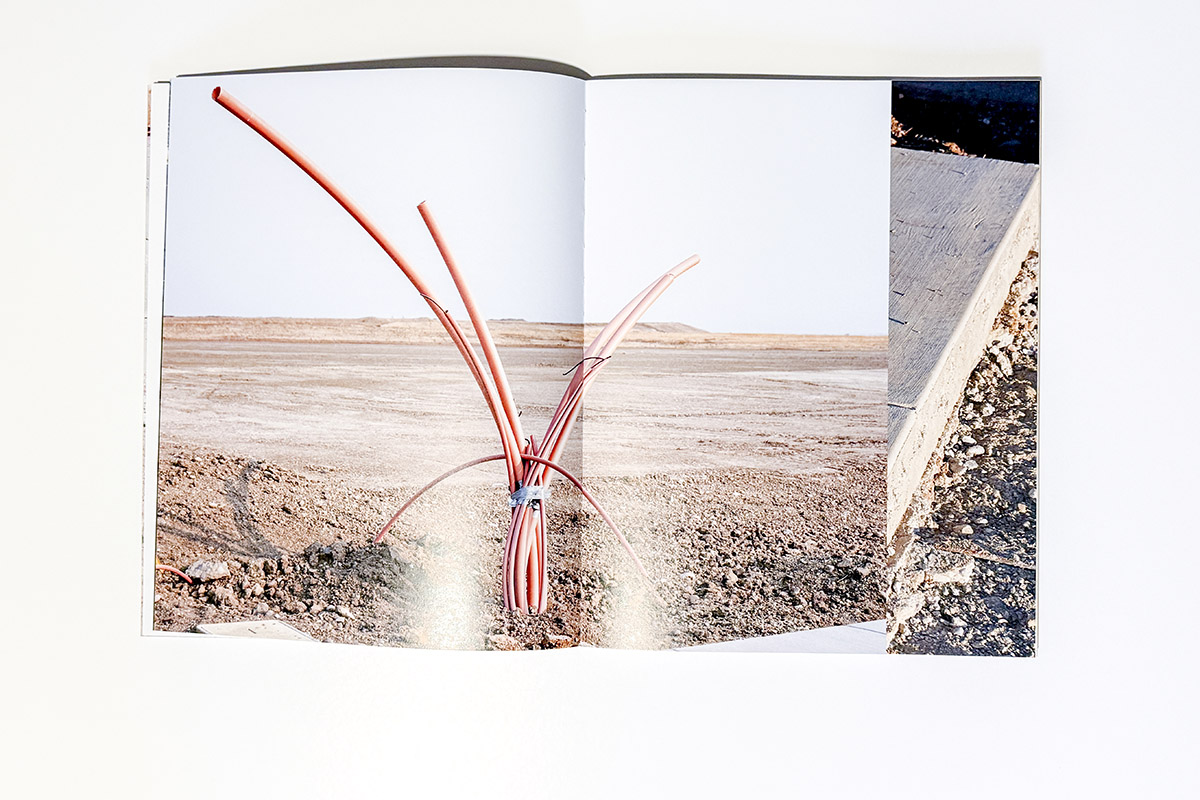
The first thing to realize when encountering Tracy Hills is that it is a two-book volume. McIntosh and Müller have photographed the same place, often accompanying one another. In the field, and as they explored, they would often arrive together, but then set off by themselves. Slowly they would make their way, in a sense, further, into Tracy Hills with each successive visit. Returning after a day of shooting, they would then tell the stories of the people they met and the things they saw, surprising (a prince who wanted a family portrait), odd (scattered bones in a burned field) and mundane (bundles of electrical conduit) (interview with the authors – October 20, 2026). The more time they spent, the more questions arose. The more images that accumulated, the more that they wanted to come back. As time went on, Tracy Hills transformed from “unimproved land” to a cultural landscape populated with families and their dreams.
If the reader is struggling with where to begin with McIntosh or Müller’s books, the choice seems to hinge upon one’s aesthetic, and perhaps historical, interests. If we are meant to be thinking about the New Topographics show (as Britt Salvesen and Greg Foster-Rice’s essay accompanying these volumes imply), and about Baltz and others, I think the place to begin is with McIntosh’s work: fence-lines, welcome signs, and rolling hills greet us in Tracy Hills. What was once farmland has now been identified for a new endeavor. The barbed wire strung across the hills rises and dips in the valleys and even seems to want to prick at a new billboard that reads: “Tracy Hills: FUTURE VILLAGES.”
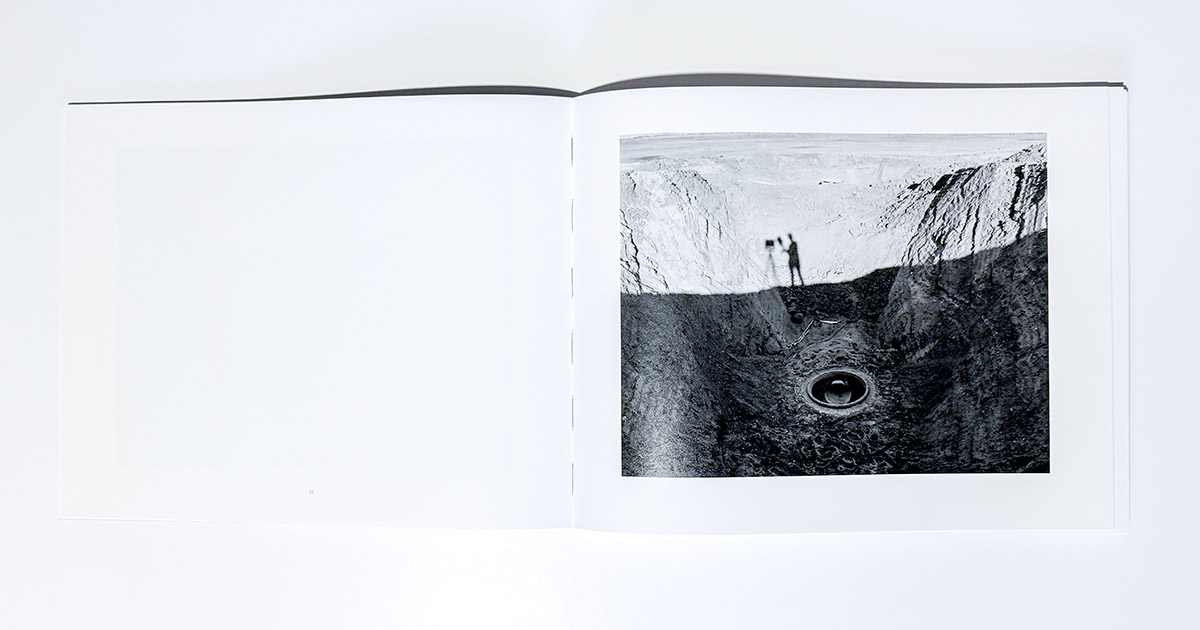
Moving through Tracy Hills, McIntosh focuses, aptly, on other traces. The tracks of bulldozers and heavy equipment crisscross the territory. His astute and controlled framing is reminiscent also of Laurie Brown’s Southern California pictures. While Brown used 6×17 format to emphasize the breadth of suburbanization so as to create an almost otherworldly sensation of a scarred future, McIntosh is able to emphasize the scale of the transformation of Tracy Hills with his mixture of straight-on, but also sometimes less orthodox framing: a horizon line creeps ominously almost out of frame, the viewer peers directly into a retention pond. Out of the grass lands, a new landscape has begun. To make a place out of this space, and therefore a new reality, resources must be mobilized, but also controlled. Water and electricity have to be taken in where it is needed, and only there, not elsewhere.
After the viewer approaches Tracy Hills from a distance, spatially, but also temporally, we transition to a sequence of images that take us closer to this new housing development in San Joaquin County. A new sidewalk is poured here. Some mailboxes and lampposts are hammered in there. Some trees are surrounded by dowels to keep them upright. “No Parking Any Time,” a sign reads. On the ground, a worker has spray-painted with arrows that look like an X and Y axis: “USA…Golden State.” Tracy Hill is starting to look like home, to someone.
The chord that McIntosh strikes with these pictures is an important one. The idea that this place looks like home is significant. As communications theorist Andrew Wood would describe it, Tracy Hill is a ubiquitous place. Tracy Hills fits into a larger historical pattern in which individual locales are constructed to be familiar, to provide experiences of consumption and quotidian phenomena. In ubiquitous places, out of any place, one can increasingly feel like they are at least somewhere like they have been before. However, the monochromatic rendering McIntosh’s gives this suburbanizing landscape serves an important function in this regard. It helps to defamiliarize the spaces of Tracy Hills. We are in a sense, pulled out of their context, and distanced from them, from the colorful images displayed by the firm marketing the property. McIntosh’s strategy affords the viewer the possibility of appraising Tracy Hills with fresh eyes.
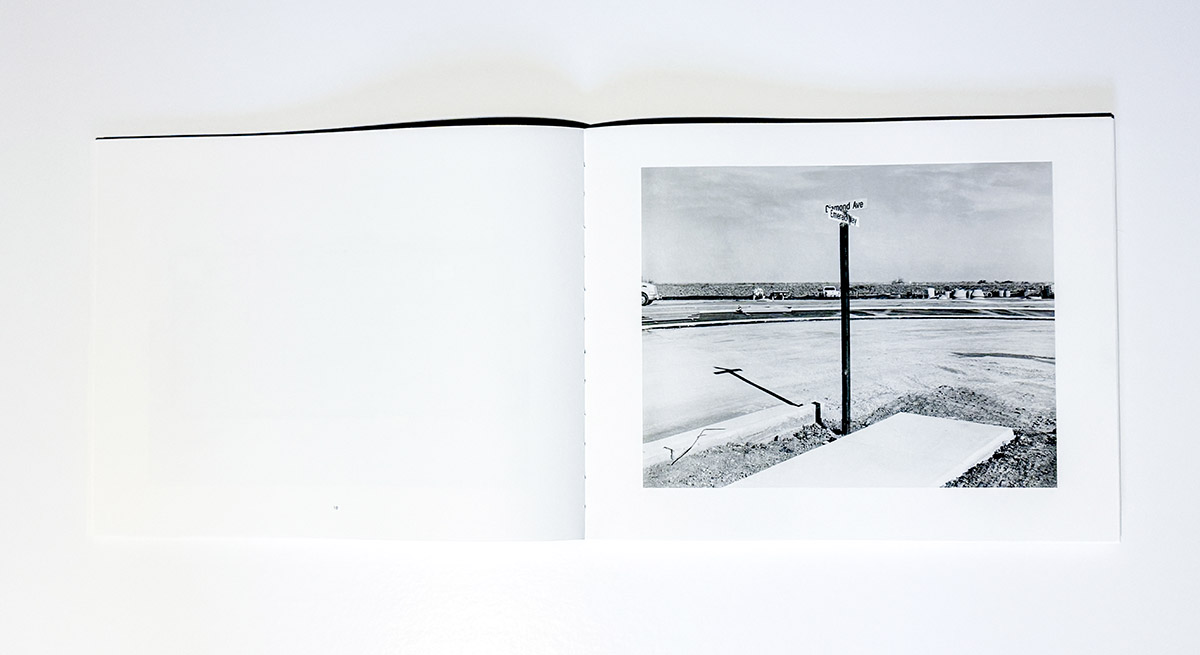
And, consistent with the critical standpoint of the past photographic and semiotic traditions I have mentioned, McIntosh clearly has a sense of irony that he brings to these pictures. This means that we see how Tracy Hills is aspirational. It is a place where people labor and want to live. For example, there is desire that is written quite literally at times into the scriptorial landscape in the form of road signs: Diamond Ave. intersects Emerald Way. This place could be a gem. But the ambitions of this newly made place run up against emerging risks. Tracy Hills has to take a detour.
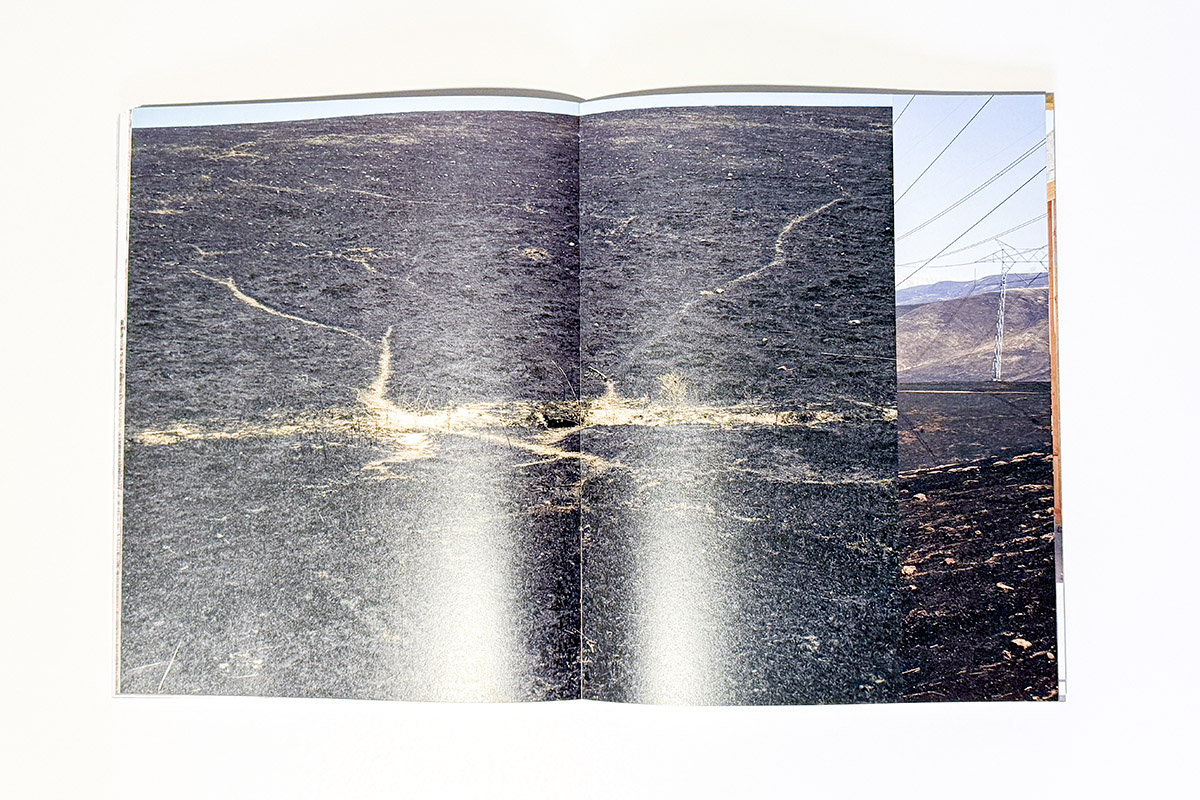
In June of 2024, three fires spread through Tracy Hills and the territory surrounding it. From June 1-3, sparks originated from a high-voltage electrical pole that short-circuited due to a failed aluminum tie, spreading into the grasslands nearby. The fire was spread by 40 mile per hour winds. The fire began near the Lawrence Livermore National Laboratory’s Site 300, which supports the U.S. nuclear stockpile stewardship program, as well as what is described online as “weapons modernization.” An estimated 14,000 acres were burned. Later, on June 11, sparks emerged from an industrial medical supply distribution facility. The extensive cardboard and paper products in the warehouse fueled the flames, and the smoke could be seen for miles. Finally, On June 27, another fire emerged and reportedly remains under investigation. On that day, more than 200 acres burned near Tracy Hills. Some reports describe that a lightning strike on already charred grass initiated the fire.
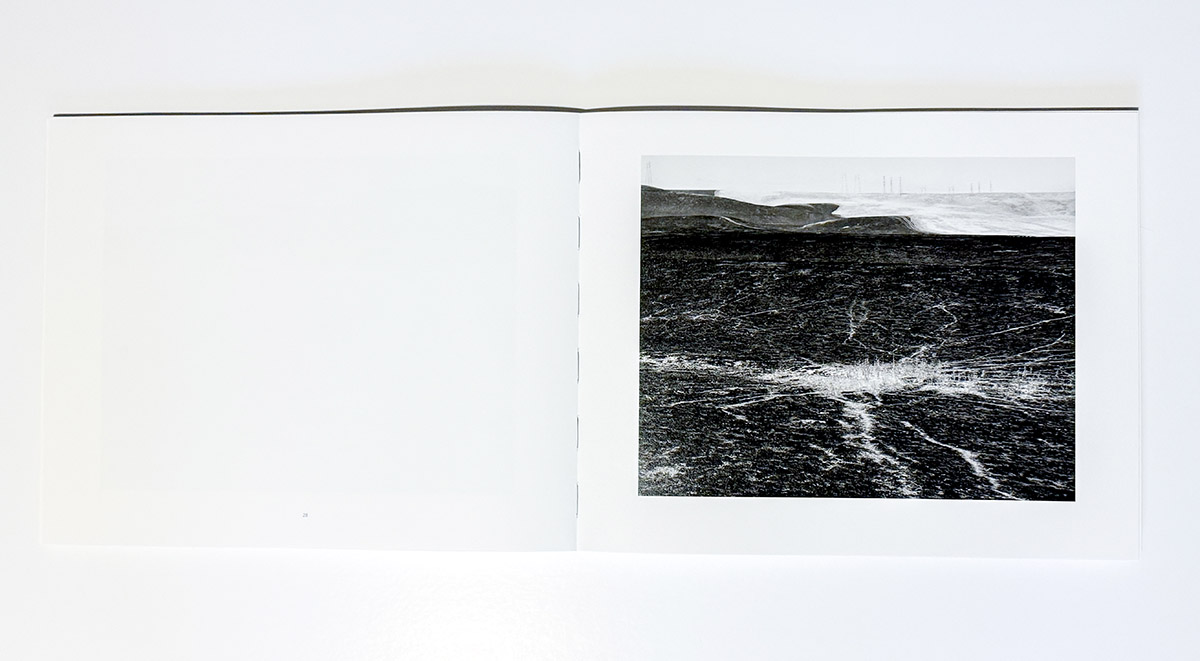
It is in the immediate wake of these events that McIntosh and Müller revisited the site, producing some of his most immediately affecting images across the two volumes. In McIntosh’s case, looking at first glance as though they could have been made with an infrared camera, we now gaze upon a burned world. But this strangeness, these seemingly otherworldly visuals are not from another planet. The foregrounds provide a crispy blackened gradient in which the eye never truly finds relief. One can only gaze at the details of burned grass and dirt. Now, instead of the tracks of earth movers, crisscrossing the landscape are the traces of fire suppression trucks. When we do find a horizon line, it appears as an ominous gray-white. You can almost feel the June heat.
Of course, the show must go on. We might wonder if only in fiction could the cycle be broken. The final sequence of images documents the return to building and completing sections of Tracy Hills. The homes and streets are starting to take shape. The familiar uniformity of the suburbs of the American West begin to populate the landscape. But, here, McIntosh’s attention is drawn to a sense of unease. Dusty hands blacken some dry-wall. The scaffolding around a newly stuccoed home seems a bit rickety. The horizon beyond the particleboard façades is a hazy grey. Despite the risk looming over Tracy Hills, up go the American Flags and in come families with their sedans. Some install solar panels on their roofs. Night falls on Tracy Hills. But, one wonders, what will the day bring?
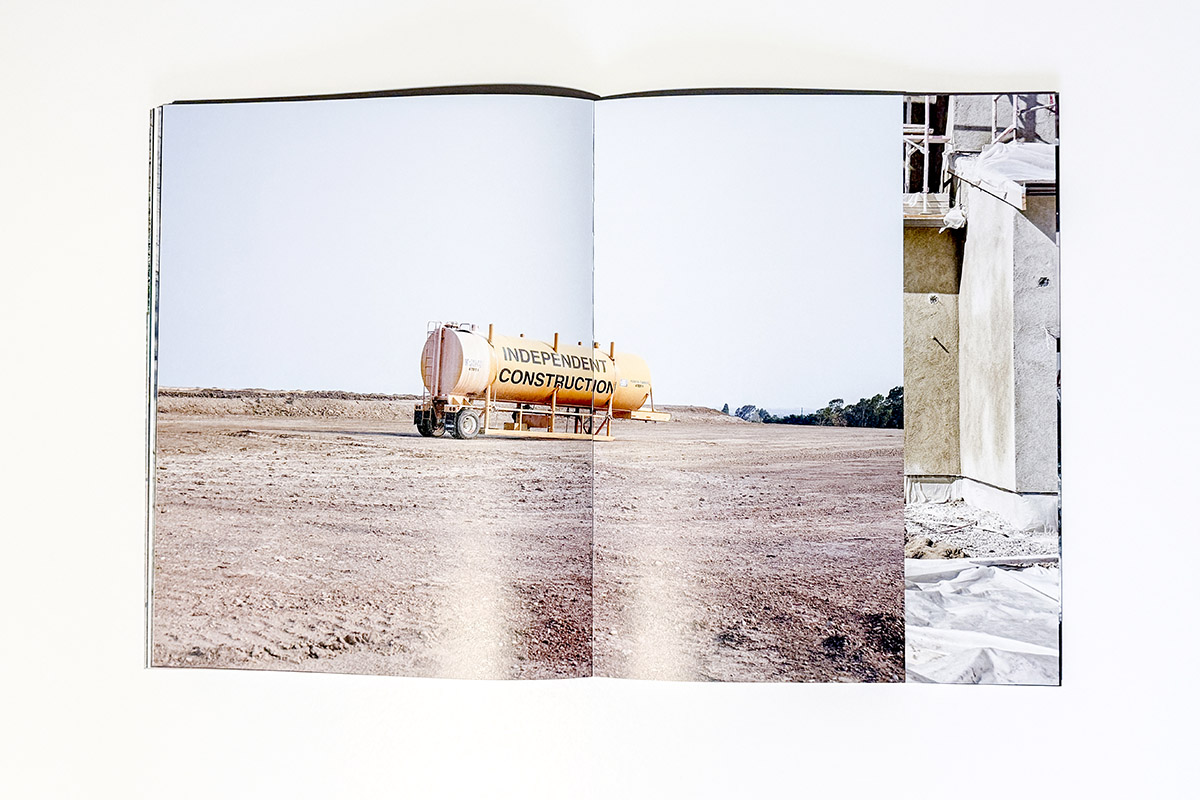
A striking feature of McIntosh and Müller’s Tracy Hills is the dialogue happening here. To be sure, in one sense, there is a dualism. The reader has two books to deal with from two photographers. But, the photographers made their work in distinct styles. One is overtly connected to past traditions of large format monochrome practice, while Müller uses digital methods and color. McIntosh’s images are horizontal. Muller’s are often vertical in orientation. This means that there can be an emphasis on the reader’s task that one typically does not find in photobooks: to identify the connections and even tensions between two works on the same subject.
If McIntosh’s Tracy Hills is a rather melancholy landscape assaulted by abstract human vision and rectilinear architecture, Müller’s is one of resplendent, colorful, risky ambition. White horizons become grey blue. Dusty foregrounds connect to the swell of distant fields, meshing into a sea of dull goldenrod hues. The striking colors of this landscape emerge as the contrast of sheets of metal duct work reflecting the powder-blue sky against a sheet of grey-black underlayment felt. Elsewhere Müller picks up a set of construction screws, neatly arranged in a spiral formation, ready to be fired.
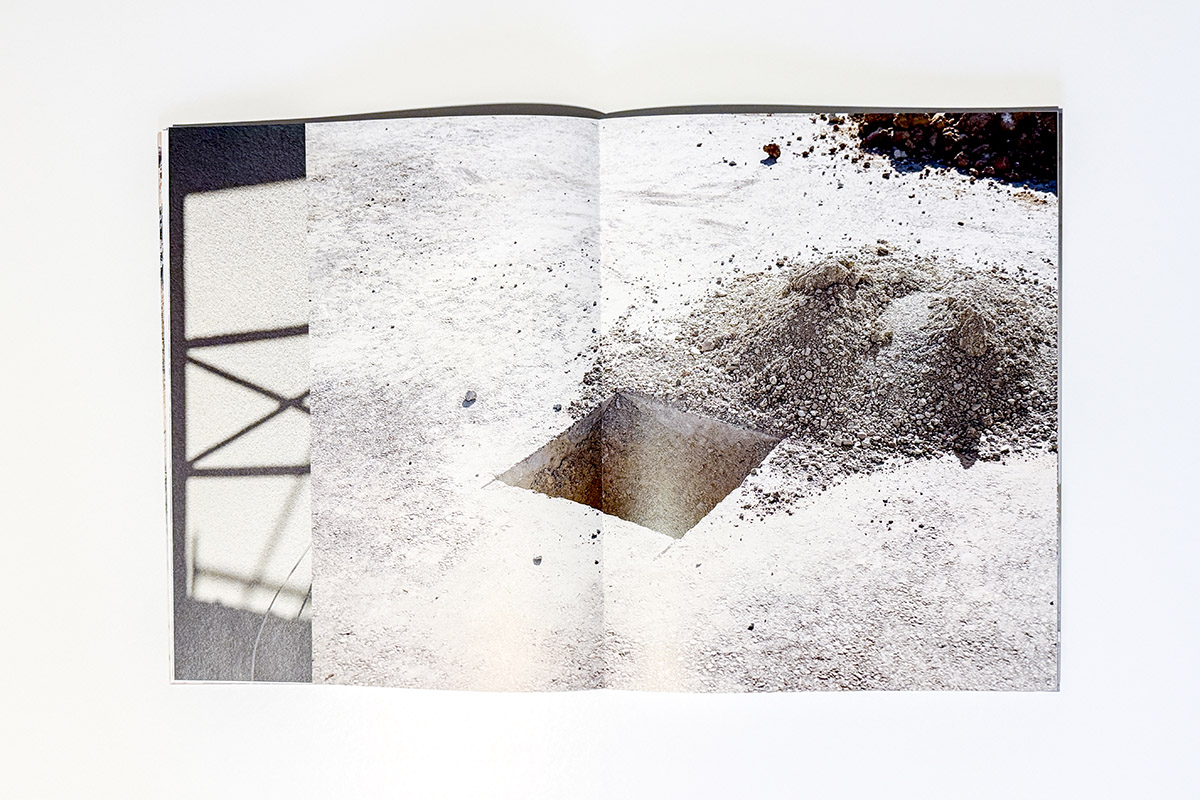
Throughout, Müller’s attention is drawn to the difficulty of reading/decoding this place. The support beams of a roof cast high-contrast shadows against some stucco. A denuded patch of rocky earth is excavated hyper-precisely in a cube formation. What will be its purpose? Elsewhere his eye is drawn to the contrasts of Tracy Hills. Sections of cracked earth form a sequence of natural repetitions are set against a stack of red steel rectangles reflecting the afternoon sun light. Cracks in building foundations and their concrete seem to form out of the rupture with the soil itself, concrete after all is a consequential contributor to global CO2 emissions. Where McIntosh provided a contextualized local sense of place, Müller’s tighter croppings, often of similar scenes, manage to successful throw the viewer into considering a wider set of problems. When taken together, the two authors manage to emphasize different scales of understanding that still manages to be coherent. If McIntosh’s traces were those of human intention and ambition, Müller’s involve the imprints and fragments of economic and ecological forces.
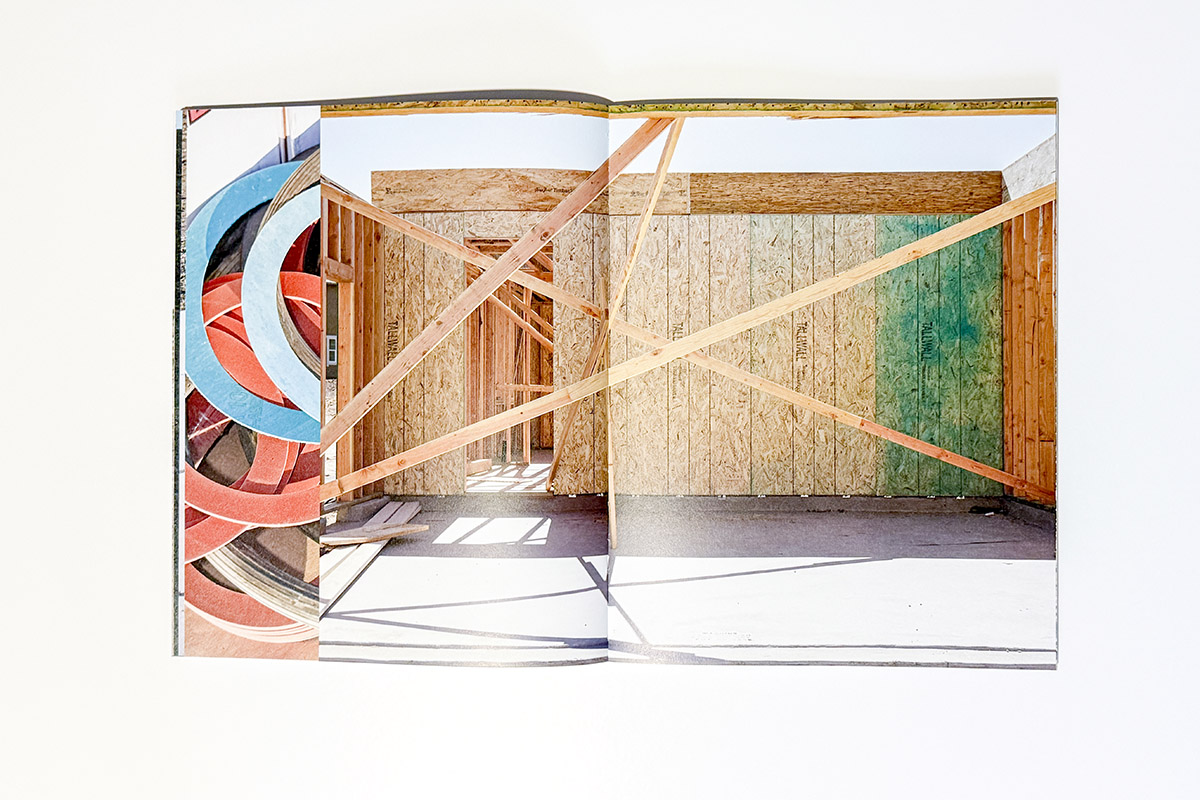
The idea of creating continuities out of apparent fragmentation is further emphasized by the design of Müller’s contribution. Where McIntosh’s work is presented in horizontal rectangles, Müller utilizes a mixture of full-bleed and edge to edge presentation alongside half-pages. Often the effect if striking, indicating the paradoxes and contrasts that preoccupy this project. For example, a deep channel of dirt excavation against a hot white sky extends across 2/3 of a spread, contrasted with a black and white paint-speckled wall. Then, there, one of those black spots is not a black spot. Hidden there is a beetle crawling its way towards the edge of this frame. Beyond these successful thematic contrasts, tensions in form and color are also prevalent. In one instance, Müller’s eye is drawn to the bizarre particle board circles that have been cut and stacked in a sea of other particle board pieces. Flip the page, and two thirds are filled with the more familiar straight lines of pine making up the beginnings of a new house.
Like with McIntosh’s text, Müller also provides a treatment of the fires. The choice of images here signifies the rupture that the June 2024 fires presented. While manner of the preceding images were tight framings of details, suddenly we see the extent of the devastation in a wider angle of view. All that is left in this blacked landscape are high tension power lines and lichen covered boulders extending into the distance. And yet, similarly to McIntosh’s work, Müller signals that resources and people continue to pour into Tracy Hills. Müller does reveal traces of nature, a green, red stemmed plant here contrast with some dried-out bushes there. Also, Müller’s emphasis on circular forms is indicative of the cyclical nature, not just of risks connected to nature (fires and droughts), but also perhaps to economic and population cycles: Circular materials abound in the firm of concrete tubing, contours from building materials, and left over tires. Eventually though, despite the vibrancy of these images, Müller closes his book with some ambiguous landscapes dirty foundations being laid, of white horizons, and the sense that this place is heating up but perhaps not for the best.
Expertly photographed and executed, McIntosh and Müller’s Tracy Hills is a distinctive project that challenges the boundaries of the photobook form while paying homage to the works that preceded it. With a critical eye, Tracy Hills offers interpretive insights and visual clarity to an increasingly hazy world. It is also a project that provokes readers to consider contradictions in economic paradigms as much as in how people live their lives and how we are asked to live. In short, and in response to Tracy Hills moniker, McIntosh and Muller seem to wonder: is the answer always YES?
Brian F. O’Neill is a photographer and sociologist based in Phoenix, Arizona.
___________
[1] As reproduced in: https://americansuburbx.com/2010/10/theory-lewis-baltz-notes-on-recent.html
[2] Page 153 of Cheng, Wendy. “” New Topographics”: Locating Epistemological Concerns in the American Landscape.” American Quarterly 63, no. 1 (2011): 151-162
[3] Page 479 of Duncan, James S. “Progress report: review of urban imagery: urban semiotics.” Urban Geography 8, no. 5 (1987): 473-483.
[4] https://tracyhillslife.com
__________
Ryan McIntosh and Yogan Müller – Tracy Hills
Photographers: Ryan McIntosh (born California 1984, resides in Los Angeles), Yogan Müller born France 1987 in resides in Los Angeles)
Foreword: Britt Salvesen
Essay: Trespass, by Gregory Foster-Rice
Publisher: Radius Books (Santa Fe, NM) copyright 2026
Texts: English
Printing: EBS SRL, Verona, Italy
Design: David Chiceky, Inga Hendrickson, and Nick Larsen
Hardcover book, two volumes in semi-transparent slipcase; layflat binding; 9.75 x 12.5 inches; 264 pages; 124 photographs; ISBN 9798890181206
__________

Articles and photographs published in the PhotoBook Journal may not be reproduced without the permission of the PhotoBook Journal staff and the photographer(s). All images, texts, and designs are under copyright by the authors and publishers.


Leave a Reply