Review by Hans Hickerson ·
In art, as elsewhere, less is often more. Pare something down, eliminate unnecessary details and distractions, reduce it to its essence, and you end up with a core that resonates beyond its supposed limits.
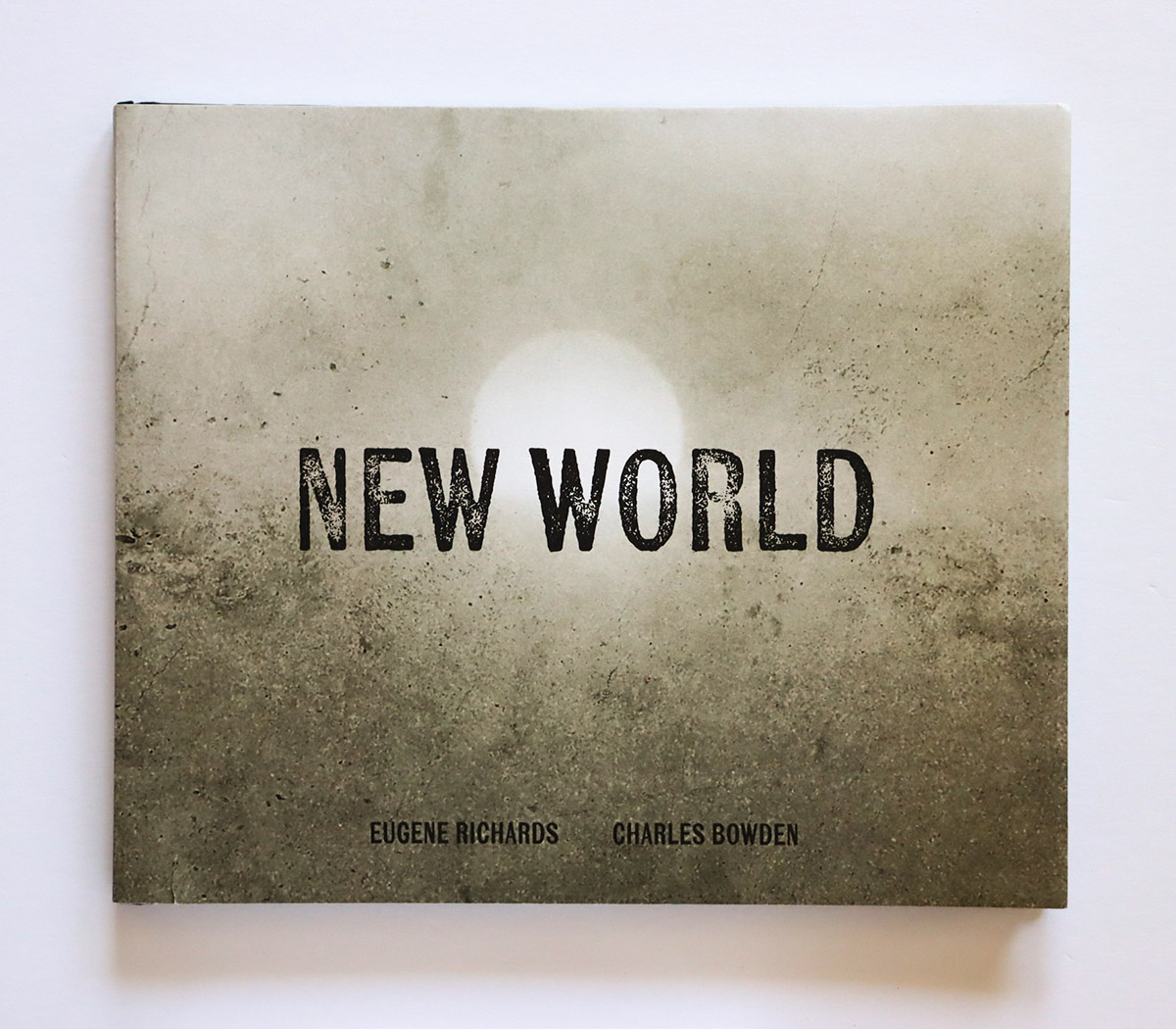
Eugene Richards’ New World works like that. His 56 black and white photographs depict scenes from the North Dakota plains, while Charles Bowden’s texts, taken from his posthumously published memoir Dakotah, offer commentary on the settlement of the plains by Europeans, including his family. But the memories and ghosts that haunt the pages of New World make it less about a place and more about bigger themes of endurance, loss, hope, despair, decay, and death.
How does it do this?
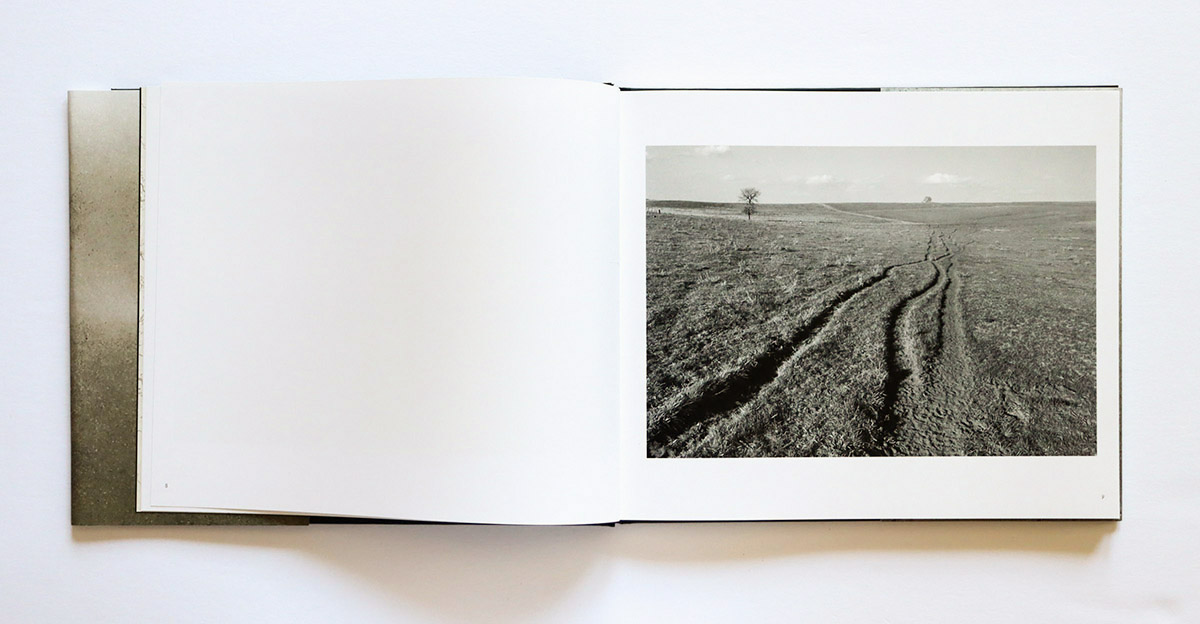
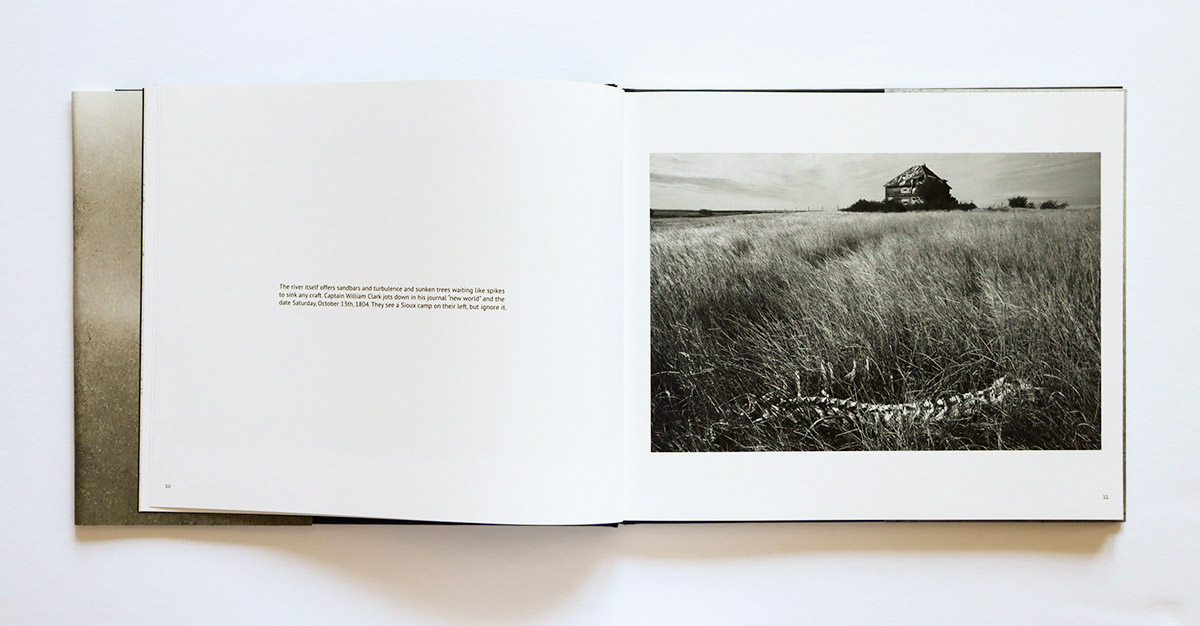
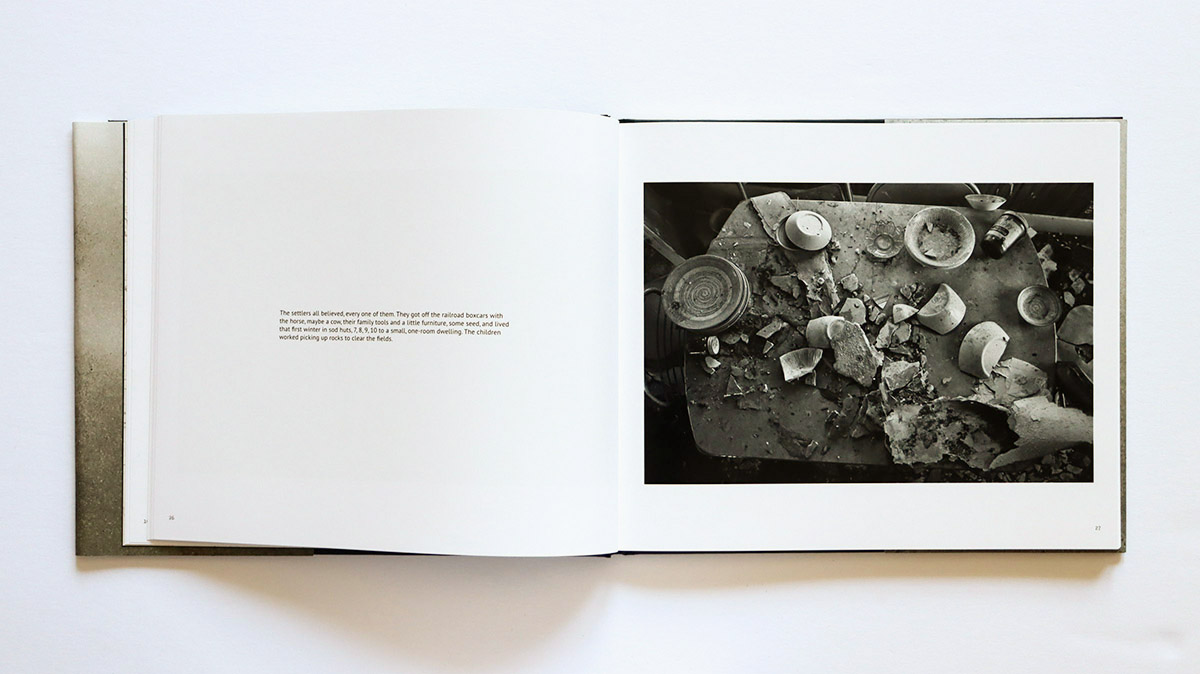
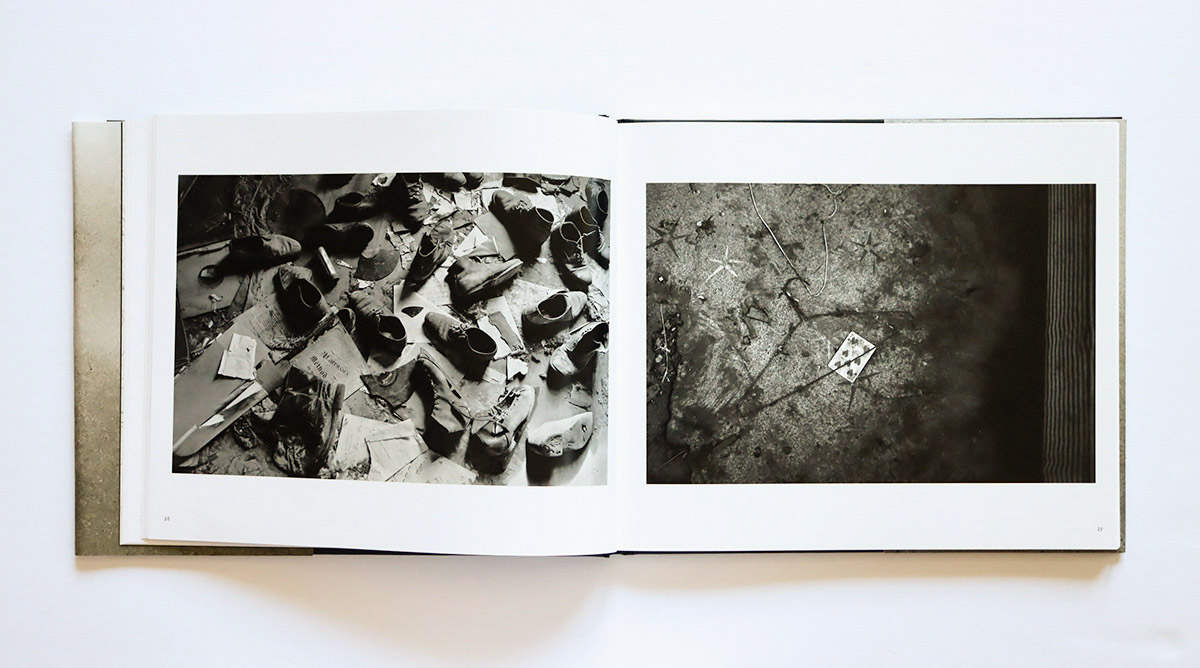
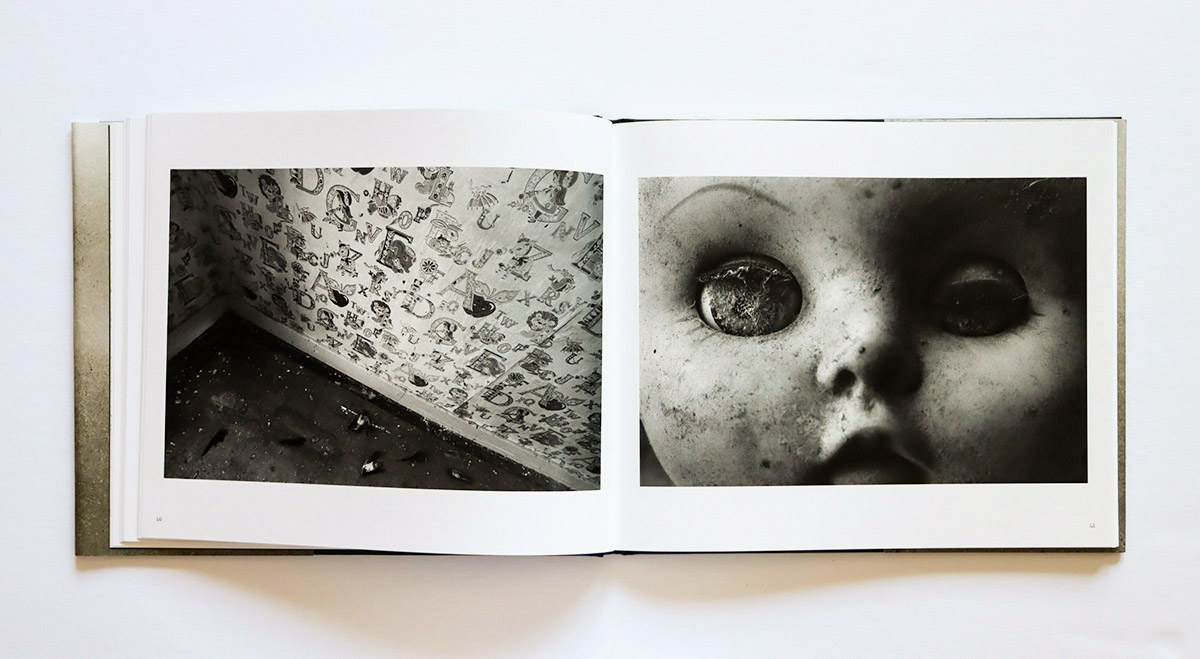
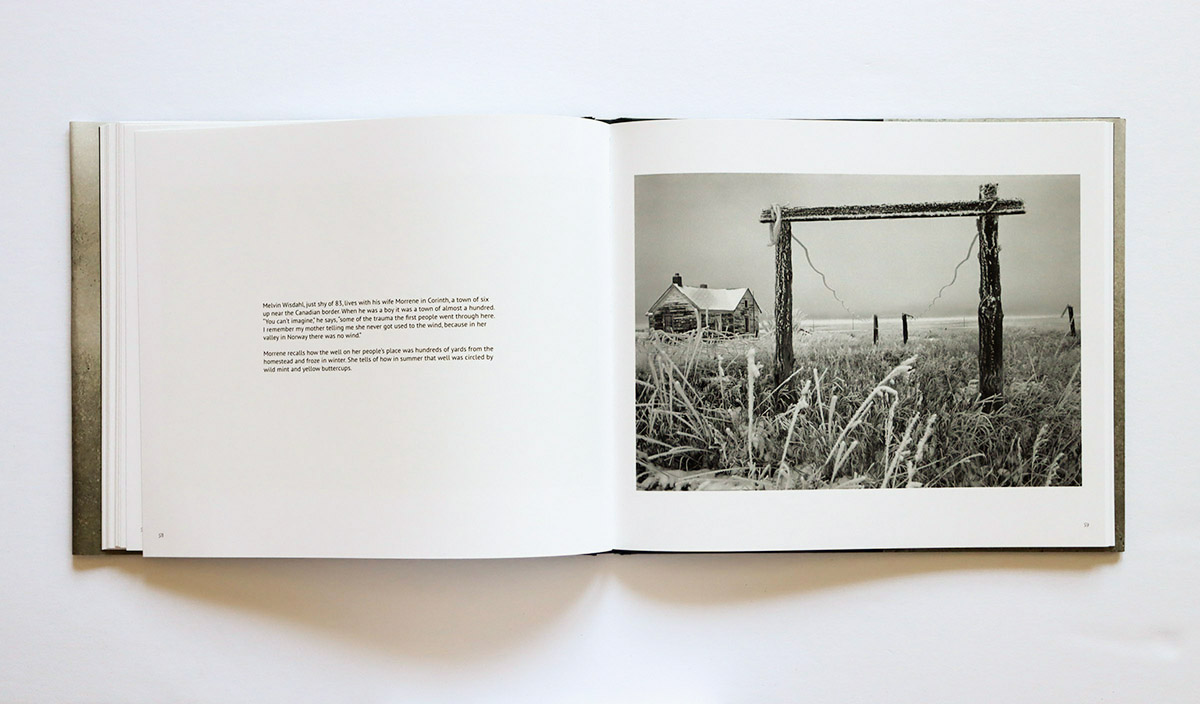
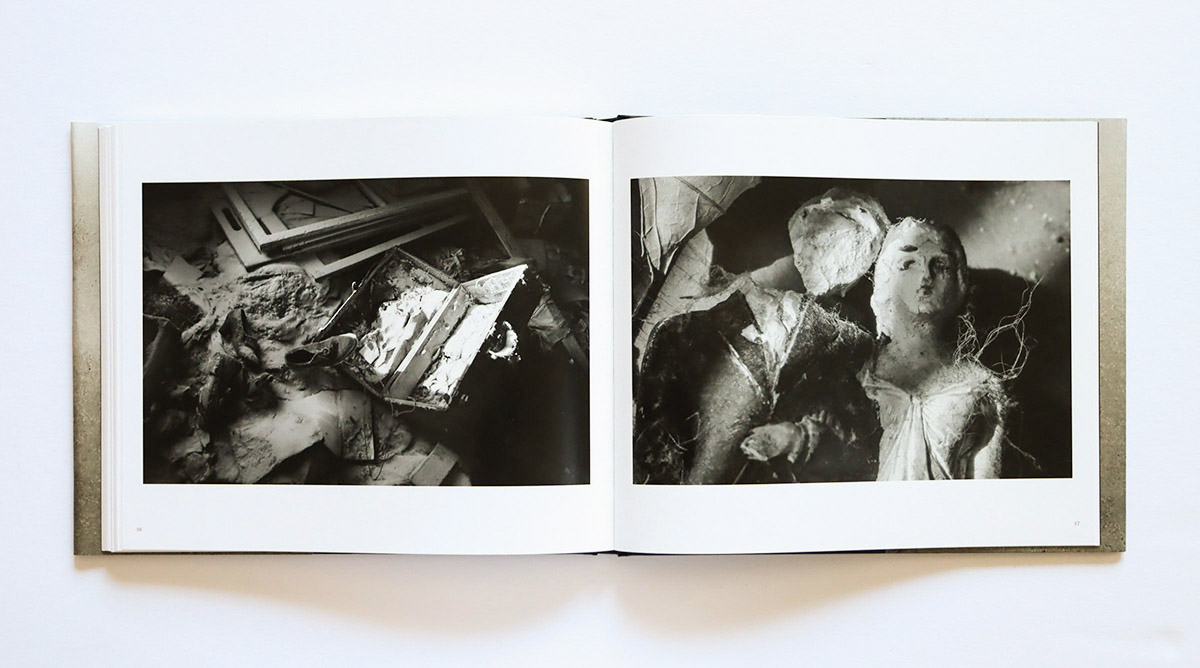
The book starts outside on the prairie. We see the open sky, the vastness of the land, the occasional tree. We see signs of human presence – truck tracks, an isolated, decaying wood frame farmhouse, and railroad boxcars viewed through the wreckage of a junked car. We also see signs of death – the bones of a horse or maybe a cow, the shot-up side of an ancient pickup. As we move closer and into old, abandoned houses we see collapsed outbuildings, broken dinnerware scattered over a kitchen table, torn curtains flapping in open windows, and floors strewn with shriveled leather shoes, coat hangers, a broken tricycle, and torn photographs. We do not see any people, but we do see dead insects and birds, plus dolls scattered on the floor, still, motionless, as if they had died where they lay.
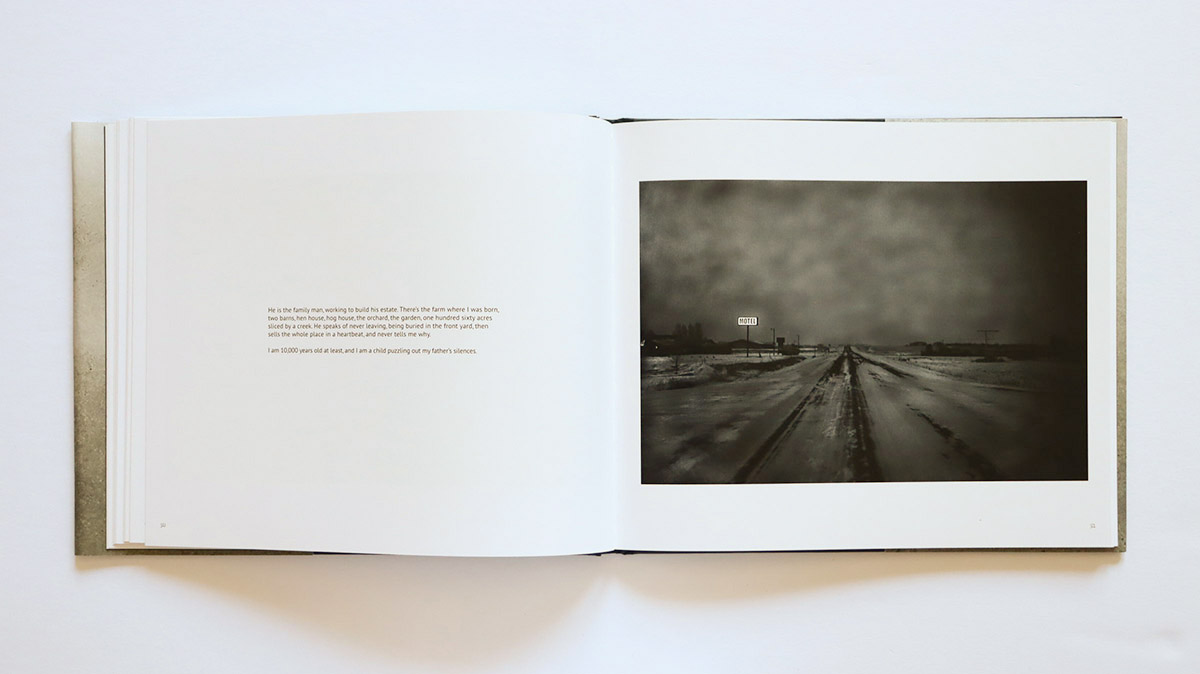
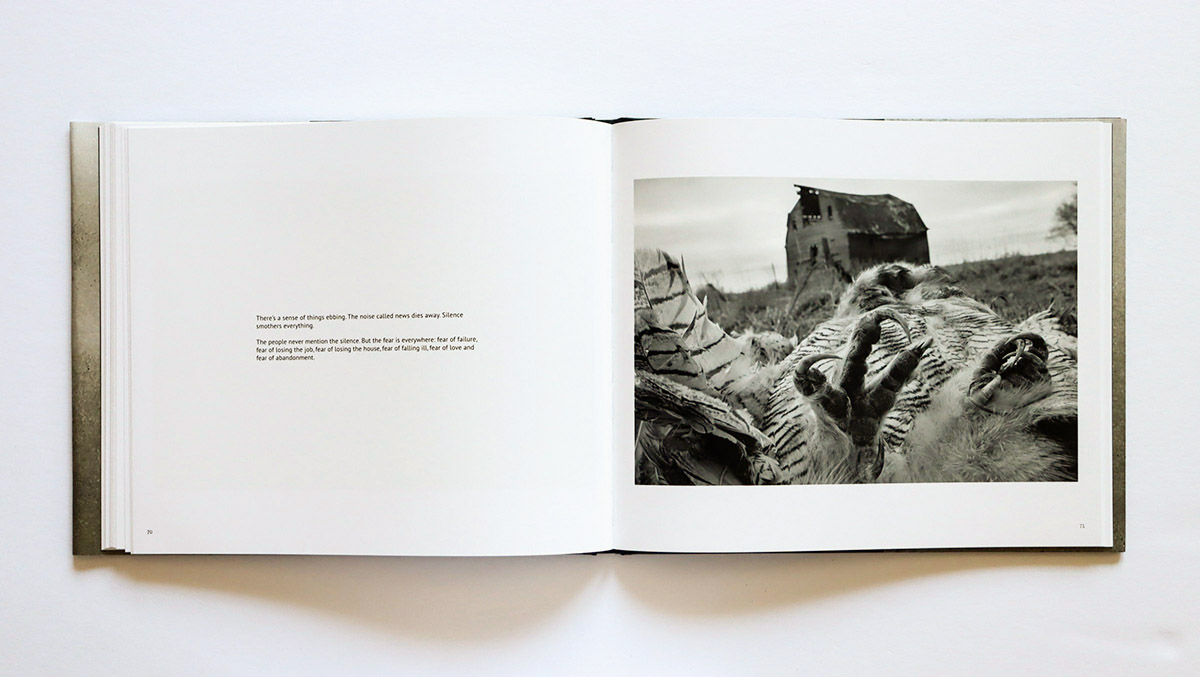
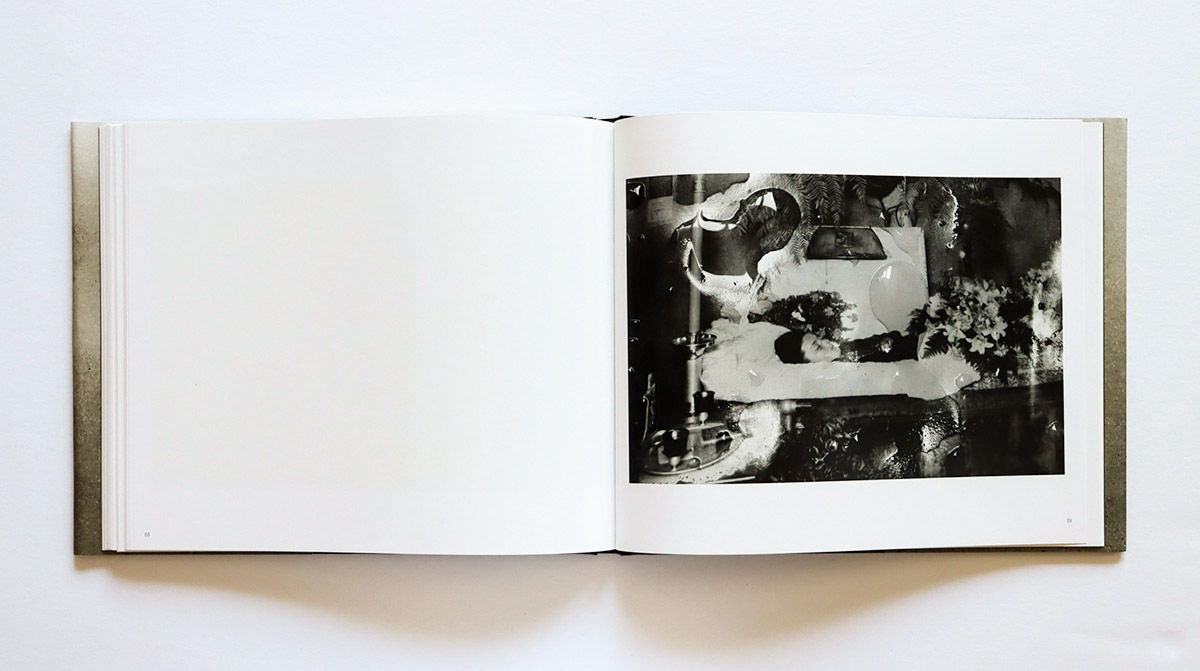
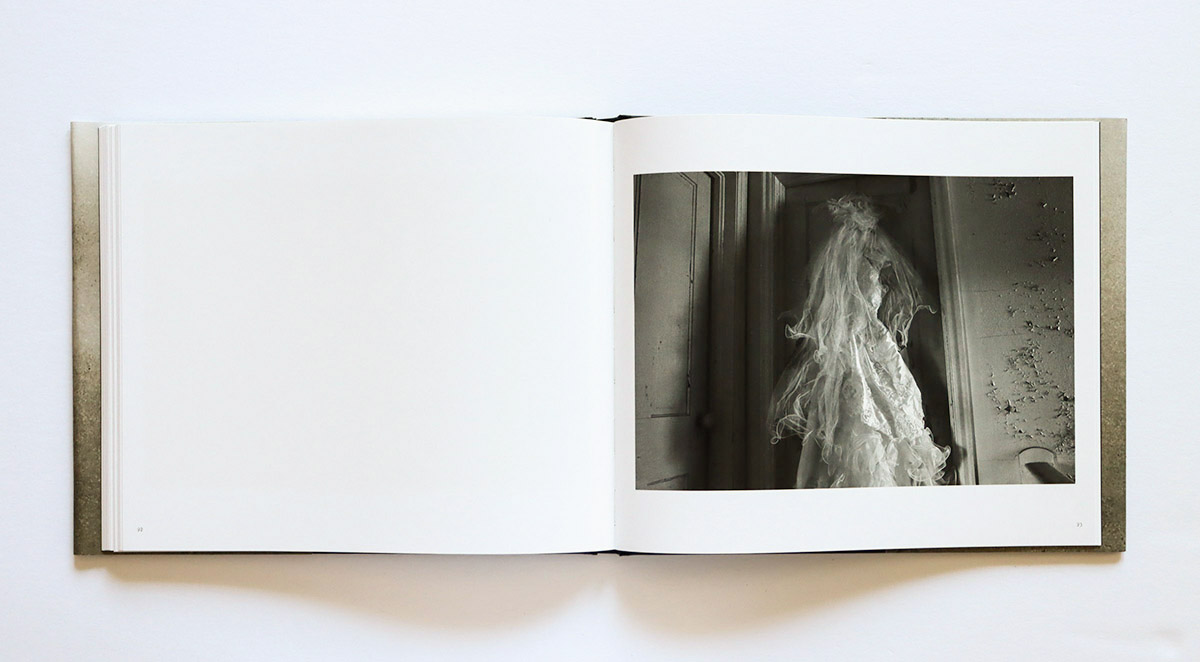
There are very few photographs in the book that connect us to contemporary human society or to closeness with others. We see a lonely roadside MOTEL sign, a mere footnote in the winter darkness. We see a dog, and then a cat, accompany the photographer in his exploration. We glimpse horses outside a house and a pickup parked in front of grain elevators, but mostly we see the wreckage of the past. Desks in an empty schoolhouse. A kitchen stove and some metal barrels in a field of tall prairie grass. The face of a clock, its glass murky, its hands frozen at 4:18. Particularly striking are details such as a torn photograph of a young woman lying in a coffin. A rotting suitcase. A wedding dress, hung on a door like a ghostly spirit. A close-up of a doll’s face, her sightless eyes open and staring but covered with dust. The talons and feathers of a dead hawk in the foreground, a dilapidated barn in the background.
Writer Charles Bowden’s spare, low-key texts weave gracefully through Richards’ photographs. They take us from Native times to Lewis and Clark, to homesteading and the Dust Bowl, to memories of his parents and youth, and to descriptions of the harsh, empty places in the photographs. The stories they tell play off the images and add depth and resonance to the visual narrative.
Eugene Richards is thought of as a photojournalist, but this is not photojournalism. This is not reporting. If you were a photojournalist and went to the northern plains on assignment you would photograph people, cars, gas stations, oil rigs, schools, farms, churches, sports, social gatherings, people working, and children playing and hanging out. Richards is after something else, something deeper and more personal.
New World is an impressive book. A traditional photobook in many ways, but an accomplished one – a masterful marriage of image and text, an ode to the enduring spirit of a people and place, an elegy to life and loss.
Hans Hickerson, Editor of the PhotoBook Journal, is a photographer and photobook artist from Portland, Oregon.
PhotoBook Journal previously reviewed Eugene Richards’ The Blue Room.
____________
Eugene Richards – New World
Photographer: Eugene Richards (born in 1944, lives in New York)
Publisher: Many Voices Press © 2025
Language: English
Texts: Charles Bowden, Eugene Richards
Design: Eugene Richards, Sam Richards
Printing: The Studley Press, Dalton, MA
Hardcover with dust jacket; sewn binding; 11 x 9.25”; 104 pages, 56 black and white photographs; ISBN 978-0-9912189-4-3
__________
Articles and photographs published in the PhotoBook Journal may not be reproduced without the permission of the PhotoBook Journal staff and the photographer(s). All images, texts, and designs are under copyright by the authors and publishers.


Leave a Reply