Review by Max Cavitch ·
American photographer John Gossage’s new book, An Abridged Dictionary of Sculpture, is dedicated “to the memory of my friend Anne Truitt, who taught me to love sculpture.” In her Daybook, Truitt describes a day in January 1980 when Gossage came to her studio to photograph the “forest” of sculptures she’d assembled for her upcoming show at New York’s André Emmerich Gallery. Gossage snapped away, while Truitt “sat in my one studio chair with its blue-and-white Yukata material pillow” (1982, 217).
Gossage and Truitt were close friends, neighbors, and collaborators for many years, and he frequently photographed her work and gallery installations. (They even did a show together in the early 70s.) Gossage’s devotion to black-and-white photography—he didn’t publish any of his own color photographs until 2010—might seem ill-suited to Truitt’s exuberant use of saturated colors. Yet while he also sometimes took color photographs of her work, the stark geometry of Truitt’s aggressively minimalist pieces is in some ways well served by what could be called Gossage’s monochromatic “abridgments” of them.
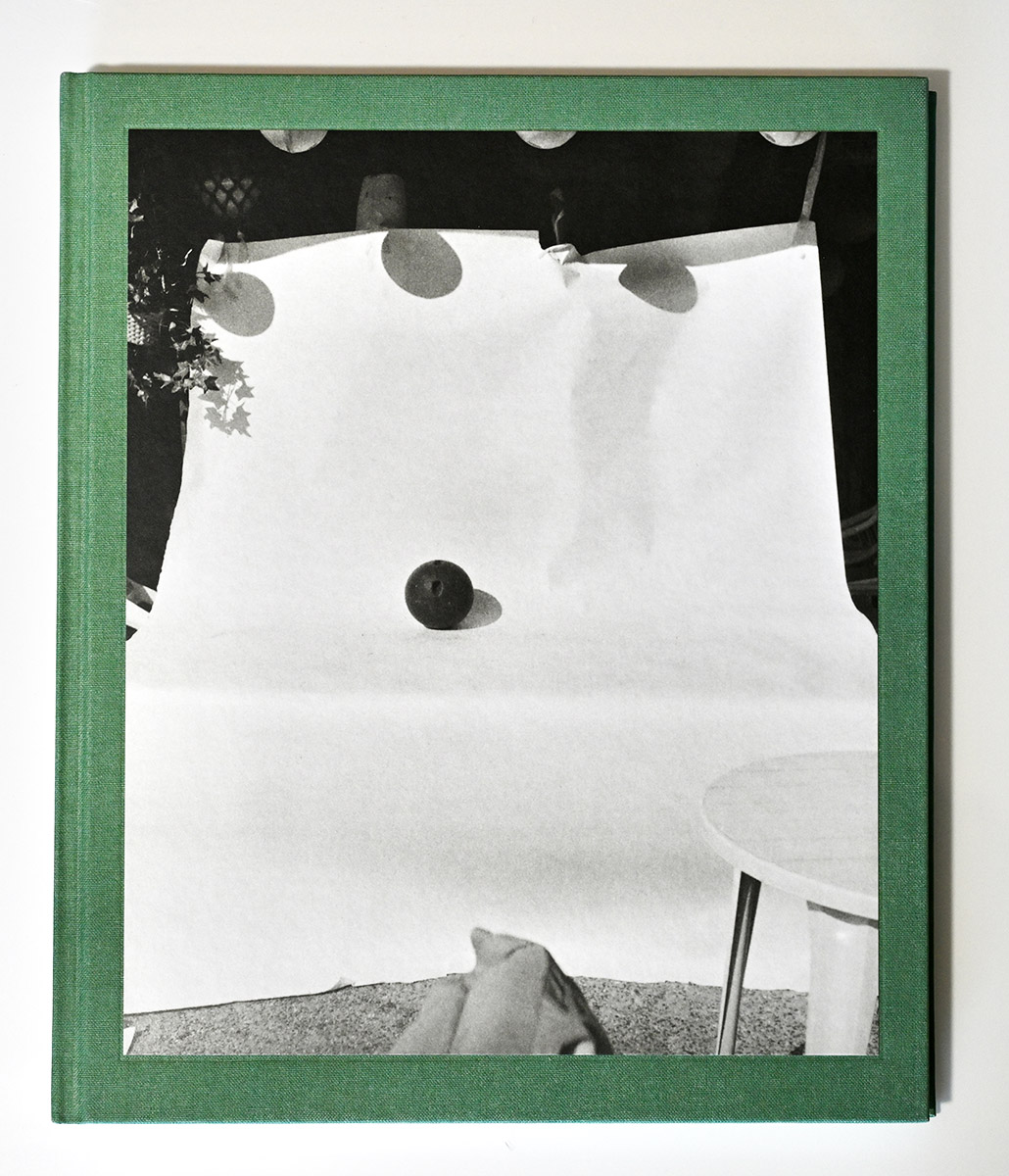
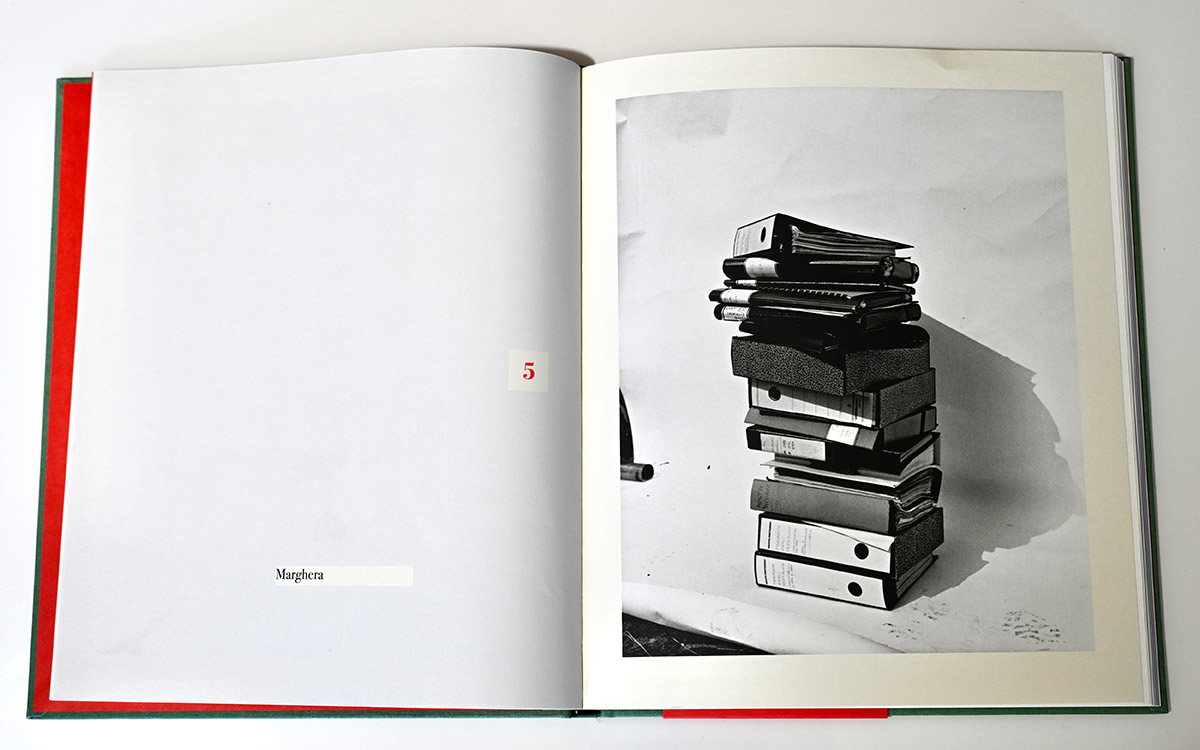
But none of the black-and-white photographs in Gossage’s Abridged Dictionary of Sculpture evoke anything like the rectilinear monumentality of Truitt’s iconic sculptures. Even the squared-off, white paper backdrop, against which the book’s various objects/sculptures are set, is always made to appear conspicuously wrinkled, scuffed, rough-edged, and askew. In one photograph, it even bears legible footprints (presumably Gossage’s or those of someone who helped him stage this shot), and it features a precarious-looking pile of cases and binders that seems more like one of John Latham’s pre-incinerated Skoob towers than like any of Truitt’s perfectly squared-off monoliths (p. 15).
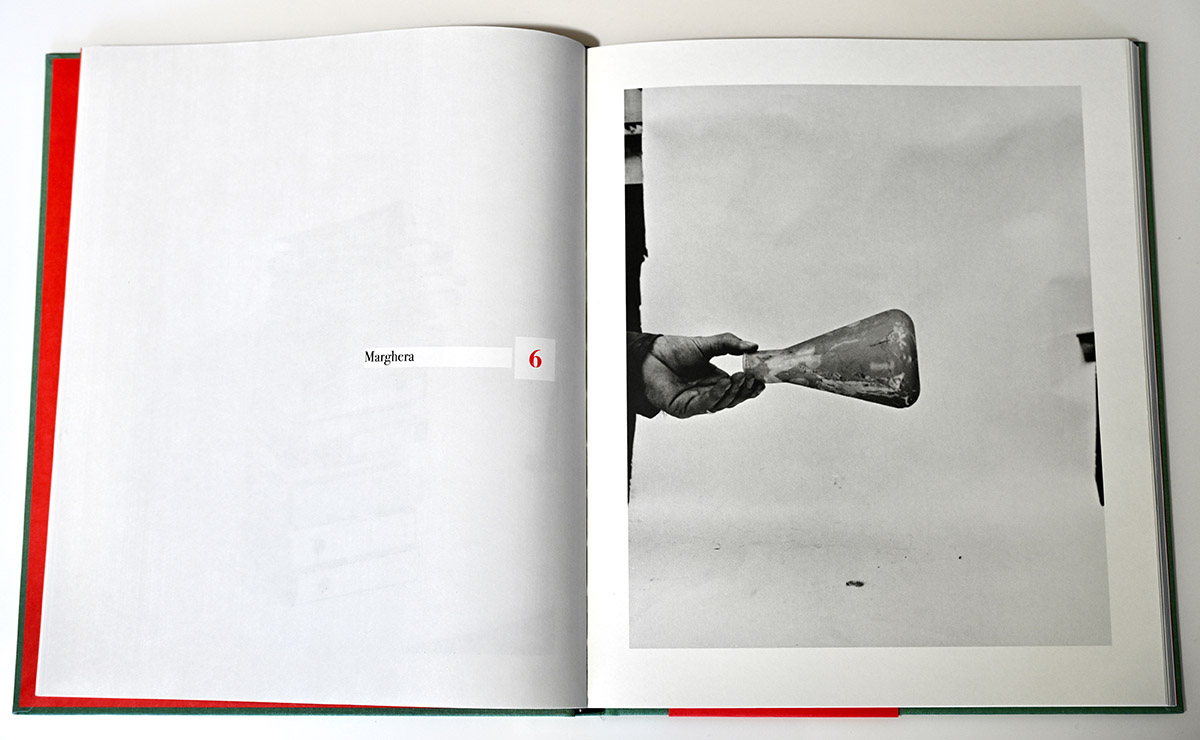
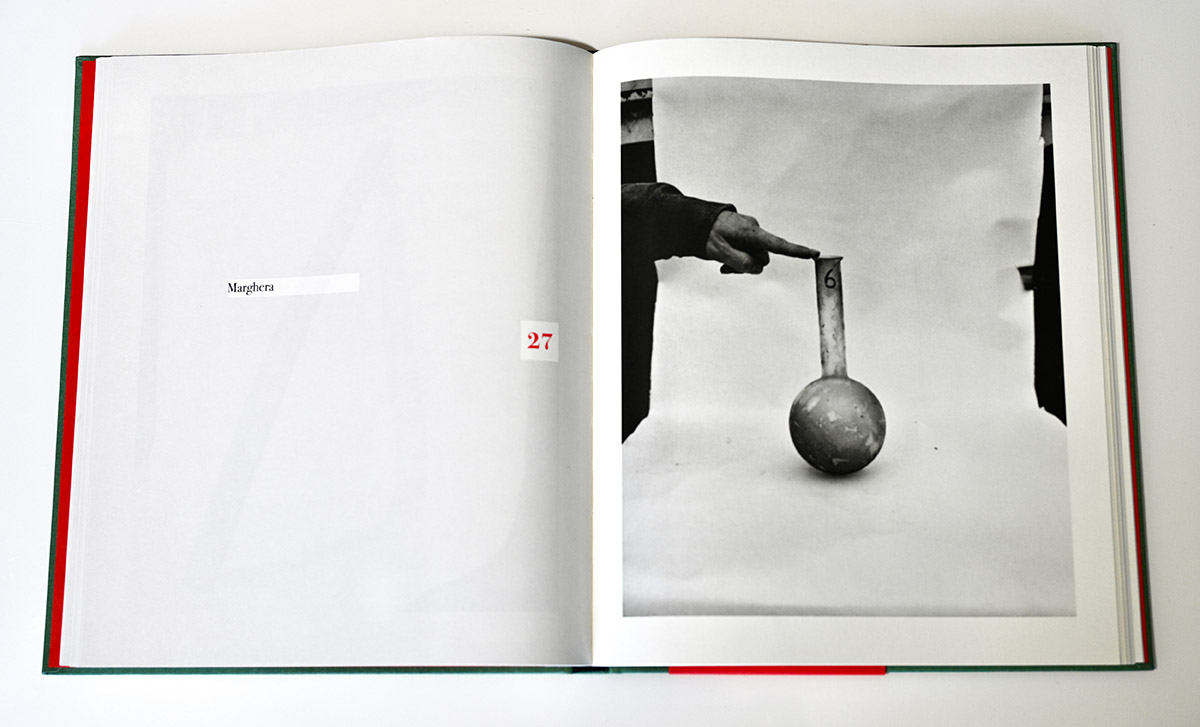
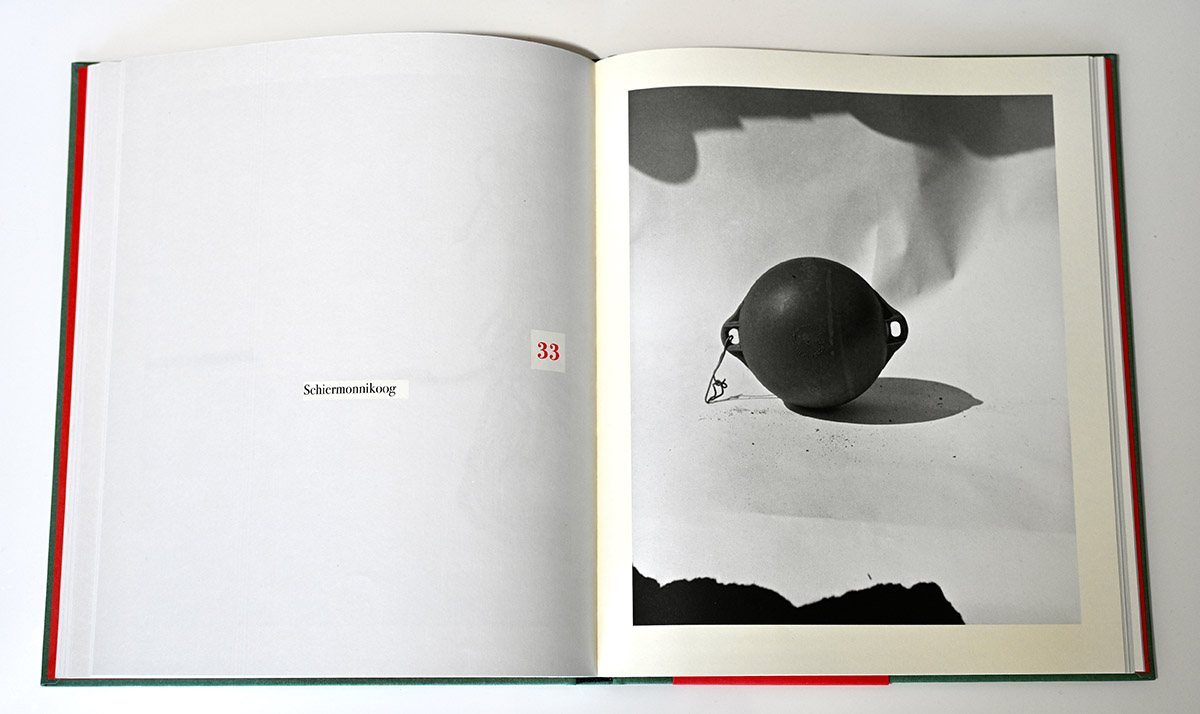
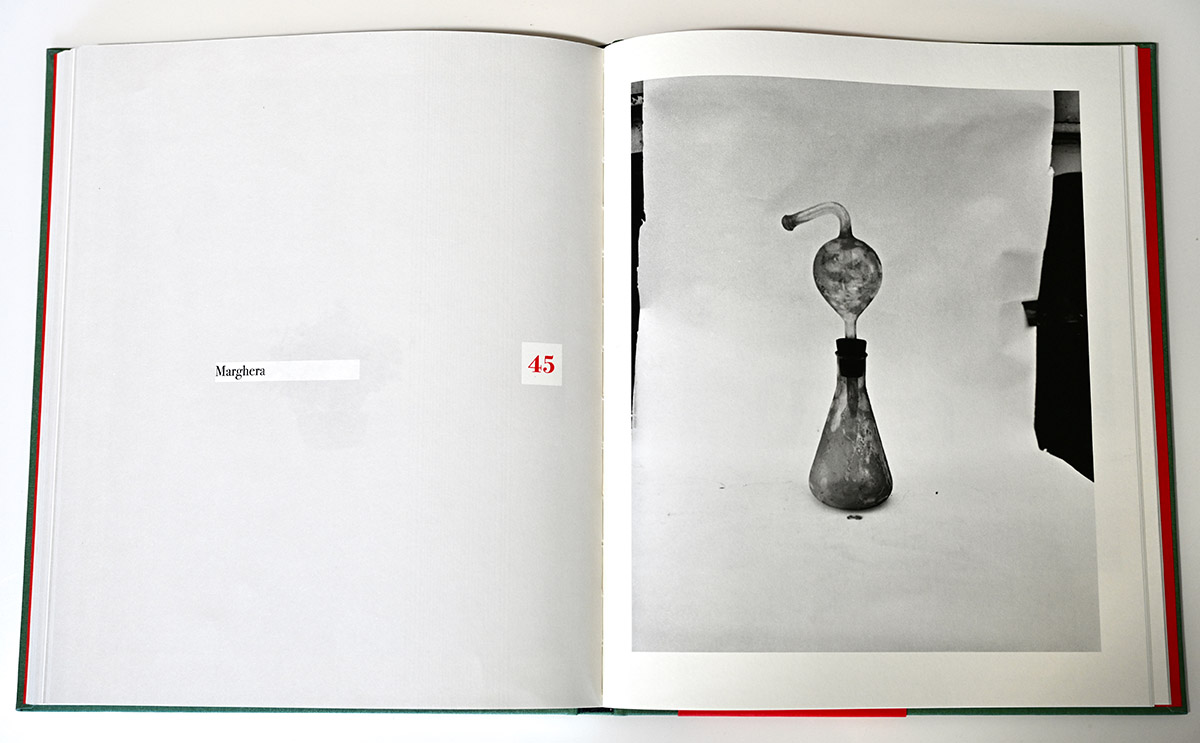
All of the book’s objects/sculptures are abridgements, inasmuch as each one is a cryptic piece of some larger story that transpired before and beyond the camera’s frame. Some objects are readily identifiable: a fishnet float; a hand-held sheaf of long grasses; an old folding ruler; a heap of heavily worn caps; a boiling flask; an Erlenmeyer flask; another Erlenmeyer flask fitted with a pear-shaped splash head. But many objects frustrate recognition: a weathered block of wood; a segment of piping; a long metal rod; the guts of some electronic device; a shallow, empty box; a clump of dirt; tangles of rope and wire.
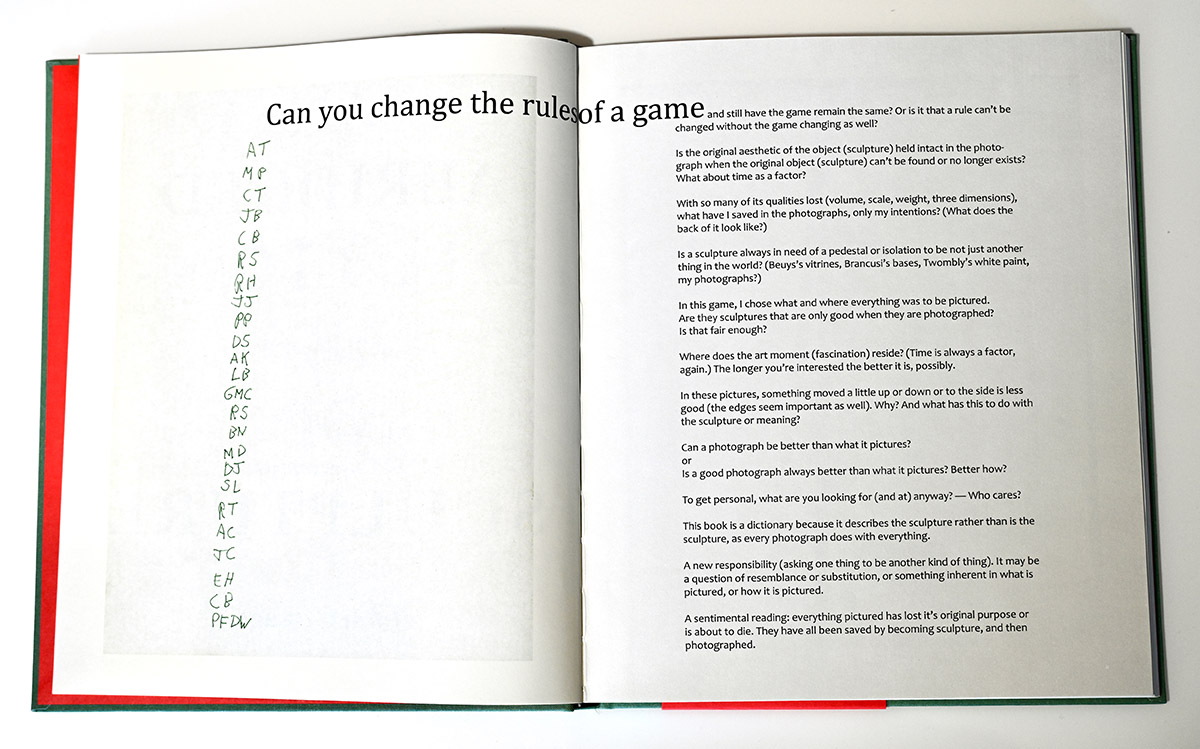
What is the significance of this motley assortment of refuse? In Gossage’s text, he offers what he calls “a sentimental reading” of these objects: “Everything pictured has lost its original purpose or is about to die. They have all been saved by becoming sculpture, and then photographed” (p. 5). Does this mean they’re all objets trouvés or readymades like Marcel Duchamp’s urinal, which “became” sculpture when it was called Fountain and then photographed by Alfred Stieglitz? Gossage is famous for his art-historical erudition, and in An Abridged Dictionary of Sculpture he is, at least in part, winking at various traditions of found art, trash art, appropriation art, anti-art, natural object art, etc., with their repeated provocations of tired and simplistic questions about what counts as “art.”
Gossage himself asks: “Is a sculpture always in need of a pedestal or isolation to be not just another thing in the world? (Beuys’s vitrines, Brancusi’s bases, Twombly’s white paint, my photographs?)” (p. 5). But one could also ask: What sort of object does a photograph need (to be) in order not to be just another snapshot in the world? “In these pictures,” Gossage writes, “something moved a little up or down or to the side is less good (the edges seem important as well)” (p. 5).
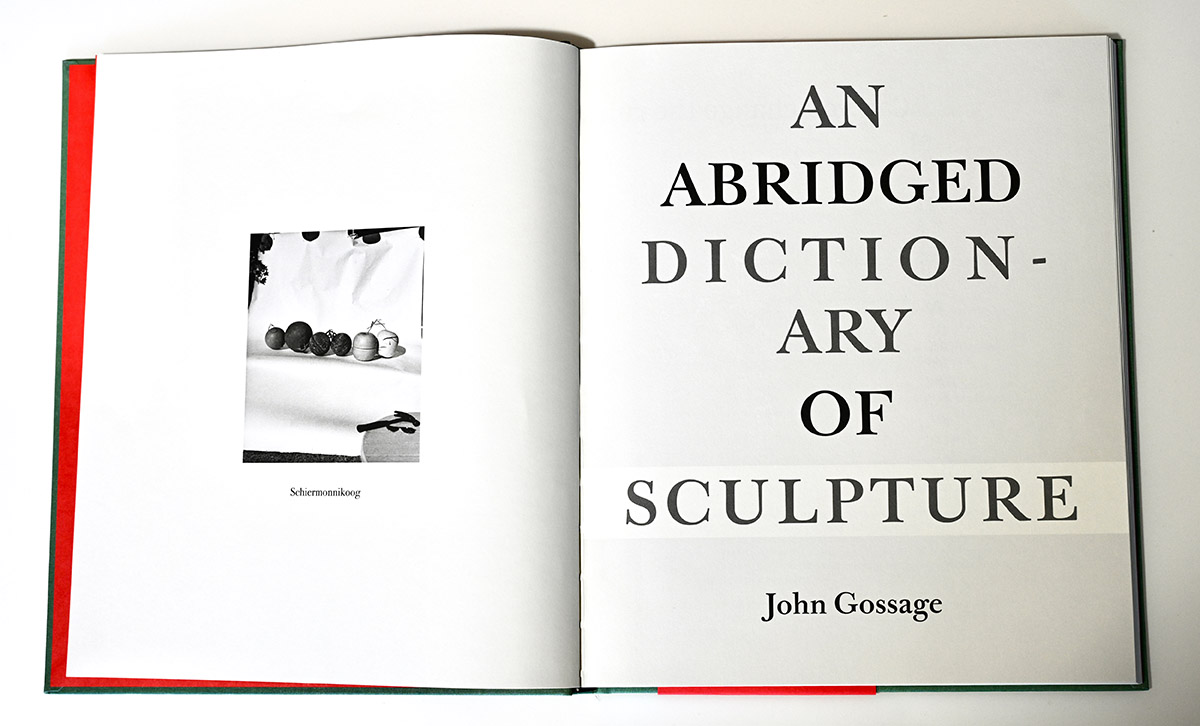
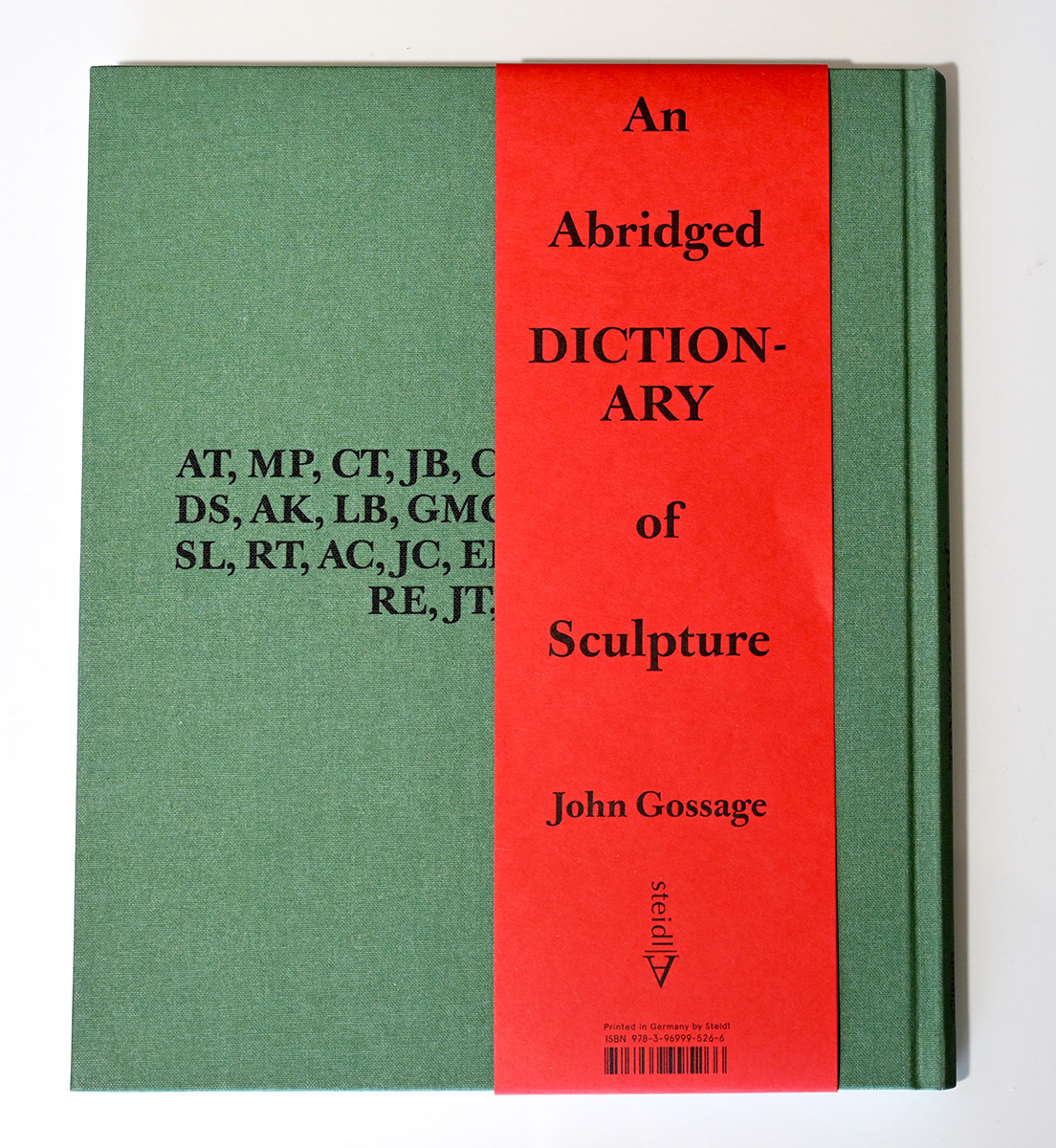
A photograph isn’t like a pedestal, nor do photographs need pedestals. But they are a way of isolating (framing) objects in both time and space. In photography—especially monochromatic photography—proficient composition isn’t everything, but it’s often the most important criterion of aesthetic judgment. A sculpture, however, can be seen and framed in innumerable ways—that is, until it’s photographed. As Gossage says of his Abridged Dictionary, “this book is a dictionary because it describes the sculpture rather than is the sculpture, as every photograph does with everything” (p. 5). Yet a book—any book—is also sculptural, because it can be seen and framed in innumerable ways. (My own photographs of Gossage’s book, below, are meant to show its three-dimensionality and to capture something of the reader’s encounter with the heft, volume, texture, and scale of the codex form. To paraphrase Emerson, one must be a sculptor to read well.)
Gossage uses photography to help us find (his) sculptures in the objects he has “saved,” just as Duchamp “saved” a porcelain urinal for the history of the avant-garde. In doing so, Gossage isn’t just winking at the history of art. He’s also gesturing more directly at the history of his own work, which makes his Abridged Dictionary a heavily abridged atlas as well. That is, each of the book’s photographs is linked with one of three place-names, which are listed and identified on the book’s penultimate page. Two are in northern Italy—Rubiera Reggio Emilia (a small town northwest of Bologna) and Marghera (the industrial borough of Venice)—and the third is Schiermonnikoog, a small Dutch island in the Wadden Sea. Gossage’s brief descriptions of these locales sound like they were lifted directly from Wikipedia, as if there were no more personal connection or association either to the objects with which they’re linked or to Gossage himself.
But anyone familiar with Gossage’s oeuvre will recognize Marghera as the subject of his 2002 book, The Romance Industry: Venezia / Marghera, 1998. They’ll also recognize Rubiera Reggio Emilia from his 2004 book, 13 Ways to Miss a Train. And they’ll recognize Schiermonnikoog from the 2005 Island exhibition and catalogue, which features work by Gossage and six other photographers. In other words, Gossage’s Abridged Dictionary is also an abridged retrospective, or reprise, of a distinctly peripatetic phase in the career of a distinctively American photographer—one often linked closely with Walker Evans, for example.
Many of Gossage’s books—including The Pond (1985), Stadt des Schwarz (1987), Empire (2000), and The Thirty Two Inch Ruler / Map of Babylon (2010)—foreground geography and a sense of place. But despite this book’s emphasis on a trio of place-names, the photographs in Abridged Dictionary could have been shot anywhere. Each is characterized by the illocality of the photographer’s studio, with its artificial lighting, generic paper backdrop, and inscrutable fragments of what lies beyond: a window sash, the corner of a bench or table, a male or female hand holding or propping up an object/sculpture. Against this illocality, the itinerancy of objects stands out, as they move from place to place and from book to book—or as they are moved from place to place and from book to book by the itinerant photographer himself, even as movement itself is abridged in each photograph’s immobilized instant.
Max Cavitch is a writer and photographer in Philadelphia
__________
John Gossage – An Abridged Dictionary of Sculpture
Photographer: John Gossage
Publisher: Steidl and The Agency © 2026
Language: English
Text: John Gossage
Design: John Gossage
Printing: Steidl
Clothbound hardcover with a tipped-in photograph and belly-band; 58 photographs; 120 pages; 21.6 x 26 cm; ISBN: 9783969995266
__________
Articles and photographs published in the PhotoBook Journal may not be reproduced without the permission of the PhotoBook Journal staff and the photographer(s). All images, texts, and designs are copyright of the authors and publishers.


Leave a Reply