Review by Gerhard Clausing •
As you start viewing João Linneu’s JJ VFF VV, you quickly get the idea that joy and pain go hand in hand and that a good portion of stamina pays off. The parents waited ten years to get the OK and participation of their son Valentín for this impressive journey of his early emergence, a long process shared by all three. Printed on heavy paper stock, the book features a thickness of almost two inches (4.5 centimeters, to be exact), consonant with the weight of the subject. The title represents the initials of all three of the participants in this engrossing family saga.
Joy and pain are often presented as opposites, as if one must leave the room before the other can enter. This photobook offers a more honest arrangement as the project traces the complicated pregnancy of Linneu’s partner, Fernanda Fajardo, and the premature birth of their first child, Valentín, in 2014. This is not a polished story in which fear disappears once the baby arrives. Happiness carries the memory of blood, waiting, and helplessness, while pain does not cancel tenderness. Both feelings occupy the same image, bed, and gesture.
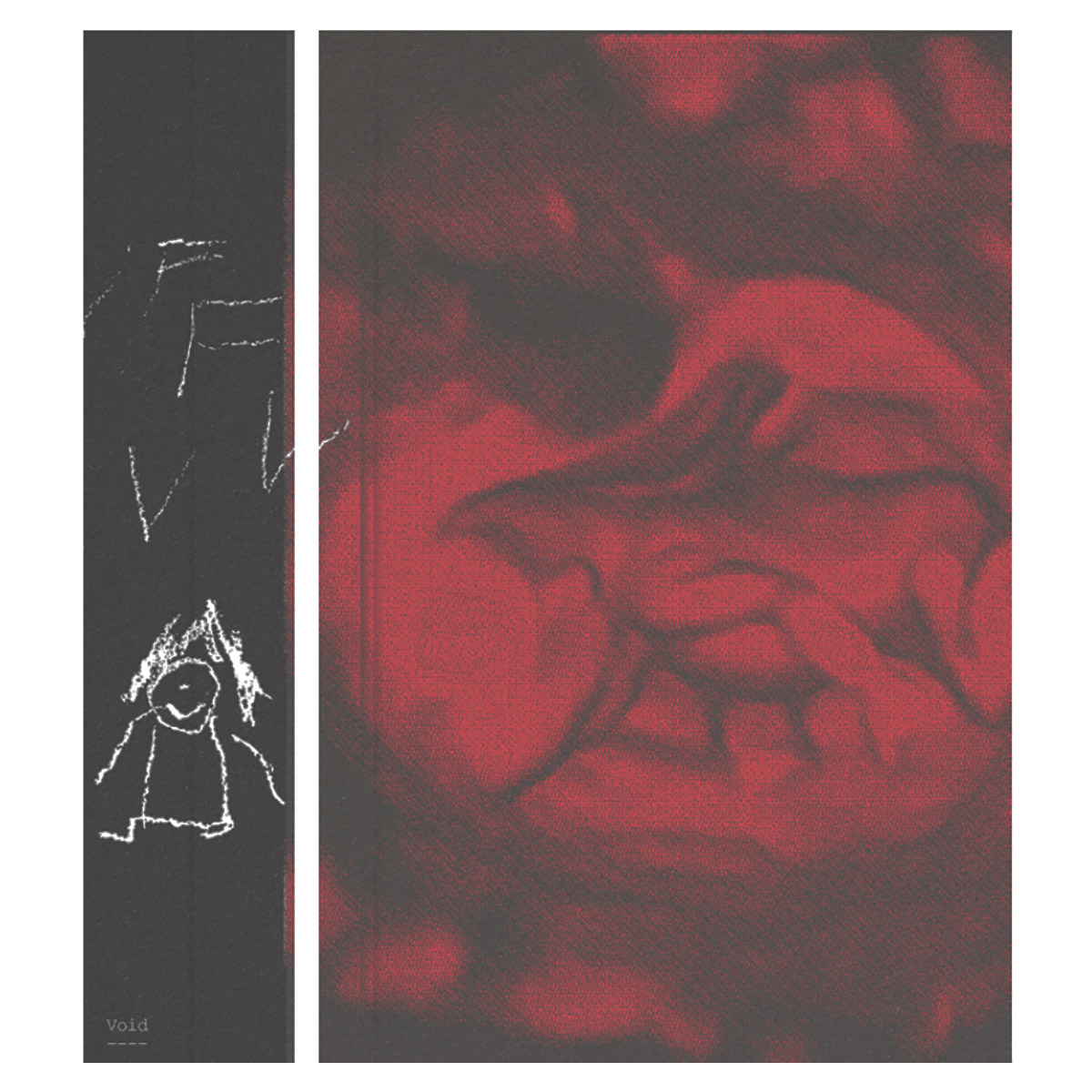
The cover prepares us for this balance. A red, screen-printed image suggests intertwined bodies, but its coarse dots make the scene seem unstable, and the color suggests blood and pain. On the spine there is a simple figure, a kind of self-portrait, drawn by Valentín, now eleven. These rough, almost chalk-like lines answer the coarse printed dots, joining two kinds of marks. The child who survived the events inside thus contributes to the book that records his uncertain arrival. His joyful drawing does not erase what came before; instead, past and present touch each other in this location. The cover becomes a family collaboration and a reminder that every beginning is understood differently after we see what happens subsequently.
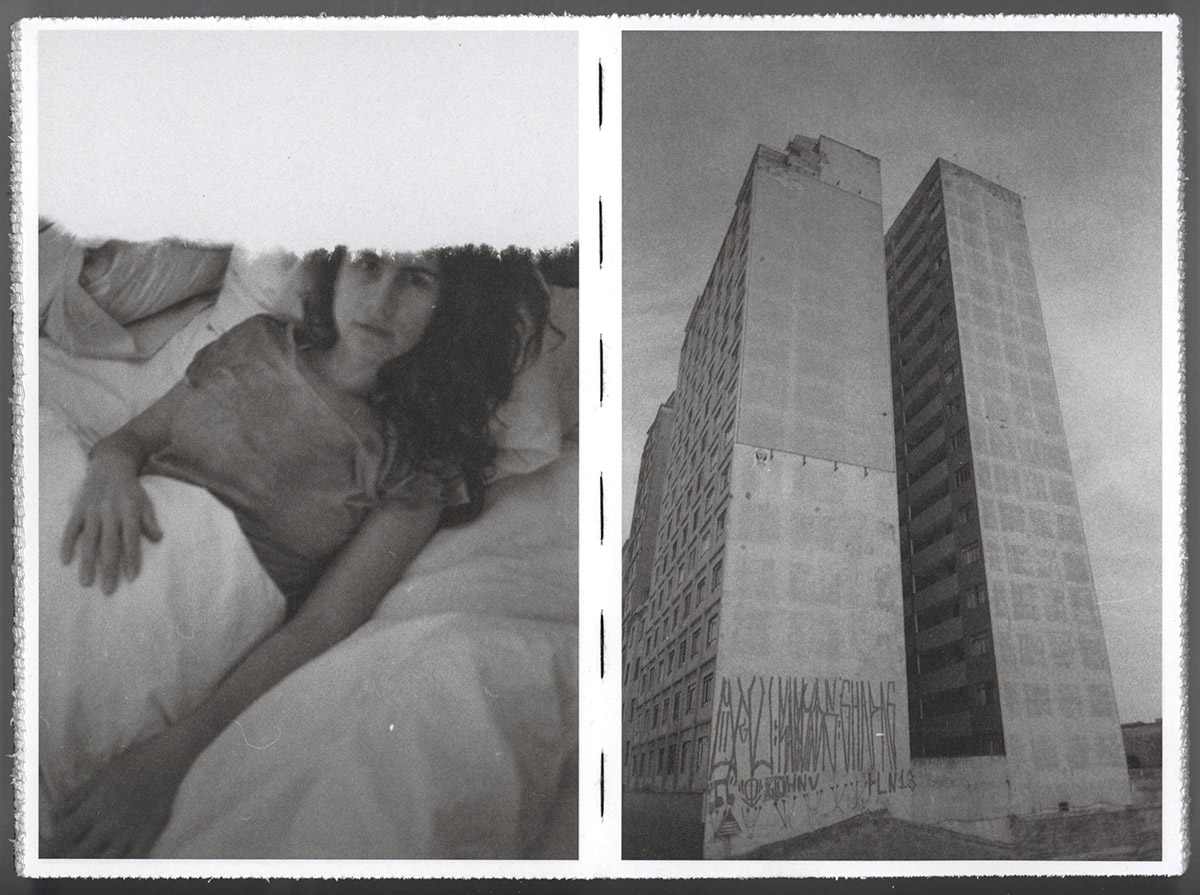
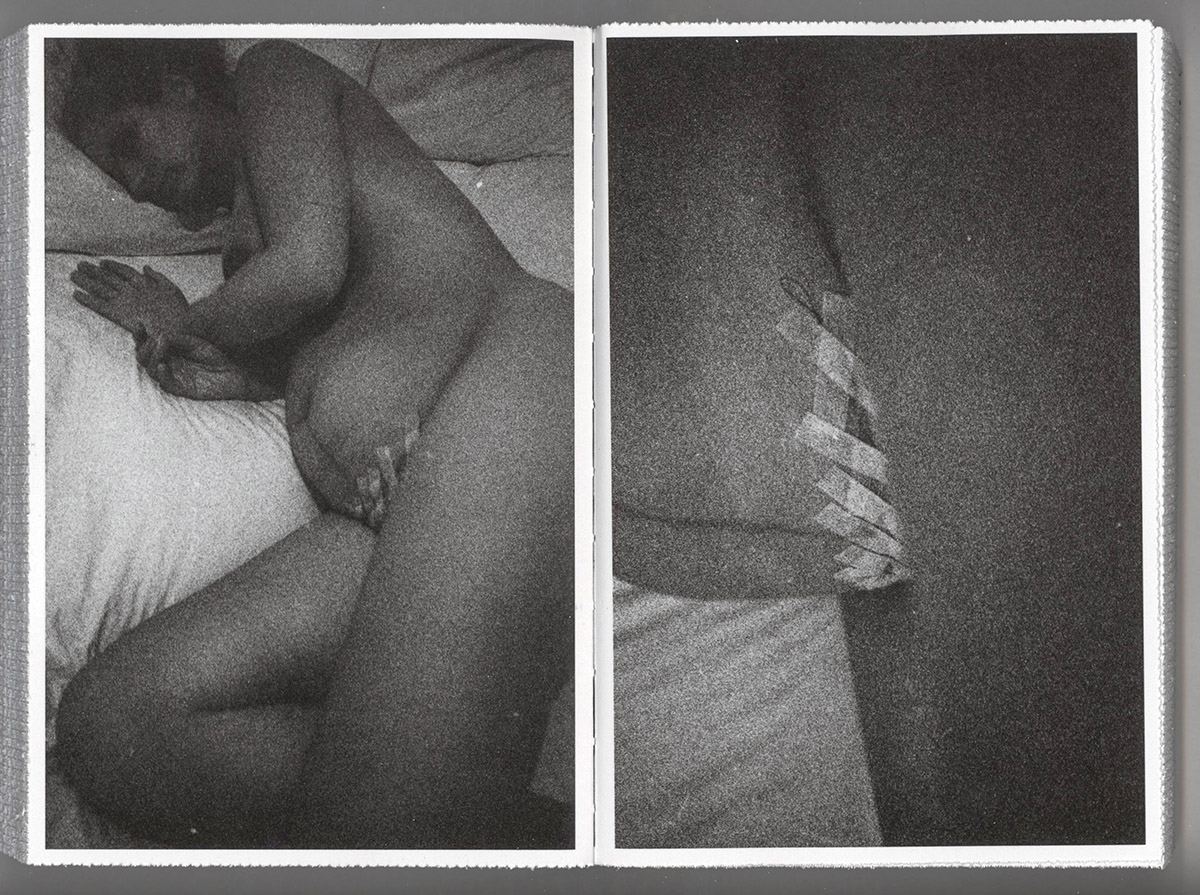
Linneu avoids the familiar language of idealized pregnancy photographs. Fajardo is not posed as a glowing symbol of motherhood. She is tired, exposed, and often confined to bed. In one spread, she lies diagonally across rumpled sheets, soft and heavy with waiting. Opposite her stand two severe concrete towers photographed from below. The pairing is formal and emotional: curved body against hard rectangle, horizontal rest against vertical force, intimacy against the impersonal city of São Paulo. The buildings, themselves marked, give physical form to the stillness, uncertainty, and imperfection imposed on the family.
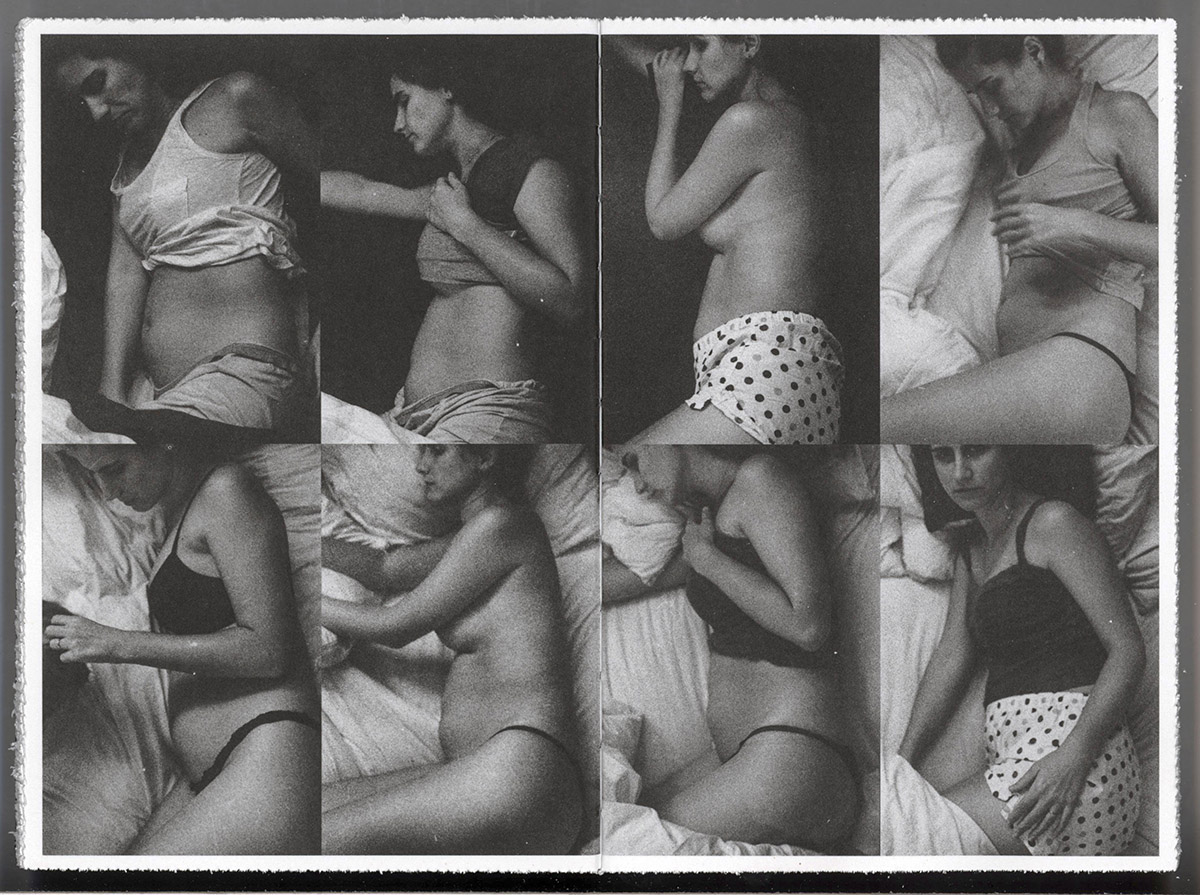
A grid of eight photographs studies Fajardo’s changing body and position on the bed. The sequence resembles a contact sheet made during one day, yet the repeated gestures acquire weight. A hand touches the stomach; a shirt is lifted; knees draw inward; the face turns away. Her ordinary clothing, including polka-dotted shorts, keeps the sequence from becoming a medical typology. The body changes while time barely moves. Linneu makes us feel the rhythm of a difficult pregnancy, when physical change continues as ordinary life remains suspended. The grid also denies us one defining portrait. Fajardo is not reduced to suffering or expectation. She is restless, thoughtful, uncomfortable, and present.
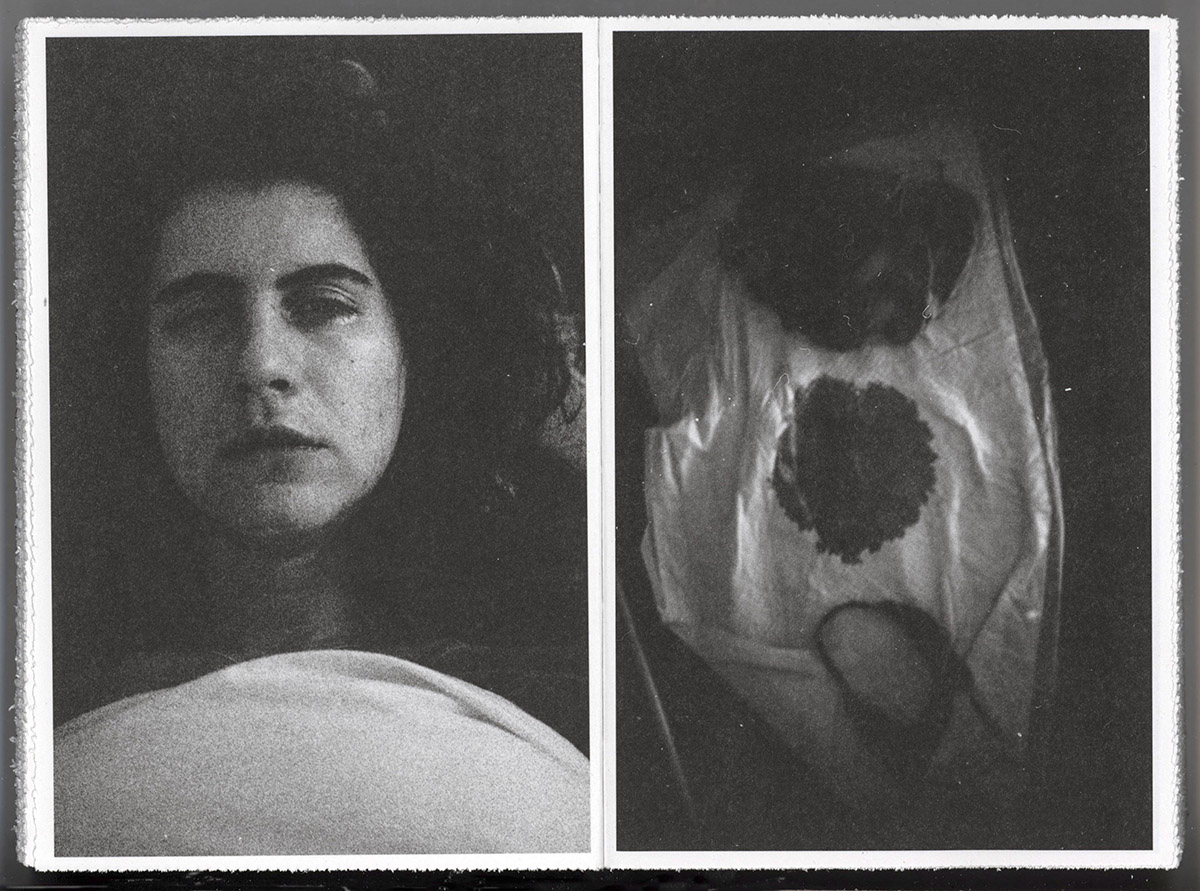
The book often places direct photographs beside uncertain images. A close view of Fajardo’s face, emerging from darkness above her abdomen, faces what appears to be an obscured medical scan. Its black center may suggest evidence, mystery, or threat. Medical imaging promises knowledge, but often does not present complete reassurance. Pregnancy remains visible and hidden. A body may be watched and measured while the people involved still cannot know what will happen. Linneu’s grainy photographs accept that uncertainty rather than pretending the camera can solve it.
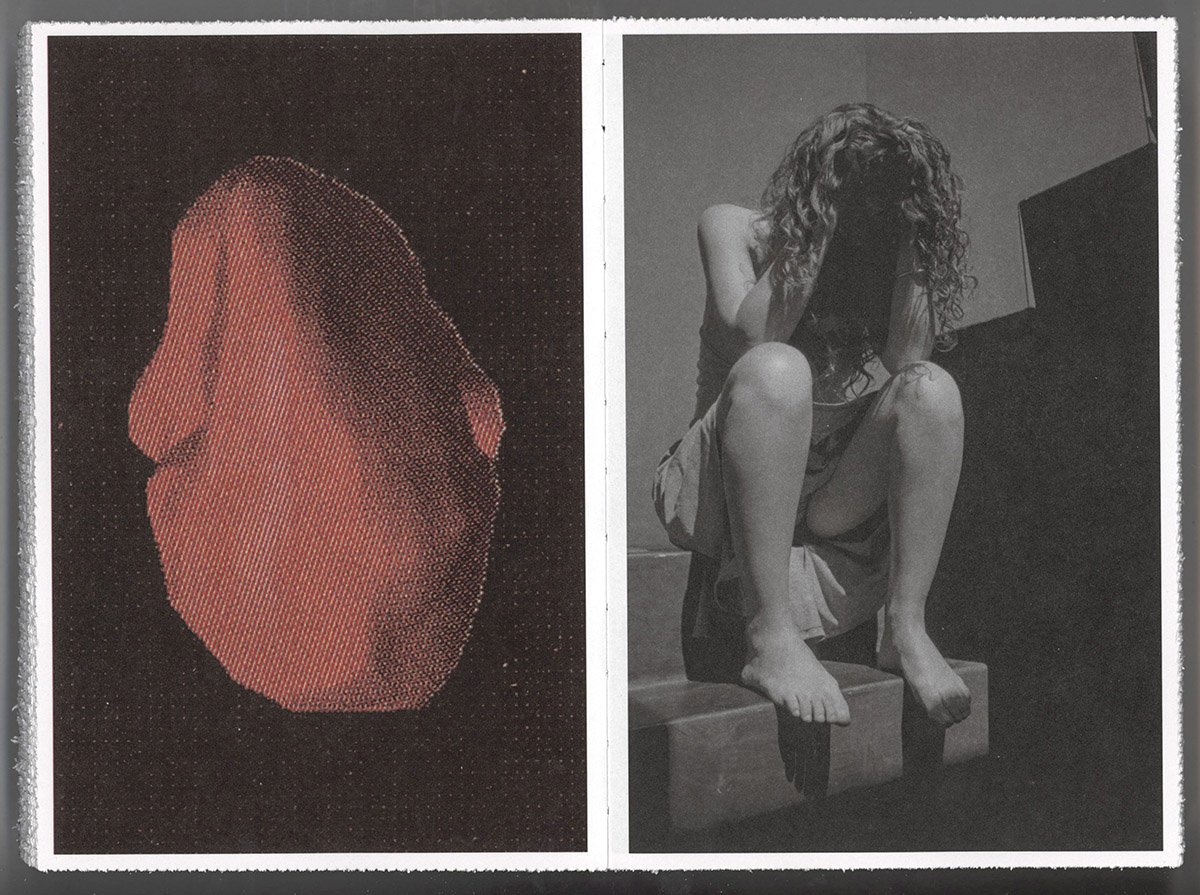
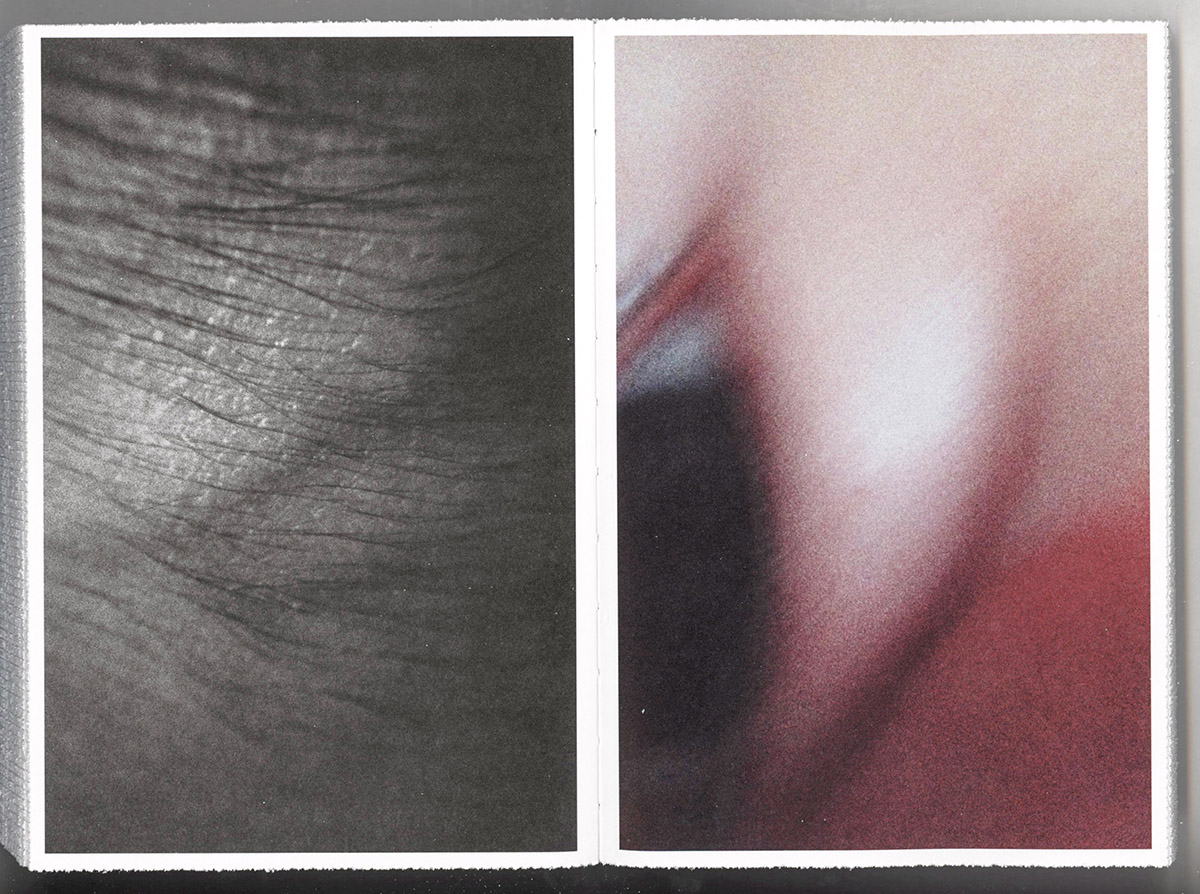
Red enters the black-and-white sequence like an alarm. A rounded halftone form seems detached from ordinary space; across from it, Fajardo sits on steps with knees raised and her face in her hands. The pictures do not explain one another, but they share compression and inwardness. Neither can be separated cleanly into body or symbol. One is nearly abstract, the other painfully specific. Red suggests blood, danger, warmth, and life, all at once. The same color holds injury and vitality, just as the coming child brings fear and joy together.
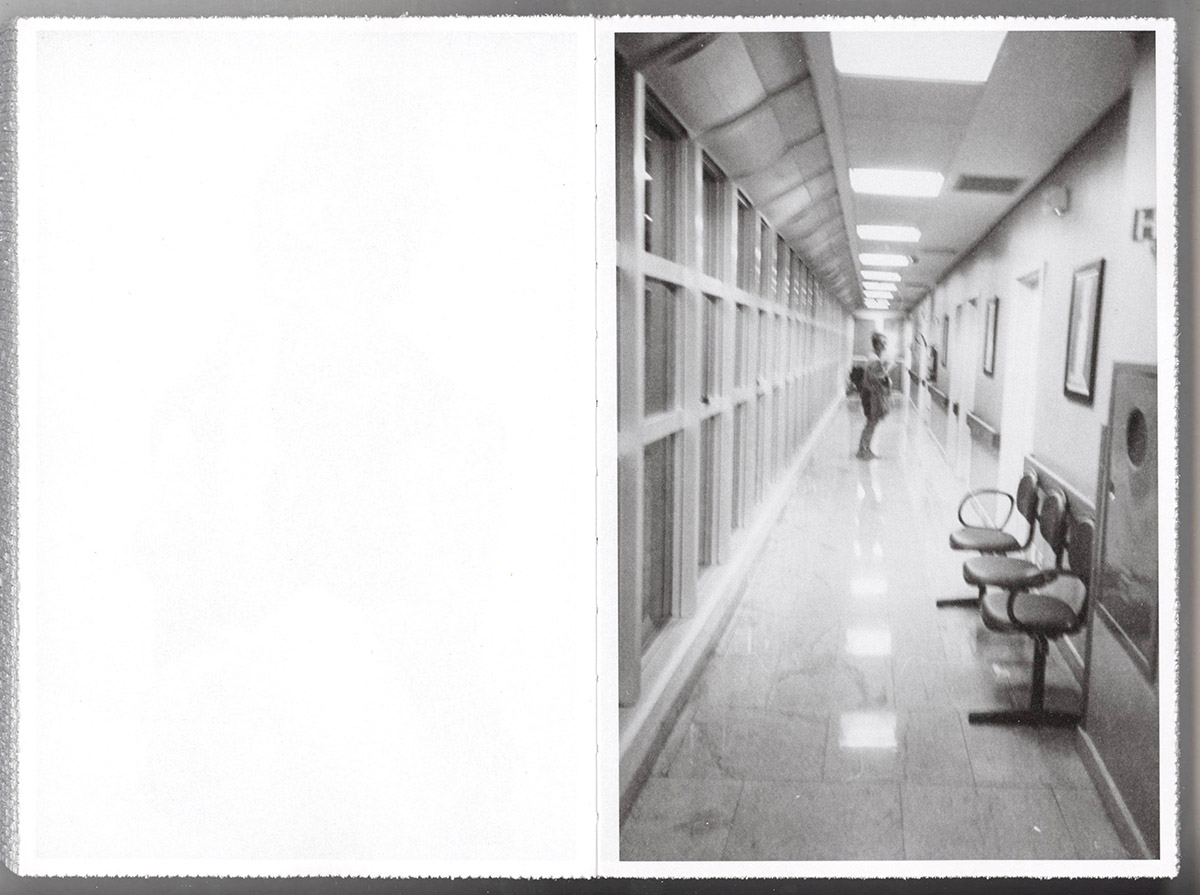
Several strong spreads depend on absence. A blank page faces a long hospital corridor whose lights and doors pull the eye toward a distant figure. The emptiness resembles a pause in speech, or a place where an image might have been. Photography was prohibited in the pediatric intensive care unit, so part of the experience must be represented indirectly. The blankness acknowledges that limit without filling it with invention. It also conveys the hospital’s isolating scale, where a private emergency is absorbed into corridors, doors, chairs, and waiting.
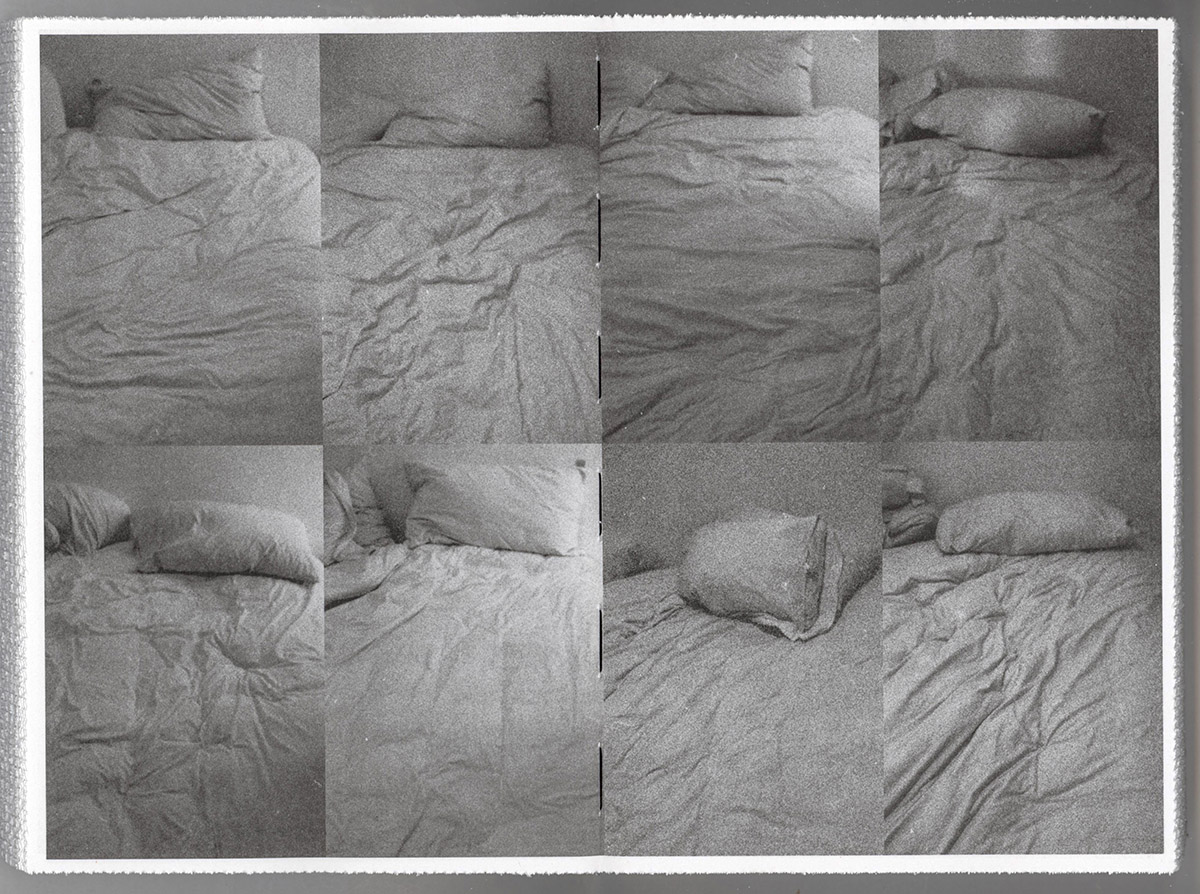
An eight-part study of the empty bed further develops this absence. Sheets wrinkle, pillows shift, and light changes, but the person who occupied the space is gone. The repeated cropping turns pillows into stand-ins for the missing figure. The bed becomes a quiet clock. Because portraits made there recur chronologically, its vacancy signals the mother’s hospitalization more powerfully than a caption might. The fabric appears topographical, marked by pressure and departure. Yet the bed is not simply an image of despair. It holds the possibility of return, and its emptiness hurts because the space has become intimate to us.
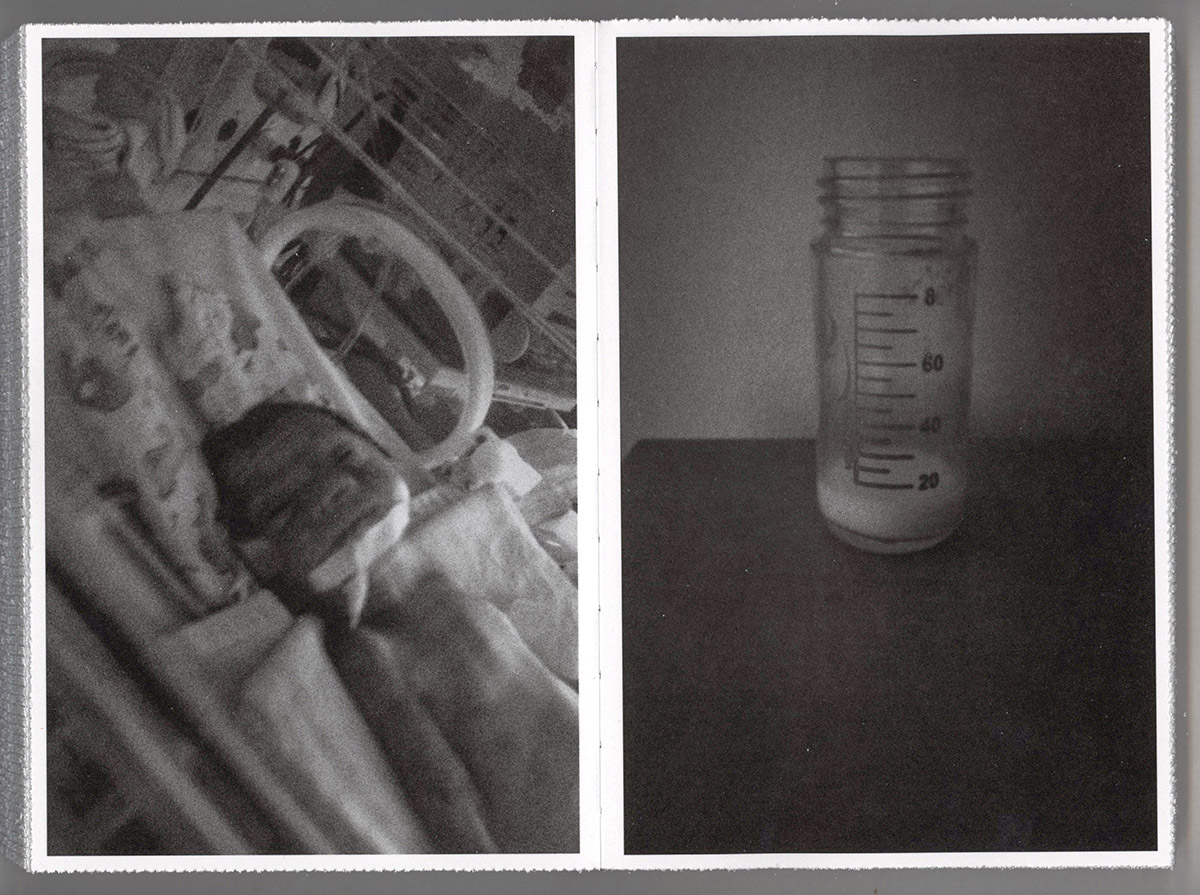
When Valentín appears, Linneu refuses the easy release of a conventional happy ending. The premature infant lies among hospital equipment, astonishingly small. Facing him is a container with a small amount of breast milk, and showing demanding units of measurement. The pairing brings technology and care together. Under these conditions, every small amount becomes labor, nourishment, and hope. Numbers that might seem cold become signs of devotion. This is joy reduced to a fragile quantity, yet no less real for being measured. Survival appears as a series of modest acts rather than one dramatic victory.
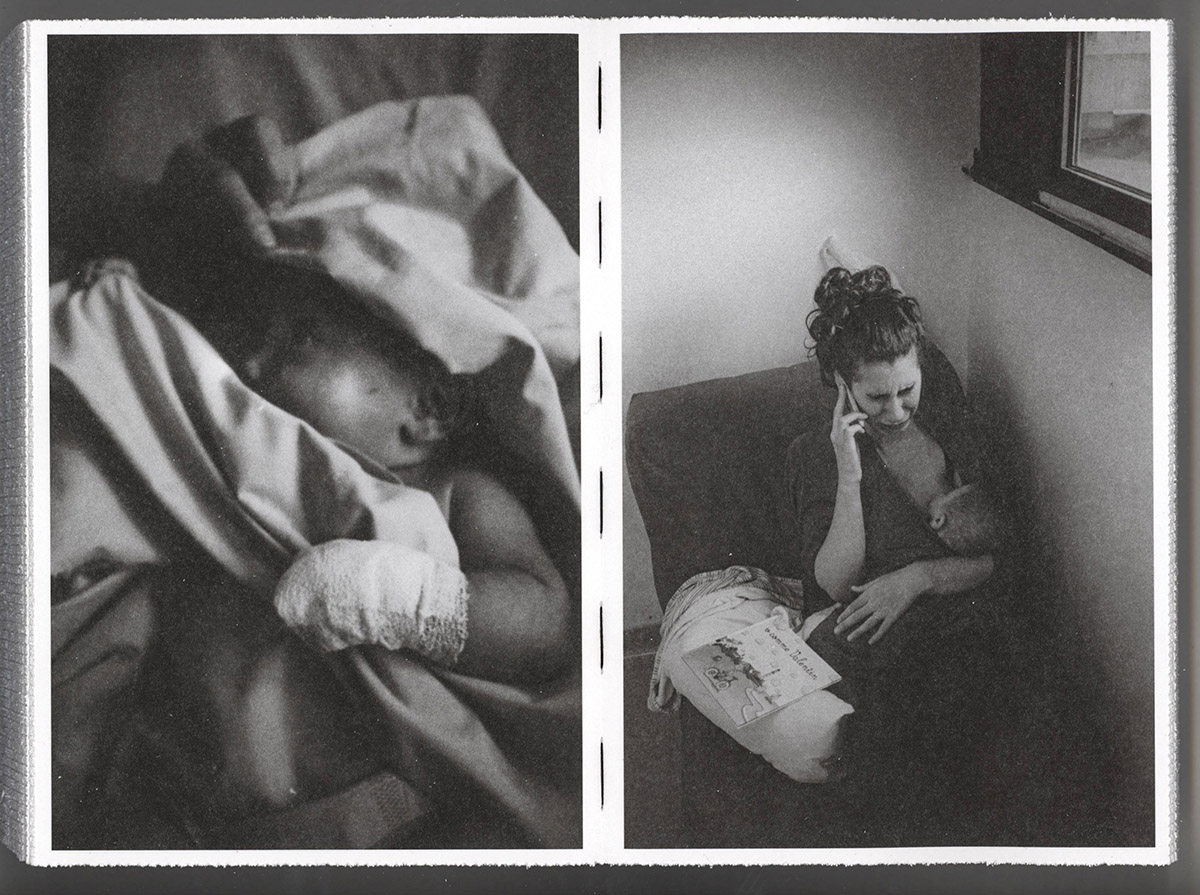
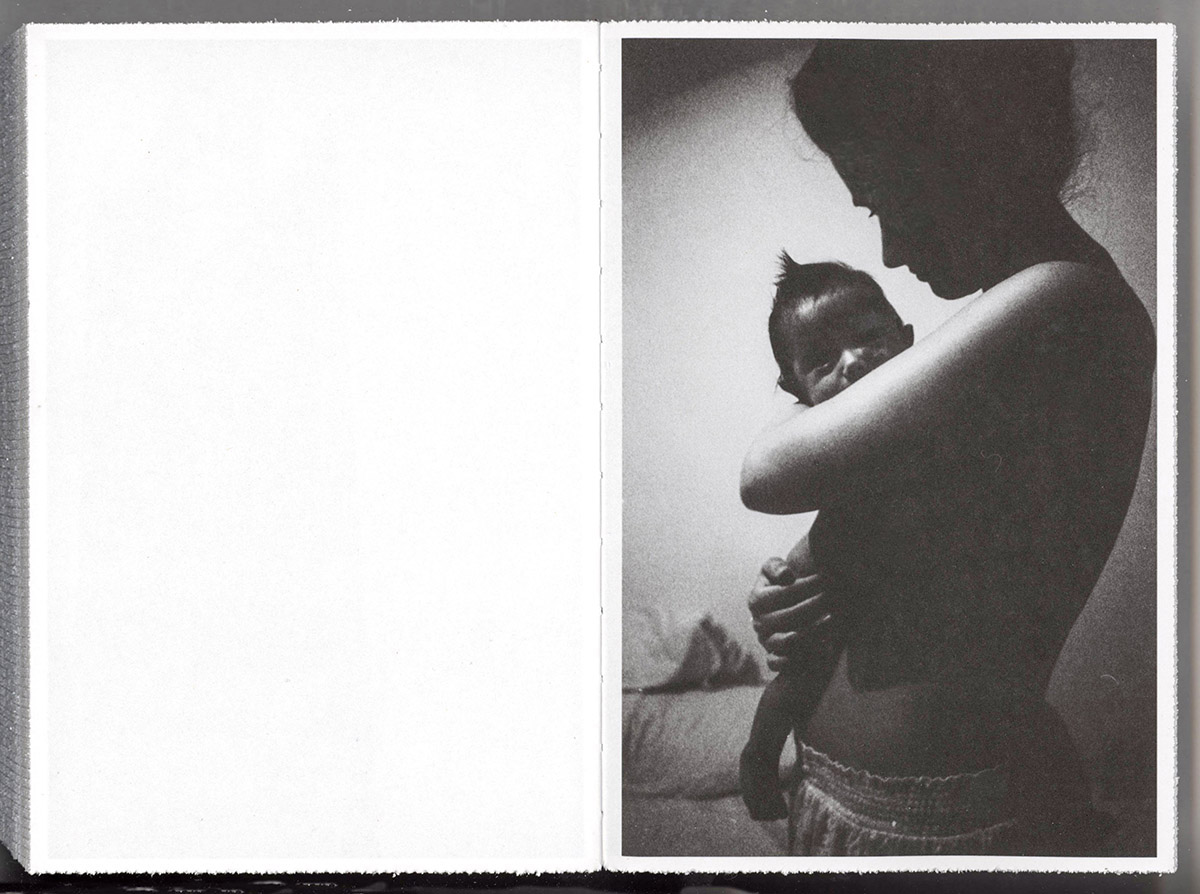
Later photographs make tenderness visible but never simple. Fajardo holds and feeds her infant while speaking on the telephone, her face tightened by emotion. A children’s book across her lap promises a future beyond the hospital. Elsewhere, the baby’s protected hand rests among folds of cloth. The child is not displayed as a prize at the end of an ordeal; care remains as work. Finally, Fajardo holds Valentín close to her chest. The left page is blank, giving them room while preserving the memory of earlier gaps. Their embrace is secure, but the picture remains dark and grainy. Relief still carries its shadow.
This project is also a shared act of seeing. Linneu photographs as what he calls a powerless close witness, while Fajardo contributes self-portraits and occasional portraits of him. She is not only watched as her body passes through danger; she looks back and helps shape the record. As noted, Valentín’s later drawing extends the collaboration across time. The result is less one author’s private diary than a collective portrait of a family coming into being under pressure.
Published by Void this year, the book contains 416 pages, a formidable record, with a silkscreened Otabind softcover. The broad-opening binding serves pairings that converse across the gutter. Rough borders, grain, grids, blank pages, and interruptions of red and bluish toned moments give the object the feeling of an archive that demonstrates unpredictability. Risographic reproduction of many of the images adds to the overall feeling of immediacy and uncertainty. The design, which even includes Valentín’s weight chart, does not make distress comforting. It lets us discover beauty in attention, persistence, and the willingness to show what family photographs usually omit.
Linneu’s first monograph counters the conventional smooth public story of childbirth. It never claims that suffering makes joy more valuable, or that a healthy child justifies every fear. Its wisdom is quieter: our lives remain imperfect even at their happiest, and love grows inside conditions we would not choose. JJ VFF VV lets pain and joy remain side by side, neither defeated nor isolated. It is an unusually tender photobook about a family emerging and about photography’s ability to hold what cannot be neatly resolved.
____________
Gerhard (Gerry) Clausing, PBJ Editorial Consultant and Editor Emeritus, is an author, visual artist, and educator from Southern California who explores perception, transformation, and memory.
____________
João Linneu – JJ VFF VV
Photographers: João Linneu (born in Brazil, lives in Reykjavik, Iceland) and Fernanda Fajardo
Illustration: Valentín Fajardo Prado
Language: English
Publisher: Void, Athens, Greece; © 2026
Design: João Linneu
Silkscreen Otabind softcover; 416 pages; 6.4 x 9.25 inches (16.3 x 23.6 cm); printed in Latvia by Jelgavas tipogrāfija; ISBN 978-618-5479-49-7
____________
Articles and photographs published in the PhotoBook Journal may not be reproduced without the permission of the PhotoBook Journal staff and the photographer(s). All images, texts, and designs are under copyright by the authors and publishers.


Leave a comment