Review by Hans Hickerson ·
Bear with me as I begin with a digression.
Have you lain awake at night pondering the mysteries of Roland Barthes’ “punctum?” I haven’t, and I usually find analytics unhelpful to my practice of photography. But I thought about the term again recently and wondered what AI would do with it. Microsoft’s Copilot puts it this way: “The punctum is the specific detail in an image that provokes a deep, personal, and often emotional reaction in the viewer.”
I was thinking about it with respect to how many images are being produced by all the many hundreds of thousands, perhaps millions, of photographers – fine art or otherwise – who are busy making pictures every day. Who is going to appreciate, cherish, and love all those photographs? Most of them will not connect to many people. They will live their lives as homeless visual orphans looking for someone to punct.
What does this have to do with Nan Goldin? Well, the massive success of her book The Ballad of Sexual Dependency begs the question why it is so popular. If you think about the work in terms of Barthes’ punctum, you realize that it has puncted a lot of people, that there is something there that “provokes a deep, personal, and often emotional reaction in the viewer.”
It is not about technique. It is not anything formal or theoretical. Goldin does not use a special lens or shooting style. Her subject is not exotic. She is not documenting an indigenous community in the highlands of Honduras. Instead she points her camera at her friends – her family in a way – and at herself. She tells her story, she shows us her life in photos. The people in her pictures are from her own artsy, druggy, demimonde circle. Her images speak to us because they are raw and they do not pull their punches. They are searing and memorable. We are given the full picture – the ups and downs, the happiness and heartache, the splendor and misery – of her life, and we identify with her as we share her joy and her pain.
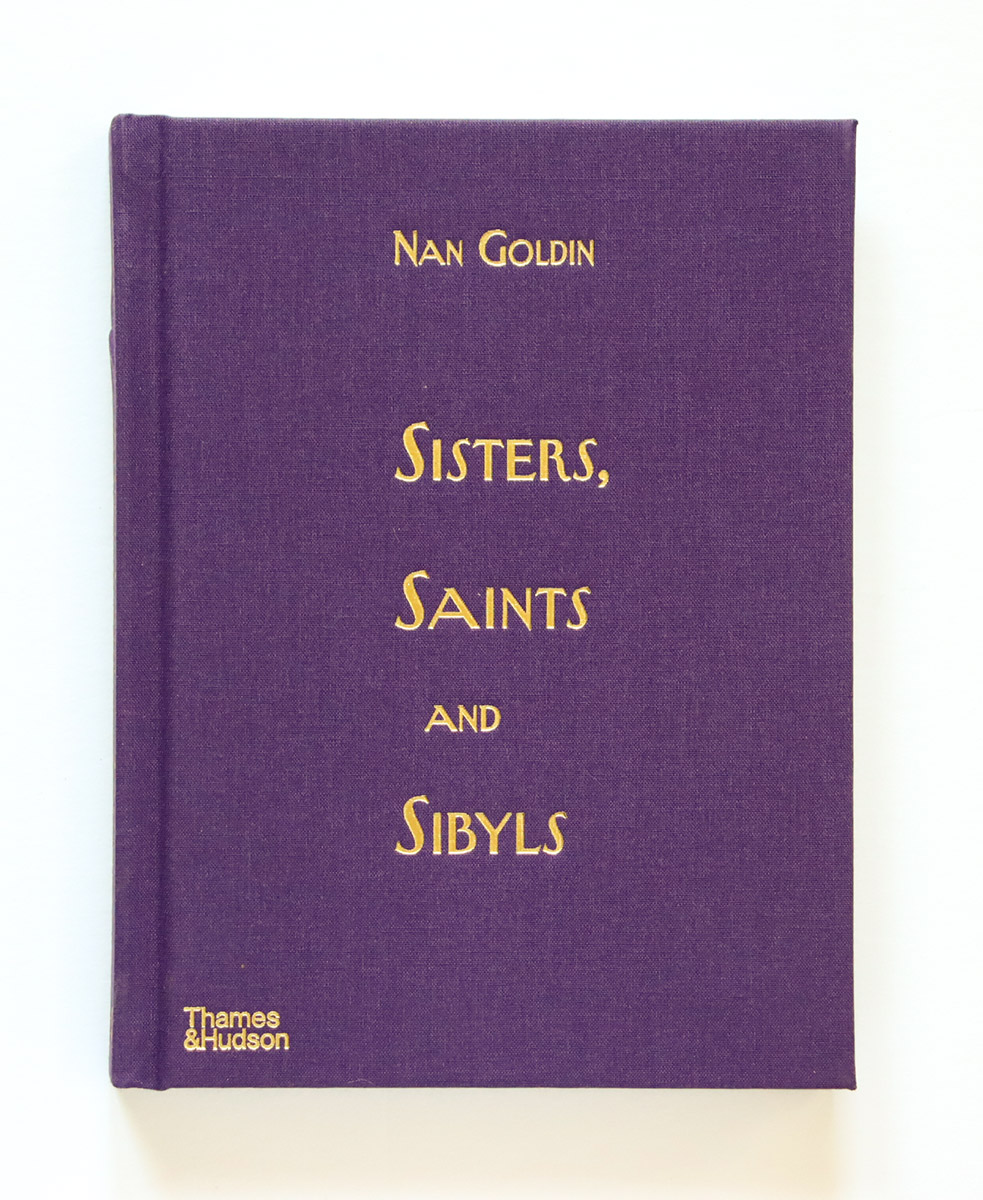
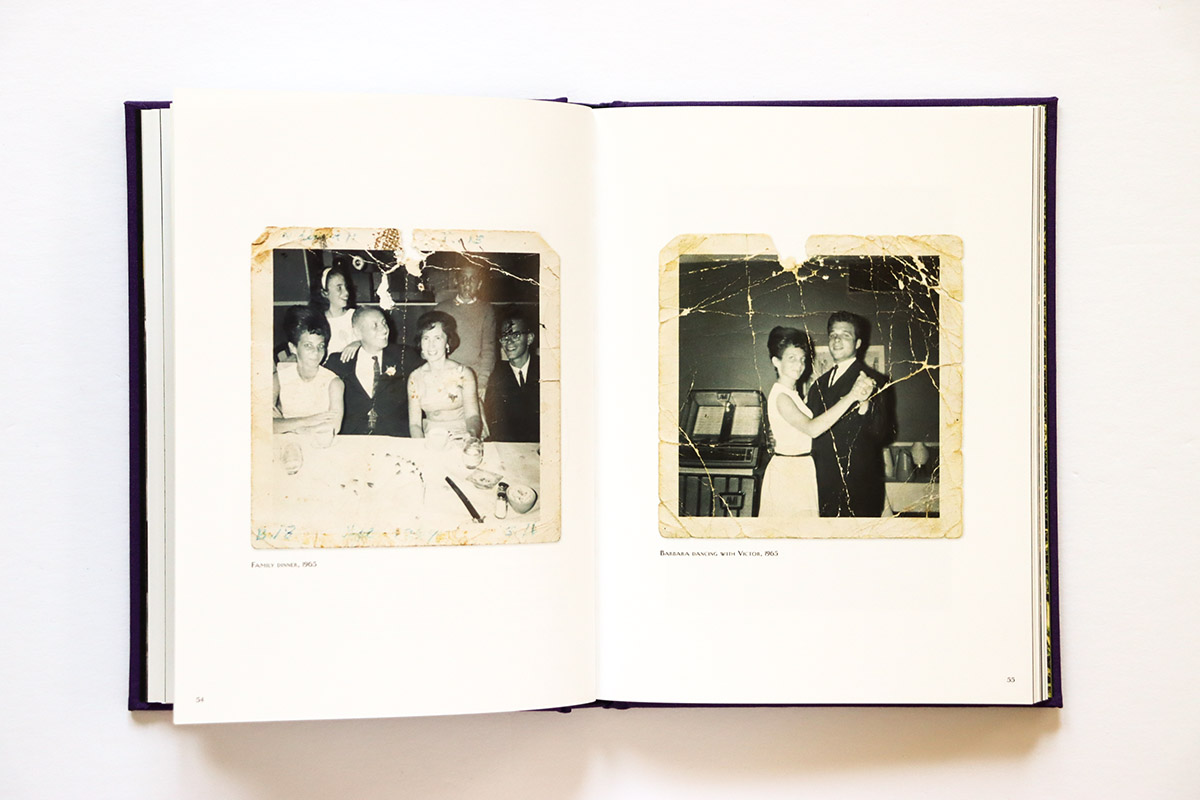
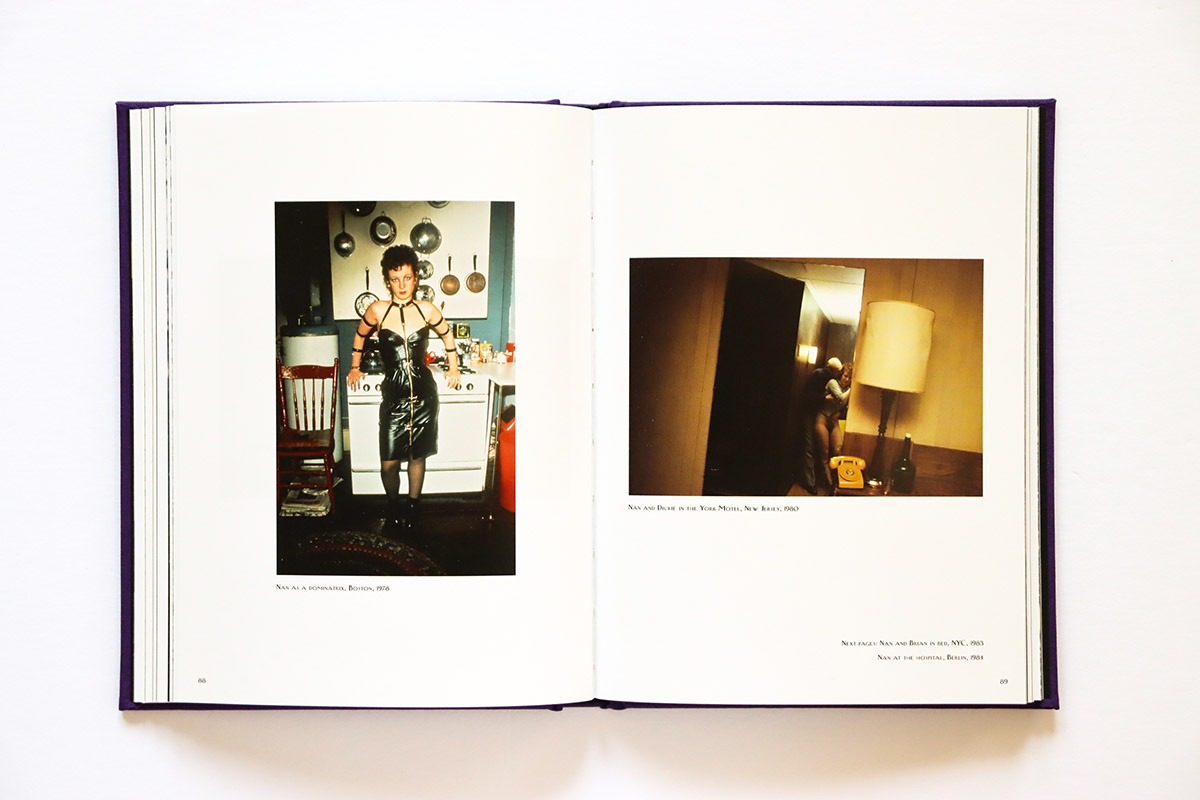
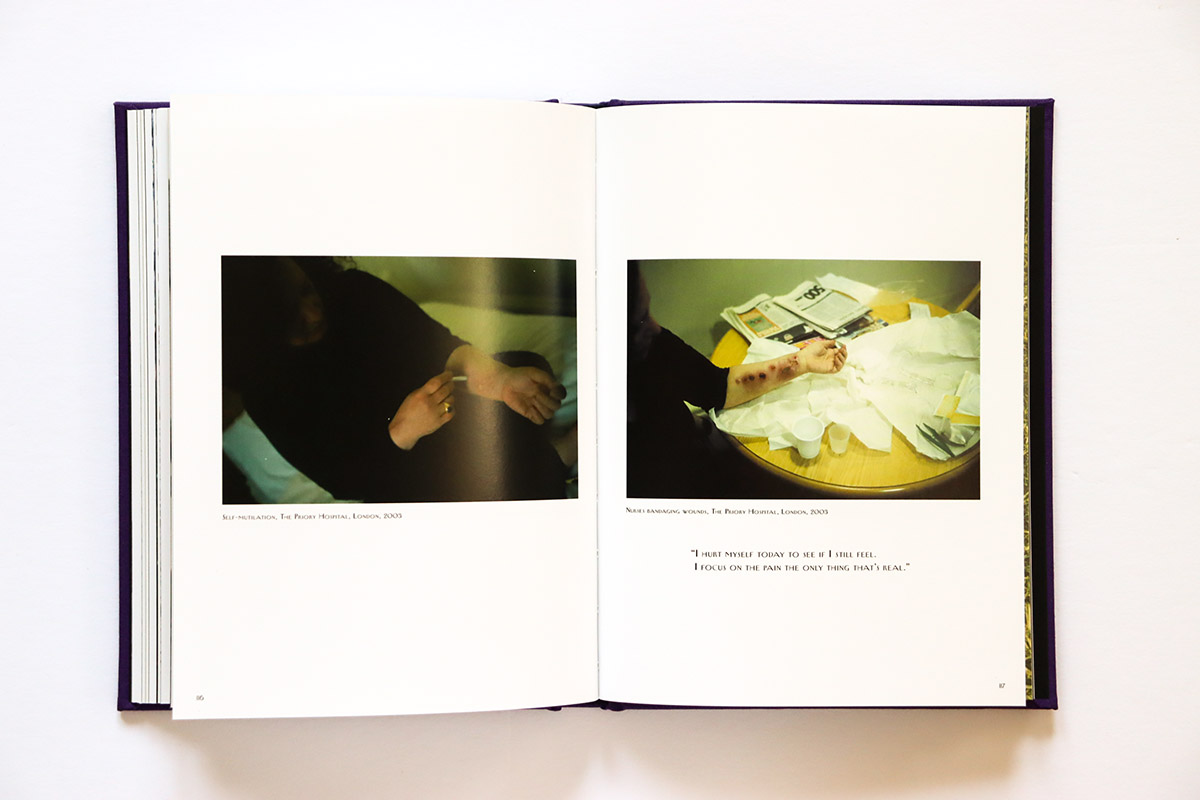
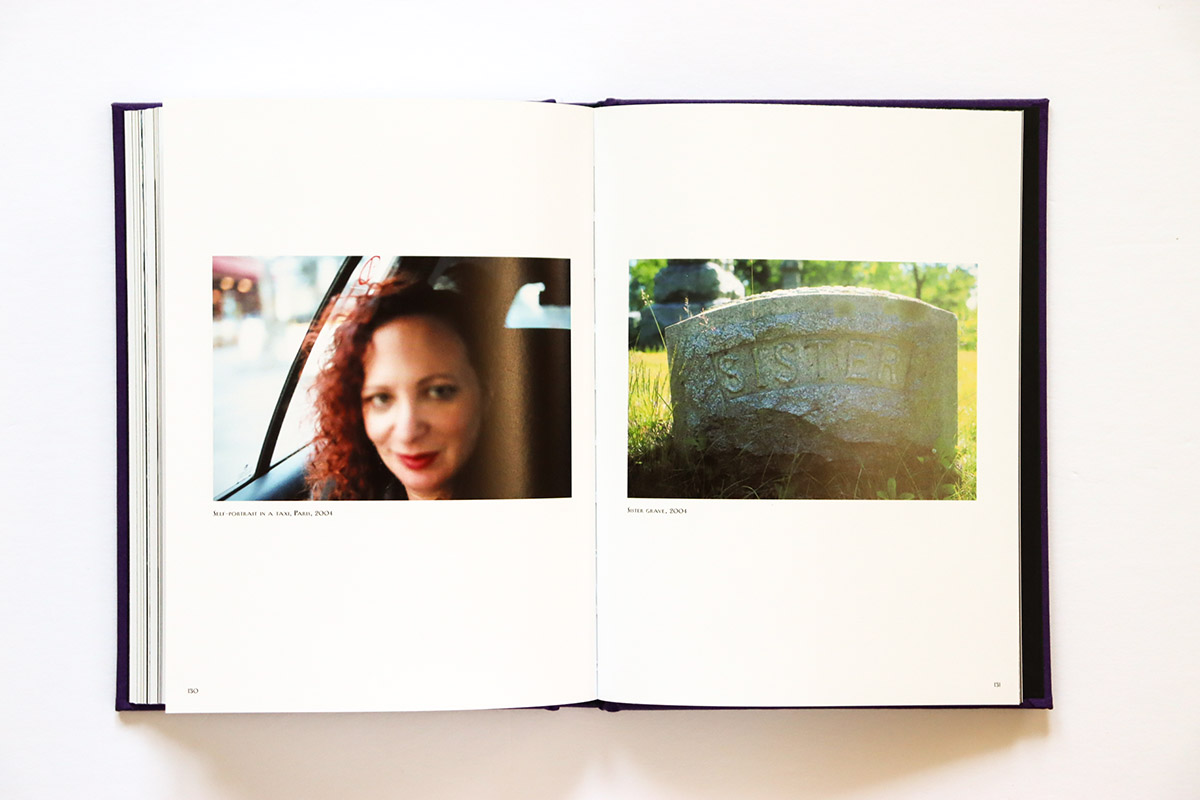
As for Goldin’s Sisters, Saints, and Sibyls, the book accompanies a film, or film sequences, to be shown in Paris in the fall of 2026. It was apparently first published in France in 2004, and the Thames and Hudson edition in this review is new this year. The book layers Goldin’s own photographs, some of them icons we are familiar with, with texts, family snapshots, documents, and diaristic views to tell the story of her older sister’s mental health struggle as well as her own bouts with addiction and recovery.
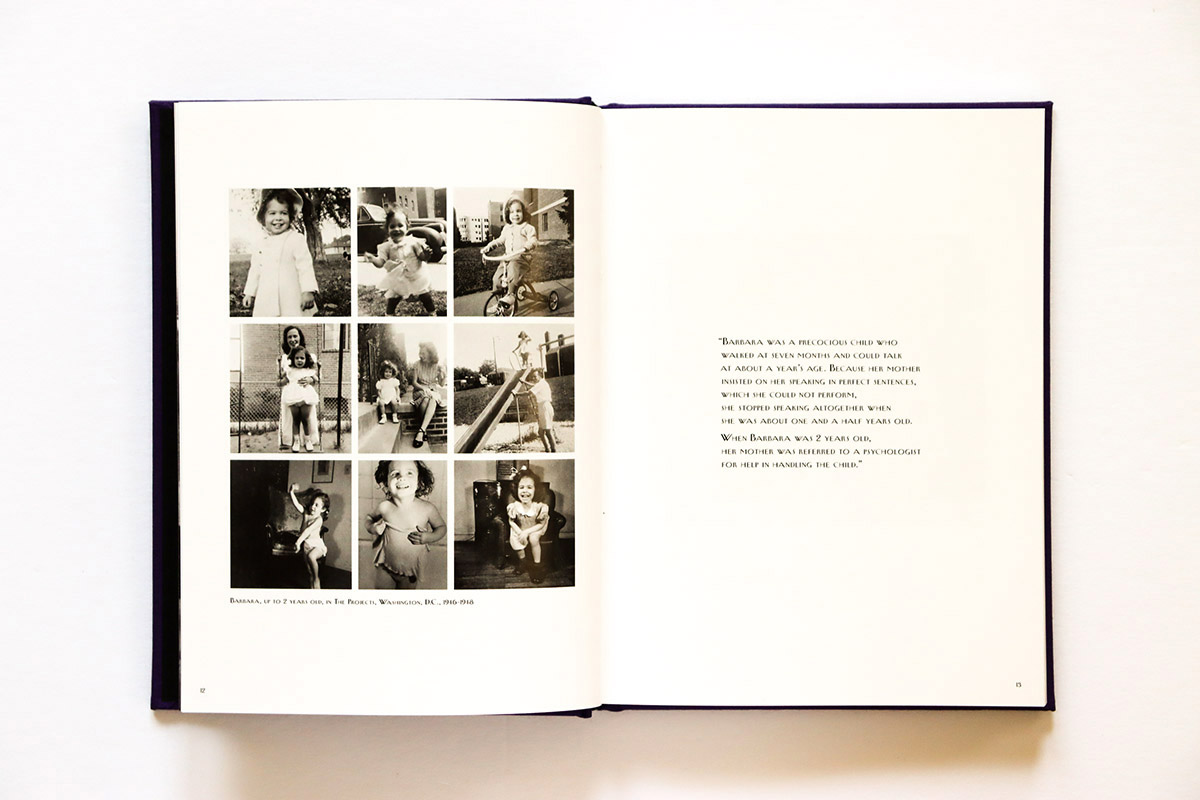
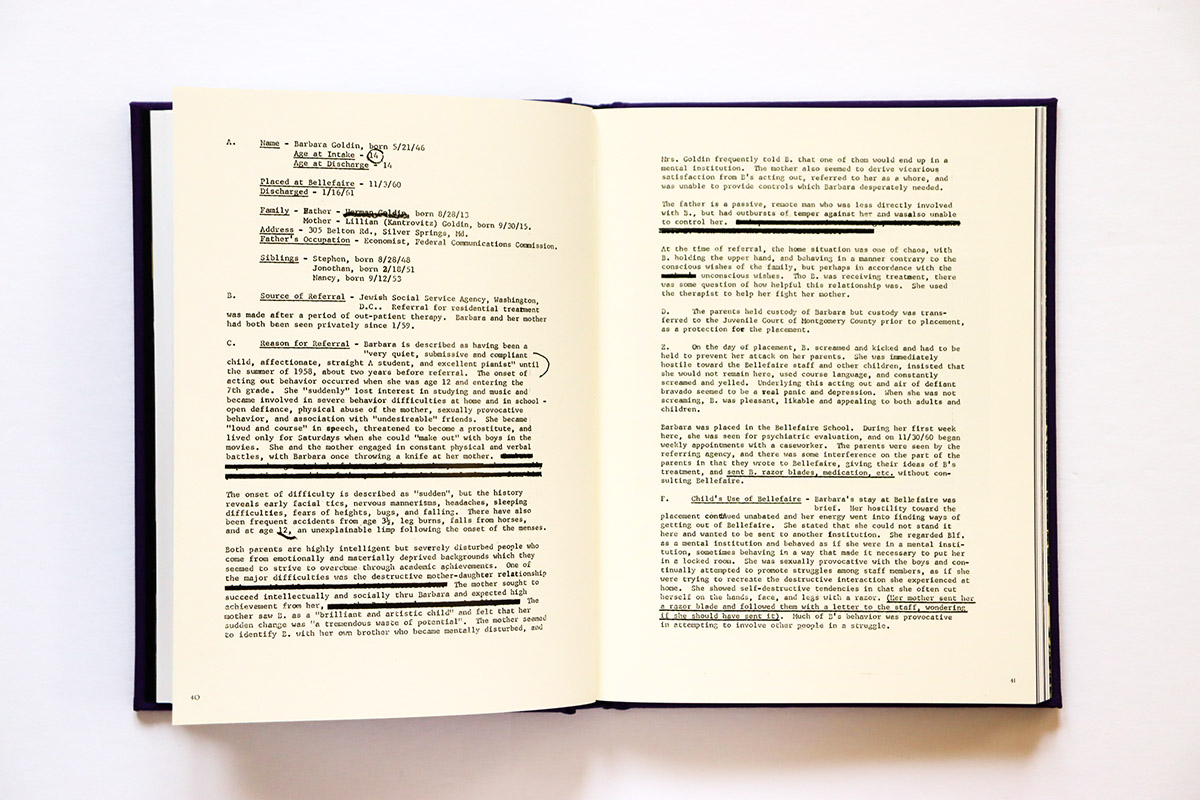
Goldin does not hold back as she lays out the story of her sister Barbara. After several pages of photos of her parents and Barbara as a toddler we read:
Barbara was a precocious child who walked at seven months and could talk at about a year’s age. Because her mother insisted on her speaking in perfect sentences, which she could not perform, she stopped speaking altogether when she was about one and a half years old. When Barbara was 2 years old, her mother was referred to a psychologist for help in handling the child.
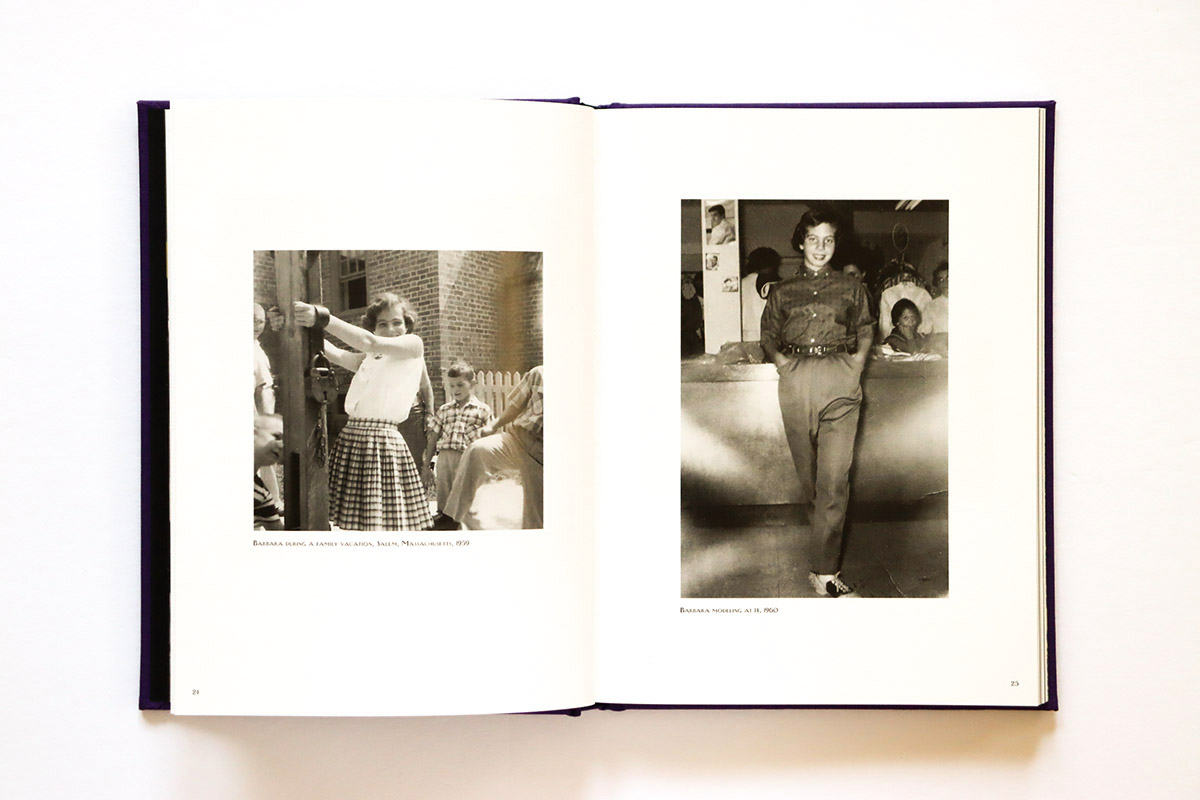
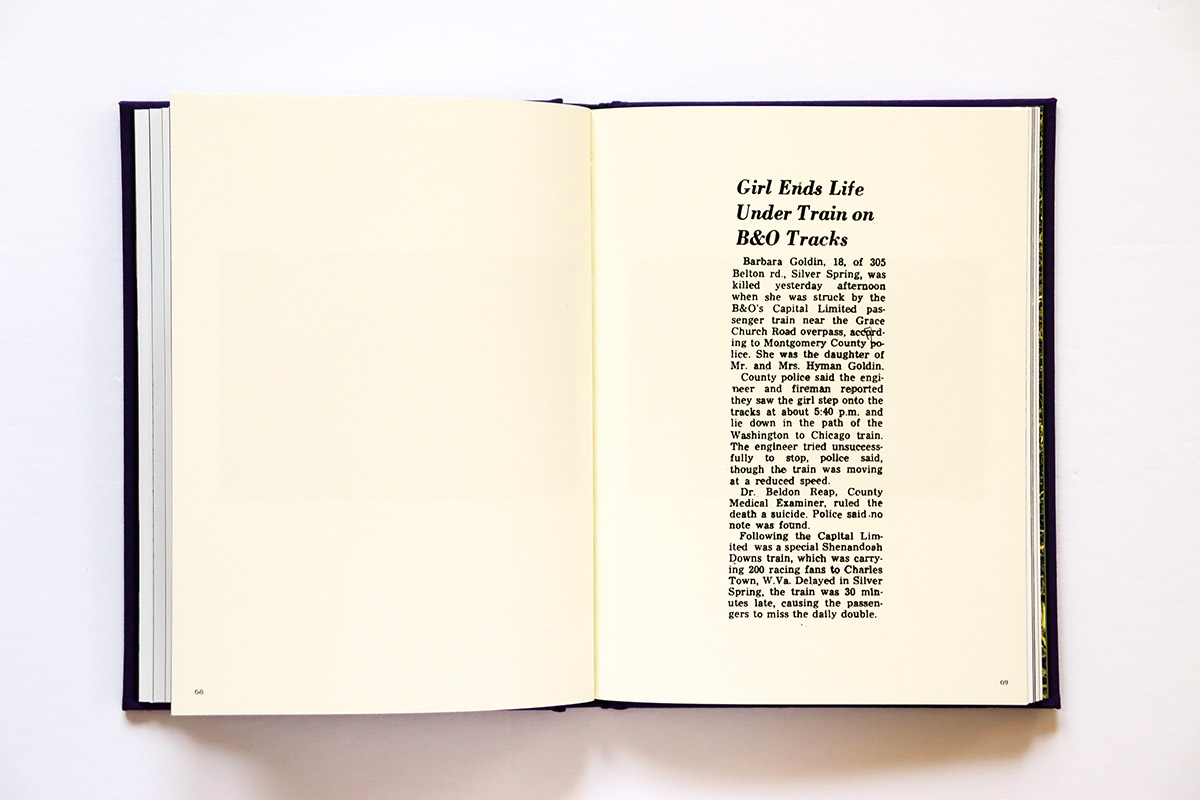
Geez. Talk about toxic parenting. And things got worse when Barbara entered adolescence. She began rebelling and her parents sent her to a detention center 300 miles away to teach her to behave. The common practice in therapy today of treating the whole family as an interdependent system of dysfunction does not seem to have existed, and Barbara was blamed for acting out as a reaction to the abusive attitudes of her mother. Ouch. What a sad, tragic situation. This is hard to take, up to and including the details of Barbara’s suicide and Goldin’s unflinching comments on the scene of the police informing her parents:
My mother said to the police:
“Tell the children it was an accident”
Who was she trying to protect?
That was my moment of clarity that defined my life,
My break with my family, I was 11.
The tyranny of revisionism even at the moment of greatest anguish.
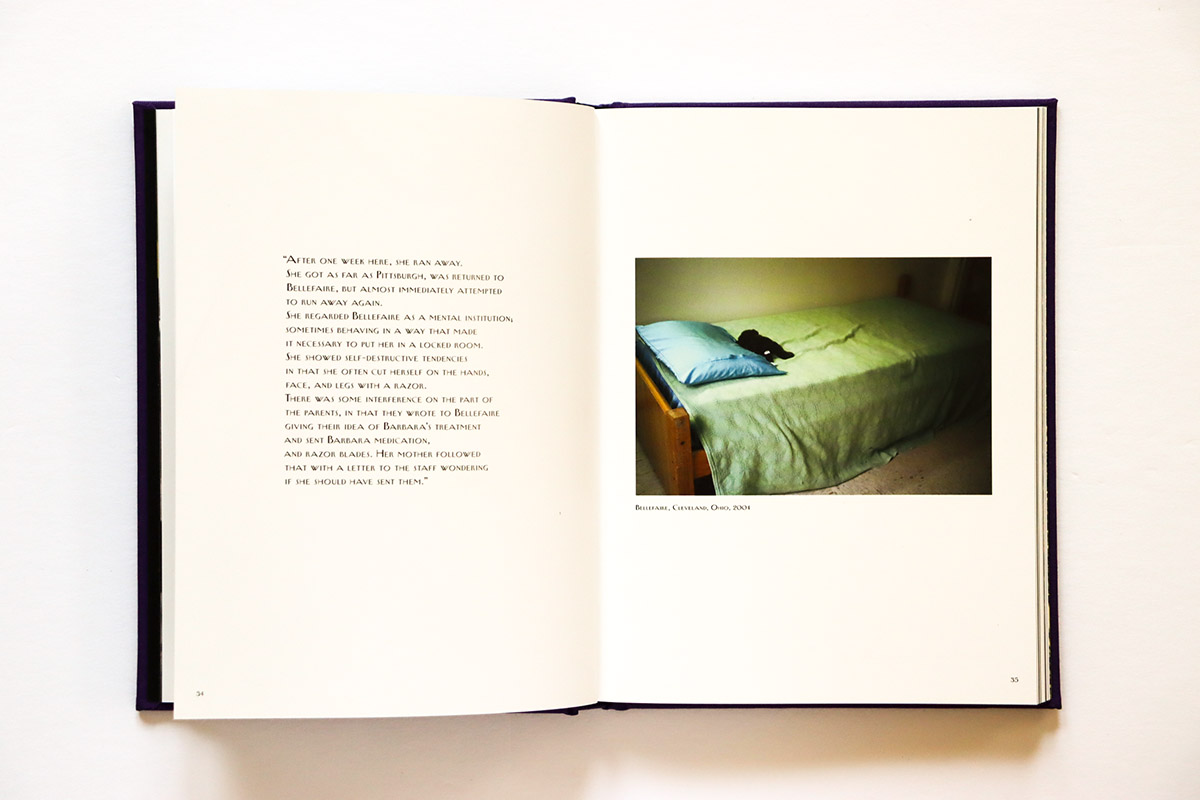
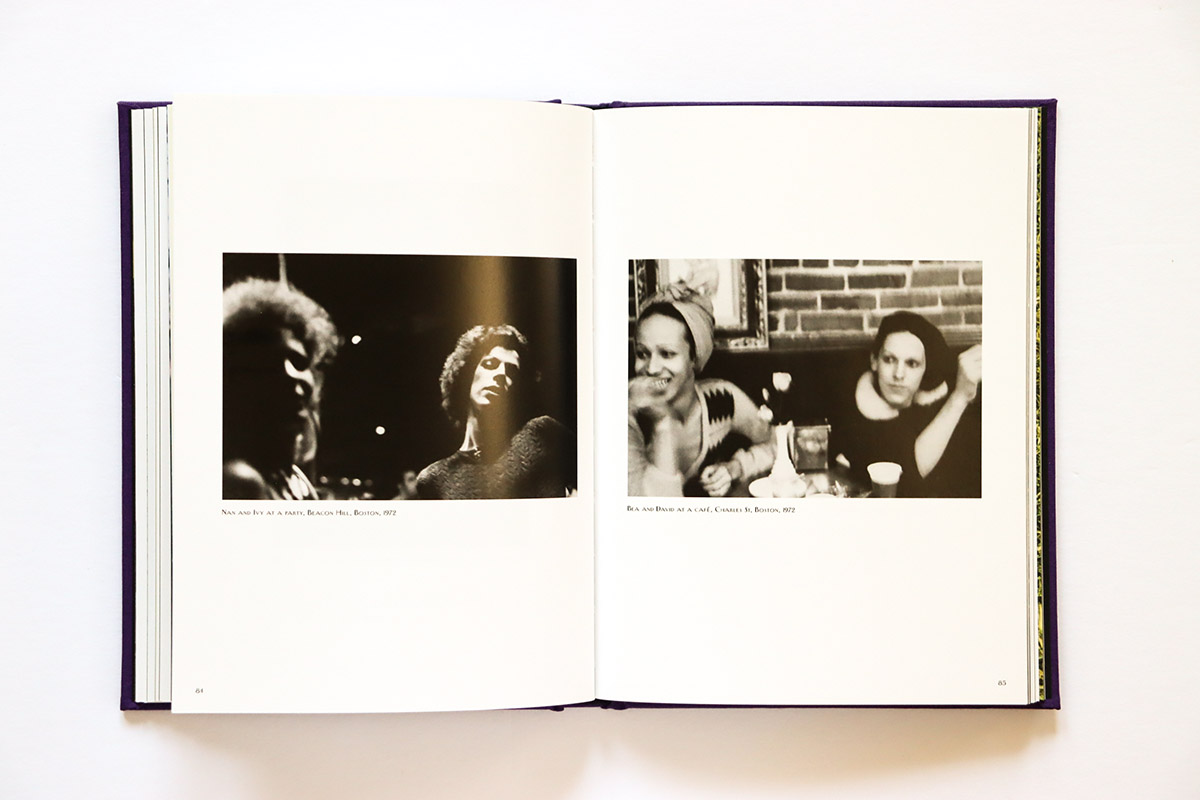
The second part of the book takes up Goldin’s own story as a teenager and chronicles her life and struggles with addiction. We see her alone and with friends, hanging out in night clubs and hotels, and then years later in hospitals and treatment centers. We see photos taken in Berlin, Paris, London, Rio, Switzerland, the south of France, and Massachusetts. The exact details are not clear and this part of her story is more impressionistic. Most of the photos date from the early 2000s, the last ones from 2004. I found the photos of her elderly parents especially powerful. I wonder what conversations, if any, Goldin might have had with them about Barbara. That could have been painful. Did they recognize the role they themselves played in their daughter’s suicide? Has Goldin forgiven them?
Sisters, Saints, and Sibyls – a “sibyl” is a female oracle – is a diminutive book, about six by eight inches, but it shows that bigger is not necessarily better. What matters is not how big the photos are but the message, the story, and what the artist has to say. What does Goldin have to say? Plenty, and it won’t leave you indifferent. In fact, it will probably do to you what it did to me, provoking a deep, personal, and emotional reaction.
Hans Hickerson, Editor of the PhotoBook Journal, is a photographer and photobook artist from Portland, Oregon.
____________
Nan Goldin – Sisters, Saints, and Sibyls
Photographer: Nan Goldin (Born in 1953, lives in New York)
Publisher: Thames and Hudson © 2026 (First edition 2004 by Editions du Regard)
Language: English
Text: Nan Goldin
Design: Nan Goldin and Thames and Hudson
Printing: Printer Trento, Italy
Cloth hardcover, embossed; sewn binding; 142 photographs; 144 pages; 6 x 8 inches; ISBN 978-0-500-03104-9
____________

Articles and photographs published in the PhotoBook Journal may not be reproduced without the permission of the PhotoBook Journal staff and the photographer(s). All images, texts, and designs are under copyright by the authors and publishers.


Leave a Reply