Review by Matt Schneider ·
“Inhabitants of the industrialized world have become hunter-gatherers of material goods—we seek, we find, we acquire. Our possessions reveal who we are and tell stories of our aspirations, our nostalgia, our past; each piece is a fragment of the identity we wish to project or preserve.”
– David Ricci (p. 148)
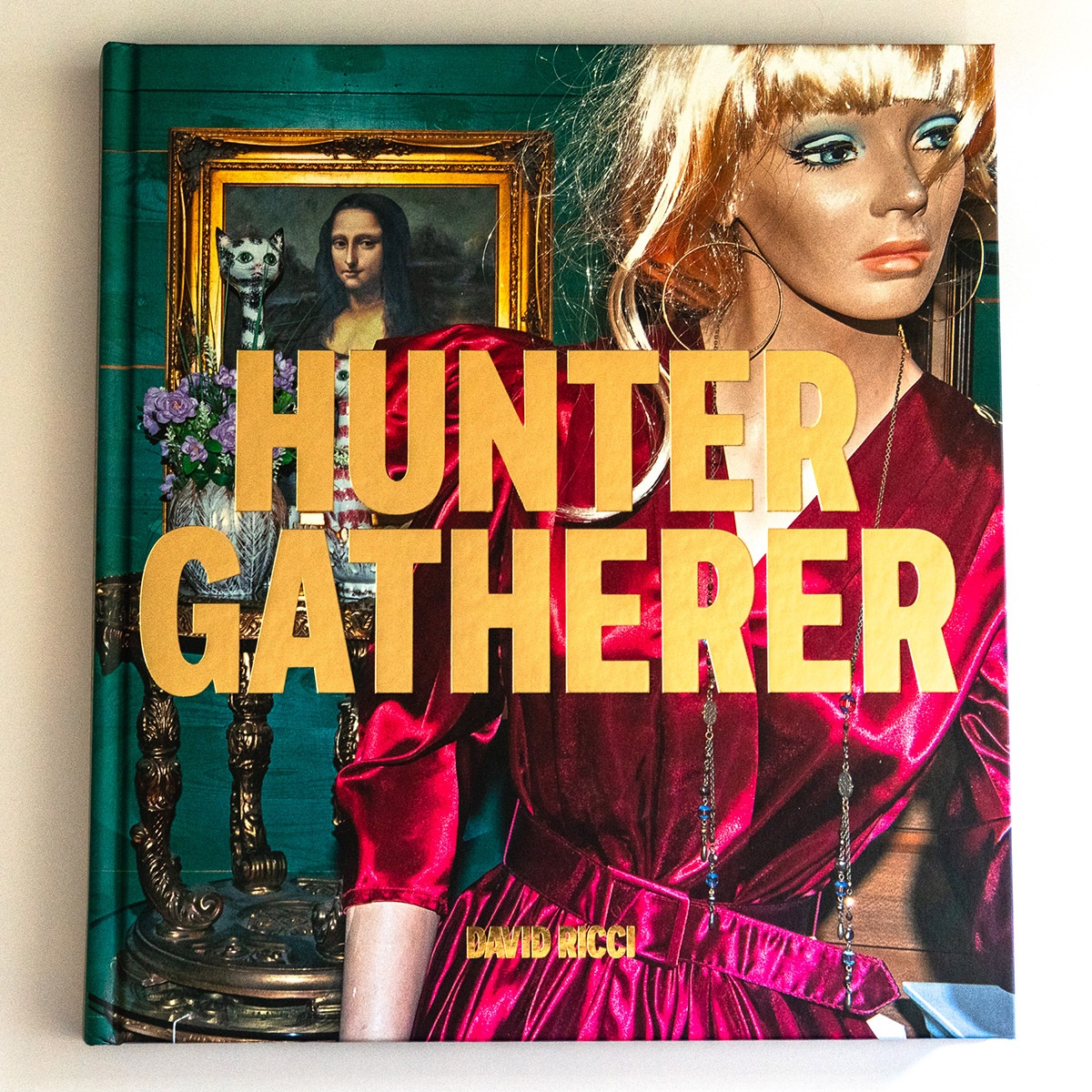
I came across Hunter Gatherer by chance. Typically, when I agree to review a photobook, it is because I think the work will offer a social critique of the present by mixing photography with archival materials. Hunter Gatherer doesn’t exactly follow this form, and under normal circumstances, I may not have agreed to review it. However, because of a mistake I made on the Photobook Journal website, the photographer, David Ricci, found my address and simply sent me the book. I’m so happy that he did.
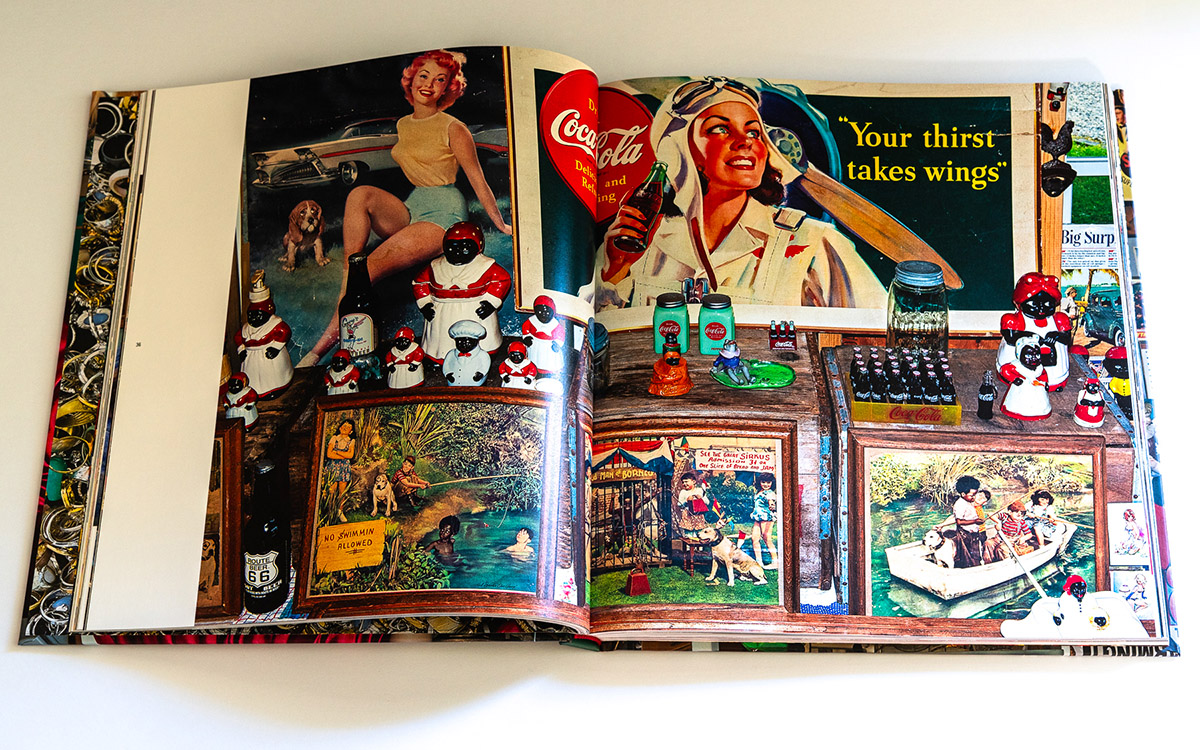
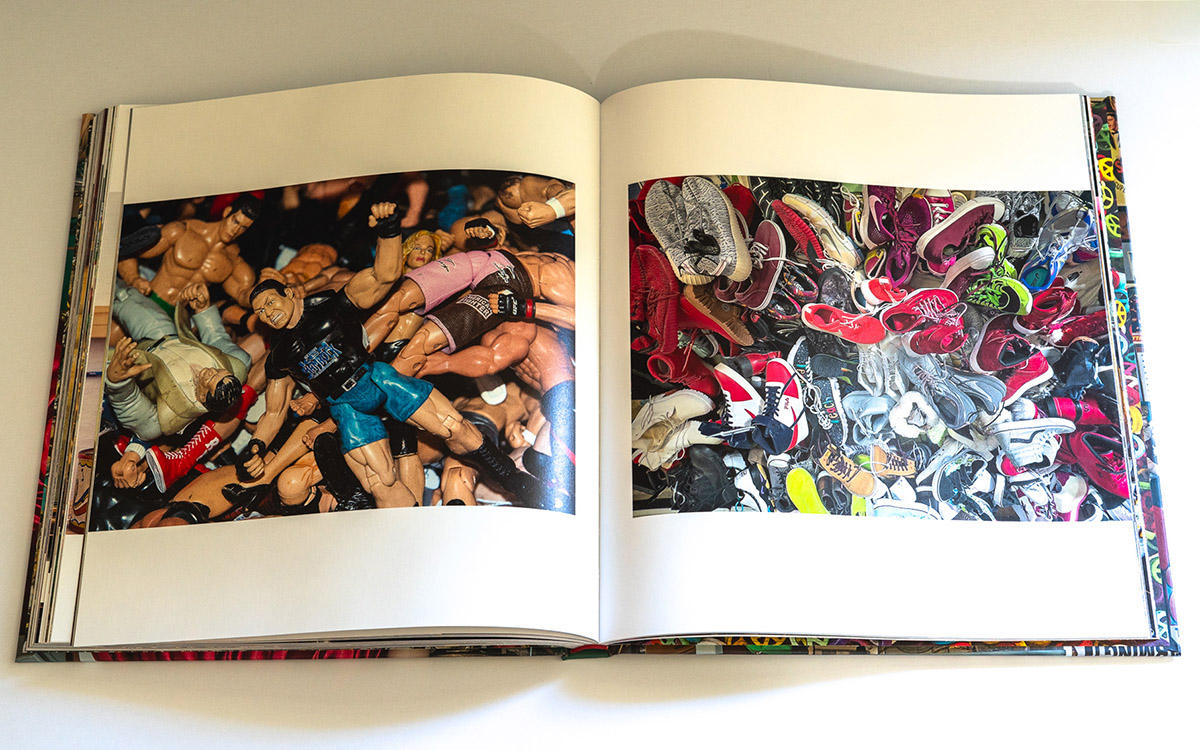
In Hunter Gatherer, Ricci provides photographs from “antique malls and fairs, curio shops, and thrift stores, and other sites where consumer goods from the past are offered for resale” from across the United States (p. 148). On my first pass through the photobook, I was hit by a sense of nostalgia. The book’s photos of PEZ dispensers (p. 47), WWE/WWF action figures (p. 118), and plastic army men (p. 116) brought back memories and feelings from my childhood. Other images feature relics from a material culture that I didn’t experience firsthand, and yet, images of mid-century Coca-Cola advertisements (p. 36 and elsewhere), for example, nevertheless felt familiar to me because of their enduring cultural relevance. On subsequent read-throughs, though, I became more interested in how the book asked me to revisit Americans’ interest in our somewhat recent past, an interest that is represented well by the popularity of shows from the 2010s, like American Pickers, Pawn Stars, and Storage Wars and the popularity of thrifting and antiquing as social activities.
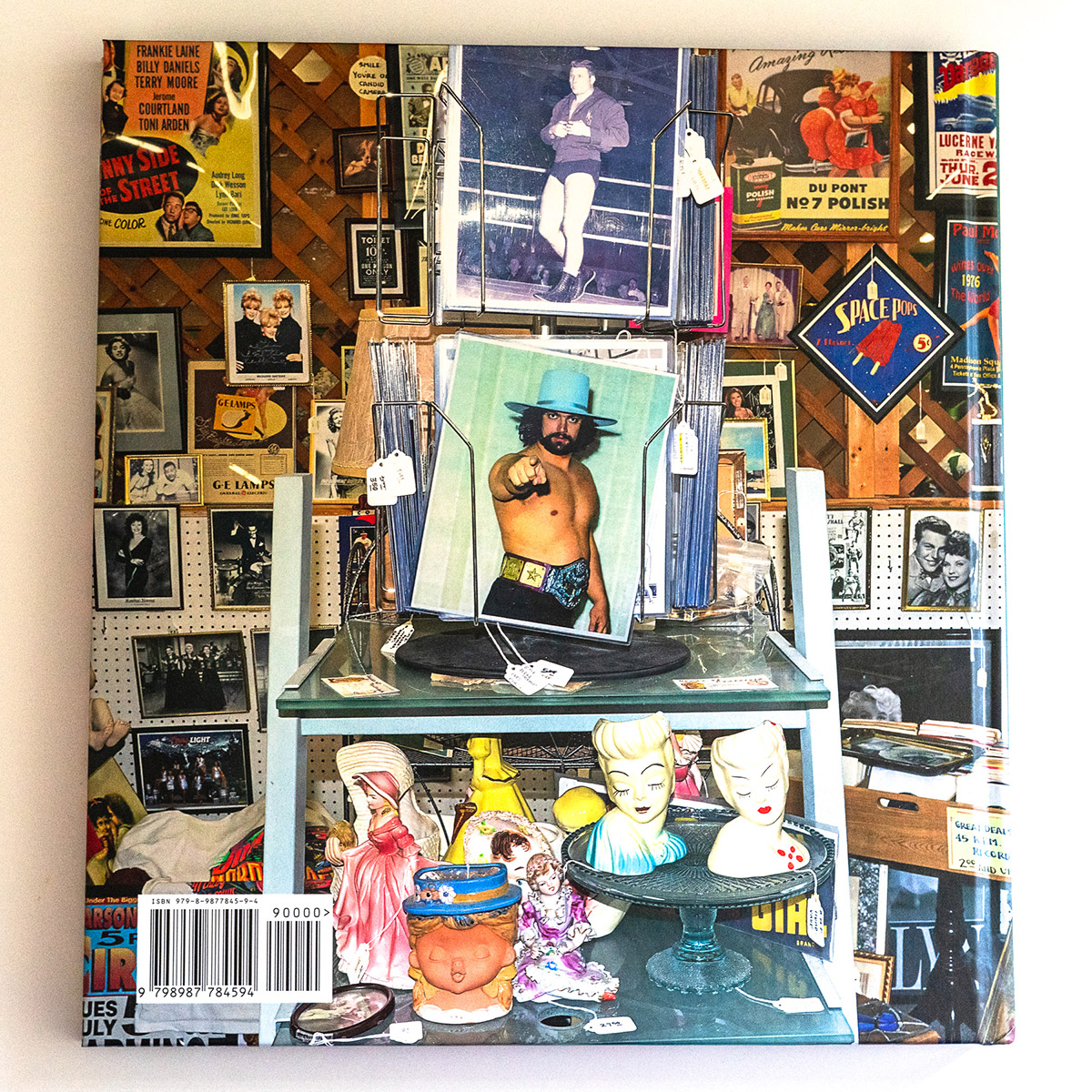
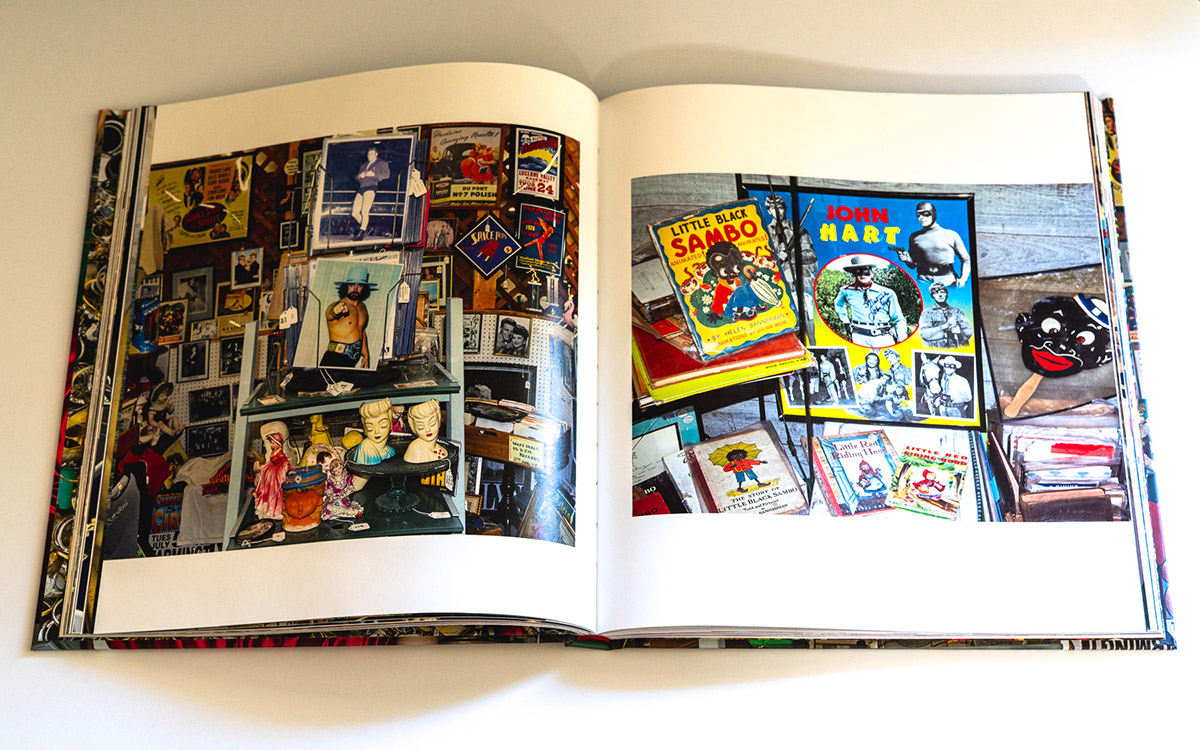
Since moving to North Carolina with my wife about six years ago, we too have irregularly found ourselves hopping through antique shops and thrift stores in hopes of finding quality furniture or interesting décor to fill our home. On occasion, we’ve reclaimed little bits of America’s past for ourselves by purchasing items from shops in Wilmington, but also places off the beaten path, like Whiteville, Hallsboro, or Lake Waccamaw. Some shops are better than others, but almost always, navigating the interior of the shops means scooting through a maze of booths or tables that are packed to the gills with nicknacks, frames, and baskets. In some ways, these stores feel like a chaotic mess, but typically, there’s also some sort of order to them. Displays lump together things perceived to be of a similar kind or utility: a pegboard wall of metal signs here, a shelf of Christmas ornaments and figurines there, tables of ‘80s-era posters and comics filling the corner. With this observation seemingly in mind, Ricci makes these compositions the central feature of his book.
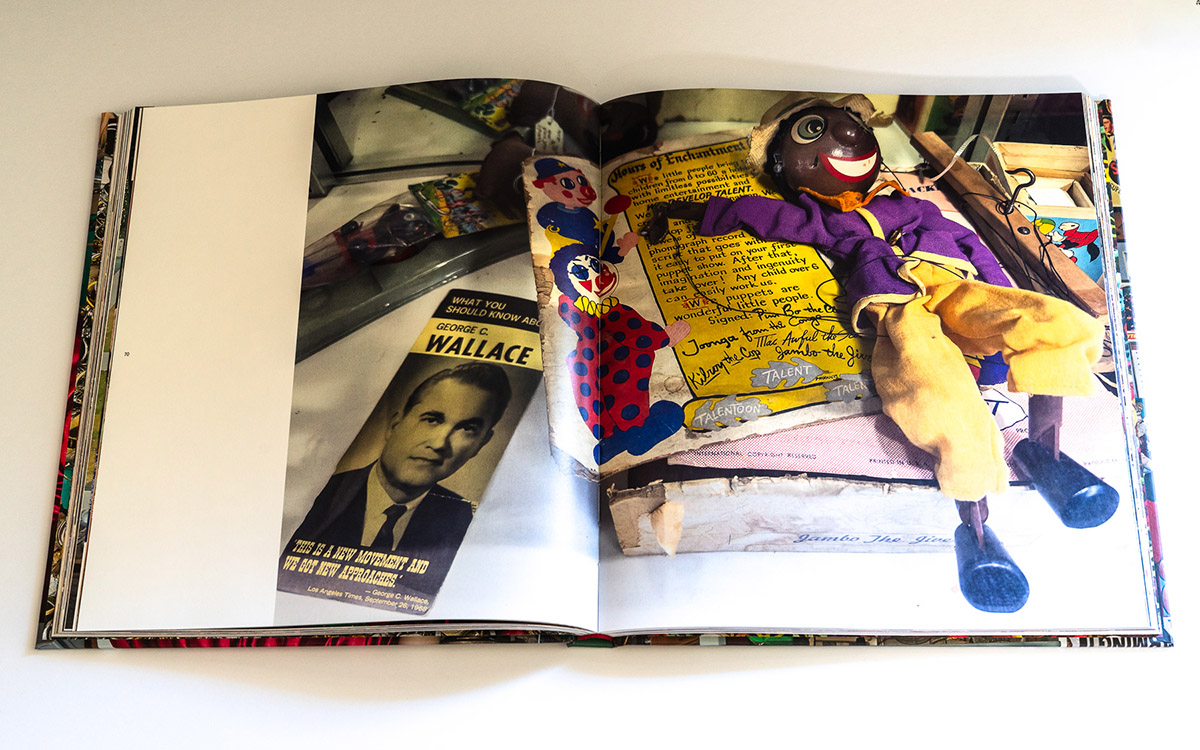
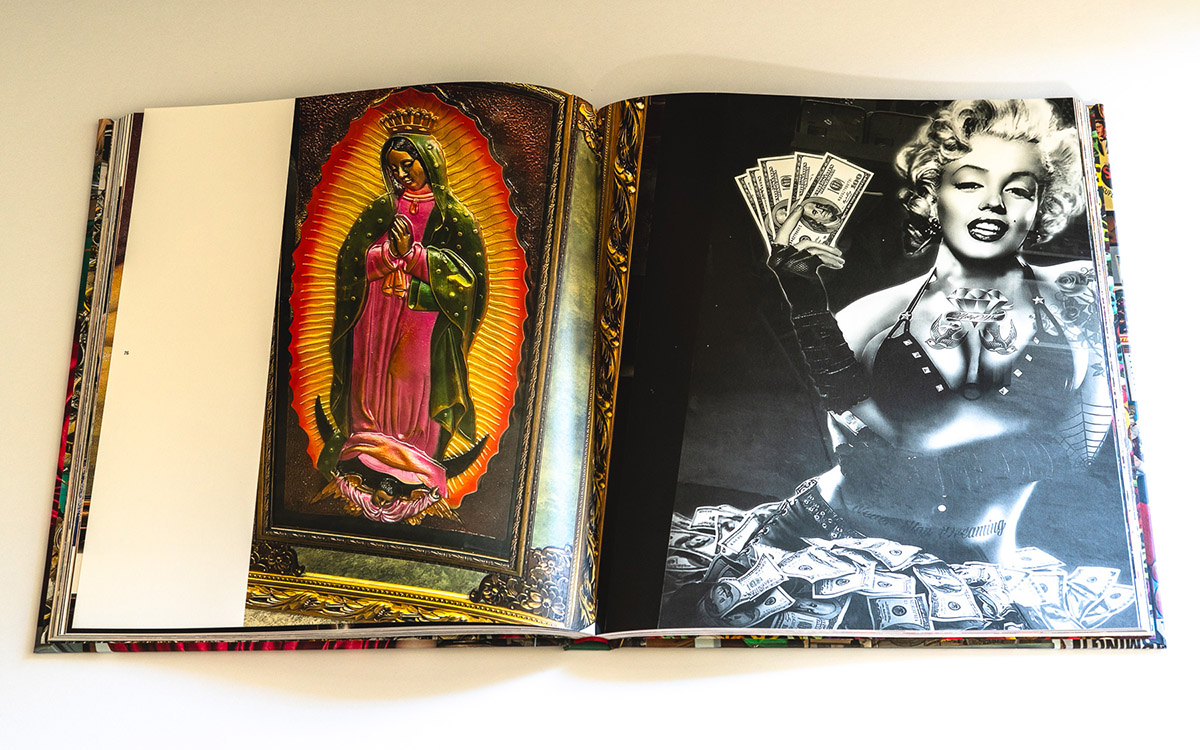
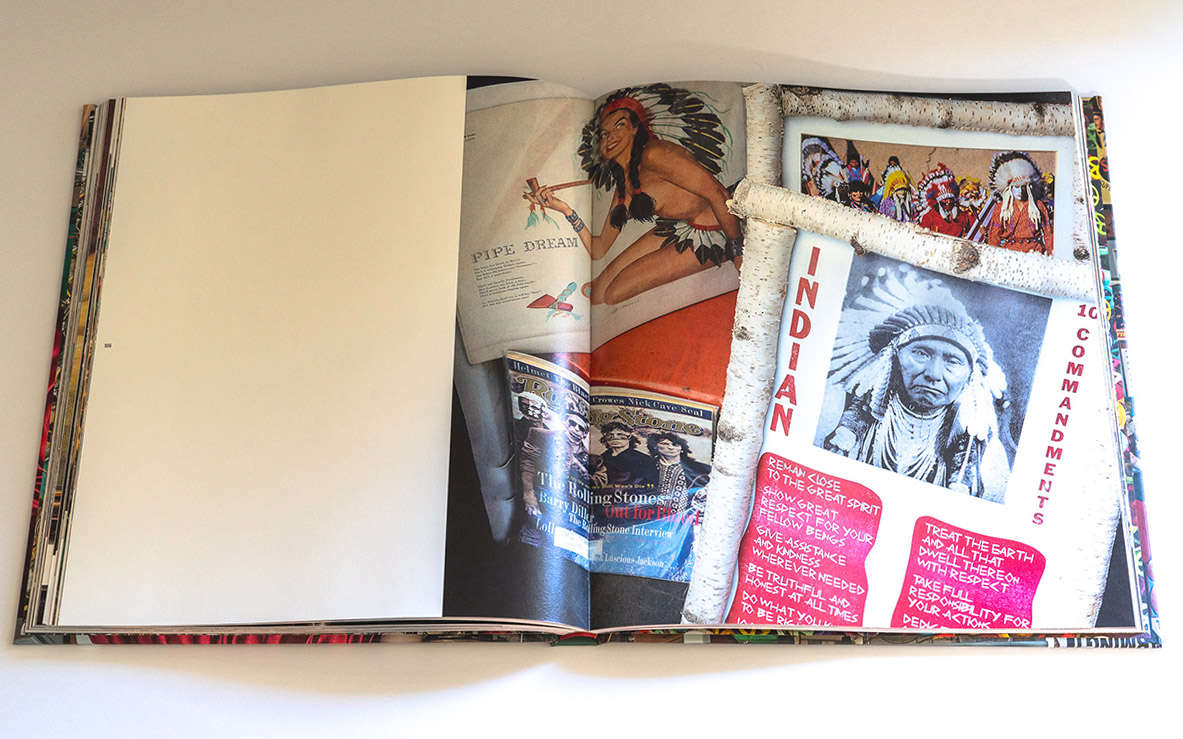
Flipping through the pages of Hunter Gatherer, the reader will find many photographs of religious paraphernalia (always Christian) (p. 52 and elsewhere) alongside varying racist caricatures of Black and Indigenous peoples, ranging from Black mammies (p. 62 and elsewhere) and Sambos (p. 57 and elsewhere) to smoking Native Americans (p. 106). In many cases, Ricci is able to capture contradictions between the supposed Christian morality of American culture and the persistence of harmful cultural stereotypes within single scenes. For example, in his photograph, “Mary & Marilyn” (p. 76), a framed artwork of a crowned and praying Mary is placed next to a photoshopped poster of a tattooed Marilyn Monroe flashing hundred dollar bills in a black bikini top. And while we tend to think of enduring historical artifacts as unique and hand-crafted antiques, Ricci does well to show us that, at some point, our material culture became one of mass-produced plastic toys and trinkets. The regular intertwining of religious imagery with photos that directly or indirectly hint at the racism, sexism, consumerism, and violence of American culture is uncomfortable. That these items, particularly those representing racist tropes, still have a market is even more unsettling, and suggests that many Americans continue to consume, if not invest in the preservation of, a culture of patriarchal white supremacy.
So, while Hunter Gatherer doesn’t use archival materials in the traditional sense, it does, in fact, provide the commentary I usually look for in photobooks. Rather than searching through archives, Ricci has created a visual catalog of artifacts from America’s past. Ricci’s photobook leaves us with an obvious but difficult question: what is American culture and how has it changed across time? Less obviously, his photographs also raise questions that are, perhaps, less about classic Americana, and more about contemporary American culture. Why is it that these are the artifacts that have been salvaged and continue to circulate? What do we choose to remember (and what do we choose to forget)?
Hunter Gatherer is a bit pricey at $60 per copy, but when you hold the sturdy 9.5’ x 10.5” hardcover book and view its 92 color images for yourself, the price will seem entirely justified. The book is very thoughtfully designed with images on the inside covers and an argument about the contradictions of American material culture implied by the progression of the photographs. The photobook should have broad appeal, but I would be most excited to recommend it to people interested in creative approaches to archival work, public history, and documentary.
Matt Schneider is a professor and visual sociologist in Wilmington, North Carolina.
____________
David Ricci – Hunter Gatherer: Salvaged Stories of American Culture
Photographer: David Ricci
Publisher: MW Editions, released March 2026
Essay: Cheryl Finley
Language: English
Hardbound, sewn binding; 9.5 × 10.5, 152 pages, 92 color illustrations; ISBN: 9798987784594
____________

Articles and photographs published in the PhotoBook Journal may not be reproduced without the permission of the PhotoBook Journal staff and the photographer(s). All images, texts, and designs are under copyright by the authors and publishers.


Thanks for the insightful review Matt. It’s especially gratifying when a reviewer recognizes the deeper ideas driving the work, including this crucial observation: “His photographs raise questions that are, perhaps, less about classic Americana, and more about contemporary American culture”.