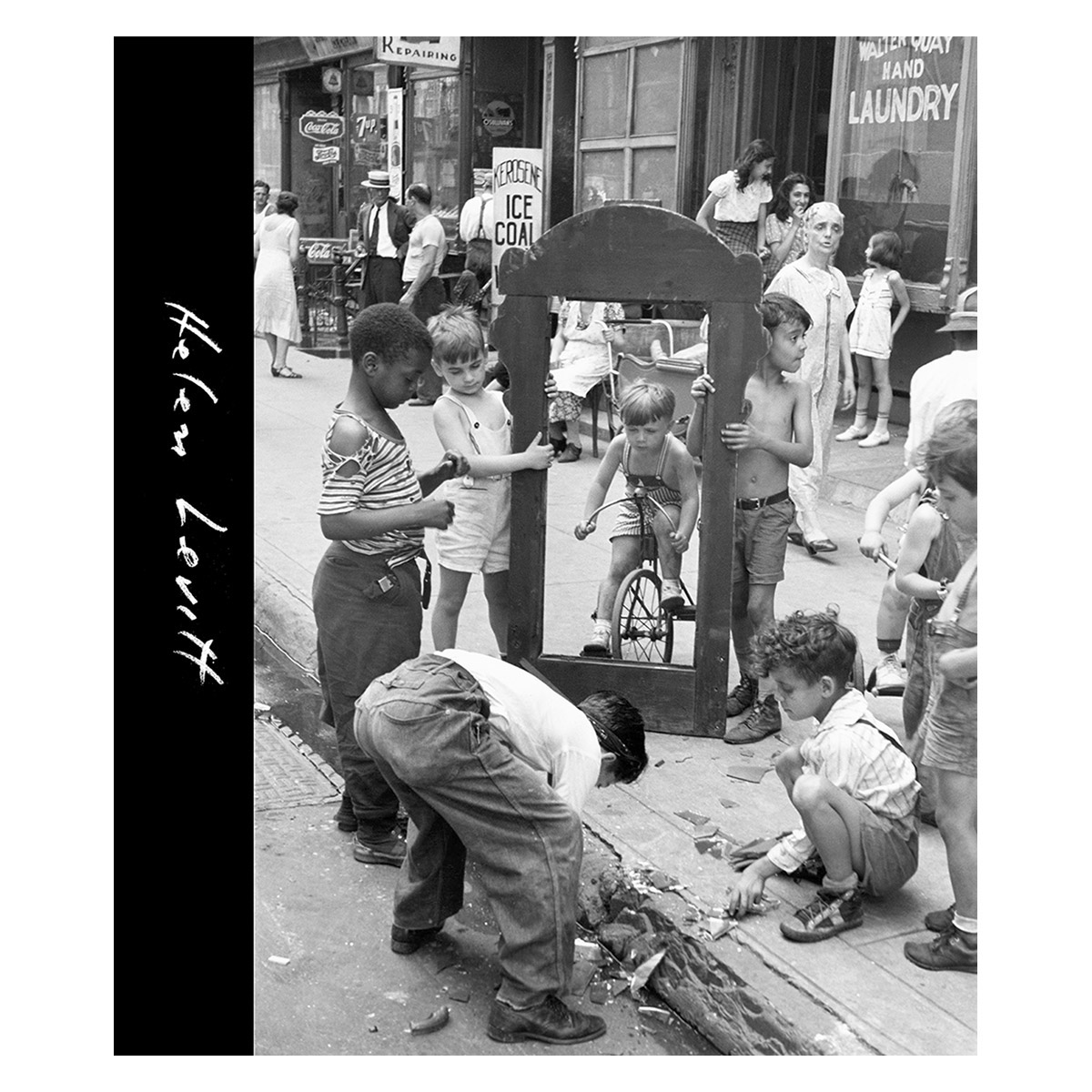
Review by Gerhard Clausing •
Helen Levitt’s photographs have often been described as street photography, but that term is too narrow for what she accomplished. The street, for Levitt, was not merely a location. It was a stage, a playground, a studio, a social club, a theater of small dramas, and sometimes a wall-sized sketchbook. This substantial volume, edited by Joshua Chuang and produced in conjunction with Fundación MAPFRE, gives us a broad and generous view of Levitt’s achievement: early black-and-white work, children’s chalk drawings, New York street scenes, Mexico, subway photographs, and the later color pictures. It also includes seven valuable essays that help situate her work without burying it under theory.
The book succeeds because it lets Levitt’s pictures breathe. The design is spacious, sometimes almost austere, with single images or small groupings placed against ample white space. That restraint is important. Levitt’s pictures are visually active, full of gestures, glances, fragments of writing, bodies in motion, and edges that matter. A crowded design would have weakened them. Here, the sequencing allows the reader to move from social observation to play, from play to performance, from performance to mystery. The later color pictures are printed on specially coated paper, providing her subtle use of color with extra brilliance.
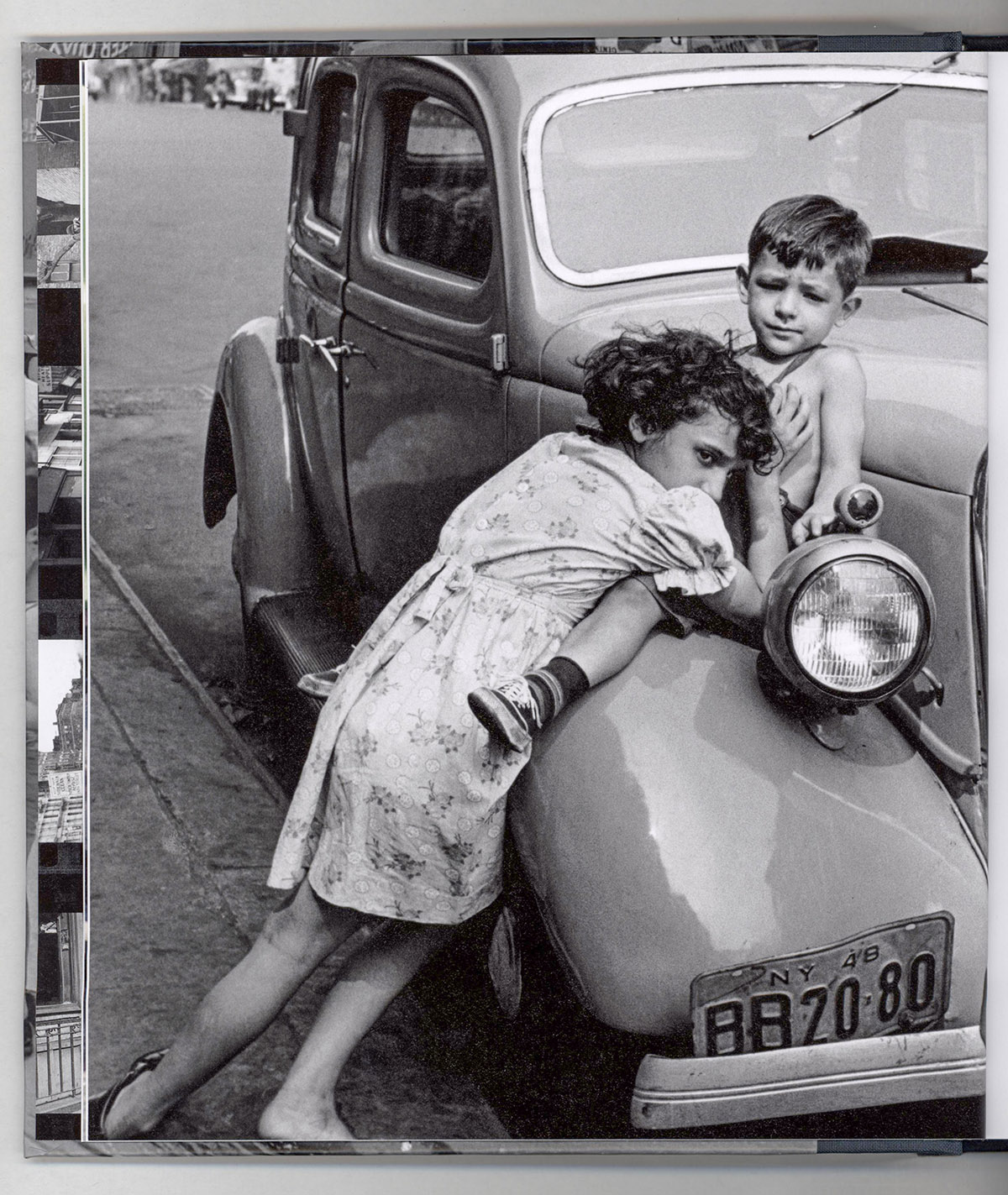
I will now examine and discuss a number of representative photographs, also shown in the image section below. The introductory image on page 6 is useful because it places Levitt among several crucial influences and companions: Henri Cartier-Bresson, Walker Evans, James Agee, and Janice Loeb. Yet the book never makes the mistake of treating Levitt as merely a follower of any of them. Her own sensibility is already clear. Like Evans, she was attentive to the facts of the street; like Cartier-Bresson, she understood timing; like Agee, she valued human complexity. But Levitt’s strongest gift was her ability to see ordinary people as if they were creating their own temporary worlds.
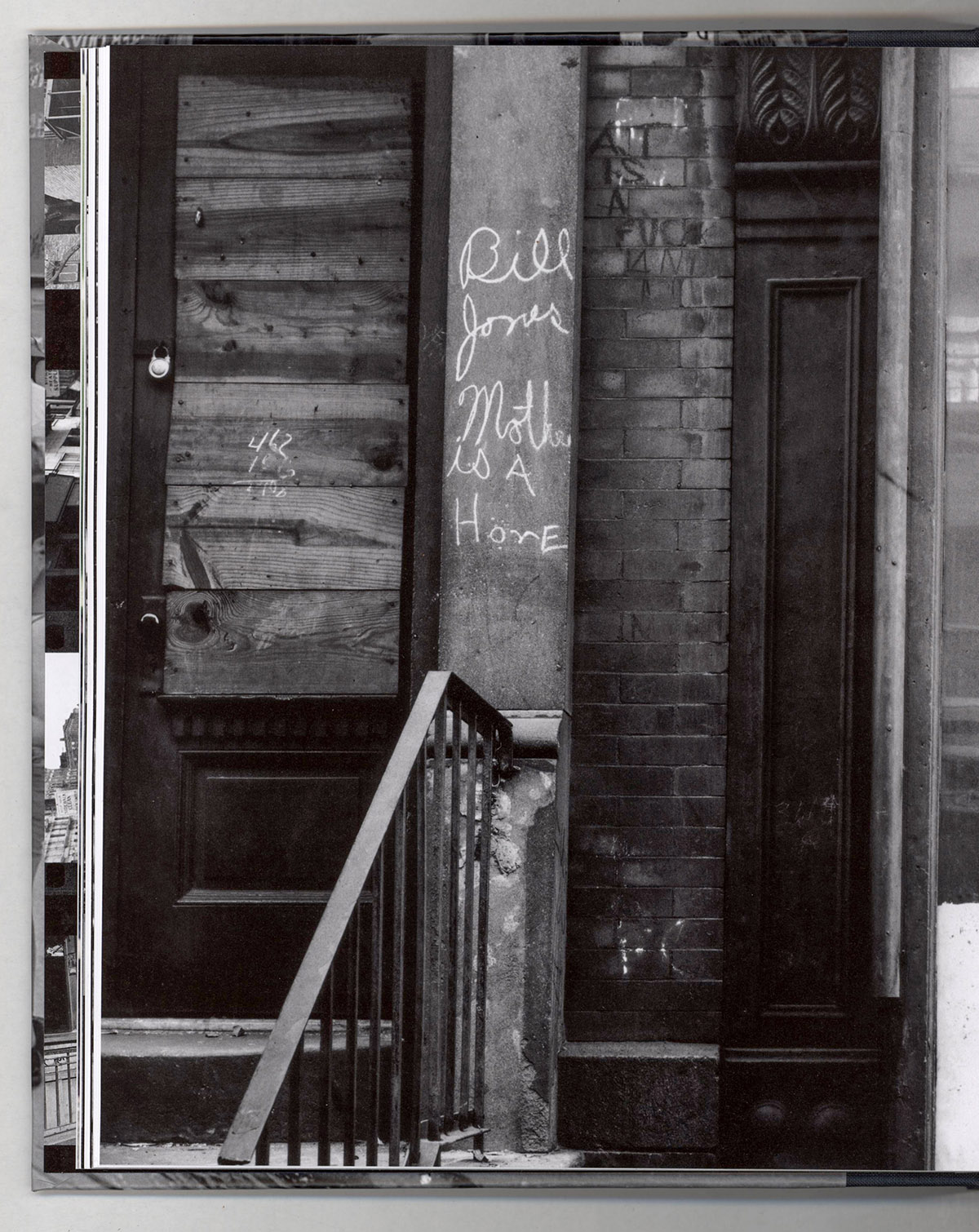
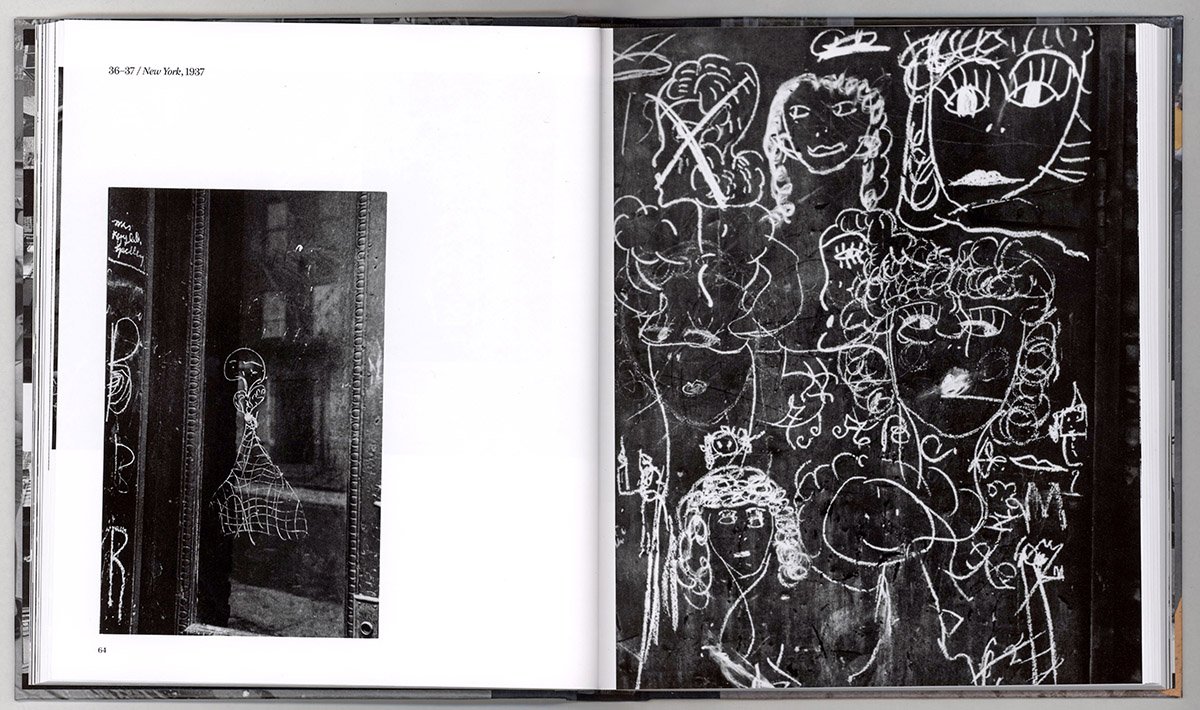
That becomes especially clear in the chalk drawing material. On page 28, the chalked phrase “Bill Jones Mother is a Hore” is both crude, with its two orthographic deviations, and oddly formal, written on the vertical architecture of a doorway. Levitt does not clean it up or sentimentalize it. She shows children’s street culture as witty, aggressive, theatrical, and fully alive. Pages 64–65 deepen this idea. On the left, a chalk figure appears on a dark door or window surface like a ghostly visitor. On the right, a dense field of faces and bodies fills the wall. These are not merely examples of children’s art. They are claims of presence. Children without official power have remade the city surface into a shared imaginative territory.
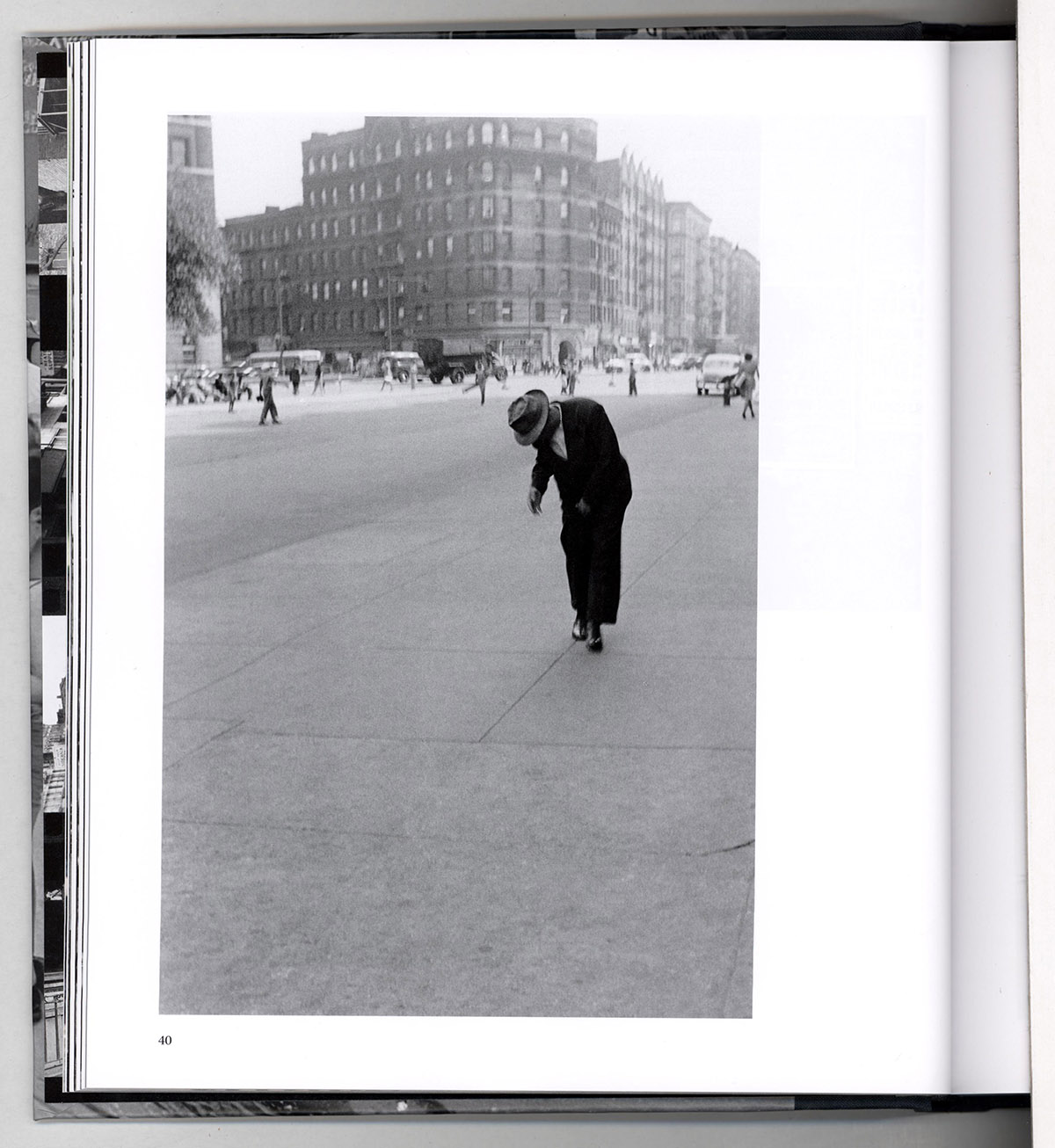
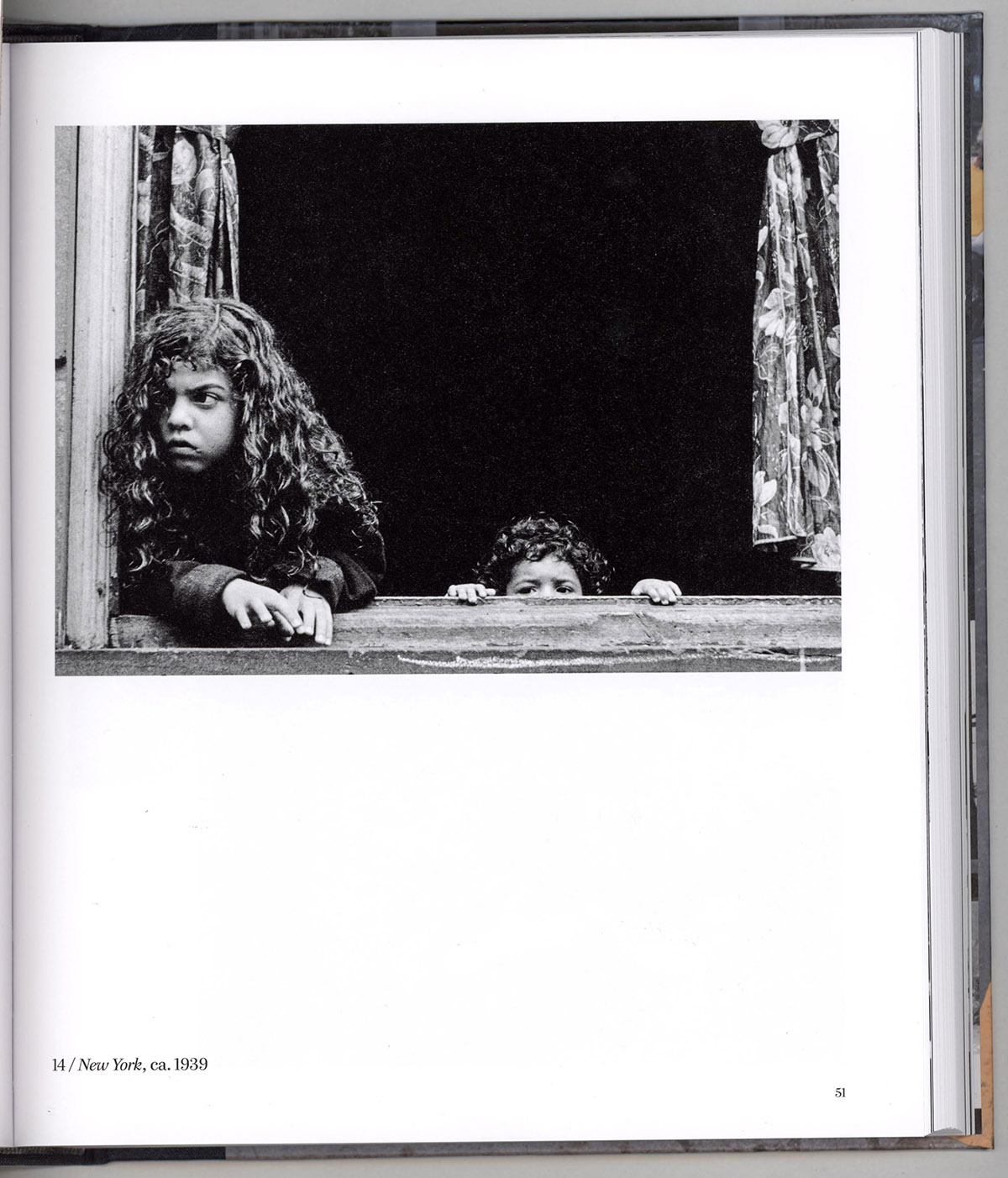
The early street photographs show how Levitt built her art from small choreographies. On page 40, a solitary man bends forward in a vast urban space, his body dark against the pale pavement. The figure is humble in scale, yet oddly monumental in posture. The surrounding city nearly swallows him, but his gesture holds the frame. On page 51, two children lean from a window: one fully visible, with heavy curls and a serious face, the other barely rising above the sill. It is a beautiful Levitt composition because it creates a cirular viewing experience: the children watch the street, the photographer watches them, and we in turn watch the exchange.
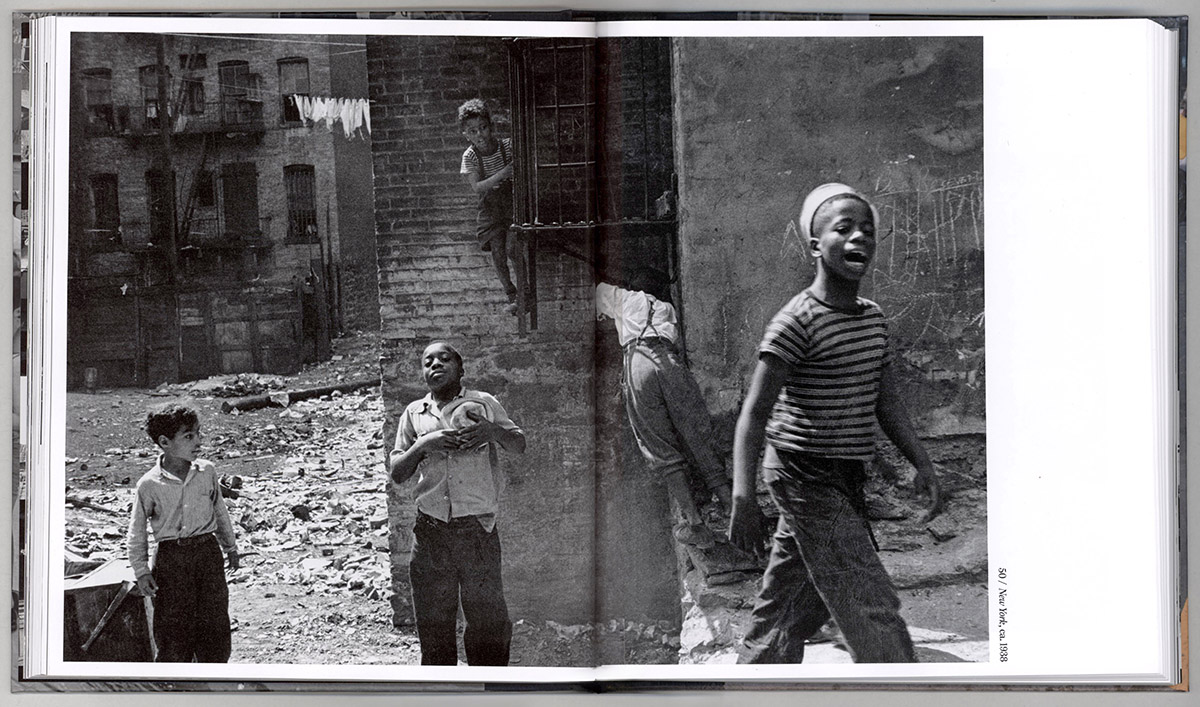
Pages 90–91 offer one of the book’s most animated examples of Levitt’s urban theater. Children occupy a rough New York lot, moving through rubble, walls, laundry, and chalked surfaces. One boy strides across the foreground, slightly blurred, as if already leaving the picture. Other children climb, lean, hide, or hover near the architecture. The image is not arranged like a formal group portrait, yet it has the balance of a staged scene. Levitt’s genius lies in this paradox: she finds order without forcing it. Her best pictures feel as if accidentally discovered and yet very well composed at the same time.
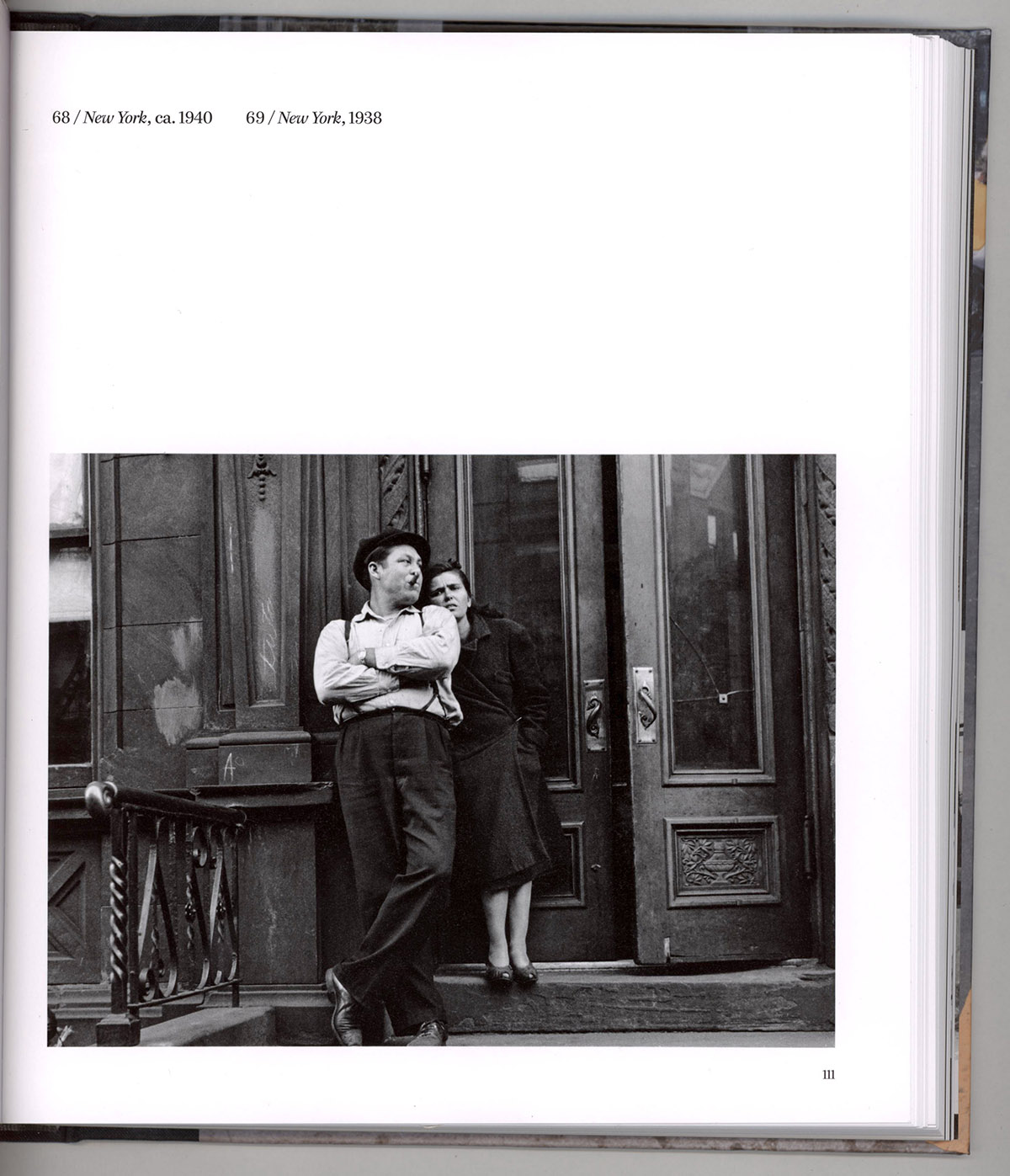
The image on page 111 brings adults back into the conversation. A man stands near a doorway with folded arms, leaning back in a confident pose, while a woman behind him looks out from the threshold. The photograph is built from posture and hesitation. The man performs ease; the woman, partly sheltered by the doorway, complicates that performance. Levitt’s people are rarely reduced to types. They are caught in relationships that remain partly unreadable.
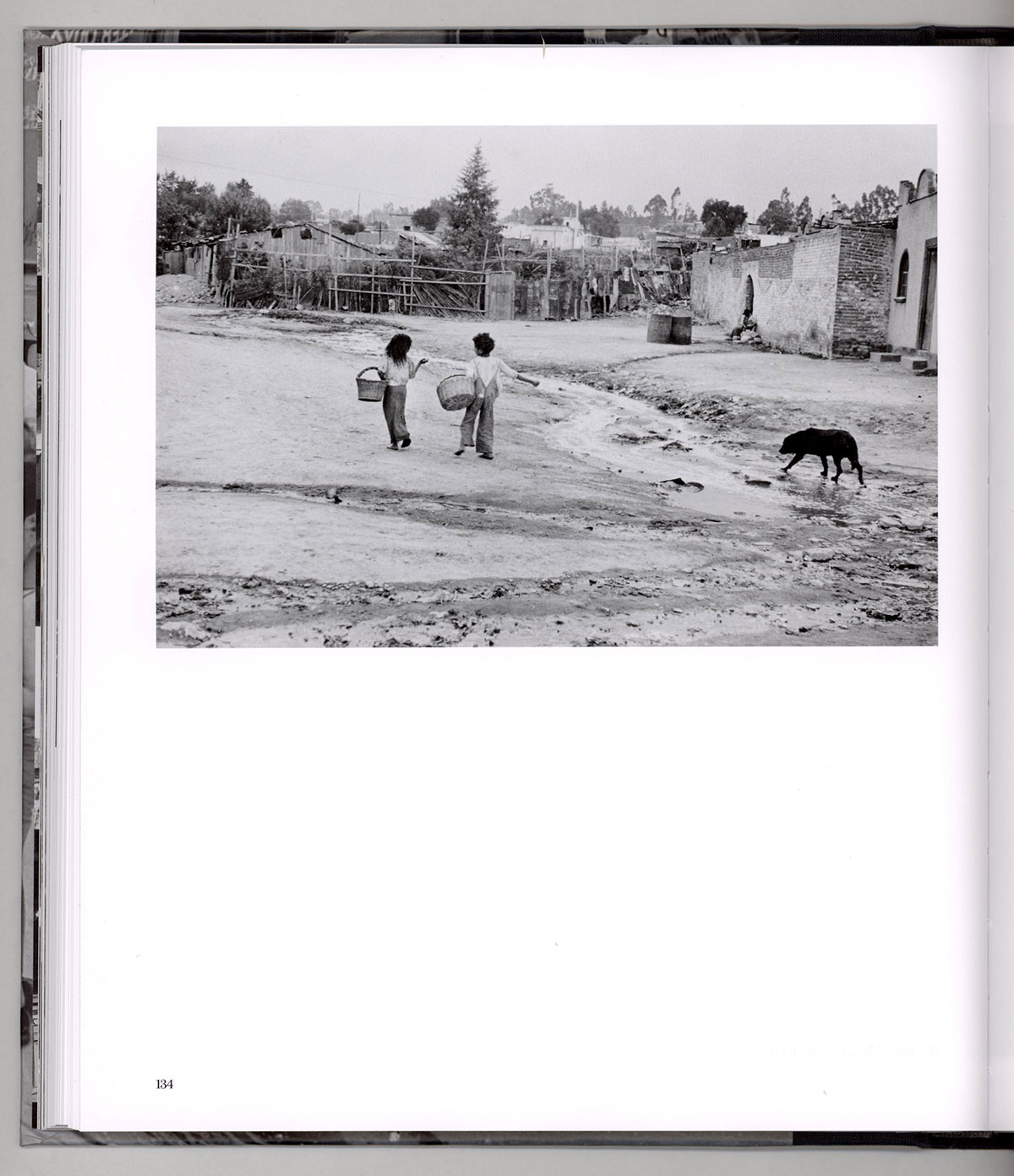
The Mexico photographs, including the spread on page 134, mark a shift in atmosphere. Two children move through a dusty open space with baskets, while a dog noses along the ground. The built environment is lower, brighter, more exposed than Levitt’s New York. The image is quieter, less crowded, but still attentive to movement and social space. Mexico did not turn Levitt into a different photographer; it tested her way of seeing in a place where she was less at home.
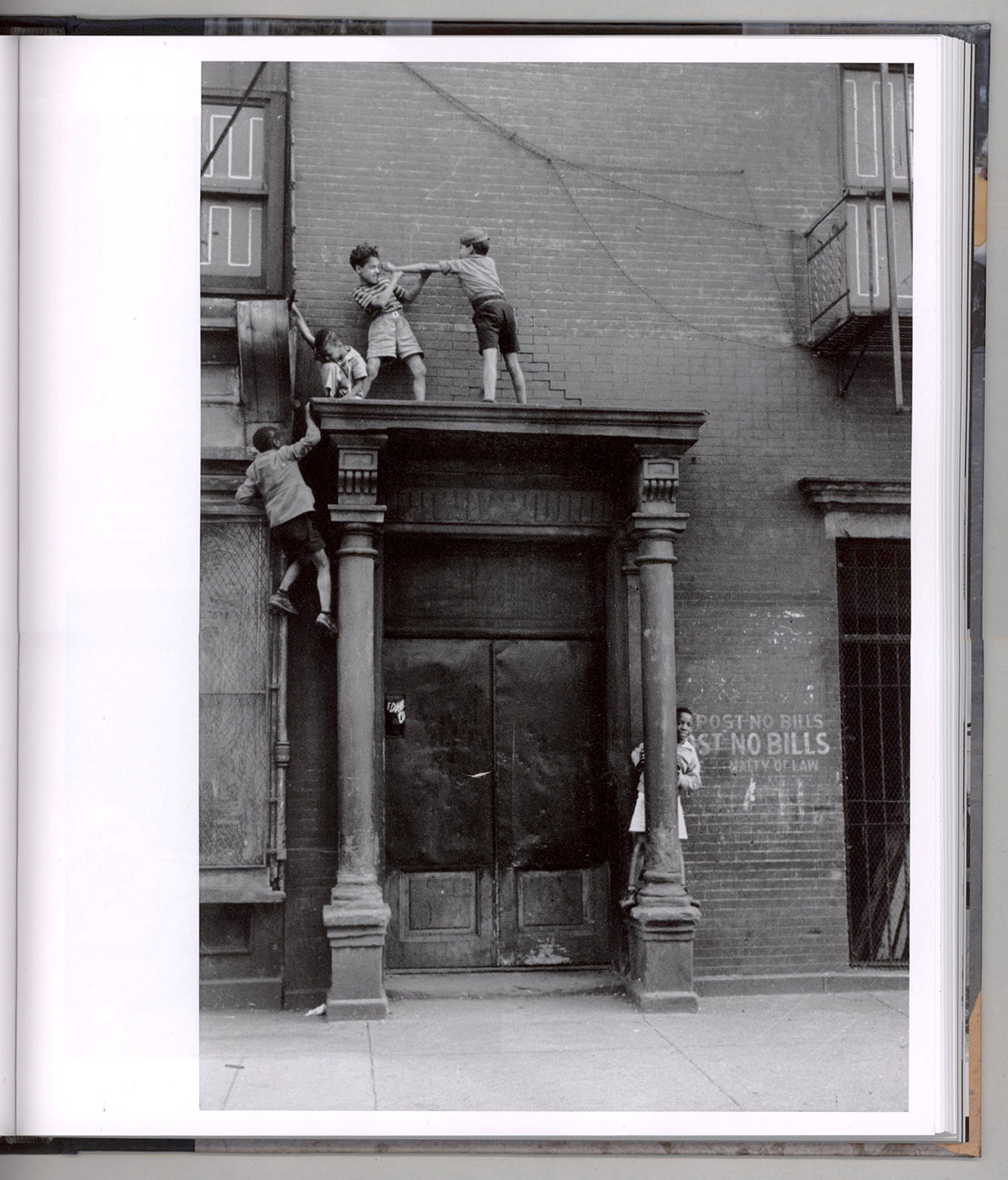
Page 177 returns us to one of Levitt’s central subjects: children transforming architecture into adventure. Boys climb and balance around a building entrance, making a stoop and façade into a landscape of risk. This is not innocence in the sugary sense. It is physical intelligence. Levitt respects children because they know how to use the city inventively. Their play is a form of reading the environment.
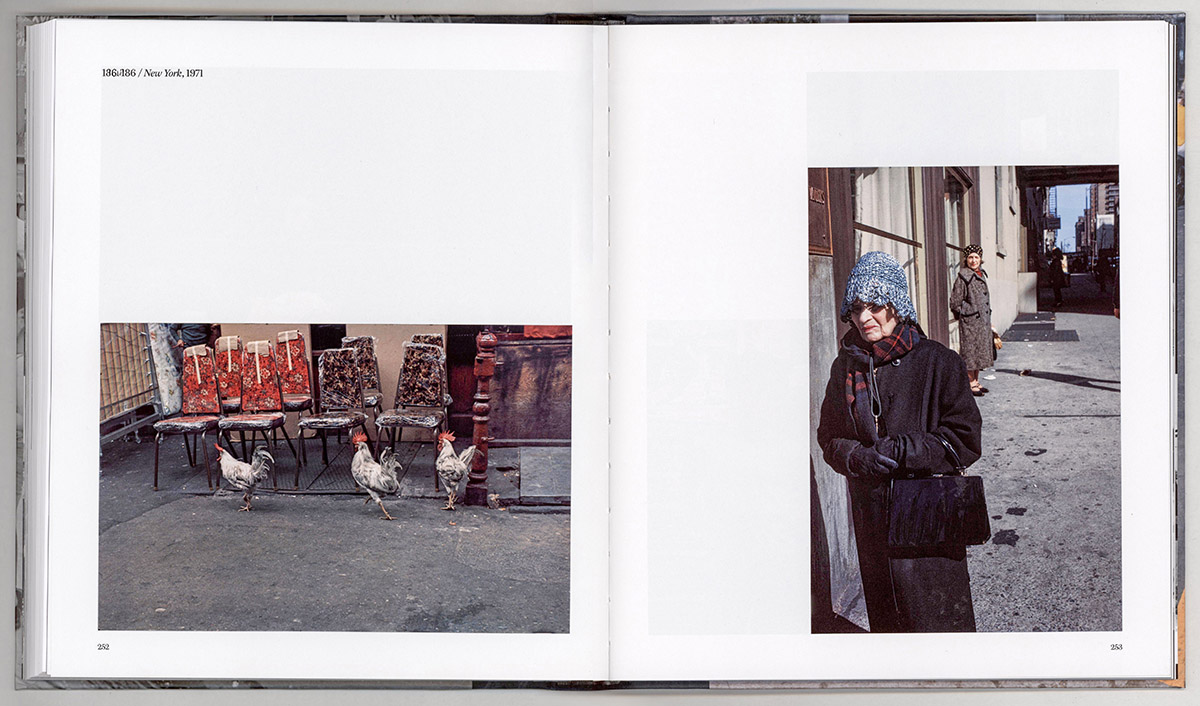
The later color pictures, as represented on pages 252–253, are a revelation. Not only do they use color for photography for street work, which was an innovation for its time, but they also show an exemplary use of color in other ways. Three roosters stand before a row of worn chairs, their combs echoing the reds and browns of the upholstery. Opposite them, an older woman in a blue patterned hat stands on the sidewalk, another figure receding behind her. Levitt’s color is observational rather than decorative. It finds humor, tension, and strangeness in the plainest arrangements. The city is always changing, but this photograher’s eye remains alert to visual rhyme and human oddity.
This book reminds us that Levitt was neither a sentimentalist nor a cold documentarian. She photographed people as makers of gestures, games, poses, glances, jokes, and private dramas. The essays provide valuable context, especially regarding chalk drawings, Mexico, gender, film, and color, but the true argument is made by the sequence of images. Levitt’s world is rough, funny, crowded, tender, and resistant to explanation. She gives us just what we see, and then makes us realize how much seeing can contain. This book is a great compendium of one of the most brilliant street photographer’s capabilities.
____________
Gerhard (Gerry) Clausing, PBJ Editorial Consultant, is an author, visual artist, and educator from Southern California who explores perception, transformation, and memory.
____________
Joshua Chuang, ed. – Helen Levitt
Photographer: Helen Levitt (1913-2009, born in Brooklyn, New York; died in New York City)
Texts: Joshua Chuang, Elisabth Gand, Lauren Graves, Monica Bravo, Freya Field-Donovan, Anne Bertrand, Joel Sternfeld
Language: English
Publisher: Thames & Hudson, New York and London; © 2025
Hardbound, with illustrated cover; 312 pages with 356 images; 9.75 x 11.25 inches (25 x 29 cm); printed and bound in Spain; ISBN 978-0-500-03097-4
____________
Articles and photographs published in the PhotoBook Journal may not be reproduced without the permission of the PhotoBook Journal staff and the photographer(s). All images, texts, and designs are under copyright by the authors and publishers.


Leave a Reply