Review by Hans Hickerson ·
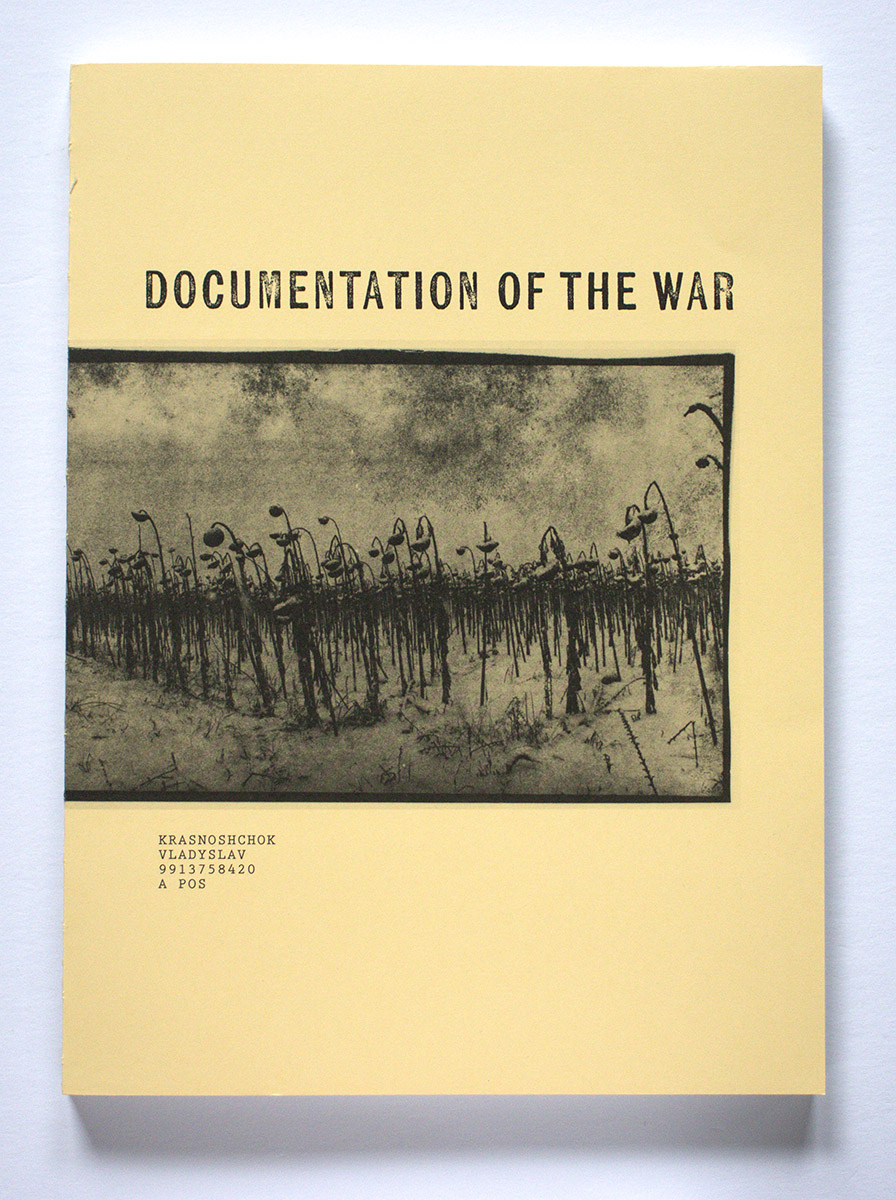
Less can definitely be more. Vladyslav Krasnoshchok’s Documentation of the War, for example, views like visual grunge rock – sound stripped down to its core. Like other successful photobooks it is a happy partnership of photography, texts, and design.
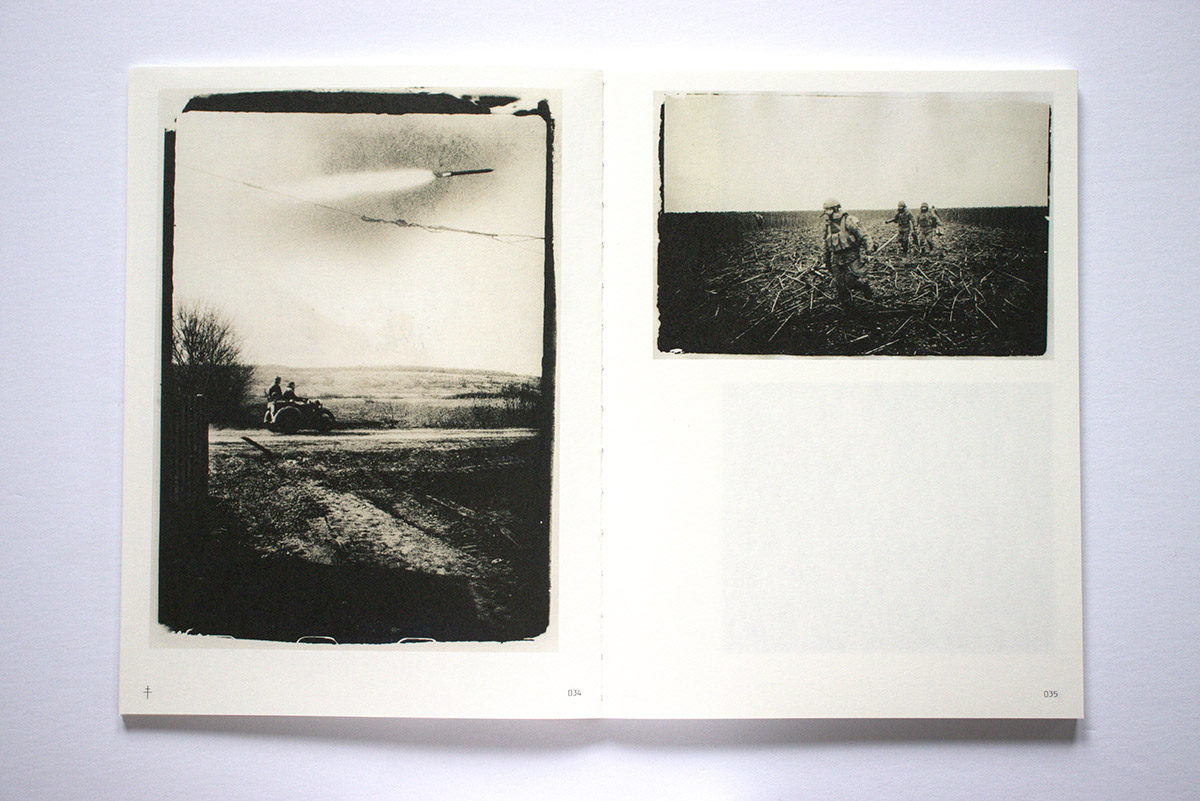
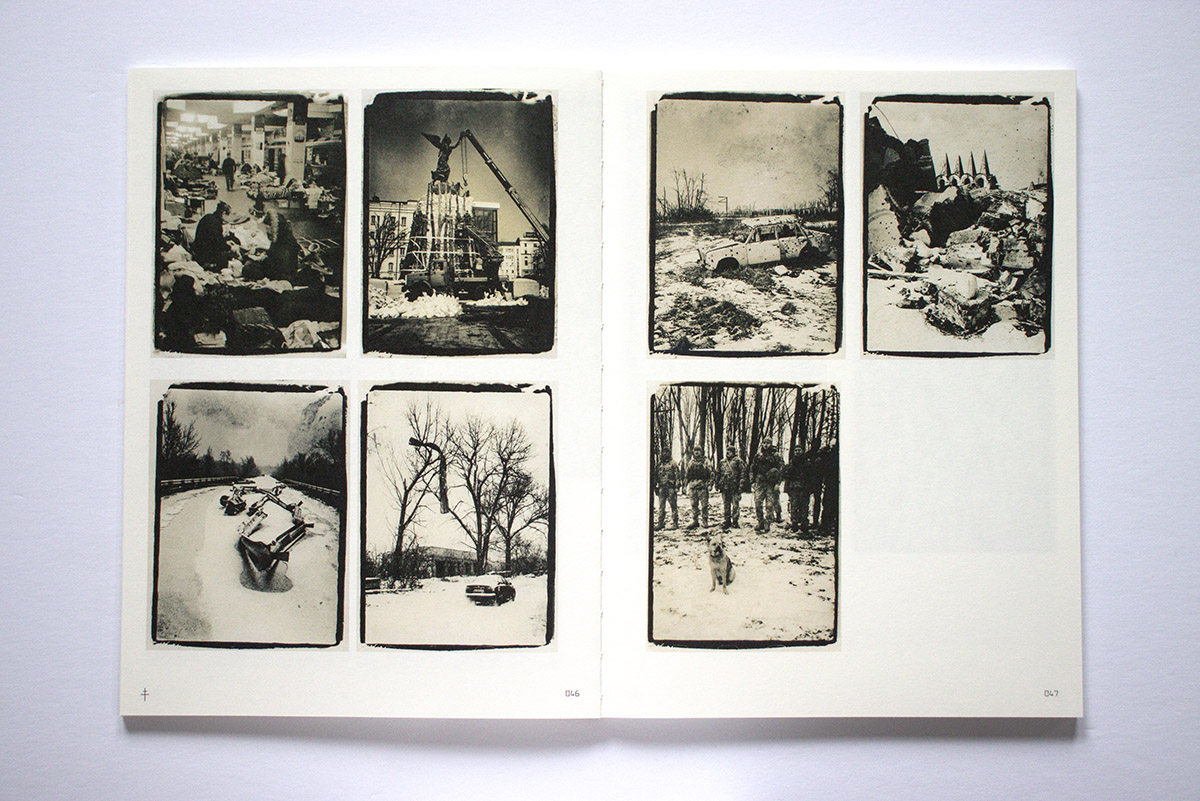
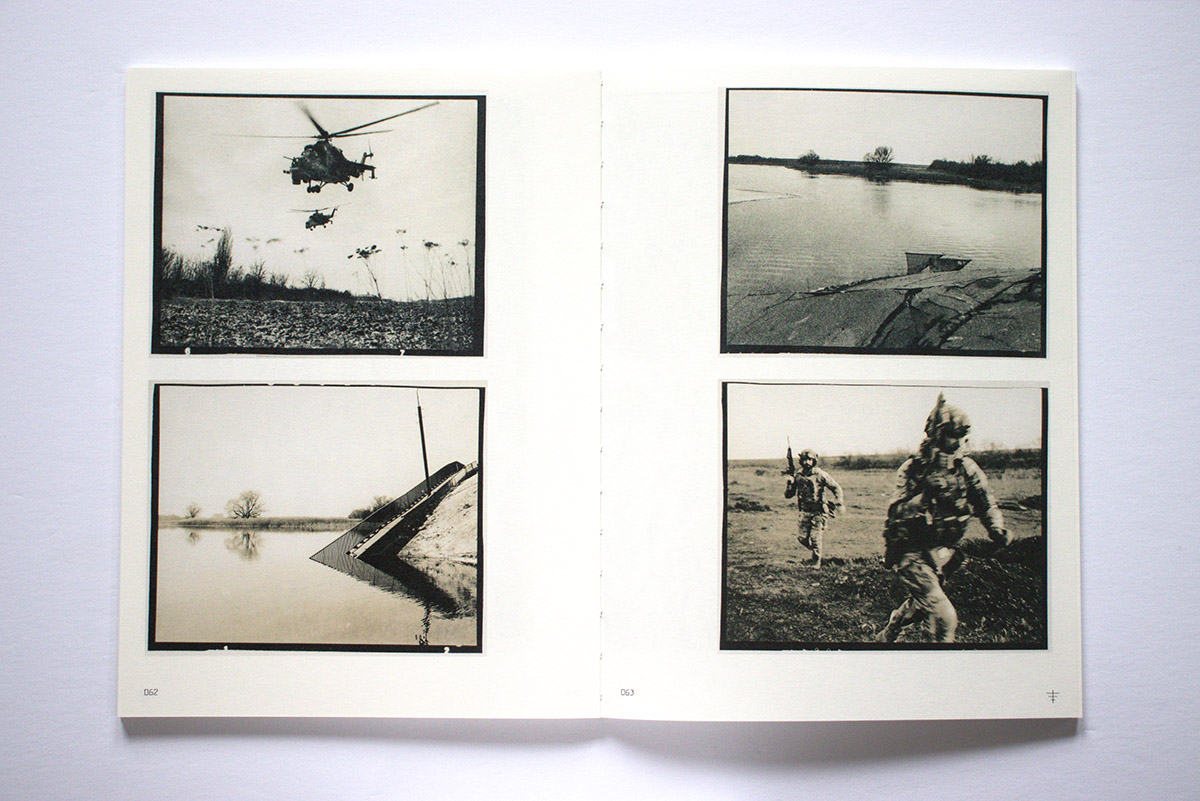
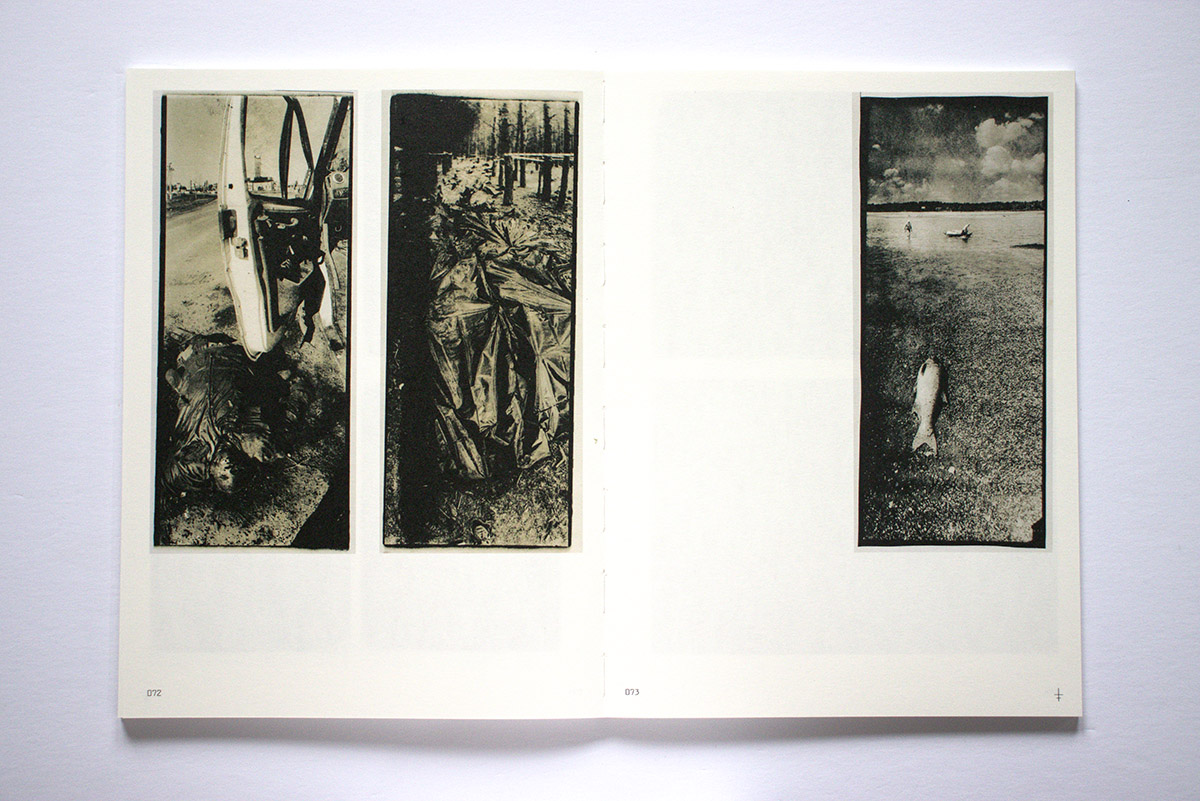
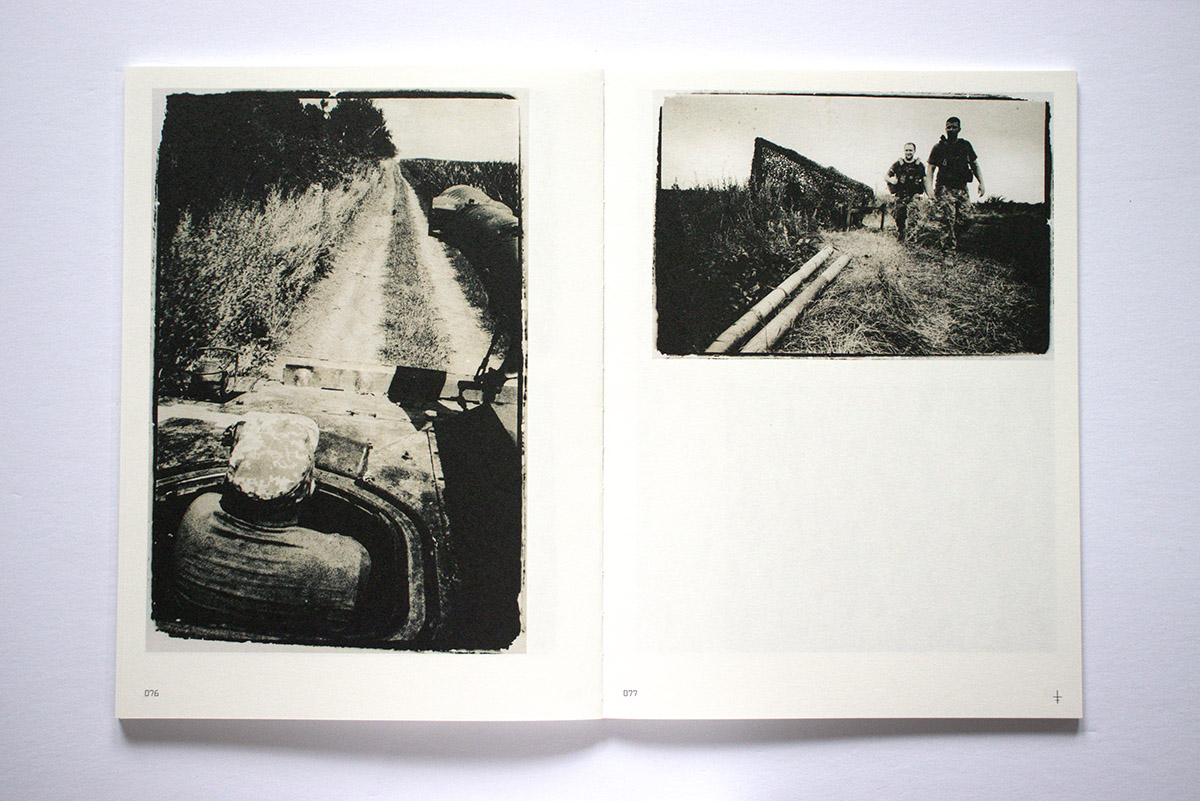
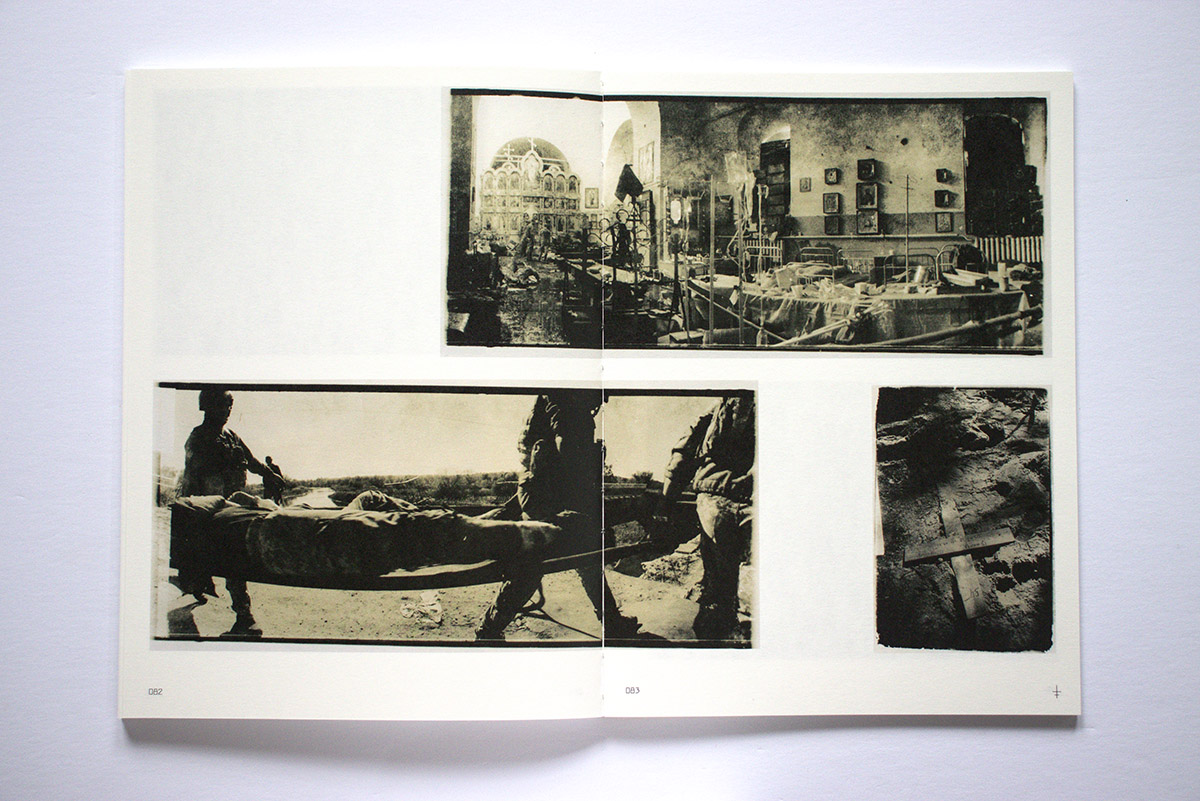
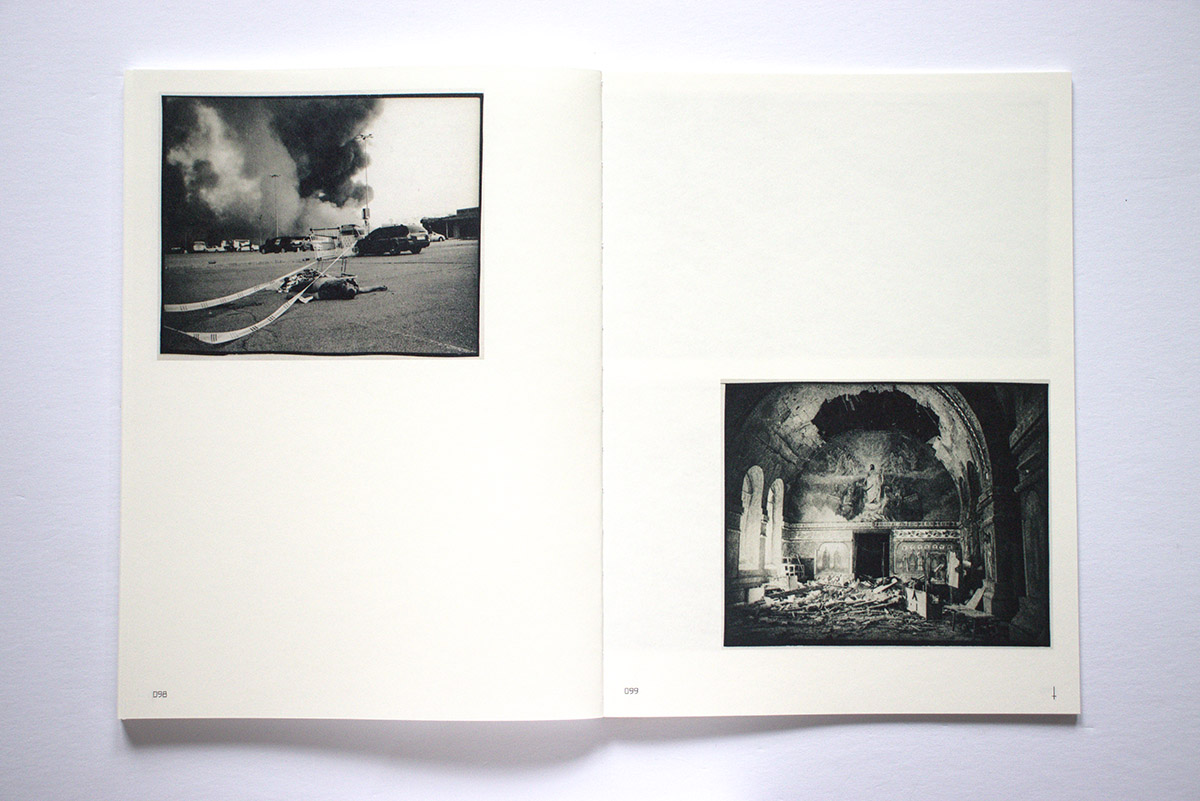
How to describe Krasnoshchok’s photographs? Adjectives like bleak, dark, raw, primal, primitive, gutsy, and graphic come to mind. Krasnoshchok’s images are reduced to essentials in a couple of ways. For starters, he uses traditional black and white film and makes his prints himself in a darkroom. In the book it looks like the photos have been scanned rather than the negatives, a choice that reduces the range of subtlety and richness in the details. Shadows are often blocked out, details can be blurry, the skies grainy, blotchy, and dirty – or is that a shell exploding? Hard to tell. Krashnoshchok is not interested in fine detail but rather the main idea.
The uncoated paper stock also slightly limits precise rendering. It is warm-toned, and the photos have a pronounced antique copper color such that many without obvious reference to modern technology resemble vintage scenes from World War II or the U.S. Civil War. Timeless, like the cover photo of a field of sunflowers, with only the small dot of a car to locate it in the last 100 years of human history.
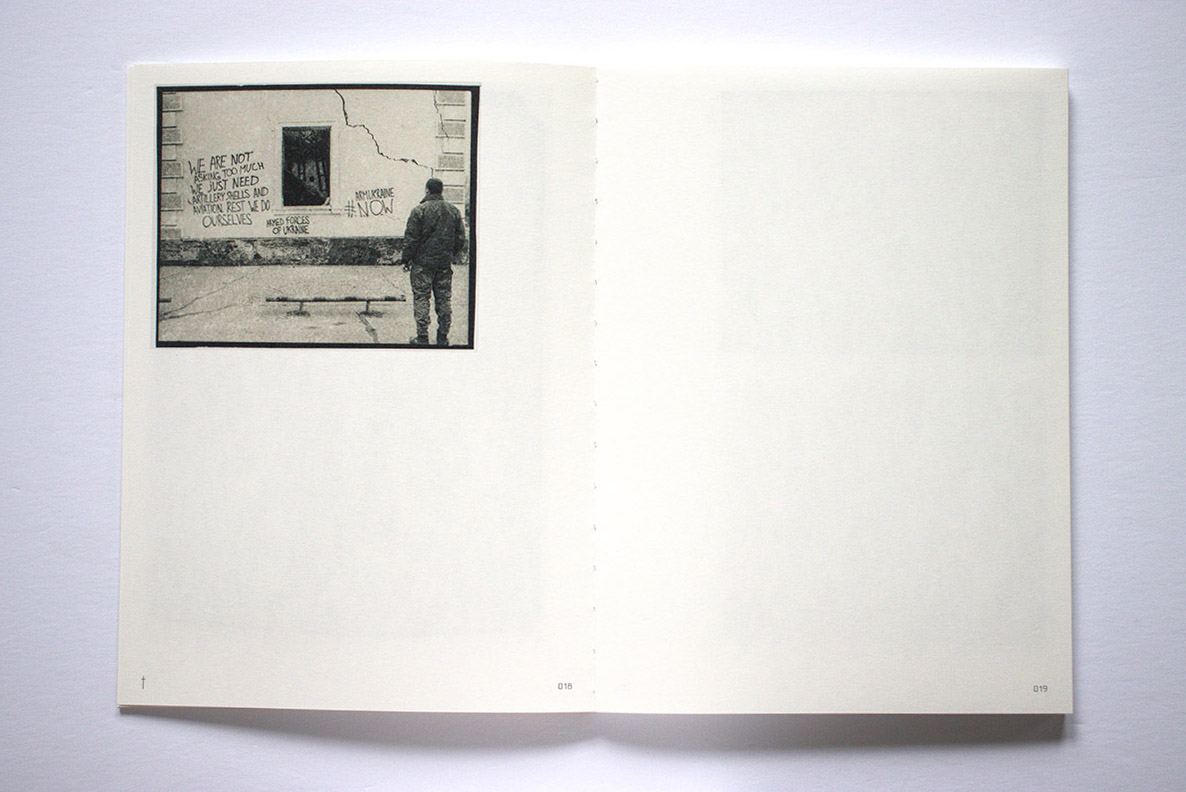
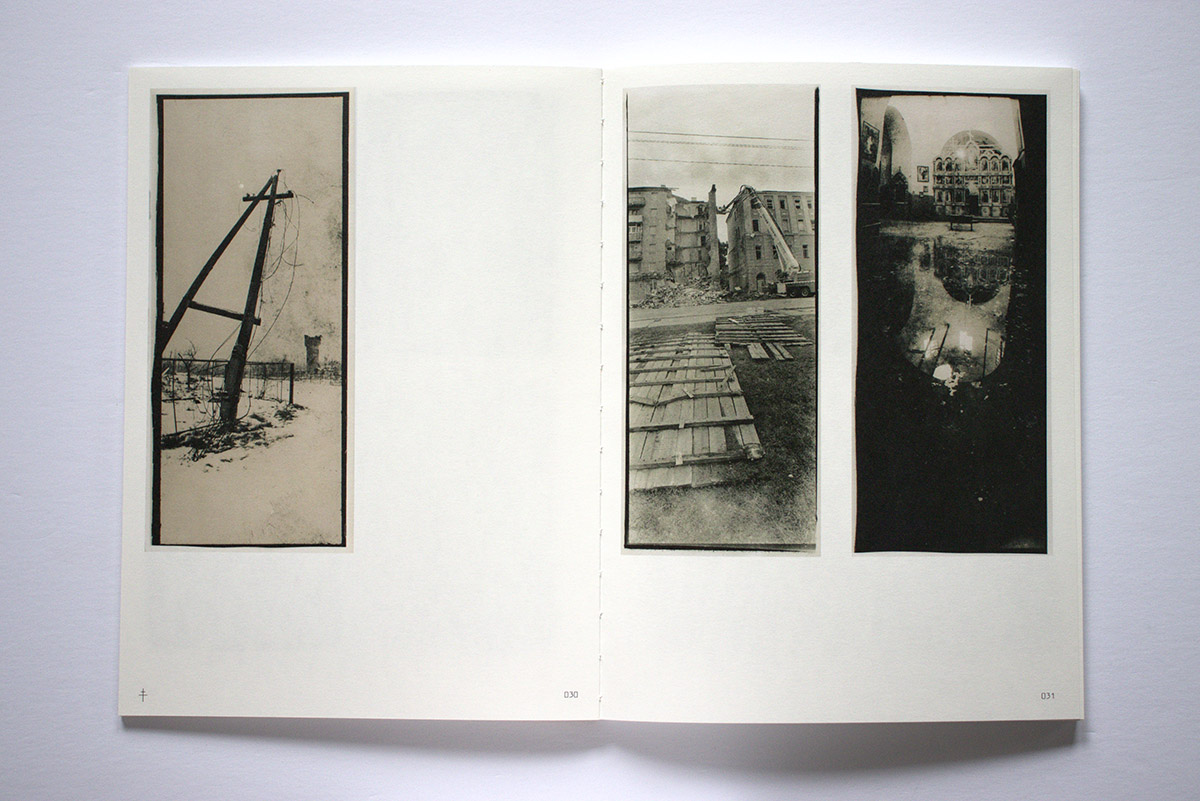
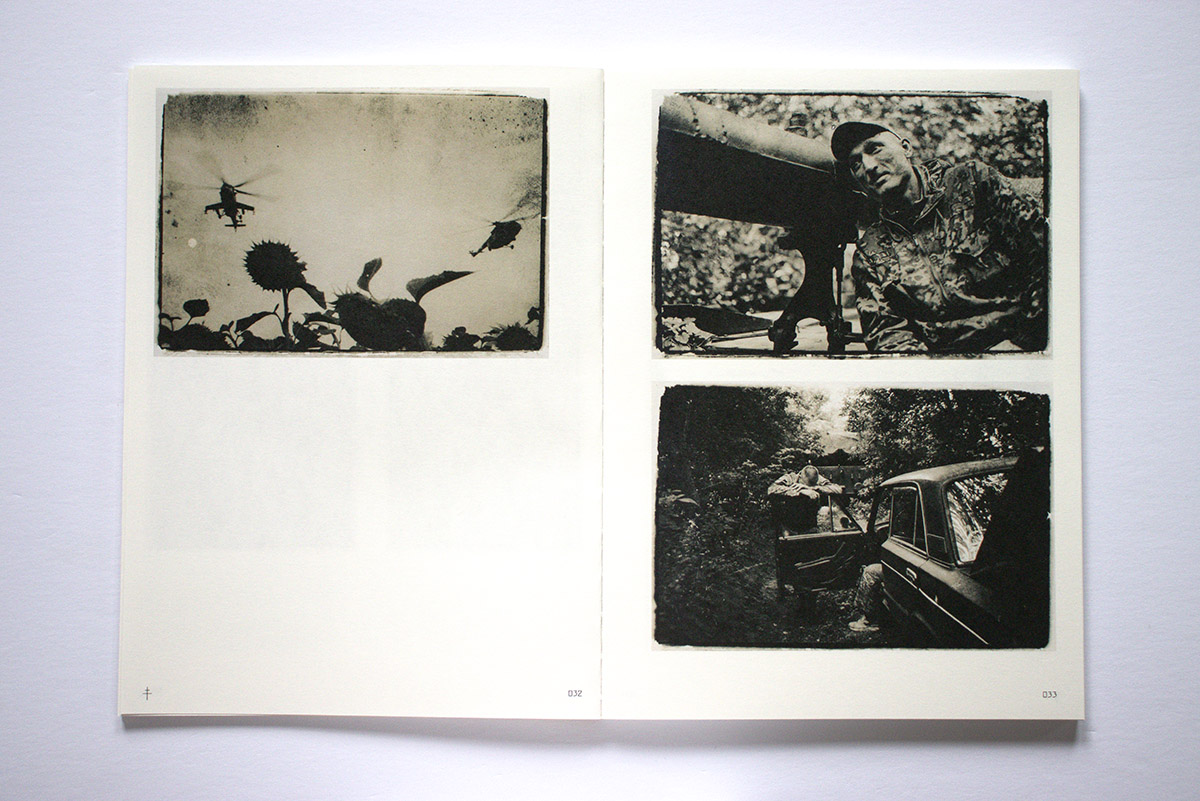
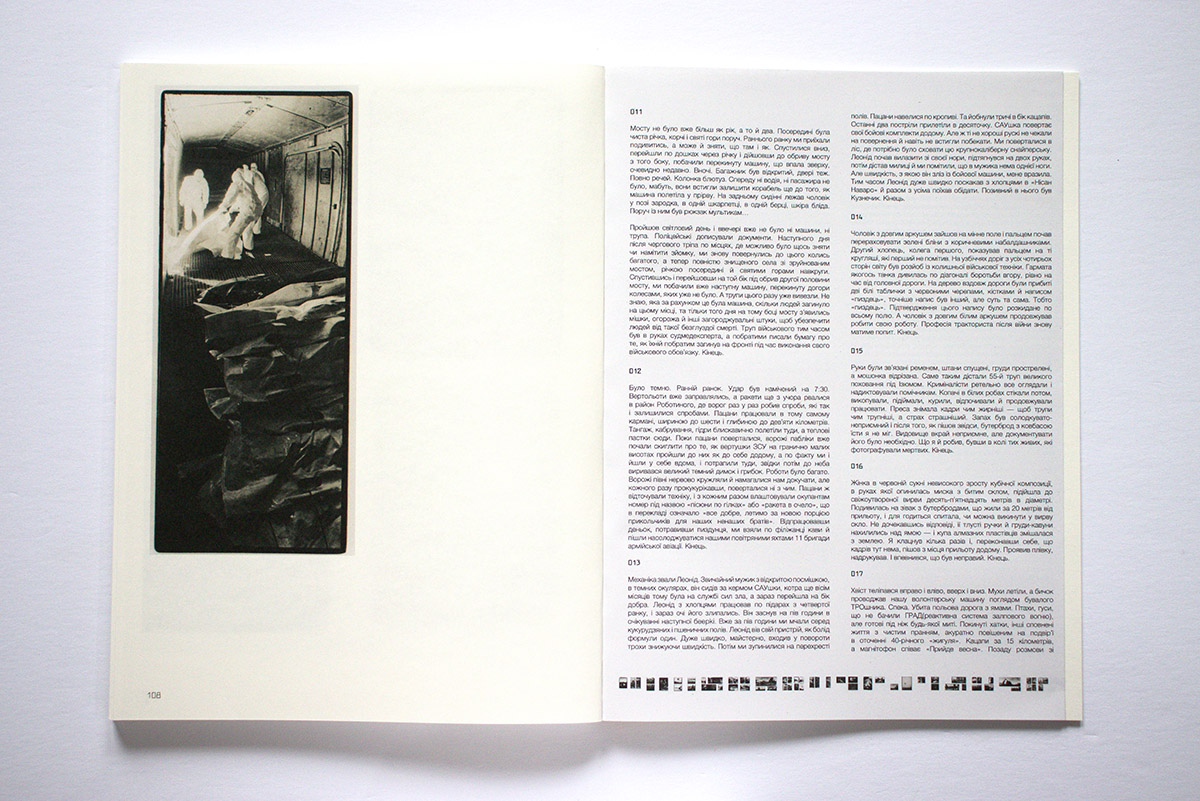
Krashnoshchok sees himself as a collector of war-related themes that he describes as pieces of a puzzle. The war has many facets and dimensions, and Krashnoshchok offers a balanced buffet of faces and places. We see shattered, broken, blasted houses, shops, churches, apartments, bridges, trees, cars, and military vehicles. We see soldiers relaxing, running, looking anxious, hunkering in holes, walking with their weapons, training, firing missiles and howitzers, being carried on stretchers, repairing vehicles, riding on tanks, loading firewood, and launching drones. We see helicopters, mortar and artillery shells, assault rifles, ammo boxes, minefields, tank traps, tanks, rocket launchers, motorcycles, and armored personnel carriers. We see many muddy roads. Dead bodies too. Animals: a cat, cows, fish, probably some pigs, but hard to say for sure. And dead people: a body sprawled in a parking lot, smoke billowing from a nearby building. A partly decomposed, booted body next to a blown-apart vehicle. Bodies and body parts excavated from mass graves. A corpse with two large holes in its back. A skeleton corpse. Bodies in bags, piled into a rail car.
It’s not pretty, it’s not romantic, it’s not heroic, but it is memorable.
The layout includes photographs of different sizes in various formats – landscape, portrait, and some stunning horizontal and vertical panoramas. There is a smooth flow to the images. The book includes two foldouts of text, one near the beginning and one near the end. The texts, in Ukrainian and English, are Krasnoshchok’s episodic comments on the war, including his experiences at the front lines, losing friends, attending funerals, and documenting the camaraderie and bravery of Ukrainian soldiers. Along the bottom of the foldouts is a sequence of tiny thumbnail pictures of the photographs in the book. It is a clever reminder of the importance of design and how it can be intentionally made to disappear. Also included is a printed insert, in Ukrainian and English, listing key dates in recent Ukrainian history.
A grim, gritty visual report on the ongoing situation in Ukraine, Documentation of War reminds us that while our lives may be normal, other people’s are not.
Hans Hickerson, Editor of the PhotoBook Journal, is a photographer and photobook artist from Portland, Oregon.
____________
Vladyslav Krasnoshchok – Documentation of the War
Photographer: Vladyslav Krasnoshchok (Ukrainian, born 1980, lives in Kharkiv)
Publisher: Red Hook Editions © 2026
Language: English and Ukrainian
Text: Vladyslav Krasnoshchok
Design: Jason Eskenazi & Alexander Paterson-Jones
Printing: Grafiche Antiga, Italy
Soft cover with die-cut dust jacket; 165 photographs; Swiss binding; 136 pages, 2 tri-folds; 22 x 30 cm; ISBN: 978-1-7376814-8-9
____________
Articles and photographs published in the PhotoBook Journal may not be reproduced without the permission of the PhotoBook Journal staff and the photographer(s). All images, texts, and designs are under copyright by the authors and publishers.


Leave a Reply