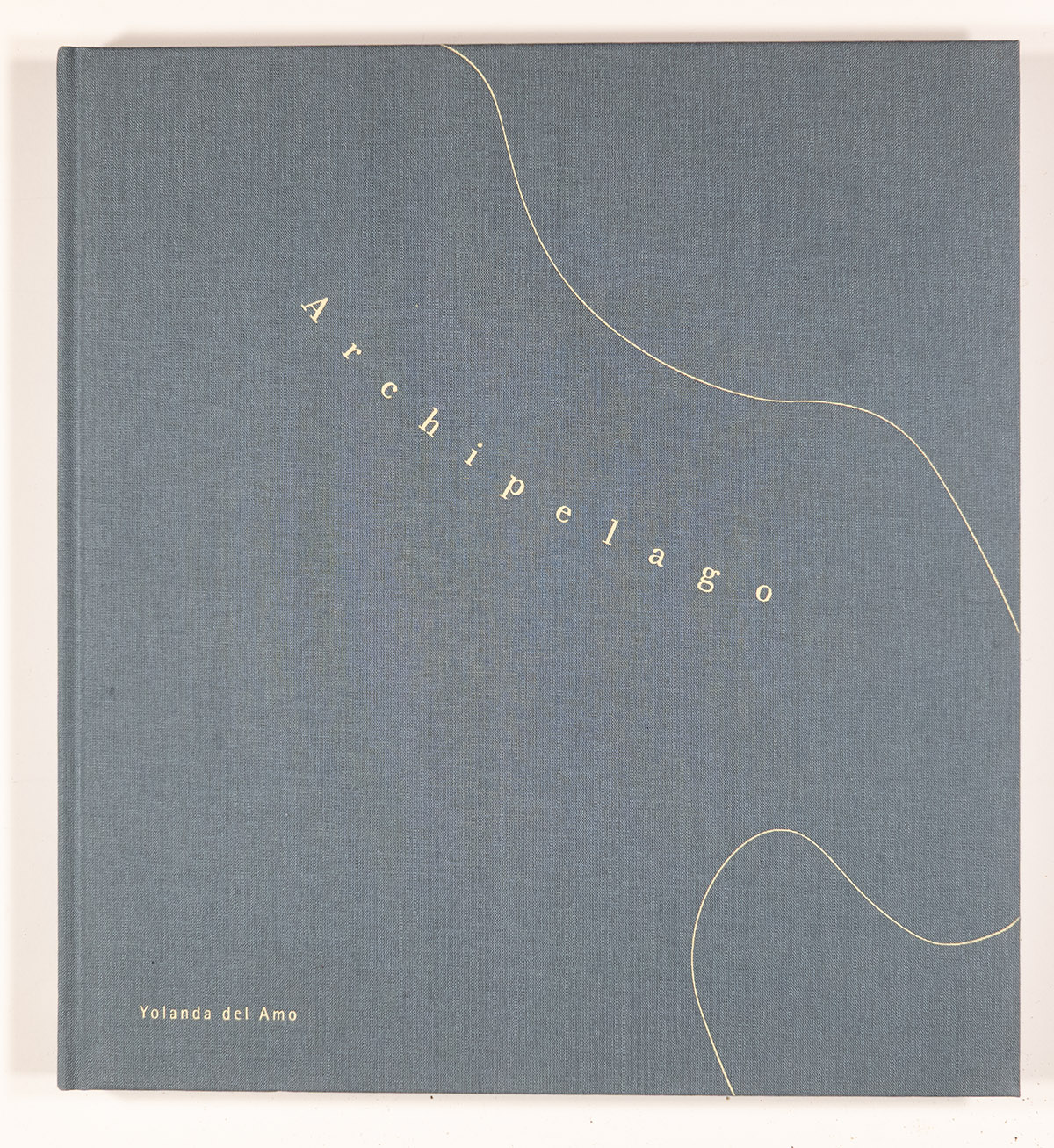
Review by Steve Harp ·
And everywhere I keep my silence, no sound returns to me.
Just endless waves at the end of our days, the sighing of the sea.
Alan Gaylor, “Tiny Island”
In Isabelle, Emilie, a photograph in Yolanda del Amo’s 2026 monograph Archipelago, two young women sit at a table in a diner. The figure on the left stares over her shoulder to her right, out of the frame. The figure on the right looks, gaze slightly elevated, to her left. Her eyes are closed or, possibly, barely opened slits. The two are not communicating – though at the same table, they seem to be in different spaces altogether. On first glance, the location looks to be an outside café at a tropical resort. In the distance appears a stretch of sand beach with palm trees and a cabana, puffy clouds in a blue sky, water gently rolling onto the shore. Look for more than a moment, though, and you realize that this is a trompe l’oeil painting on the wall behind them. We have no idea where they are, other than at table 4.
An archipelago, according to Miriam-Webster, can be defined as “a group of islands” or “an expanse of water with many scattered islands.” We might think of the photographs – and more specifically, the human subjects therein – in Archipelago as “a collection of ‘islands’“ according to del Amo as quoted in the opening essay, “Islands in the Sea of Life” by Vicki Goldberg. What might it mean for photographs (or the subjects depicted) to be thought of as “islands”? What associations are called up? Separation, distance, lack of relationship or communication or connection . . . Goldberg goes on to liken the scenes depicted by del Amo in this volume to “moments from unwritten plays.” Narrative moments disconnected from each other, floating, just as the subjects depicted within each frame seem disconnected from those they share the frame with.
The clear sense of staging in these photographs immediately brings to mind the work of two other contemporary photographers whose work is likewise planned and meticulously arranged before exposure, Gregory Crewdson and Jeff Wall. But whereas the narrative moments (or “encounters”) Crewdson crafts suggest an underlying menace and dis-ease akin to the worlds of David Lynch, and the banal “instants” Wall creates unsettle precisely because in the scenes presented, the viewer knows they are anything but “everyday moments,” del Amo’s scenes unsettle differently.
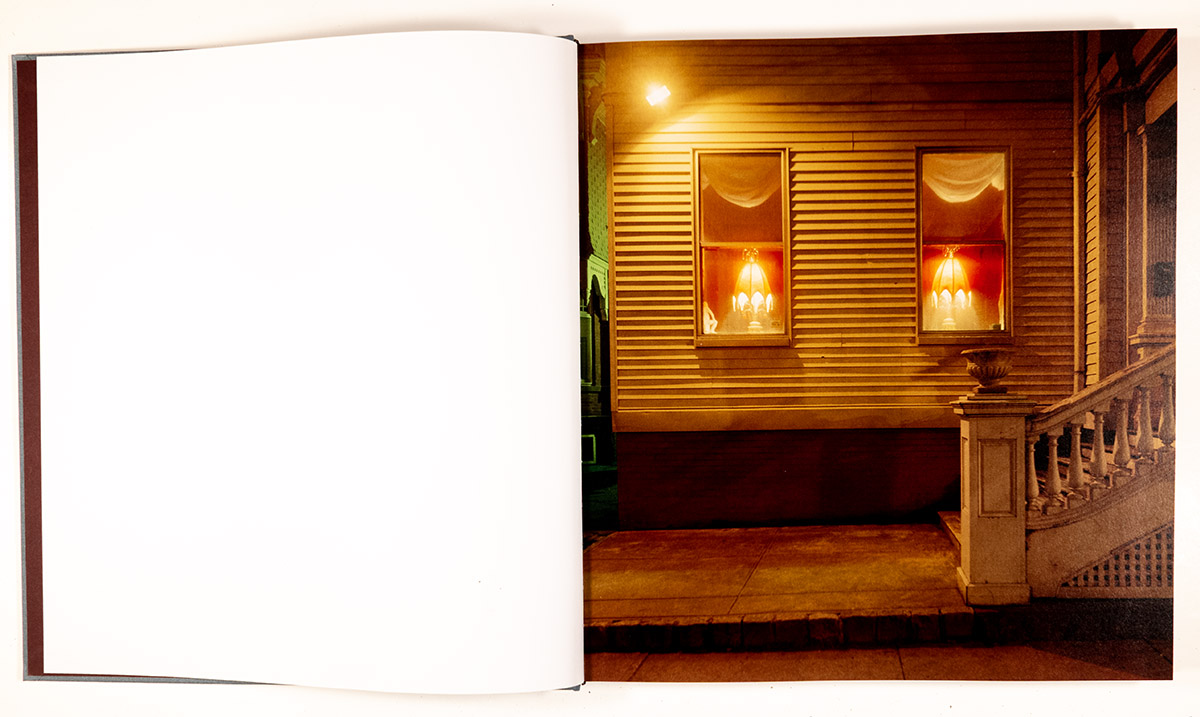
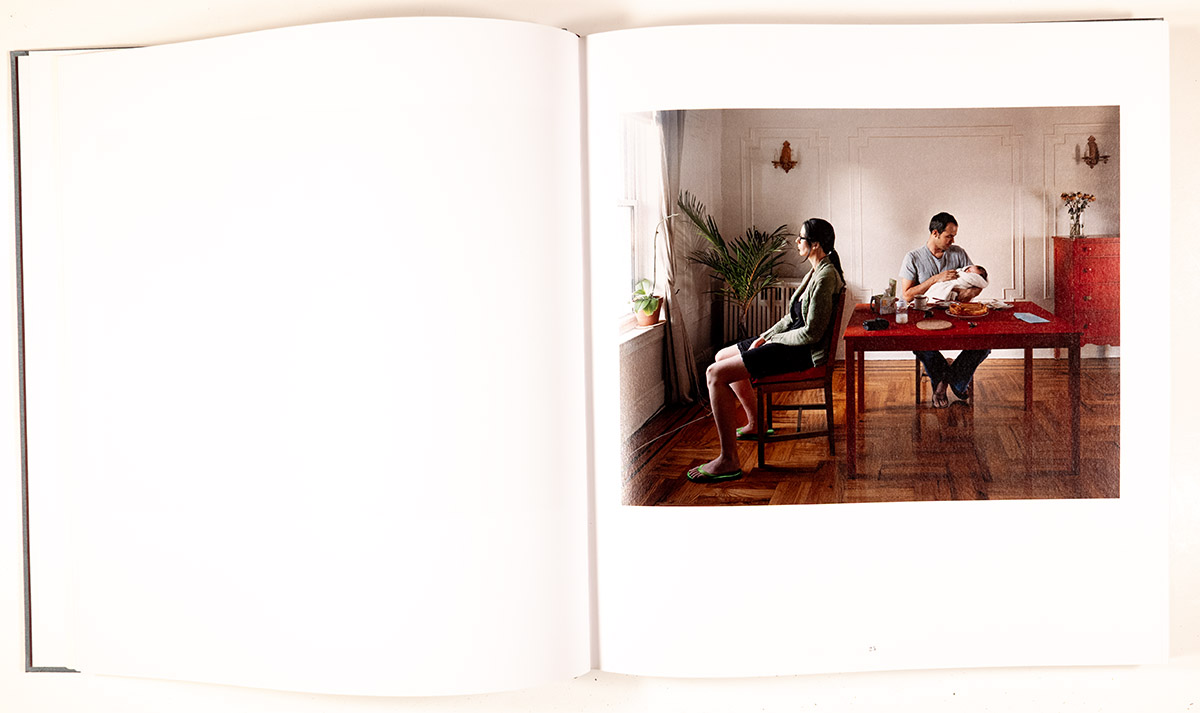
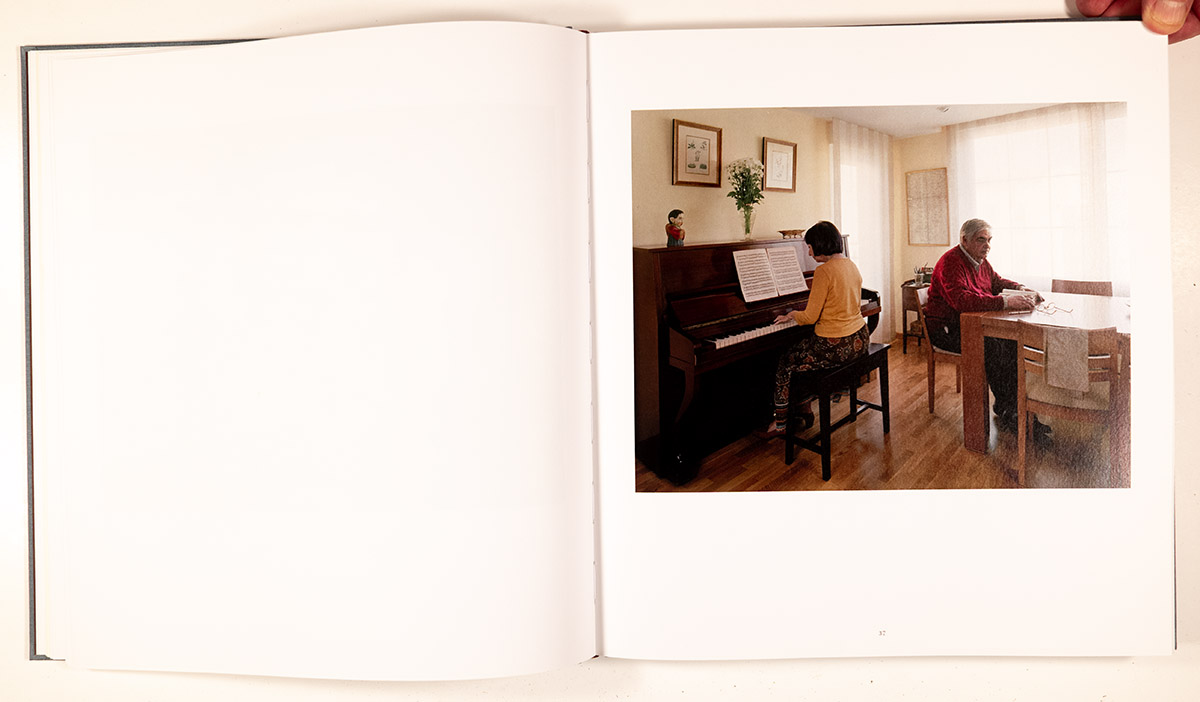
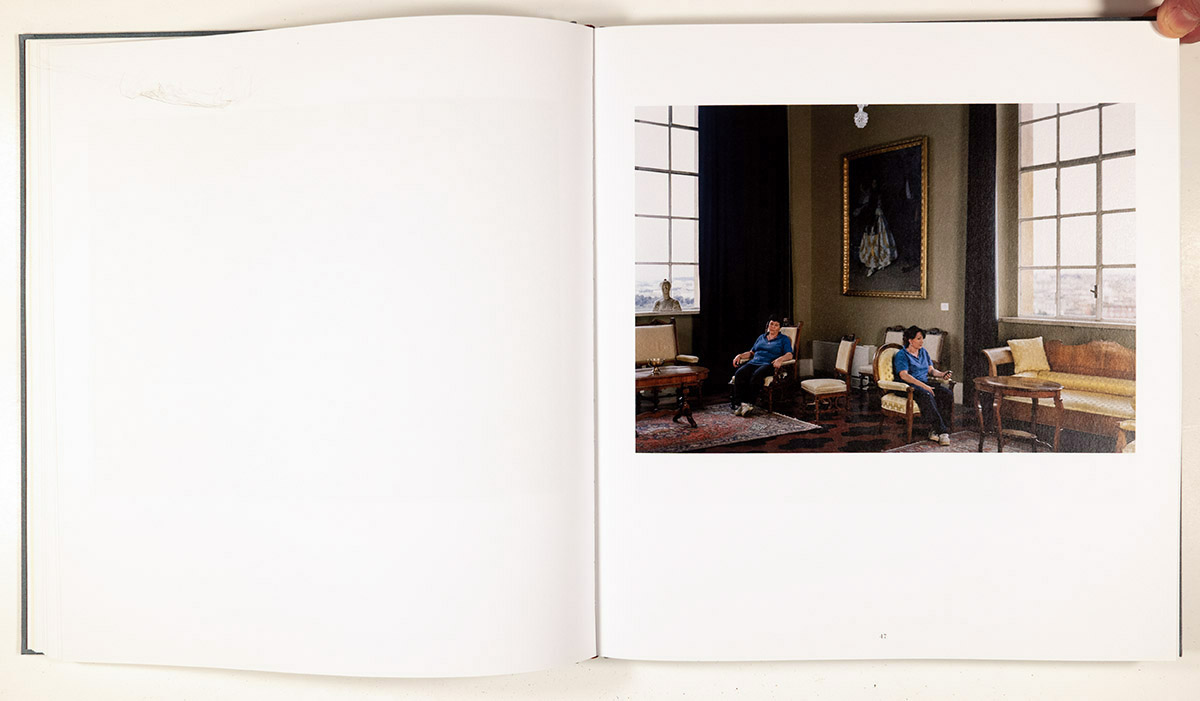
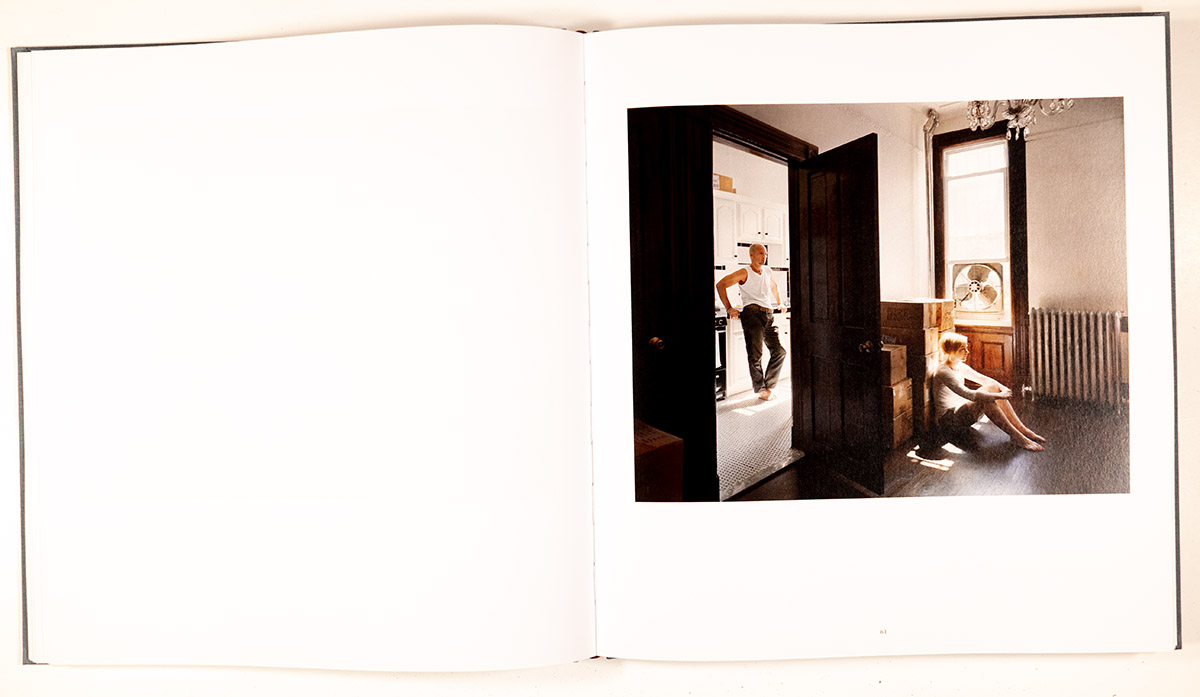
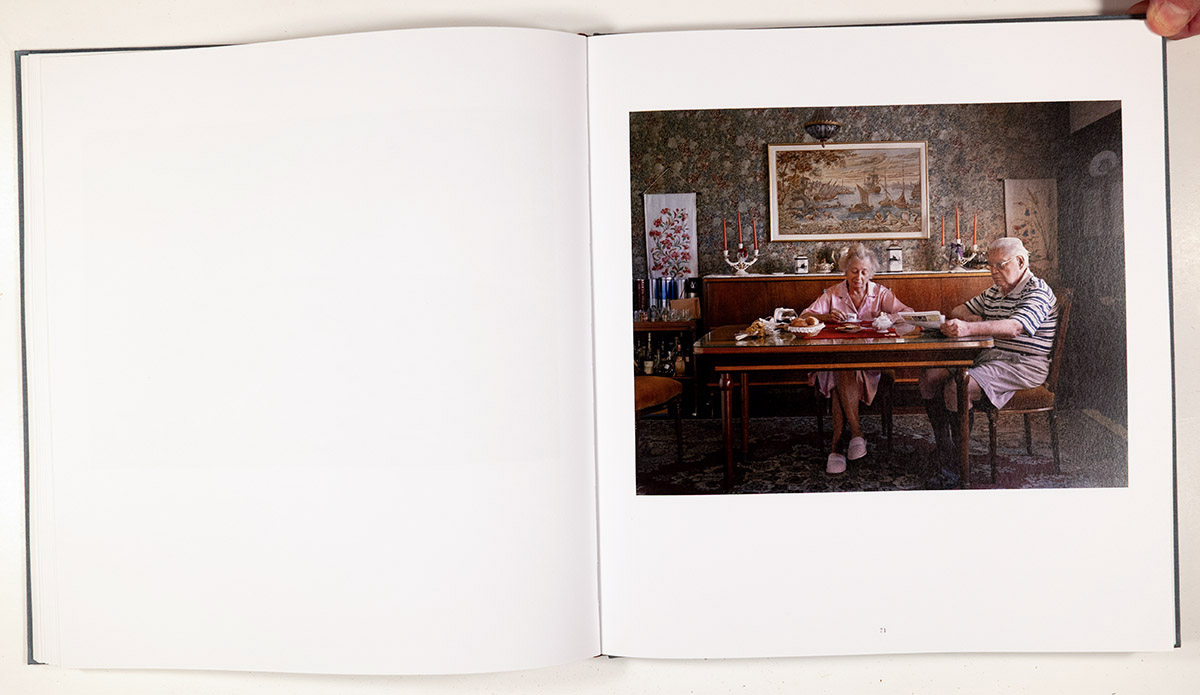
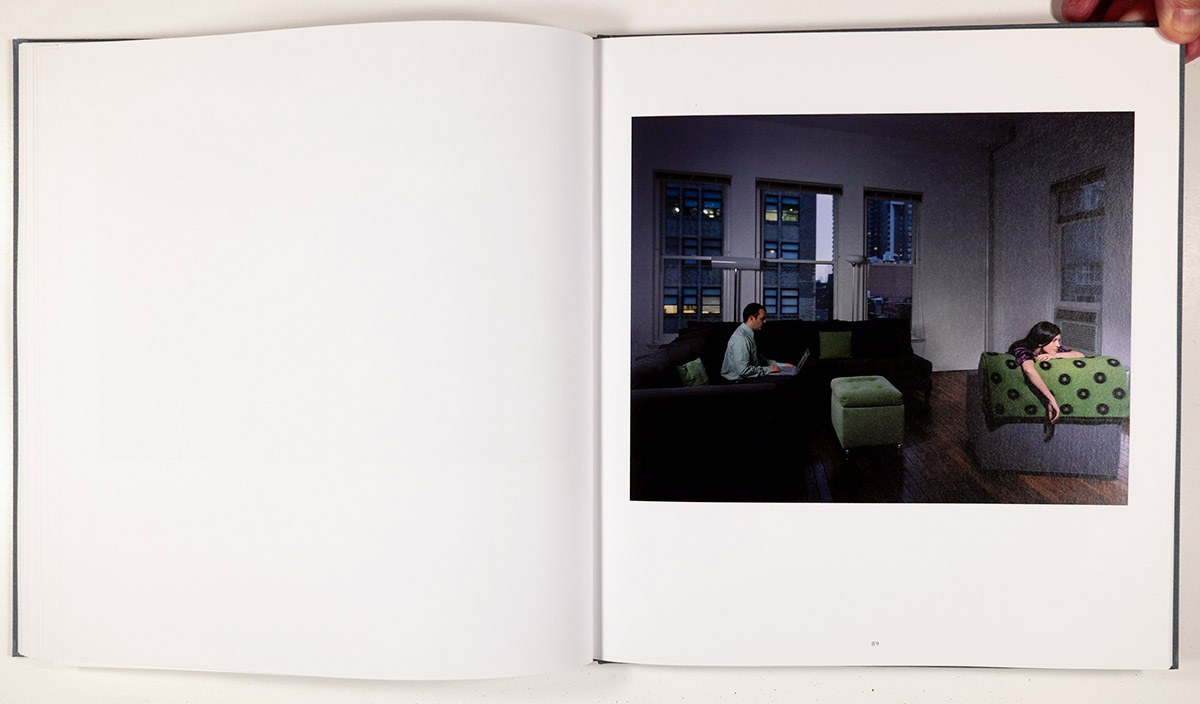
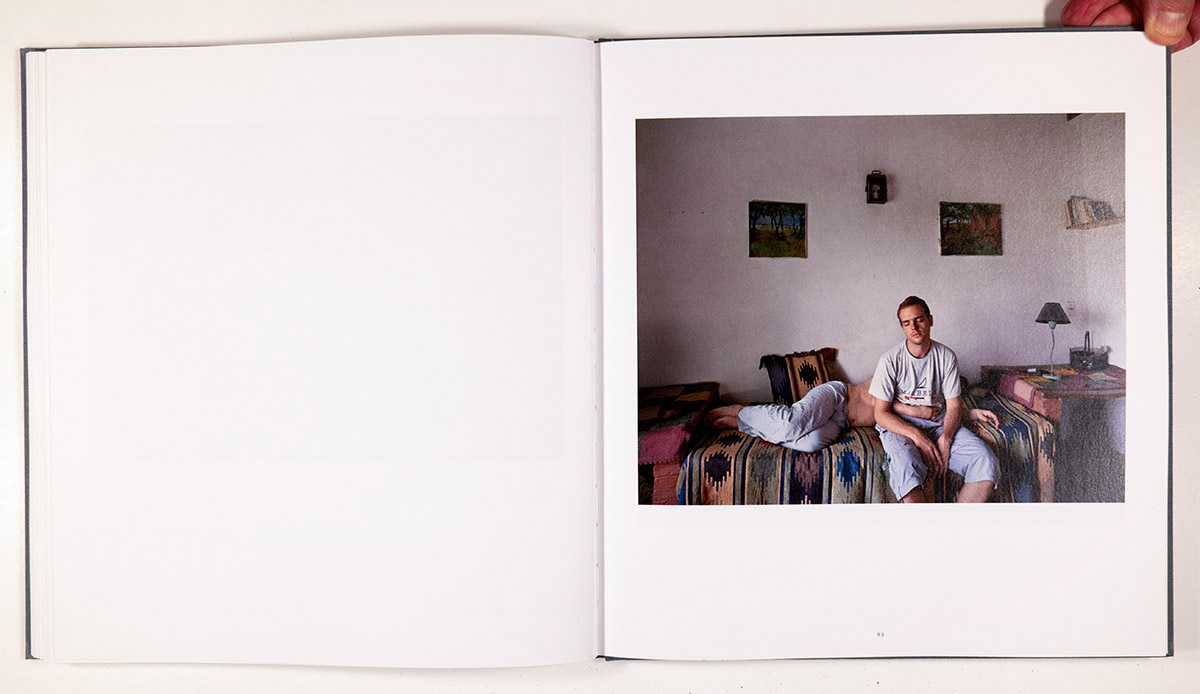
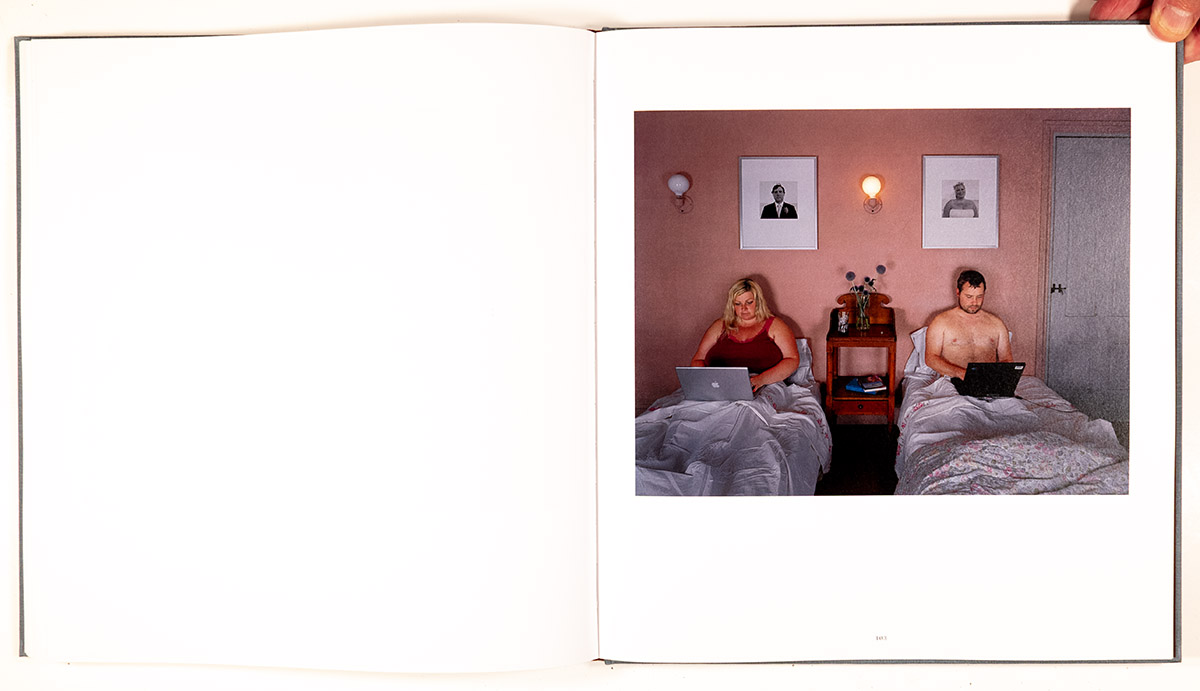
The book consists of 47 images, each presented in standard “American format” spreads (photograph on the right side, the left page blank). Other than the opening image (a full-bleed exterior view of the side of a house, two windows illuminated by lamps inside) and the final image (another exterior view looking through widows at two figures inside in different rooms) the other images are domestic tableaux. Most (though not all) are interiors, with the primary focus, narratively speaking, on the figures inhabiting each scene and their relationship. Or, perhaps, lack of relationship. Except for Barbara (p. 67), every other photograph has two or three subjects (one has four). What becomes increasingly and overwhelmingly apparent as one leafs through these images, is the ambiguity or uncertain connection between the figures presented. Often gazing in different directions, looking past each other or even in different rooms, the figures truly seem as islands – perhaps physically close, but experientially in separate worlds – even in those images in which there is a physical connection between the subjects. (I’m thinking of Gonzalo, Miguel, [p. 93], in which one has his arm around the waist of the other, the embraced figure has his eyes closed and head tilted – is this a look of contentment or an escape into a different mental space?)
The photographs are titled uniformly and simply: the names of the “characters” in the frame or scene. I scanned through the titles and names several times, curious as to whether there were recurring presences and, with any possible recurrences, whether anything approaching characteristics might start to emerge in repetitions or interactions. Fernando appears twice (on pages 37 and 39), with Charo and then with Juan. In both photographs the figures look off in different directions. Other than Fernando, I did not see any repeated names. I was reminded of Robert Altman’s 1993 film Short Cuts, which weaves together ten Raymond Carver stories with an ensemble cast and interconnecting story arcs. No weaving together here – separate islands, disconnected islands.
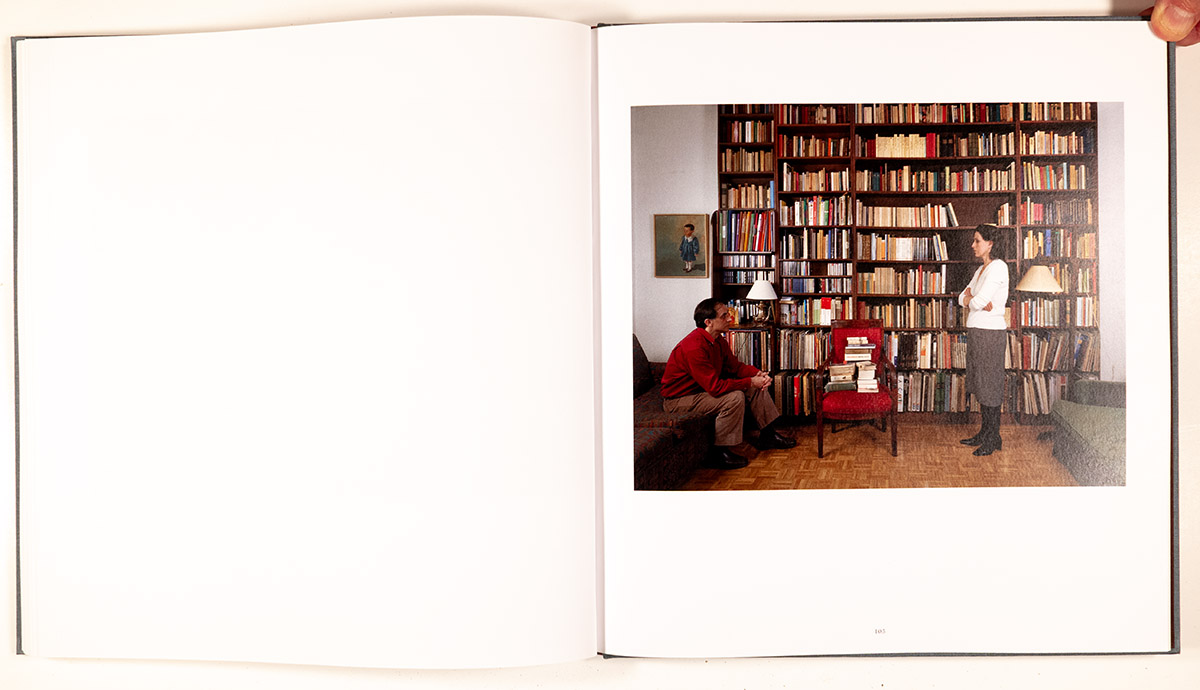
The volume’s concluding essay, “Alone Together” by Jean Dykstra remarks on the qualities of uncertainty, mystery and secrets at play in these images. One becomes something of a detective in parsing these photographs, searching the mise-en-scène for clues to the narrative. Leonor and Jose face each other across a chair stacked with books (Leonor, Jose p. 105). The backdrop is a room-sized bookshelf filled with books and journals. What seems like the weight of academic learning fills the room, yet what seems equally present in their closed-mouth stares at each other is an absence of communication, a lack of the ability to share experience. Next to the bookshelf on the left side of the photograph is a small painting of a child staring off frame to the left, into the blind field, a place elsewhere but not here.
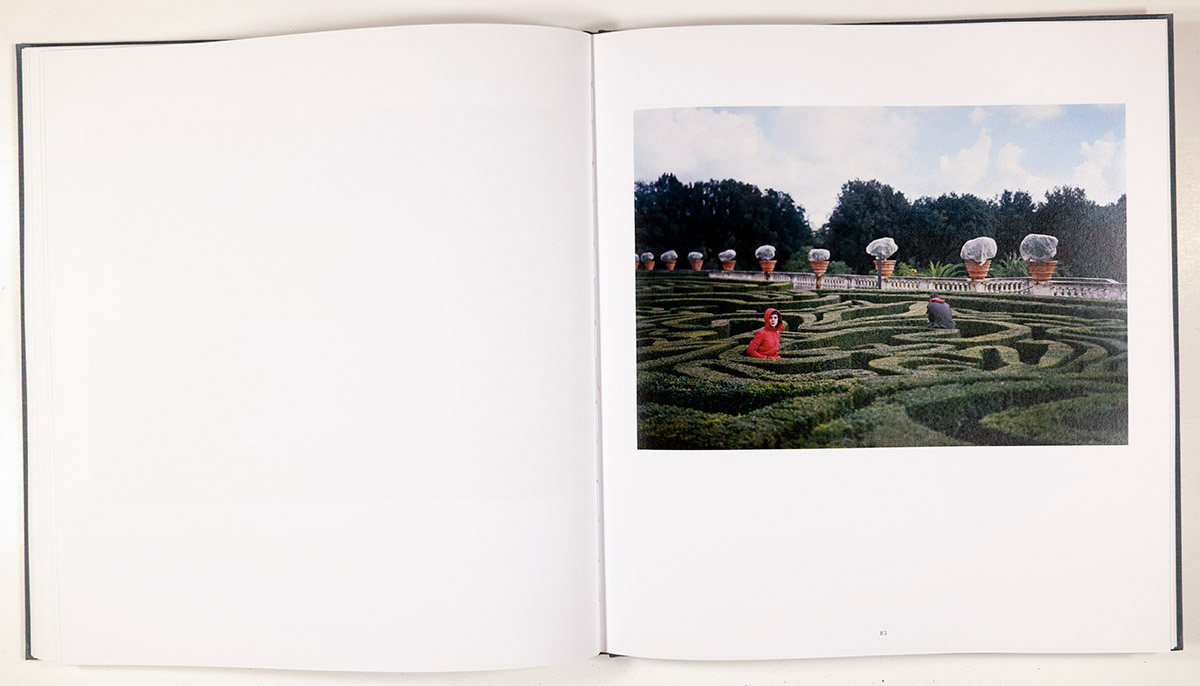
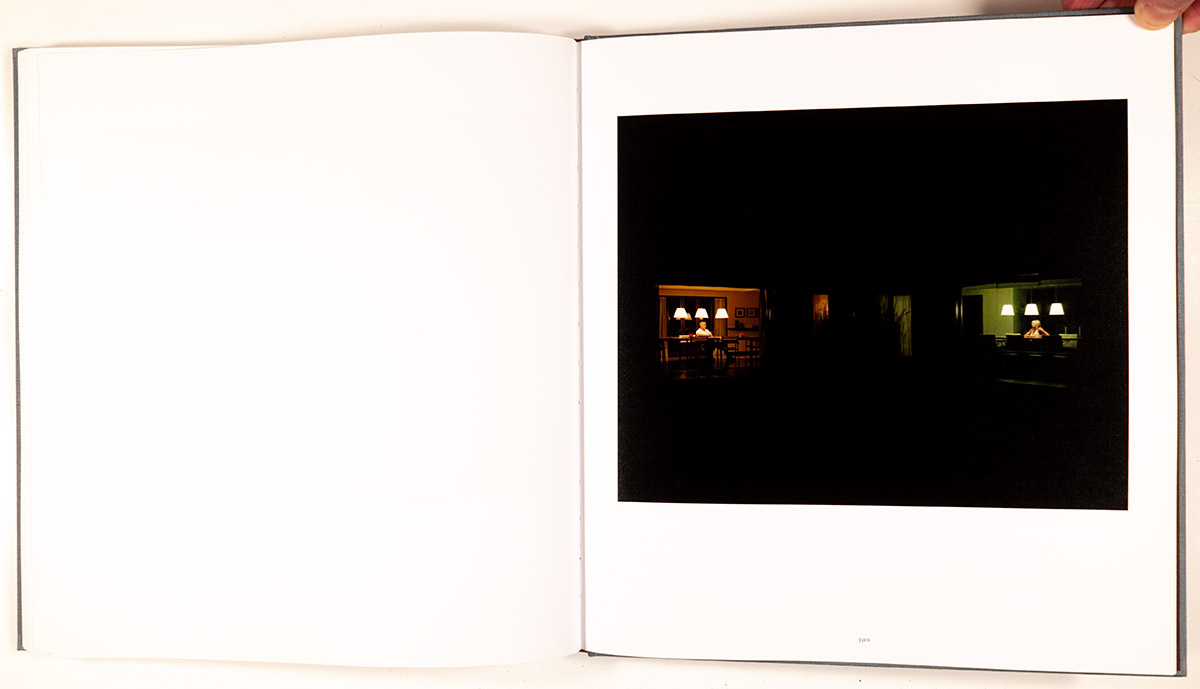
This lostness is literalized in Noemi, Joseant (p. 85) depicting two children in a hedge maze. One stares directly into the camera, the other is hunched over, back to the camera, hardly visible. Secrets and mysteries abound – the resolute silences of these photographs suggest an impenetrability, rendered more so due to the absolutely precise construction of each photograph, the composition of the frame, the placement of people and objects. Exact, still, frozen in a kind of photographic amber. We search for meaning in these clues, for a “map” of these islands but we remain lost. The book’s final image (Marcella, Hugo p. 109), the exterior image looking into two windows of two figures in separate rooms, quite powerfully reminded me of Edward Hopper’s Nighthawks. A similar color palette, depicting figures in the same space but different worlds, a permeating sense of loneliness and solitude.
Contributing Editor Steve Harp is Associate Professor at The Art School, DePaul University
__________
Yolanda del Amo – Archipelago
Photographer: Yolanda del Amo (born Madrid, currently resides in New York City)
Publisher: Kehrer Verlag, Heidelberg, 2026
Essays: Vicki Goldberg and Jean Dykstra.
Text: English, Spanish
Design: Hannah Feldmeier.
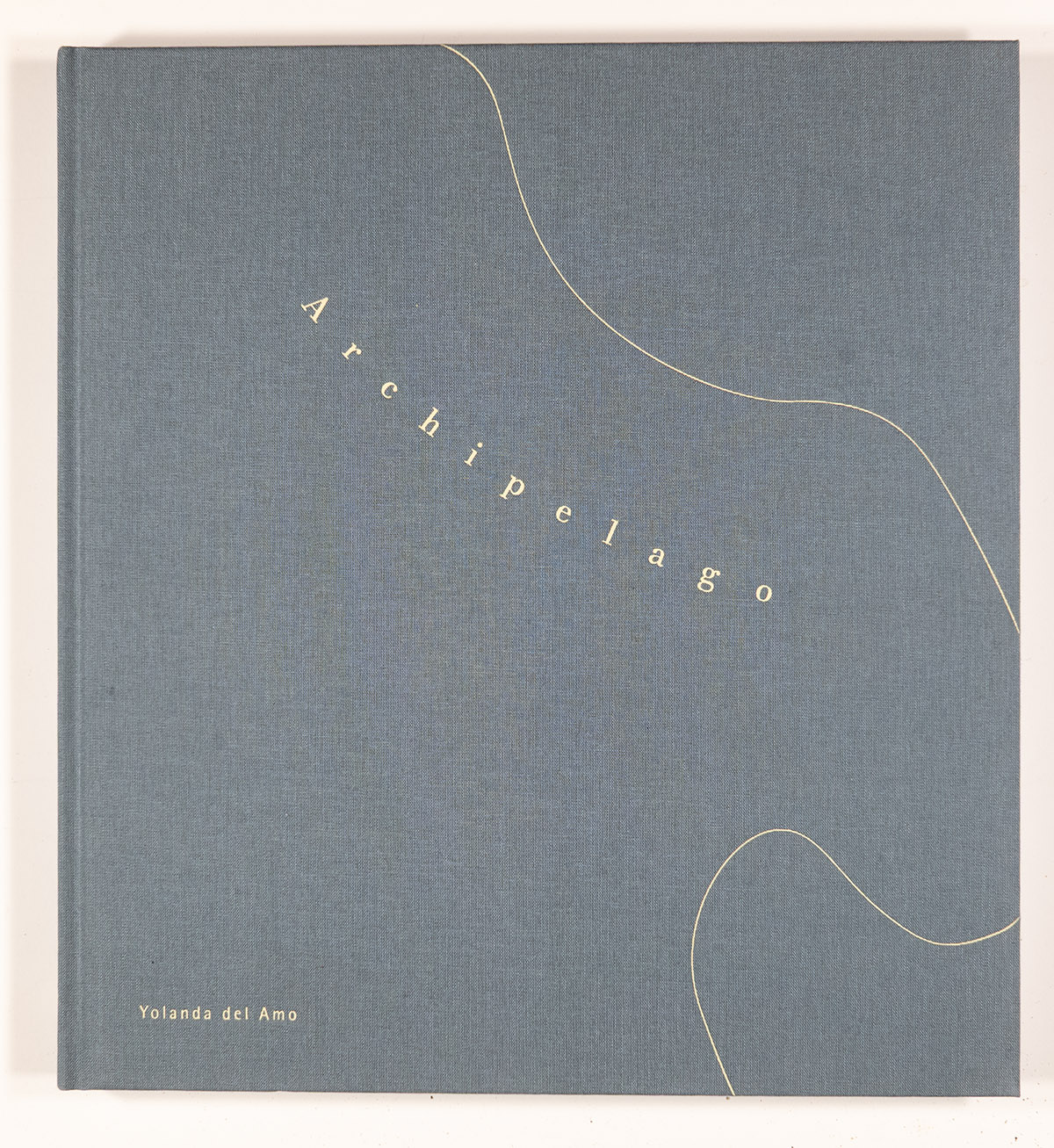
Cloth hardcover; sewn binding; 27 x 29.5 cm; 128 pages; 144 color illustrations; ISBN 978-3-96900-228-5
__________
Articles & photographs published on PhotoBook Journal may not be reproduced without the permission of the PhotoBook Journal staff sand the photographer(s).


Leave a Reply