Review by Hans Hickerson ·
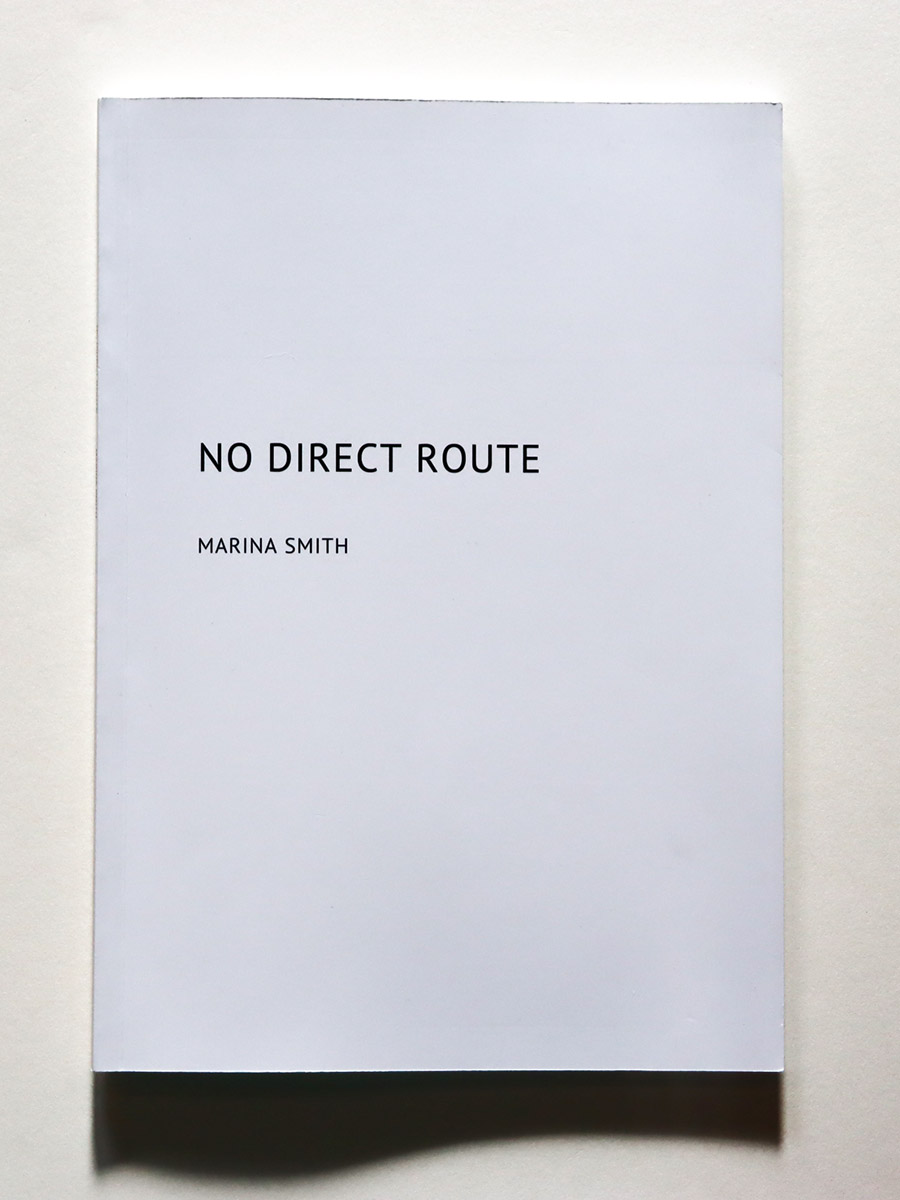
Part travelogue, part meditation on history, culture, photography, and family, Marina Smith’s No Direct Route offers ten interwoven photo / text essays inspired by a recent visit to her family home in Rostov, Russia.
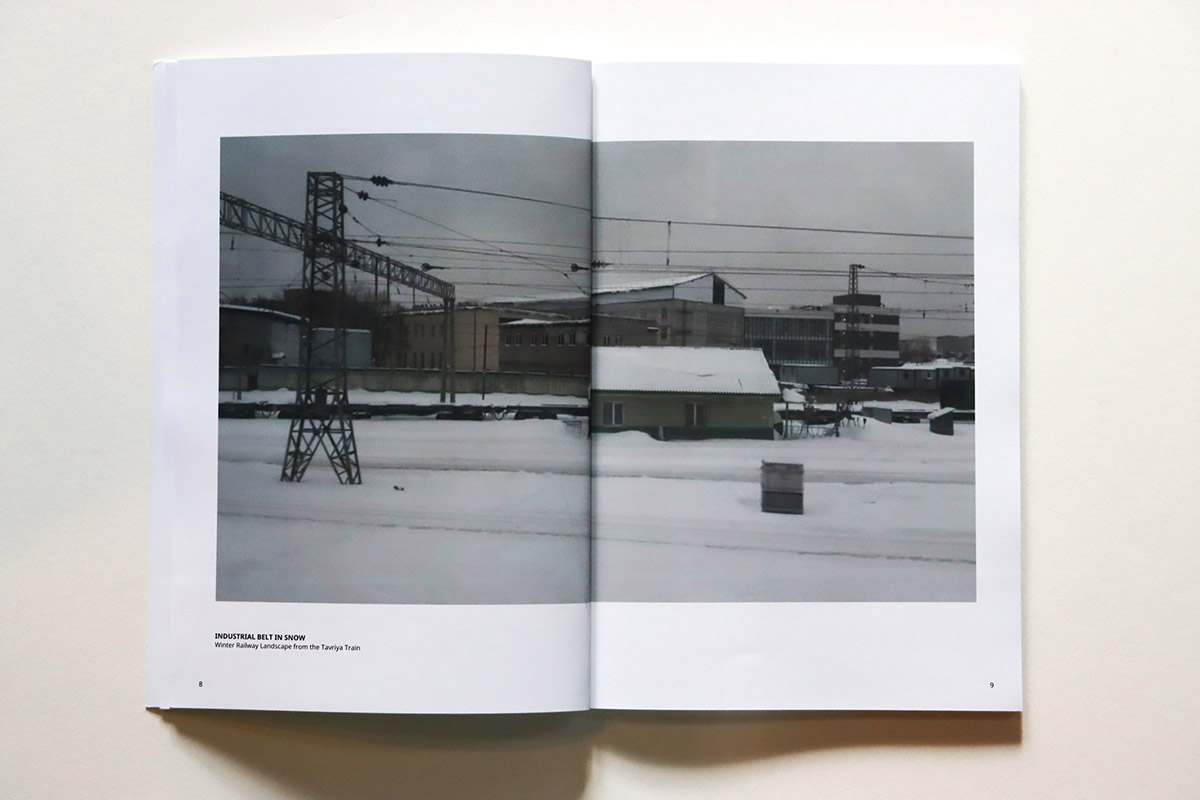
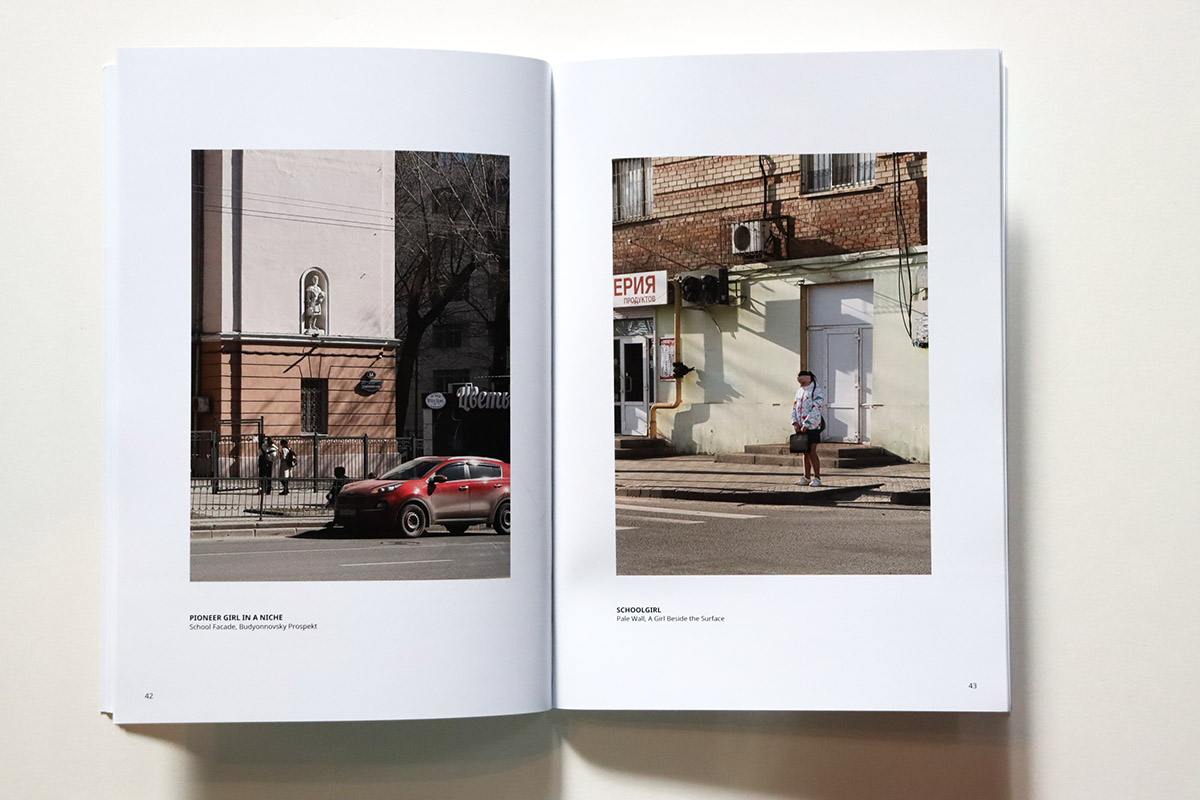
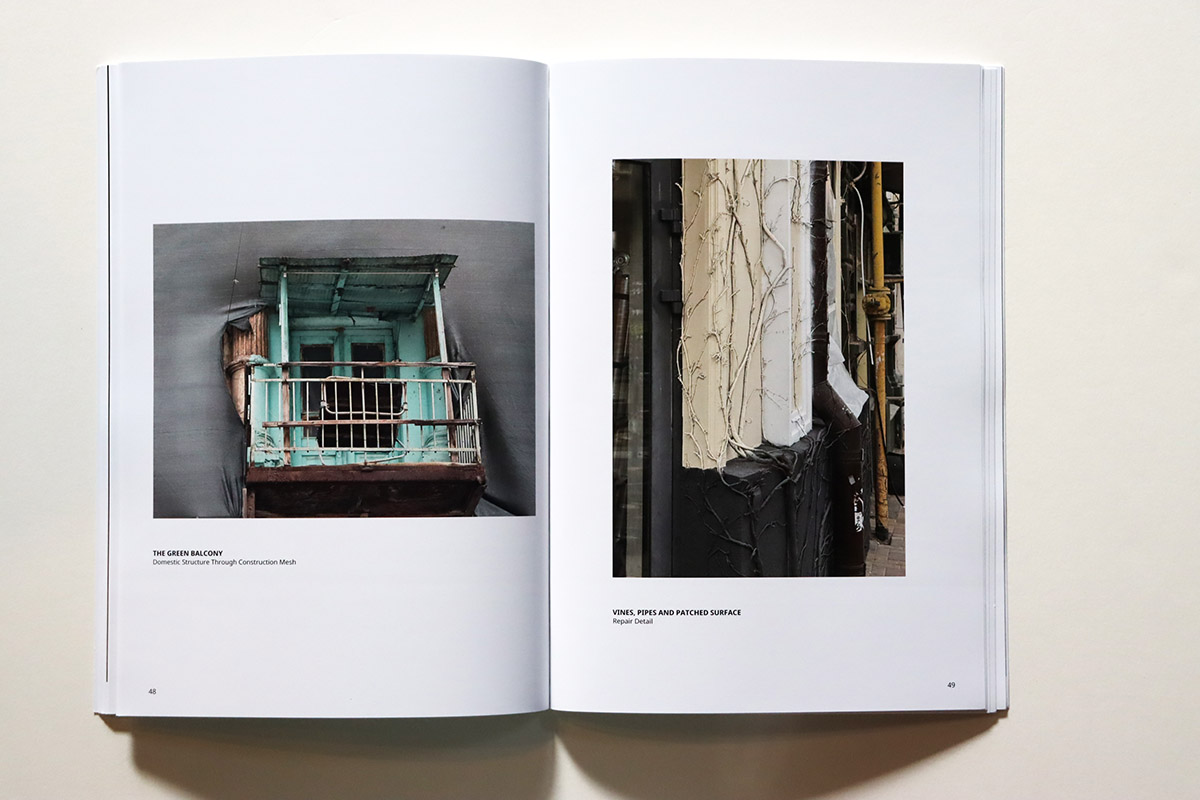
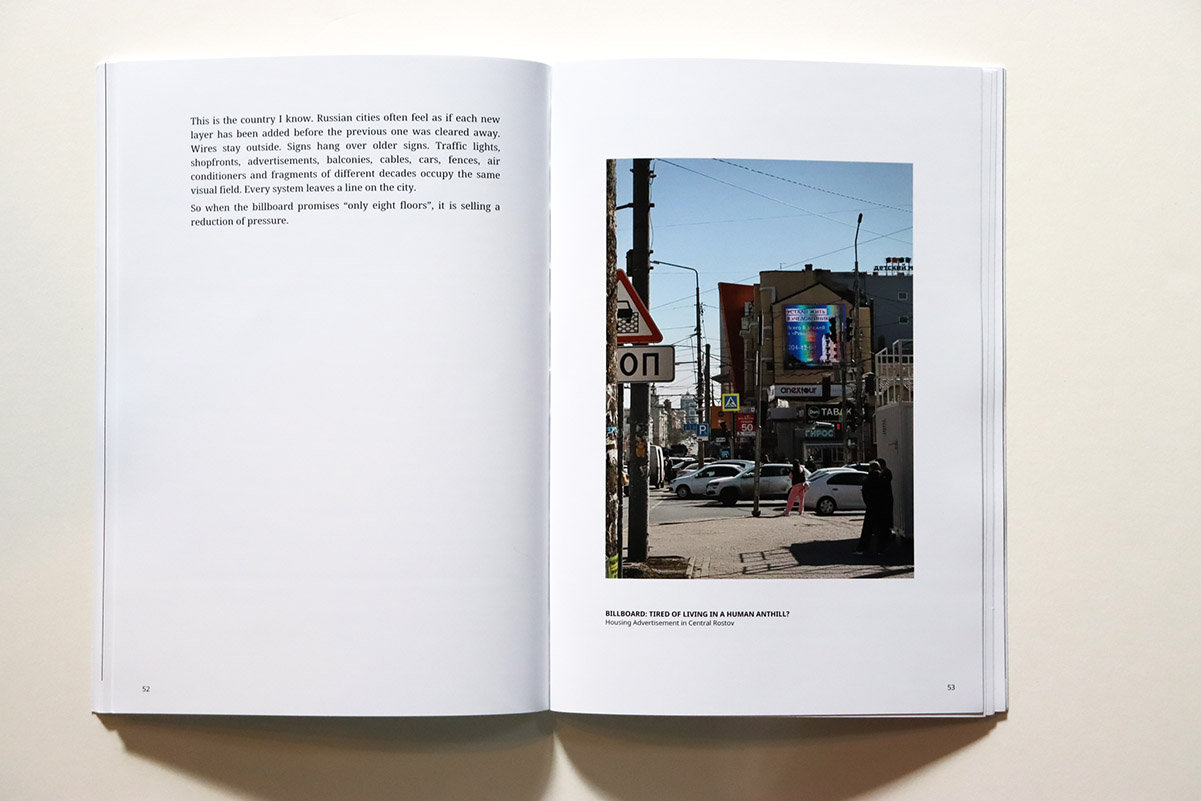
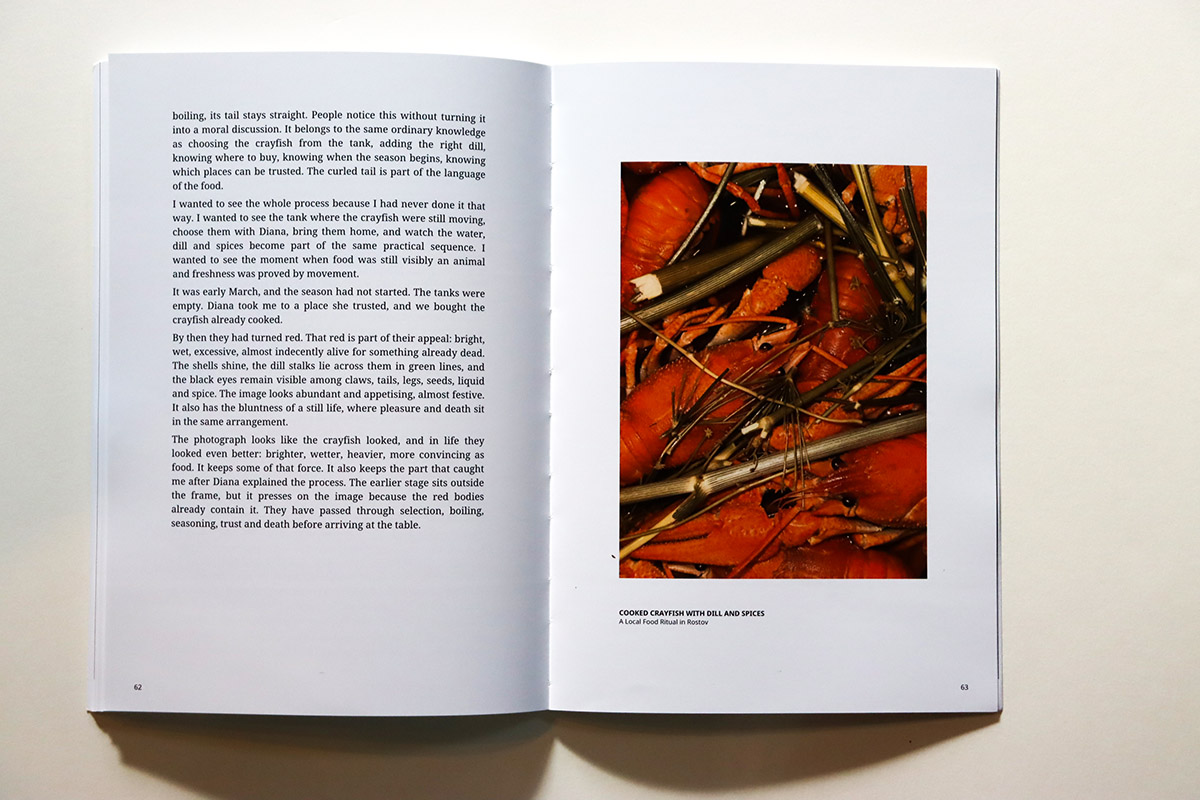
The images in some ways are secondary to the texts, but without them the texts would lose their anchors in visual reality. The photographs show what the texts discuss. It doesn’t take many pictures to support a text; in some cases just one is enough, and they make a convincing case for how photo / text narratives work and why they are their own thing and more than the sum of their parts.
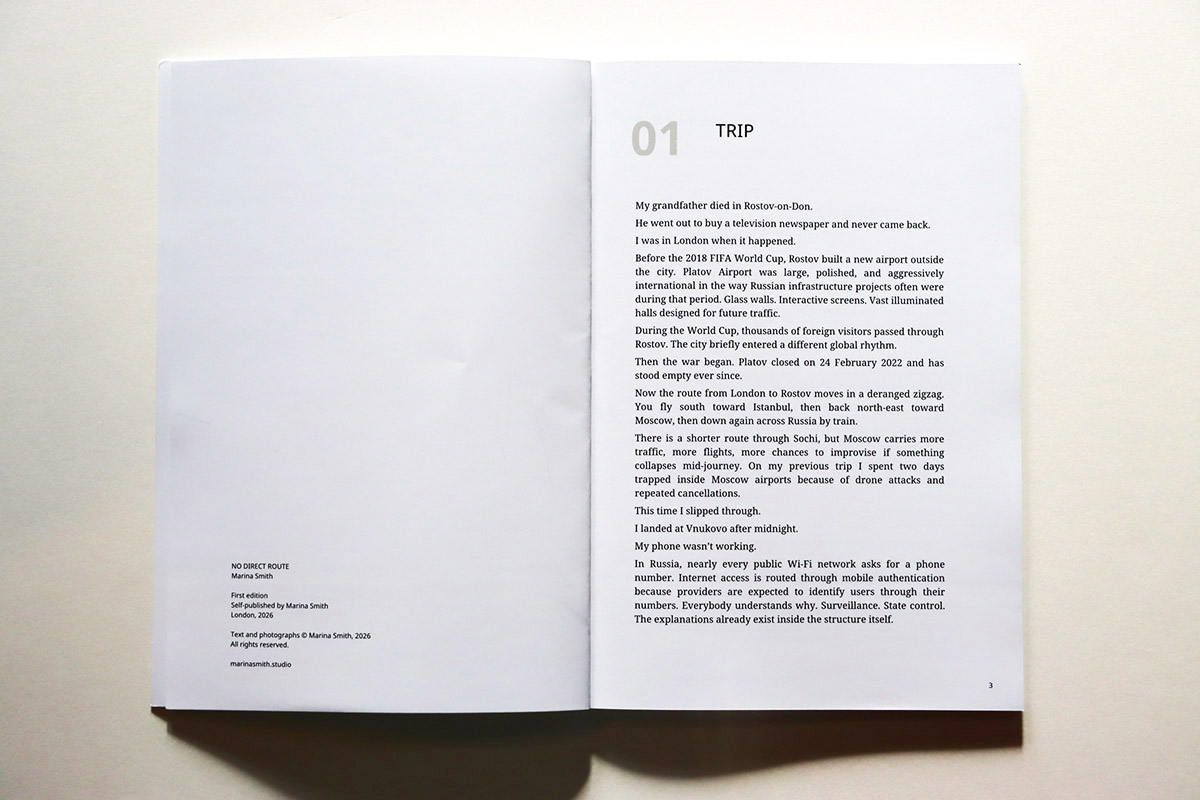
The first section or chapter in No Direct Route is titled “Trip.” It chronicles Smith’s February trip from Moscow to Rostov in a time of war. Her travails include being unable to fly directly from London to Rostov. Instead she had to go through Istanbul to Moscow and then take a long-distance train south to Rostov. Getting her Russian SIM card working was another challenge. She also gives background information on the 2022 Russian invasion of Ukraine and the resulting changes in patterns of everyday life. I found her story captivating. It is an insider’s point of view that you do not often hear. It shows the seeming normalness of everyday life set against a background of tension and secrets.
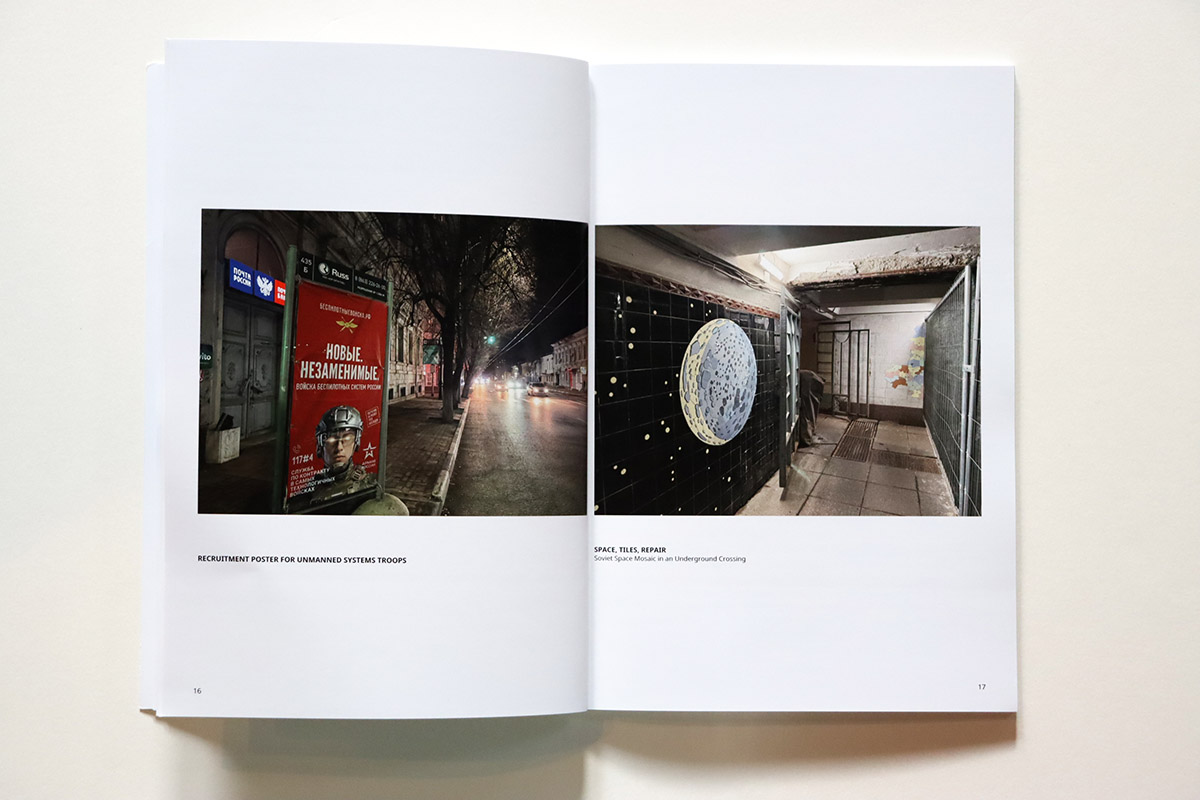
The second text, “Routes into the Future,” features photos of a recruiting poster for the Russian Unmanned Systems Troops as well as a Soviet-era space mosaic, and Smith analyzes and deconstructs the levels of propaganda and reality involved in these examples of authoritarian state media control.
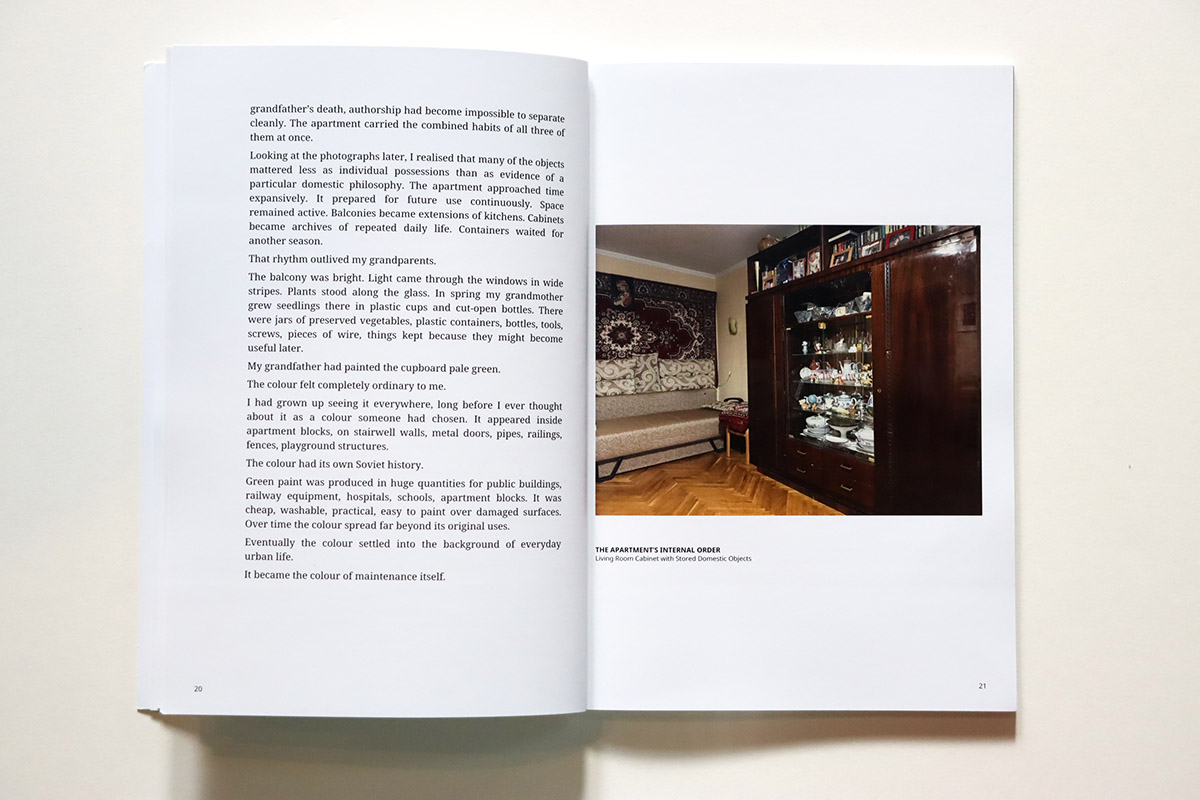
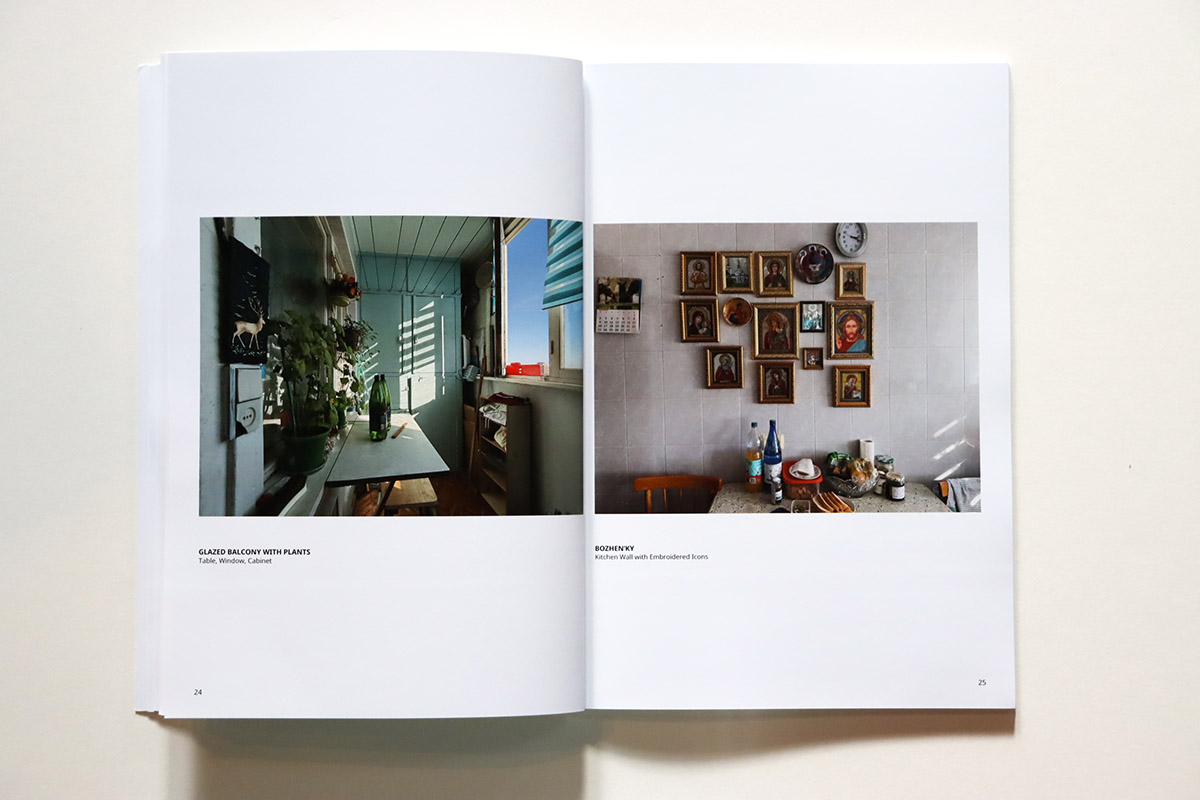
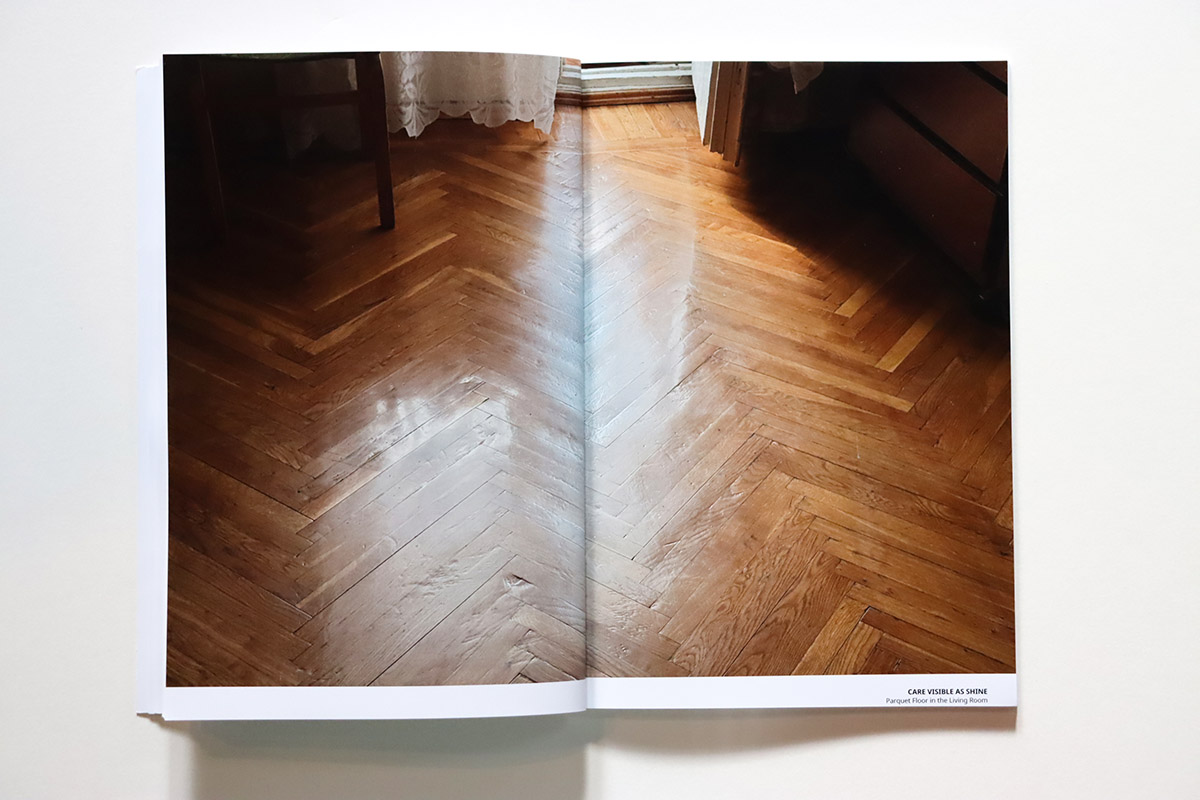
Next, in “Empty Flat,” six photos explore her grandparents’ flat in Rostov, while Smith’s text unpacks the “grammar” of the domestic world. Her insights are the perfect example of what you see when you travel and adapt to a different culture and then go home again, how you see with fresh eyes things you always took for granted.
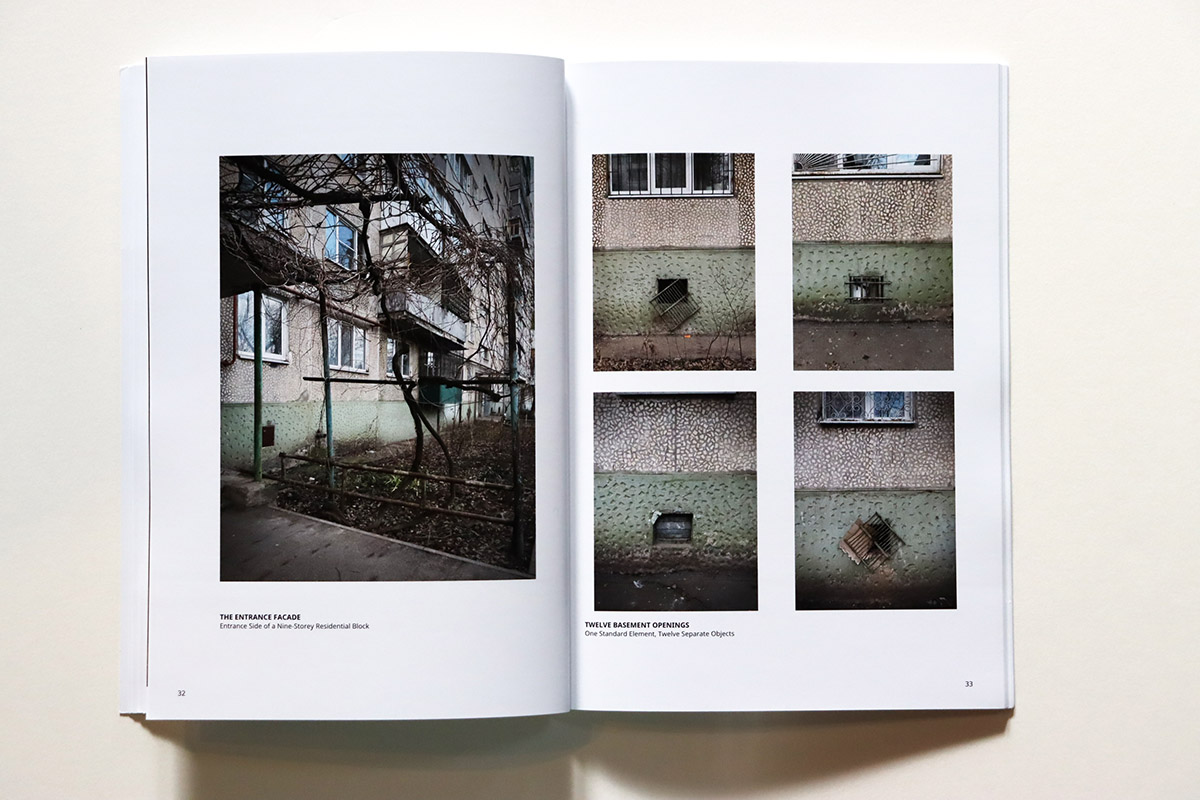
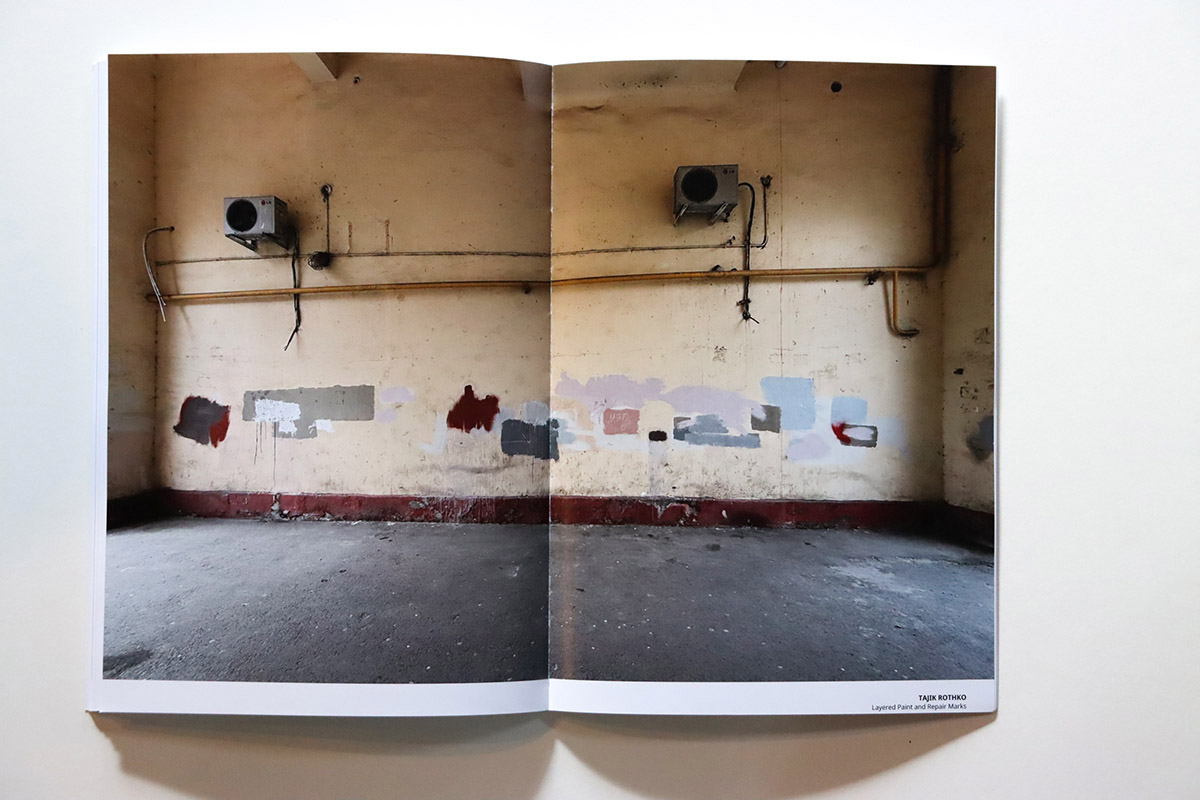
The other chapters continue in the same vein, a mixture of personal narrative, background information, and critical analysis. They include “Basement Openings,” variations on a visual theme; “The Figure and the Surface,” commentary on statues on the sides of buildings; “A Valuable Building,” about a building being remodeled; “Human Anthill,” inspired by a billboard for new apartments; “The Force of Good,” featuring a factory sign; “Crayfish,” which delves into the cultural significance of food; and “Tajik Rothko,” discussing the similarities between a patched, repainted wall and painter Mark Rothko’s floating patches of color.
No Direct Route is a great example of the importance of packaging. The content of the book is top-tier, but the presentation is humble. Like most printing, however, it was probably not inexpensive to produce. But if it had been published by Mack or Steidl it would have benefitted from ambitious design and the high status (and price tag) that comes with it. As with other books, you could take the same content, re-package it, and make it into something that people would experience quite differently.
A lot of artists find themselves in this situation, without distinguished contextualization, be it a museum or gallery or high-end publishing. But it does not diminish the quality of their ideas. The artist’s ideas do their own thing when they speak to you. Unfortunately, however, people accord worth based partly on status, and status usually has a financial basis. In the art world it’s not Paid to Play but Pay to Play. Not a fair situation, to be sure.
On the other hand, some of us try to view art based on value independent of prestige. If you are like that, you will look at Marina Smith’s No Direct Route and find it fascinating.
Hans Hickerson, Editor of the PhotoBook Journal, is a photographer and photobook artist from Portland, Oregon.
____________
Marina Smith – No Direct Route
Photographer: Marina Smith (born in Russia, lives in London)
Publisher: self-published © 2026
Language: English
Design: Marina Smith
Softcover; 33 photographs; perfect binding, 72 pages; 7 x 9.75 inches.
____________
Articles and photographs published in the PhotoBook Journal may not be reproduced without the permission of the PhotoBook Journal staff and the photographer(s). All images, texts, and designs are under copyright by the authors and publishers.


Leave a Reply