Review by Lee Halvorsen •
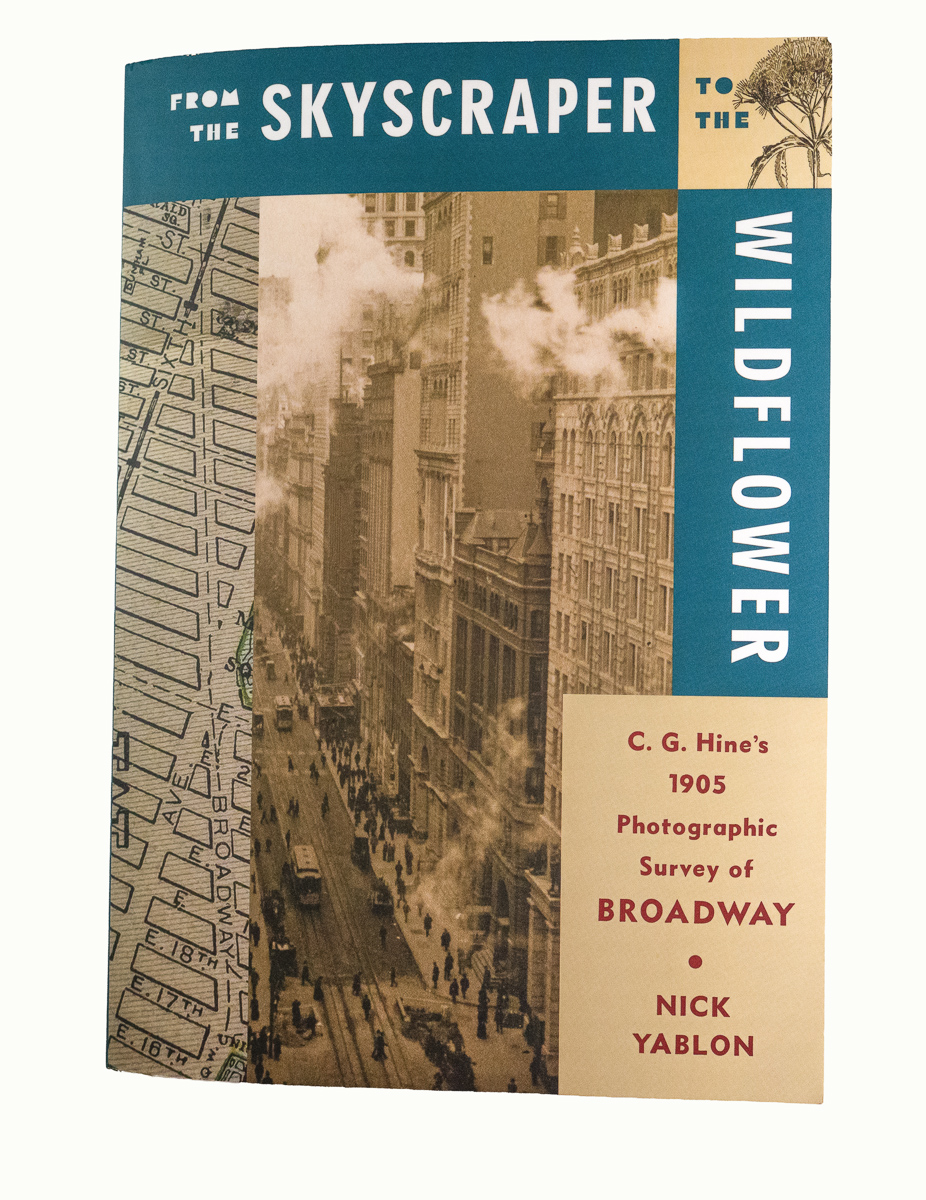
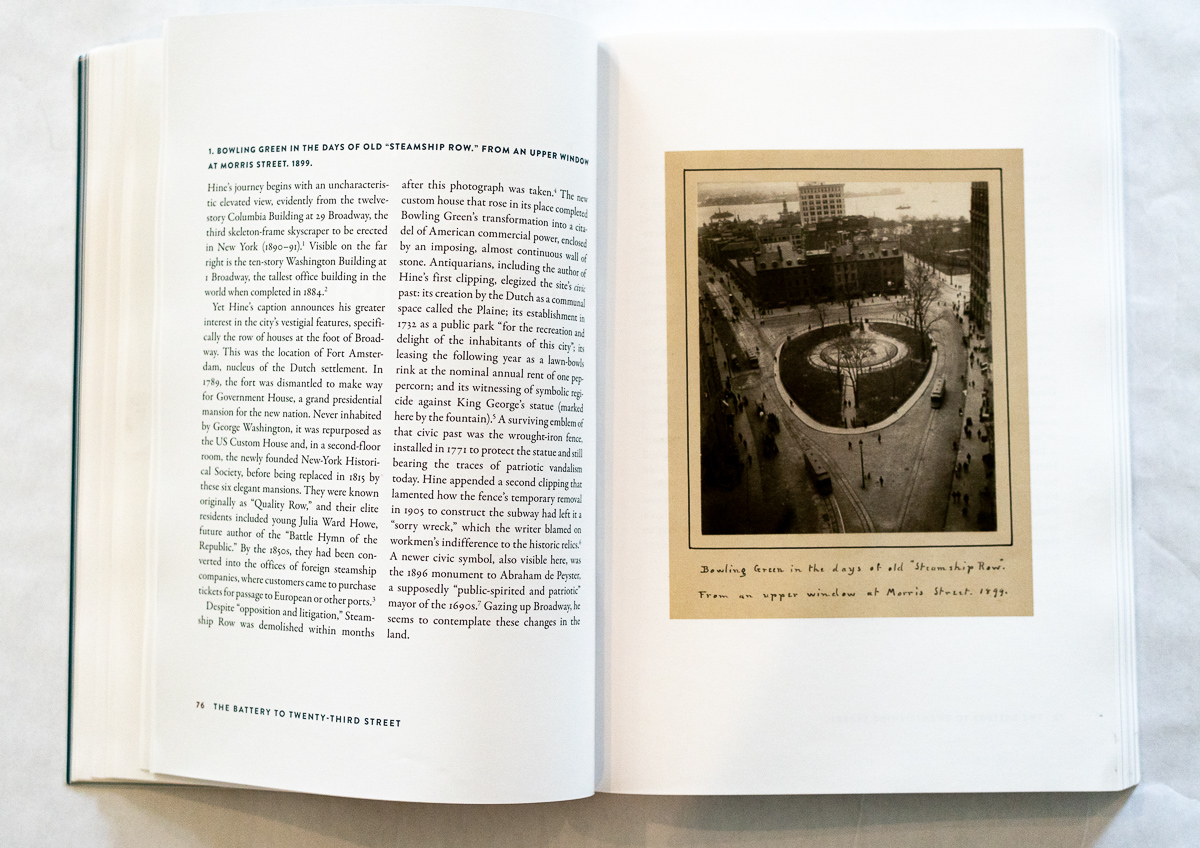
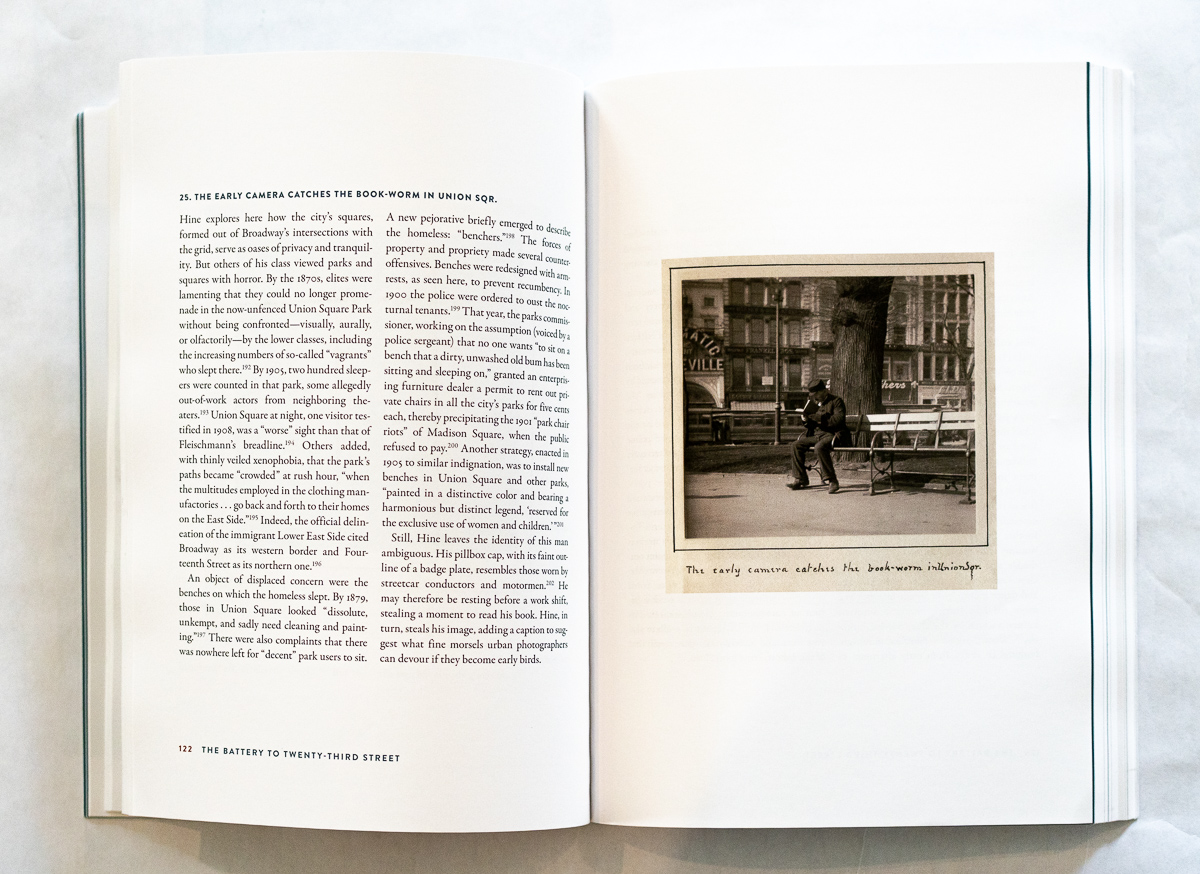
This book is a masterful blend of history, urban transformation, and culture brought together in the context of a street known round the world: Manhattan’s Broadway. Throughout 1905, C.G. Hine a businessman and amateur photographer made images along Broadway, organized them geographically by city block, and then created hand-made books with context-based newspaper clippings and captions. In 1917, Hine presented his three-volume collection of Broadway images to the New York Historical where they remained undiscovered for over 100 years.
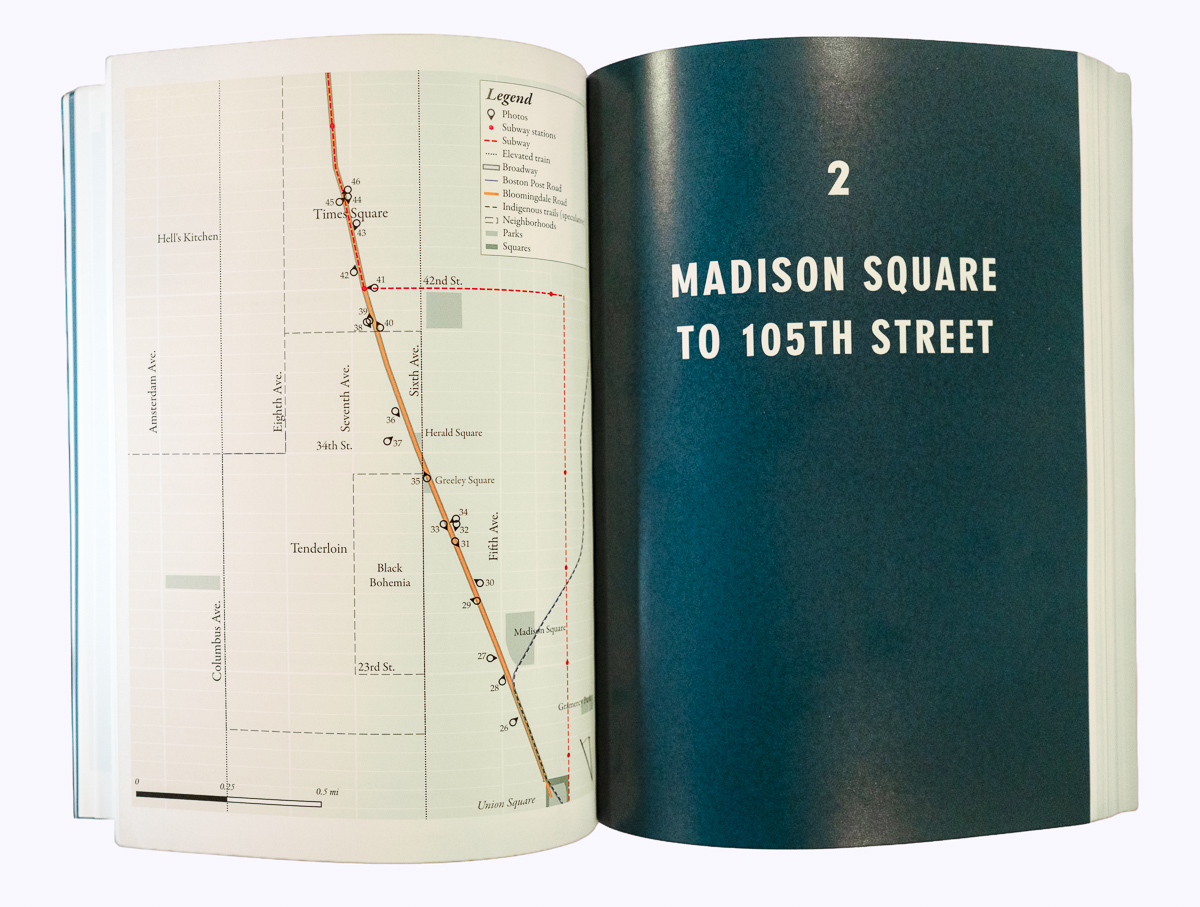
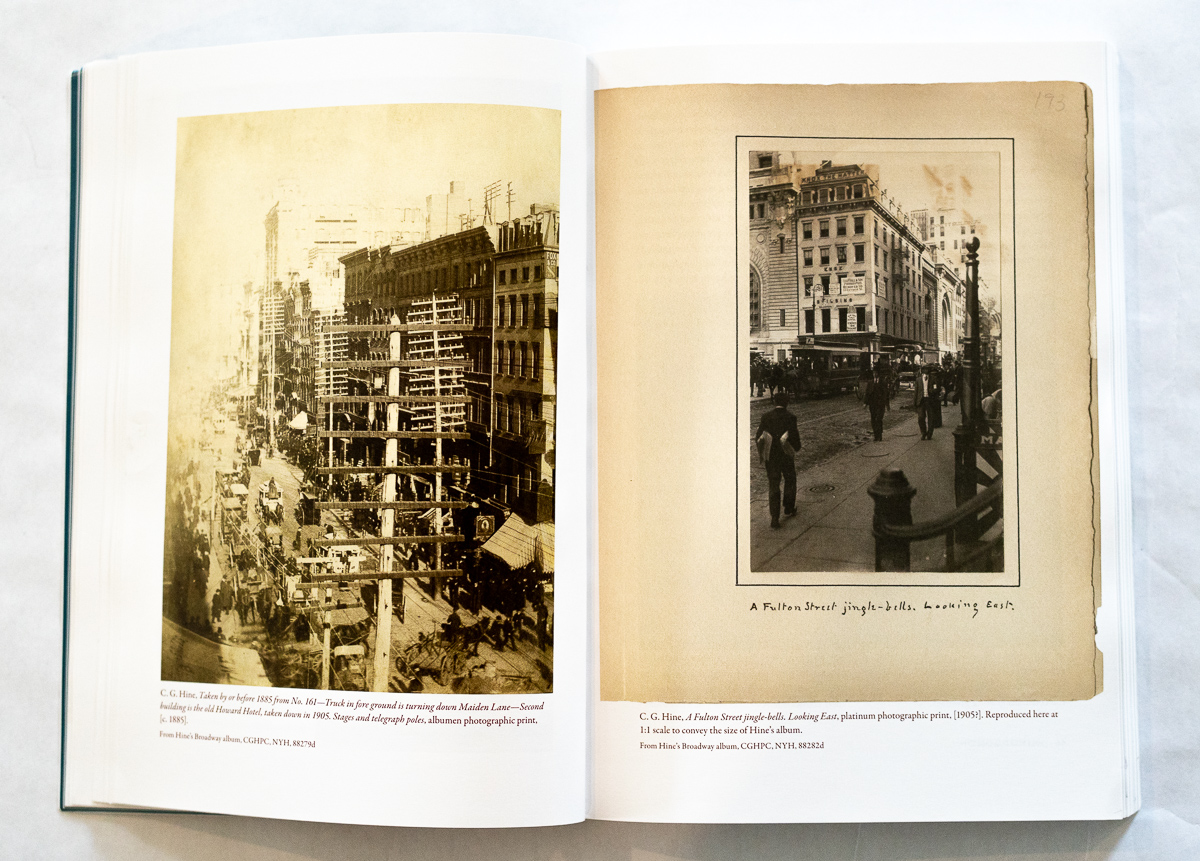
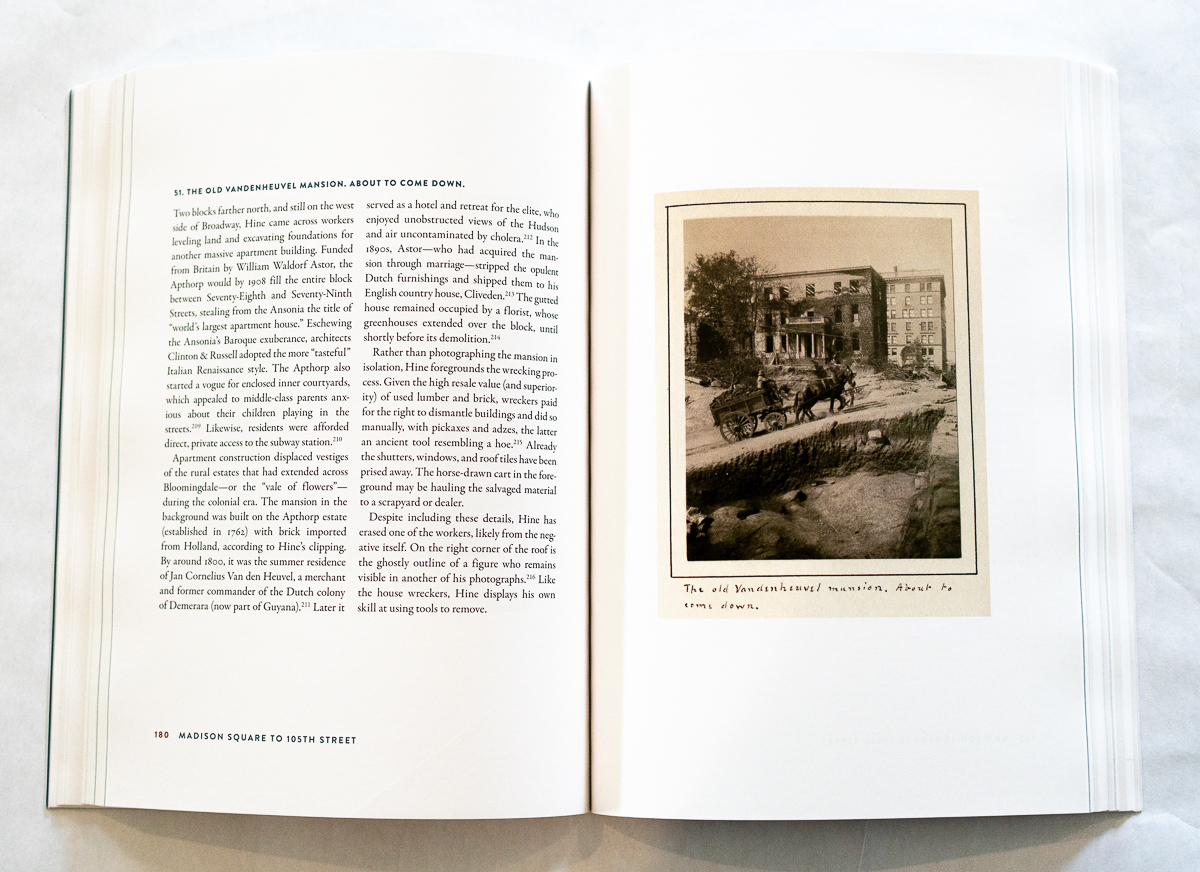
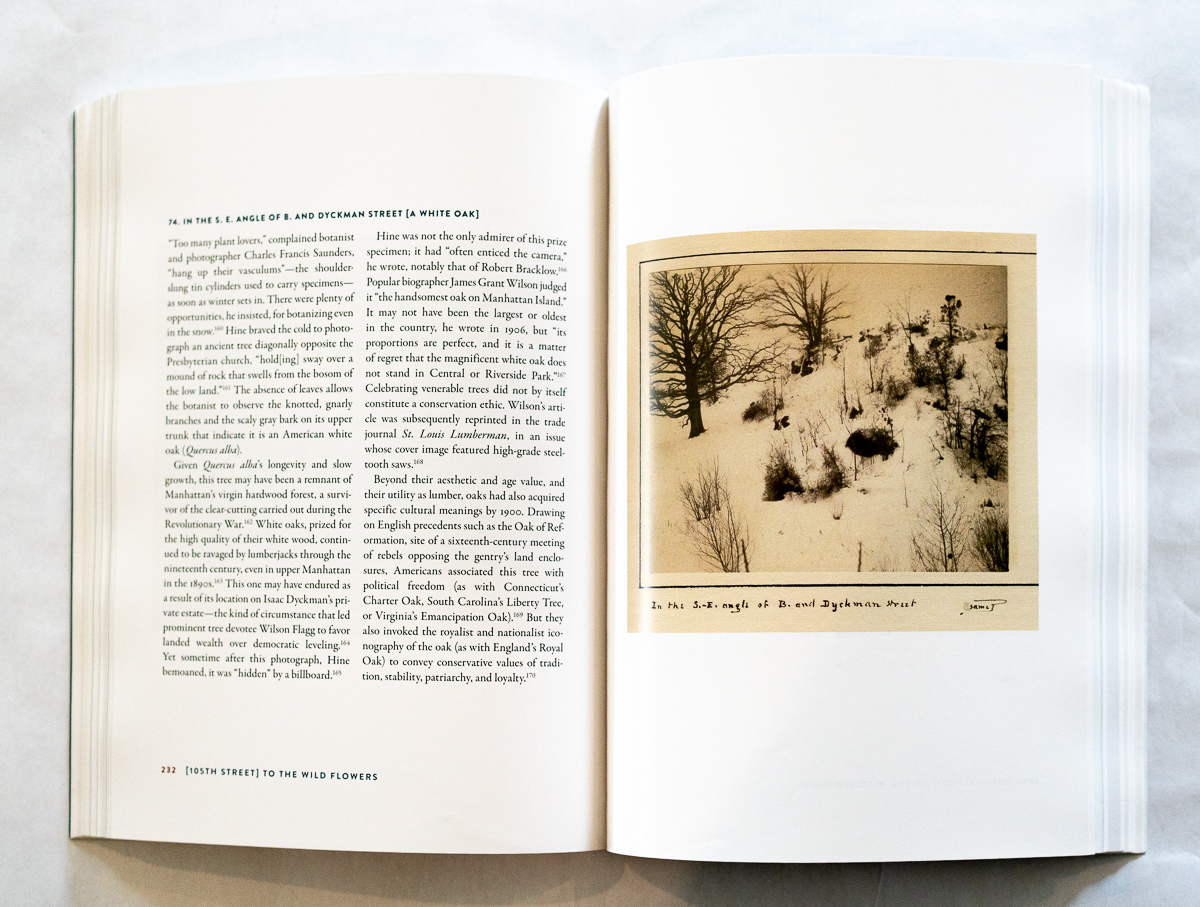
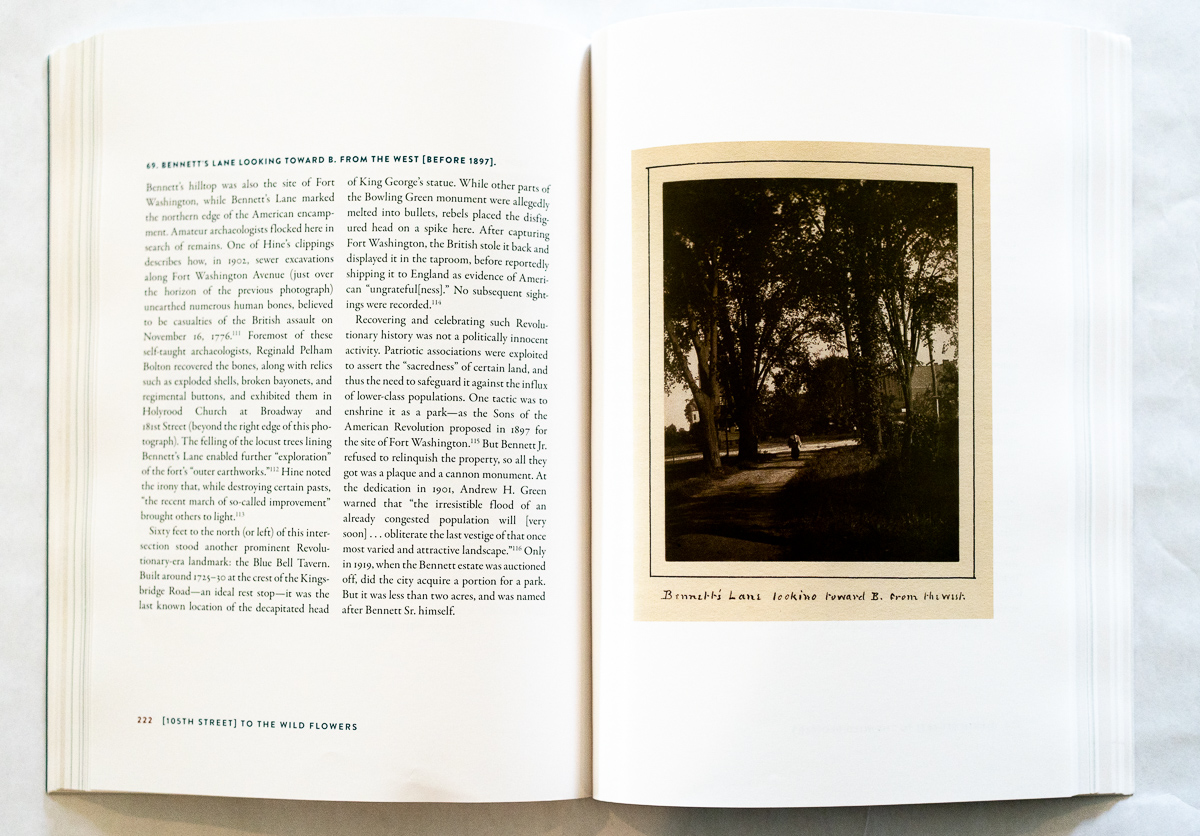
Yablon discovered the volumes and realized they were more than scrapbooks of an amateur photographer; he recognized that Hine was capturing images from a city in transition. This was Manhattan, but with wide open spaces, horses, rickety one-story buildings, flower gardens next to skyscrapers under construction, next to a blacksmith’s shop. Hine had captured not only the transition, but the edges of the transition, a person, event or place that is just a little different than its surroundings but, given the perspective of 100 years, is the harbinger of the way it will be. Hine saw these edges, made the images, provided text and context, and constructed his books. And then they sat.
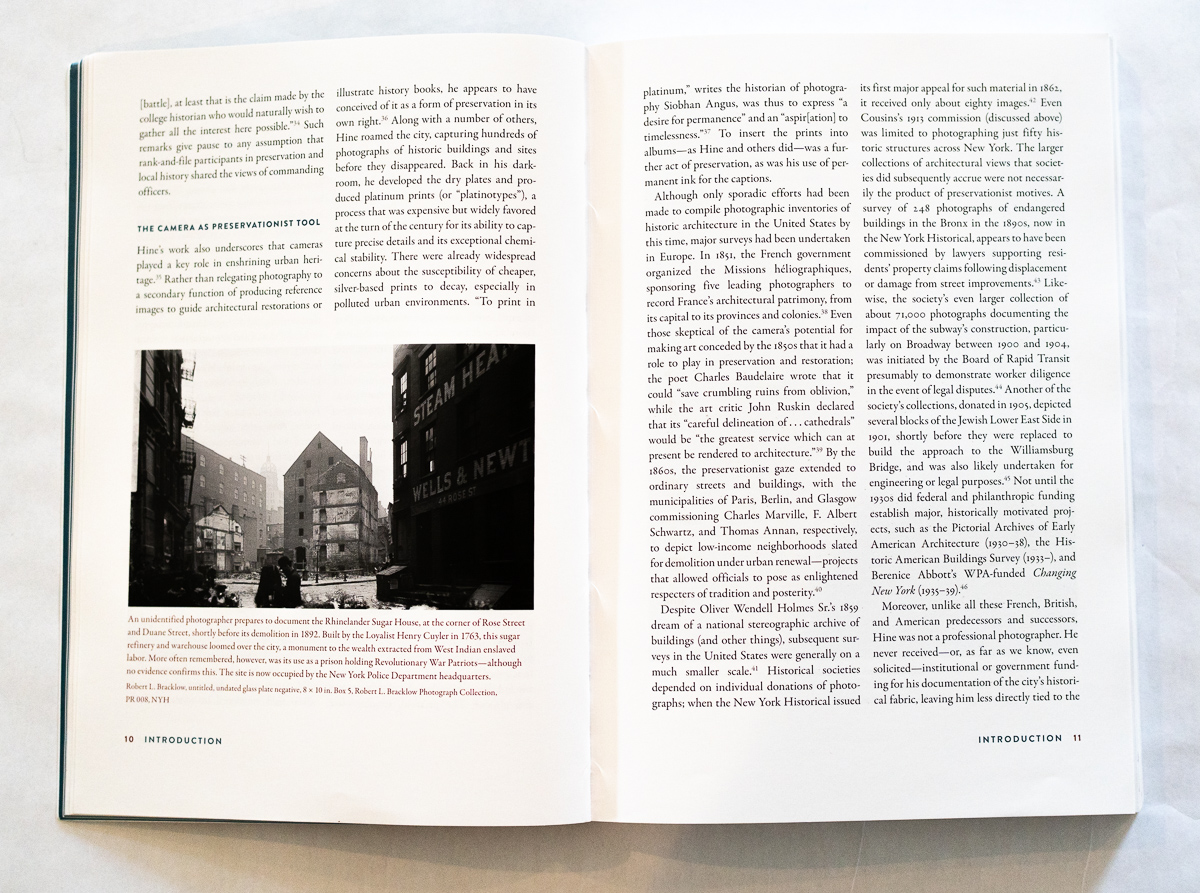
After their discovery, Yablon became the academic detective. In the introduction he explains the origin of Hine’s books and he’s written a one page essay for each of Hine’s images he’s included in the book. Bottom line, Yablon did not simply “discover” an album in the archives. He reconstructs: why Hine made the books, how the images were organized, what intellectual movements may have influenced Hine, how the album fit into early preservation efforts, and a little about Progressive Era New York. This turns what could have been a coffee-table photography book into serious urban history with captivating images.
Many books reproduce old photographs merely because they are attractive and emote nostalgia, but instead, Yablon asks “Why was this corner photographed? Why this building? Season? Angle?” With Yablon’s research of the times and places captured by Hine, the images transport us to that era, that place, that gritty human texture.
The book’s title captures one of the book’s themes, the “Skyscraper” represents new technology, modernity, the “Wildflower” represents everything overlooked and perhaps destroyed by modernization. Hine’s images capture that edge, that transition. This makes Yablon’s book surprisingly relevant to twenty-first century discussions about development, ecology, humanity, and urban identity.
Unlike many historic or academic books where illustrations interrupt the argument, here the photographs are integral to the narrative. I constantly moved between looking and reading. The experience resembles walking Broadway with an informed guide.
This book is a wonderful presentation of contemporary research and historic perspective. Imagine standing on a corner in 1905 talking about the weather and then noticing the subtle changes around you, this book will take you there. If you are a New Yorker with a passion for city history or anyone who is fascinated by change happening before your eyes, this is a must have. It’s an extraordinary tome, more than a photobook, more than a historical treatise, it’s a book about cultural transformation in one of America’s iconic streets.
Lee Halvorsen is assistant editor, writer and visual artist living in Virginia.
__________
From The Skyscraper To The Wildflower, C.G. Hine’s 1905 Photographic Survey Of BROADWAY by Nick Yablon
Artist: C.G. Hine Photographer. Nick Yablon, Author living and working in Iowa
Foreword: Nick Yablon
Copyright ©2026, Columbia University Press
Publisher: Columbia University Press, New York
Printed in the United States
Language: English
Format, selection of Paperback or Hardcover or E-book, 344 pages, 7 x 10 inches, ISBN 9780231203531 (Paperback)
__________
__________
Articles and photographs published in the PhotoBook Journal may not be reproduced without the permission of the PhotoBook Journal staff and the photographer(s). All images, texts, and designs are under copyright by the authors and publishers.


Leave a Reply