Review by Matt Schneider ·
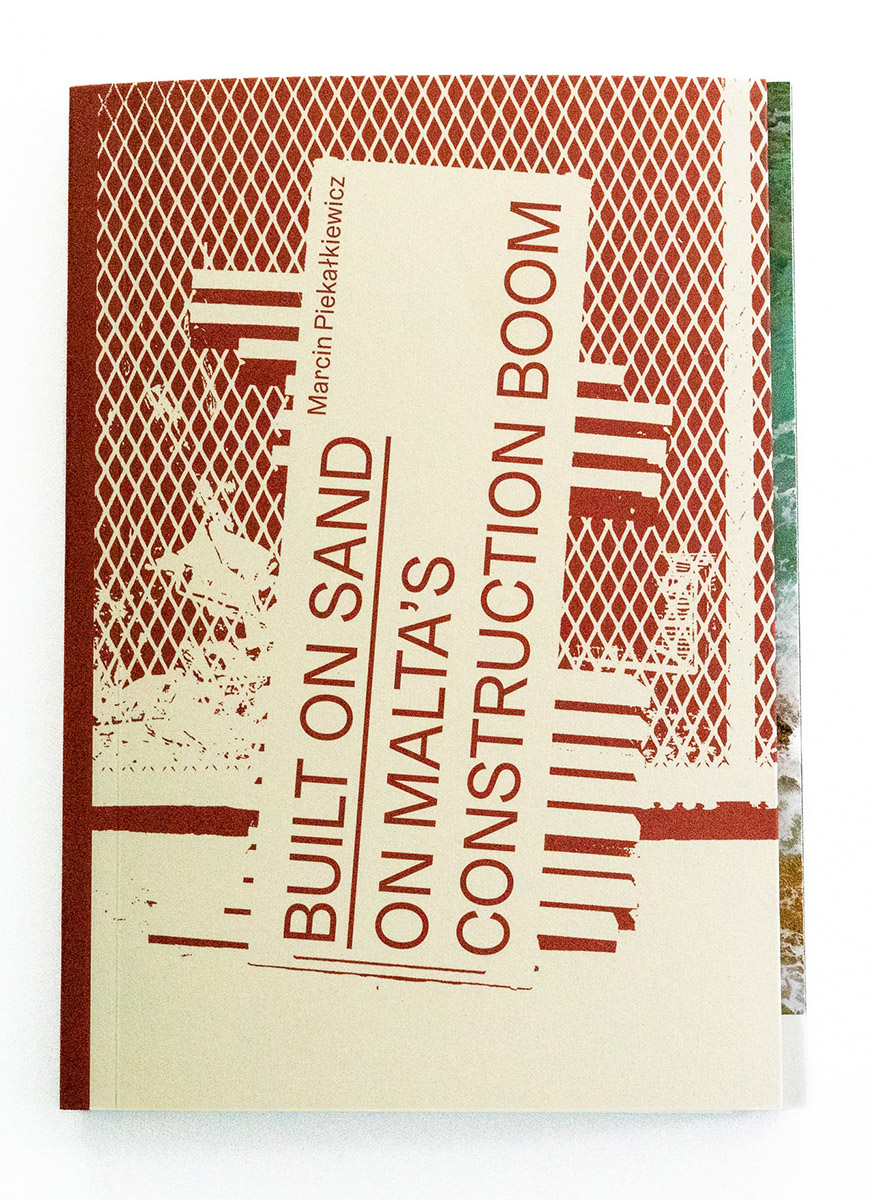
What does limestone have to do with the history, development, and politics of Malta? Apparently quite a lot, as this is the undergirding (and extremely) compelling question at the center of Marcin Piekałkiewicz photobook, Built on Sand.
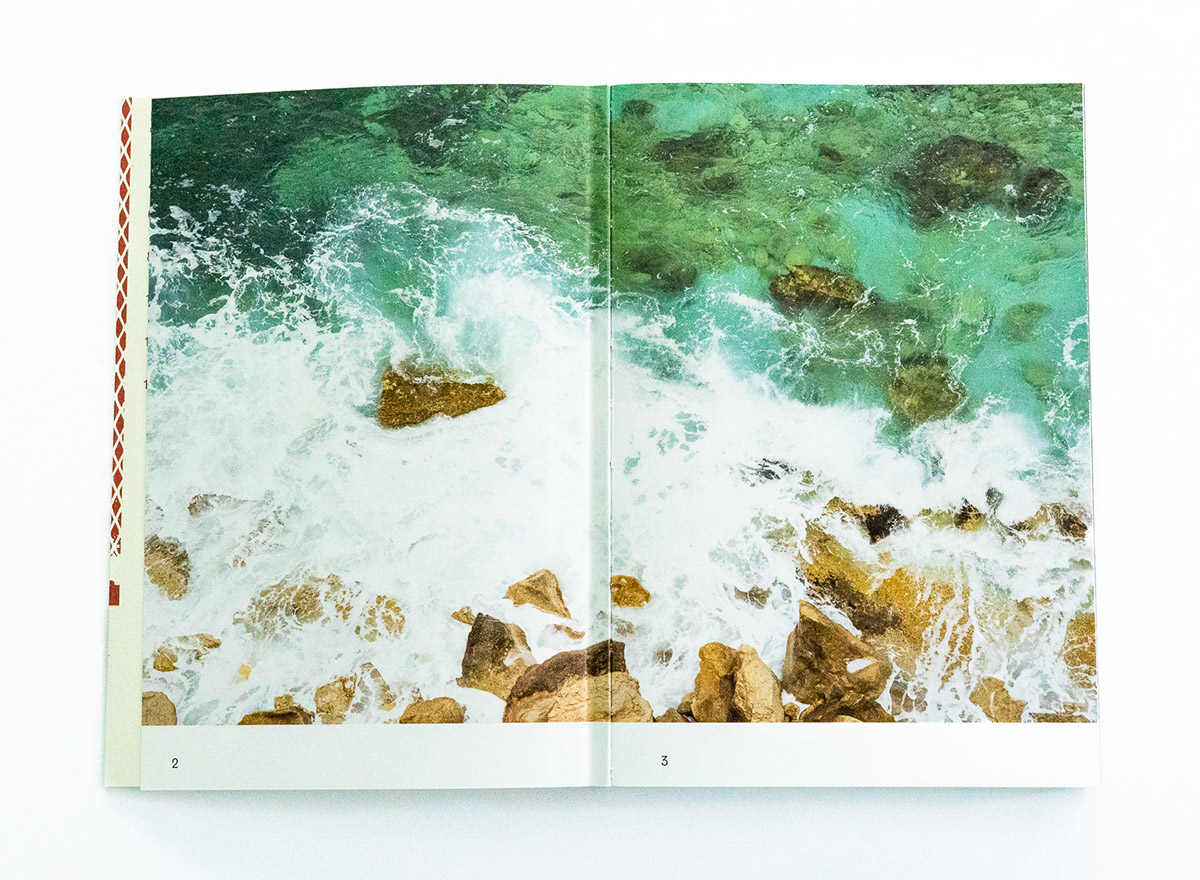
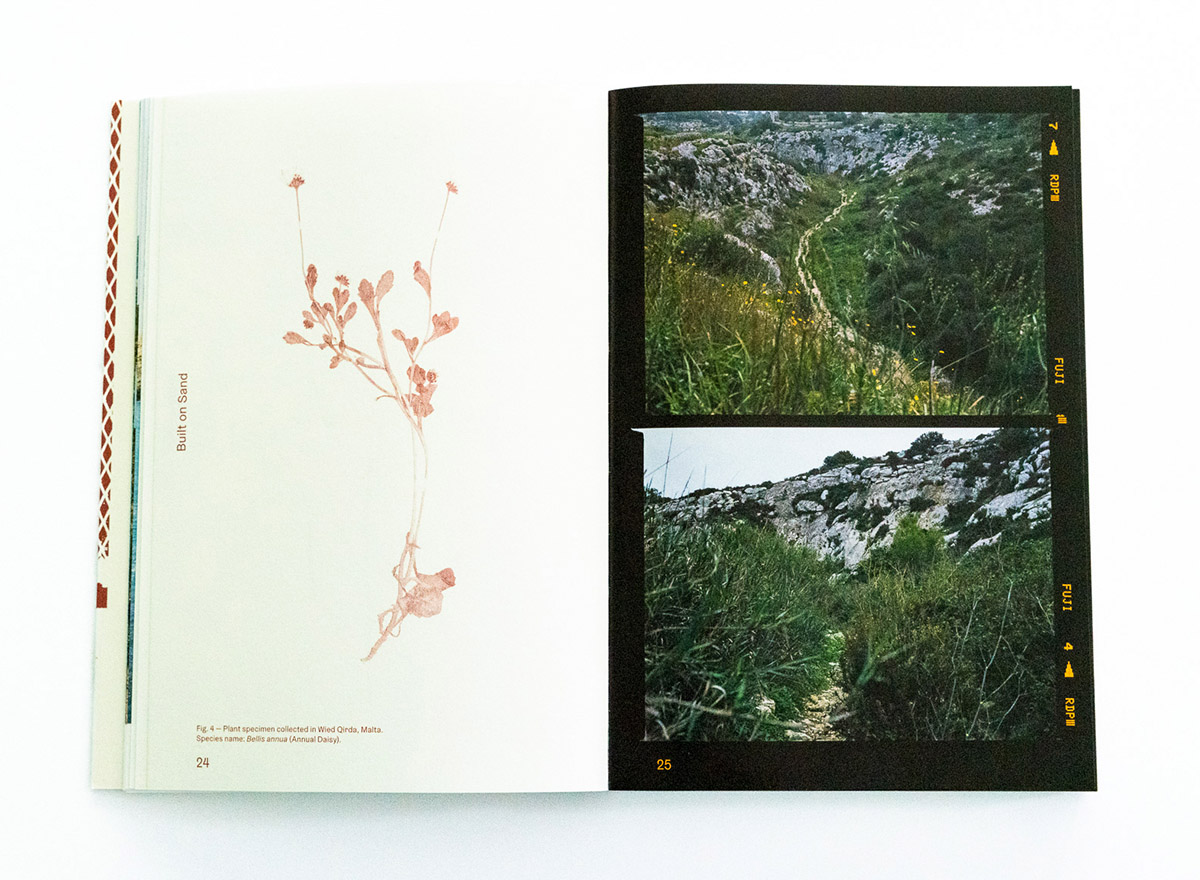
Perhaps as you would expect, Built on Sand opens with images of crystal blue waters crashing against rocky coasts. It’s immediately easy to see the appeal of living or visiting a place like Malta, and indeed, this is a central tension that Piekałkiewicz explores in his wonderfully unique and thoughtful photobook. This is a “paradise” that is booming. As people have flooded into Malta, greater and greater percentages of the island have become subject to real estate development. Thus, the rapid and ceaseless development of Malta puts severe pressure on the natural eco-systems and the local political situation in the process. In an age of severe environmental degradation and urbanization, much space has been allotted to the topics of “development” and “extraction.” And yet, by documenting the long relationship between limestone extraction and local development on Malta, I found Built on Sand to be totally novel contribution to the discussion.
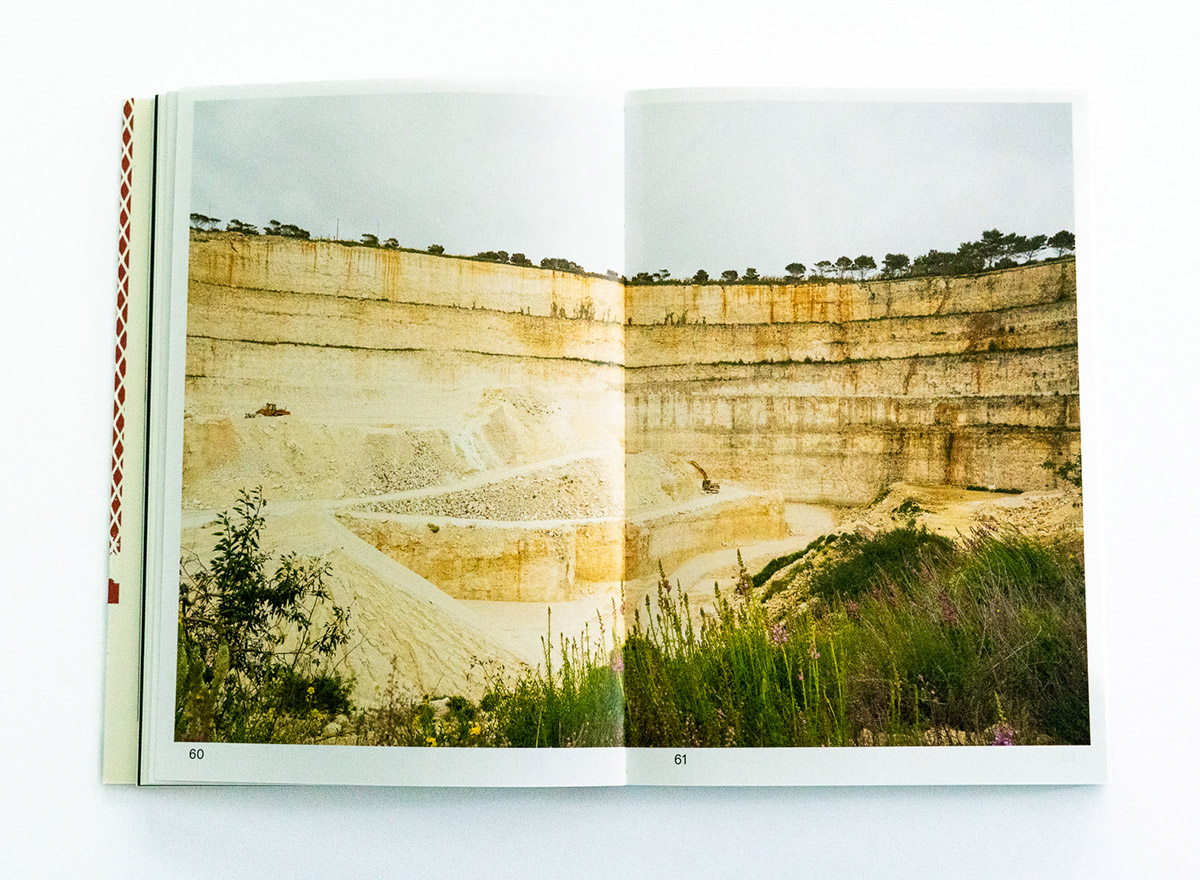
Organized into seven parts — Introduction, Geological Heritage, the Use of Limestone throughout History, Limestone Extraction Today, the Ongoing Construction Boom, Exploitation of Construction Workers, and Epilogue – the book effectively situates Malta within both the historical and geological record. When viewed through this lens, the contemporary Maltese paradise is simultaneously more complicated than most people realize and the unsurprising outcome for an island defined by its geographic position and its relationship to limestone. For example, an essay about the geological history of the islands – which goes back millions of years to allow us to understand Malta’s rich ecology – is punctuated by a series of photos featuring shovel excavators, dump trucks, deep quarries, and the scars extractive industry have carved into the natural geology (pp. 46-60).
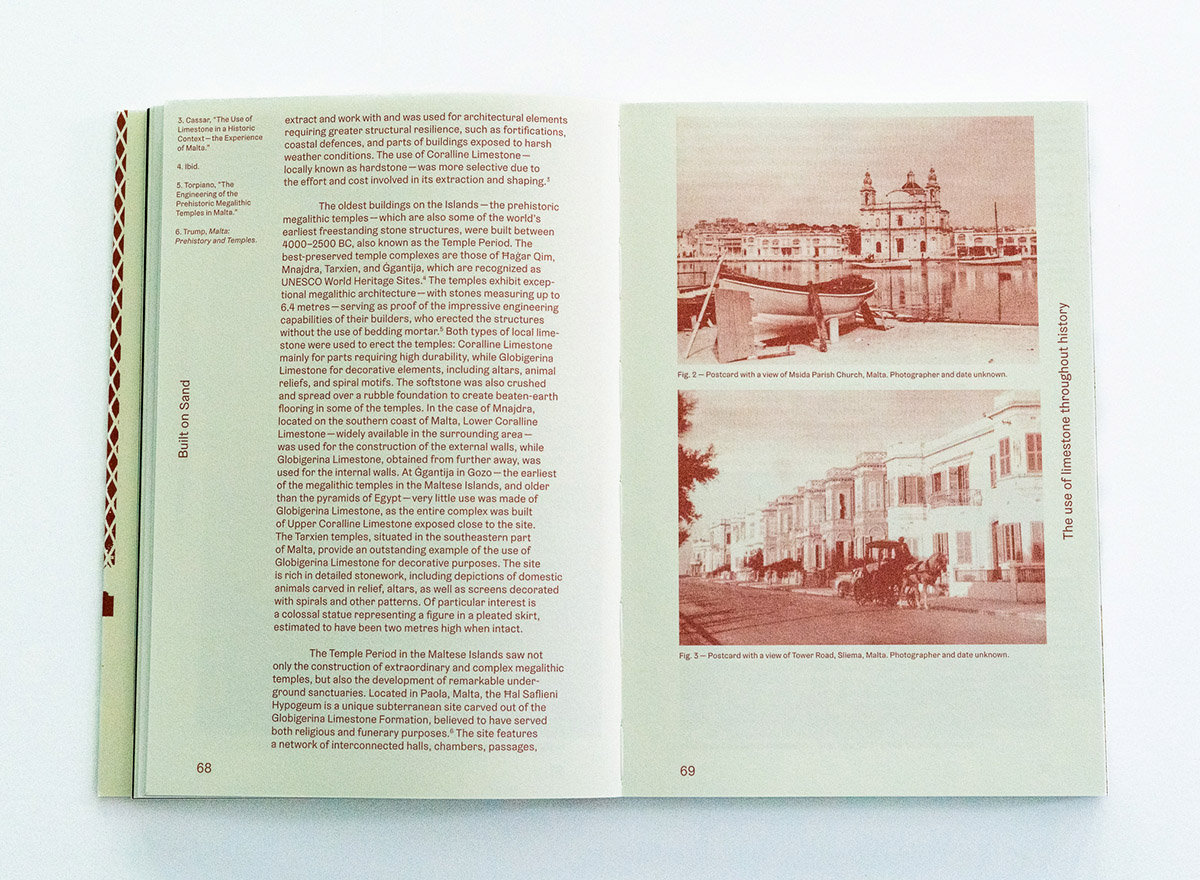
Similarly, in the Use of Limestone throughout History section (my personal favorite) Piekałkiewicz details the ways in which limestone has been interwoven with Malta’s human history. From prehistoric megalithic temples and underground sanctuaries to churches and sculptures to island defenses and fortresses, the abundance of both “soft” and Coralline (hard) limestone have provided unique conditions for the development of Maltese architecture. Underpinning the stone’s continued significance, Piekałkiewicz includes an image of a limestone quarry worker at the Limestone Heritage Museum in Siġġiewi (p. 66) as well as a series of postcards featuring impressive limestone structures from different points in Maltese history, including the Msida Parish Church, homes on Tower Road in Sliema, and the Ħaġar Qim megalithic temple complex in Qrendi.
From this history, contemporary Malta, whose course has also been shaped by changes in the global capitalist economic and political order, comes into sharper focus. At this intersection of the past and present, we see the production of a set of social problems that is, on one hand, unique — likely not observable anywhere else in the world — and on the other hand, completely typical. Piekałkiewicz describes an island that is almost never quiet. Between 2011 and 2021, the population grew by 24%, from 417,400 to 519,600, and the foreign-born population increased by a factor of six. In 2024, Malta hosted 3.5 million visitors, up 29% from 2019. As the most densely populated country in the European Union (EU) and a common tourist destination, Malta is a place where in 2022, 25.9% of its land area was covered by artificial surfaces (about twice as high as the Netherlands (13%), which ranks second) and where, in 2023, the average hectare of agricultural land was priced at €283,000 (about 3 times higher than the Netherlands (€91,000), which ranks second).
On its own, the growth of Malta should not be interpreted as good or bad. However, this rapid growth has come with a number of unfortunate consequences. For one, the rapid development signals threats to the unique island ecology that is documented throughout, but especially in the early pages of Built on Sand. To meet growing demand, much of the construction and extraction happening on Malta occurs without regulation or need of permits. Not only are greater percentages of the island being paved over, but stone quarries also scar the interior of the island. In 2022 alone, the construction and demolition activities generated over 2 million metric tonnes of waste (“77.7% of the total waste generated by the country” (p. 118)). Against this backdrop, Malta’s construction industry has become a place of exploitation and danger for workers. Starting in 2020, for example, the rate of fatal work accidents rose sharply in Malta, jumping from 25.97 fatal accidents per 100,000 workers in 2020 to 56.85 in 2021 and 52.31 in 2022 (8.5 times higher than the EU average).
As this trend continues, rural places and traditional structures are increasingly becoming the subjects of redevelopment efforts, transforming places tied to Malta’s cultural traditions into expensive villas. As Piekałkiewicz writes, “Malta is increasingly losing important elements of its heritage to local and foreign speculators. They benefit from a poorly regulated property market and a government closely tied to the construction industry. New real estate developments are erasing the country’s distinctive natural landscape and overshadowing its unique architecture – the very features that once gave Malta an advance in attracting visitors seeking something genuinely traditional and different from the sprawling resorts of other Mediterranean destinations” (p. 119).
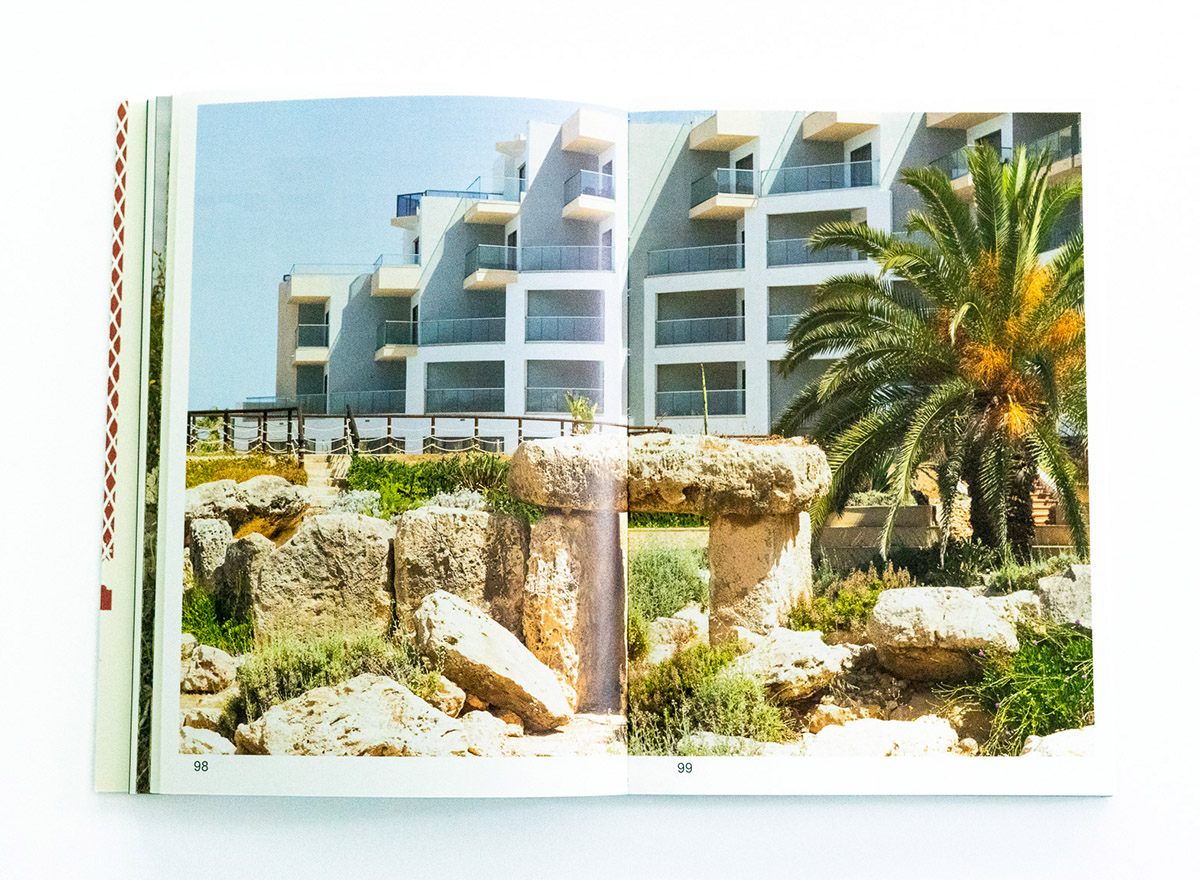
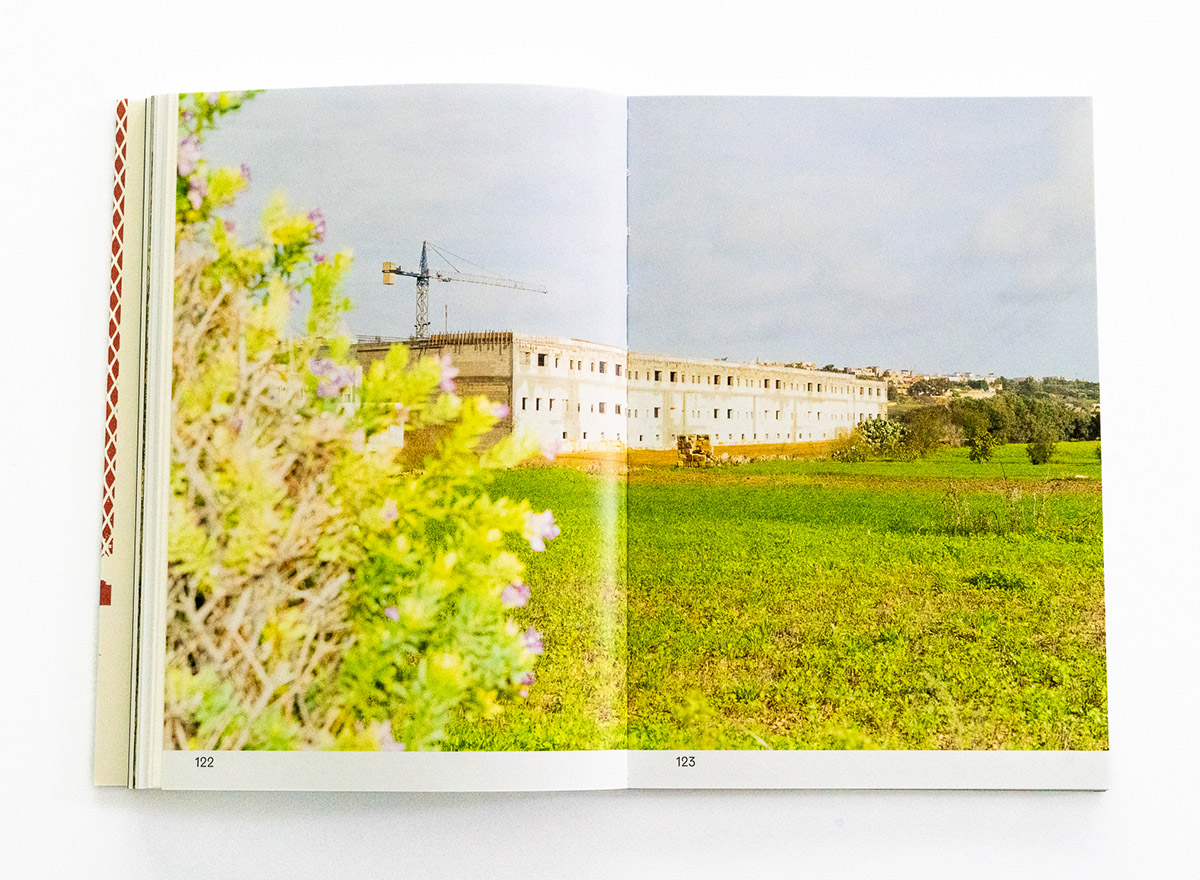
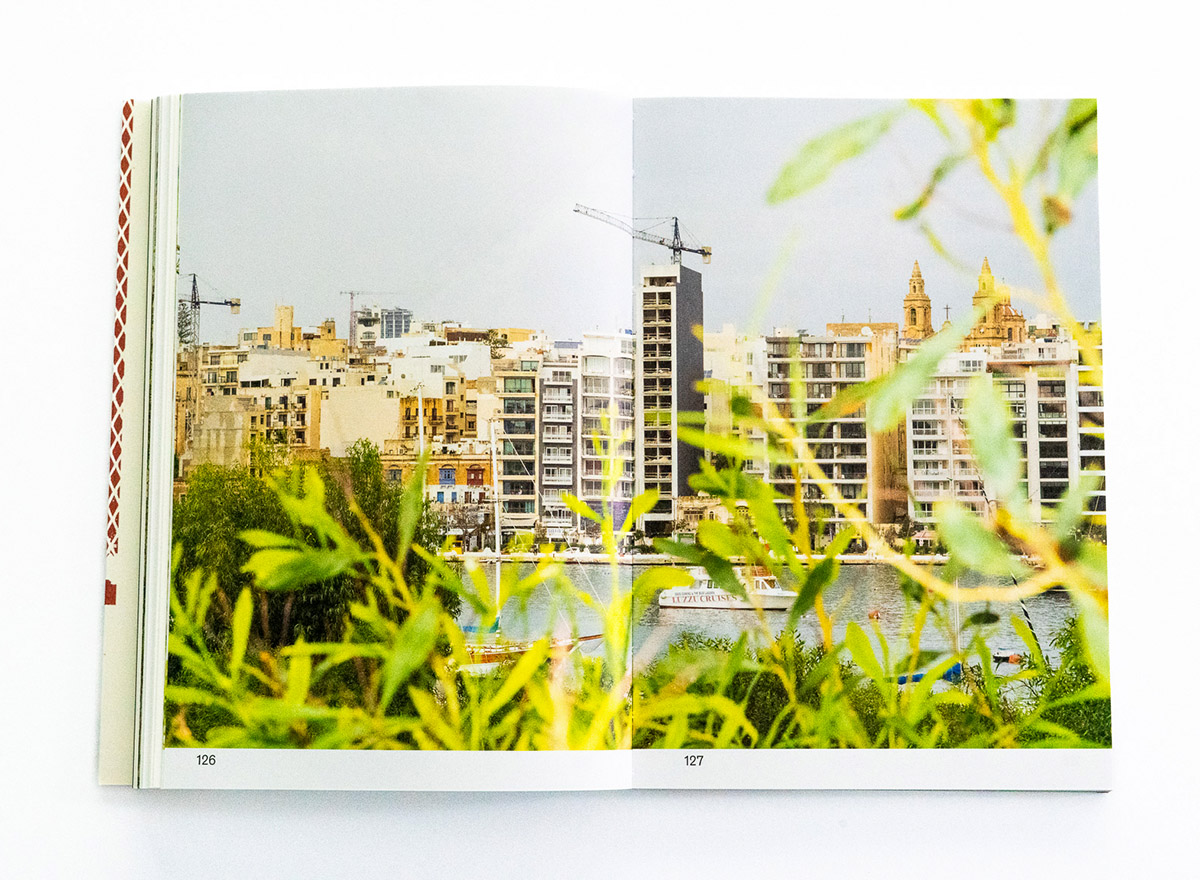
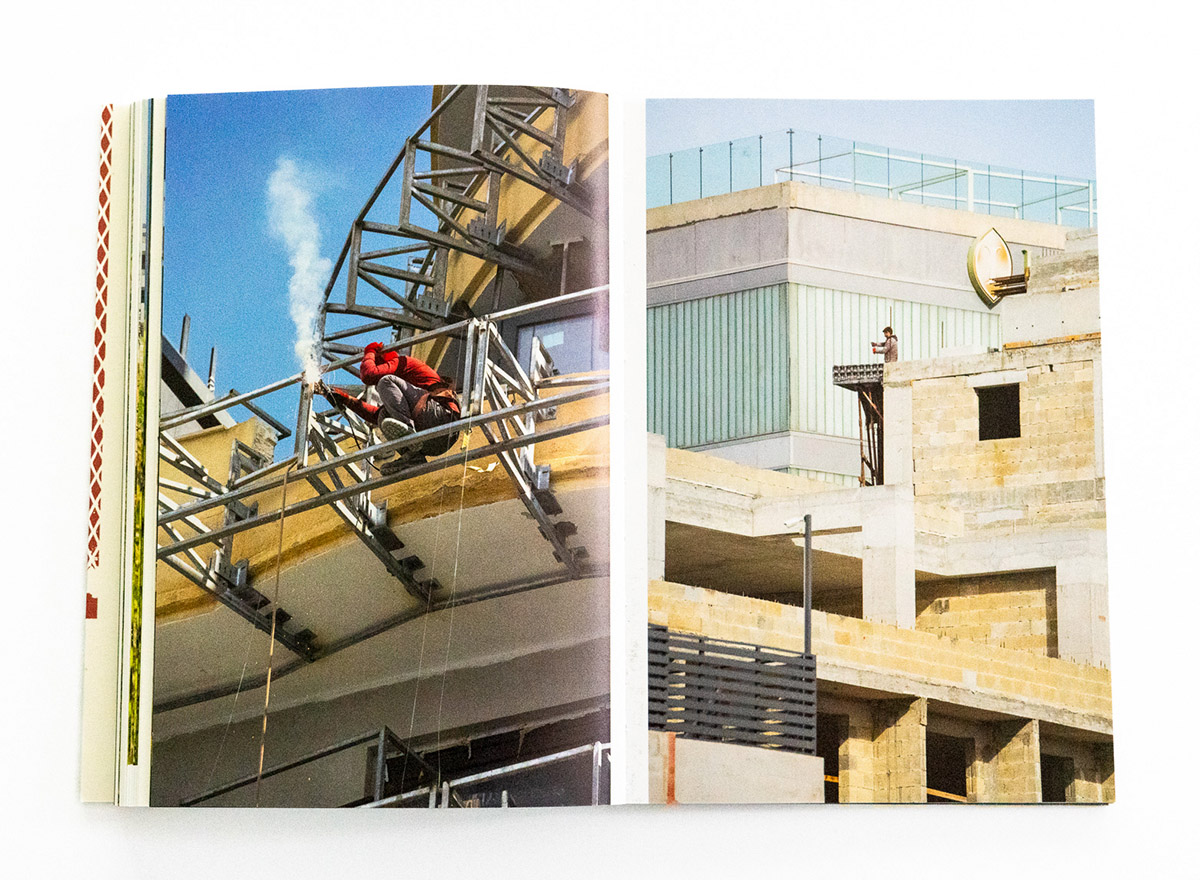
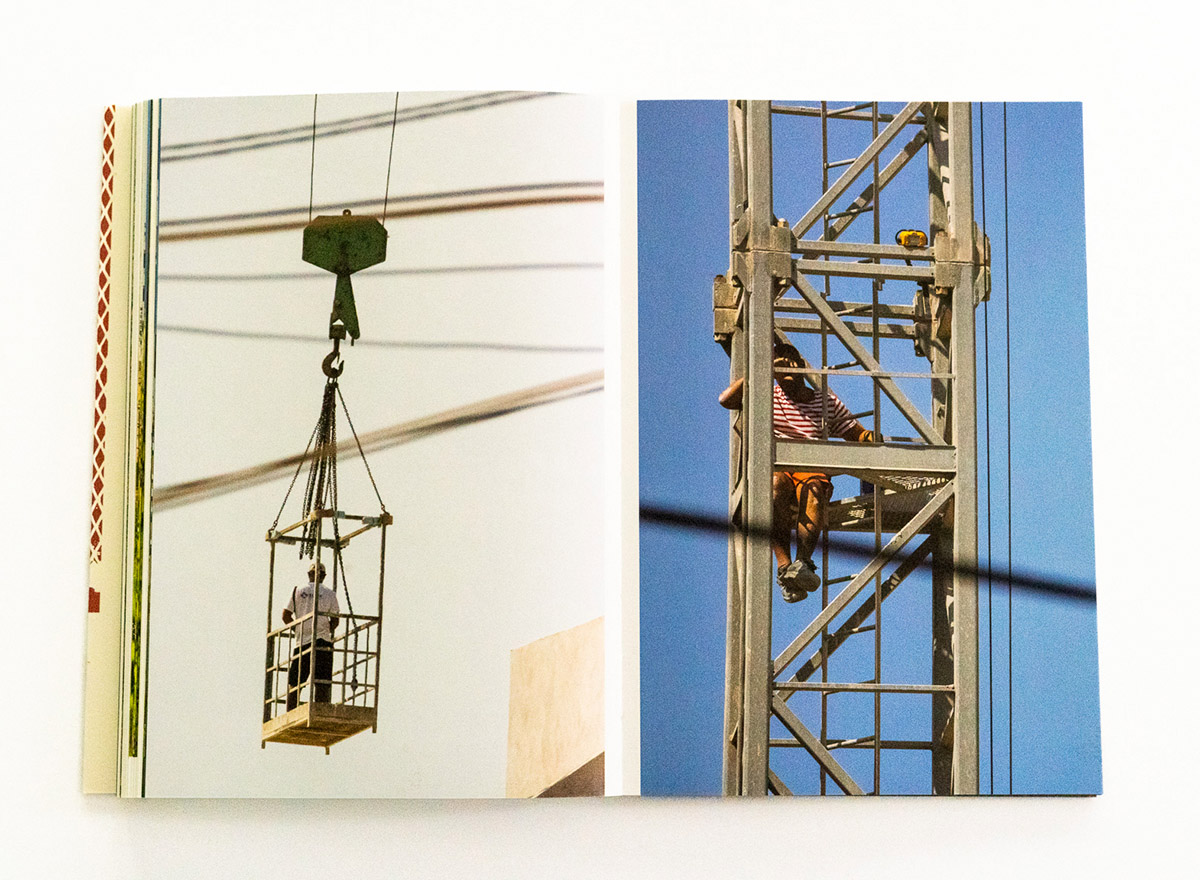
The photographs in Built on Sand speak well to the text of the book, placing an emphasis on natural ecologies and newly built environments. Throughout the book, Piekałkiewicz supports his argument with graphs and charts that are only bolstered by his photography. For example, data and text about the exploitation of workers is well matched to photos that represent the physical precarity that workers are subjected to, including men working near ledges high above the ground without harnesses or hardhats. In my favorite photos from the book, Piekałkiewicz draws attention to the fact that Malta is a place that has changed substantially over centuries and rapidly in recent years by juxtaposing new construction with nearby natural landscapes and historical sites. In one photo, excavators sit at various places along an inclined path leading down into a quarry. Along the back quarry wall, the reader can see the pace of limestone removal marked by weathered layers of rock moving horizontally across the frame, while trees line the top of the pit and yellow and purple flowers fill the foreground. In another, a freshly built condo complex looms just behind prehistoric ruins.
As I engaged with this photobook, I was impressed by Piekałkiewicz’s ability to blend Malta’s geologic and cultural histories to comment on its present. I hope other readers will appreciate that Piekałkiewicz’s combination of historical research, statistical evidence, and thoughtfully curated photography offers a useful perspective on contemporary Malta but also is broadly relevant to contemporary debates about growth and sustainability.
Matt Schneider is a professor and visual sociologist in Wilmington, North Carolina.
__________
Marcin Piekałkiewicz – Built on Sand – On Malta’s Construction Boom
Text and Photography: Marcin Piekałkiewicz
Publisher: The Eriskay Connection (NL)
Design: Rob van Hoesel
Lithography: Gaëlle van den Dool
Sewn softcover binding; 150 × 220 mm; 184 pages; ISBN 9789493363281
__________
Articles and photographs published in the PhotoBook Journal may not be reproduced without the permission of the PhotoBook Journal staff and the photographer(s). All images, texts, and designs are under copyright by the authors and publishers.


Leave a Reply