Review by Gerhard Clausing •
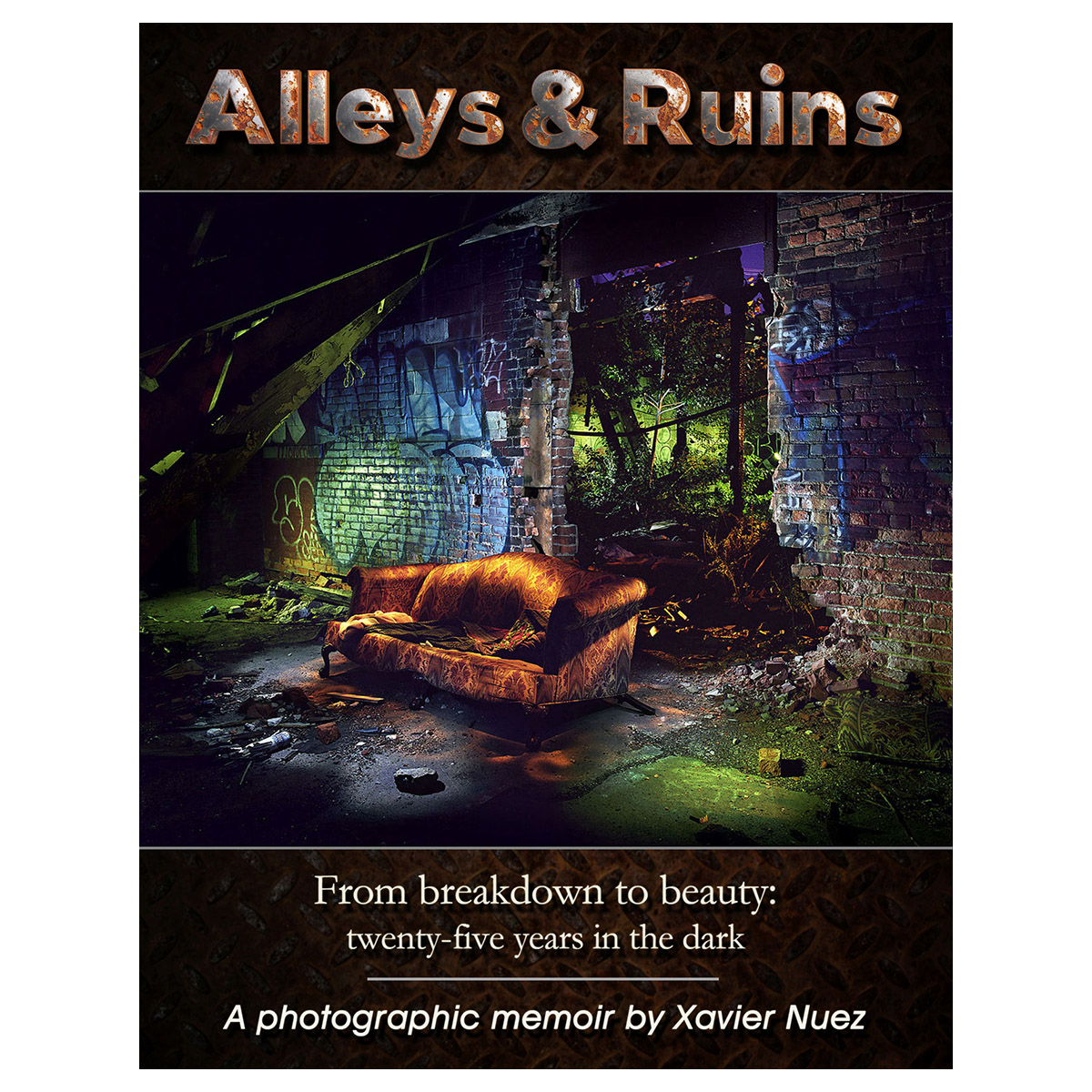
This photobook clearly demonstrates that there is a relationship between our inner self and the outer environment, with a strong impact on our vision. For many years Xavier Nuez traversed cities at night, photographing many forlorn places, a pursuit that helped him overcome his own issues as he learned to find peace and beauty in these not always so empty spots, light painting them at times to make them come more alive. The resulting photographs constitute a reflection of his inner state, as the environments became his friend and as he encountered folks in these spaces. This project presents an account of his impressive personal and photographic journey.
A door at the back of a building can tell us a great deal, provided someone takes the trouble to look. In Alleys & Ruins, Xavier Nuez gives sustained attention to such subjects which seem unpromising at first glance. His photographs turn overlooked corners of cities into places of considerable visual and emotional interest, and his accompanying accounts reveal the encounters that make these solitary views possible. Together, pictures and stories allow us to follow a photographer deveoping his craft while finding his place among people.
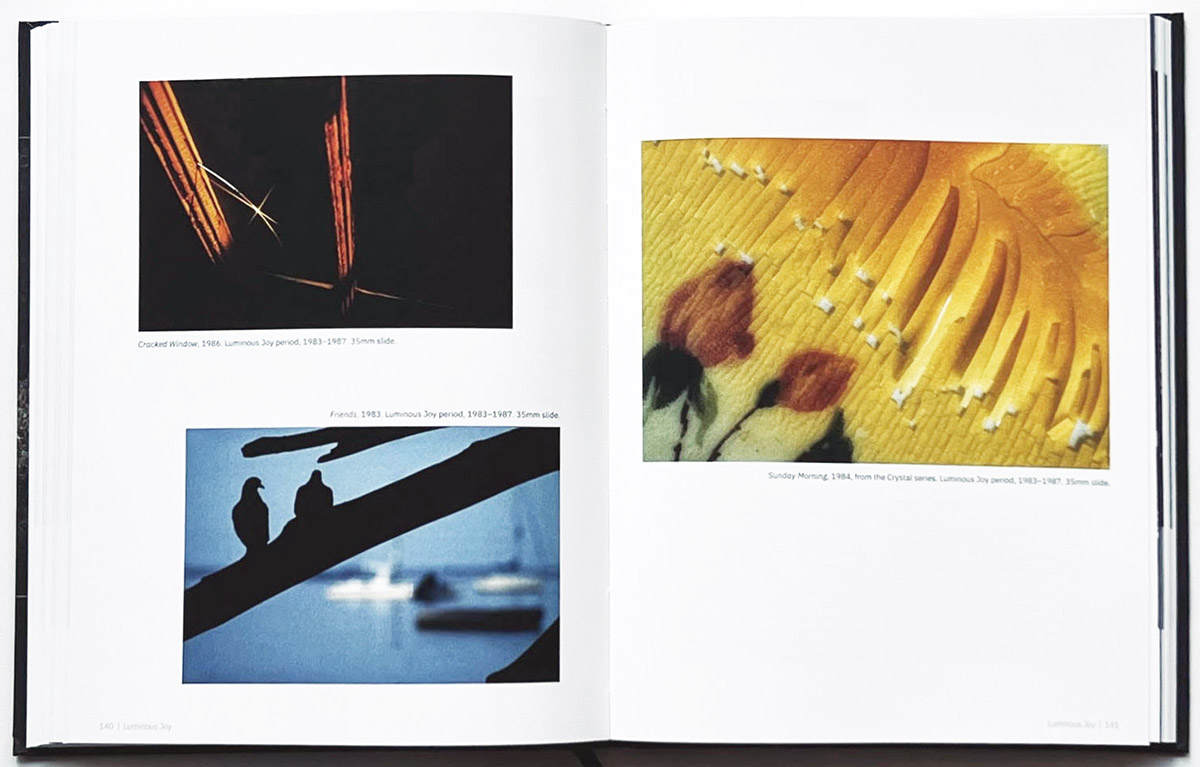
The subtitle, From breakdown to beauty: twenty-five years in the dark, suggests both a photographic undertaking and a personal passage. The selected spreads that I am showing below also reach into his earlier work. Photographs from his “Luminous Joy” period of the 1980s show an attraction to strong diagonals, silhouettes, and color transformed through crystal. We can already recognize a vision that enjoys discovering unexpected structures within ordinary appearances. These early experiments help us understand the later work without reducing a varied career to a single formula.
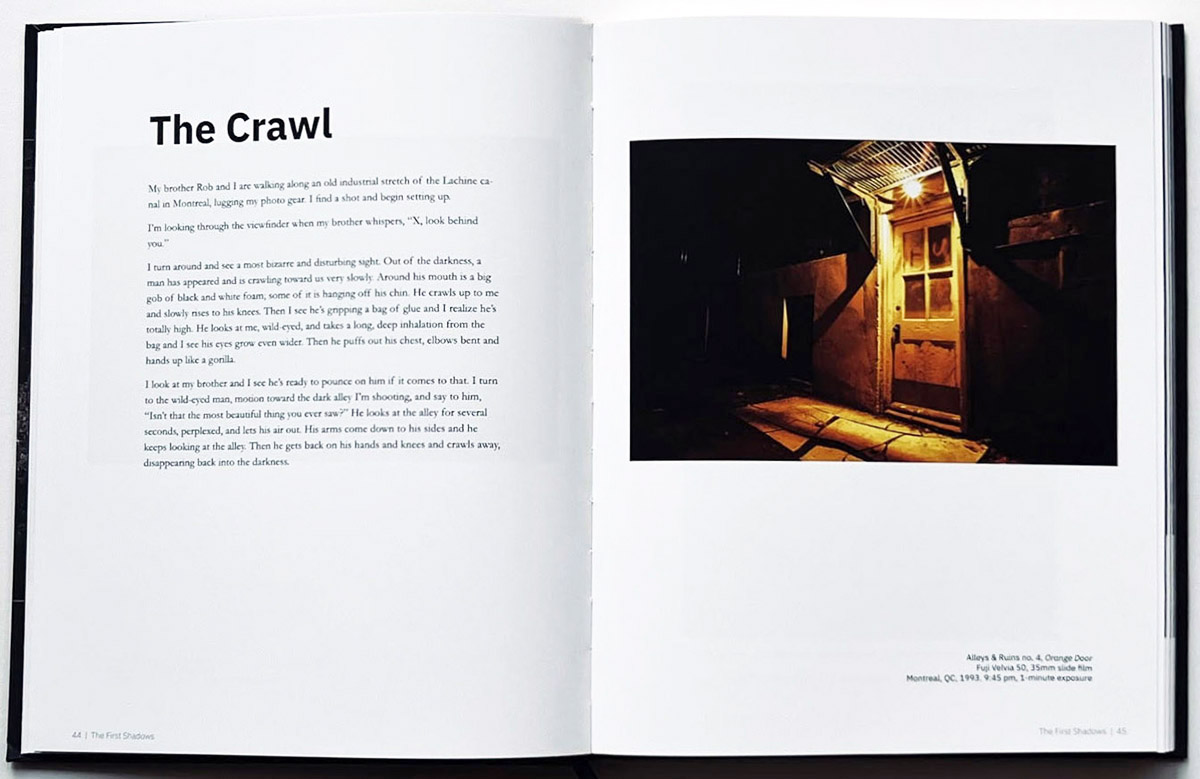
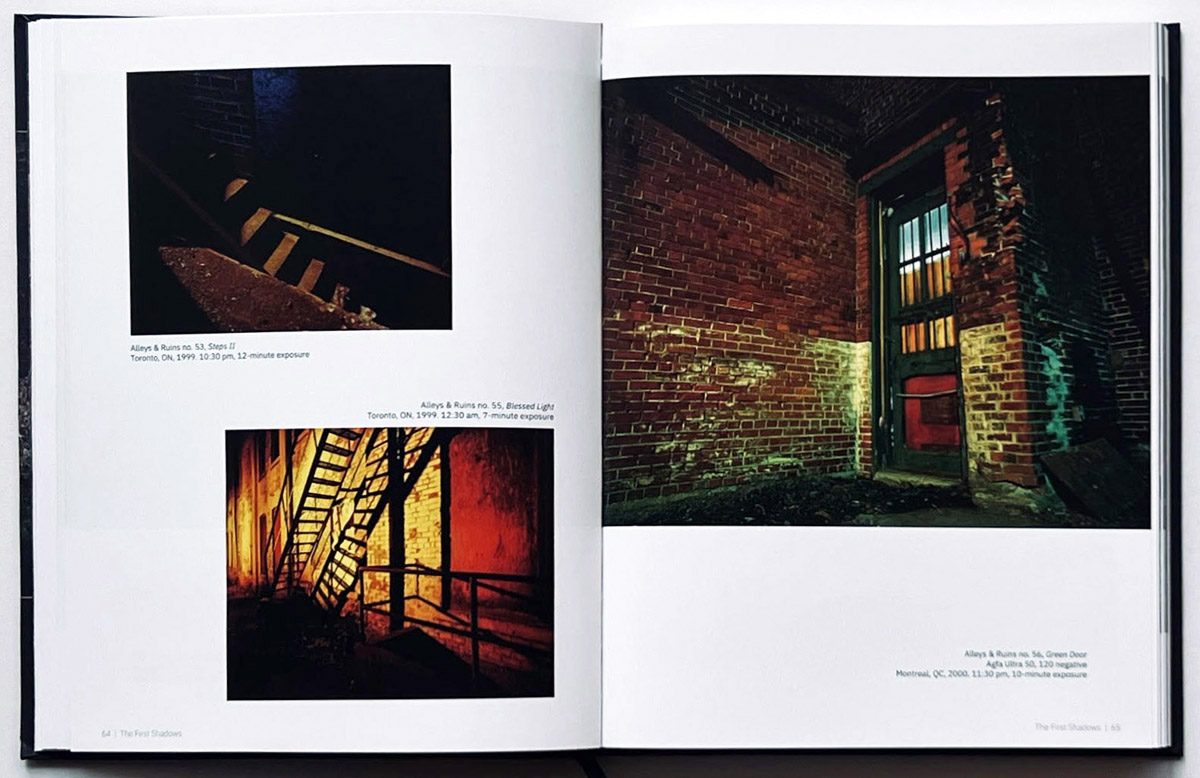
Let us consider some of his photographs. “Orange Door,” made in Montreal in 1993 on 35mm slide film with a one-minute exposure. A small light illuminates a battered entrance, and the surrounding darkness concentrates our attention on its warm surfaces. “Green Door,” photographed in the same city in 2000 on medium-format negative film, opens the composition to a more extensive arrangement of brickwork and colored panes. Its ten-minute exposure also indicates a growing investment of time. The doorway has become an occasion to investigate relationships across an entire wall.
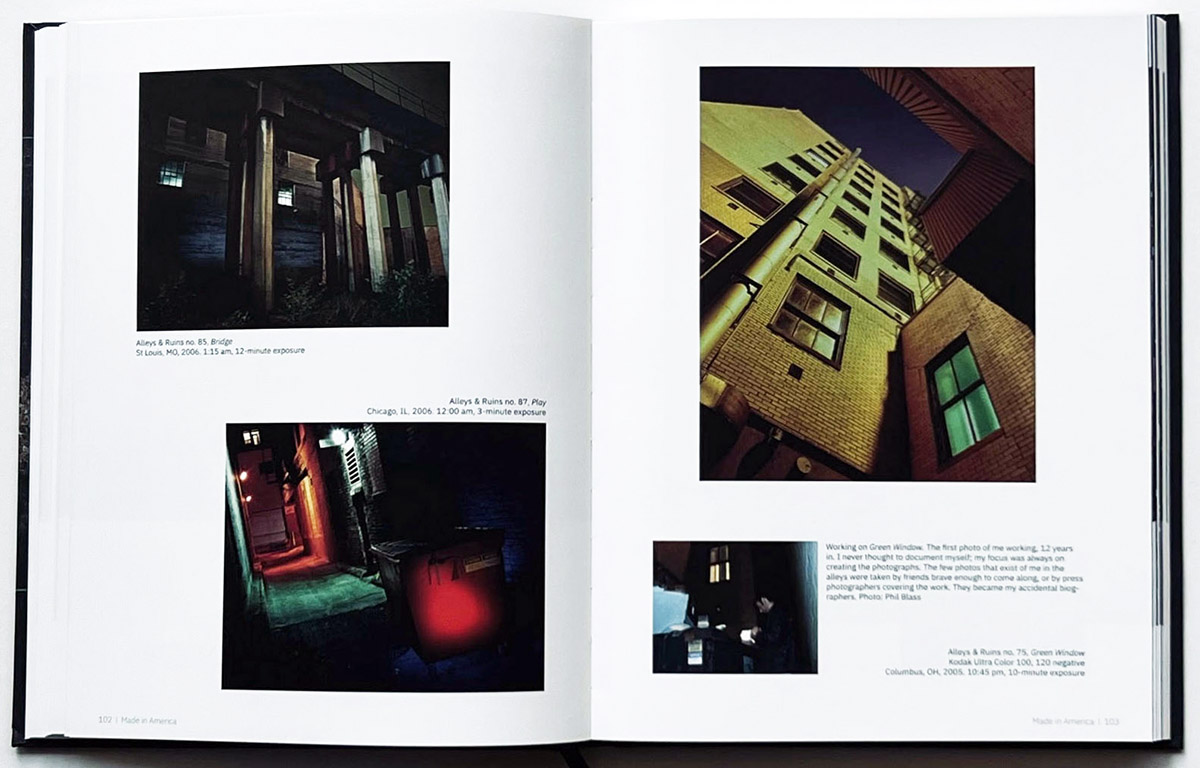
Elsewhere, the fire escape and its shadows in “Blessed Light” create a vigorous pattern across a yellow-orange facade. In “Play,” photographed in Chicago in 2006, red and turquoise light establish successive areas of interest down a narrow passage. Color increasingly directs our movement through space. The attraction comes from the photographer’s ability to find a structure for these colors, giving an unremarkable service alley a distinct psychological atmosphere.
The captions are particularly useful in following this development. Dates, film stocks, and exposure lengths help us understand the photograper’s process. Long exposures require Nuez to remain in a place, often well after midnight, while his hand-held colored light allows him to alter its appearance. The polished image emerges from a period of physical involvement. During that time, other people may enter the situation, even when they never appear in the finished photograph.
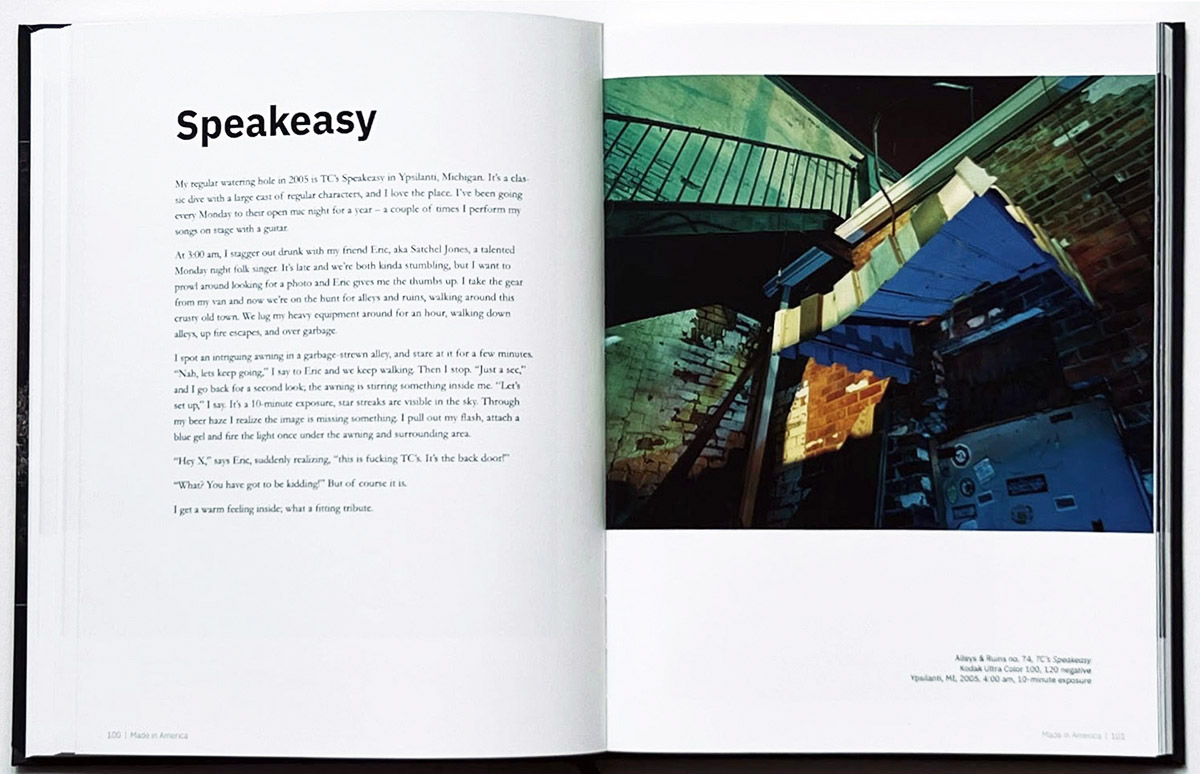
The account titled “Speakeasy” provides a wonderfully revealing example. After leaving a favorite bar in Ypsilanti with a friend, Nuez searches for a photograph, eventually returning to an awning that has caught his attention. During the exposure, he adds a blue-gelled flash beneath it. Only then does his friend recognize the motif as the back entrance of the very bar they have just left. We see how photographic discovery can make the familiar temporarily unfamiliar. The resulting picture also preserves a personal attachment that its architectural appearance alone would never explain.
Other encounters are more disturbing. In “The Crawl,” a man inhaling glue approaches Nuez and his brother beside Montreal’s Lachine Canal. Nuez redirects attention toward the alley he is photographing, asking whether it is the most beautiful thing the man has ever seen. The man looks and eventually withdraws. We cannot know what he makes of the invitation. The account nevertheless changes our experience of the adjacent photograph. Its stillness now includes our knowledge of a tense, unpredictable human exchange.
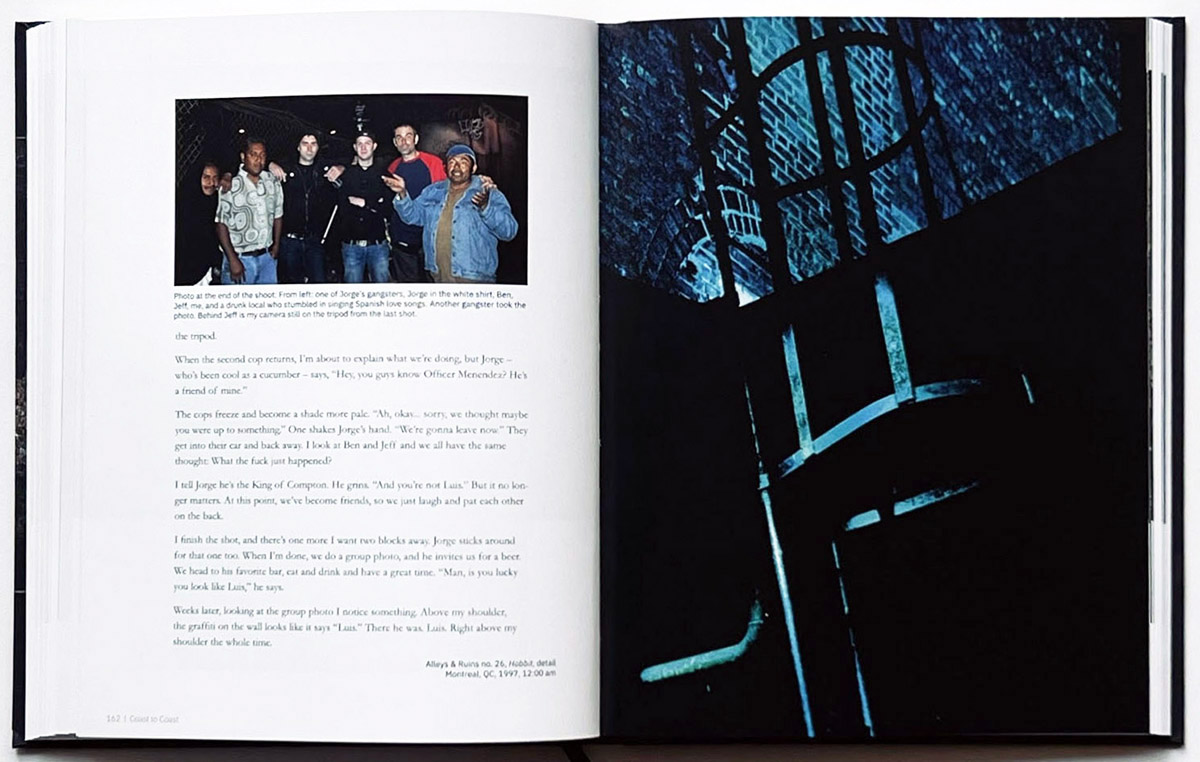
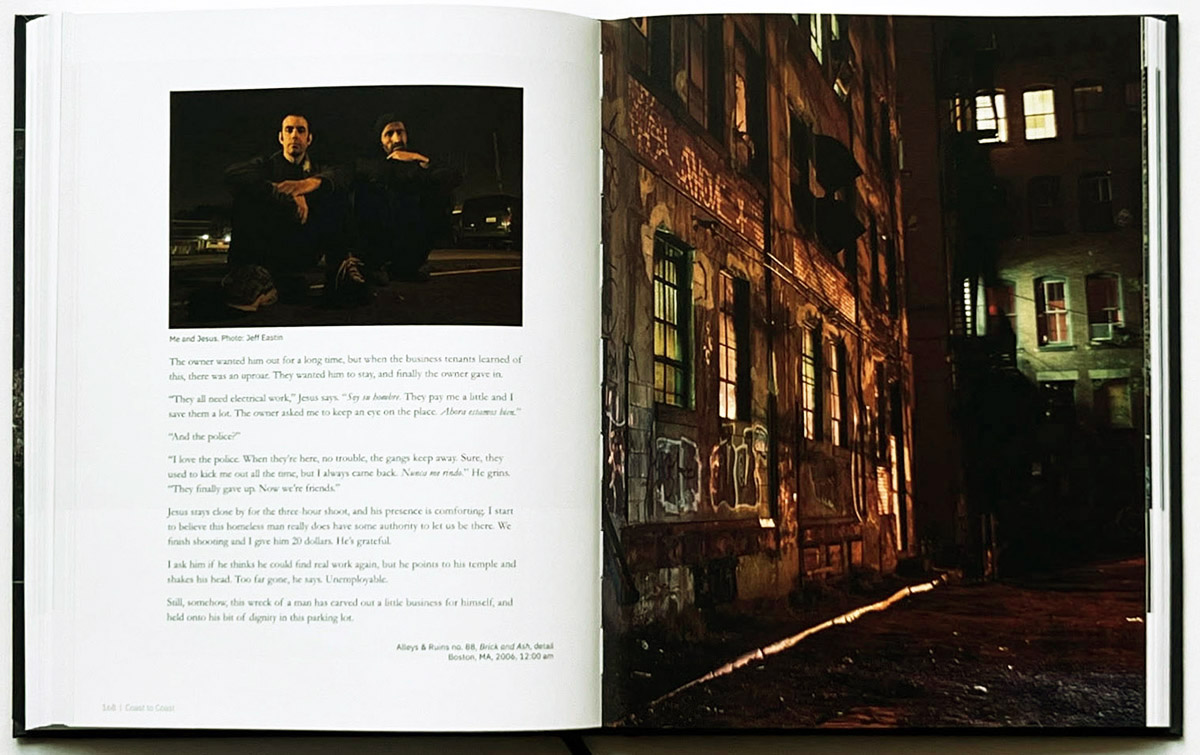
In Boston, a homeless man named Jesus provides companionship during a lengthy shoot and explains the informal electrical work and watchfulness that have earned him a place among local businesses. The photograph of Nuez with Jesus supplies another kind of evidence. Behind an image of seemingly deserted architecture lies a negotiation about access, usefulness, and trust. Such passages give the professional journey a social dimension. Expertise involves learning how to inhabit a place while making a picture there. Cultural elements are revealed that otherwise would remain hidden.
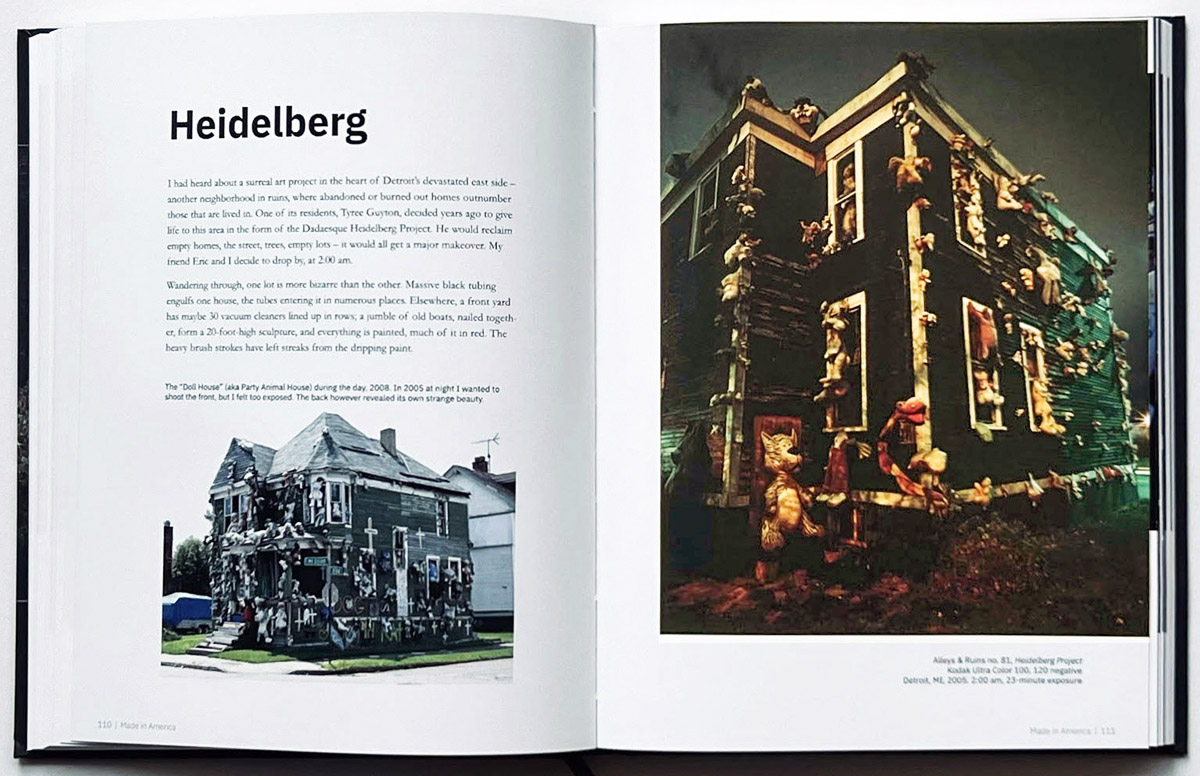
Nuez also encounters someone else’s transformation of urban neglect at Tyree Guyton’s Heidelberg Project in Detroit. A house covered with discarded toys becomes a remarkable photographic subject. The pairing of a daytime view with Nuez’s illuminated nighttime interpretation lets us distinguish Guyton’s intervention from the photographer’s response. Creative work has already taken root in this neighborhood. Nuez participates in an existing conversation about what can be made from what others have abandoned.
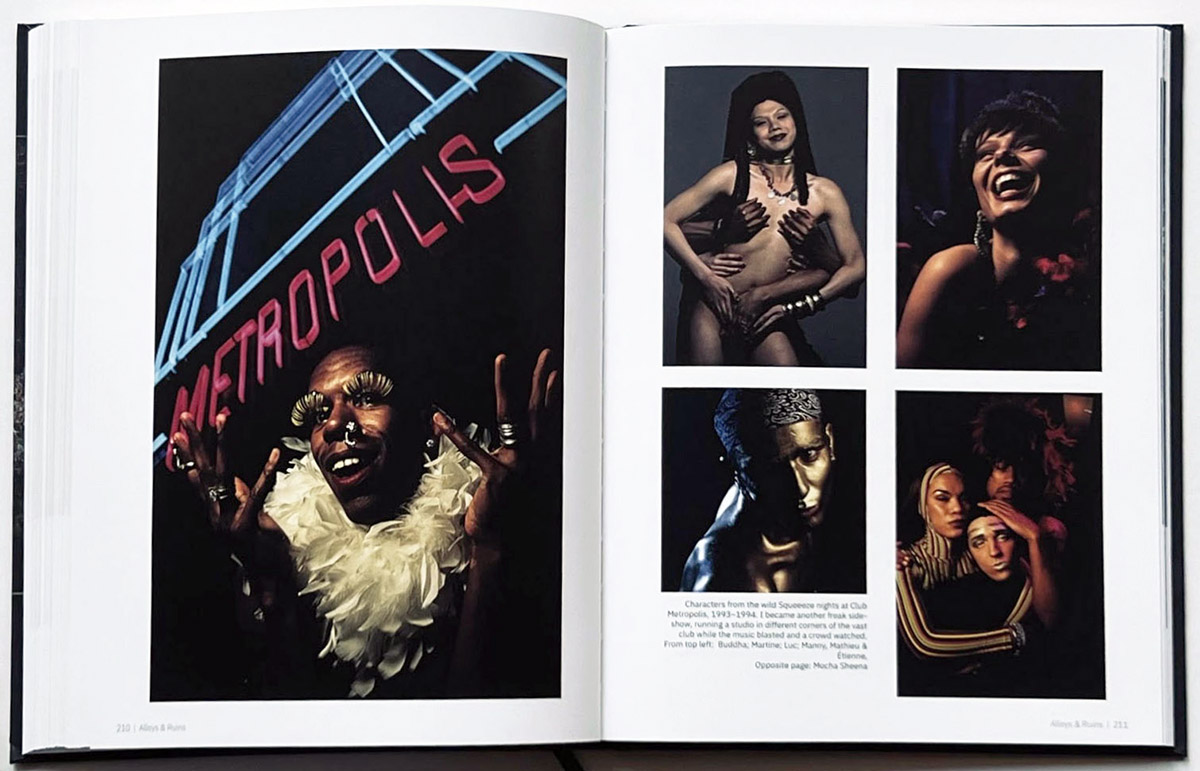
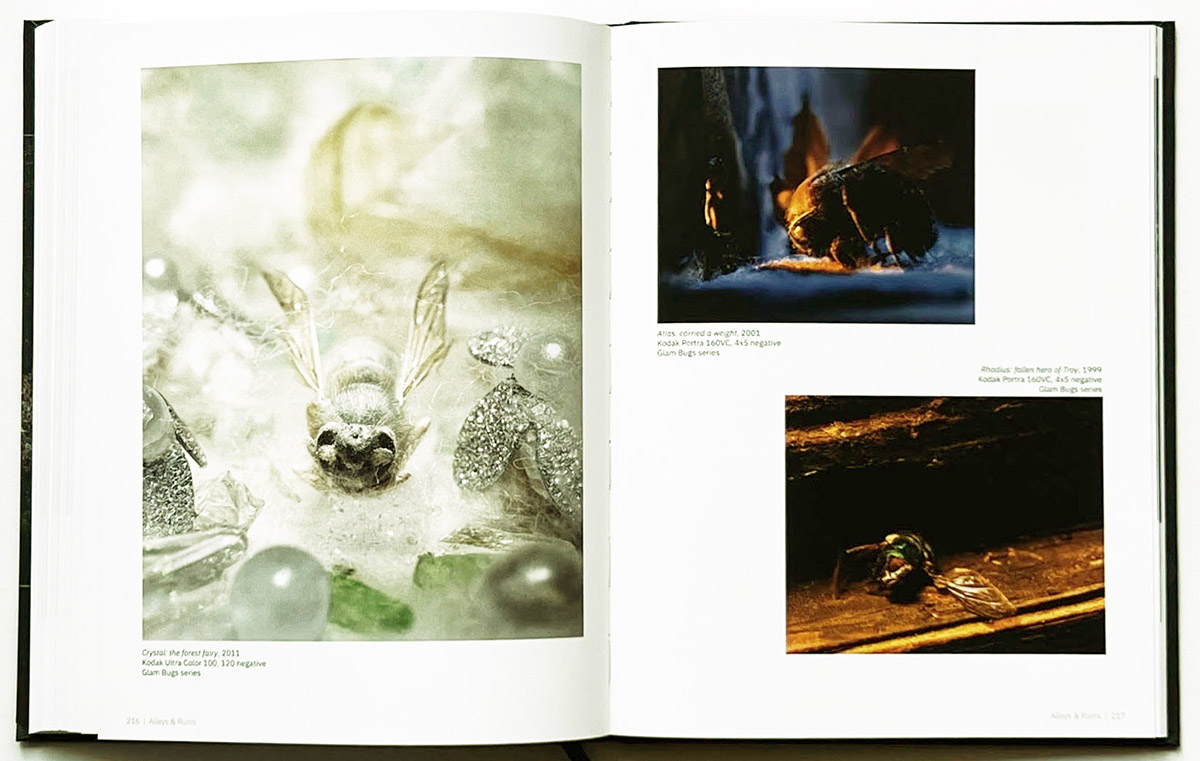
The nightclub portraits and the “Glam Bugs” photographs broaden our understanding of his visual journey. The Club Metropolis images from 1993–1994 show his interest in expressive faces and theatrical presentations. The insect studies bring a similar appetite for transformation to a much smaller scale. These excursions suggest a continuing willingness to experiment with subject, light, and the boundary between observation and invention.
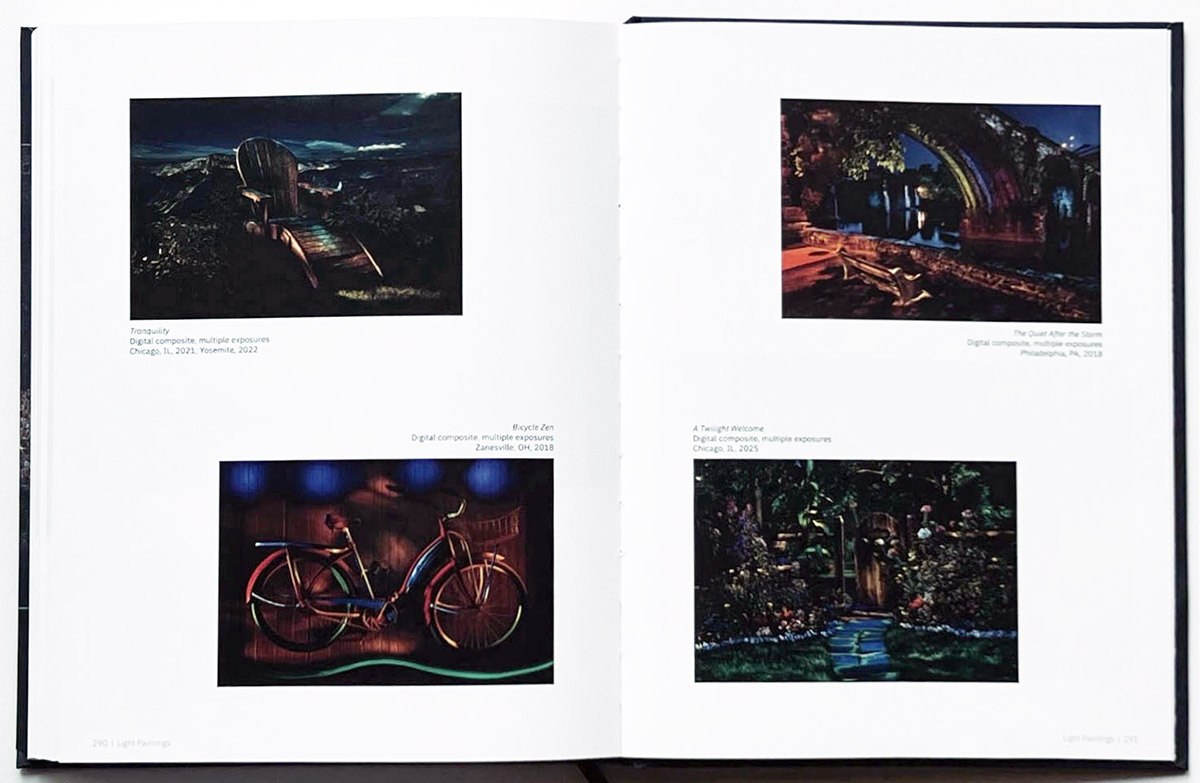
The later digital composites make that boundary especially visible. “Bicycle Zen” and “A Twilight Welcome” are identified as images assembled from multiple exposures. “Tranquility” brings together material from Chicago and Yosemite. Here Nuez extends his control from illuminating a location to constructing the final image from separate photographic elements. The captions acknowledge the change openly. His development involves an expanding set of choices about how an imagined picture can be realized.
The design supports these discoveries through changes of scale. Large architectural photographs invite sustained looking; smaller pictures provide comparisons or introduce the people involved. Nuez explains that he concentrated on making photographs and seldom thought to document himself. Pictures of him at work came from friends and press photographers, whom he calls his accidental biographers. Their images help the memoir show us a person at work. Designed by Nuez himself, the book brings these different kinds of photographs together, while the prose encourages us to return to views whose apparent solitude we now understand differently. Along the way, we also find out much about the photographer’s family and background, elements that make this project a comprehensive, involving experience.
Alleys & Ruins asks us to reconsider how we assign value to places and to people. Its beauty grows from patient attention, yet the stories preserve awkwardness, vulnerability, and humor that resist a comfortable picture of urban life. We follow a photographer developing considerable command of his medium while remaining exposed to the surprises of the street. That combination makes this photographic memoir especially rewarding. It encourages us to examine what our own habits of looking have allowed us to miss, as well as the relationship between our inner processes and the outer world. An astonishing volume!
____________
Gerhard (Gerry) Clausing, Editorial Consultant of the PhotoBook Journal, is an author and artist who investigates the role of culture and memory in visual art.
____________
Xavier Nuez – Alleys & Ruins. A Photographic Memoir
Photographer: Xavier Nuez (born in Montreal, Canada; lives and works in Chicago, Illinois)
Editor: Bryan Nyary
Texts and Design: Xavier Nuez
Language: English
Publisher: Old Light Editions, Chicago, Illinois; © 2026
Hardbound, with illustrated cover, 304 pages, paginated; 8.75 x 11.25 inches (22.4 x 28.7 cm). ISBN 978-8-9956246-0-8
____________
Articles and photographs published in the PhotoBook Journal may not be reproduced without the permission of the PhotoBook Journal staff and the photographer(s). All images, texts, and designs are under copyright by the authors and publishers.


Leave a Reply