Review by Hans Hickerson ·
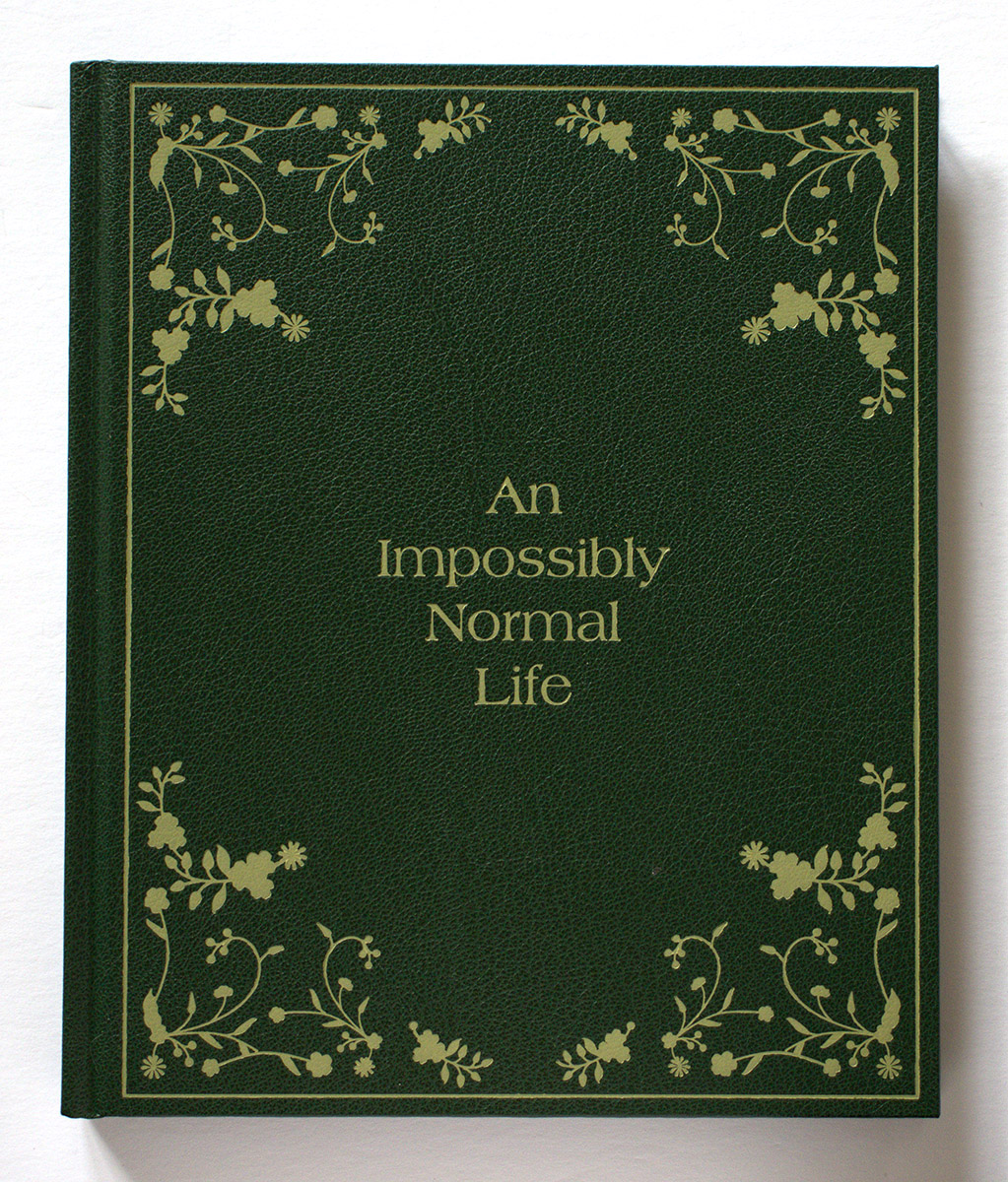
Move over Barbie and Ken. Make way for Ken and Grant, the homonormative protagonists of Matthew Finley’s An Impossibly Normal Life, a script-flipping fantasy that views the world through a gay lens. The book is an imagined photo album that doesn’t talk about sexual orientation. Instead, it embodies queerness by making it real, at least as close to real as you can get through fiction.
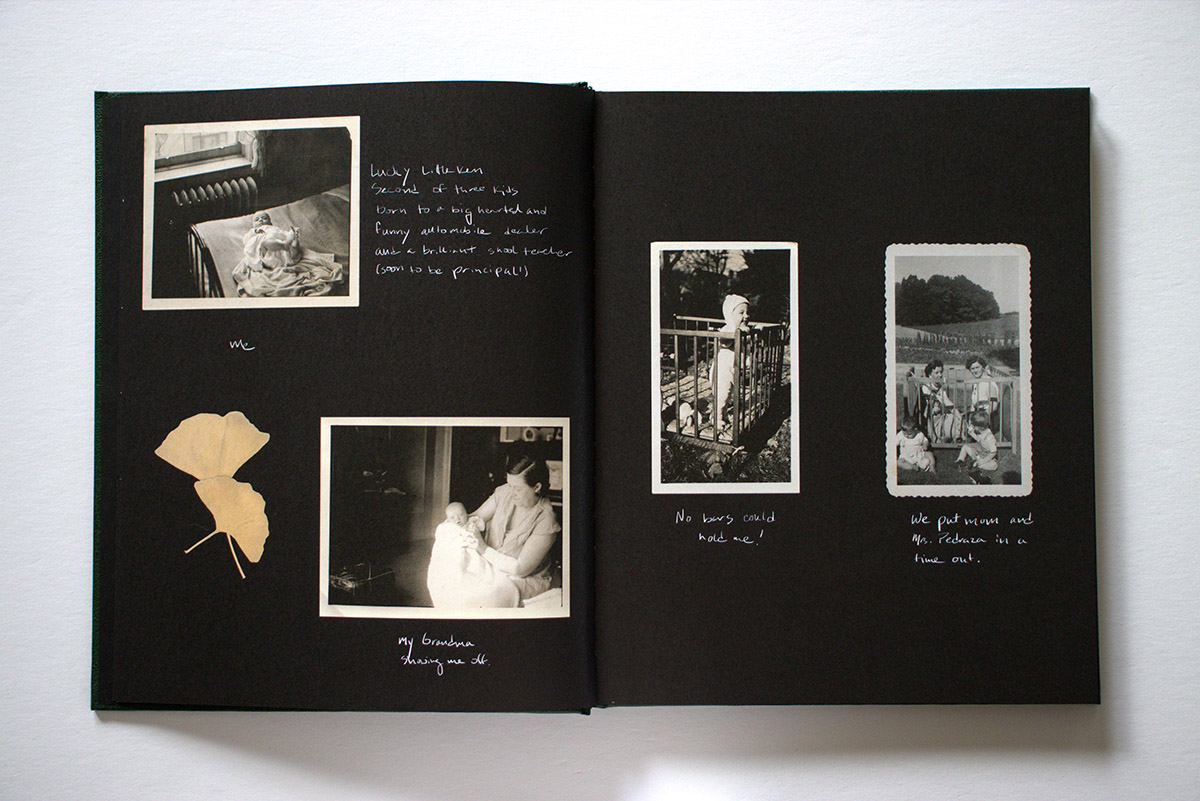
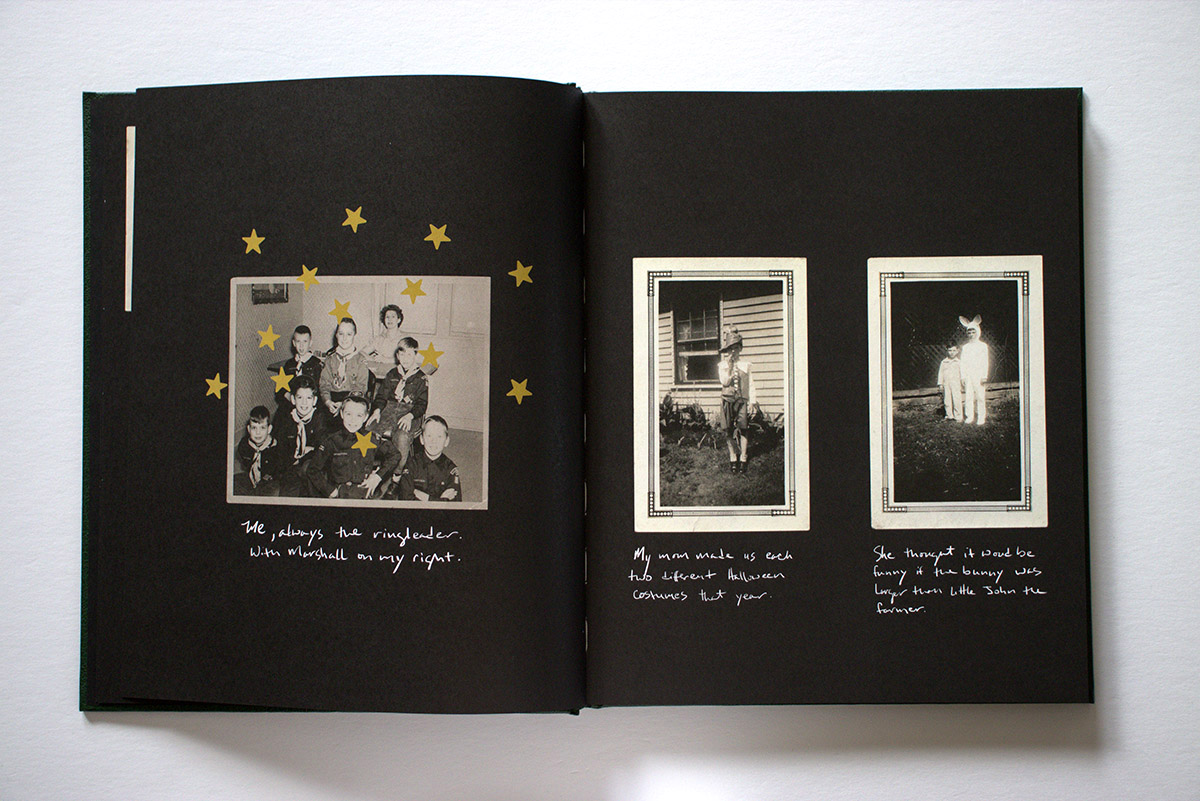
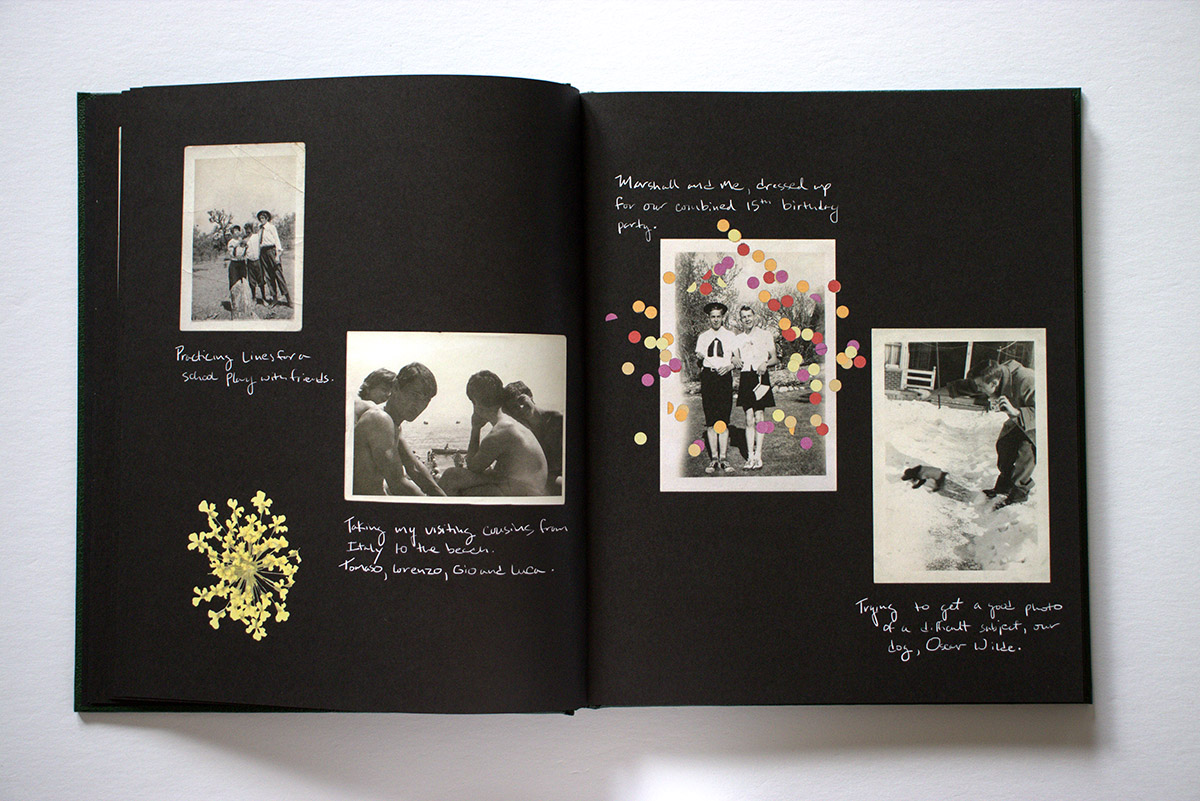
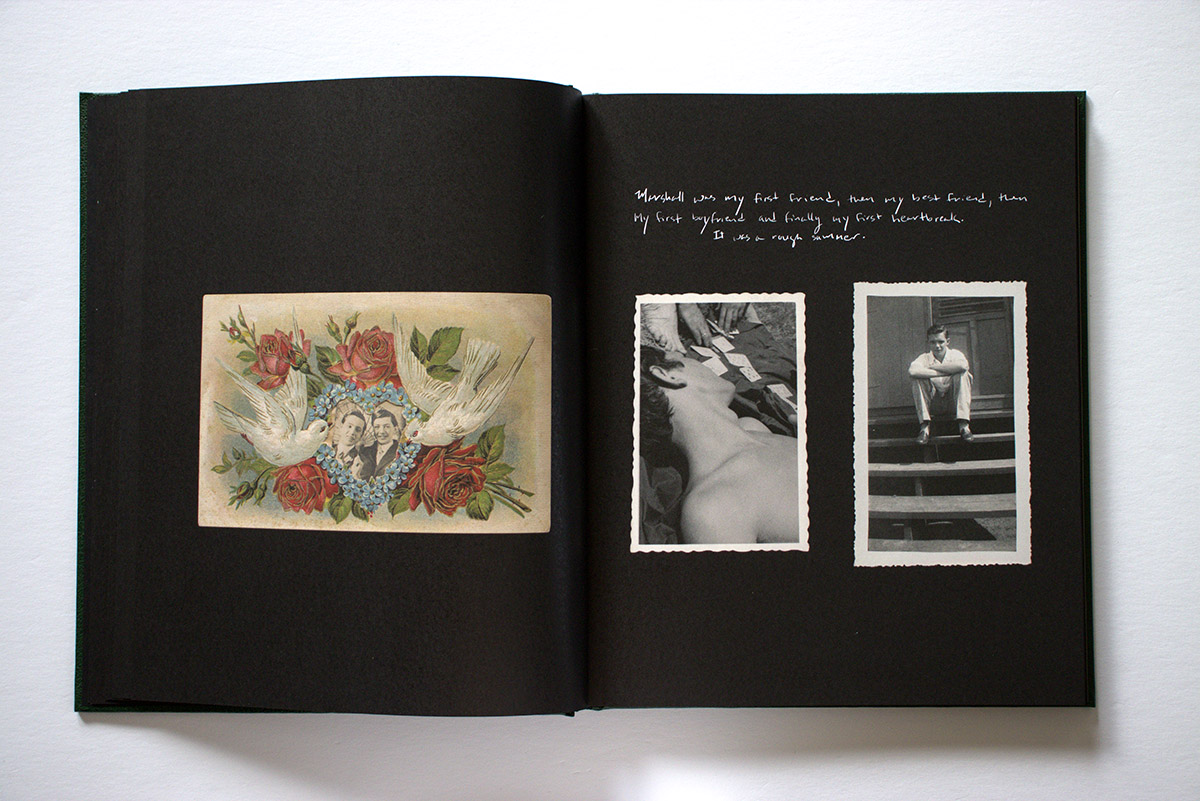
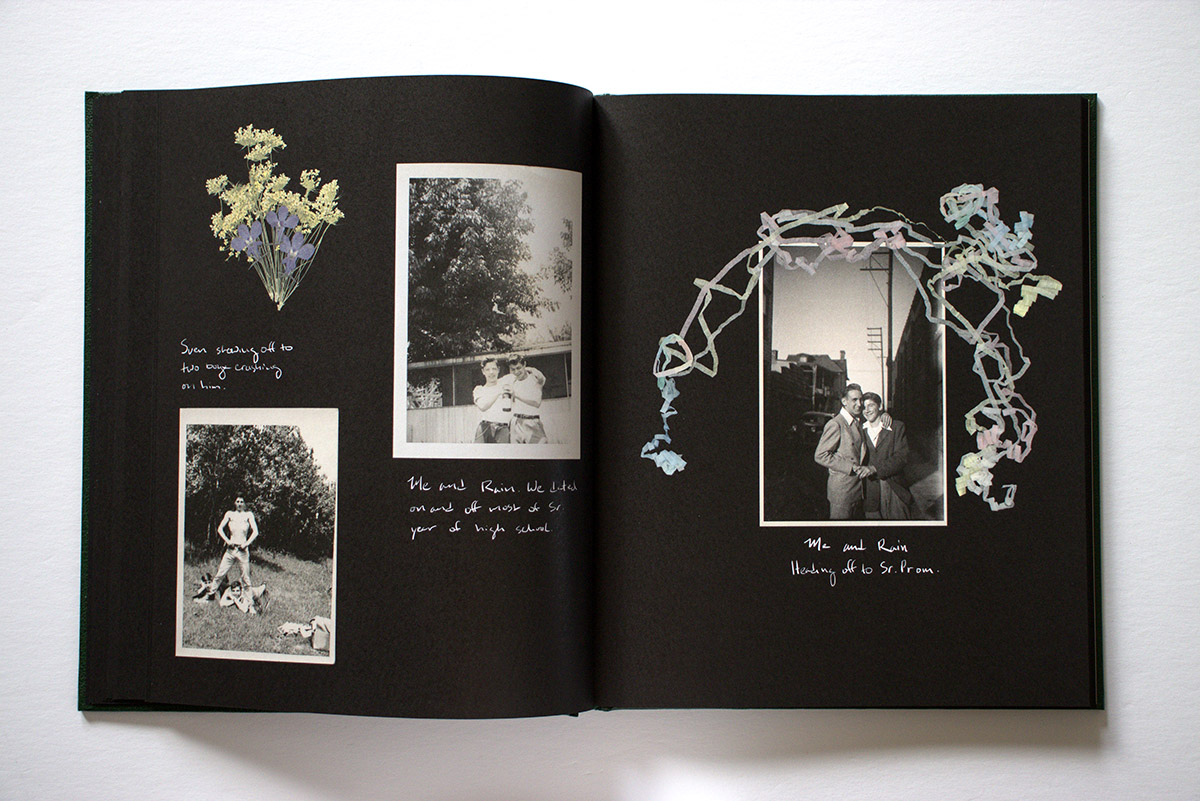
Author Matthew Finley uses found photos from back into the mid-twentieth century to tell the story of Ken, a “normal” American boy. His straight, open, understanding, supportive, tolerant, “normal” parents love and accept him. Ken does normal gay-boy stuff growing up – kissing his friend Marshall as a toddler, playing with the family dog, Oscar Wilde, going to Cub Scouts, and dressing up in Halloween and Easter Bunny outfits. As a teen, after getting over his breakup with Marshall, he goes to the prom with his date Rain and has other new friends and flirts.
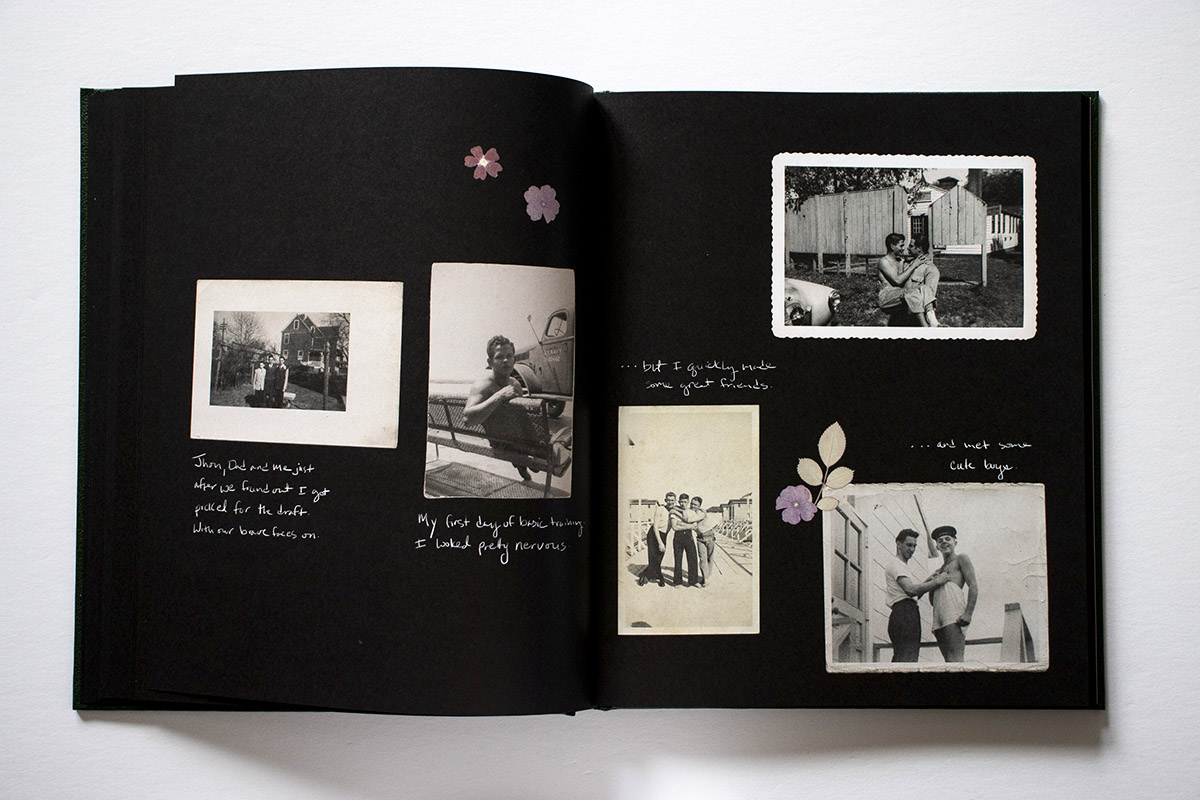
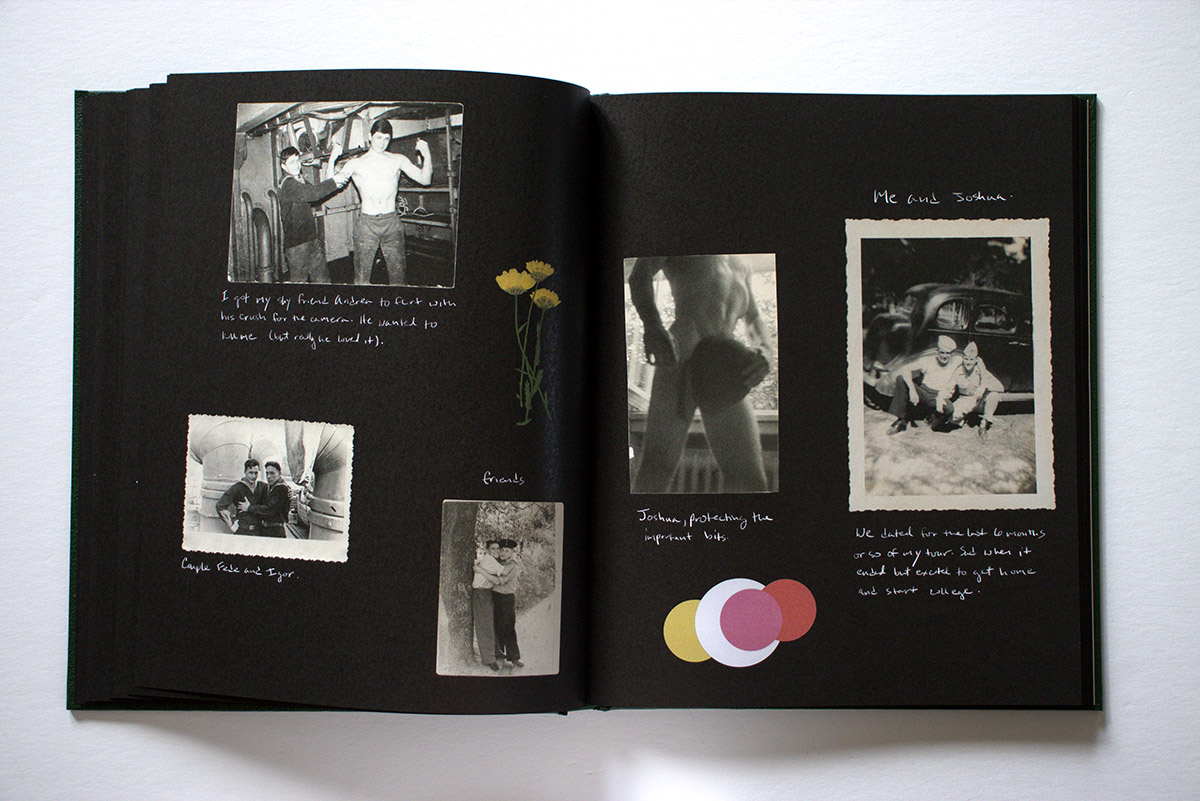
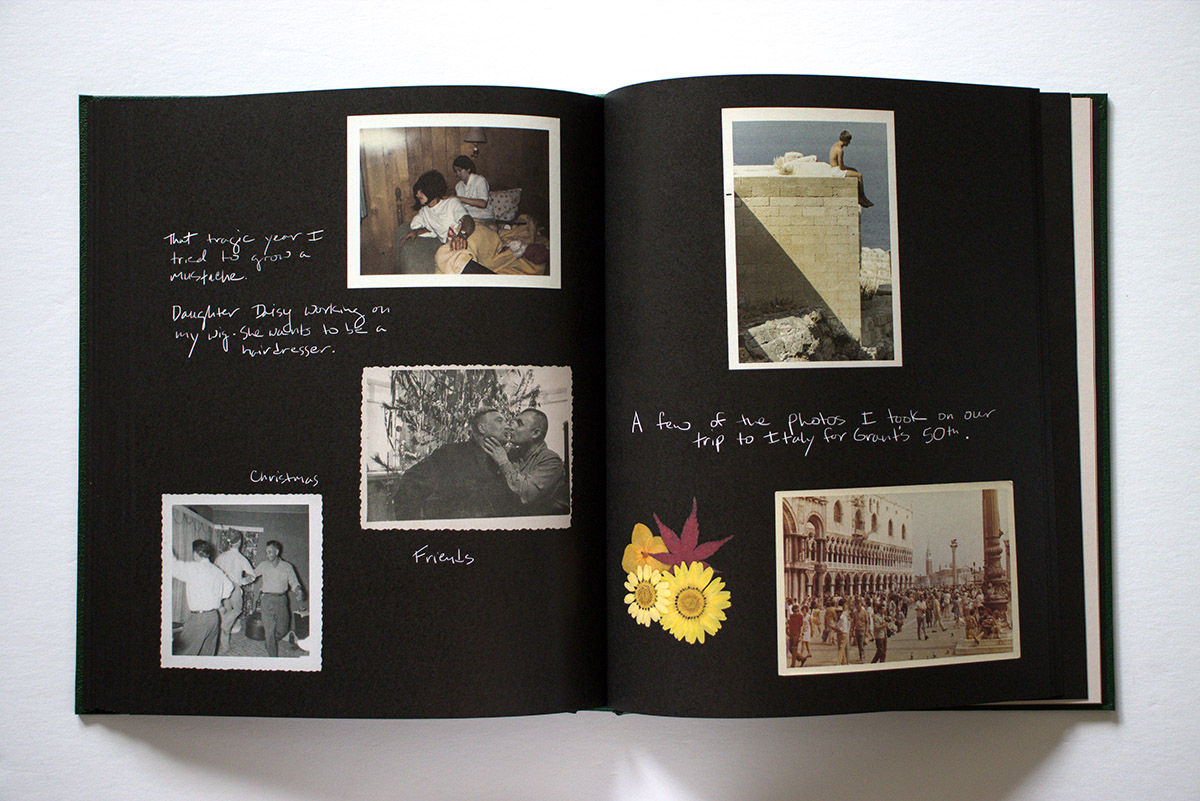
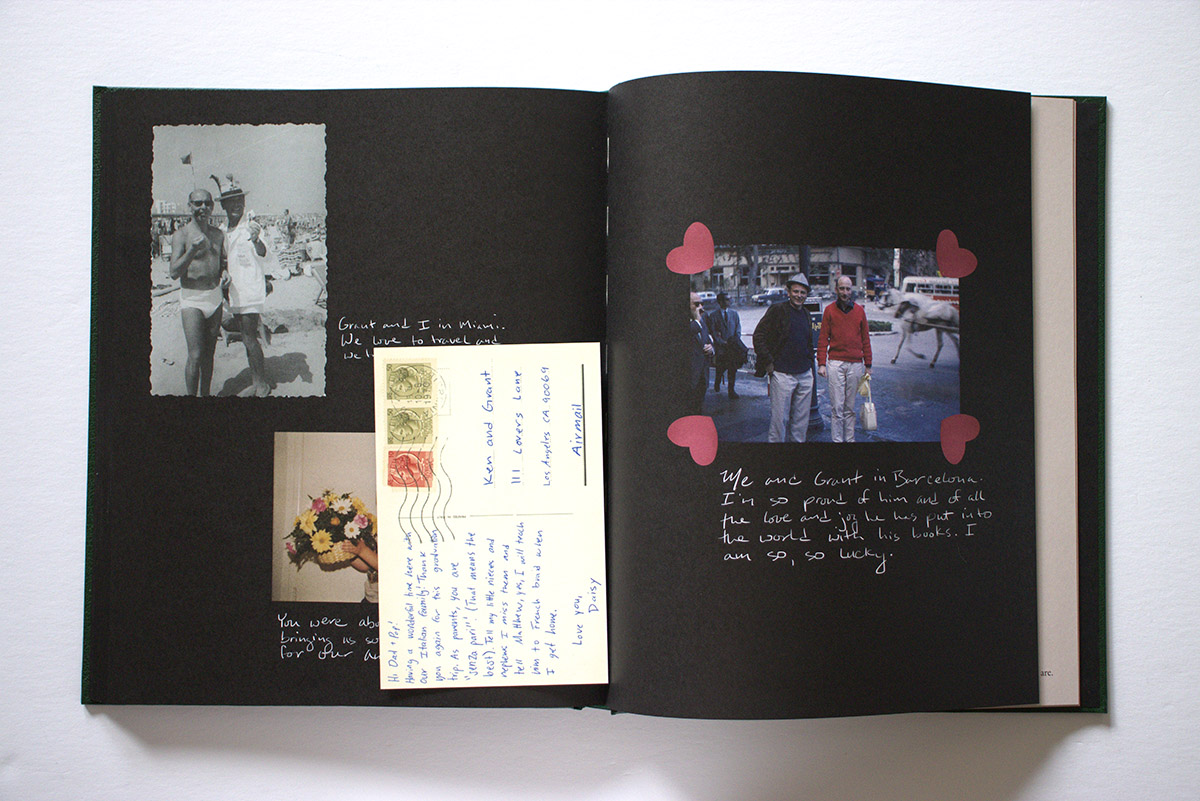
After high school Ken is drafted into the Navy and we see him in photos with his shipmates, flirting with cute boys like Hanz and Kay. We also see fellow sailor Bruno and his boyfriend. During shore leave in Italy he visits his Italian relatives, including cousin Lorenzo and Lorenzo’s future husband, Aunt Jax and her fiancée Ann, and Enzo (“Was sexy but possesive and jelous [sic]”) from a neighboring village.
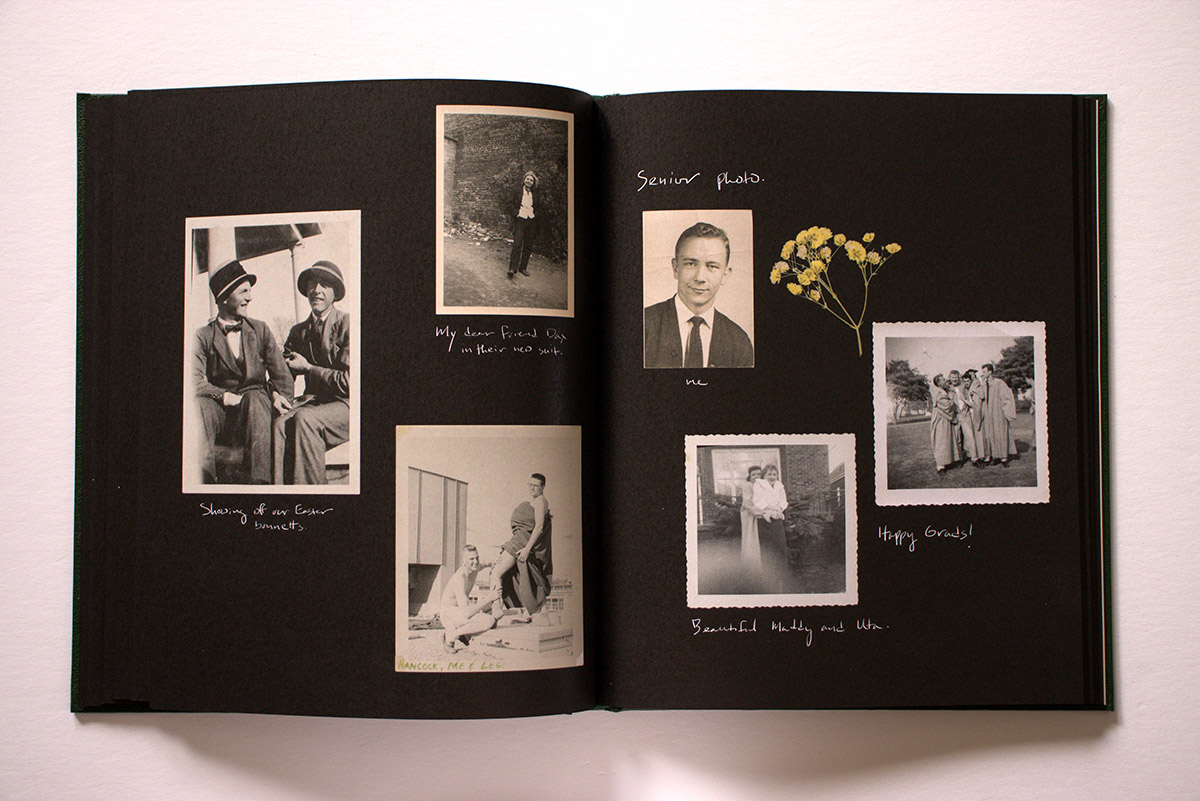
After the war, Ken goes to college. We see him hanging out with his college buddies and crushes, fooling around. He takes intimate photos of guys in his bed, “handsome men in morning light.” His father’s death occasions more old family photos, including “Dad’s uncle and his husband back in Hungry [sic].” Photos from his senior year include one of his “dear friend Dax in their new suit” and “beautiful Maddy and Uta.”
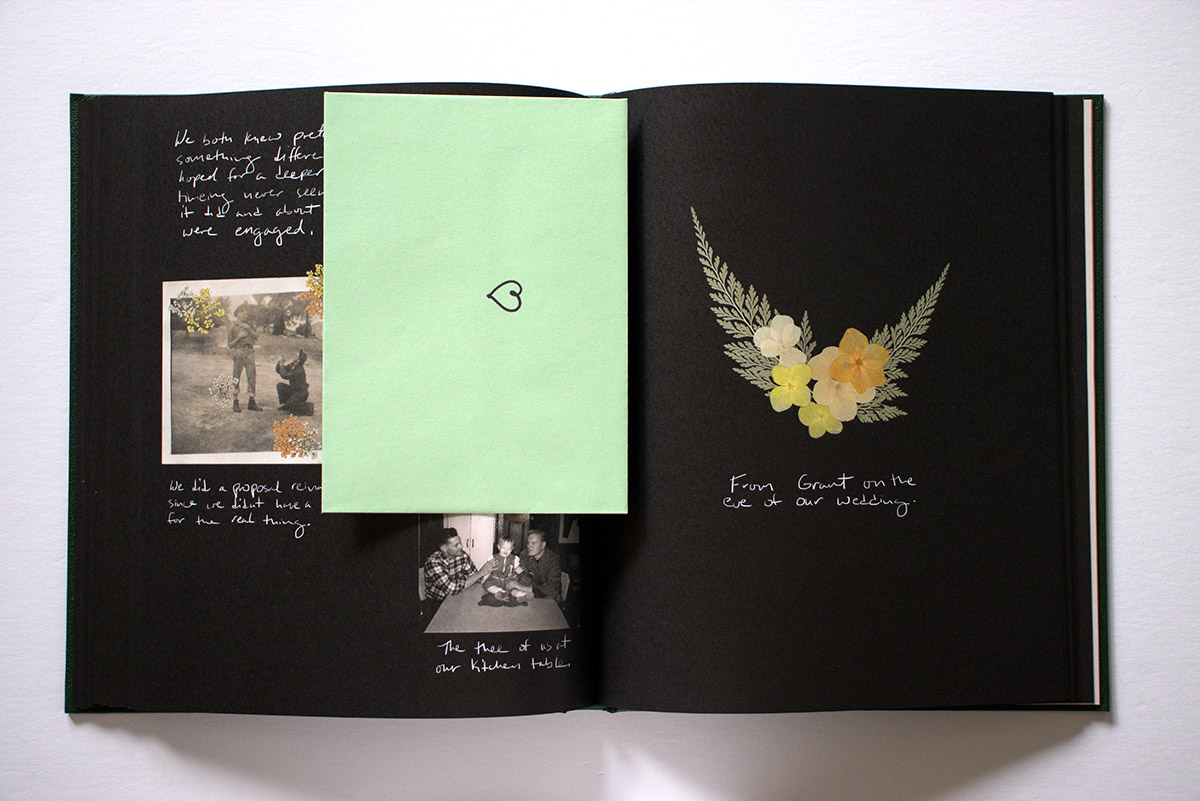
After college we meet Jules, Steven, Juanito, Bo, “handsome Christopher,” and finally Grant. Ken and Grant go on to get married and to parent Grant’s daughter Daisy. We see Ken in his new restaurant, then later in two more. We see Ken and Grant’s first house and their first new car. We follow them on vacations and trips. We see daughter Daisy again and family and friends from previous pages. The book ends with views of Ken and Grant as an older, settled couple.
Something you notice after entering the book’s alternate universe is the gender imbalance. For example, in the first 20 pages of photographs we see 15 men, 8 women, 3 girls, and 67 boys. Later, in 20 pages after his college graduation we see 0 older men, 0 children, 14 women, and 103 young men. If you like looking at photos of young men, including guys with sculpted abs and pecs, this is a book you will enjoy.
An Impossibly Normal Life is cleverly fictionalized down to the smallest details. The “handwritten” captions (with faux-authenic misspellings) include Ken’s dedication to his nephew Matthew and pressed (printed) dried flowers and colored stickers. Tipped into the book are a “typewritten” letter from Ken to his parents, a letter from his mom and dad offering him love and support after his breakup with Marshall, a note in an envelope from Grant to Ken written the night before their wedding, and a “stamped” postcard sent from Italy from Daisy to her parents. One of the (printed) stamps even has a realistic-looking torn corner.
It is amazing that the found photos used to tell the story are seamlessly believable. You never stop to think that maybe you are actually looking at a different real person rather than the fictionalized characters. I would be curious to know how many different people are used as stand-ins for Ken in the book, and I imagine that it could be at least several dozen.
The book is a great example of how media – words, sound, paint, film, photographs – can be used in different ways. They can become journalism, fiction, advertising, pornography, or clinical information; it just depends how you use them.
Finley’s re-purposing of vintage photographs begs an ethical question. When they were made, men were not openly gay, and physical closeness between men did not suggest that they were queer. Is it right to portray these forgotten anonymous souls as something they quite possibly were not? On the other hand, what are the chances of someone in the book being recognized? Minute, to be sure. But I am getting into what-ifs here, and the best thing to do is to let the chips fall where they may. After all, all’s fair in love and war, if not also in art.
An Impossibly Normal Life makes the point that the situation it depicts is not normal – yet. Nowhere in the book, for example, is there a whiff of the 40-odd percent of Americans who in 2026 view homosexuality as morally unacceptable. We have a ways to go before the book’s title can be changed from “impossibly” to “possibly.”
Hans Hickerson, Editor of the PhotoBook Journal, is a photographer and photobook artist from Portland, Oregon.
____________
Matthew Finley – An Impossibly Normal Life
Photographer : Matthew Finley (born in 1972, lives in LA)
Publisher : Fall Line Press ©2025
Language : English
Text : Matthew Finley
Design: Margaux Fraisse
Printing : SYL, Barcelona
Embossed hardcover; sewn binding; 128 pages with realia inserts and cover pocket; 279 photographs;11.5 x 9.5 in; ISBN 979-8-9929373-2-9
____________
Articles and photographs published in the PhotoBook Journal may not be reproduced without the permission of the PhotoBook Journal staff and the photographer(s). All images, texts, and designs are under copyright by the authors and publishers.


Leave a Reply