
Review by Gerhard Clausing •
Brooke DiDonato’s Take a Picture, It Will Last Longer subverts everyday life quietly from within. The photographs infiltrate our reality, introducing small impossibilities, spatial contradictions, and bodily misalignments that accumulate into a sustained, disorienting logic, characterizing a topsy-turvy world through a certain amount of disturbance, which in turn invites contemplation. What initially seems playful quickly reveals itself as a major methodology. The work can be called a persistent glitch in the visual grammar of the ordinary.
I will demonstrate the methodology through examples from the photobook. From the outset, the sequencing establishes its premise: the familiar is not stable. DiDonato’s surrealism is anchored in the textures of lived space. Walls, carpets, doorways, and fixtures are not passive backdrops but active participants in the image logic. The artist introduces interventions in minute doses, allowing the absurd to emerge through small violations of expectations rather than through overt spectacle.
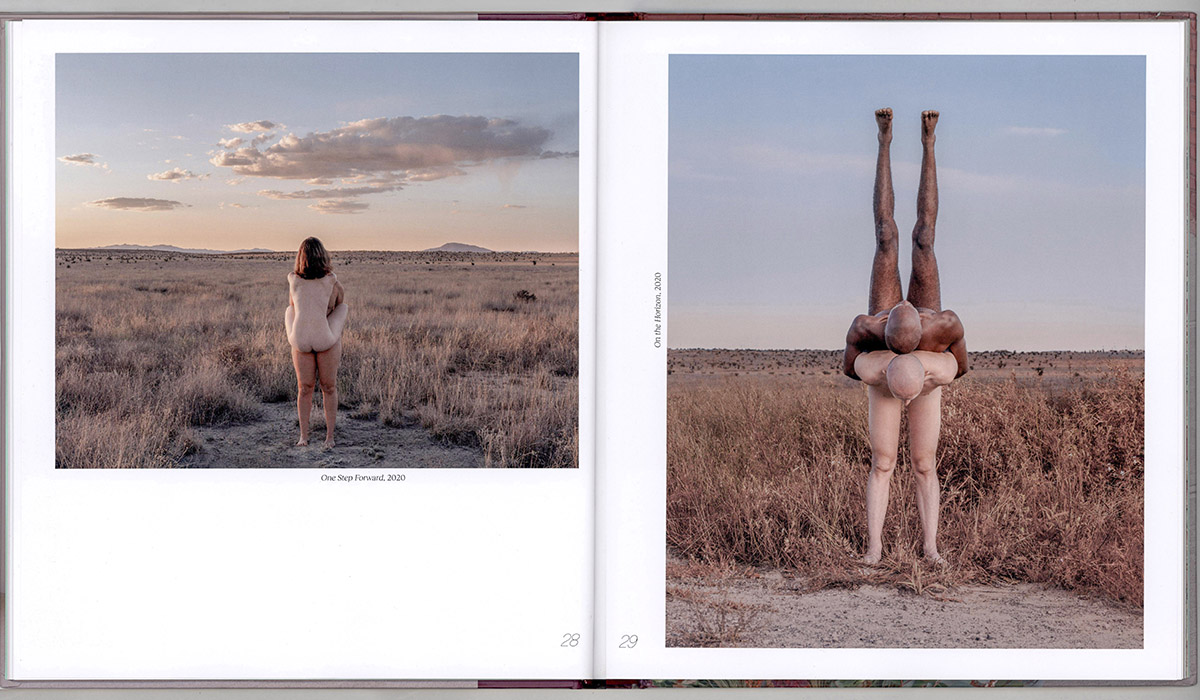
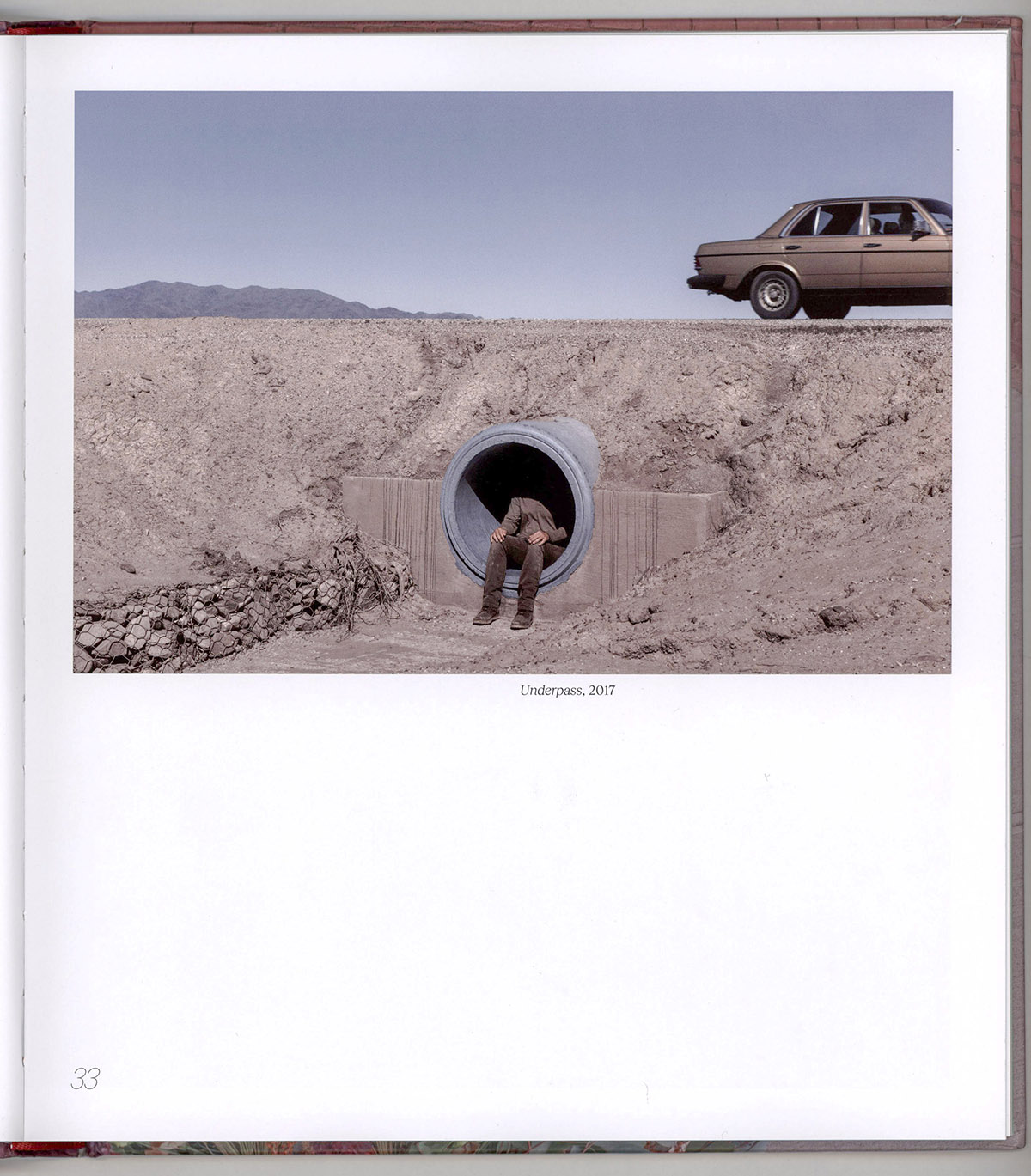
The spread on pages 28–29 clarifies this approach with particular precision. A figure appears wedged into an architectural constraint that should not accommodate the body, yet does. The image refuses explanation, and in doing so establishes a key strategy that will recur throughout the book. By page 33, the human body becomes contingent. Its placement suggesting both intention and entrapment, collapsing the distinction between agency and circumstance. One might note here a subtle but telling shift: DiDonato’s figures appear caught within a system that exceeds them.
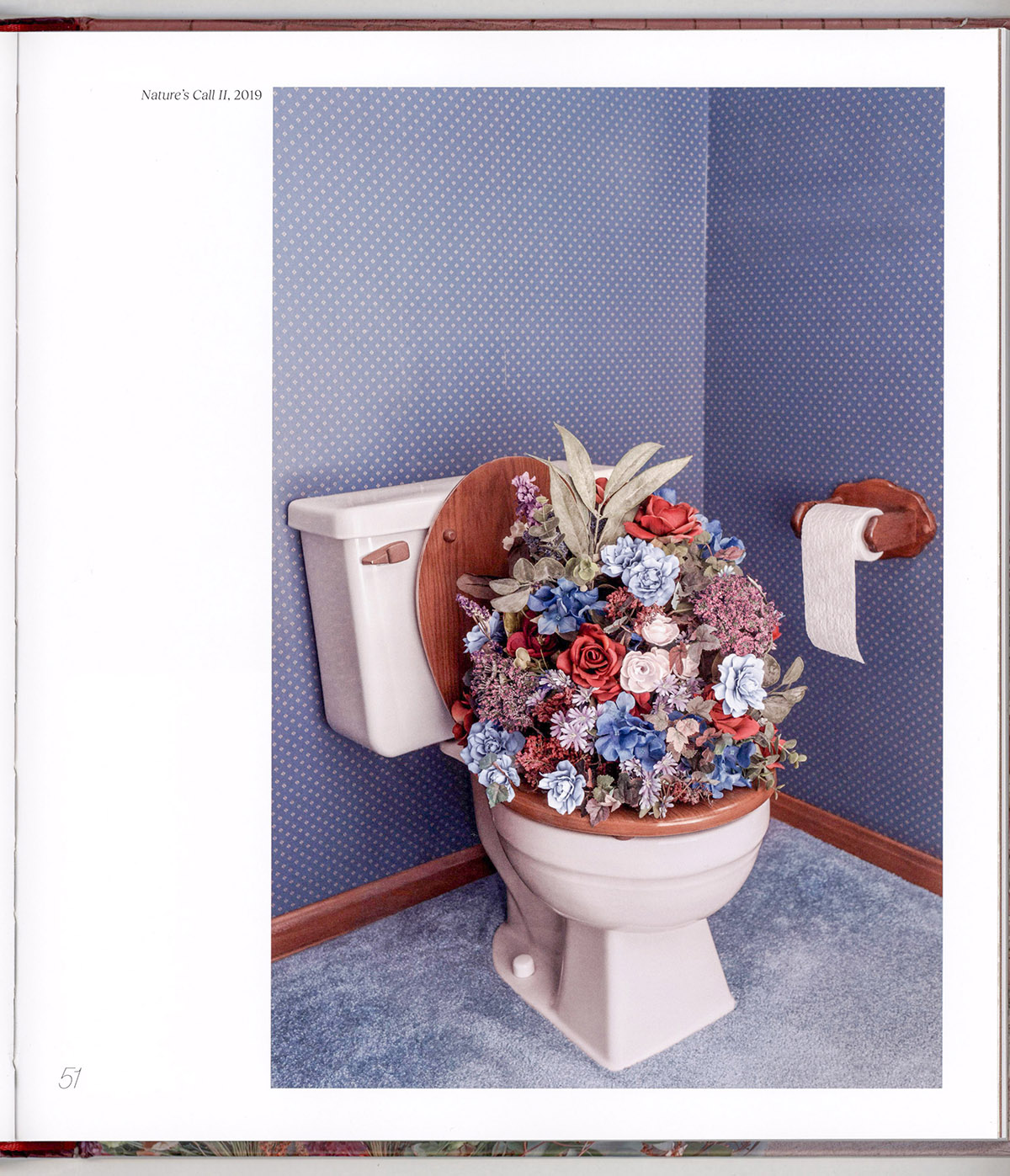
The image on page 39 extends this logic into the domestic sphere. The composition is balanced, almost conservative, yet a single implausible action quietly destabilizes the entire frame. The effect is cumulative rather than immediate. On page 51, the figure appears to negotiate physically with space itself, bending or compressing in ways that feel both deliberate and involuntary. Page 64 sharpens the contradiction further – an arrangement that cannot be reconciled through conventional perspective, yet remains grounded in natural light and believable texture. It is precisely this insistence on photographic realism that sustains the work’s tension.
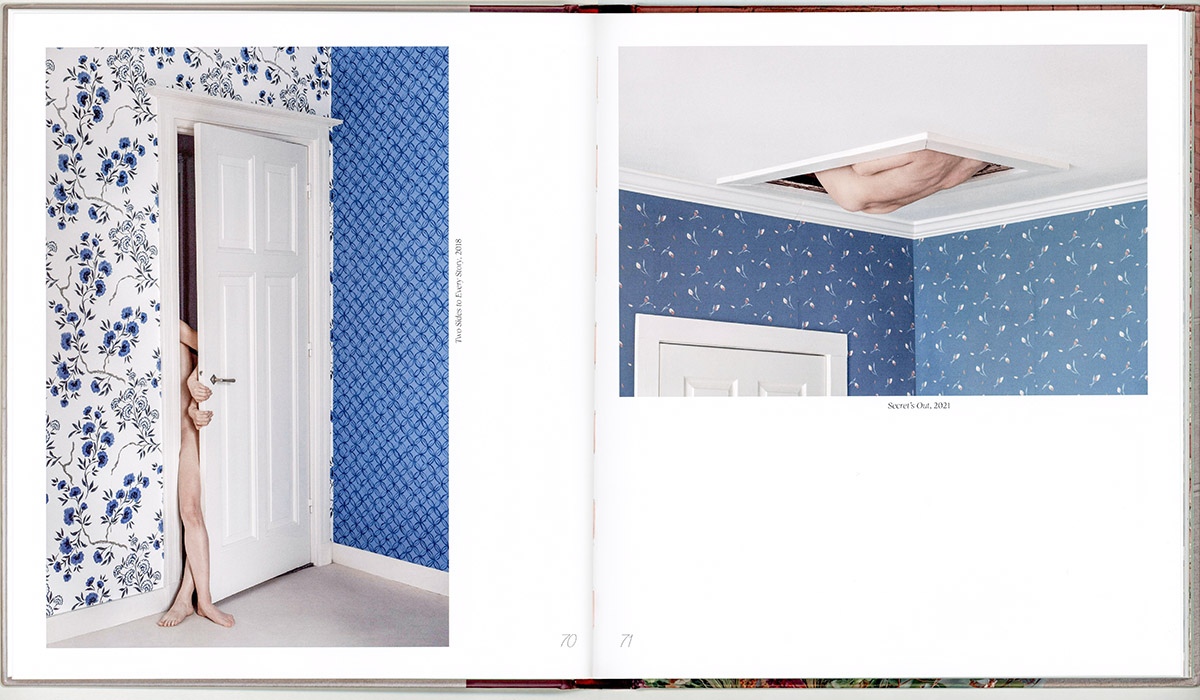
The diptych on pages 70–71 functions as a hinge within the sequence. The pairing does not advance a narrative so much as reiterate a condition: the instability between the human body and the environment. DiDonato’s repetition is not redundant; it is accumulative. Each variation refines the premise without exhausting it.
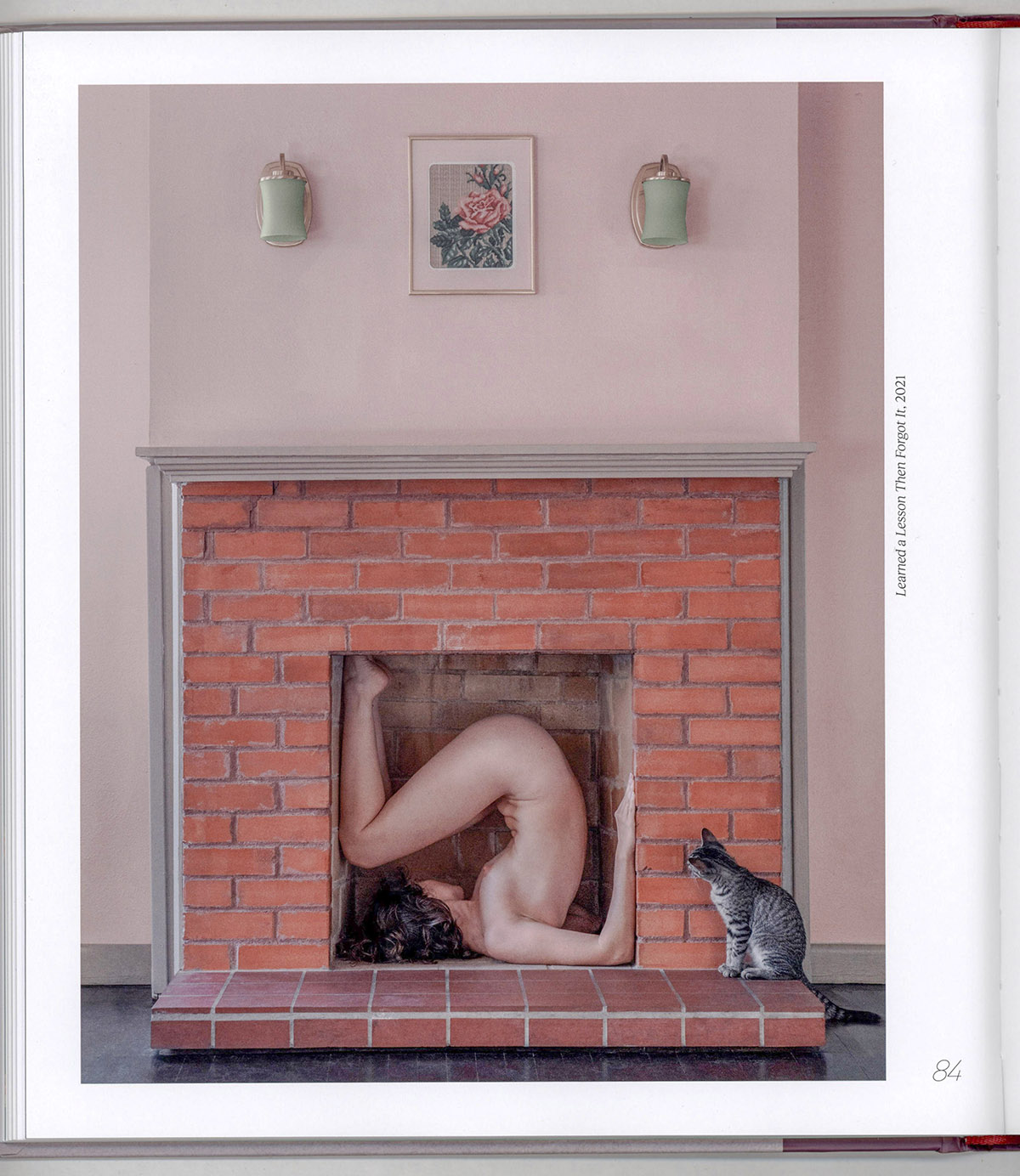
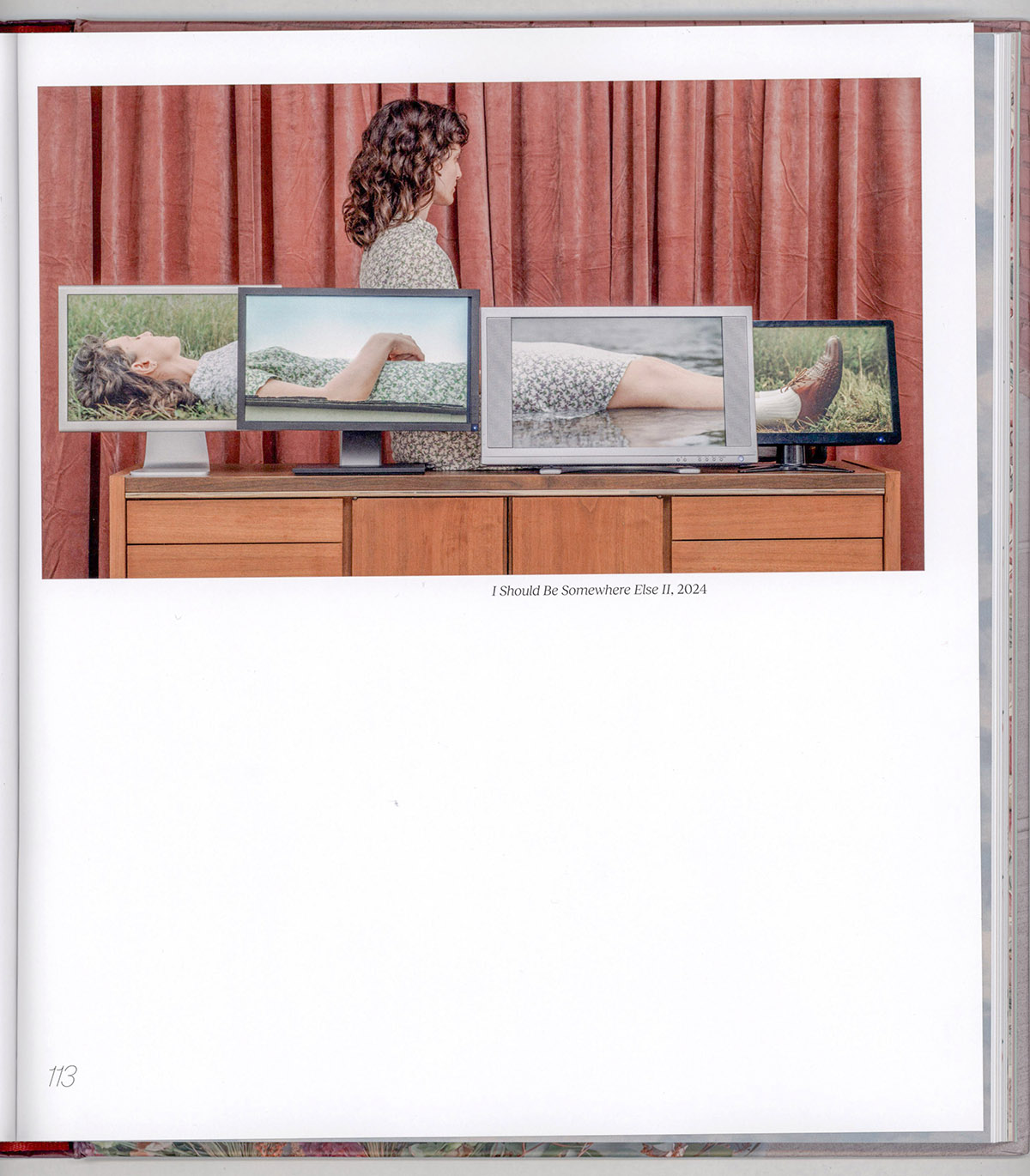
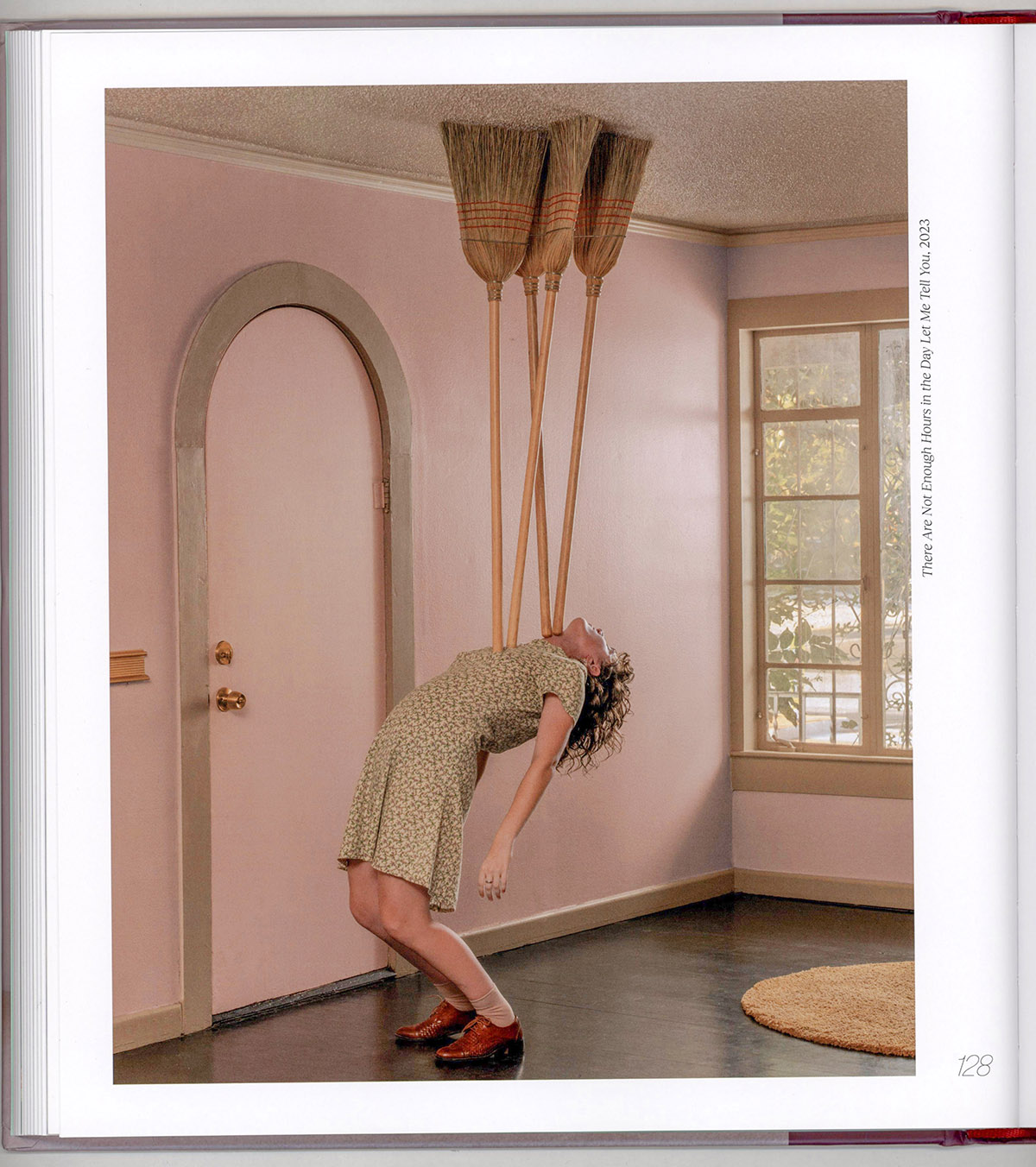
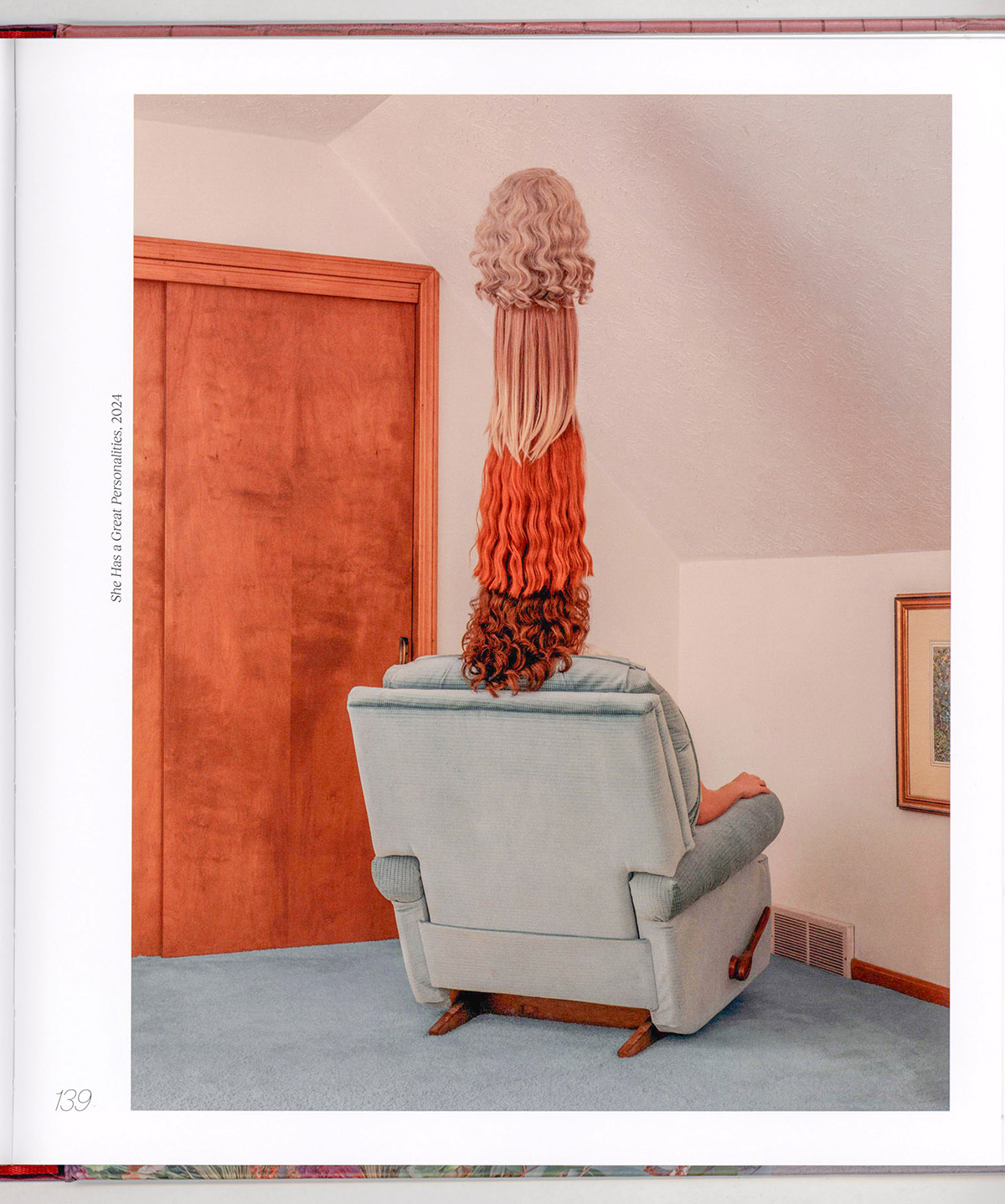
Page 84 introduces a more compressed, almost claustrophobic tension, while page 97 reopens the frame, only to reassert its underlying instability. By page 113, the work’s vocabulary is fully articulated: precise, controlled, and resistant to interpretation. The photograph on page 128 presents a more immediately legible impossibility, though it remains held in check by formal restraint. Page 139 offers a quieter modulation, allowing the sequence to recalibrate and preventing the central device from tipping into predictability.
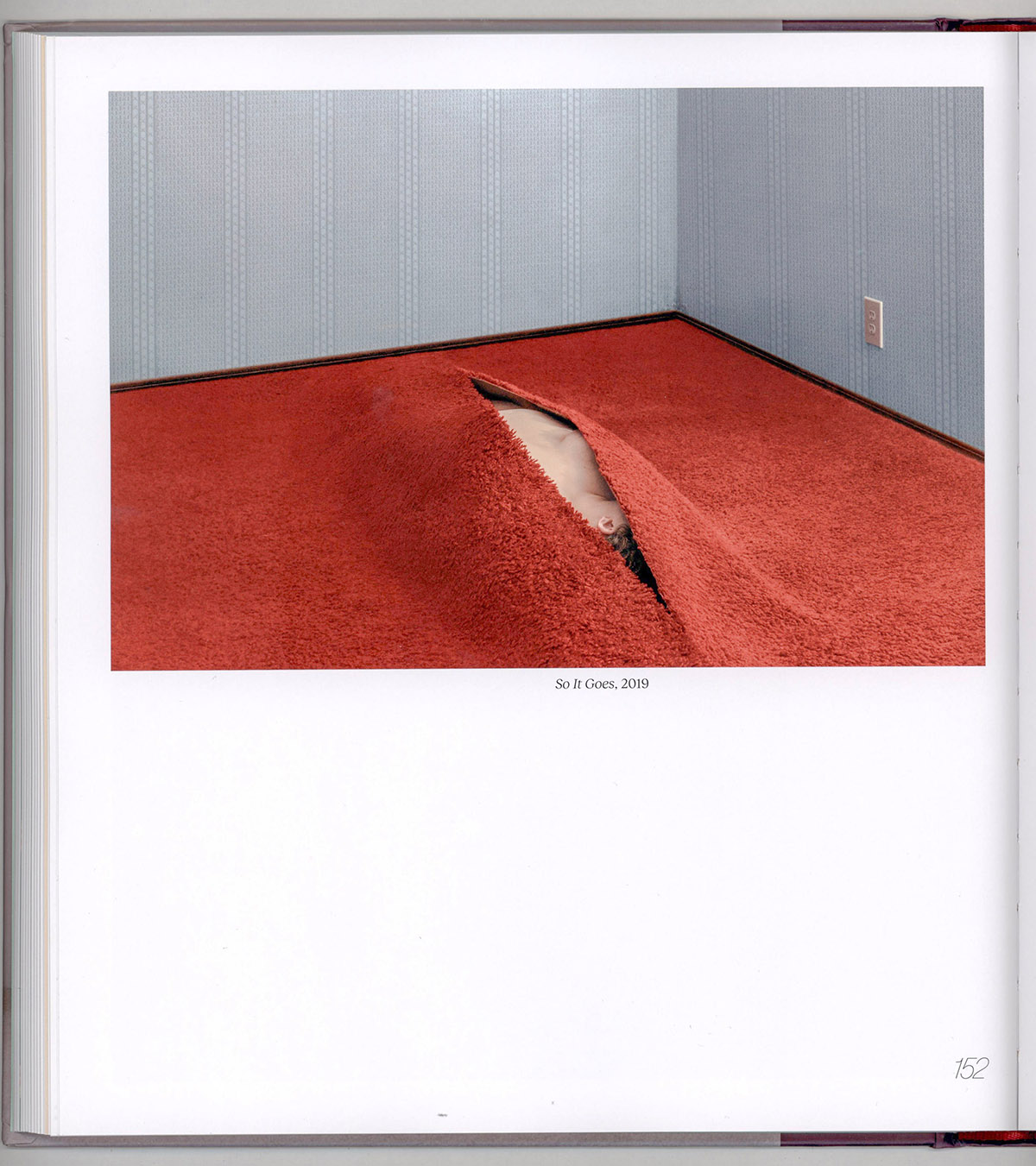
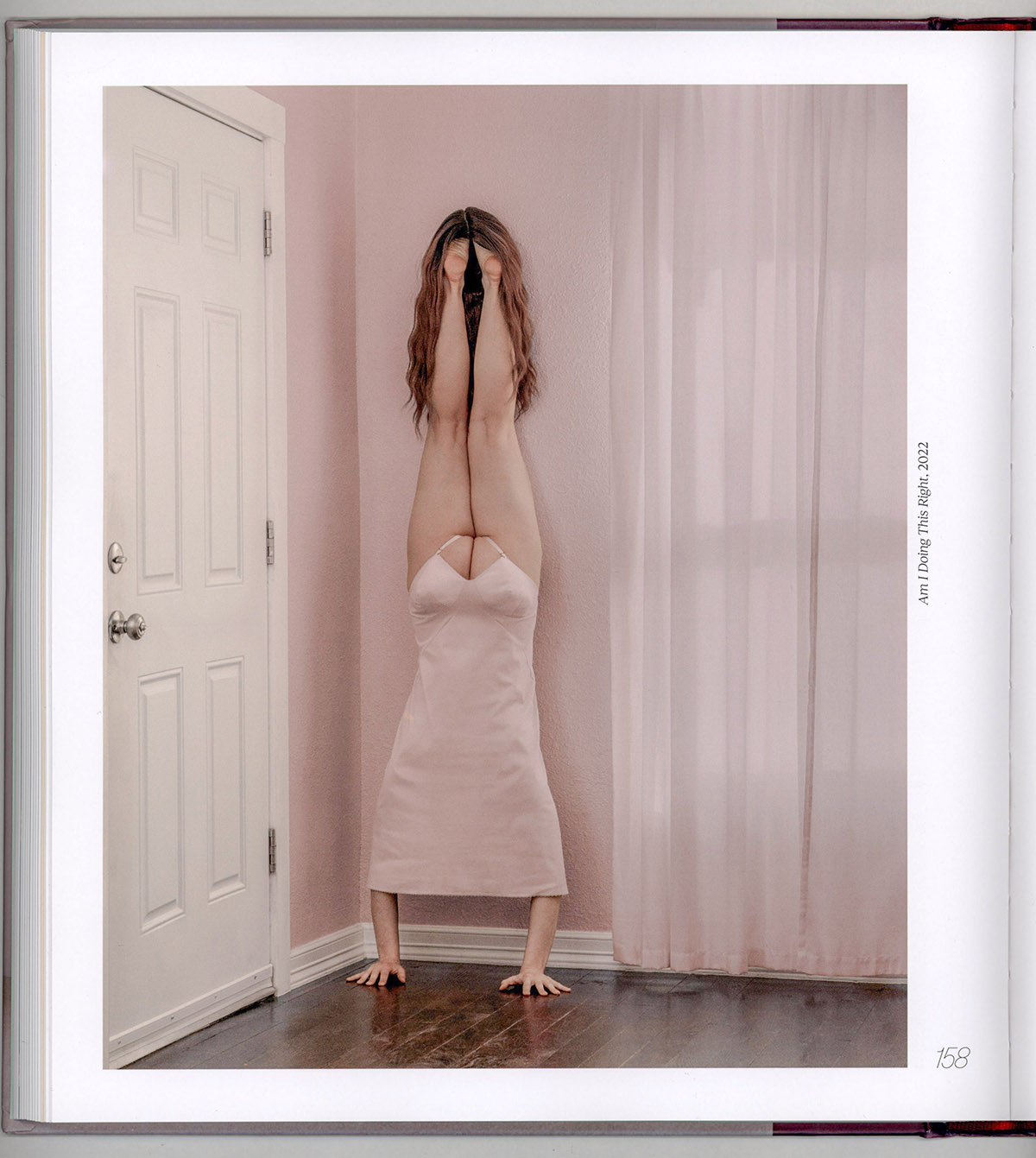
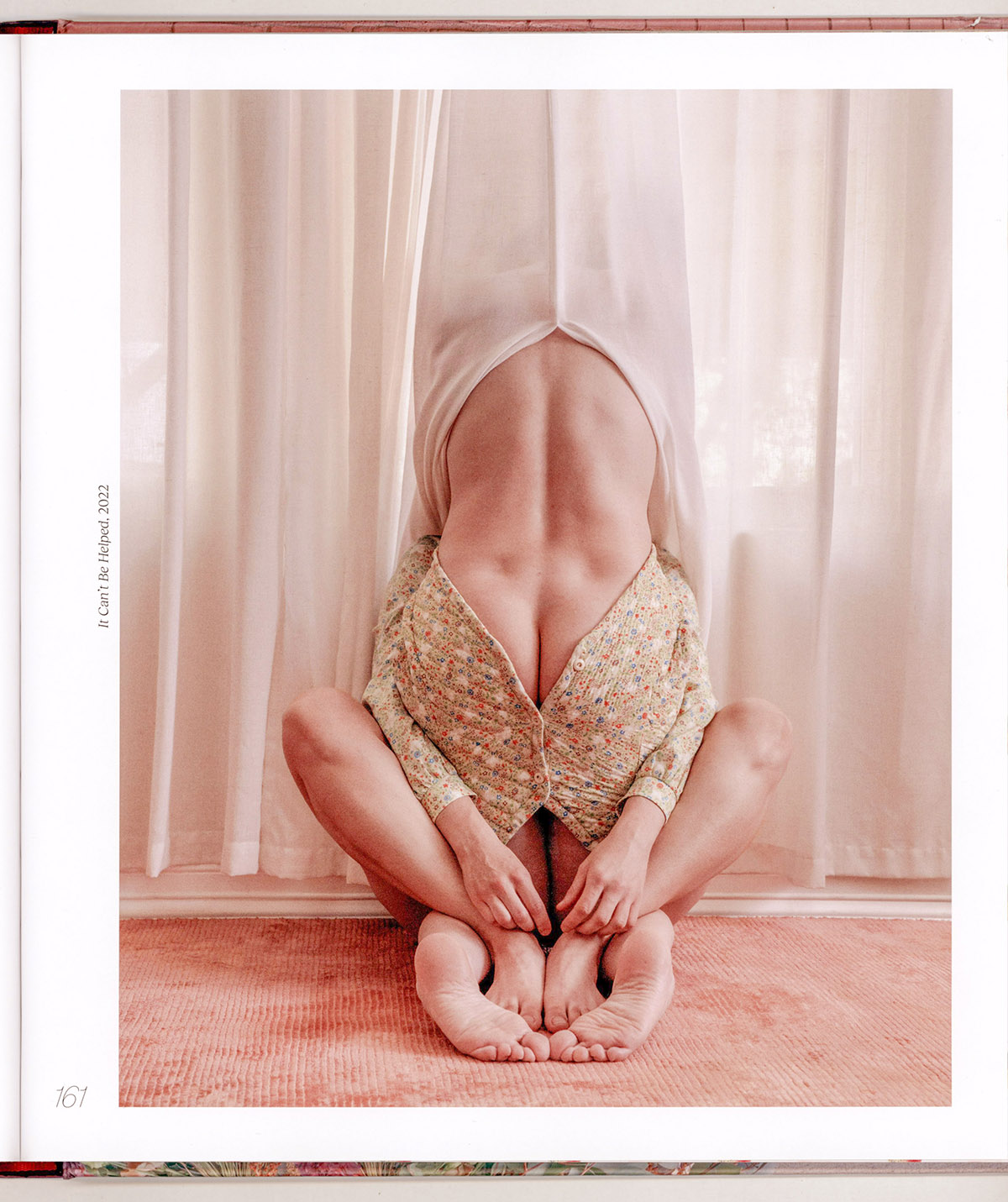
Across pages 152, 158, and 161, the distinction between figure and environment begins to blur more fully. The body no longer simply occupies space; it becomes structurally entangled with it, collapsing spatial planes and compositional hierarchies. This is perhaps where the work’s implications deepen most clearly. The surreal is no longer an intrusion but an integration.
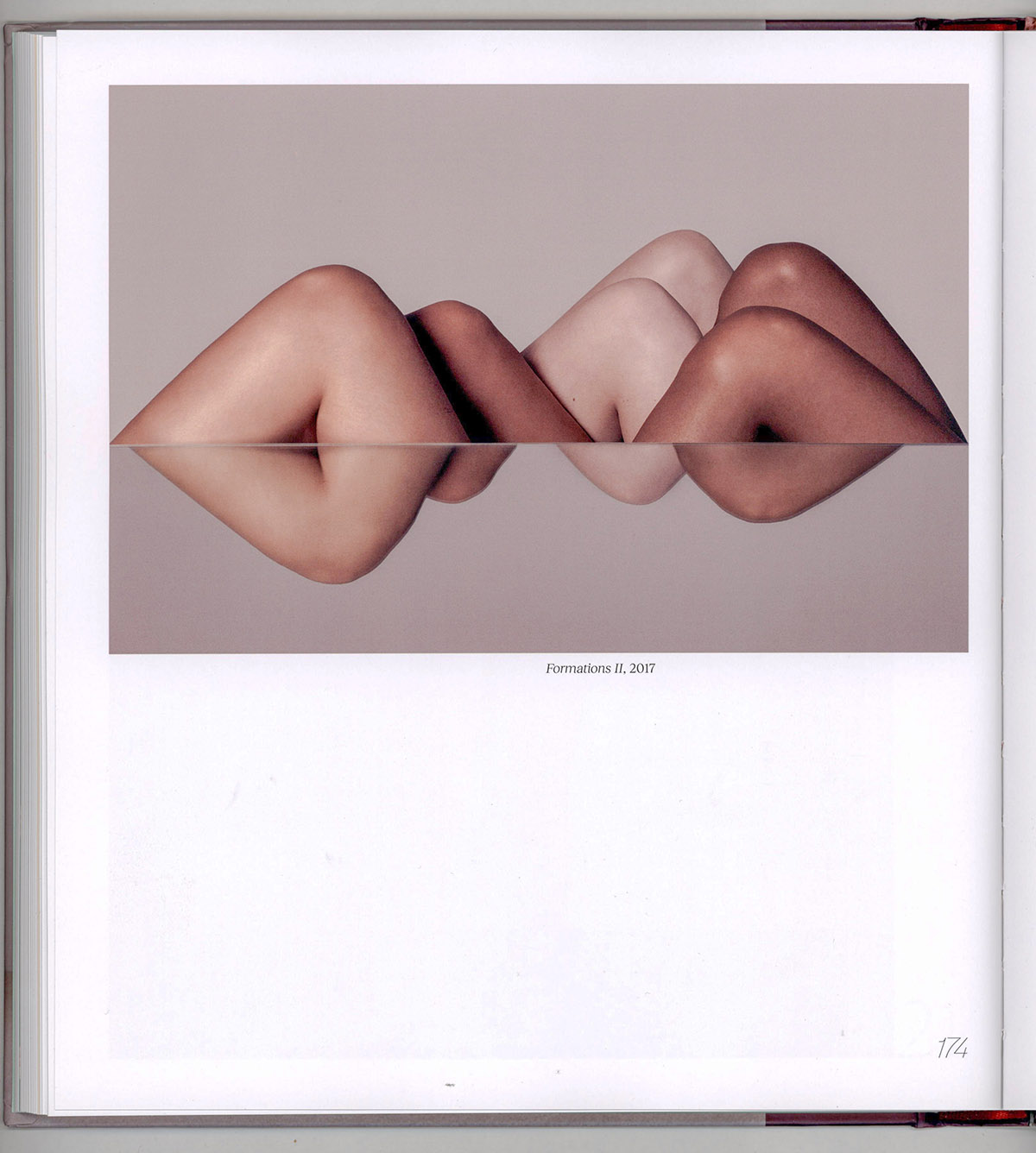
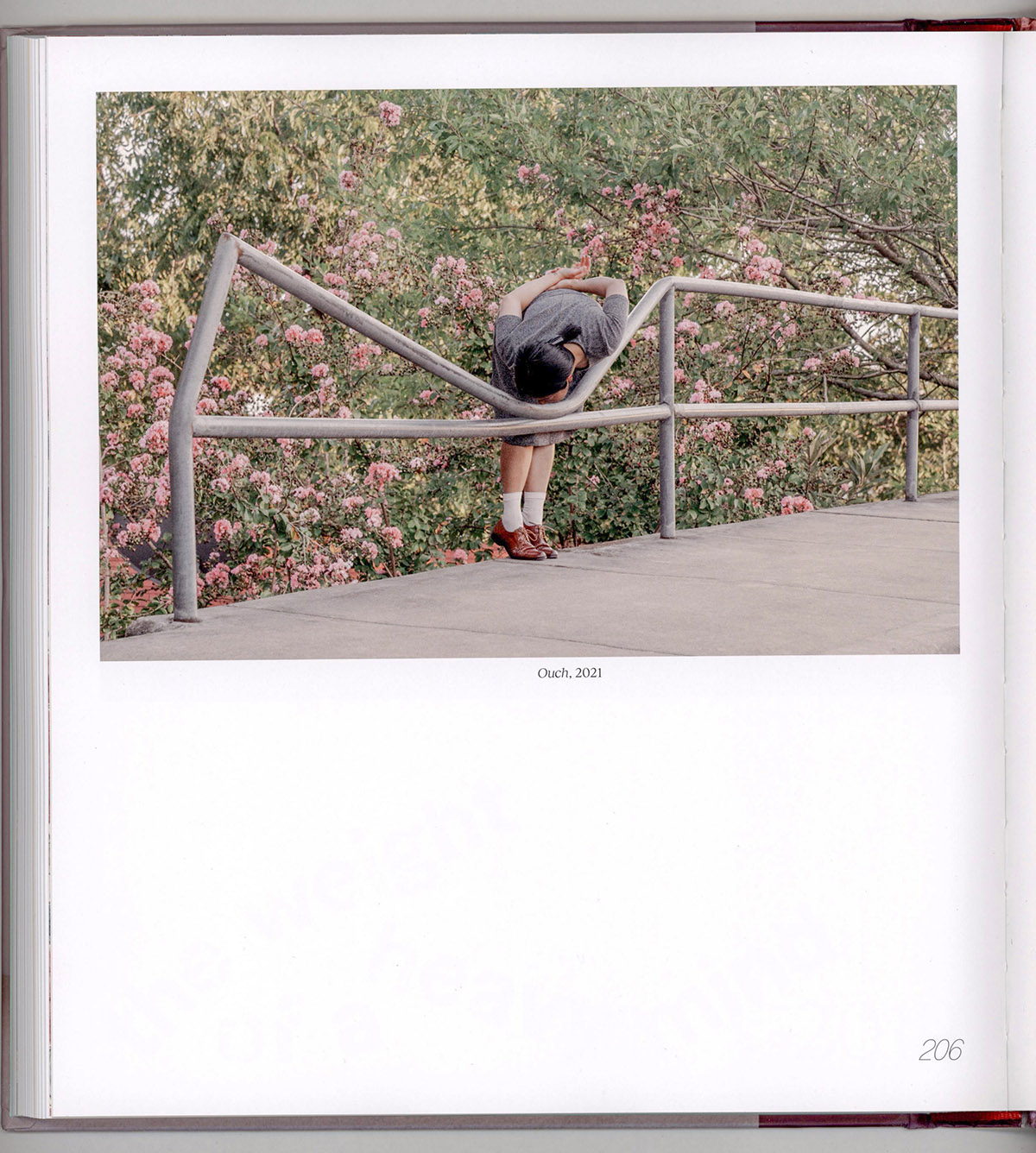
Page 174 introduces a faint tonal shift, an understated humor that briefly surfaces without disrupting the work’s rigor. This moment is brief but important; it acknowledges the viewer without conceding to them. By page 206, the book arrives at a quiet summation. The everyday persists, but remains subtly out of alignment with itself. The photograph does not resolve the tension it presents; it simply holds it.
The design is restrained and appropriately scaled, allowing the images to maintain their authority without distraction. The production quality – particularly the consistency of color and tonal reproduction – is carefully managed, supporting the work’s reliance on subtle visual tensions. There is a quiet rigor to the sequencing. The risk of repetition is present, but avoided through careful modulation of scale, density, and intensity. Old fashioned double-paged patterns are inserted as well to provide grounding. Moments of visual compression alternate with more open compositions, establishing a measured rhythm that sustains engagement without escalation. This control is not immediately apparent, but it becomes evident over the course of the sequence.
What distinguishes Take a Picture, It Will Last Longer is not simply its inventive use of surreal strategies, but the precision with which those strategies are embedded within the visual language of contemporary life. DiDonato’s interventions are modest in scale yet cumulative in effect, producing a sustained recalibration of how the everyday can be perceived. Instead of adhering slavishly to conceptual conundrum, the project locates its inquiry within the photograph itself, within the tension between what is seen and what is understood. The preface by Eleanore Sutherland, the conversation featuring DiDonato’s father Bob with Eve Van Dyke, and the “making of” section in the back of the photobook are further distinct enhancements. The amusing titles DiDonato gives to her images add a welcome light touch, as they also make fun of stereotypes.
The broader significance of this project lies in its reassertion of the photograph’s capacity for invention without abandoning its descriptive function. In an image culture often driven toward spectacle, DiDonato’s grounded surrealism expands the medium’s expressive range by remaining close to the real. The absurdities she presents are not departures from reality, but slight reconfigurations of it, small enough to be plausible, persistent enough to be disquieting.
DiDonato’s project has an enduring effect; the images linger in our minds and evoke our emotions. Their logic does not resolve at the moment of viewing but continues to unsettle, inviting reconsideration long after the page is turned. The book’s achievement is not simply visual but perceptual. It slows the act of looking, and in doing so restores a measure of attentiveness to a visual culture that often resists it. DiDonato has produced a photobook that is both coherent and quietly ambitious, one that rewards sustained attention and affirms the continued vitality of photography’s more introspective possibilities.
____________
Gerhard (Gerry) Clausing, Editorial Consultant of the PhotoBook Journal, is an author and artist who investigates the role of culture and memory in visual art.
____________
Brooke DiDonato – Take a Picture, It Will Last Longer
Photographer: Brooke DiDonato (born in Canton, Ohio; now based in New York)
Texts: Eleanore Sutherland, Bob DiDonato with Eve Van Dyke, Brooke DiDonato
Language: English
Design: Raquel Rei
Publisher: Thames and Hudson, New York and London; © 2025
Hardbound, with illustrated cover, 224 pages with 167 color images; 10.2 x 11.6 inches (26 x 29 cm); printed in China by RR Donnelly; ISBN 978-0-500-03039-4
____________
Articles and photographs published in the PhotoBook Journal may not be reproduced without the permission of the PhotoBook Journal staff and the photographer(s). All images, texts, and designs are under copyright by the authors and publishers.


Leave a Reply