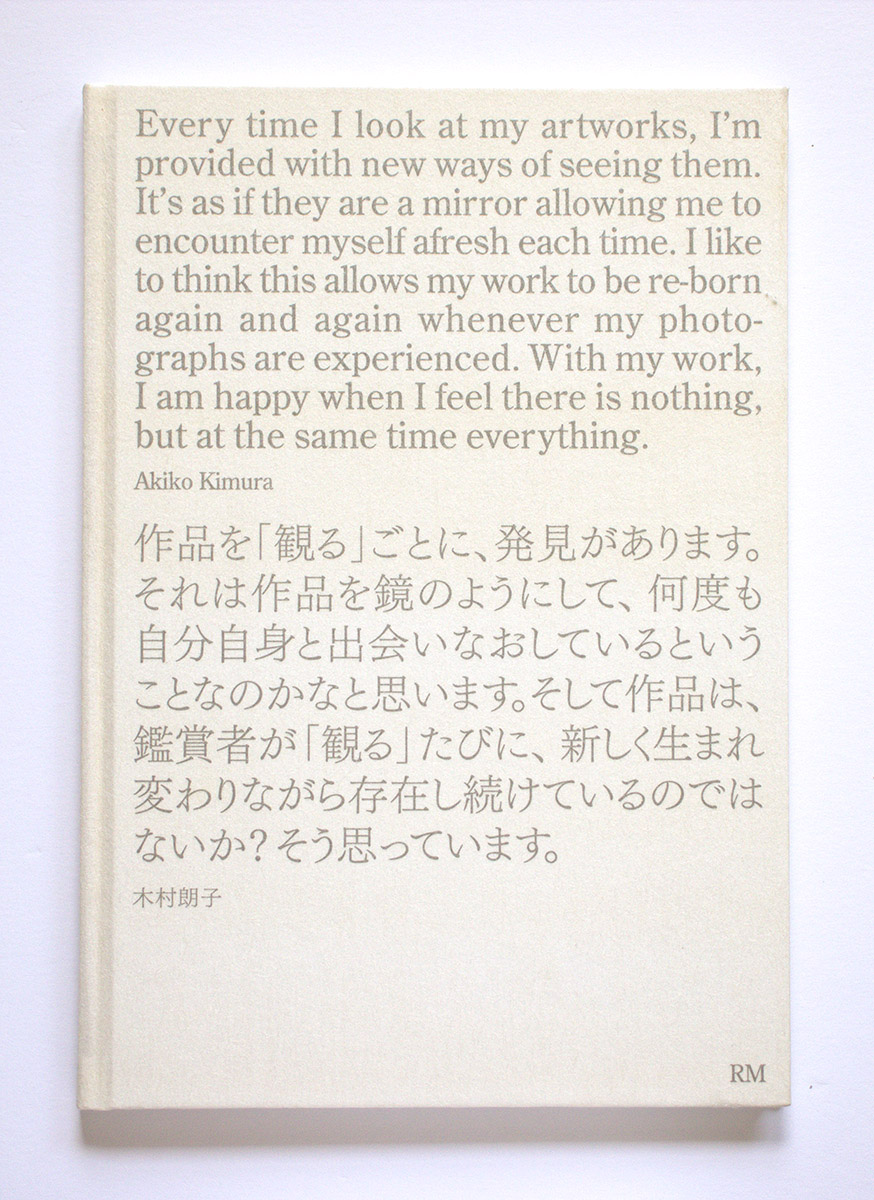
Review by Hans Hickerson ·
Akiko Kimura’s i is simple, so simple that you think there is not much there. But then you look again and realize that it shows how less can be more and how minimalism can expand rather than limit the scope of your viewing experience.
How does that work? Viewed as individual photographs it definitely doesn’t. Each image focuses on only one or two elements. But viewed as a sequence in a book, as additional images come into play new elements that inflect the ensemble enter into consideration, accumulating layers of association and meaning.
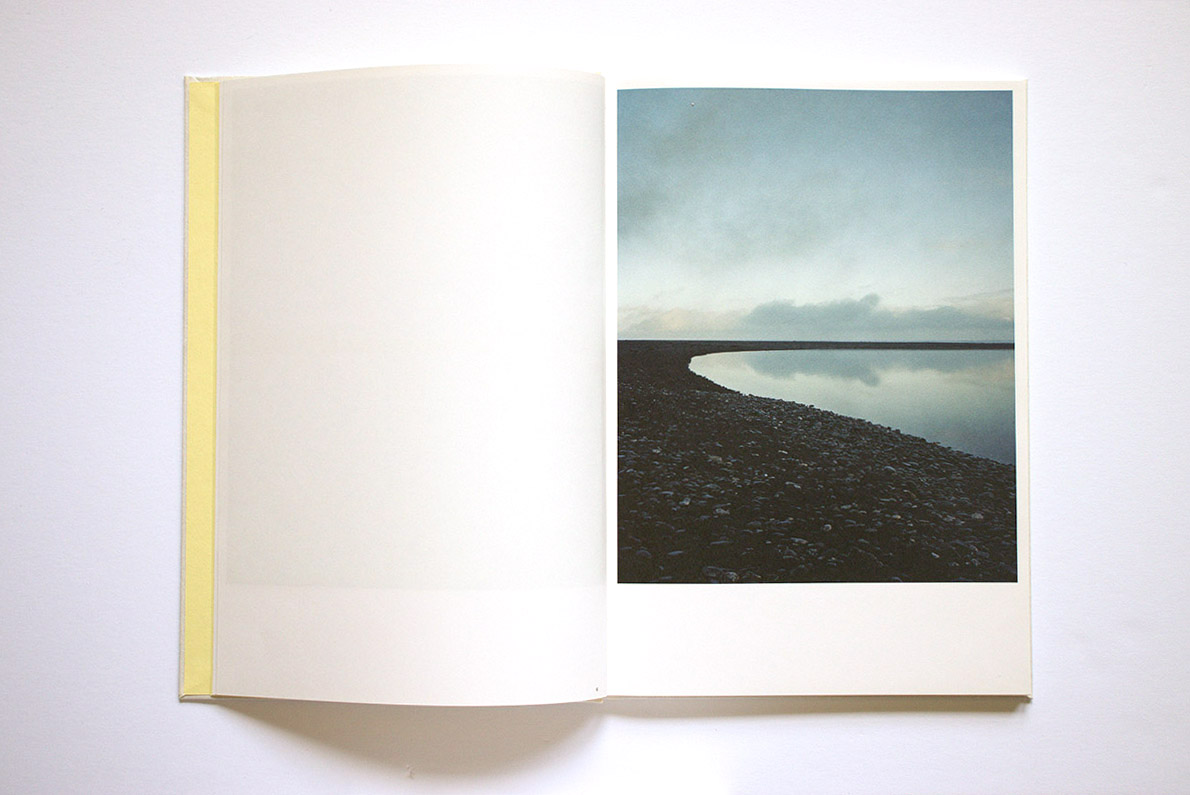
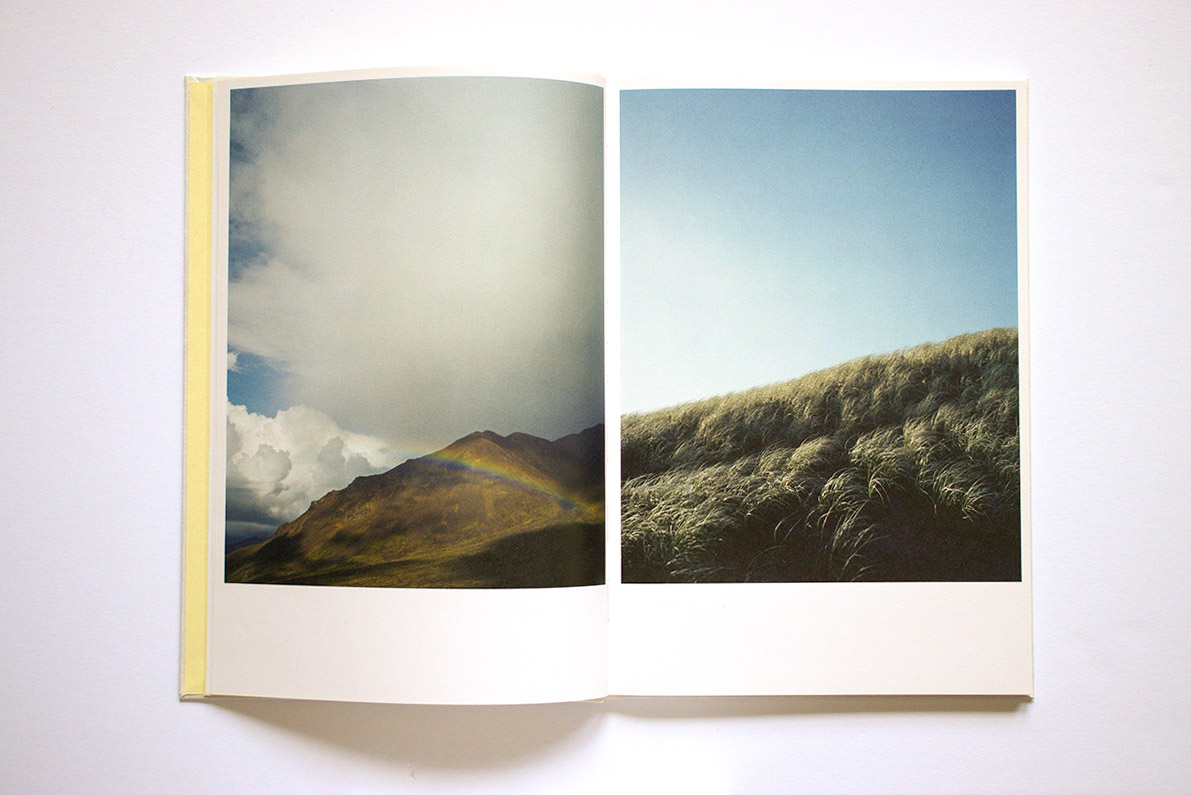
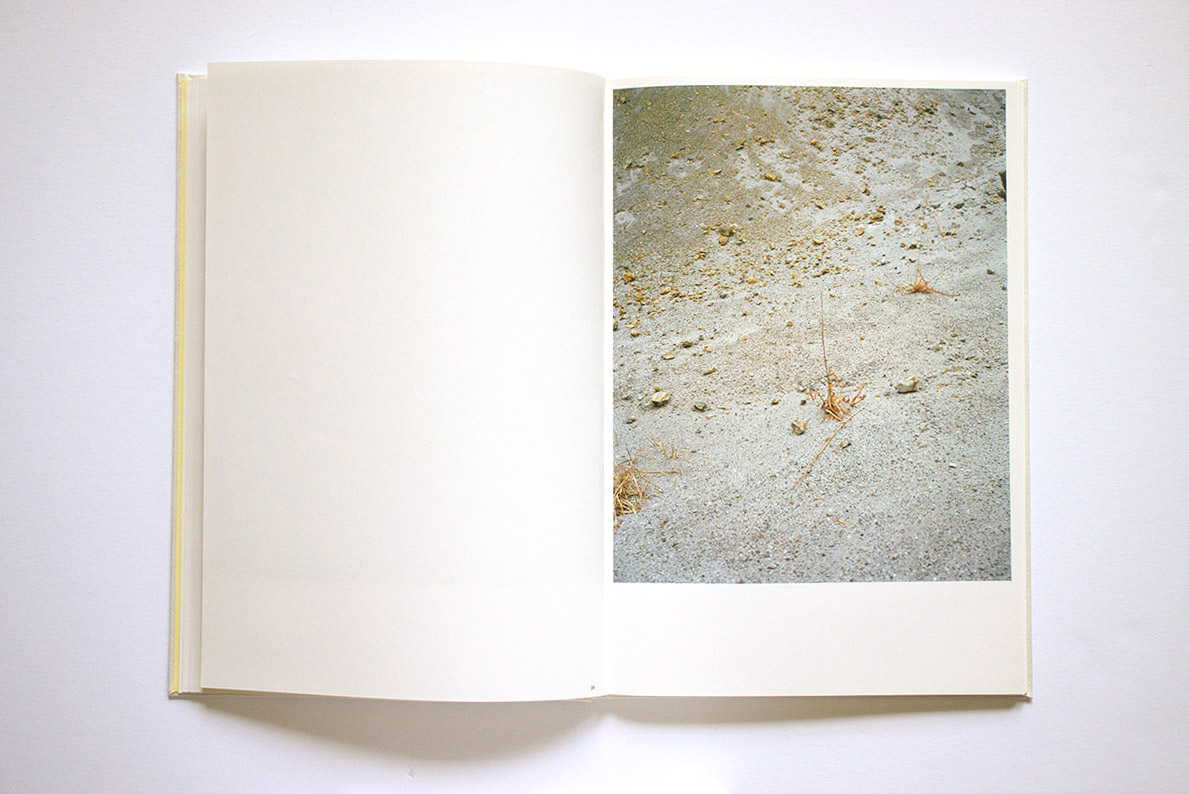
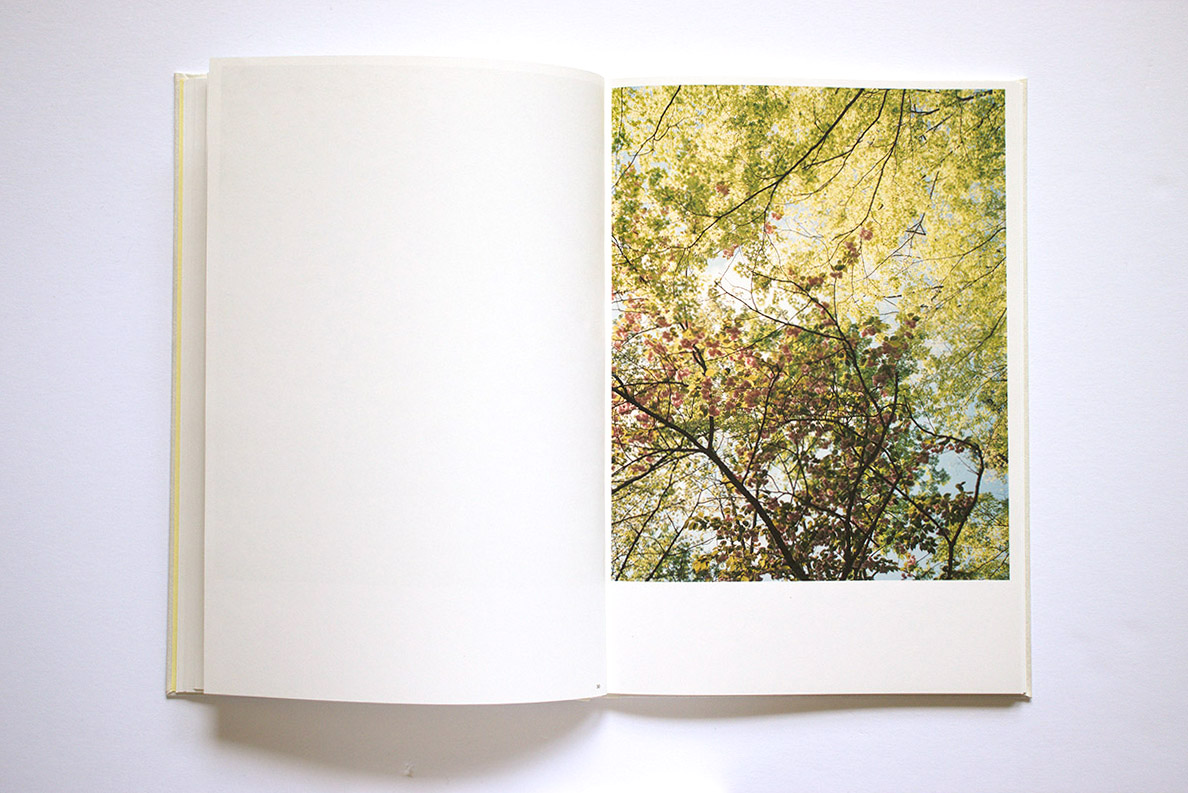
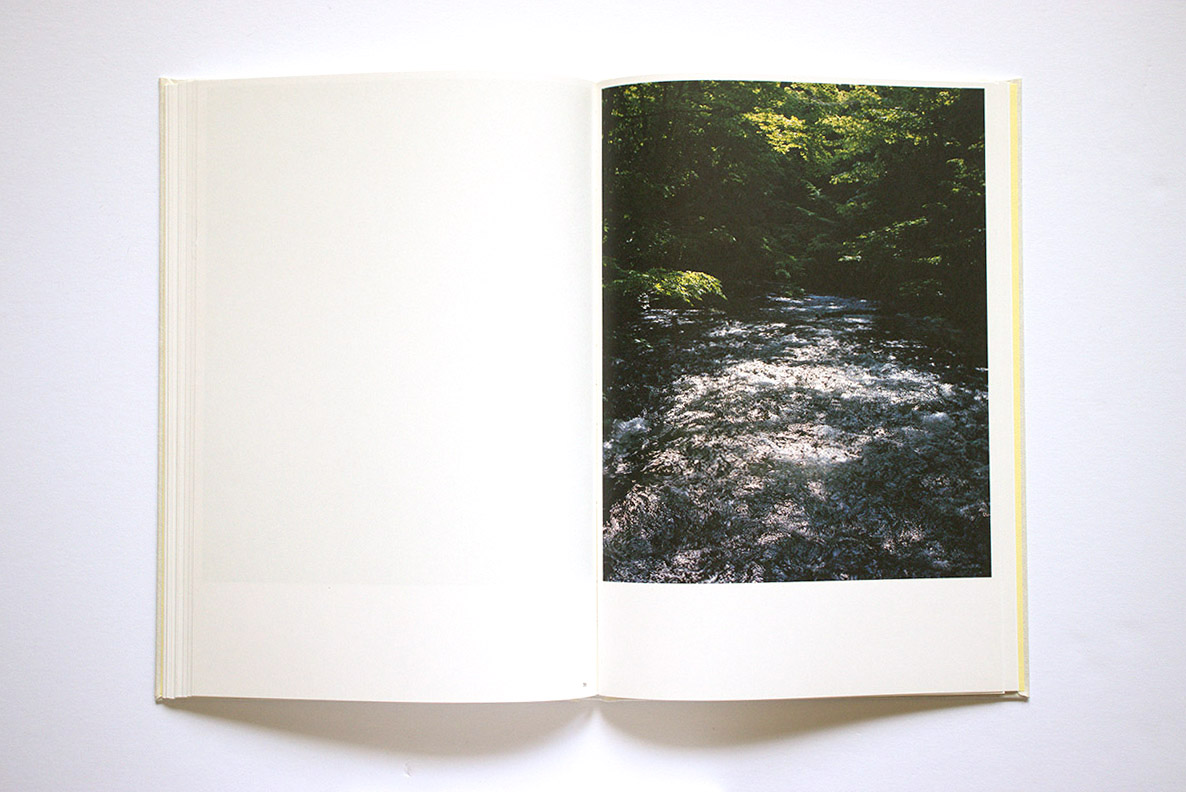
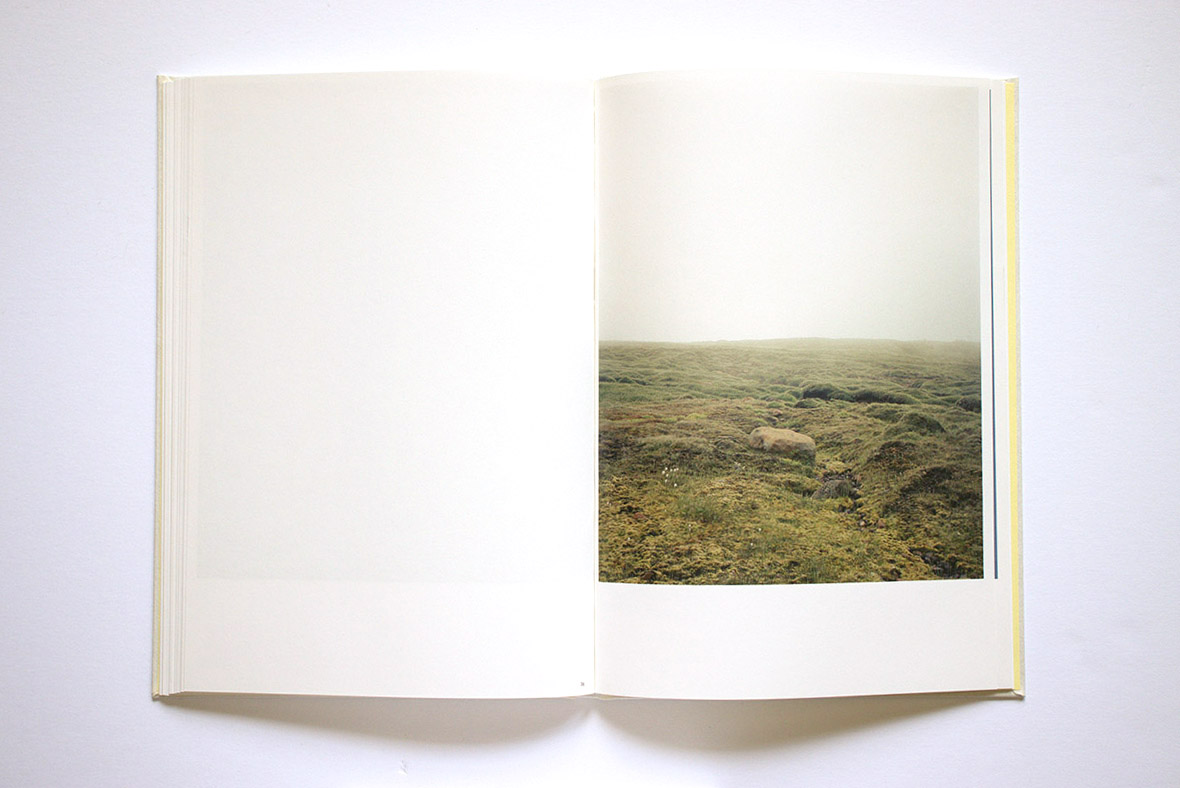
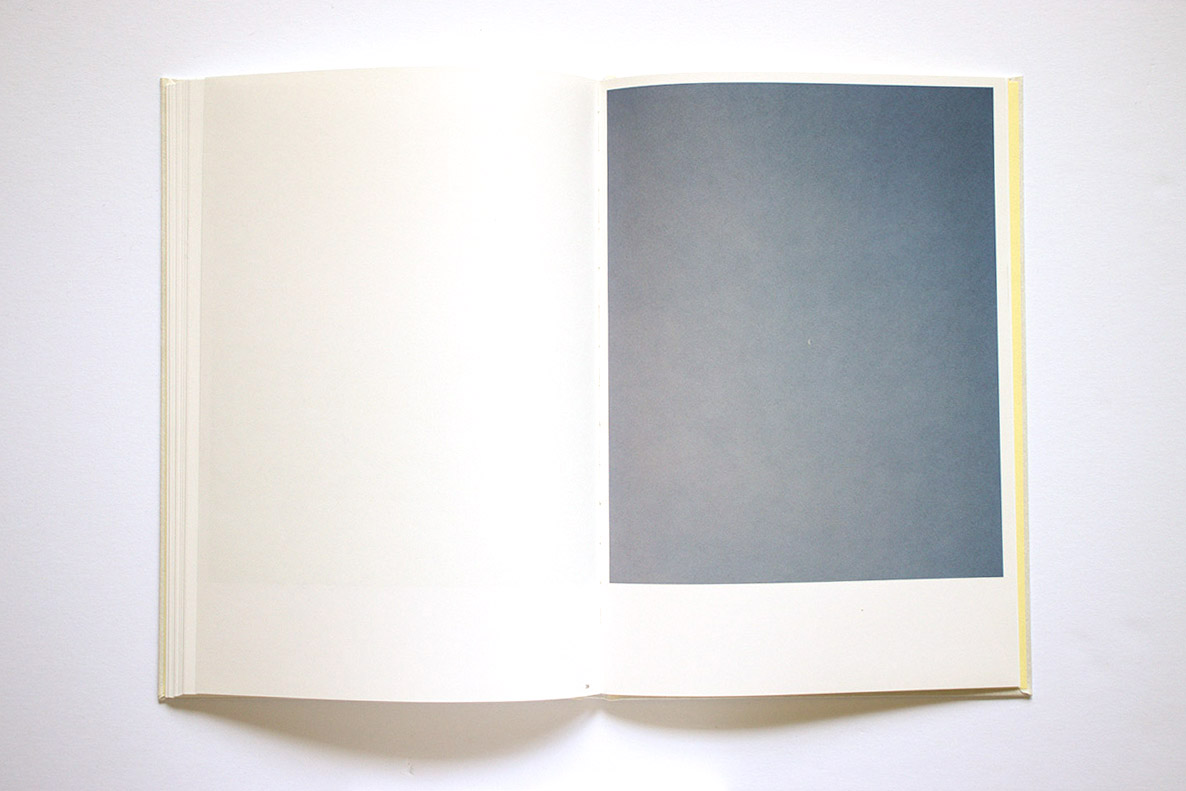
At a basic level we are looking at plain, uninflected, straightforward views of natural subjects – sky, water, land, plants, rock. We do not see any people. We do not see cars, concrete, telephone poles, roads, or buildings. No technology. No animals either, not even a bird, even though we are viewing nature.
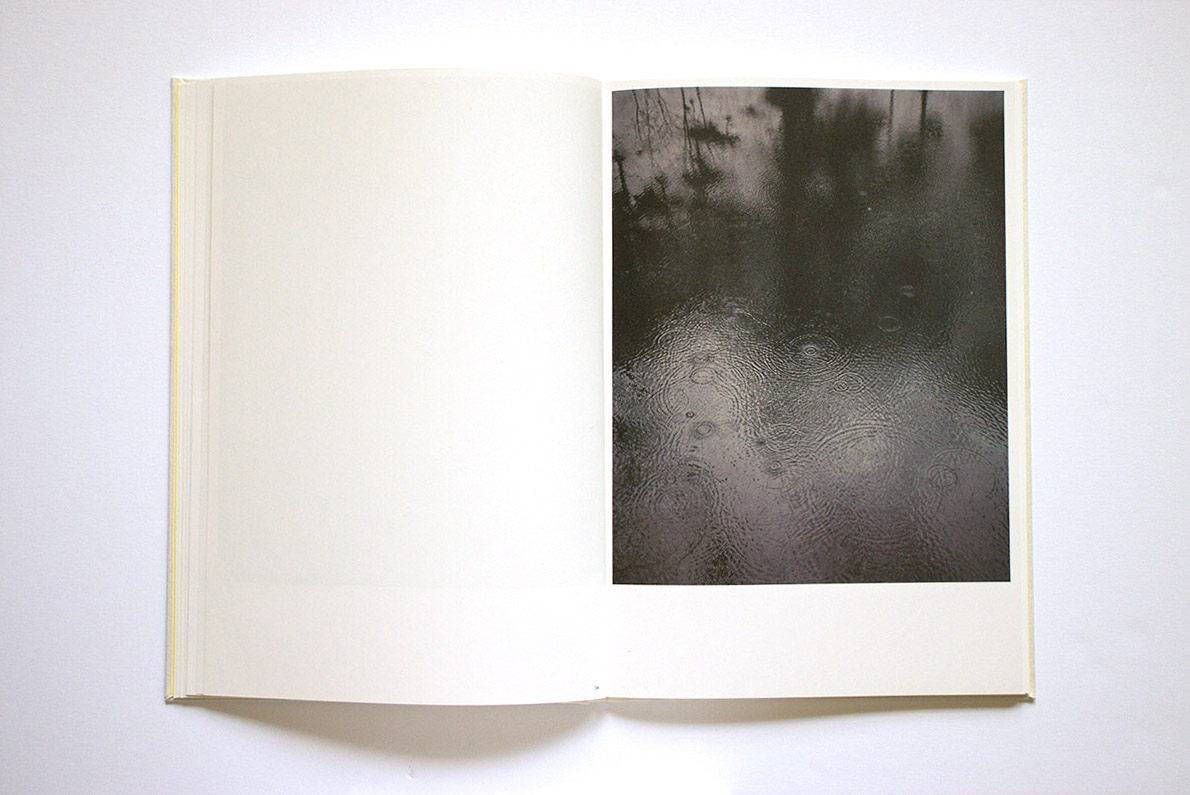
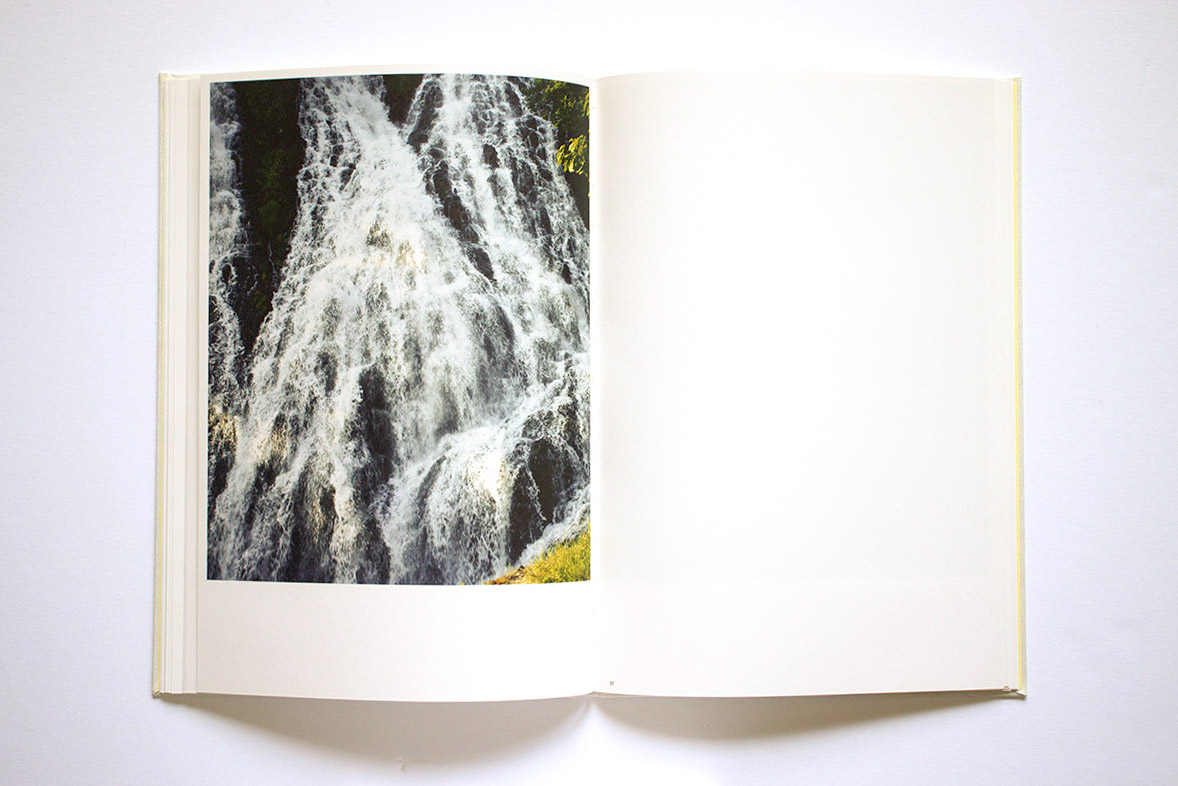
But we begin to see that the landscapes, waterscapes, cloudscapes, skyscapes, and plantscapes are set in different seasons, at different times of day, and in different weather. We notice a variety of textures, tones, and colors. We see airy clouds and ripples of rain on water. In one photo sunlight filters down through a canopy of green leaves. In another it plays on the surface of a rushing creek. And in another it highlights spots of foam on a waterfall.
Kimura makes good use of juxtaposition. She gives us land and sky and water. Light and shadow. Sea and sky. Cloud and sky. Ice and water and sky. Rock and sky. Rock and water. Water and plants. Plants and sky. Plants and land.
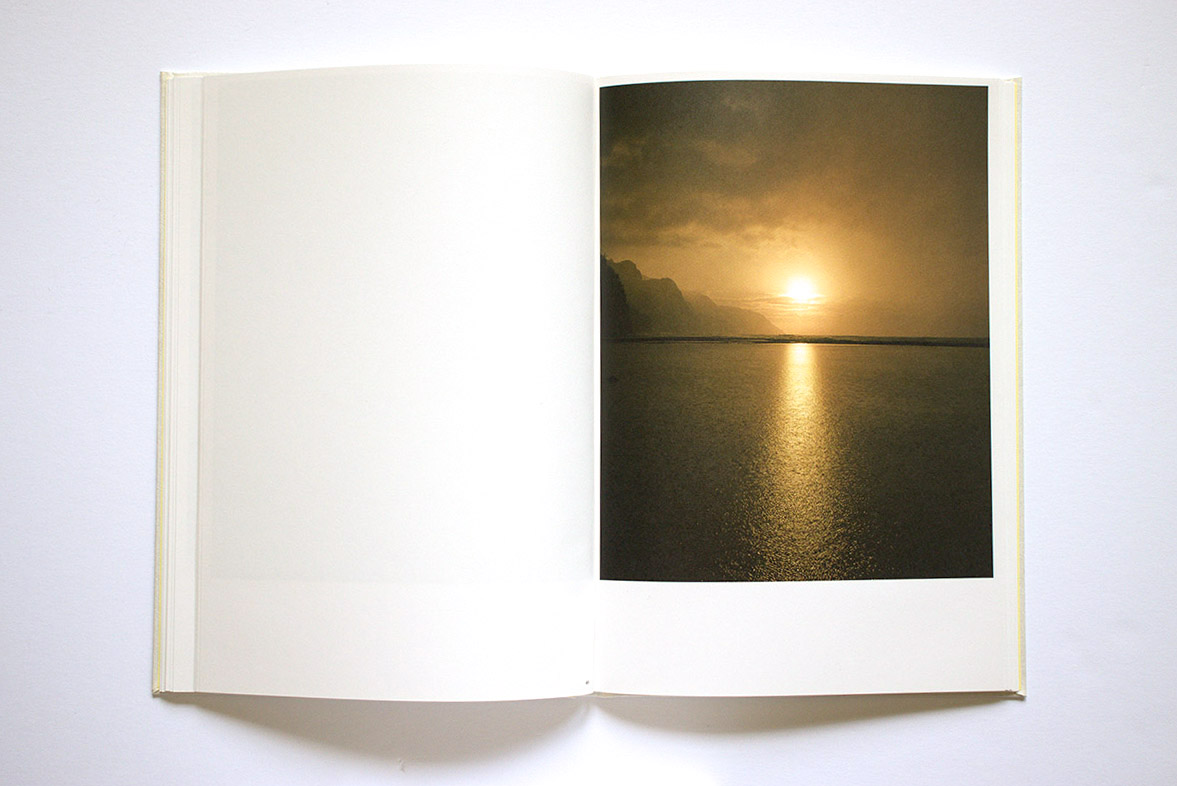
She also uses to great effect small details that contrast with the expanse of sameness surrounding them. A tiny crescent moon. The silver disk of the sun. A boulder on a heath. Small ripples on water. Windblown stems of grass poking through a crust of snow.
In some images Kimura takes chances with her radical simplicity, which can appear empty. We can see nothing in them but clouds, sky, snow, fog, or water dissolving into formless atmosphere. Other photos however are more dramatic. The sun, blazing above the water as it descends. Or backlighting tall grasses on a hill. Or pointing its radiant fingers above the land.
A range of emotions comes into play in i, given the variety of times and places included, but overall the mood is one of quiet stillness – quiet stillness that invites quiet contemplation.
Hans Hickerson, Editor of the PhotoBook Journal, is a photographer and photobook artist from Portland, Oregon.
____________
Akiko Kimura – i
Photographer: Akiko Kimura (born in 1971; lives in Yokohama, Japan)
Publisher: Editorial RM © 2023
Language: English and Japanese
Text: Akiko Kimura, Takuji
Design: Hermanos Berenguer
Printing: Brizzolis
Printed hardcover; 46 photographs; sewn binding; 92 pages; 21 X 29.7 cm; ISBN 978-84-19233-61-5
____________
Articles and photographs published in the PhotoBook Journal may not be reproduced without the permission of the PhotoBook Journal staff and the photographer(s). All images, texts, and designs are under copyright by the authors and publishers.


Leave a Reply