Review by Hans Hickerson ·
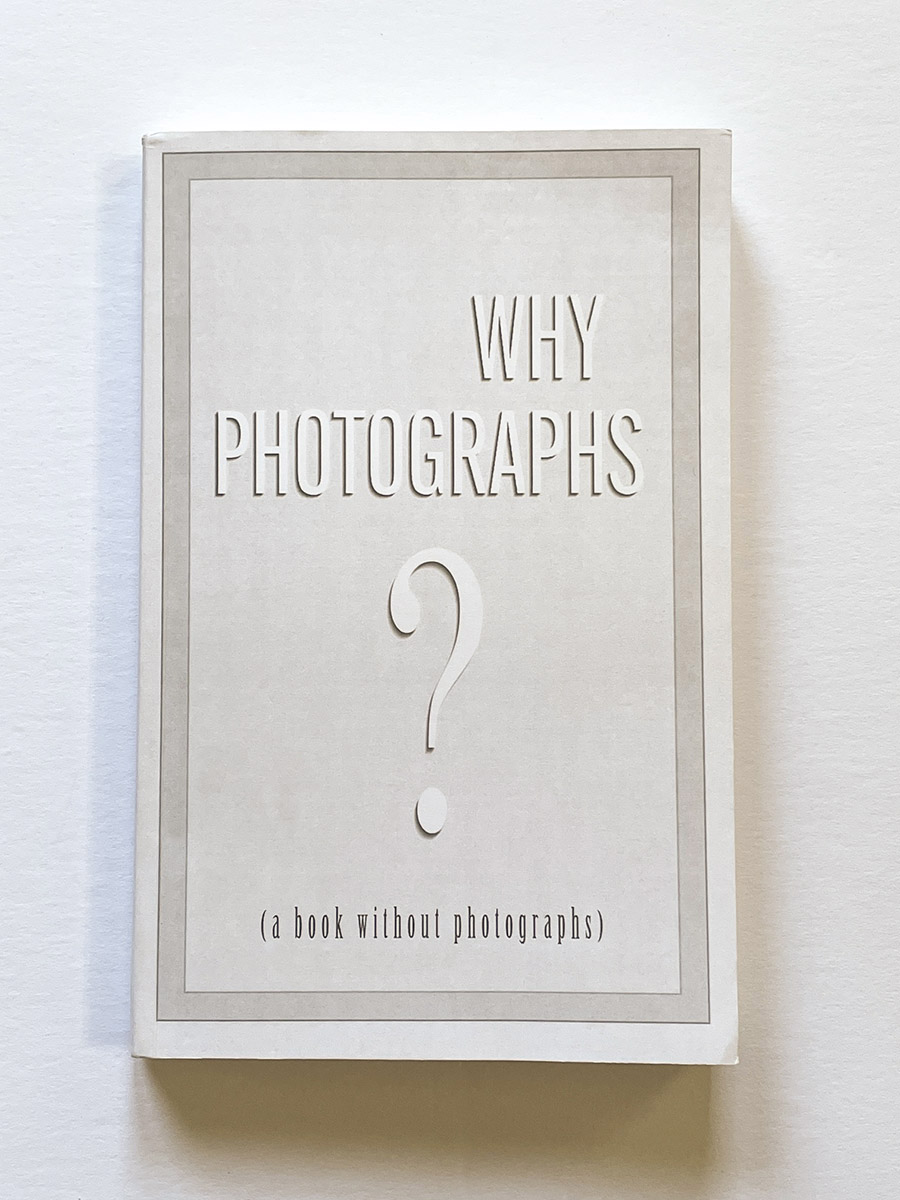
I was curious when I saw that photographer Neil Selkirk had published a book of writing, Why Photographs?.
I was not familiar with Selkirk’s work. I knew only that he had printed Diane Arbus’ posthumous photographs. What did he, an elder statesman of the medium, have to say about the state of photography? From the publicist’s blurb it sounded as if he was defending the traditional way of doing photography. Interesting, I thought, a contemporary example of French literature’s Quarrel of the Ancients and Moderns. Let’s see what he has to say.
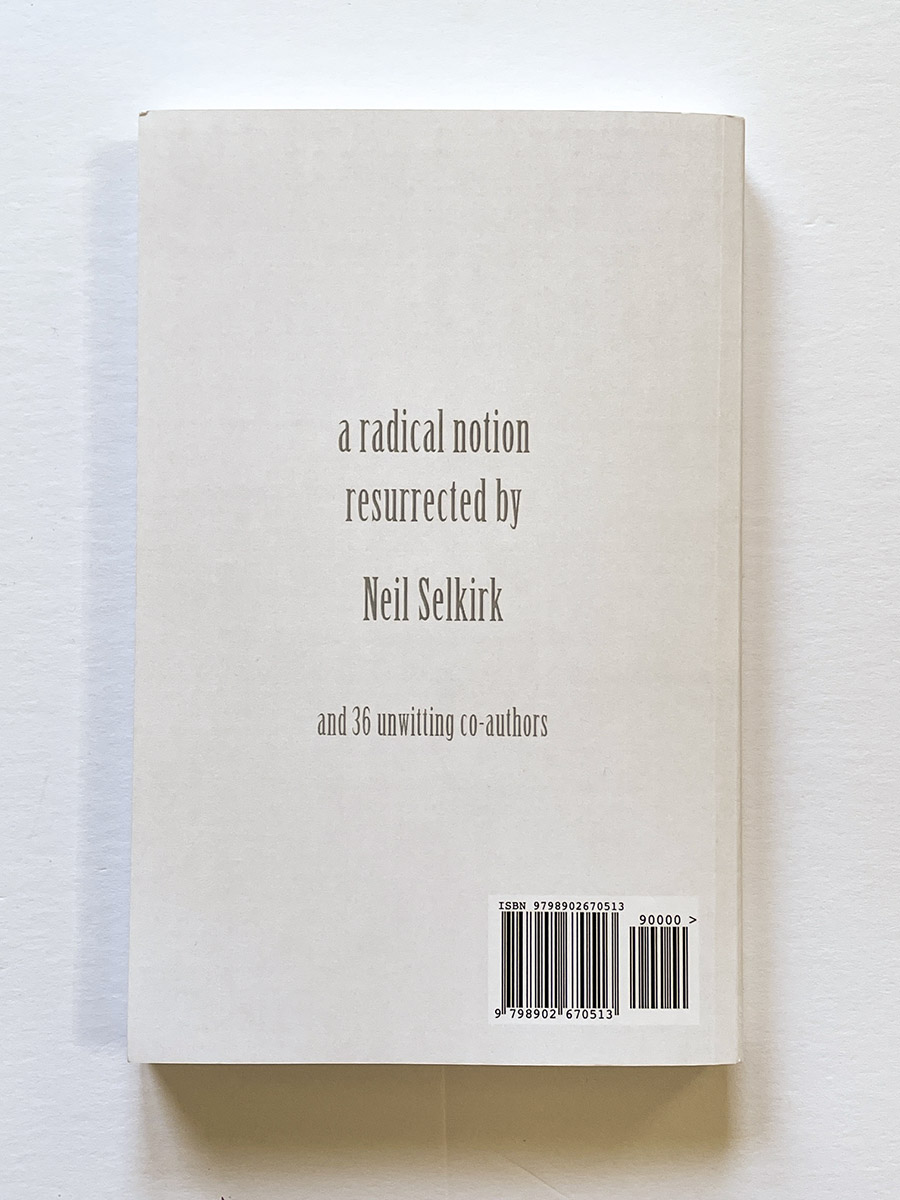
It turns out that Selkirk has acted mostly as an editor. He himself has written only around ten percent of the book. The rest of the writing is other people’s articles, quotes, essays, poems, talks, and book and exhibition introductions. The other contributors include well-known photographers such as John Gossage, Paul Graham, Diane Arbus, Bill Brandt, and Todd Papageorge; writers and poets such as Margaret Atwood, Philip Larkin, Paul Eluard, and Thomas Hardy; and various other notables such as John Szarkowski and Jeffrey Fraenkel. A text on the back cover identifies the book as “a radical notion resurrected by Neil Selkirk and 36 unwitting co-authors.”
Many of the writers were names I was unfamiliar with. John Palmer? Deborah Eisenberg? Diana Michener? This of course has nothing to do with the value of their voices. But it is interesting to notice how the photography world is full of personal as well as tribal networks and how we all create our own private pantheons of influences, authorities, and greatest hits. My own pantheon, for example, simply because I have not read their writing, does not include Doon or Amy Arbus or Richard Avedon.
Selkirk makes his arguments but keeps it light. He does not descend into bombast. He does not predict fire and brimstone for photographers who stray from the traditional path. He does however make a case for the enduring power of photographs and the thing they do best, which is to capture real events, slices of the visual world – unmanipulated images where things are represented as what they appear to be rather than transformed into something else – the genuine wonder of the real rather than the illusion of the fictional. Mark Steinmetz rather than Gregory Crewdson.
(If you can indulge my editorializing, while I largely agree with Selkirk, I like to think of it as a both/and rather than as an either/or situation. There does not have to be only one way. We can, and do, have photographs used in many ways, and for me that is OK.)
The texts in Why Photographs? were not written for the context in which they appear, and they mostly do not deal directly with the issue, although several do. Here are Siegfried Kracauer and Charles Simic:
“… photography has an outspoken affinity for unstaged reality. Pictures which impress us as intrinsically photographic seem intended to capture nature in the raw, nature unmanipulated and as it exists independently of us.”
“A photograph such as this one (by Berenice Abbott), where time has stopped on an ordinary scene full of innuendoes, partakes of the infinite.”
Selkirk and the other writers do not directly address the multiple ways in which photographs are used today. It is now commonplace not to go out and look at the world through photography but rather to use photographs to explore relationships and issues. This is especially the case given the increased accessibility of books. As a photographer you can design your projects as books rather than simply accumulate individual images in themed albums. So if your idea is to return to an earlier practice, it is too late. The genie is out of the bottle. If I use my email inbox as an unscientific sample, only one in three photobooks featured in today’s Collector Daily and Photo-eye’s Photobook Daily resemble traditional straight photography.
Not that Selkirk is arguing that you shouldn’t use photography in non-traditional ways.
Instead, Selkirk is offering an opportunity to think about what photography does best. He is presenting a case for why images have more power when they acknowledge the specifics of their content, their allegiance to facts, along with their form. So, not really a Defense of Traditional Photography, but rather testimony to what photographs do and what they do not. As a Diane Arbus quote puts it:
“…a photograph has to be of something and what it’s of is always more remarkable than the photograph.”
Hans Hickerson, Editor of the PhotoBook Journal, is a photographer and photobook artist from Portland, Oregon.
____________
Neil Selkirk – Why Photographs?
Author: Neil Selkirk (Born in London, 1947, lives in New York)
Publisher: Warbler Press © 2026
Language: English
Text: Neil Selkirk, 36 others
Softcover; perfect binding; no photographs; 136 pages; 5.5 x 8.5 inches; ISBN 979-8-90267-051-3
____________
Articles and photographs published in the PhotoBook Journal may not be reproduced without the permission of the PhotoBook Journal staff and the photographer(s). All images, texts, and designs are under copyright by the authors and publishers.


Leave a comment