
Review by Lee Halvorsen •
I was drawn to this book by the image on its cover promising a deep look into the city, people, and texture of Calcutta (Kolkata), and I was not disappointed. Kowshik is a street photographer, and his book immerses us into the places, cultures, and people of Kolkata. His images are a mix of black and white with color; the color images bring out the kaleidoscope of hues everywhere, the black whites dive deeper into the human condition and, quite frankly, are much more impactful than the color. The cover image of the Howrah Bridge at early light with people, birds, and the city in the background is a perfect introduction to the content of the book.
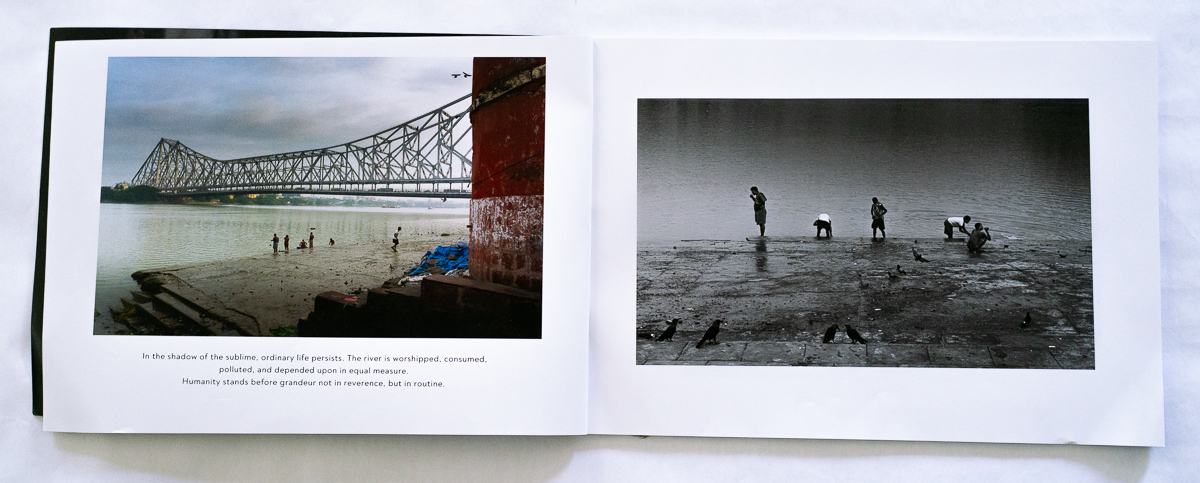
Kowshik walks us through Kolkata but includes more than street images, he brings us the mood, the emotion, the human experience inside this giant metropolis. He starts at the Bridge over the Hooghly River and the people who depend on the river’s water for spiritual and physical sustenance. The early morning rituals of bathing, swimming, and living literally with the river are intimate and sometimes startling…for instance, the bone carrying dog face-to-face with a cigarette smoking child; the apparent bond between adult and child at the baths; a crow picking at a carcass next to a man sitting at water’s edge.
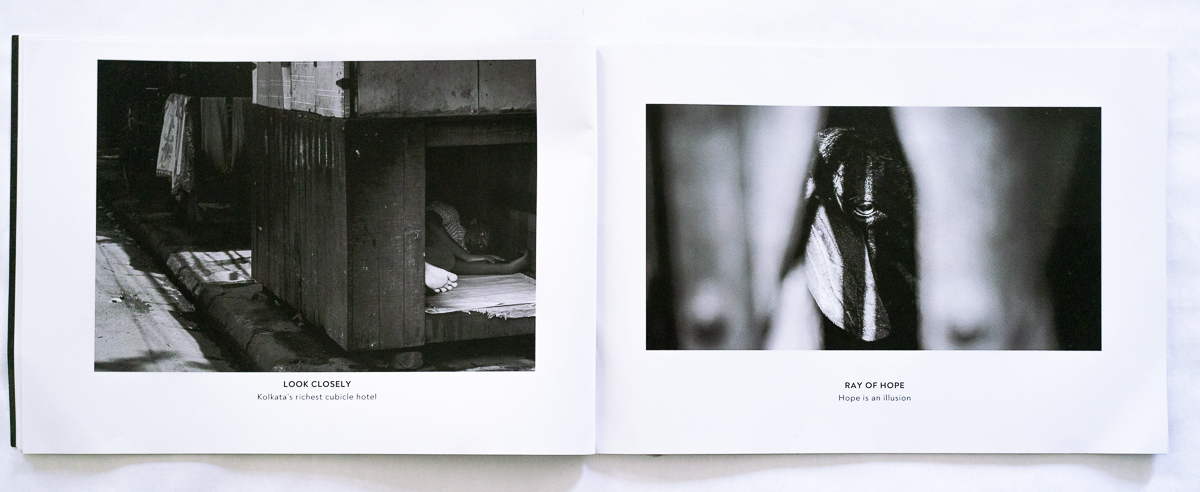
Kowshik uses the German phrase, Da Sein, “presence or existence” to guide us through his next chapter. This chapter is all black and white and has perhaps some of his most powerful images, images of people living normal lives in intense, busy streets. The tonal qualities of the images enhance the emotion of the portraits and each subject’s story is clearly told. I am bit distracted by the text below the images, I feel the images are strong enough to not require any explanation and in fact, the words detract a bit from the strength of the stories in the pictures.
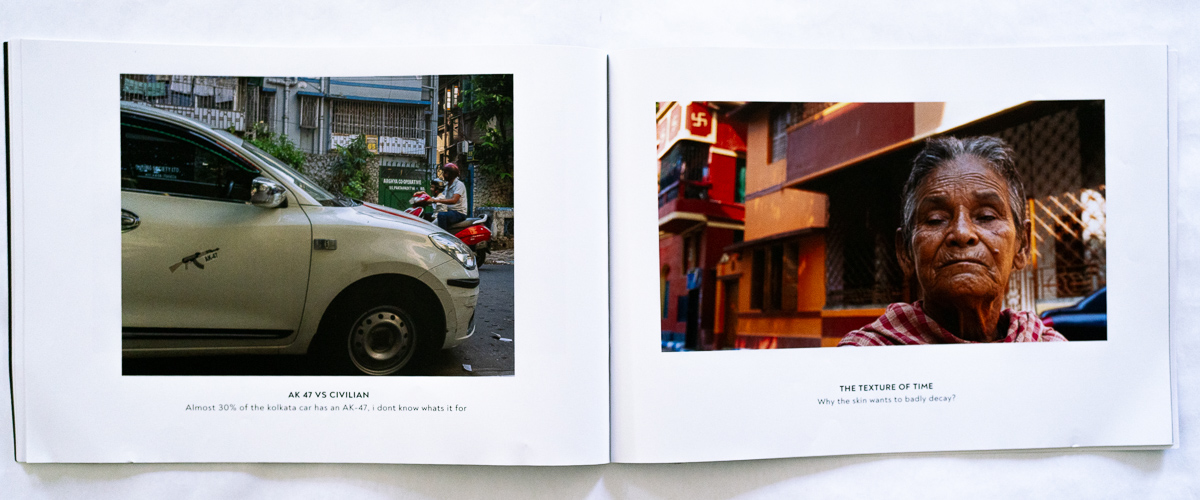
The French word, Flanerie, to comfortably stroll about, is Kowshik’s theme for Chapter 3. His bright color images exude the liveliness and movement of the people in the city. The reader can sense the rhythm of the streets by the sequencing and movement of the colors between the pages…each page turn brings us a new, but consistent, place in this magnificent city.
There is a dichotomy between Kowshik’s images and his captions and that’s a bit puzzling. His images are wonderfully found with empathy, compassion, and composition. His texts are a little doom and gloom denying the truth of his inner eye as he makes the images.
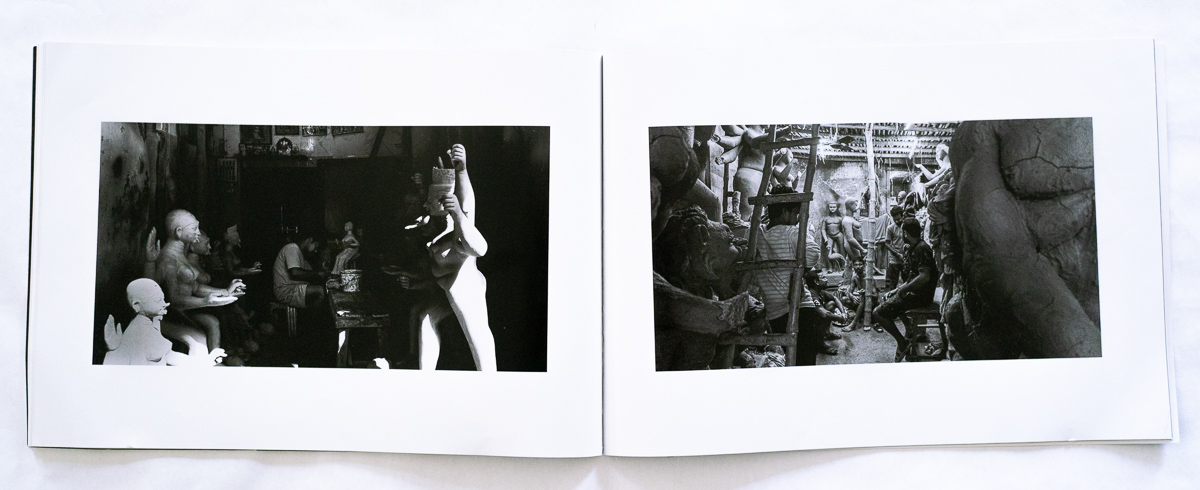
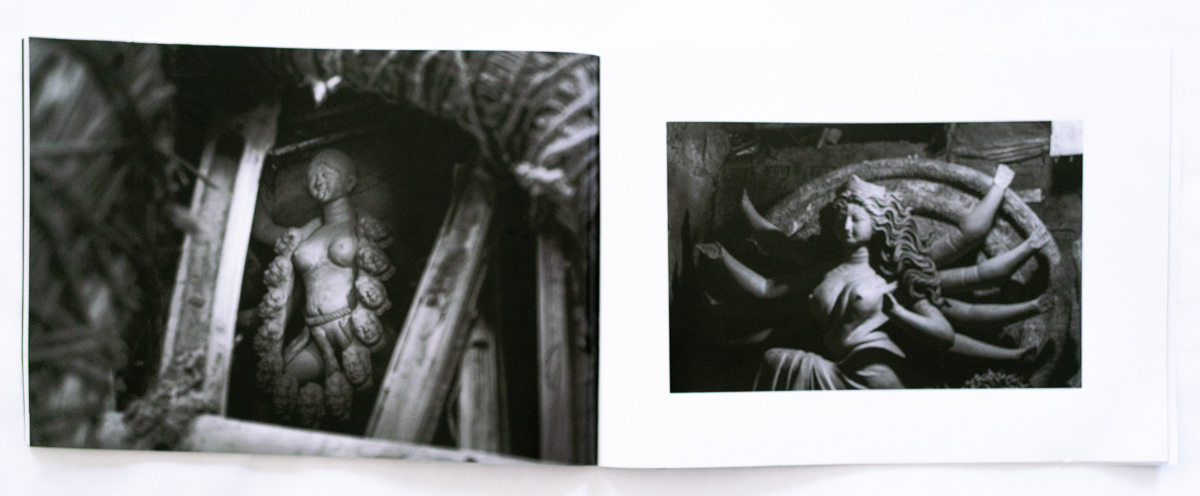
In his final chapter, Kowshik brings us the concept of Lila who is associated with Kolkata. The concept of Lila is how other Hindu gods and goddesses interact with the universe and Lila is personified in paintings and sculptures throughout the city. Kowshik finds Lila in streets, buildings, gray sculptures, and colorful paintings and mannequins. The Goddess of Divine Play is shown in places throughout the city, leaving the reader with a smile on the face.
The photography in this book is superb, the sequencing is very good, and the sounds and feelings of Kolkata are in its pages. It’s a very good book and I look forward to seeing more from this thoughtful artist.
__________
Lee Halvorsen is assistant editor, writer and visual artist living in Virginia.
__________
CALCUTTA by Vijay Kowshik
Artist: Vijay Kowshik living and working in Chennai, Tamil Nadu, India
Copyright ©2026 Vijay Kowshik
Publisher: Self Published
Should you wish to purchase the book, please write Vijay, his email is vijaykowshik3@gmail.com
Printed in India
Language: English
Format, paperback, perfect bound, 8 x 11.5 inches, no ISBN
__________


__________
Articles and photographs published in the PhotoBook Journal may not be reproduced without the permission of the PhotoBook Journal staff and the photographer(s). All images, texts, and designs are under copyright by the authors and publishers.


Leave a comment