Review by Gerhard Clausing •
How do you show moods and emotions in your photographs? How are a photographer’s feelings transmitted? And what about the people being photographed, and what do places and environments signal to us? Furthermore, what is the nature of the relationship between the photographer and the model?
Such are the issues making up the self-imposed assignment behind this project. Yosuke Morimoto was coming out of a relationship and felt a strong sense of loss. So he went to Yoyogi Park and other locations around Tokyo and approached some young women, asking them if they were willing to be photographed, and did this for many years, all without establishing a close contact with any of them, unlike what photographers usually do with their models. The moods of the areas of the city where he briefly met the young ladies who were willing to be photographed and the moods presented by the young women constitute many pairings that make up the sequence of this photobook.
Ambiguity is the main ingredient of this project. The sights and moods of a city merge with the portraits of young women, and we as the audience have to make some sense of it. So let us start: the landscapes are representative of an absence, the young women’s portraits are showing a presence and an emotional side that ranges from quizzical questioning of the purpose to degrees of possible distance. We are constantly challenged to read an emotion into the young women’s expressions. Consequently, it is us who are trying to interpret the photographer’s reflection in the countenances of the models photographed and the landscapes paired with them. The repetition we observe is one of variation of a theme of distance and closeness. It is a parade we are watching, a viewing of sorts in public places of tenuous relationships that never were extended. As the models have all given permission for the photographs, we are challenged with the task to reach our own interpretations of what is shown. Perhaps there is also some yearning for more, at least some of the time.
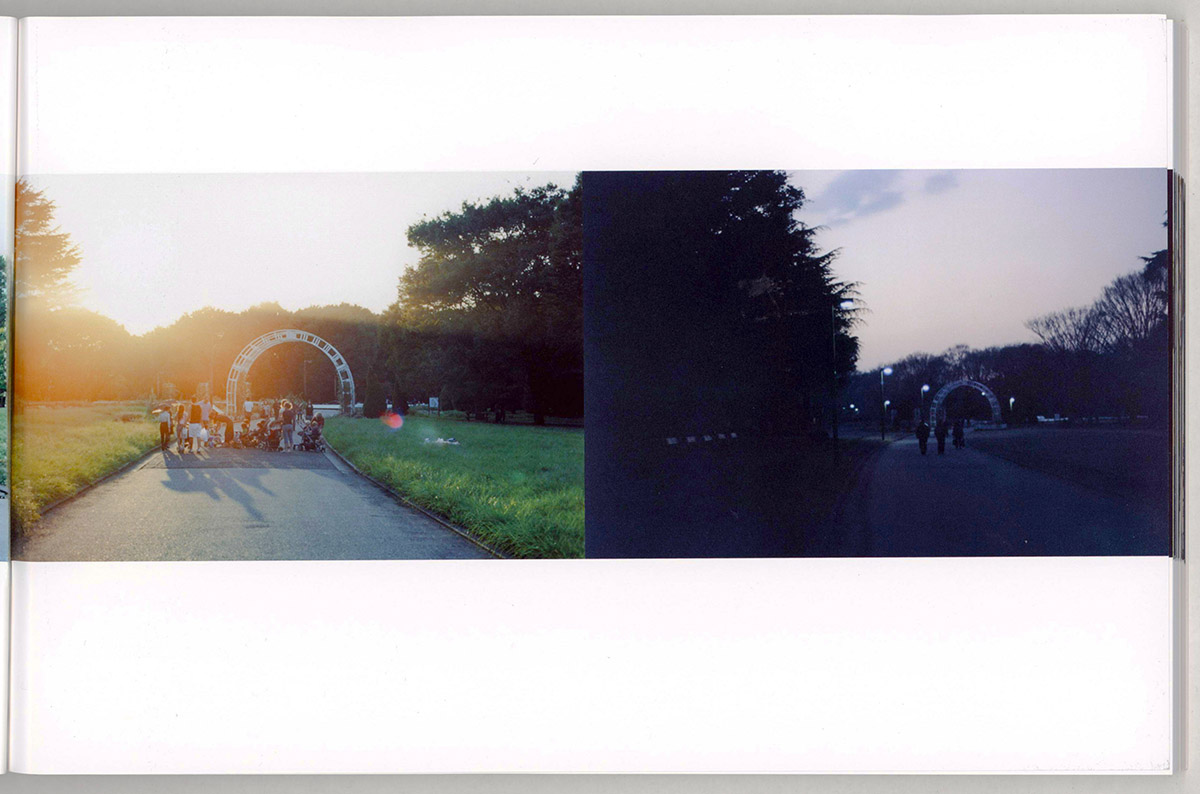
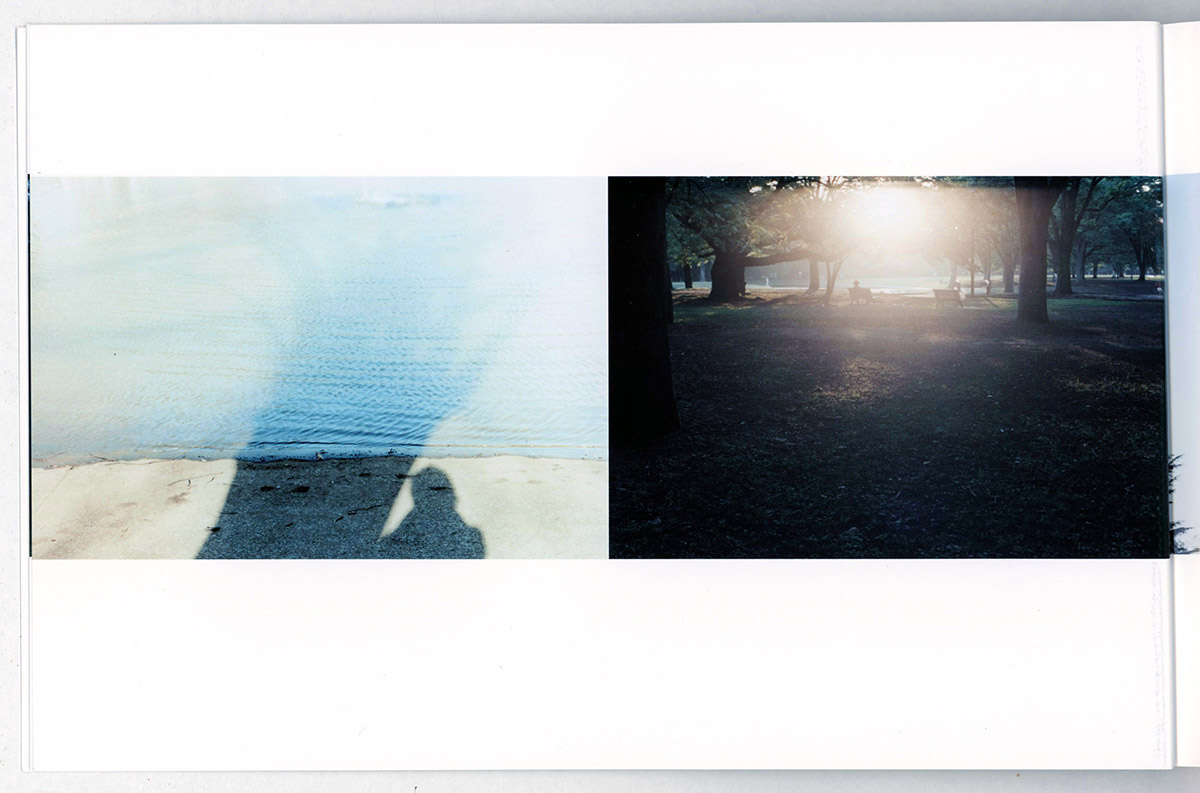
The style of the book, presented in generous horizontal format, in itself makes an impression of a kind of continuity. The colors are subtle; the landscapes and portraits of the young ladies are presented in parallel, and a lot of them at that. The photobook pairs portraits with parks, paths, buildings, sky, shadows, and transit spaces, making Tokyo feel both crowded and emotionally spare at the same time.
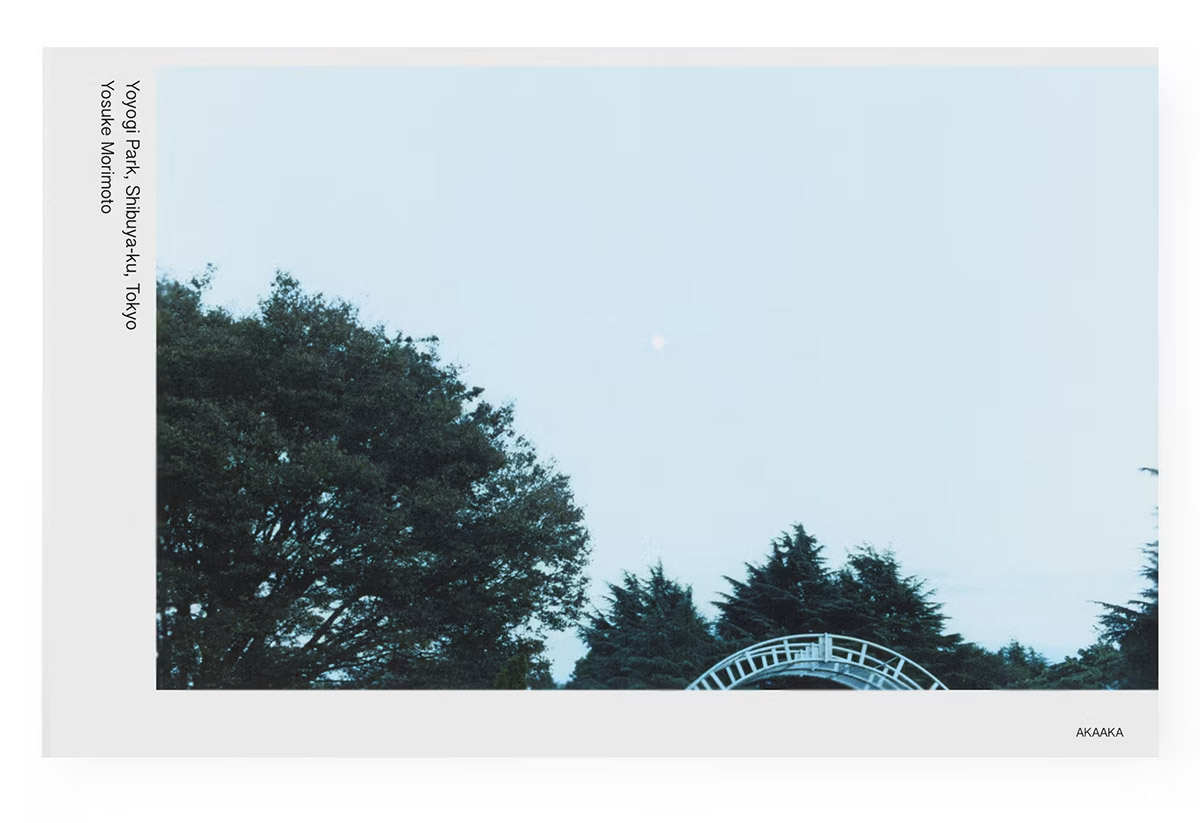
The cover already sets the mood. Instead of a face, we see a pale blue sky, trees, and the partial curve of a white park structure. The image is airy, even evasive. It gives us a location before it gives us people, as if the book is telling us that emotion first attaches itself to atmosphere. Yoyogi Park becomes more than a public place; it becomes a container for memory, uncertainty, and repeated attempts at connection.
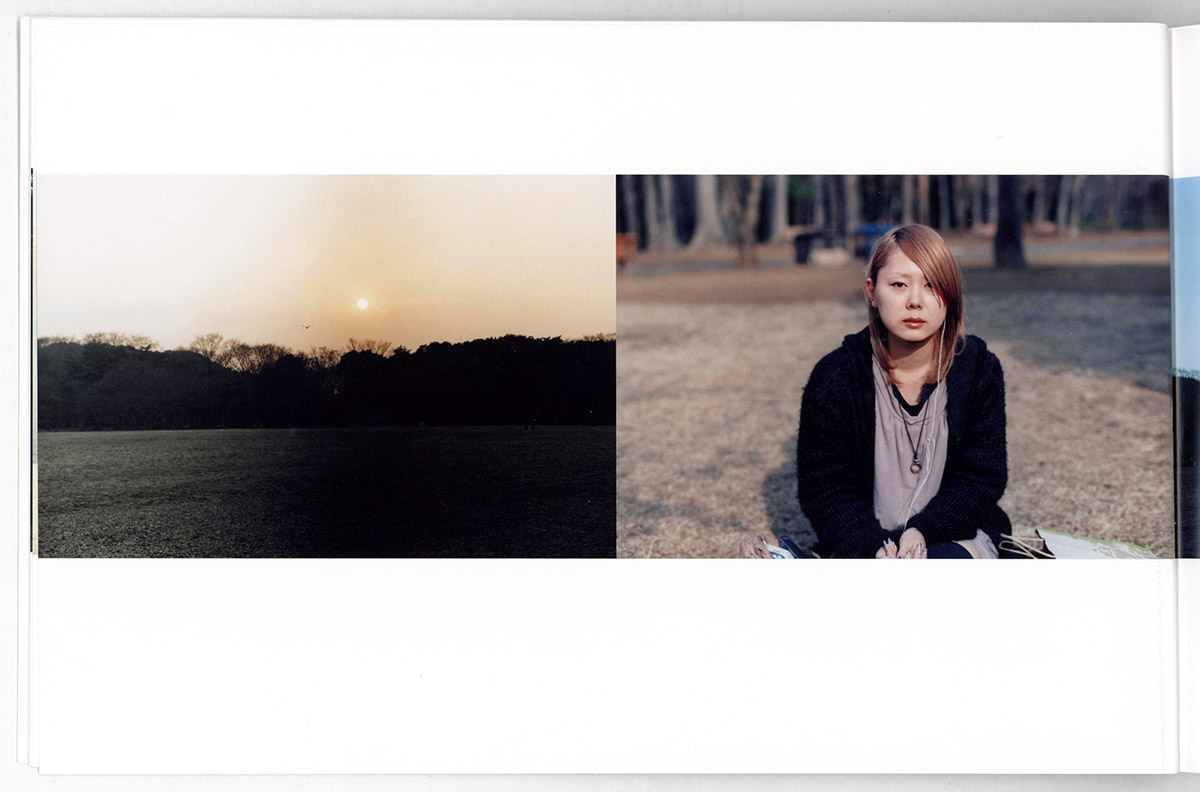
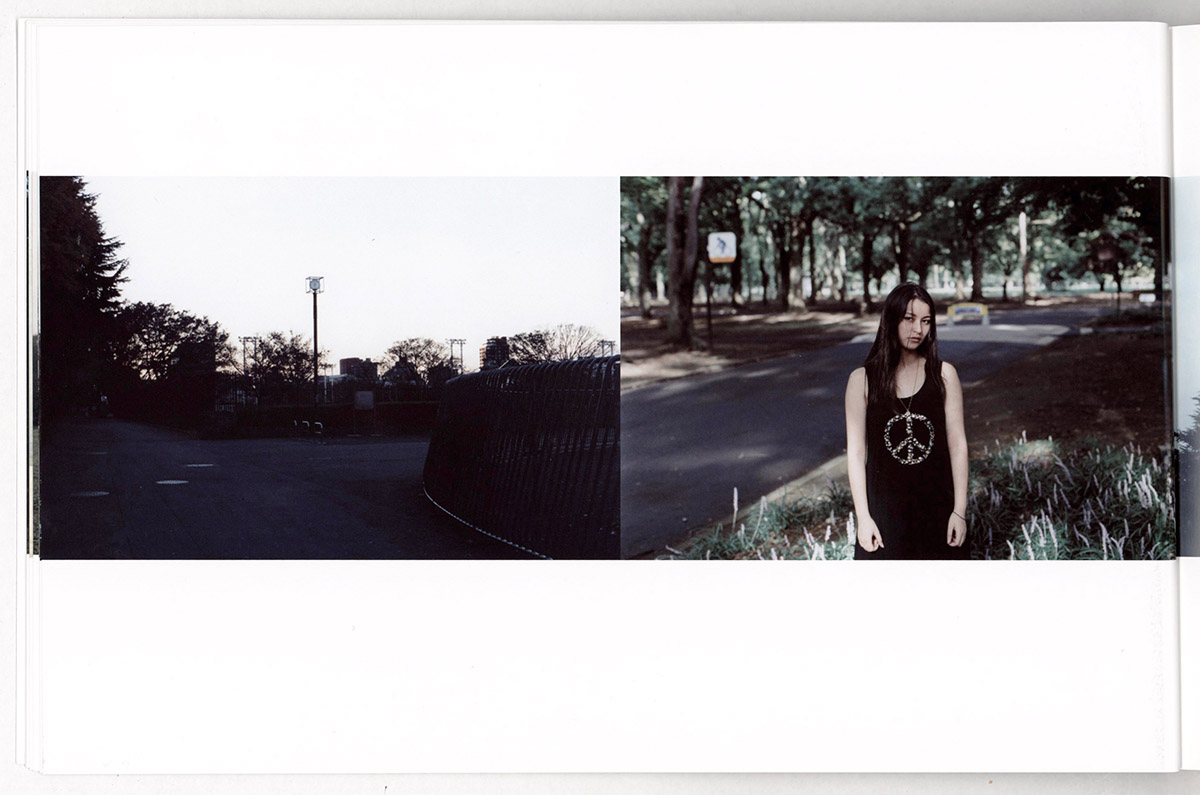
The structure of the book most often presents a landscape or urban fragment on the left and a portrait on the right. This creates a rhythm of encounter: first the site, then the person; first the emotion-suggesting weather, then the human presence. On one spread, a sunlit park scene is followed by a young woman seated outdoors, her expression direct but reserved. On another, a darkened path and fence precede a standing portrait of a woman in a black dress with a peace symbol. The sequencing suggests that each person is somehow connected to the light, season, and physical setting in which Morimoto met her.
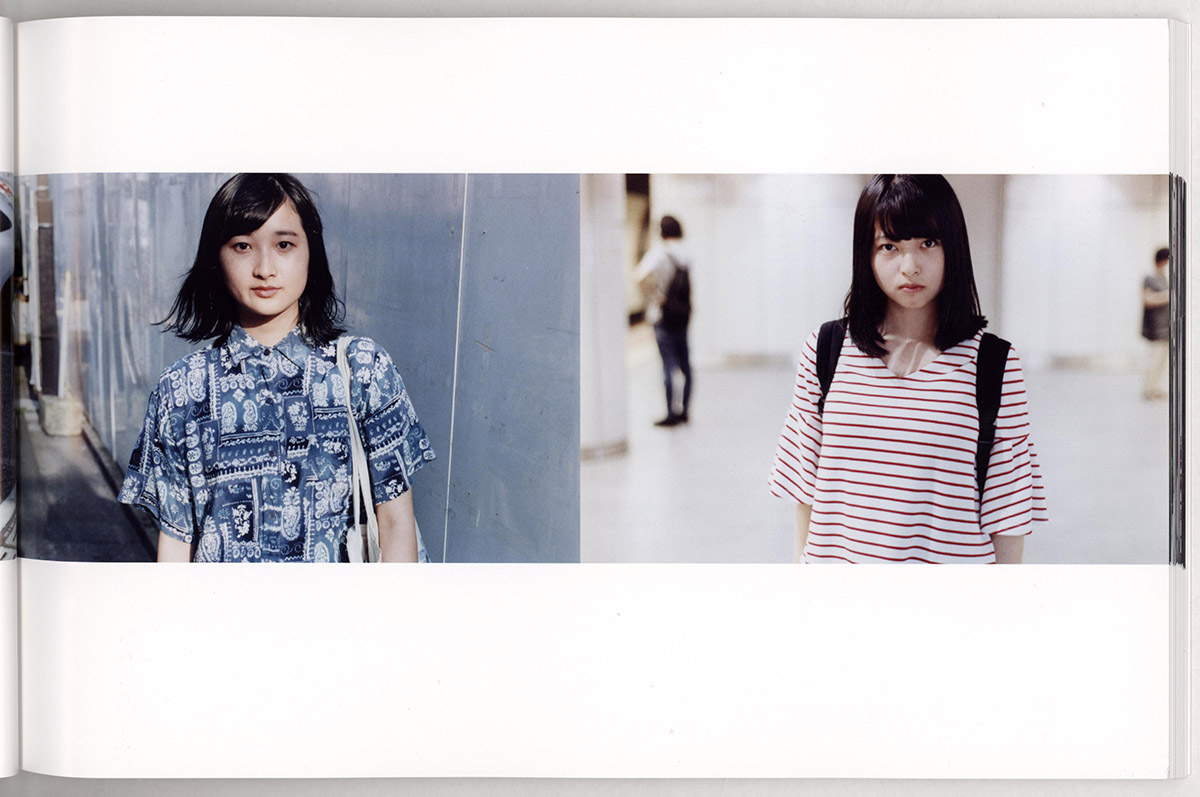
The portraits themselves seem restrained; these women are not dramatized or romanticized. Most look directly at the camera, but their expressions are held back: serious, tentative, sometimes curious, sometimes seemingly tired. The emotional exchange is delicate because we cannot know what they were feeling. Still, the photographs transmit a sense of guarded openness. They seem to show the pause between anonymity and recognition. For the photographer, that pause may have held the hope of renewal after heartbreak. For the viewer, it becomes a reminder that a portrait can be both intimate and incomplete.
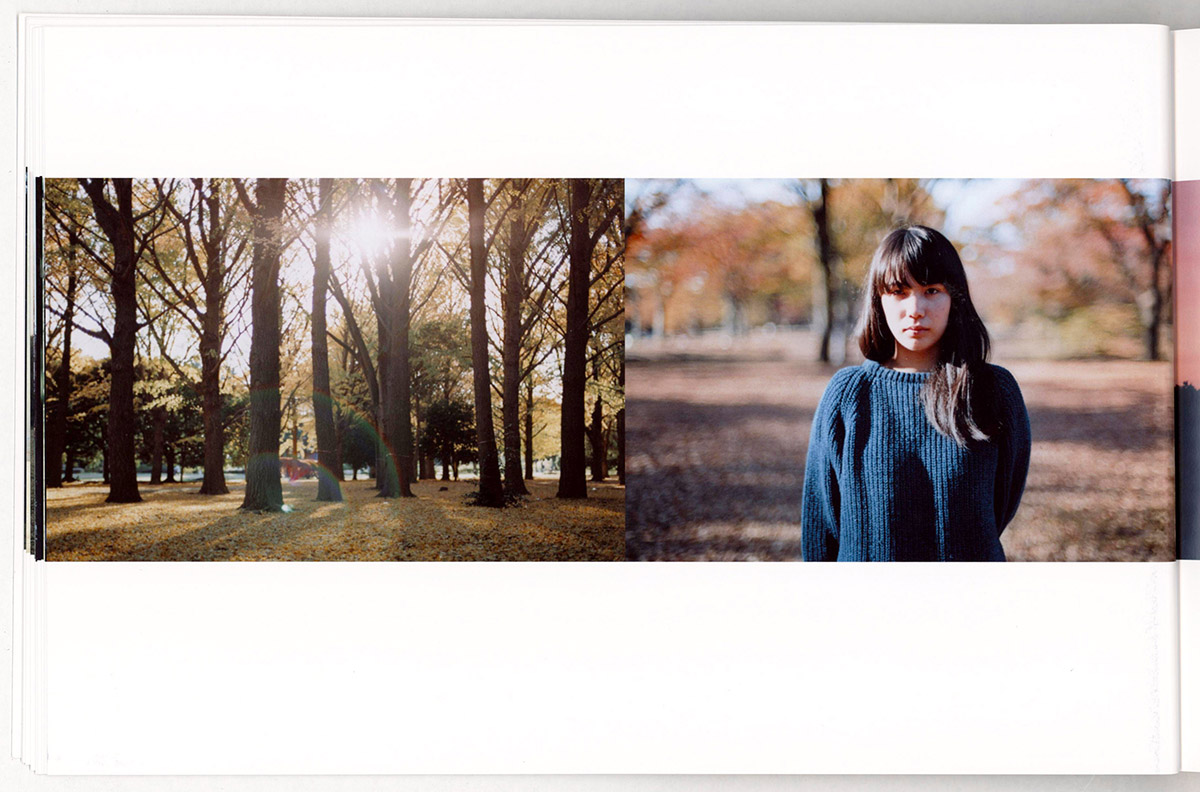
A strong example appears in the spread with the autumnal park trees and the woman in a blue sweater. The left image is full of warm light passing through trunks and fallen leaves. The right image brings us close to a calm face, but not close enough to solve it. Her eyes meet the viewer with composure, while the soft background keeps her partly inside the park’s seasonal atmosphere. The feeling is not romance exactly; it is more like suspended attention. Something has been offered, but only briefly.
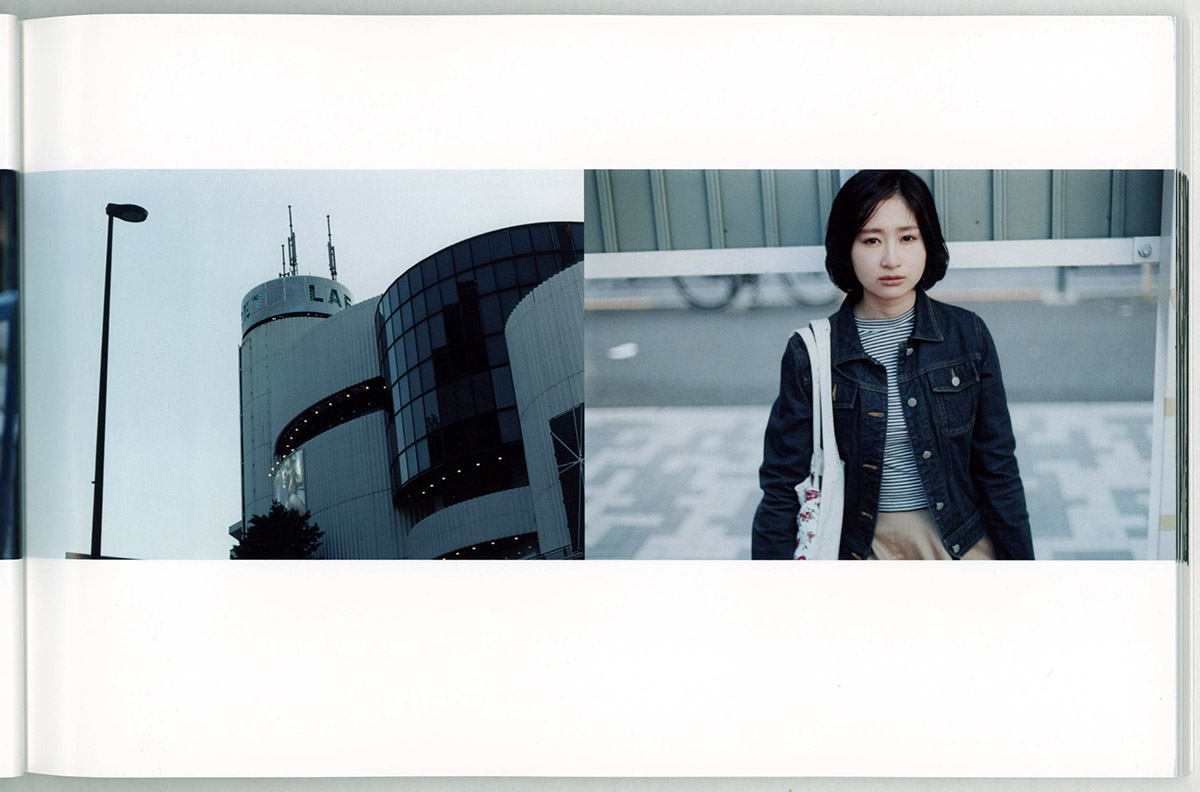
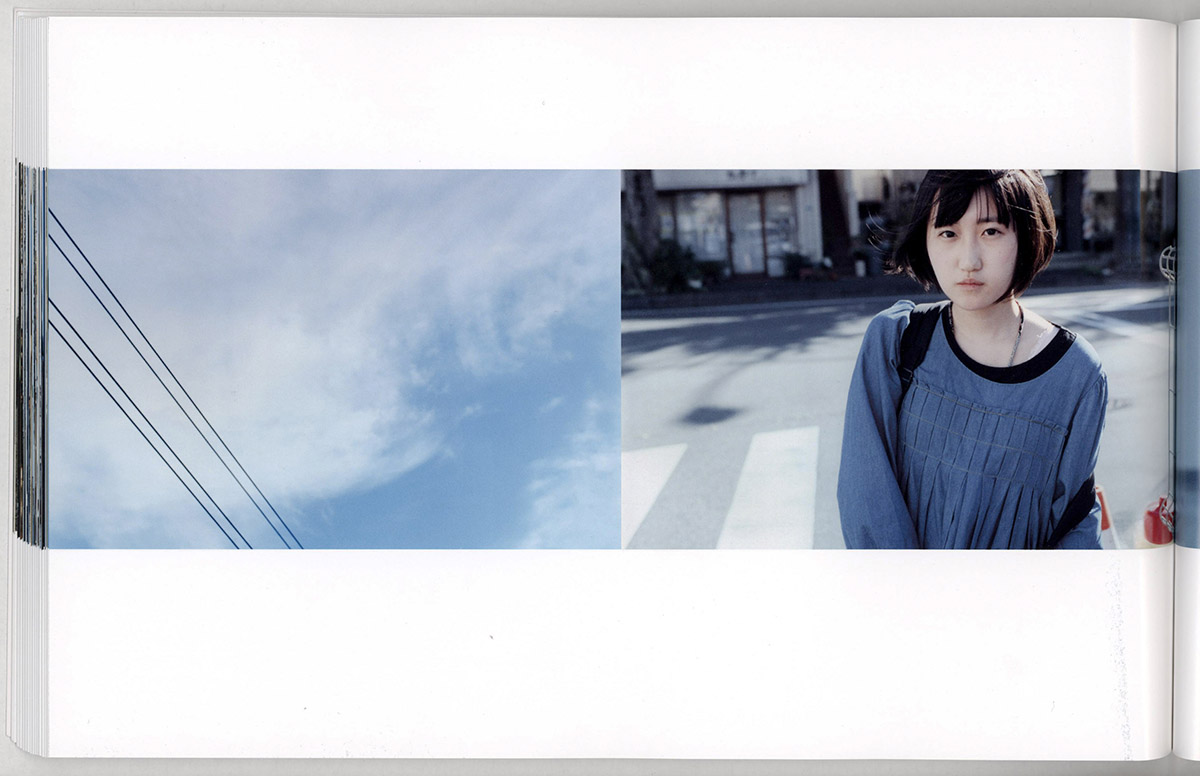
The urban images present a contrast to the park’s softer mood. A Shibuya building, overhead wires, a crosswalk, a pale interior concourse, and blurred public figures place the portraits within a modern city of surfaces and movement. In these spreads, the women appear against gray walls, streets, and transit spaces. Their stillness contrasts with the city’s flow. Morimoto’s camera seems to ask whether a meaningful human exchange can happen in a place designed for passing through. The answer is yes, but perhaps mostly momentarily.
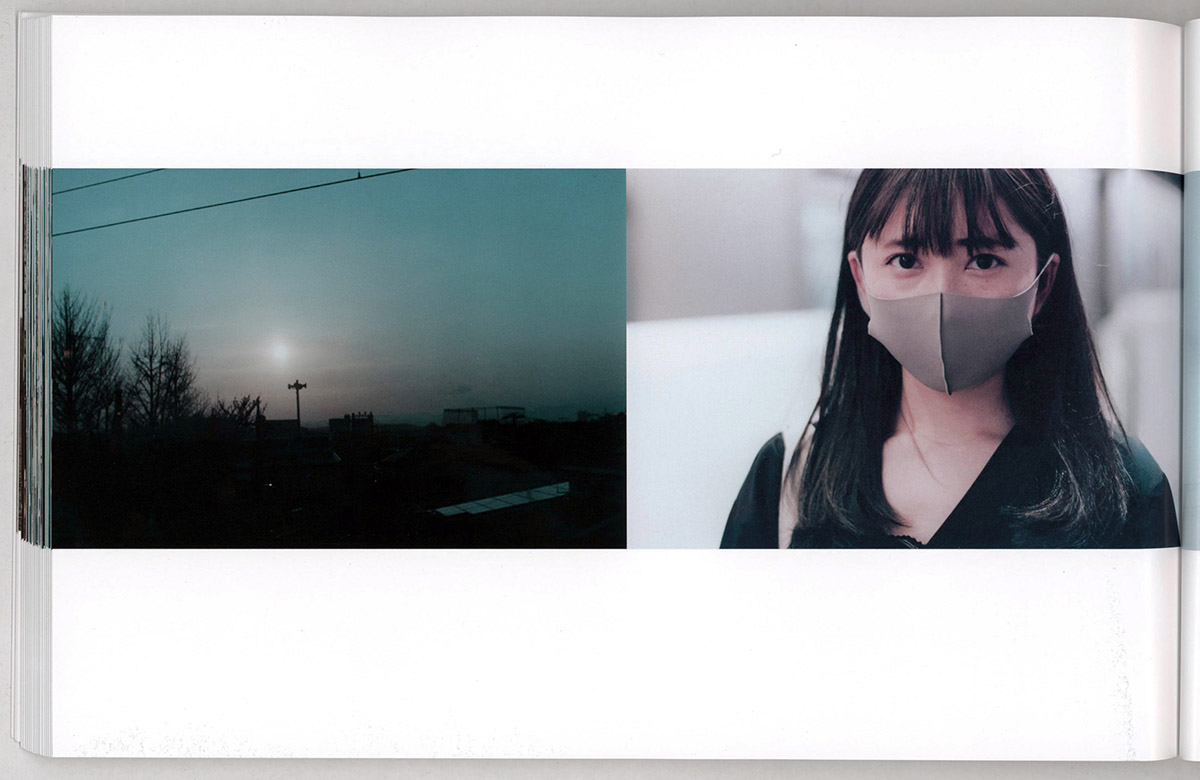
The photograph of the masked woman is especially striking. Her face is partly covered, but her eyes become more intense because of that covering. Beside her, the dark landscape image shows a dim sun over a nearly silhouetted horizon. Together, the two images suggest distance, caution, and a wish to be seen without being fully exposed (besides being more protected from germs). This is one of the project’s most moving emotional pairings: the world is darkened, the face is protected, but the gaze remains present.
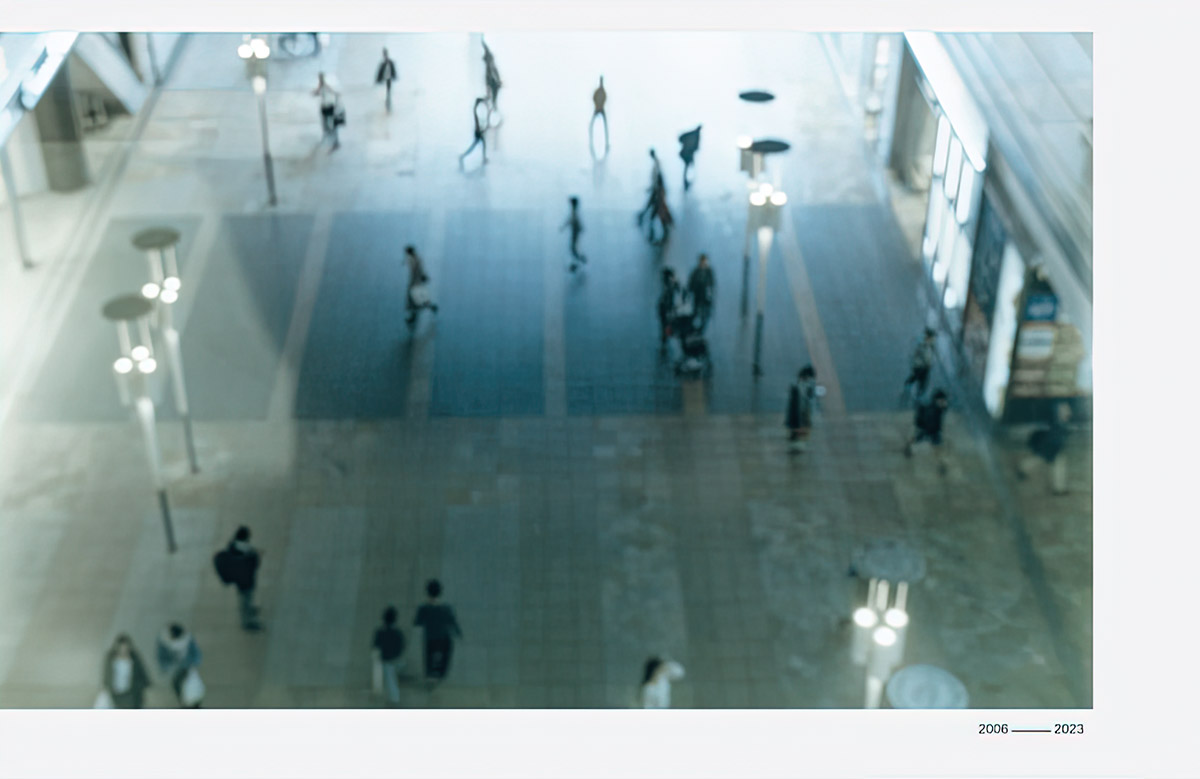
The rear cover, marked “2006-2023,” shows a blurred elevated view of people moving through a public interior. After so many direct portraits, this ending pulls us away. Individuals become silhouettes, almost memories. The long date range helps us understand the book. This was not a quick rebound project, but a sustained act of returning to public life, year after year, with the camera as a means of contact. The blur suggests that people pass through our lives without becoming fully known, yet their presence may still leave traces.
Morimoto’s achievement lies in his refusal to overstate the drama. A breakup might have led to a more obvious story of loneliness, desire, or recovery. Instead, he gives us a series of modest encounters shaped by light, distance, and mutual hesitation. The women are not reduced to symbols of the photographer’s emotional life; they remain separate people, each with her own unreadable interior. At the same time, the repeated structure makes clear that Morimoto is searching for something through them: contact, not possession.
This project can speak to you on several levels. Many personal thoughts were going through the photographer’s mind throughout the years that he took these photographs. Through these images you too can ponder your own relationships, both distant and close, both friendly and less so, to get in touch with both memory and emotions, regarding what you have experienced. Yosuke Morimoto’s project reminds us in an excellent fashion of the range of emotions that people experience in relationships of all kinds. The back cover illustrates our busy world, a situation that often prevents deeper relationships because of all the hustle and bustle. This photobook gives us much to think about regarding emotions, casual encounters, and moments of recognition.
____________
Gerhard (Gerry) Clausing, PBJ Editorial Consultant and Editor Emeritus, is an author, visual artist, and educator from Southern California.
____________
Yosuke Morimoto – Yoyogi Park, Shibuya-ku, Tokyo
Photographer: Yosuke Morimoto (born in Kagawa, Japan; lives in Tokyo)
Languages: English and Japanese
Publisher: Akaaka Art Publishing; © 2023
Softbound, with illustrated cover; 154 pages; 12 x 7.75 inches (30.5 x 19.5 cm); printed in Japan; ISBN 978-4-86541-173-7
____________
Articles and photographs published in the PhotoBook Journal may not be reproduced without the permission of the PhotoBook Journal staff and the photographer(s). All images, texts, and designs are under copyright by the authors and publishers.


Leave a comment