Review by Hans Hickerson ·
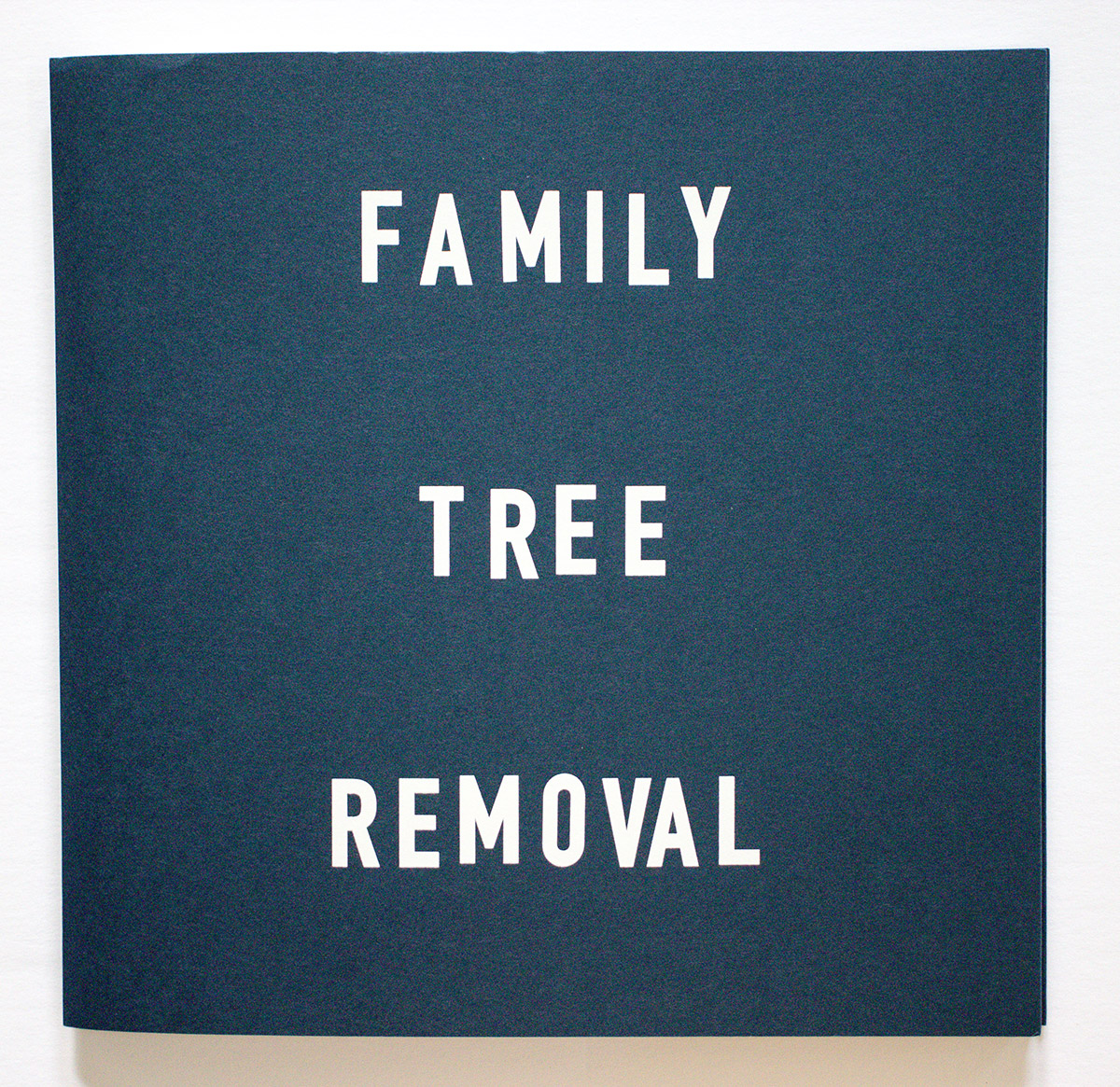
You can’t thumb through some photobooks. You have to look at them front to back and read the texts, otherwise they don’t work. Jordan Baumgarten’s Family Tree Removal is like that. If you don’t read the text, you don’t understand what the pictures and the book are really doing.
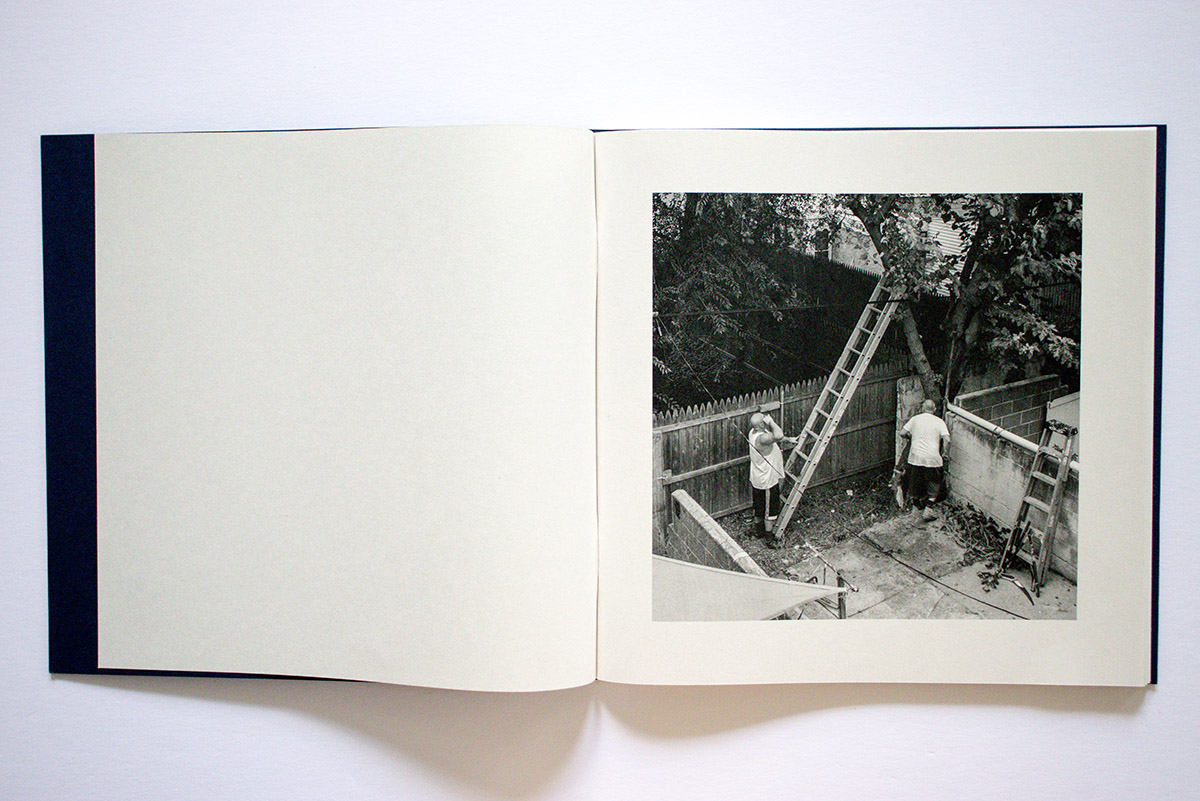
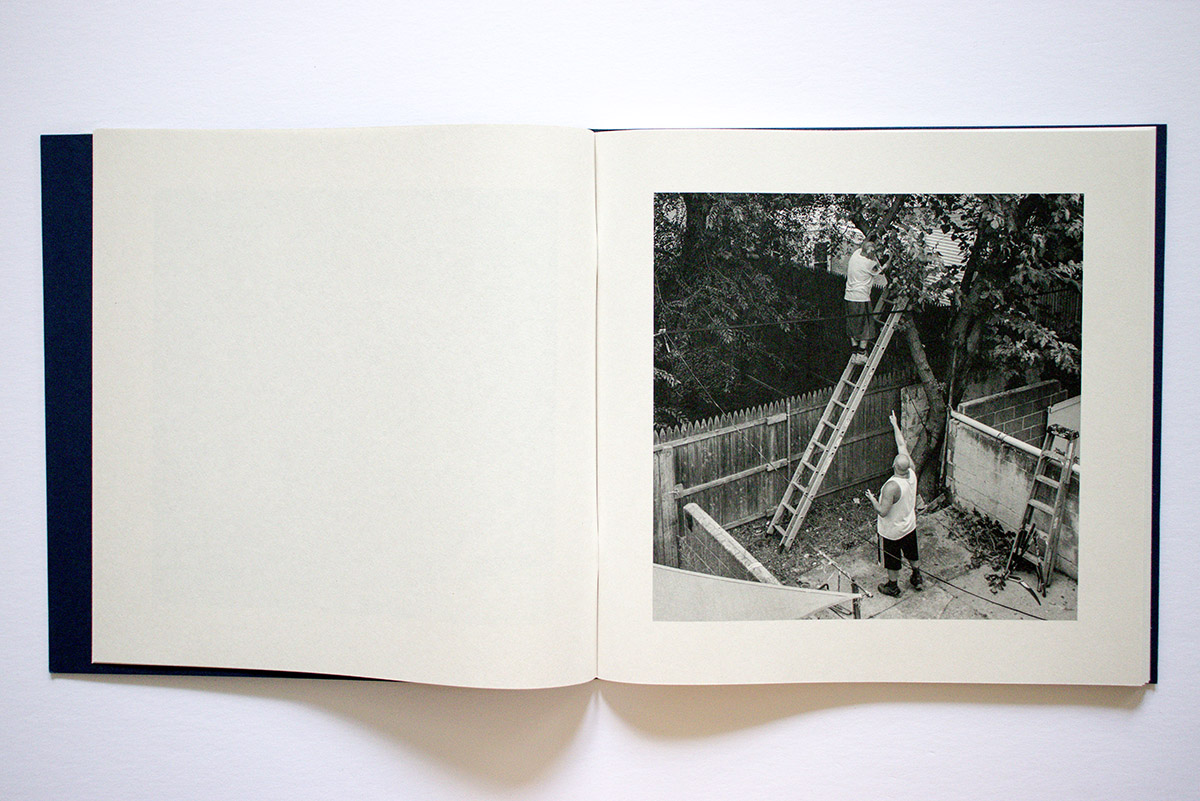
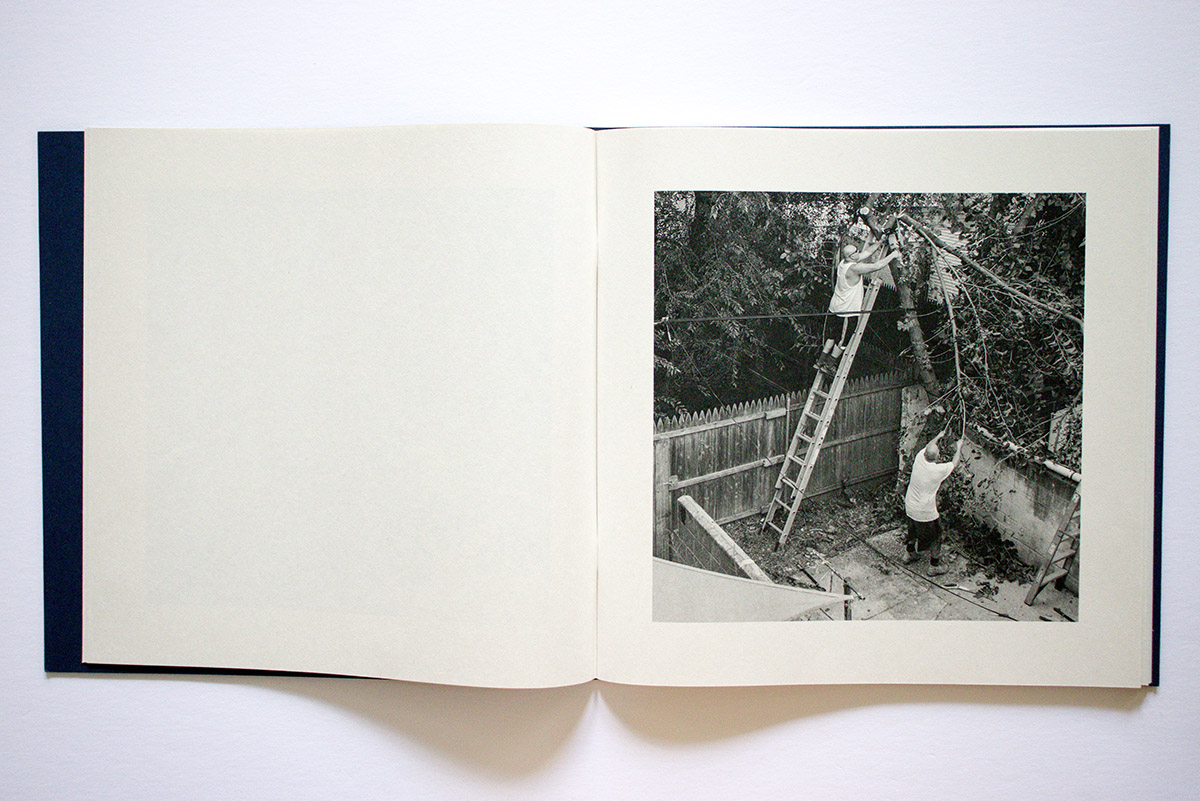
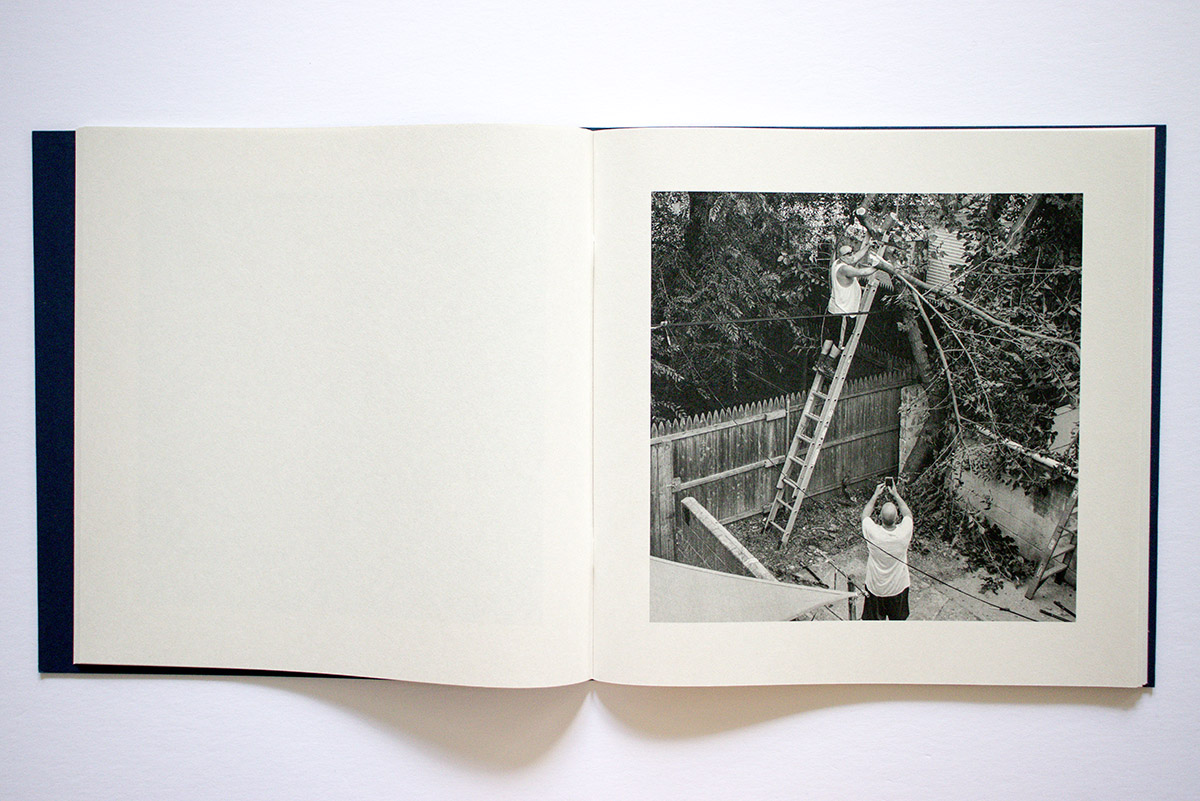
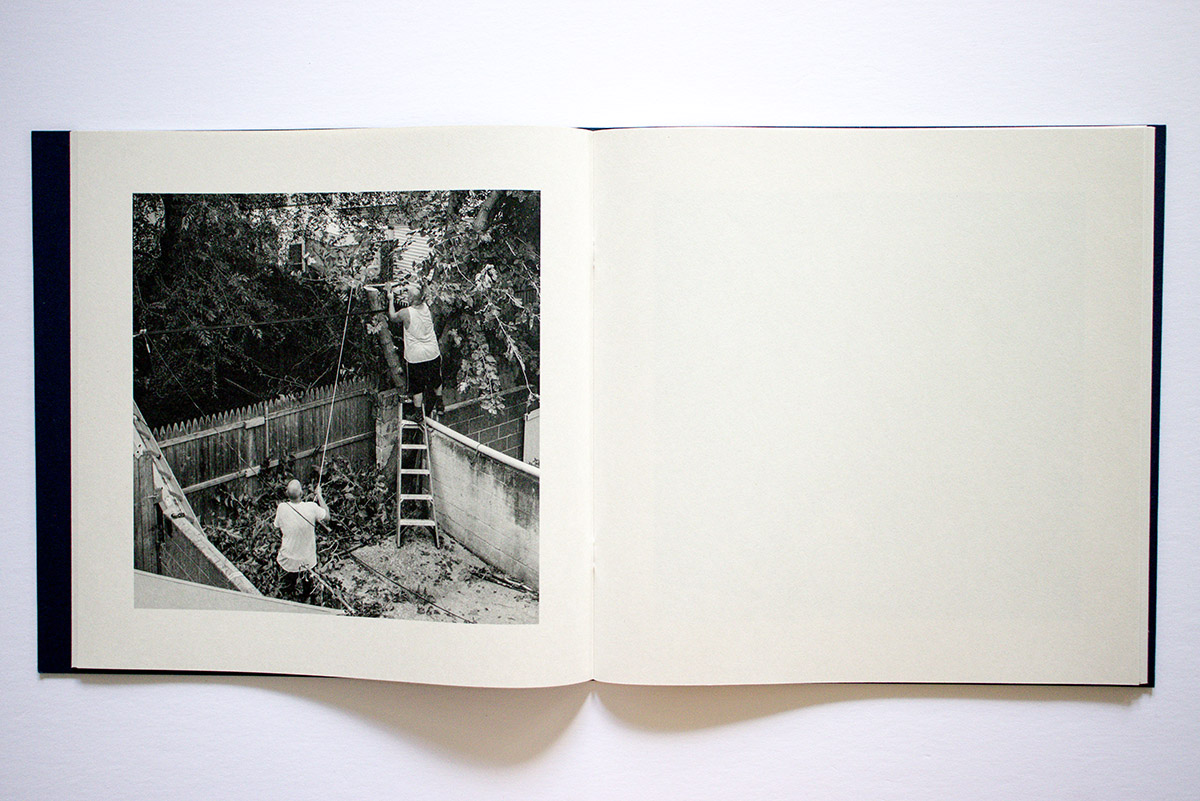
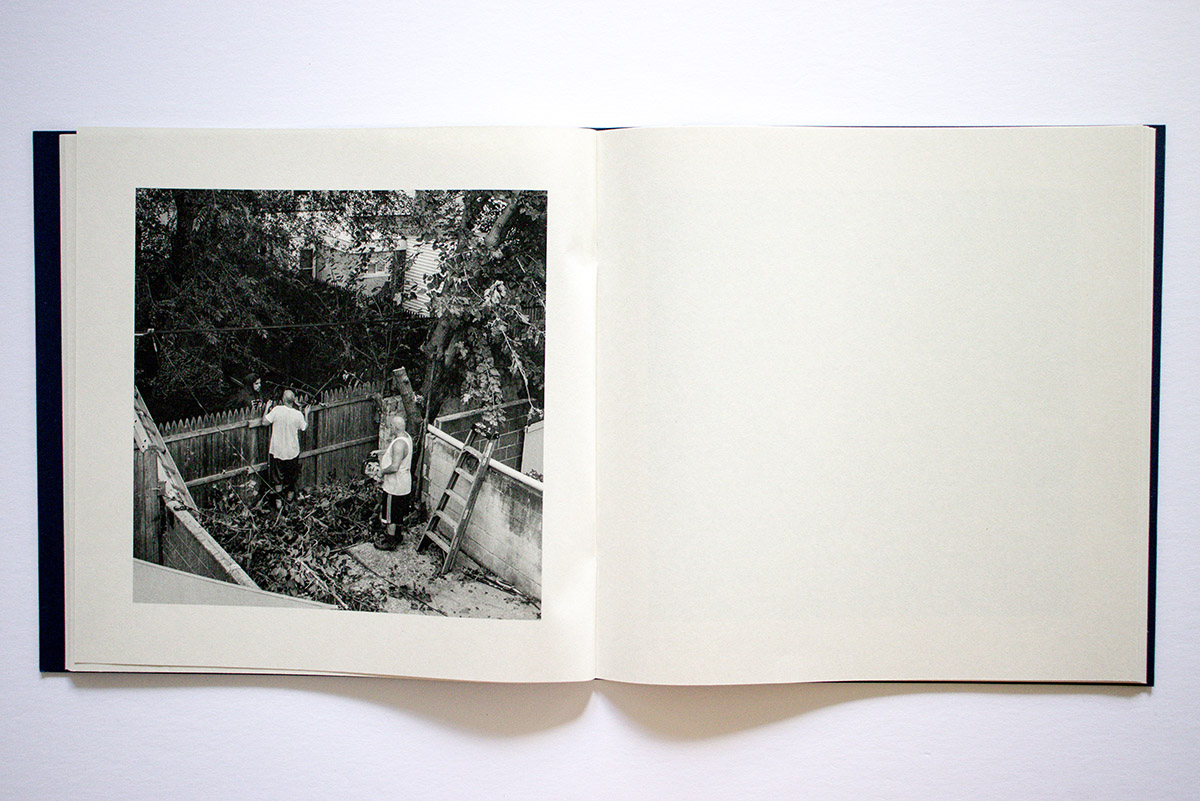
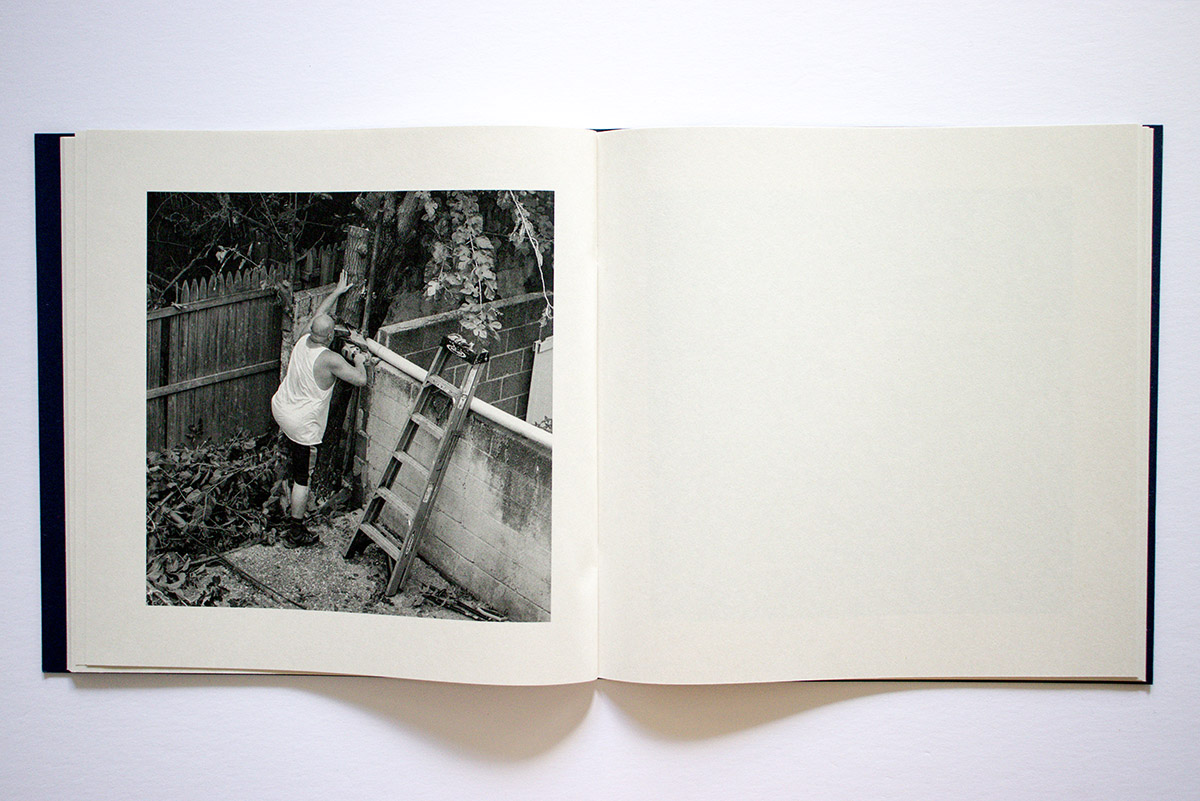
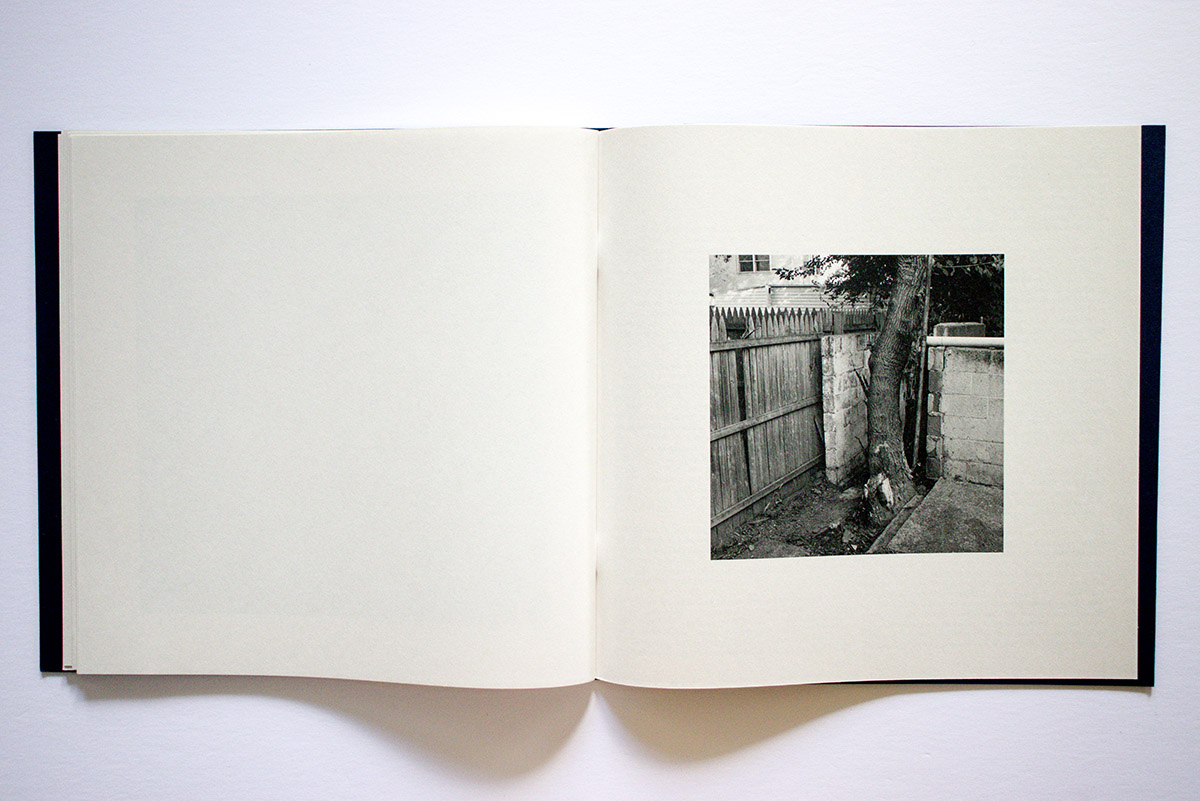
I looked at the pictures briefly when I picked up the book. Got it, I said. I see what’s going on. It’s a series of photos that presents a slice of reality – a sequence of 27 photographs of two men cutting down a tree in an urban back yard. It’s a mundane but artistically resonant moment. Beauty and significance in ordinary, everyday events. Common things that become interesting if you consider them closely. Universal human experience in the particular. The power of looking and seeing through photography. Great book idea, I thought. Boundary pushing and risk-taking: that’s what I want to support.
But then I read the three pages of Baumgarten’s first-person text, and things quickly got specific and dramatic. With the added narrative context, the photos meant something quite different. Which just confirms the truism of how framing images with words powerfully affects how we mentally process what we see.
Baumgarten lives in a high-crime neighborhood in Philadelphia. His text tells the story of a next-door neighbor who died of a drug overdose in his bathtub. He had known his neighbor pretty well, but he did not know that his neighbor, June – short for Junior – had been dealing drugs. June had bought his house a long time ago and after getting out of prison had only recently begun renovating it. He was excited about being a homeowner and had plans for what he was going to do, how he was going to improve his living situation and circumstances.
Baumgarten recounts his role in discovering June’s body and supporting June’s family, explaining the events of the aftermath as well as the funeral. He also tells of his struggle to process June’s death, including dealing with his own feelings of guilt for not having checked on June earlier himself. The story ends with the description of June’s cold, empty house in winter and Baumgarten understanding that June is not coming back.
When you look at the 27 photos of two men cutting down a tree in an urban back yard now, they do not look the same. The men and yard are not anonymous. The men are June’s relatives and they are working in June’s back yard. They are helping him fulfill a dream that will never come true. The photographs are a reminder of what could have been but no longer will be. They are freighted with the drama and details of Baumgarten’s story of someone from a bad neighborhood who tried to beat the odds but who didn’t make it. They are a symbolic memorial to Anibal Mercado – June – short for Junior – father, friend, nephew, neighbor.
As for the physical book, Family Tree Removal is not flashy. Uncoated newsprint, but printing that keeps the tones and images lively. No high-end binding or bells and whistles or fancy anything. Honest, old-fashioned, plain-vanilla story telling through pictures and words is what gives this book its wallop.
Hans Hickerson, Editor of the PhotoBook Journal, is a photographer and photobook artist from Portland, Oregon.
____________
Jordan Baumgarten – Family Tree Removal
Photographer: Jordan Baumgarten (born in 1983, lives in Philadelphia)
Publisher: Smog Press; © 2023
Text – Jordan Baumgarten
Language: English
Design: Jordan Baumgarten, Taylor Galloway, Adam Ianello
Printing: El Sereno Graphics
Softbound dustcover with flaps ; 27 black and white photographs; newsprint, saddle stitch; 60 pages, unpaginated; 10 x 10 inches, ISBN 978-1-7369863-3-2
____________


Articles and photographs published in the PhotoBook Journal may not be reproduced without the permission of the PhotoBook Journal staff and the photographer(s). All images, texts, and designs are under copyright by the authors and publishers.
 PhotoBook Journal
Leave a comment