Review by Douglas Stockdale •
If we compare the planet with a communal apartment, we occupy the direst room.
– Aleksei Yablokov, Environmental Advisor to Boris Yeltsin
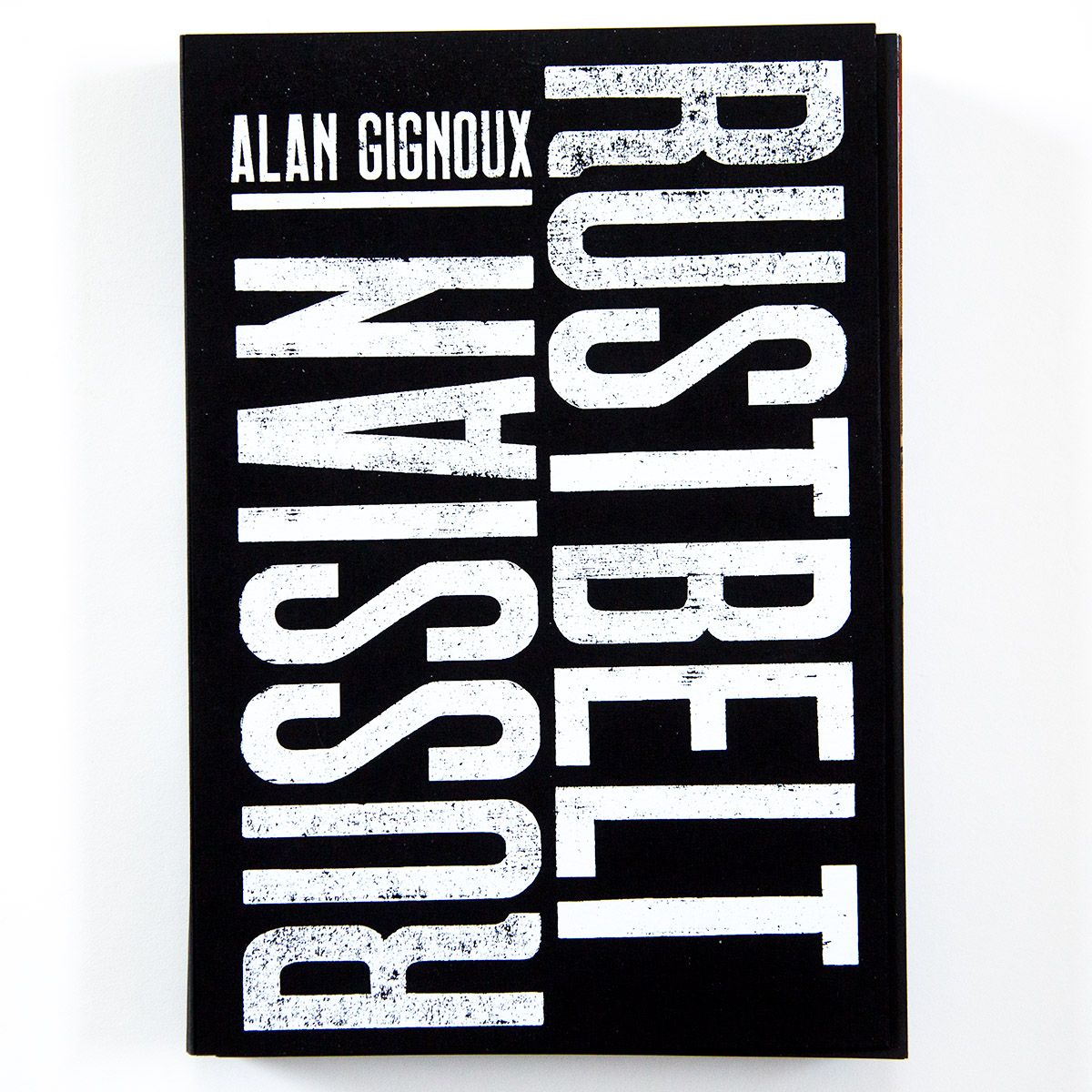
The Russian Urals is the subject of Alan Gignoux’s recent artist-photobook, Russian Rustbelt, documenting the Ural industrial region during a residency with the National Centre for Contemporary Art in Yekaterinburg in 2009. The design of this artist book takes as its inspiration the Soviet era photobooks produced between 1920 and 1941. Gignoux investigates a fascinating period of transition between old (Soviet socialism/Communism) and new (Russian capitalism/market economy), while recalling the American midwest area known as the ‘Rustbelt’ due to its deteriorating economic infrastructure in the 1980’s.
The Urals is a region in Russia that is particularly hit hard by the punishing legacy of the Soviet industrial projects: failing industries, abandoned factories, outdated and dilapidated industrial equipment, decaying housing, job losses, population loss and serious environmental degradation, leading in some cases to ill health and early death. This area includes several historically significant “monocities” (single-industry urban centers) such as Ural Mash, Chelyabinsk, Nihzny Tagil and the steel town, Magnitogorsk. Gignoux also postulates that due to a lack of investment, both private and governmental, probably not much has changed in the environmental conditions or this urban landscape, or perhaps maybe even worse, in the 14 years that he investigated this region.
In his introduction, Gignoux provided some grim statistics for the Urals that provides another layer of context for his harsh visual narrative; in Magnitogorsk, 40% of teenagers have a chronic disease and in the mining town of Karabash, the average life expectancy is 45 years. This is much worse envirornimentally than the American ‘Rustbelt’ ever was.
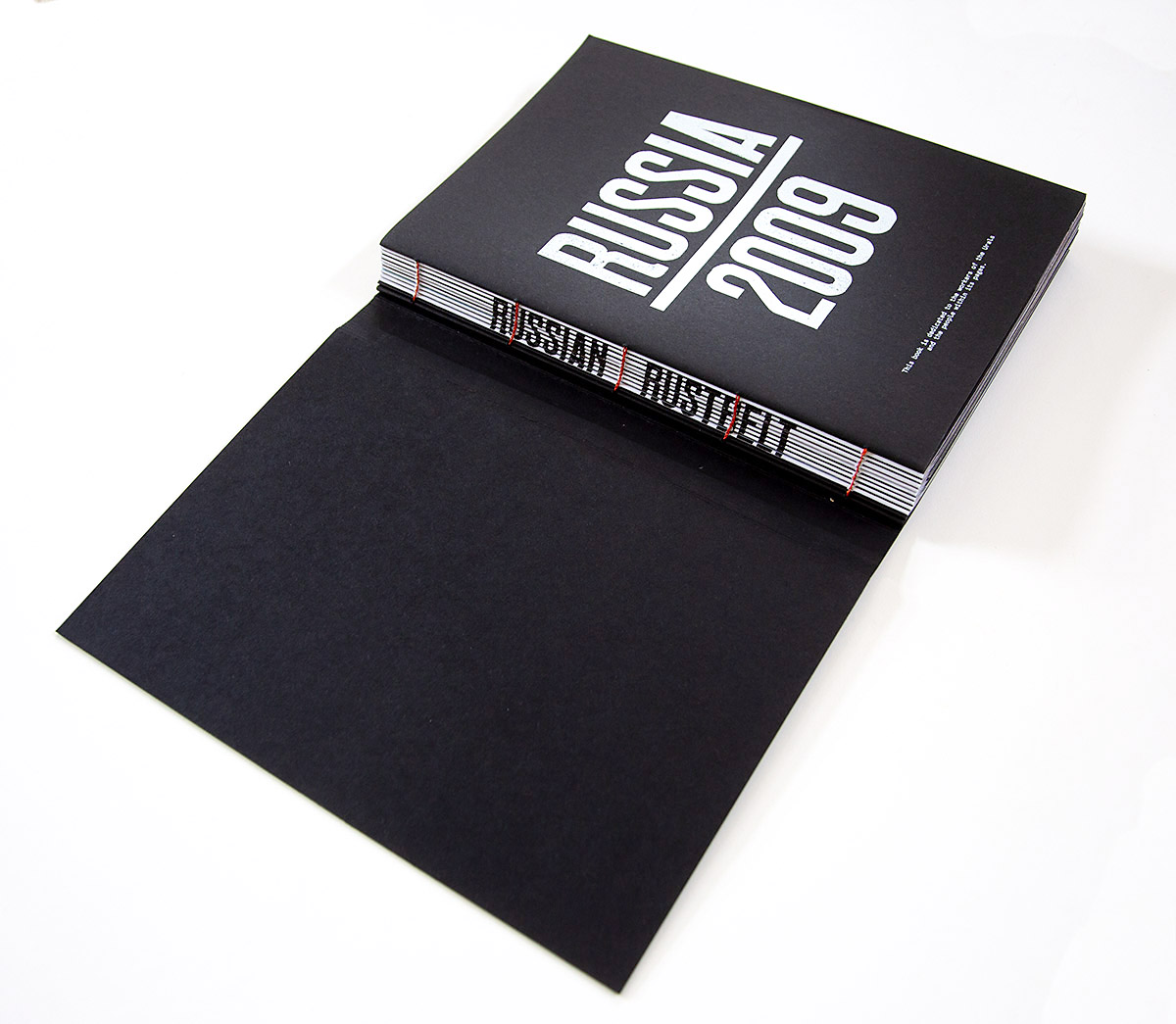
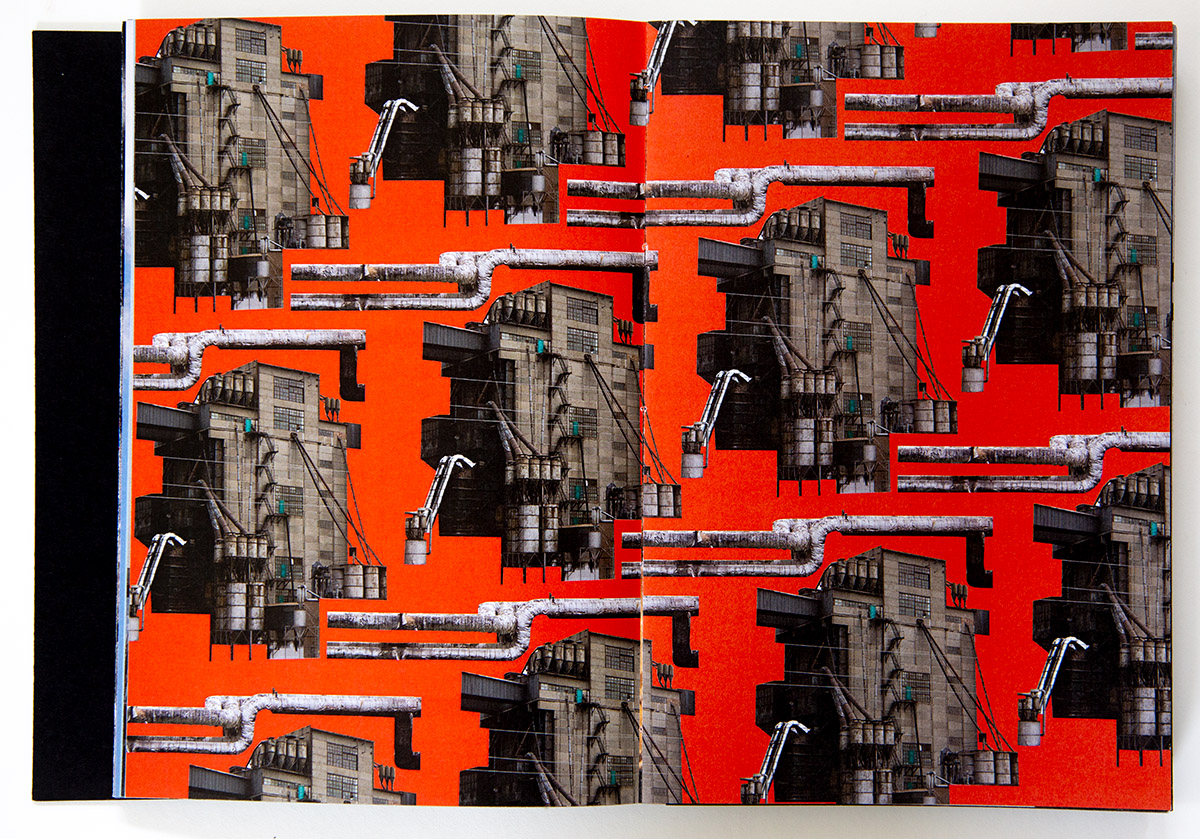
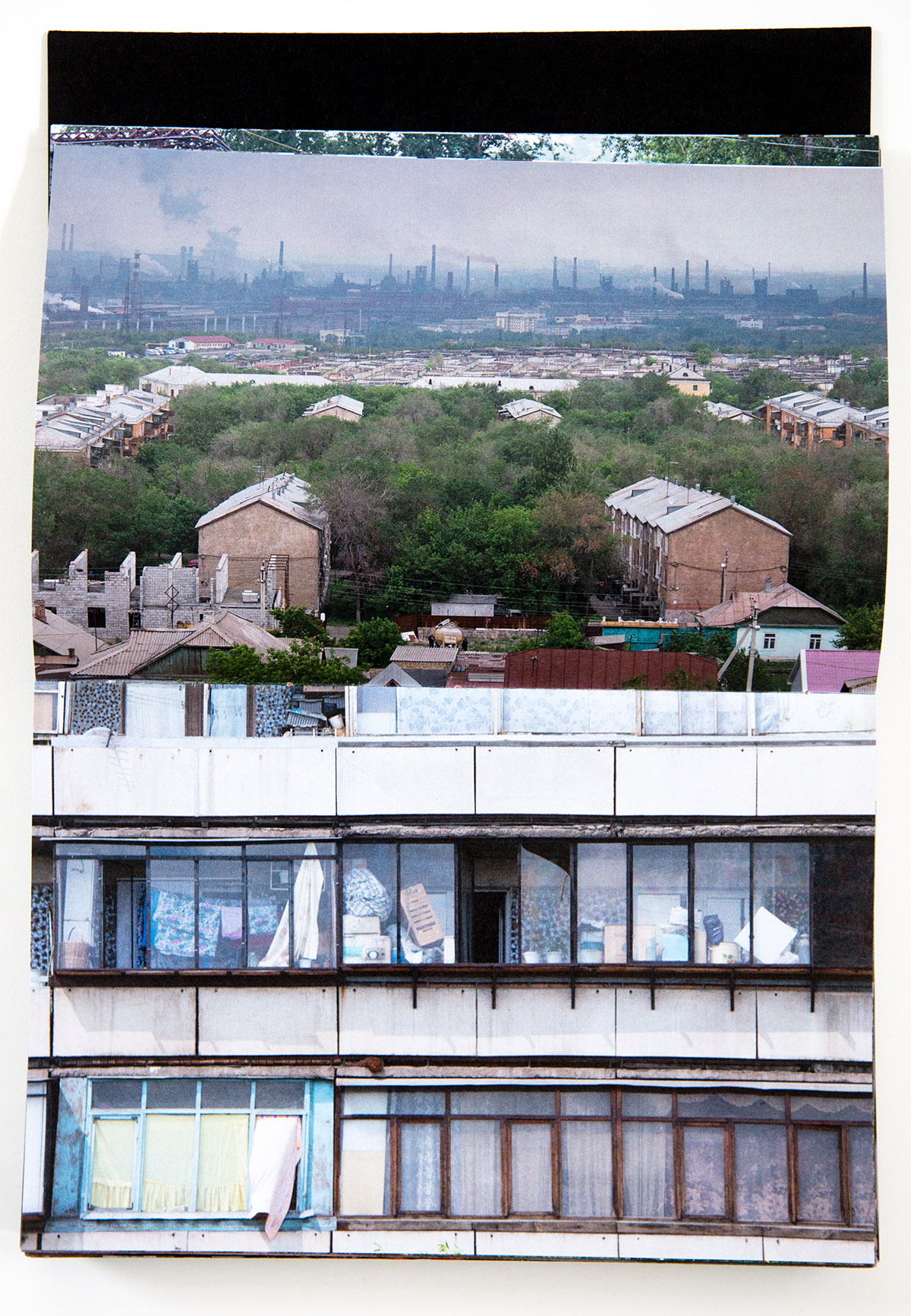
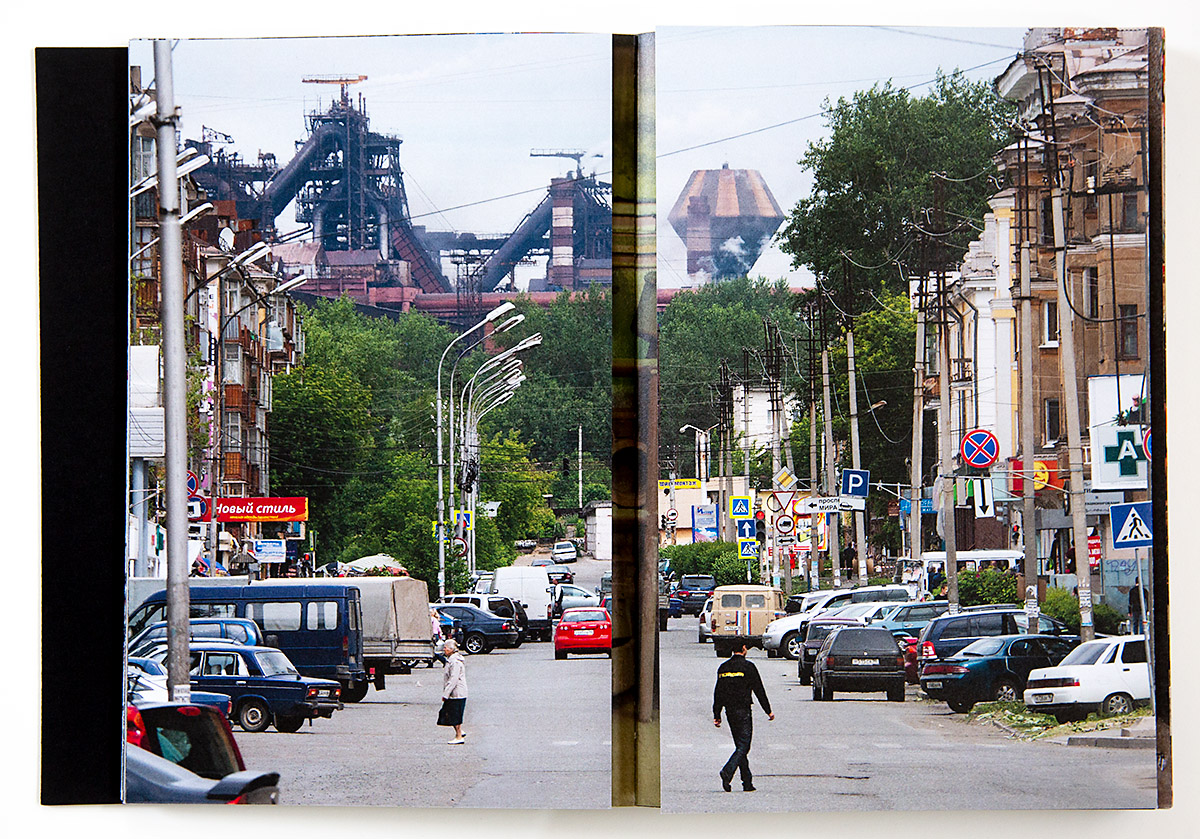
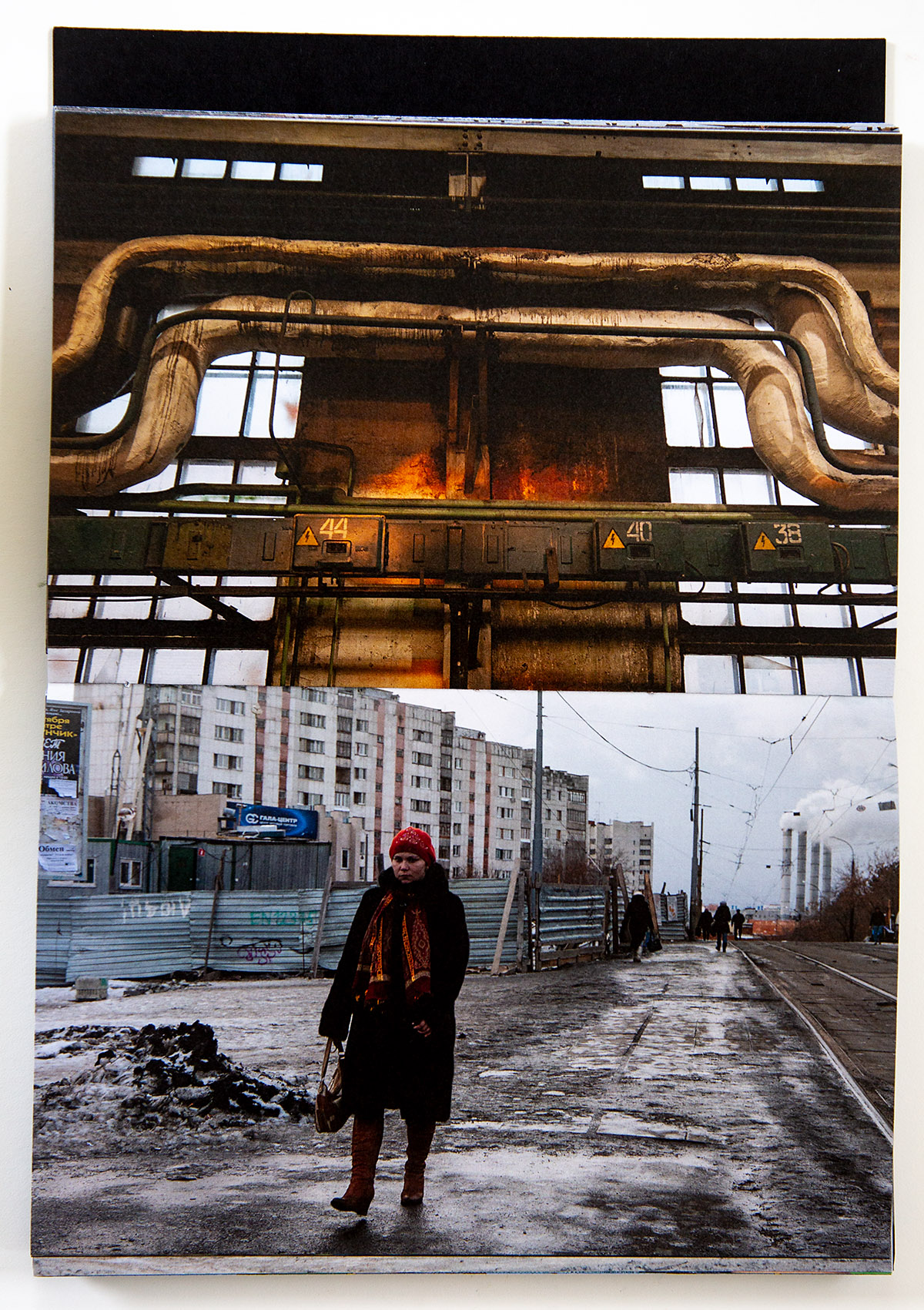
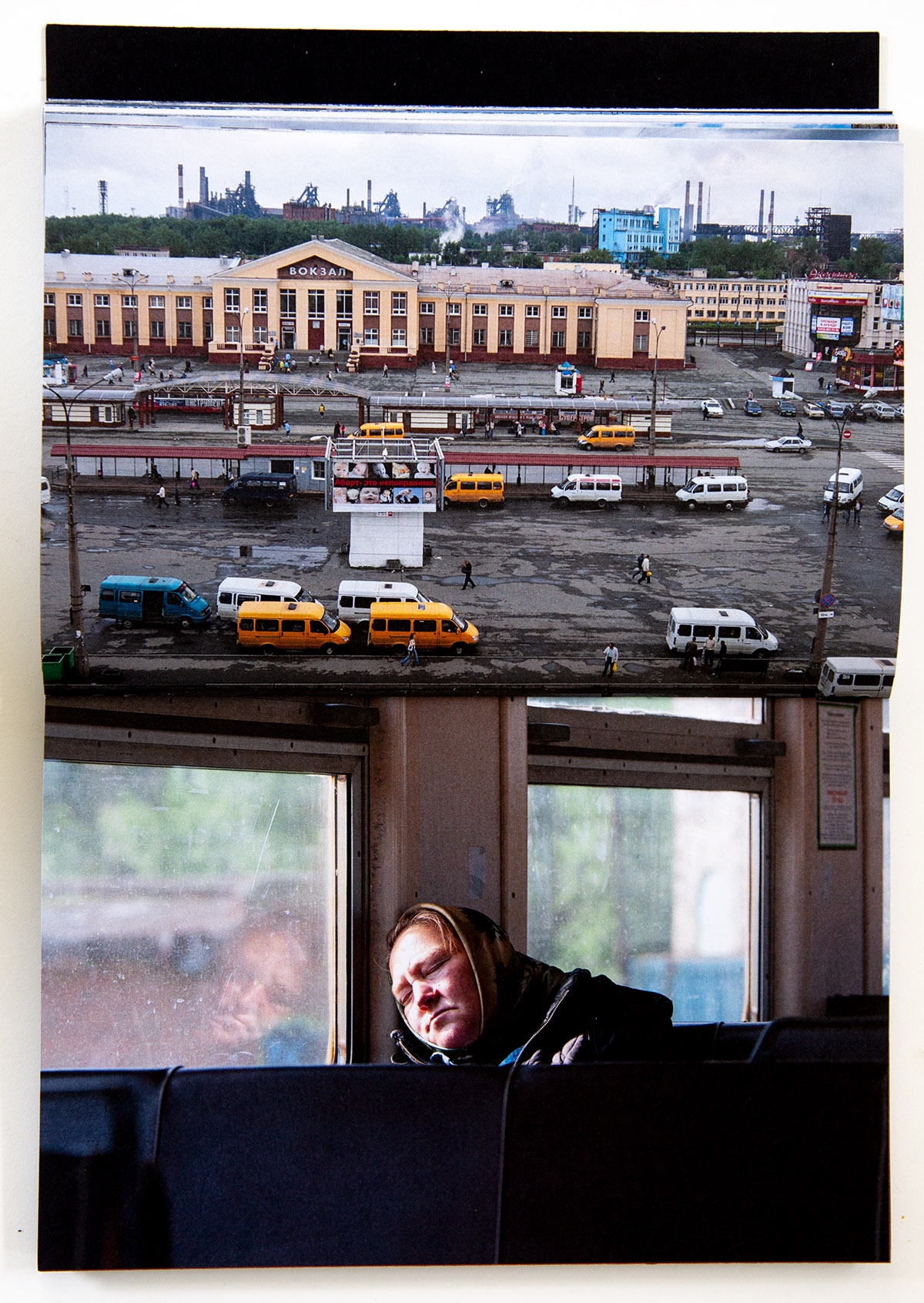
I found this an interesting version of a what might be called a “flip-book” in how the reader is required to continually re-orient the book in order to read it. The page format of this 7-1/4” x 11” book allows it to be illustrated with what appears as full 35mm format photographs; the double gatefolds, both exterior and interior and the “wallpaper” pages are in a traditional horizonal to the spine layout, while the remaining images are stacked at right angles to the spine. The stacked layout allows the two facing pages to read similar to a Chinese scroll, thus the book designers are able to creating some jarring visual juxtapositions.
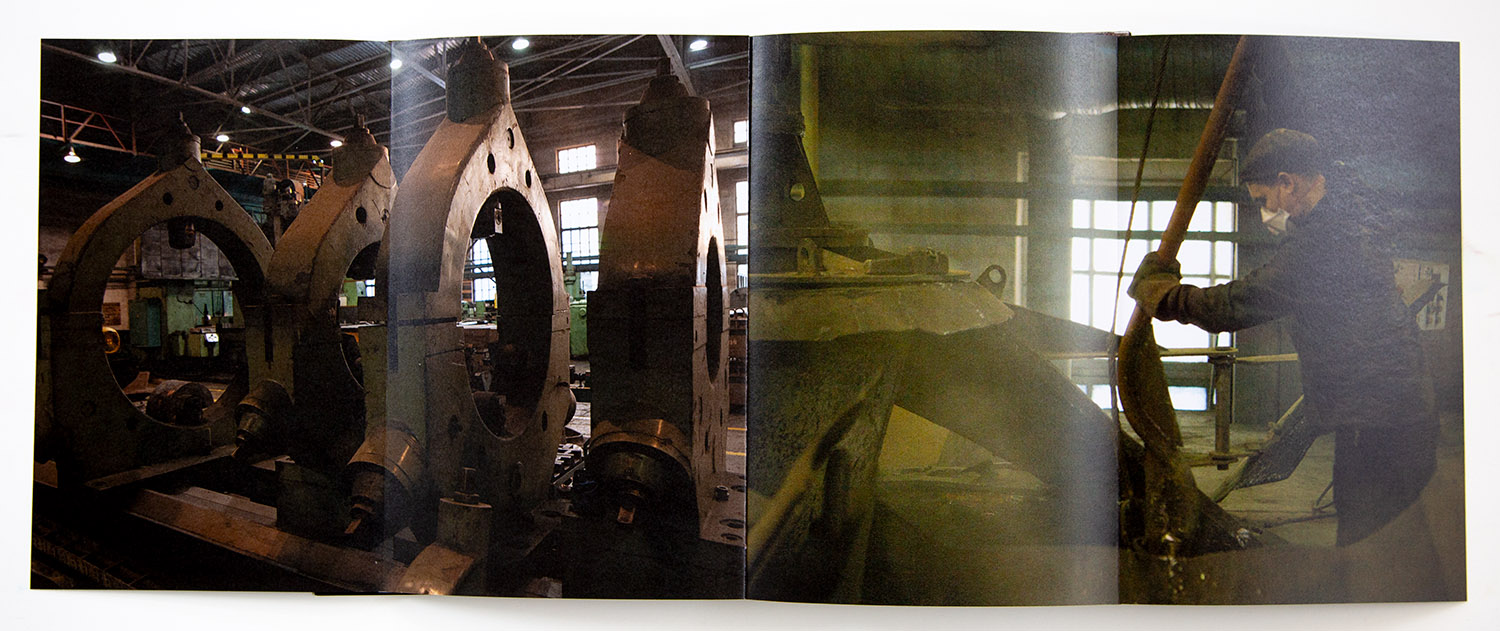
The use of the double gatefolds is brilliant; when the page flaps are closed, you witness a somewhat destressing urban landscape, but when the page flaps open, you are confronted by a deeper troubling dive into what had been concealed. These are beautiful visual metaphors that essentially ask the reader to look beyond the surface as to what could be lurking within the background industrial landscape of mountainous buildings and structures with the towering smokestacks spewing out who knows what.
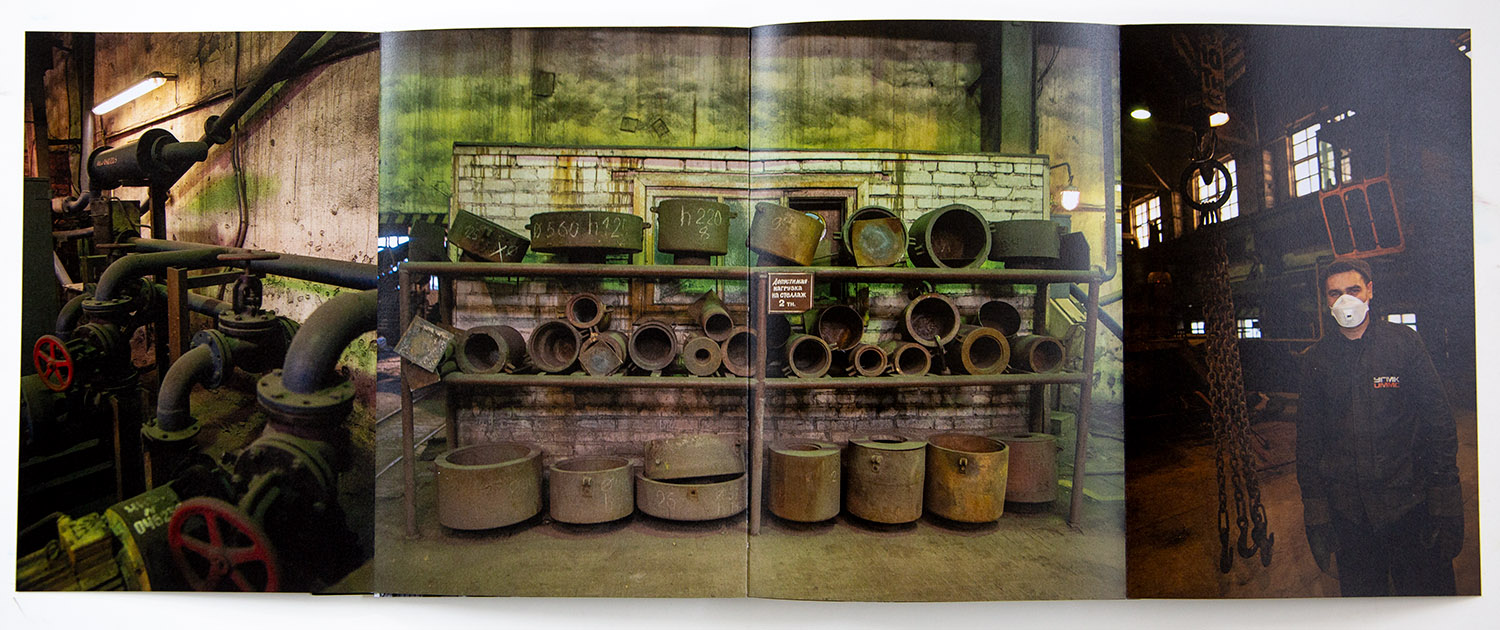
A printed signature can allow a double gate-fold created by the two center sheets, thus the book’s nine signatures allow the inclusion of nine double gatefolds that alters the pace, sequential flow and reading of this artist book. Present within the gate-folds are the unseen Russian workers who inhabit these industrial complexes, providing another layer of social complexity. Gignoux provides working portraits of individuals who are involved in dangerous working conditions as a trade-off to obtain a living income.
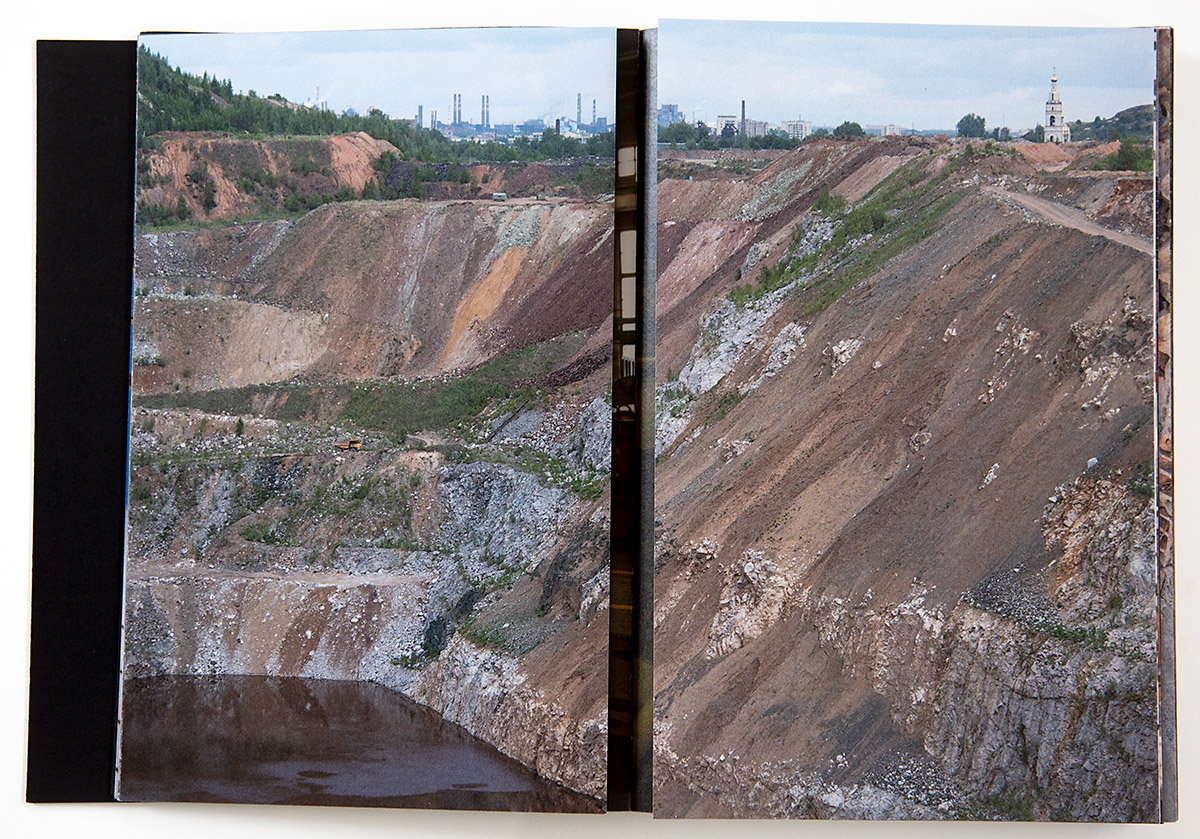
The first gate-fold is fascinating (below); the exterior pages reveal a cavernous hole created by the quest of extractable minerals. A yellow mining truck is working its way up a road on the banks of this mining pit to provide a sense of immense scale. In the background, we can faintly see a huge industrial complex that is probably being fed by this open mine. Nevertheless, perilously close perched on the edge of this huge mining pit sits a church; perhaps a potential savior for those who need to work at this site.
The matte, uncoated paper that the book is printed with provides a visual dullness that resonates with Gignoux’s equally depressing subjects. A social and urban landscape that reflects the combined effects of the long-term failure of Soviet central planning and the dire and immediate economic consequences of the fall of the USSR.
____
Other books by Alan Gignoux reviewed previously on PhotoBook Journal include: Oil Sands and Mountain Tops to Moonscapes.
____
Douglas Stockdale is the Senior Editor and Founder, PhotoBook Journal
____
Russian Rustbelt, Alan Gignoux
Photographer: Alan Gignoux, born Miami, Florida, resides London, England
Self-published artist book: Alan Gignoux, London, England, copyright 2024
Essays: Jenny Christensson
Text: English
Hardcover, Handbound (Stanley James Press), 1 foldout montage, 4 color “wallpaper” pages,Photo Index, 182 color photos, printed by One Digital, Brighton, UK, Edition of 100, ISBN: 978-1-9999610-6-0
Editing: Jenny Christensson, Chloe Juno
Typography: Anthony Burrill
Titles typeface: From the collection of Partisan Press, Moscow
Editor: Alison Bracker
Photobook Designer: Emily Maculay, Stanley James Press & Chloe Juno, Jenny Christensson
____
___

____
____
____
____
____
____
____
____
____

—-
Articles and photographs published in the PhotoBook Journal may not be reproduced without the permission of the PhotoBook Journal staff and the photographer(s). All images, texts, and designs are copyright of the authors and publishers.
 PhotoBook Journal
Leave a comment