Review by Melanie Chapman •
As the old saying goes, “Home is where your heart is.” Epic poems and countless songs have been written on the topic; missing home, coming home, longing for home… “I’ll Be Home for Christmas”, “Home on the Range”, “There’s No Place like Home”… but what if you have no home? What if home was a place of suffering and heartbreak, if your sense of home was not safe, or secure, or was constantly changing? What if you could no longer afford the place that had once been your home? What if you hadn’t had a place to call home in so long you forgot what that even felt like? What does that do to a person’s spirits, or a family’s ability to stay together? Is being without a home equivalent to being without hope?
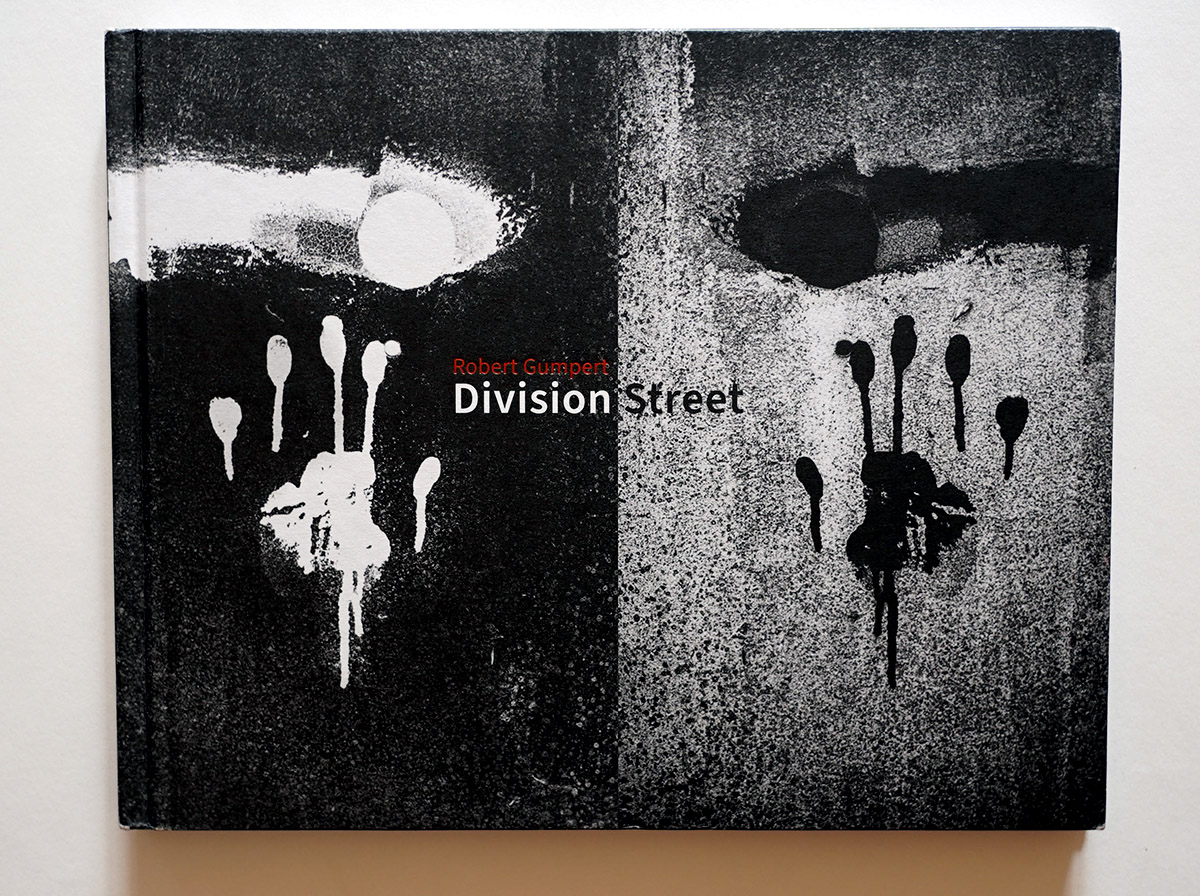
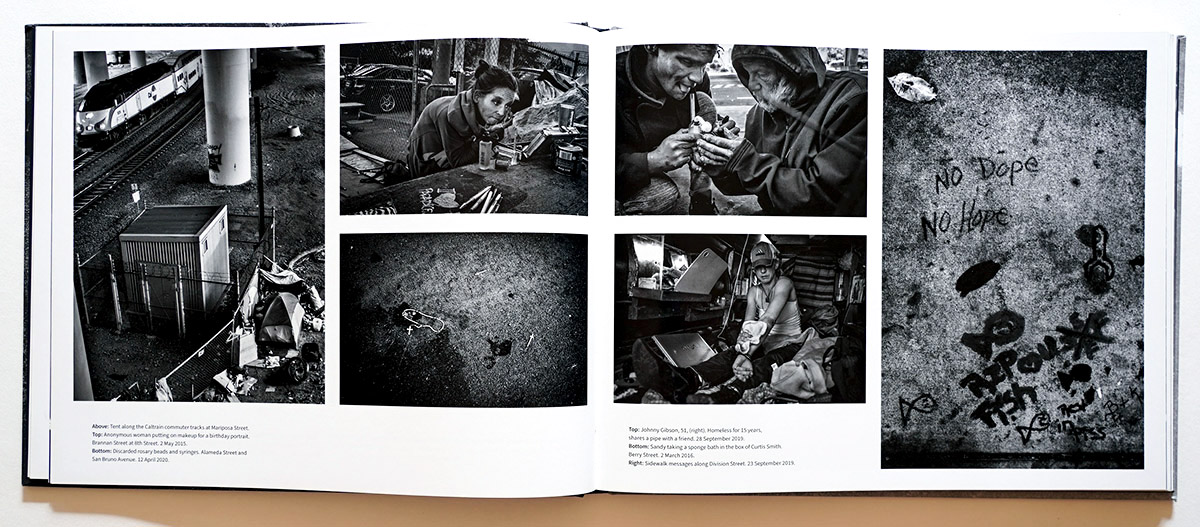
These are some of the deep and urgent questions that one faces when spending time with the portraits and documentary photographs in Robert Gumpert’s book Division Street. Spanning more than seven years, Gumpert’s compassionate work in some of the more desperate areas of San Francisco shed light on a growing yet somehow “unseen” segment of the population; those who cannot afford a proper roof over their heads or a safe place to sleep at night. Two months, eight years, 18 years, 34 years…these are but a few of the answers to the question of how long these people have been unhoused. Gumpert’s photographs reveal the toll these conditions have taken on the lives of society’s most vulnerable. Addiction, abuse, eviction, the reasons why are as varied as the ages and complexions of those he documents.
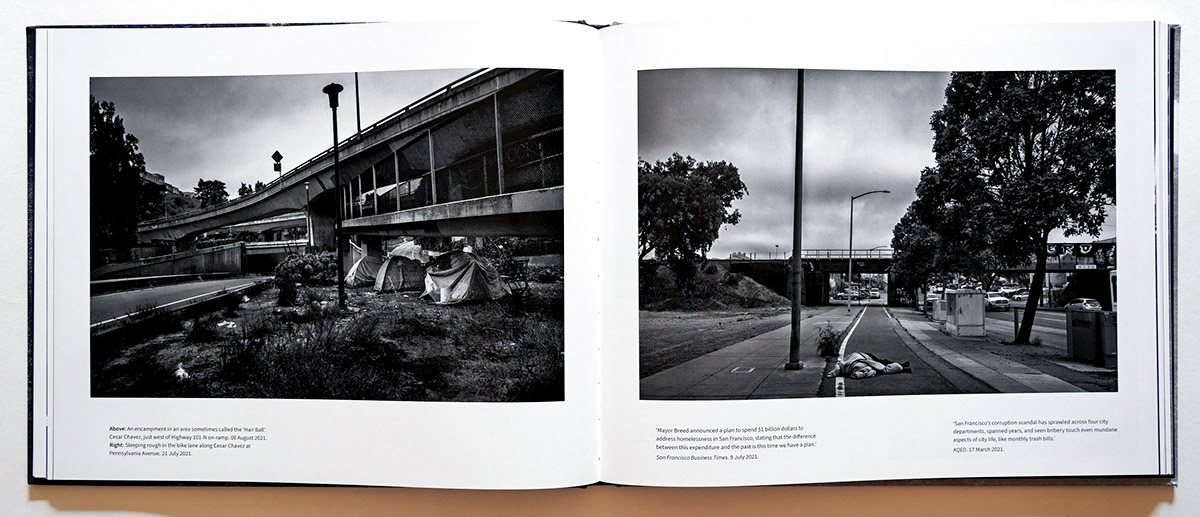
As a documentarian as well as a visual artist, Gumpert ensures that Division Street succeeds in telling a story with the inclusion of a practice that is standard in movie making: the Wide shot, then Medium, then the Close up. Gumpert revisited the changing landscape of Northern California’s Bay area as a means of illustrating how development with a big D constricts the options for those seeking shelter, be it in the form of affordable housing or a safe place to put up a tarp or tent. Cars and commuters glide past human figures wrapped in blankets asleep on the cold hard ground, treated like the trash that surrounds them. Cardboard shacks are erected in the shadows of high-rise condo towers that even folks with steady jobs are unlikely to afford.
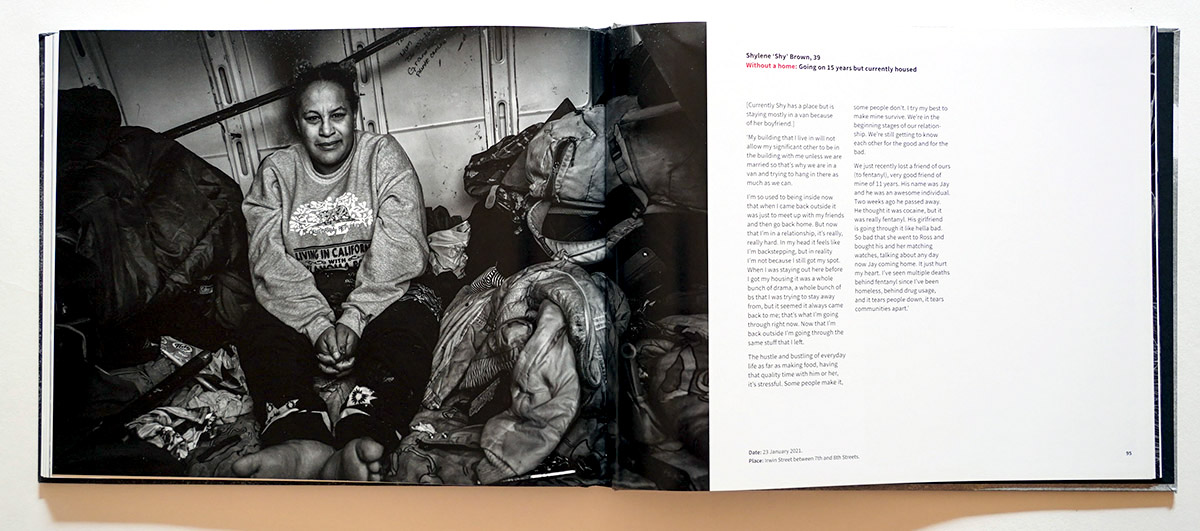
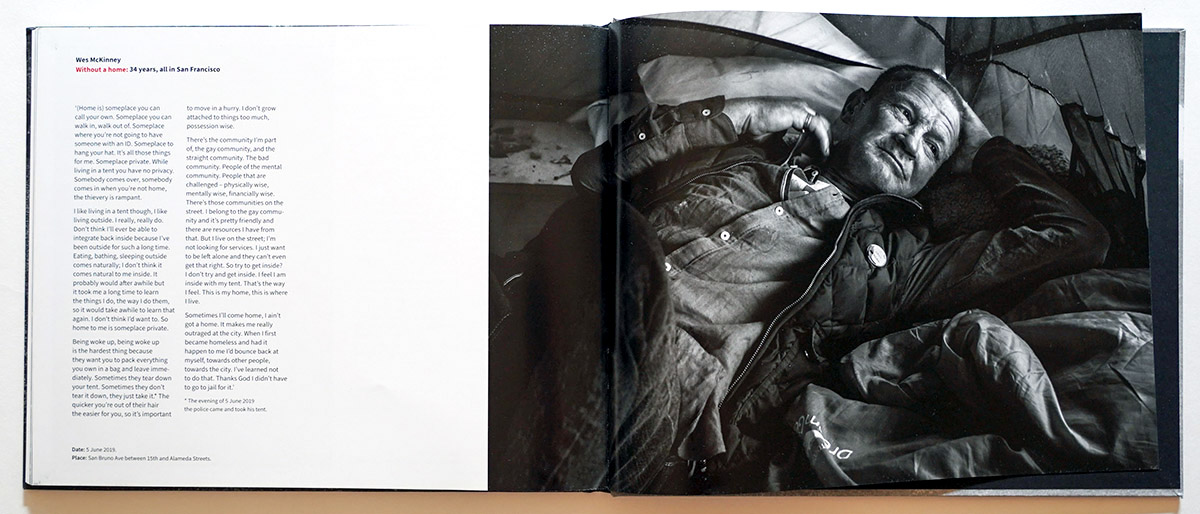
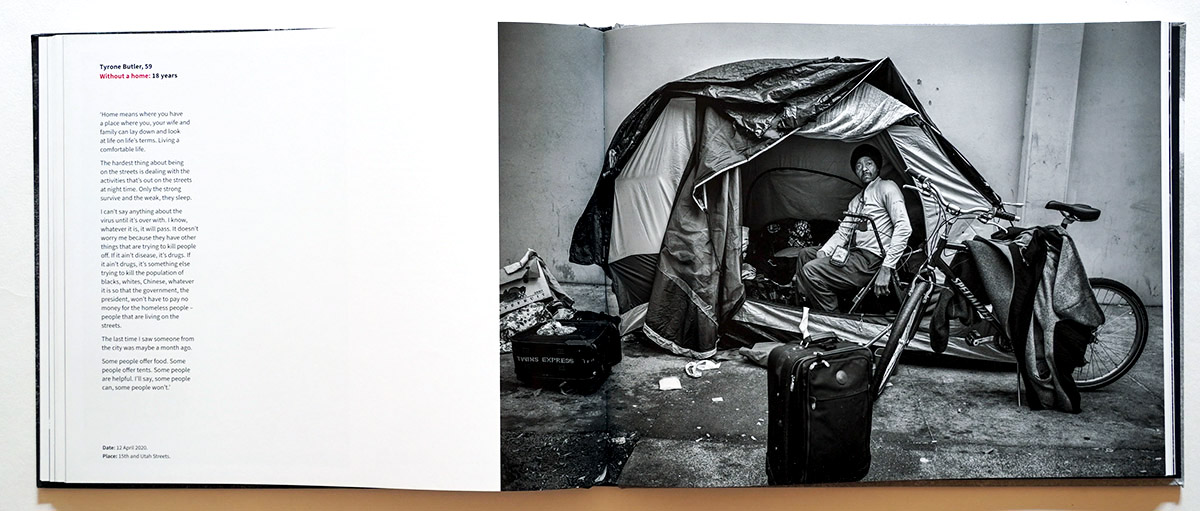
What sets Division Street apart from countless other projects that seem to look AT the problem, is Gumpert’s remarkable access to share these conditions close up, from WITHIN. The heartbreaking environmental portraits made inside improvised dwellings evoke the best work of Dorothea Lange and other FSA photographers who created indelible images from America’s last great depression. Sleeping bags, pillows, electricity, the means by which to cook whatever food may be available, spare clothes, cleaning products…all precious luxuries when you are living on the streets.
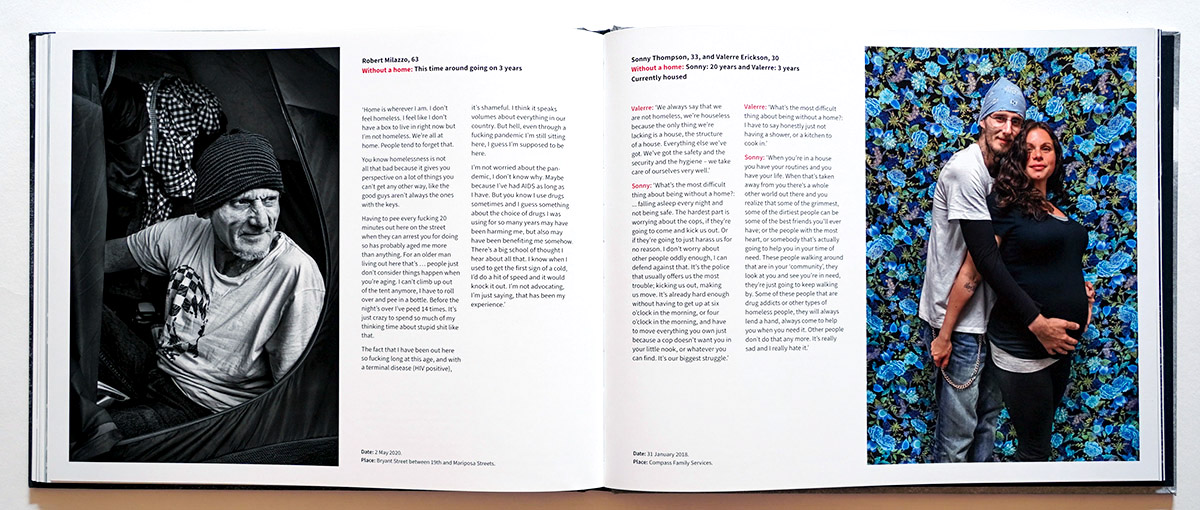
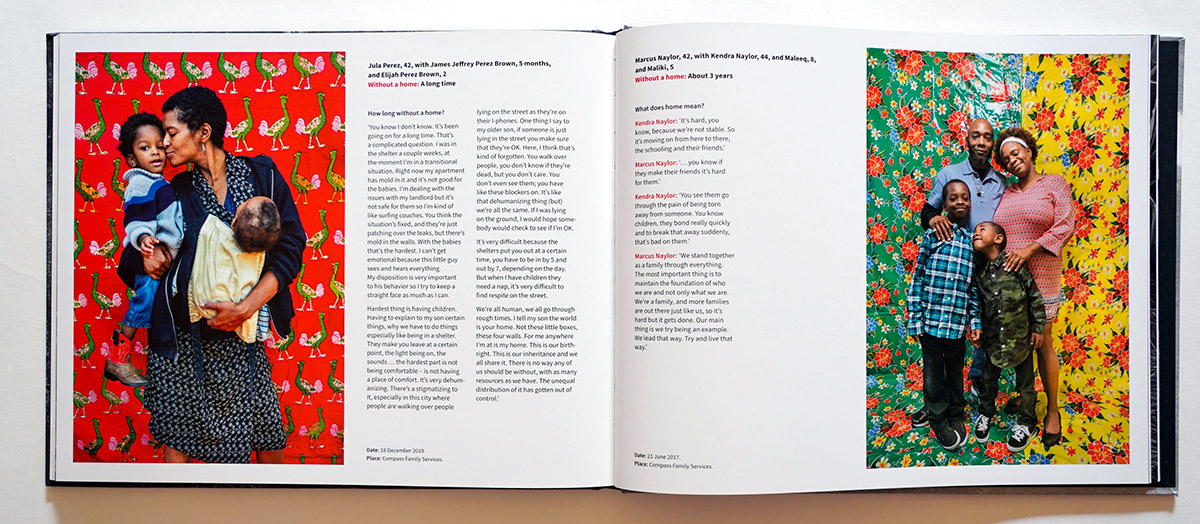
To be invited into such personal spaces and allowed to make a record of what one hopes is the lowest point in someone’s life, that requires not just a commitment of time, but a deeply researched understanding of this malignant problem and profound respect for the growing population of those struggling to endure. The posed portraits made in front of colorful flower print backdrops elevate participants beyond their stark conditions and offer instead more hopeful representations worthy of hanging on their walls, someday, if and when they have any.
The images in Division Street are powerful and yet respectful and stand on their own as important witness to a slice of the decline of the American economy and her increasingly unobtainable “dream.” However, the gut punch of the realities they face on the daily are made even more significant with the accompanying text, drawn from interviews Gumpert conducted when making these heart wrenching photographs. These folks are the canaries in the coal mine of capitalism, and their suffering, suffocation, and eradication is something we should all pay closer attention to, rather than avoid or ignore.
Come without judgement, bring instead compassion. There but for the grace of God go we, go I.
___
Melanie Chapman is a Contributing Editor and a Southern California photographer.
____
Division Street, Robert Gumpert
Photography: Robert Gumpert (resides in San Francisco, CA)
Text: English, text by subjects of the images, found Graffiti, and others Interviewed
Published by Dewi Lewis Publishing, copyright 2022
Hard bound cover, stitched binding, 111 pages, 111 color, and black and white photographs, Print by EBS, Verona Italy, ISBN: 978-1-911306-82-5
Book Design by Robert Gumpert and Dewi Lewis
____


Articles and photographs published in the PhotoBook Journal may not be reproduced without the permission of the PhotoBook Journal staff and the photographer(s). All images, texts, and designs are copyright of the authors and publishers.
 PhotoBook Journal
Leave a comment