Review by Paul Anderson ·
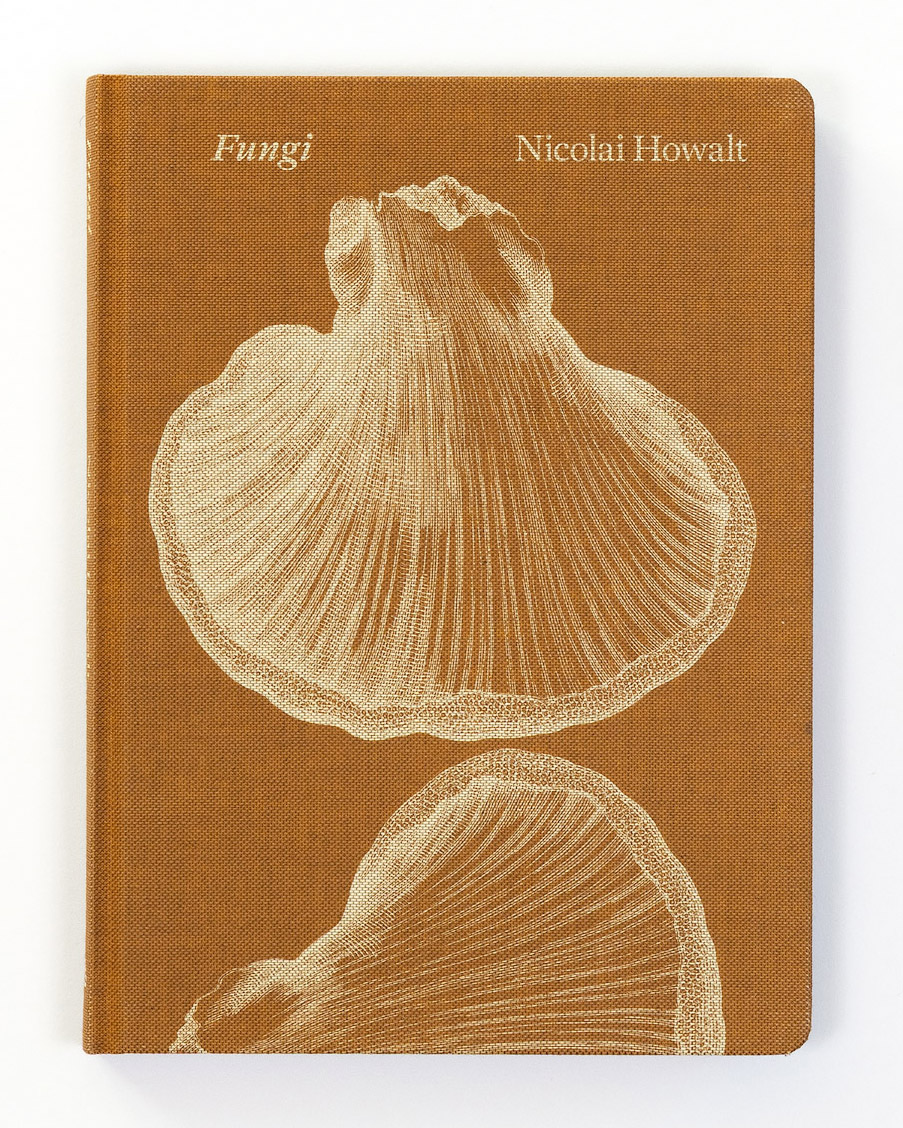
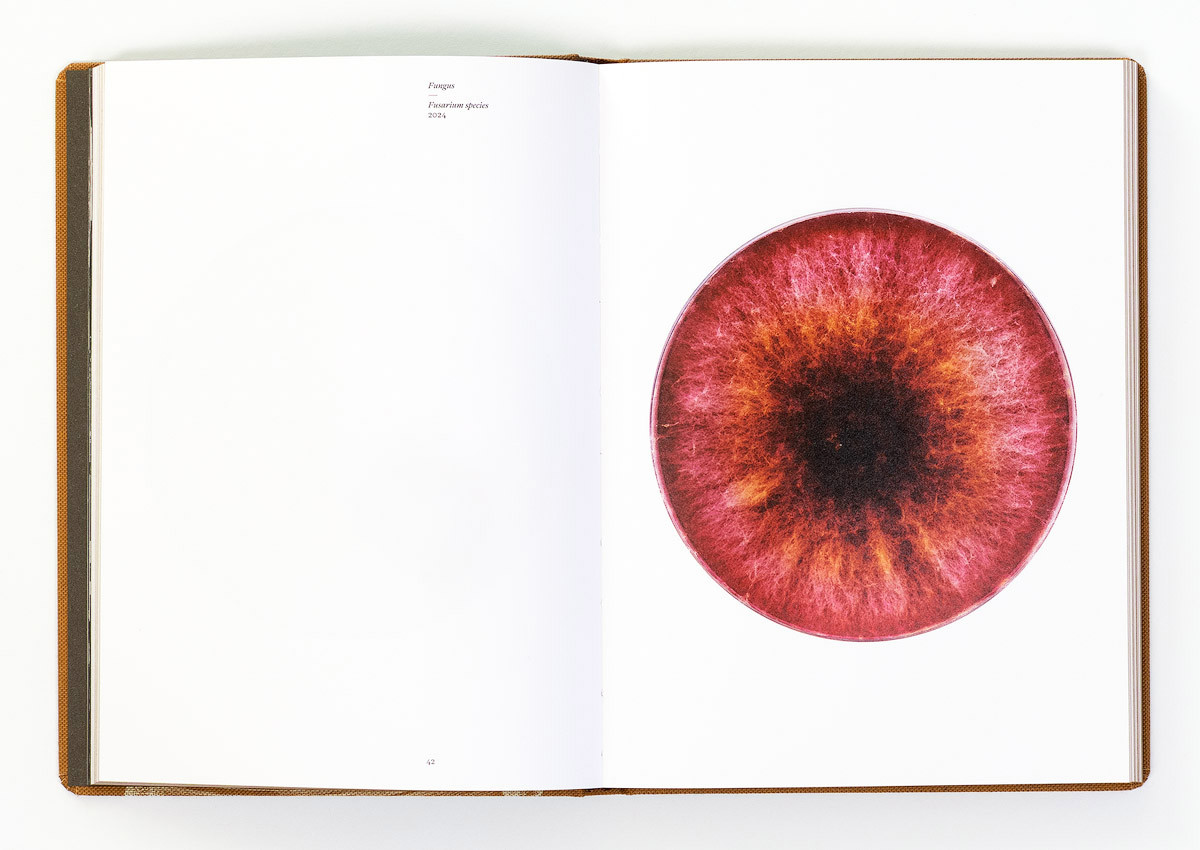
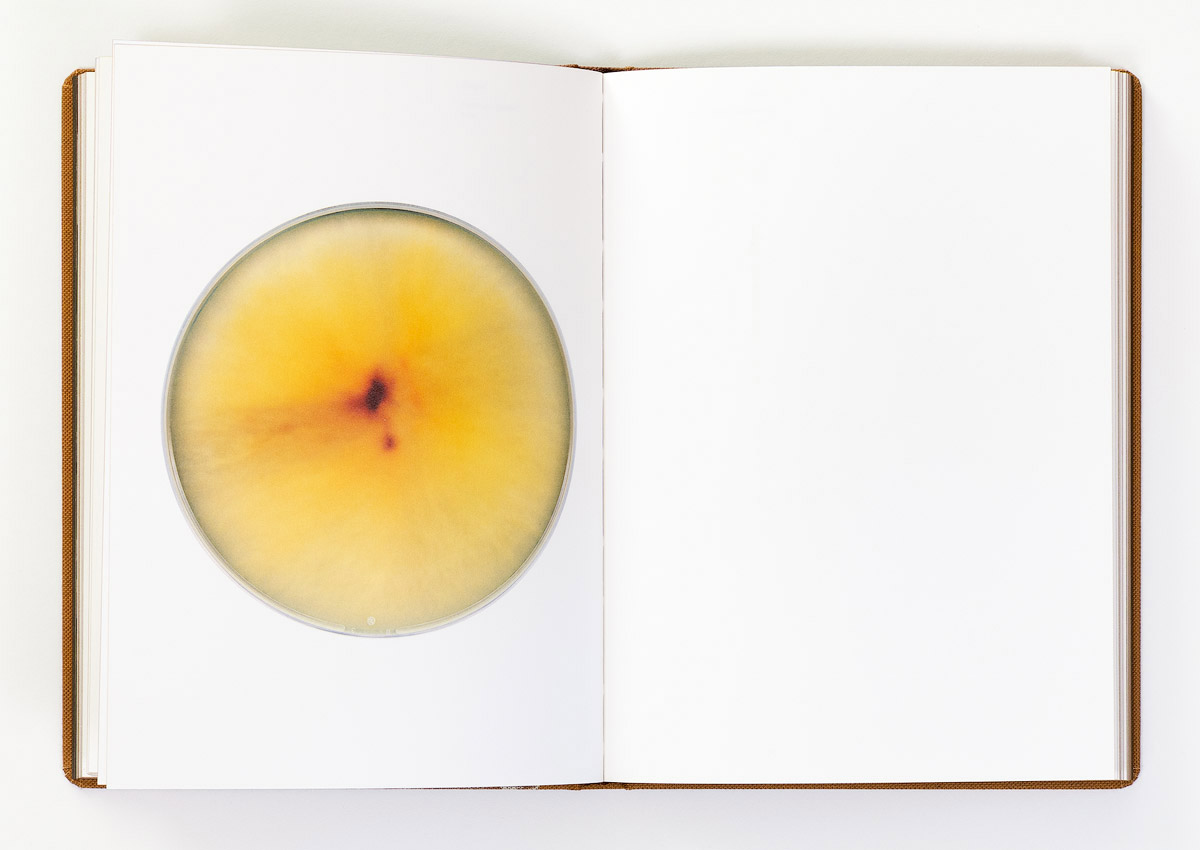
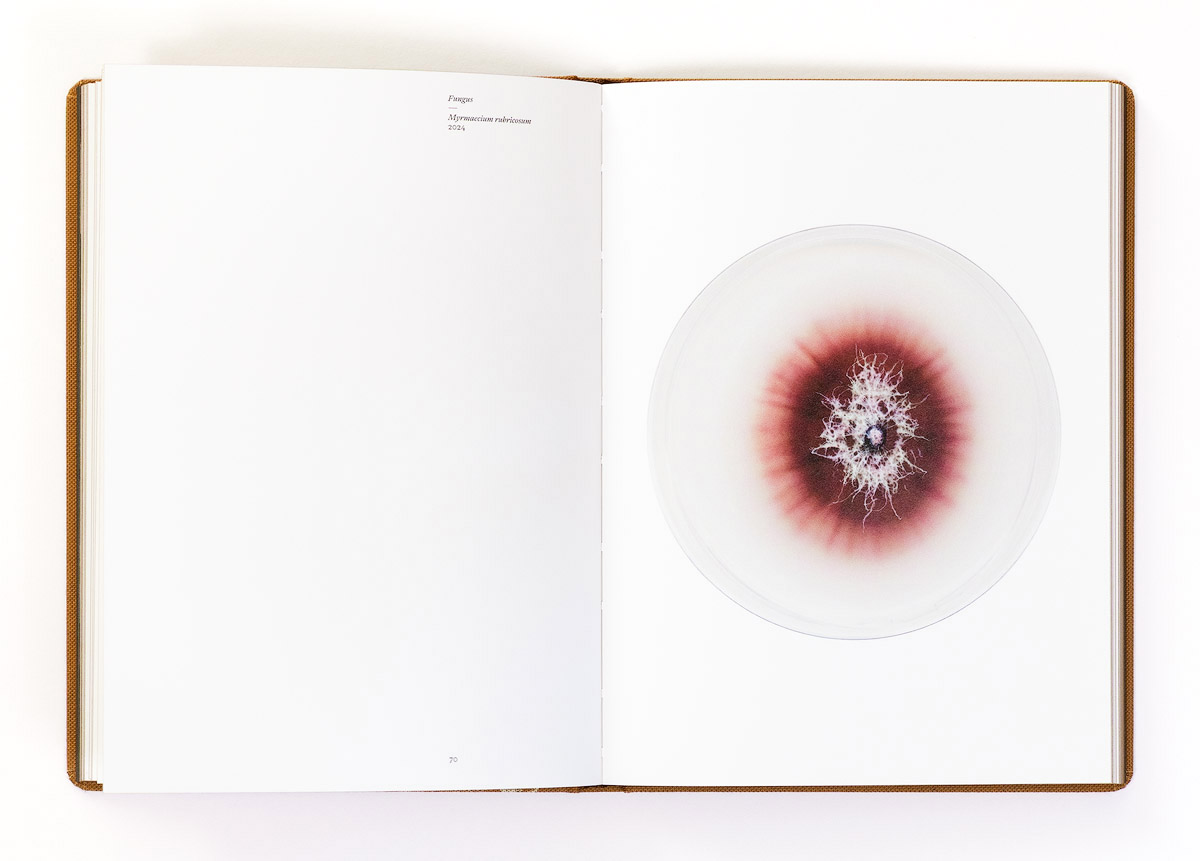
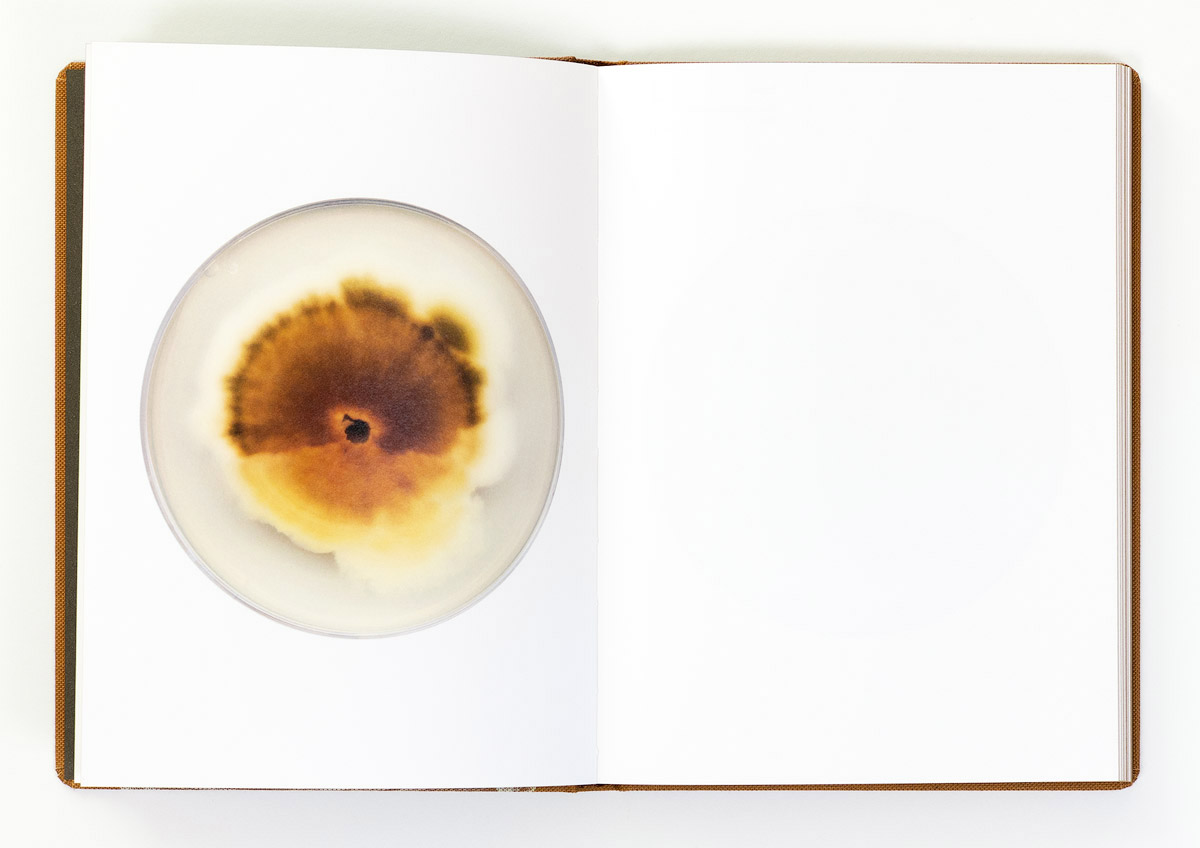
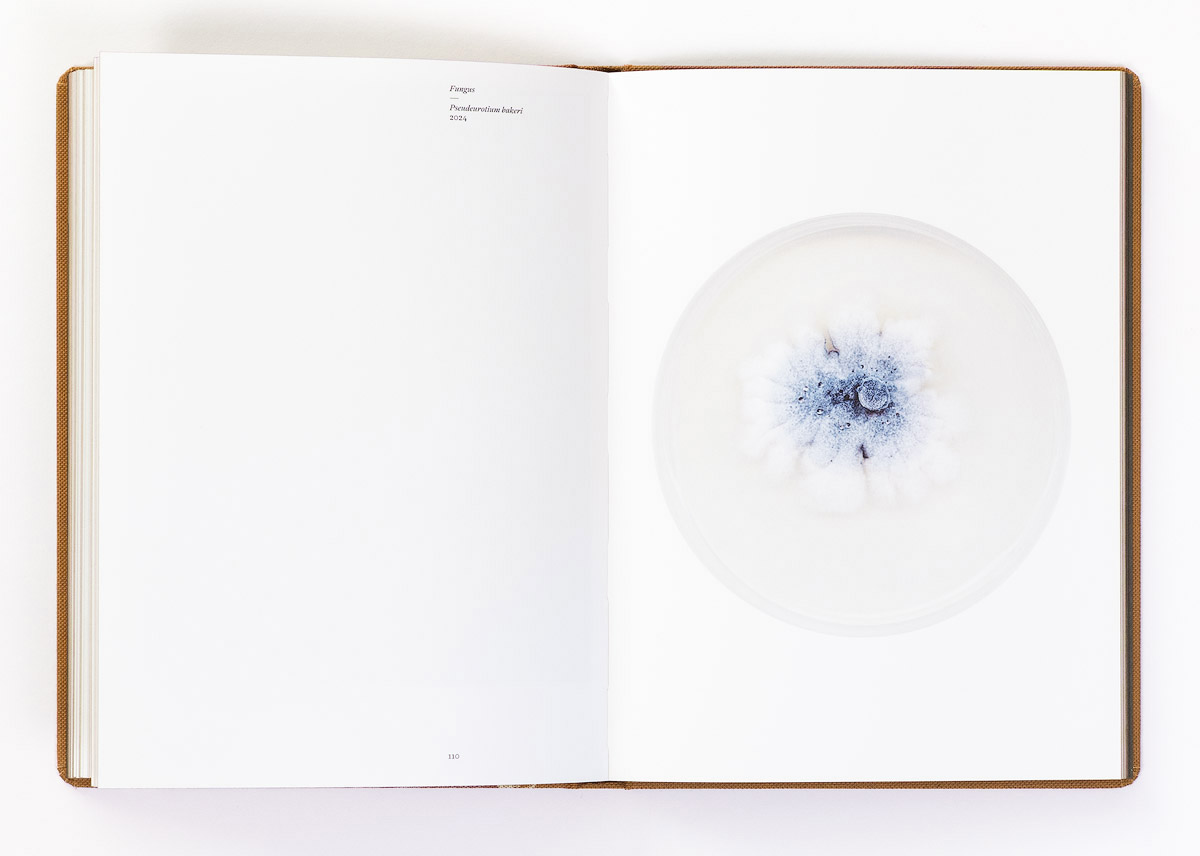
In his photobook Fungi, Nicolai Howalt reveals the vivid, otherworldly beauty of fungal mycelium — an organism most of us never actually see. As surface dwellers we primarily encounter fungi as mushrooms, which are the fruiting bodies of fungi. Howalt, however, photographs mycelium, which is normally found below the fruiting body in soil, wood, or other substrates. Mycelium has a cobweb-like structure, and its threads are called hyphae. Howalt grew fungal cultures in Petri dishes and on other substrates so they could be photographed. In this setting they look like sublime organic explosions radiating out from a fungal core. They can appear as cloud formations in glowing colors, like poached eggs with brilliant yellows and oranges, or like aerial views of Mt. Fuji in subtle blues and whites.
Fungi as a life form are both robust and ubiquitous. They play an important biological role on Earth, specifically in the recycling of organic materials. To quote Howalt from the book’s preface: “In truth, fungi are everywhere, surrounding us, but almost always beyond the reach of our senses.” Howalt has brought a beautiful representation of them to us in this book.
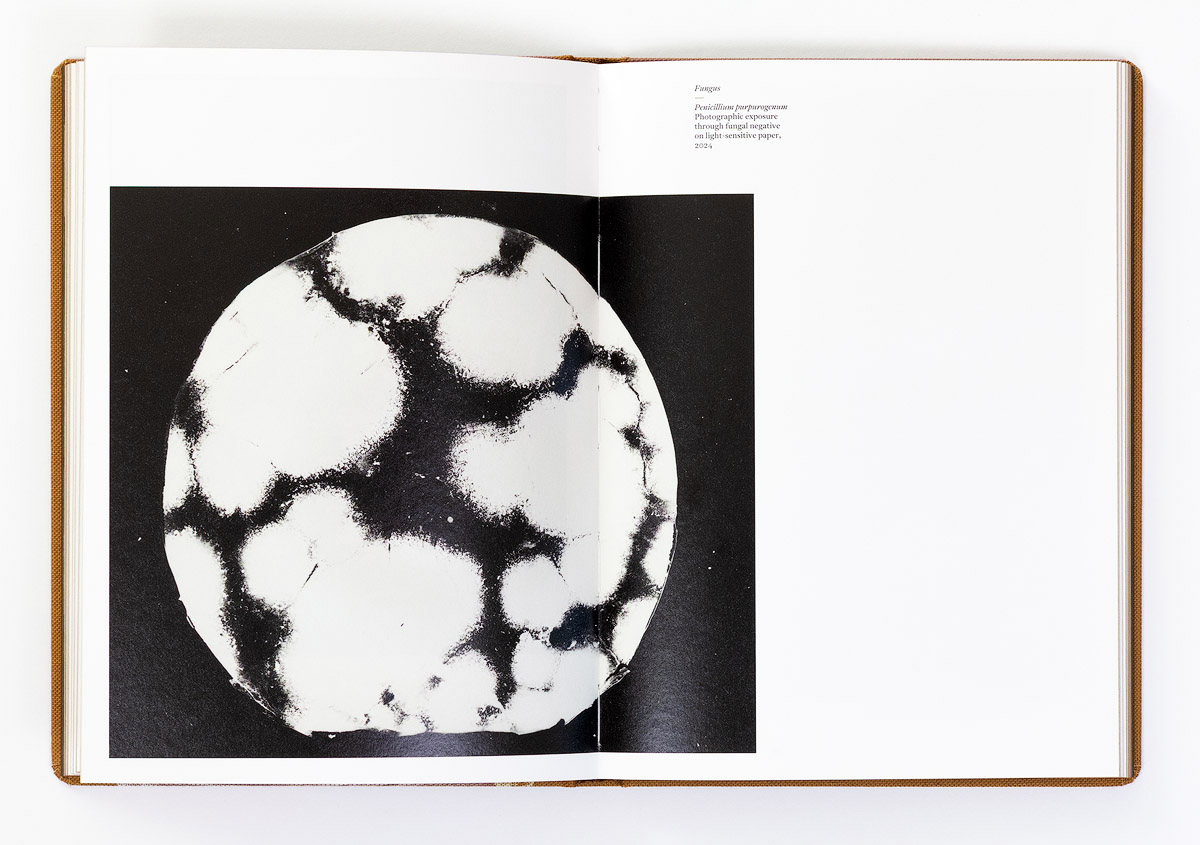
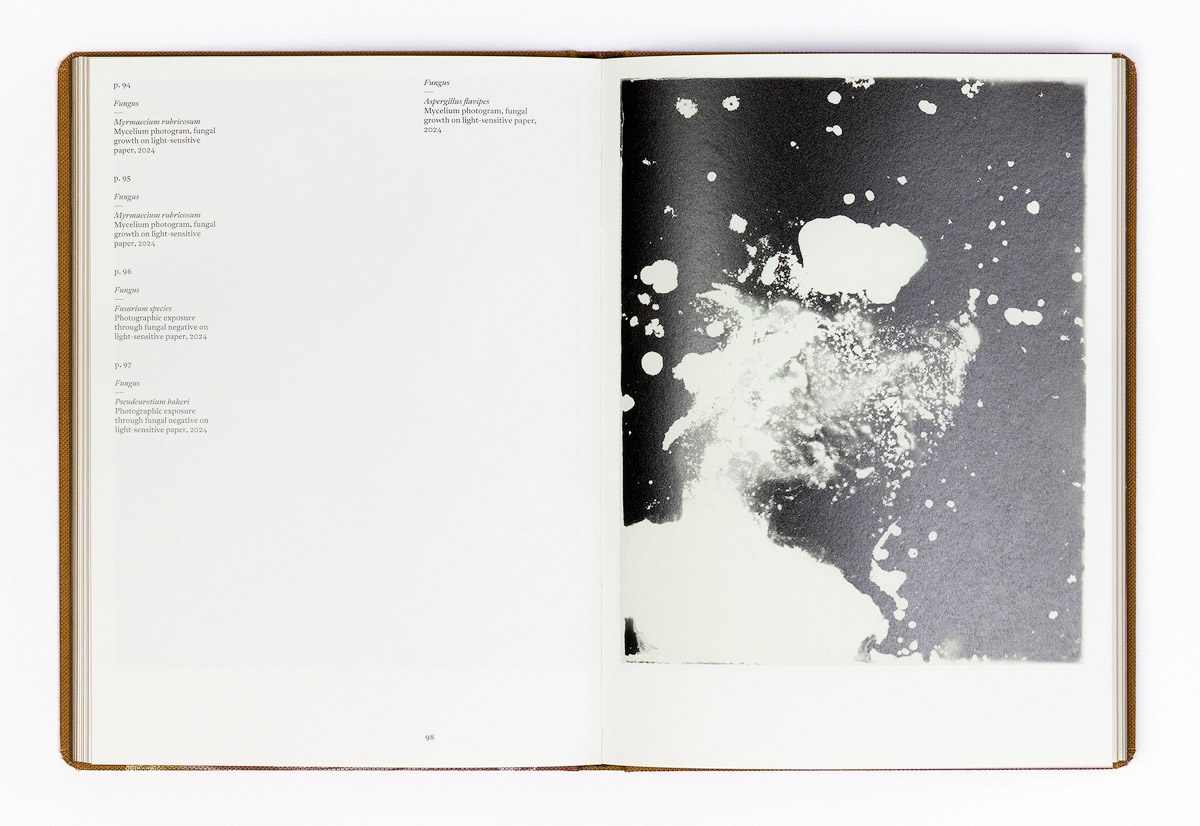
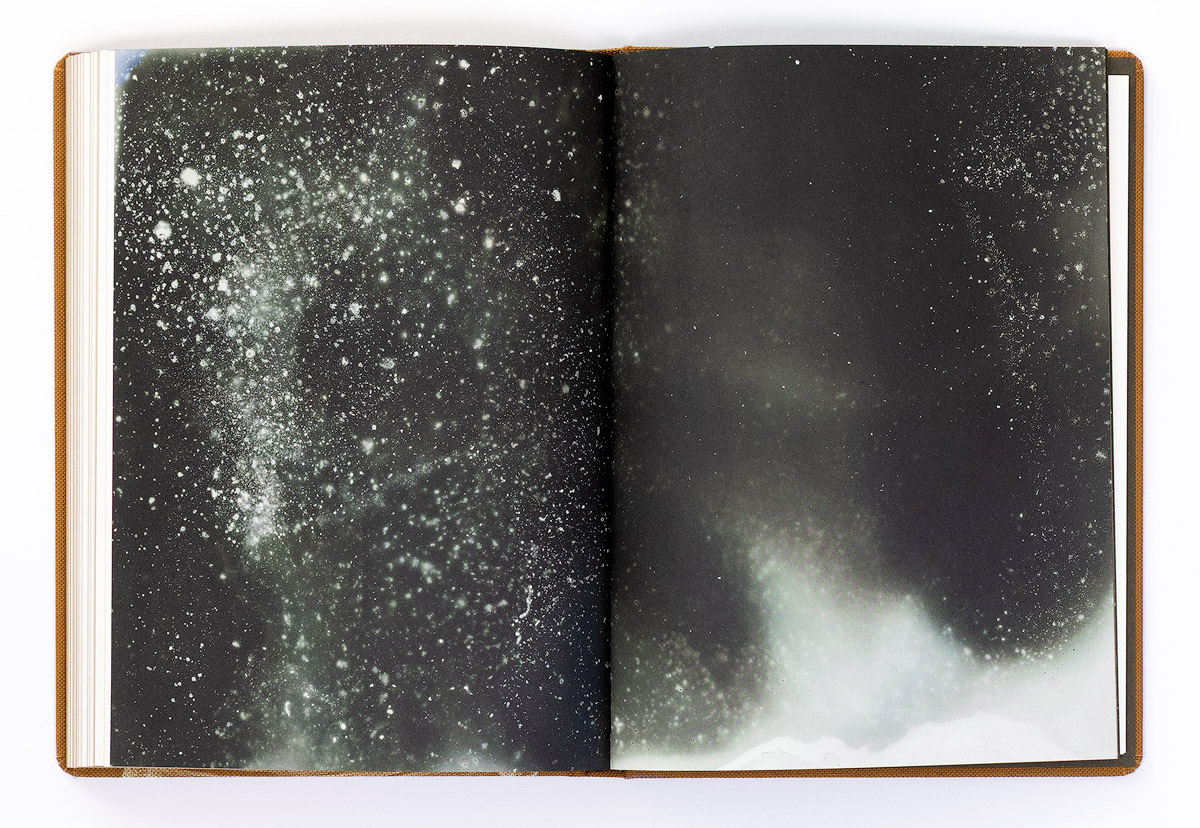
The mycelium is a root-like structure that absorbs nutrients from its environment to live and grow. Howalt developed three different processes to photograph mycelium, evolving each through significant trial and error. In one process, he cultivated a variety of species in Petri dishes in his studio, photographing and scanning the mycelium to reveal their colors, forms and textures. In another, he grew them in thin, translucent layers and used these as traditional negatives in the darkroom, exposing light-sensitive paper through them to produce analogue photographs. In a third, he cultivated fungi directly on photographic paper inside light-sealed boxes, allowing their mycelium to feed on the gelatin surface of the paper. The traces became visible when the paper was exposed and developed in the darkroom, resulting in a photogram.
The fungi play a large role in the final result, and the author is quick to give them credit. In Howalt’s words, “These works are, in essence, collaborations. The fungi dictate the forms, the rhythms, the outcome. I can guide the process but never fully control it. In this sense, the images become a dialogue between human intention and non-human agency. They are traces of life lived briefly on paper, delicate imprints of growth and decay, presence and disappearance.”
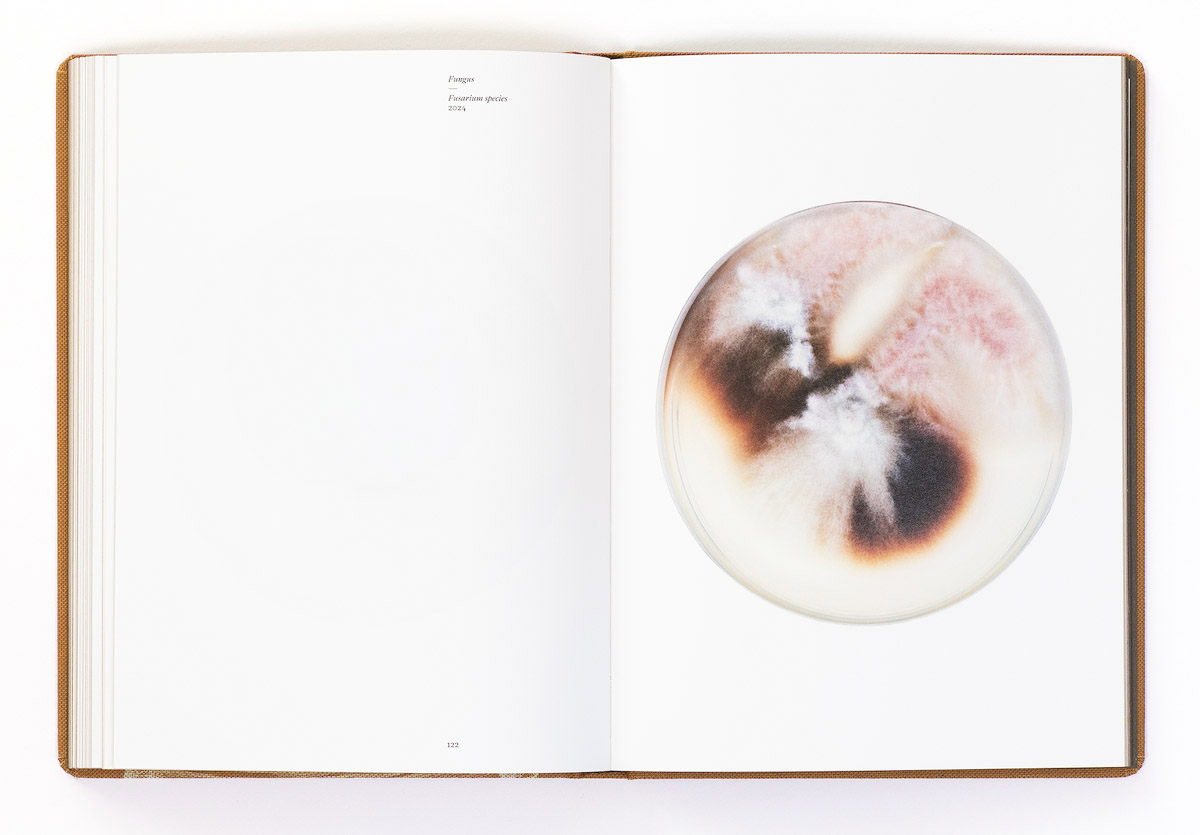
The fungi-in-Petri-dish photographs are simply sublime, especially in print form. The various species of fungi show off their individual growth patterns with velvety vibrant colors that are showcased by the high quality of these printed pages. The laws of physics and chemistry combine with inherent biological processes and an uneven distribution of growth medium to create these forms. The patterns are caused by diffusion-limited aggregation, which provides fractal-like shapes. These photographs all have motion in the sense that you see the fungus reach out from its implantation point into the medium, seeking food – a direct visualization of growth.
It is interesting to note that these color photographs bear a strong resemblance to floral photography. Both disciplines center on organic shapes, incorporate vivid color palettes, and exhibit intricate detail.
The book includes 19 color photograph pairs, each showing a Petri dish of fungal growth photographed from above and then from below. In a clever use of page layout, the top view appears on a right-hand page; turning it over reveals the bottom view, as though you were turning the Petri dish itself. The colors can change dramatically from above to below.
Aside from the Petri dish color photographs, the fungal negatives and the photograms highlight the shapes this life form can realize. Shape becomes the dominant aesthetic element, and these highly abstracted forms show biological inventiveness at its best.
The written contributions to the book are engaging as well. The photographer wrote the foreword, and it succinctly describes his interest in fungi and the three techniques used to make the images. There is an informative essay describing the nature of fungi, their great abundance, and their biological role. Last but not least, there is a cheeky little piece of prose about mushroom hunting that is thoroughly delightful.
This book will be of interest to those who enjoy studies of biological forms, abstract images, and floral photography.
Reviews of other books by this same author: A Journey: The Near Future by Nicolai Howalt
__________
Paul Anderson is a photographer/digital artist, working in Hermosa Beach, CA
__________
Nicolai Howalt – Fungi
Author: Nicolai Howalt (born in Copenhagen, where he currently resides.)
Publisher: Fabrikbooks, Copenhagen, Denmark, 2025
Design: Rasmus Koch Studio
Printing: Narayana Press, Denmark
Texts: Nicolai Howalt, Henning Knudsen, Morten Søndergaard
Language:
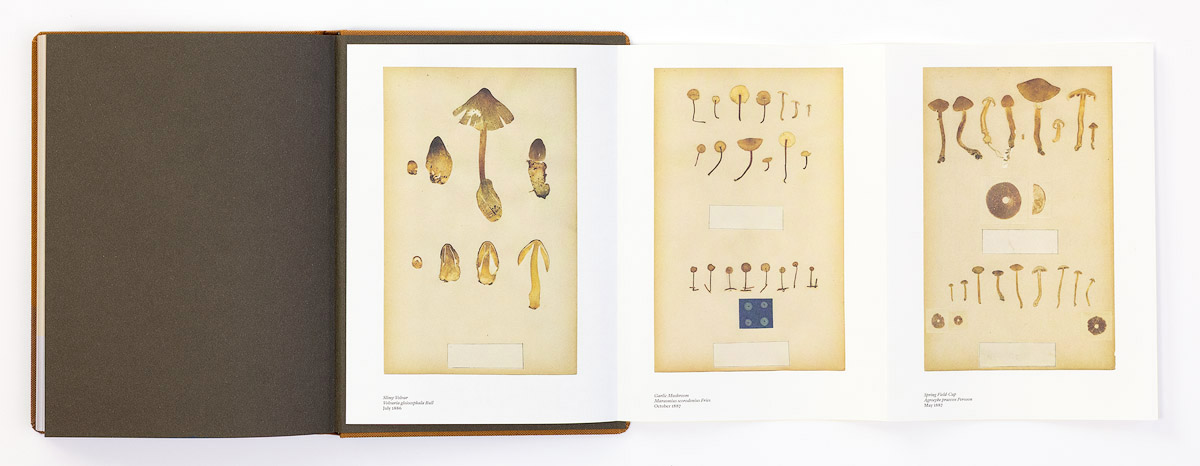
16.5 x 22.5 cm, 160 pages, 84 plates, Leporello with 5 plates, fabric hardcover, rounded corners, colored edge
__________
Articles and photographs published in the PhotoBook Journal may not be reproduced without the permission of the PhotoBook Journal staff and the photographer(s). All images, texts, and designs are under copyright by the authors and publishers.
 PhotoBook Journal
Leave a comment