Review by Matt Schneider ·
“My roots in the South extend from Alabama to Kentucky, including Virginia, the Carolinas, Tennessee. When I go back and set foot on the ground where my ancestors lived, whether it’s in Tennessee or at a family reunion in Warrenton, North Carolina, I am connecting with the power of my past. It’s a way of paying homage and saying that I see you to my people. Their life was not in vain. It is appreciated. And because of my ancestors’ selflessness, the community they created here in the South is where I feel at home. The church. Family homes. Agricultural lands. Cemeteries. Our history, Black history, is still here in the land.” – Frederick Murphy, p. 102.
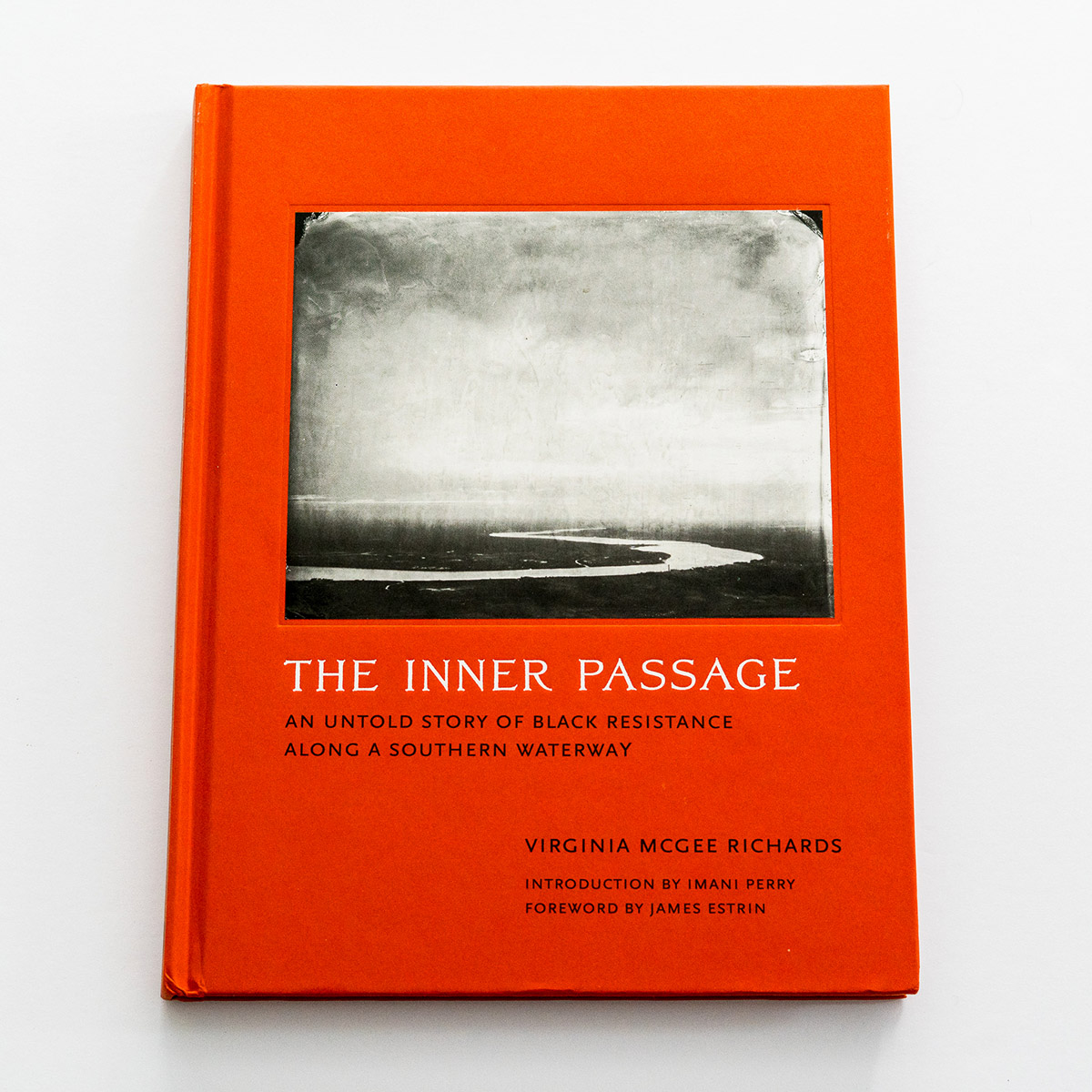
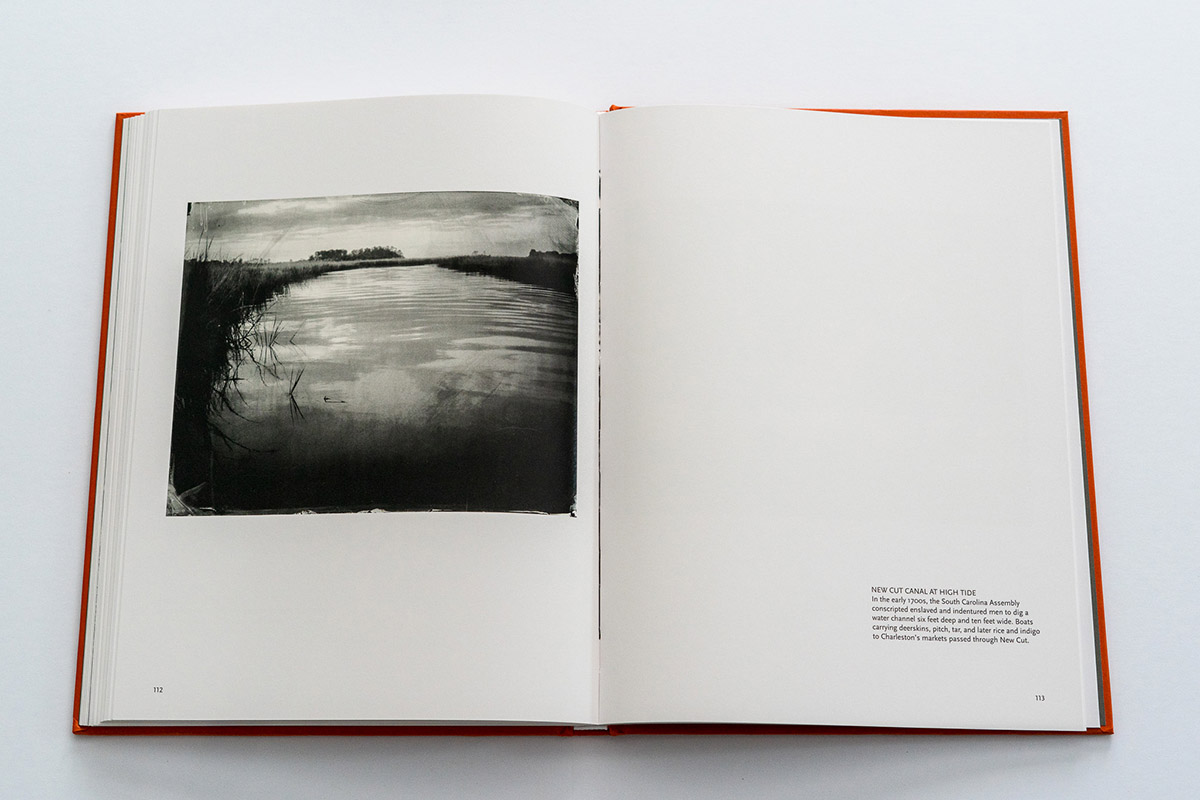
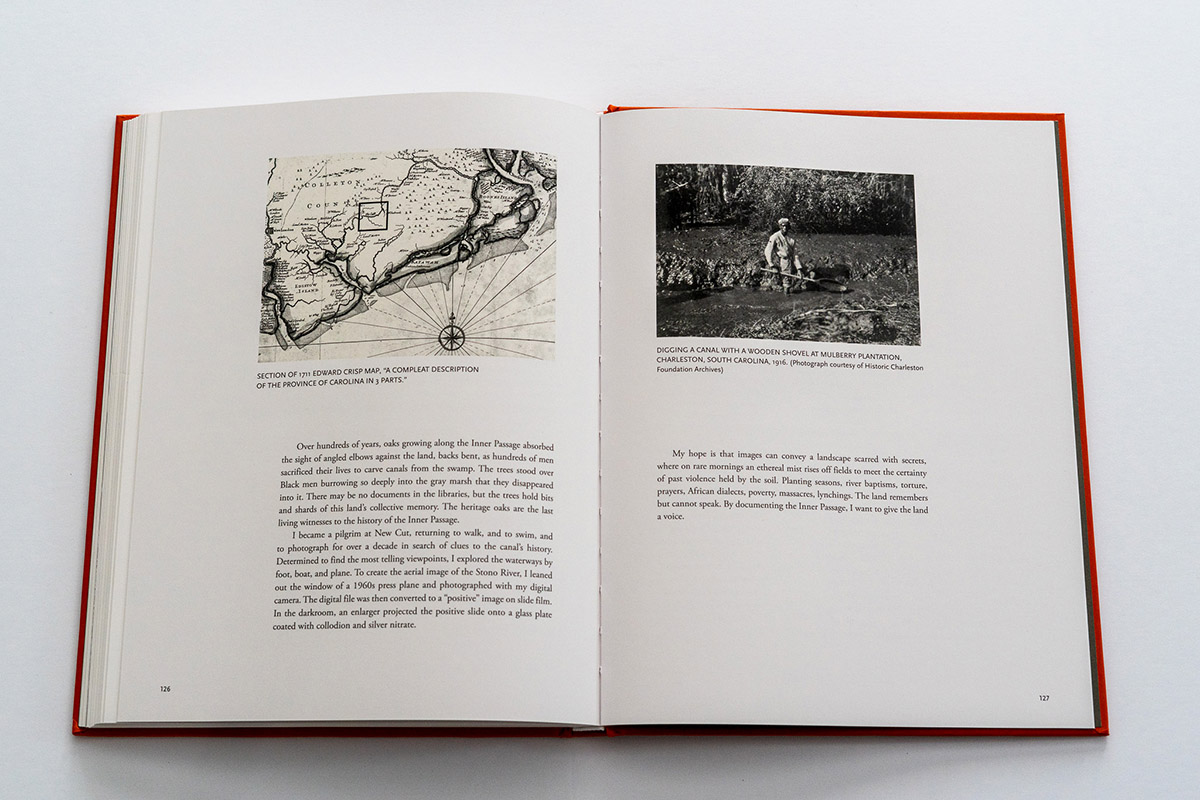
Originally constructed through slave labor in the 18th century, the Inner Passage is a 300-mile, hand cut waterway that runs from Charleston, South Carolina to St. Augustine, Florida. Constructed by enslaved people in the interest of planation commerce, the waterway is also notable for the cultural life it encouraged and for the role it played as a precursor to the Underground Railroad, allowing enslaved people to escape south into Spanish Florida and to free Black maroon communities in the Carolina swamps. Today, when thinking of these tidal waterways, we think of the Gullah Geechee Cultural Heritage Corridor, suggesting the mode of cultural life it created has had an enduring legacy not contained by the past. In her photobook named for this same waterway, The Inner Passage: The untold story of Black resistance along a Southern Waterway, Virginia McGee Richards draws attention to this often overlooked or forgotten history turned present. Through photographs that are, at once, historic, timely, and timeless, The Inner Passage directs readers’ attention to the still-visible traces of the now-nameless people of the Carolina Lowcountry that shaped this waterway and, in the process, shaped the South.
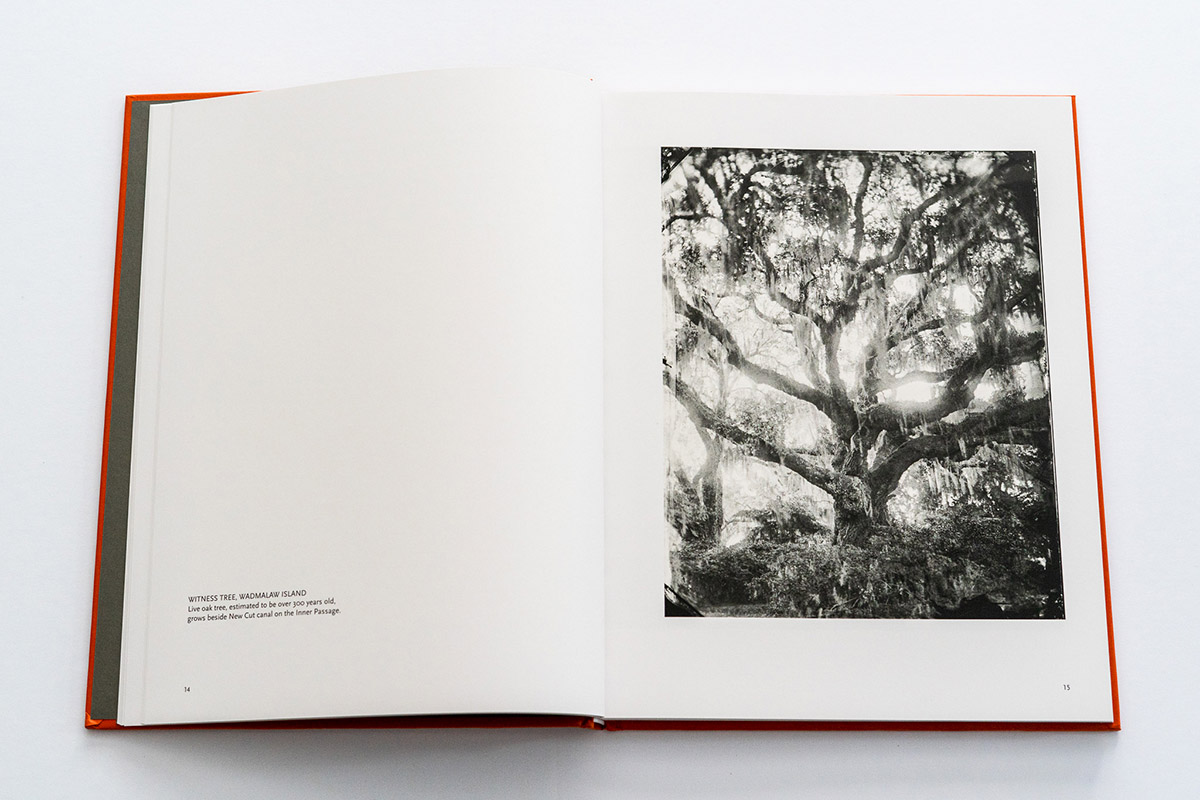
As is noted by James Estrin and Imani Perry in the book’s foreword and introduction, in her mission to tell this history, Richards’ thoughtful and deliberate use of the wet plate collodion process to take exposures with a ninety-year-old Graflex Universal Camera has resulted in atmospheric black and white photographs that are “haunting” and palpable (p. 1). This sense of deep and uncomfortable history is brought to the front of the reader’s mind from the very first images of the book, dramatic photos of oak “witness trees” whose heavy branches, covered by ghostly Spanish moss, extend wide from massive trunks. To know that these centuries-old giants “overheard whispers in myriad African dialects, English commands shouted by overseers, the many languages of native peoples, and the French, Spanish, and Portuguese of the traders passing by in small boats,” and observed “the enslaved people who dug the waterways use them to escape from their oppressors” is both awe-inspiring and unsettling (p. vii).
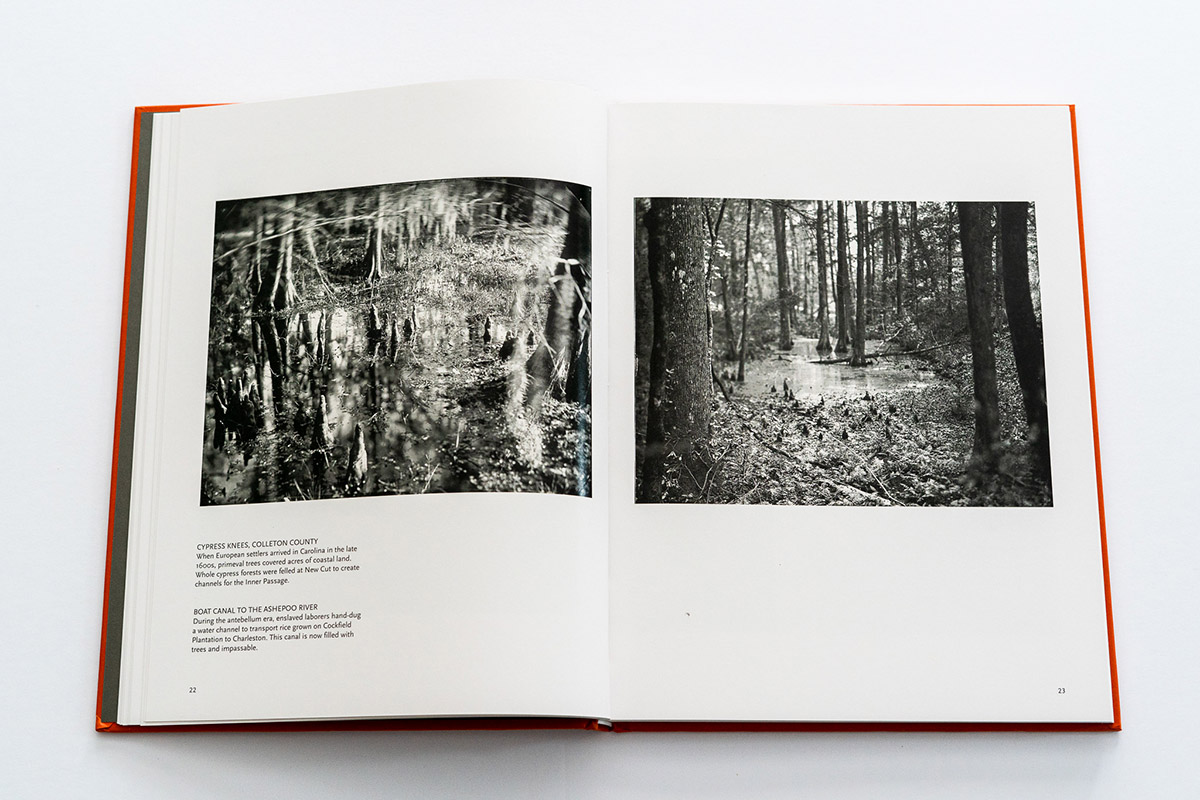
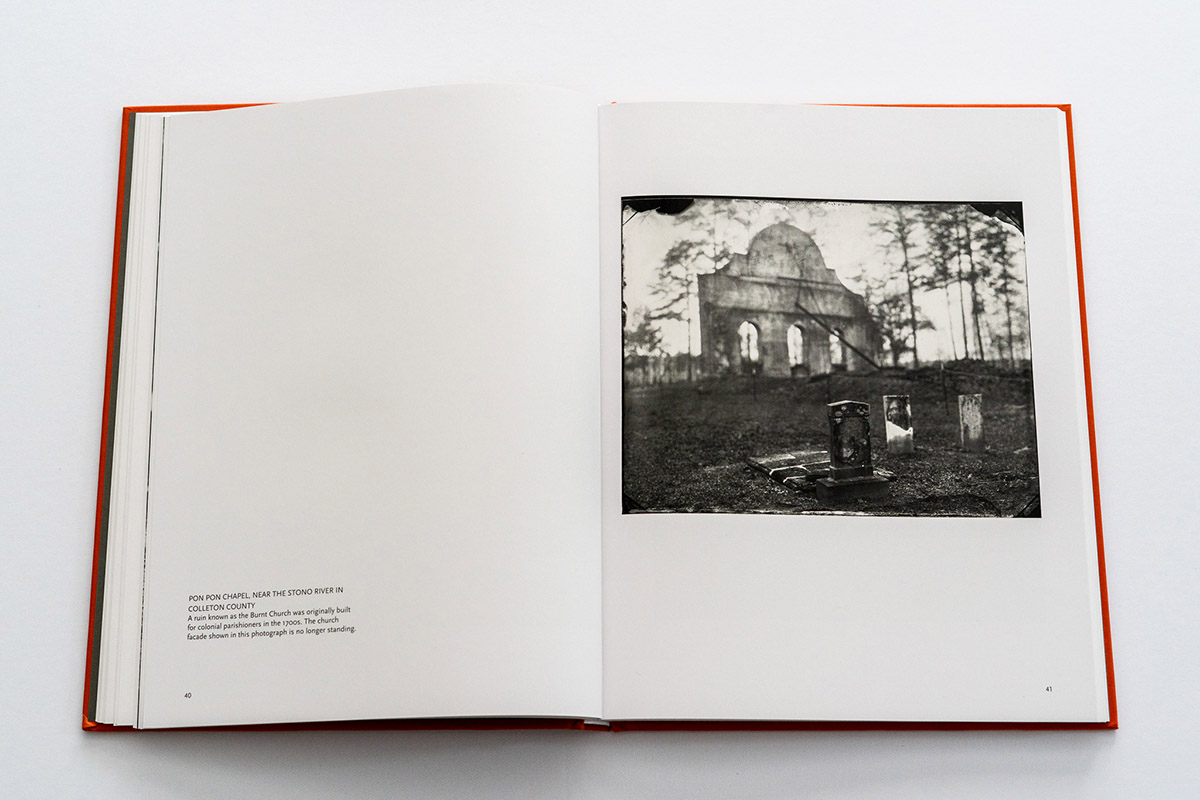
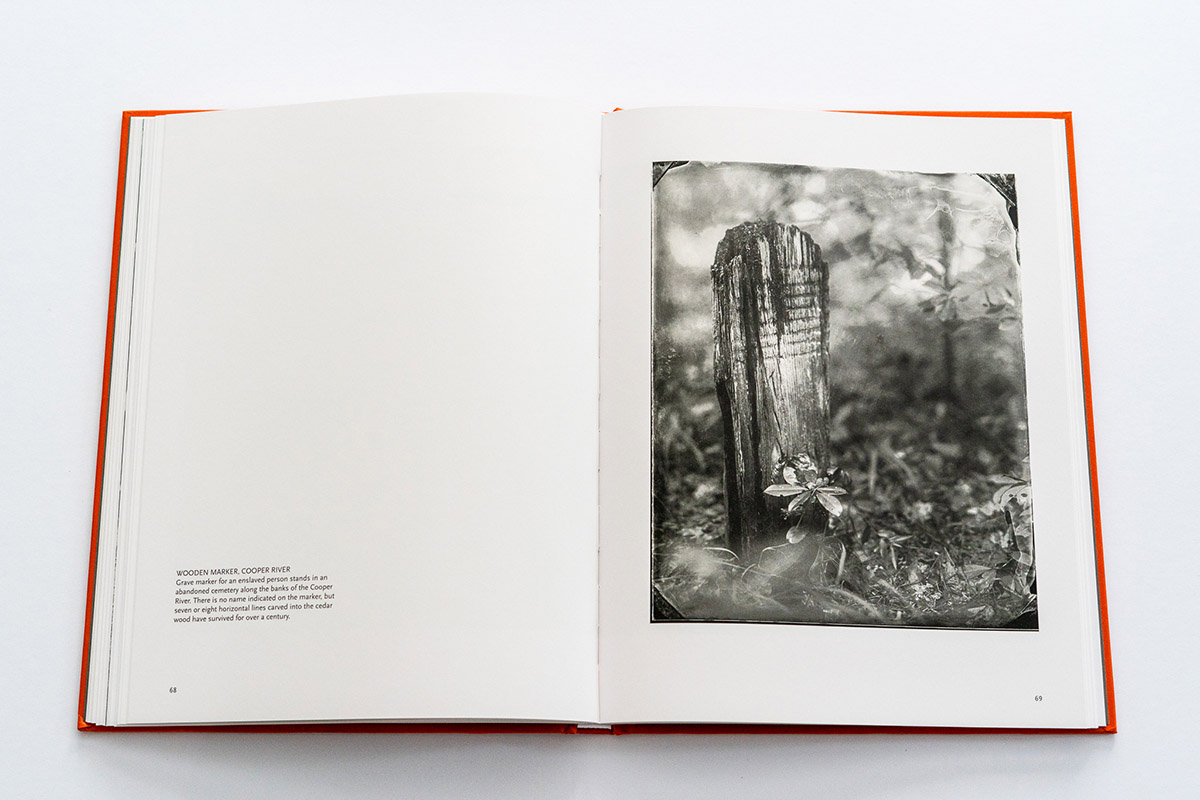
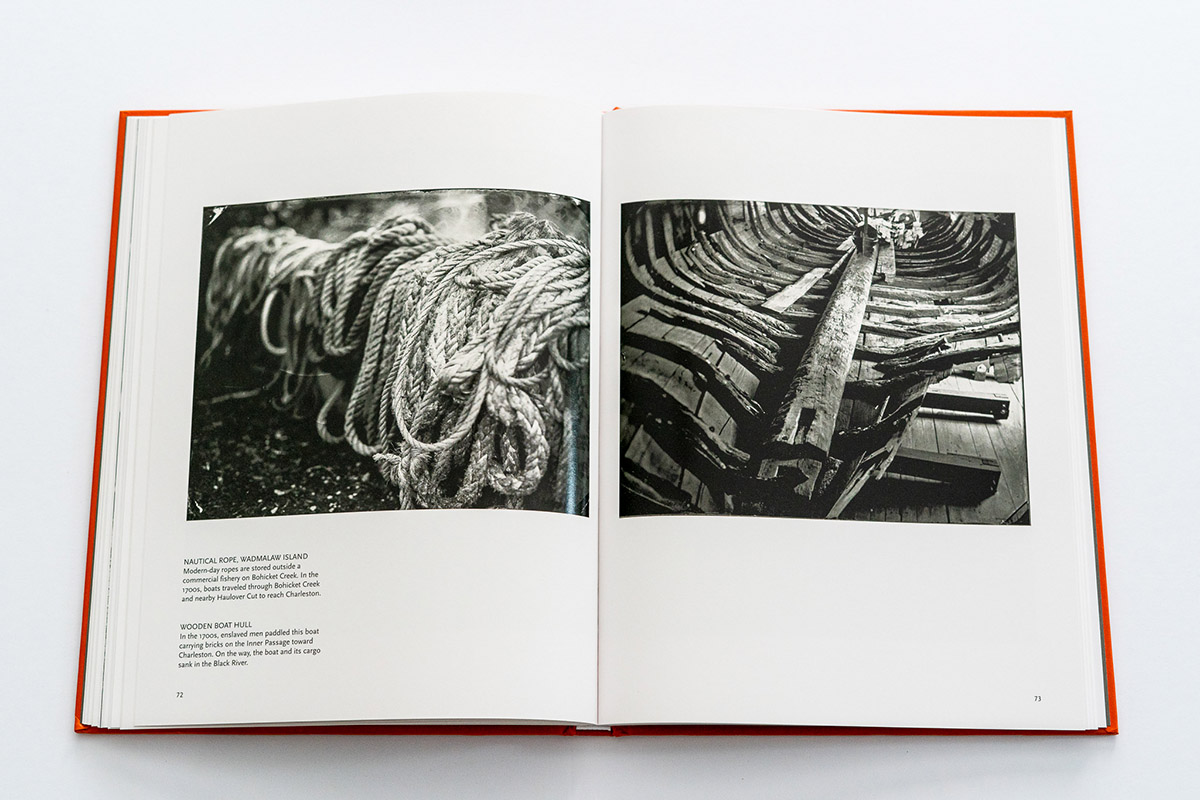
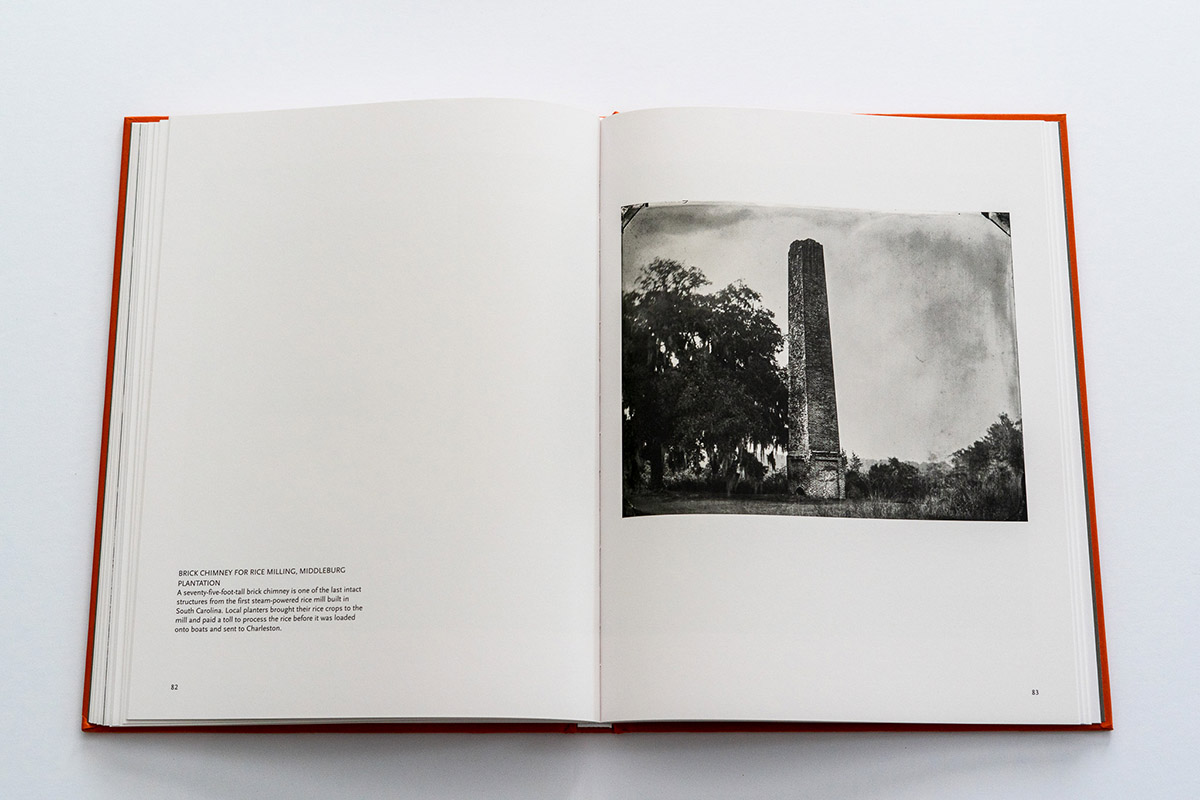
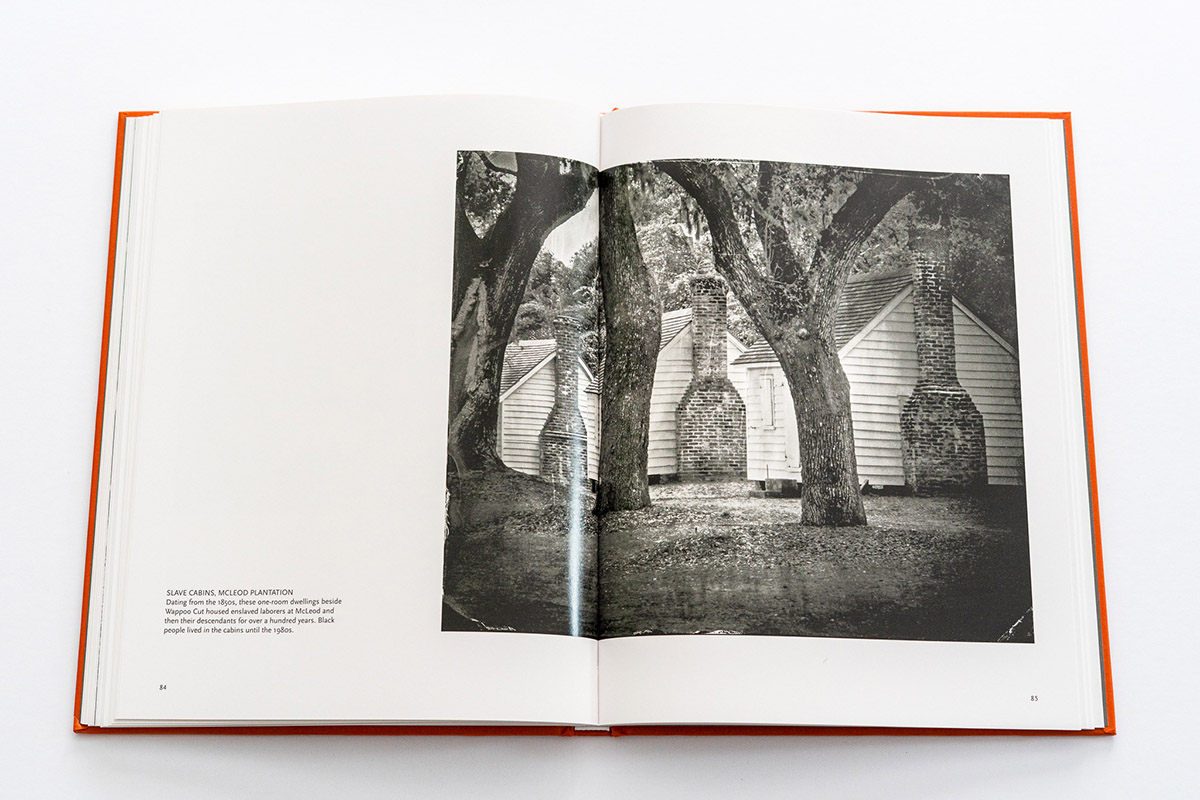
In some ways, Richards’ photobook seems like an attempt to layer the present and the past. This is felt most obviously through her use of photography techniques that stretch back to the nineteenth century, of course. As someone who lives in coastal (North) Carolina, I could feel the finer points of this decision. When this method was applied to subjects like cypress knees poking up through wetlands and to boat docks reaching out into tidal creeks, I noticed the weight of history filtering otherwise familiar scenes. In other ways, though, I’m not sure that making note of this “layering” fully captures Richards’ intention — not wholly, anyway. Rather, through the photographs she chose to capture and include in the book, I think Richards’ intention is to bring the history of these places to the fore, to show us how the past is interwoven with the present and, if you know what to look for, is legible in spaces we navigate. Through photographs of rice mill ruins, slave cabins, the still-visible scars of rice farming, and the Inner Passage itself, we see that even after 200+ years, the remnants of slavery still surround us, and in some cases, remain in use. We see that this past has made the present.
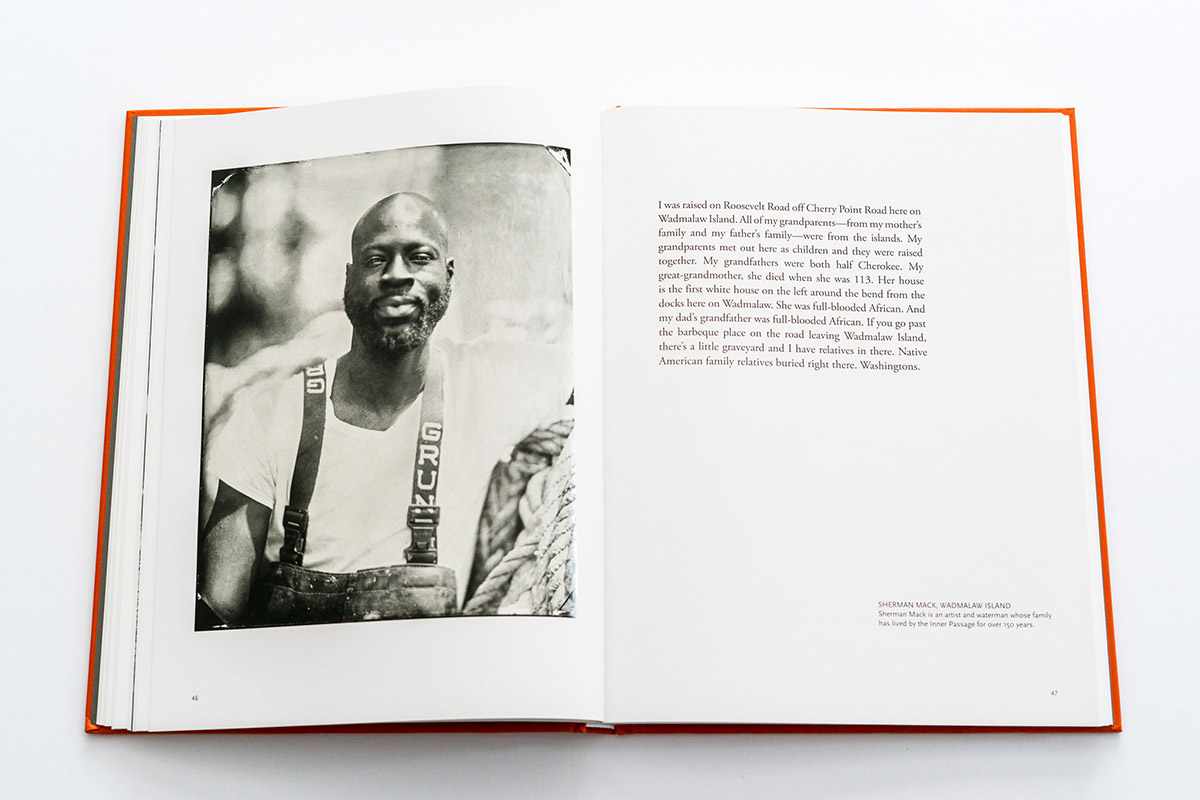
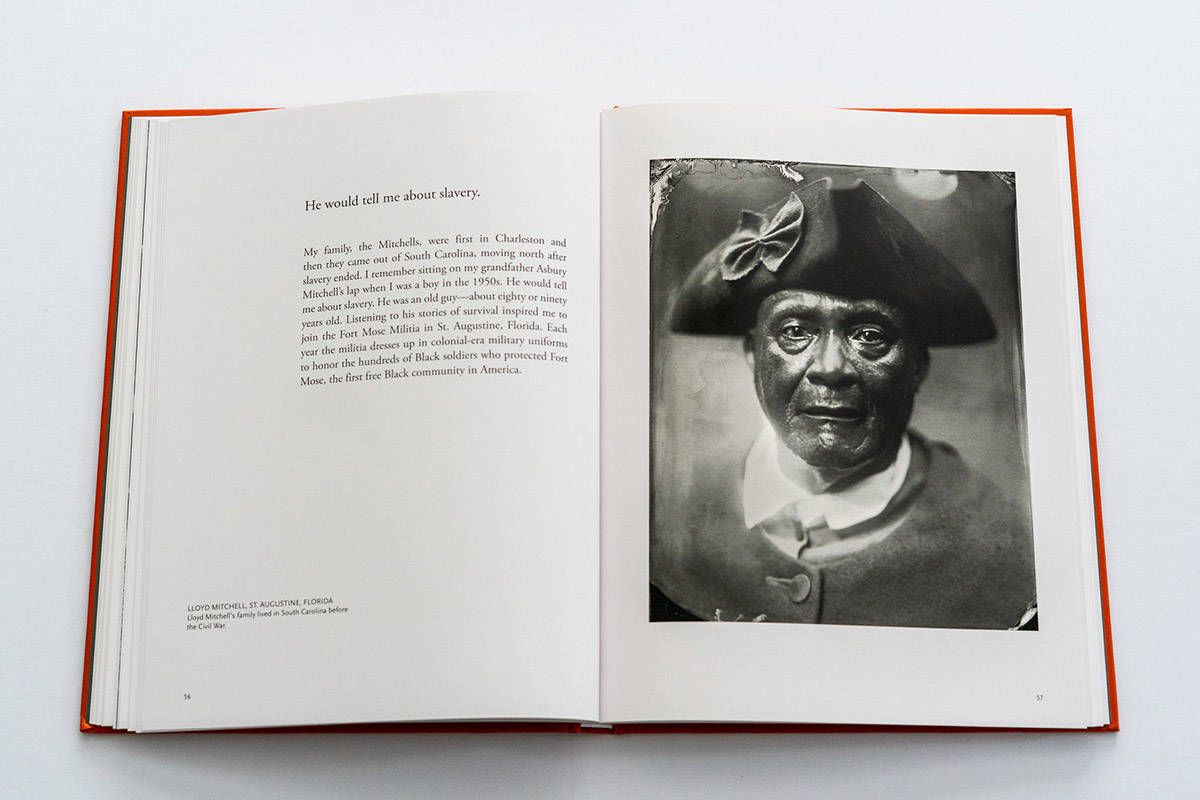
This connection between the past and present is further emphasized starting on page 43, with the introduction of portraits. These portraits are most often of locals who have resided in the Carolina Lowcountry for generations and are regularly accompanied by quotes that, sometimes directly, sometimes indirectly, speak to the ways in which the past – their family history – has been built into the land and cultural life. As Sherman Mack of Wadmalaw Island explains,
“I was raised on Roosevelt Road off Cherry Point Road here on Wadmalaw Island. All of my grandparents—from my mother’s family and my father’s family—were from the islands. My grandparents met out here as children and they were raised together. My grandfathers were both half Cherokee. My great-grandmother, she died when she was 113. Her house is the first white house on the left around the bend from the docks here on Wadmalaw. She was full-blooded African. If you go past the barbeque place on the road leaving Wadmalaw Island, there’s a little graveyard and I have relatives in there. Native American family relatives buried right there.” Washingtons (p. 47).
In similar fashion, other interviewees explain how they carry forward and/or reclaim their ancestors’ legacies. Benjamin Dennis of Ridgeland, SC, for example, explains that he is inspired by his Gullah Geechee heritage,
“I connect with the ancestors, whose voices speak to me all the time, by cooking food that has been lost, making recipes that are accessible only from Gullah Geechee ancestors like my grandfather. When I cook, I am interested in reaching the place where Senegal meets Gullah.” (p. 94)
We can and should understand Richards’ photobook as a contribution to Black history, but upon review of The Inner Passage, I hope that readers will also understand this as a work of Southern and American history. As W.E.B. DuBois writes in his most famous book, The Souls of Black Folk,
“Here we have brought our three gifts and mingled them with yours: a gift of story and song – soft, stirring melody in an ill-harmonized and unmelodious land; the gift of sweat and brawn to beat back the wilderness, conquer the soil, and lay the foundations of this vast economic empire two hundred years earlier than your weak hands could have done it; the third, a gift of the Spirit. Around us the history of the land has centered for thrice a hundred years; out of the nation’s heart we have called all that was best to throttle and subdue all that was worst; fire and blood, prayer and sacrifice, have billowed over this people, and they have found peace only in the altars of God of Right. Nor has our gift of the Spirit been merely passive. Actively we have woven ourselves with the very warp and woof of this nation – we fought their battles, shared their sorrow, mingled our blood with theirs, and generation after generation have pleaded with a headstrong, careless people to despise no Justice, Mercy, and Truth, lest the nation be smitten with at curse. Our song, our toil, our cheer, and warning have been given to this nation in blood-brotherhood. Are not these gifts worth the giving? Is not this work and striving? Would America have been America without her Negro people?” (ch. 14, Of the Sorrow Songs)
For DuBois, and I think for Richards, Black history and American history are one in the same. It was Black labor that, quite literally, built the Inner Passage and, more generally, the American South. Today, the meeting of African, European, and Indigenous cultures uniquely characterizes this corner of the United States. As is acknowledged by Rutledge Hammes of North Charleston, whose “ancestors arrived by boat from England in the late 1600s,”
“Here we share a common cuisine, common music, a common pace to our lives. But we share, too, a cruel and heartbreaking history. It’s why the Lowcountry is a place I am simultaneously ashamed of and endlessly proud of. My home is tidal, a place that moves so quickly between shocking beauty and loric violence that it’ll snath the very breath from your lungs.” (p. 90)
The Inner Passage, then, is an incredibly thoughtful, compelling, and multisensory work of photography, history, geography, and oral tradition that invites an inspiring and sometimes uncomfortable glimpse into the Carolina Lowcountry. While this book will have obvious appeal to historians and archivists, the book deserves wide readership for its creative and successful attempt at making history tangible in the present. As Richards notes in the book’s conclusion, it is not uncommon for boaters and fishers to navigate through or past portions of the Inner Passage without knowing its historical or cultural significance, without recognizing that they are moving through built channels. 2026 marks 250 years of American history and roughly 300 years of history being made on the Inner Passage. Perhaps it’s time more of us engaged with it, and Richards has given us a wonderful place to start and model to follow.
Matt Schneider is a professor and visual sociologist in Wilmington, North Carolina.
____________
Virginia McGee Richards: The Inner Passage: The untold story of Black resistance along a Southern Waterway,
Photographer: Virginia McGee Richards
Publisher: MIT Press, Cambridge, MA, copyright 2026
Introduction: Imani Perry
Foreword: James Estrin
Language: English
Hard-bound cover with tip-in; 8.00 × 11.00; 1152 pages; 61 black and white illustrations; ISBN: 9780262051712
____________
Articles and photographs published in the PhotoBook Journal may not be reproduced without the permission of the PhotoBook Journal staff and the photographer(s). All images, texts, and designs are under copyright by the authors and publishers.
 PhotoBook Journal
Leave a comment