Review by Hans Hickerson ·
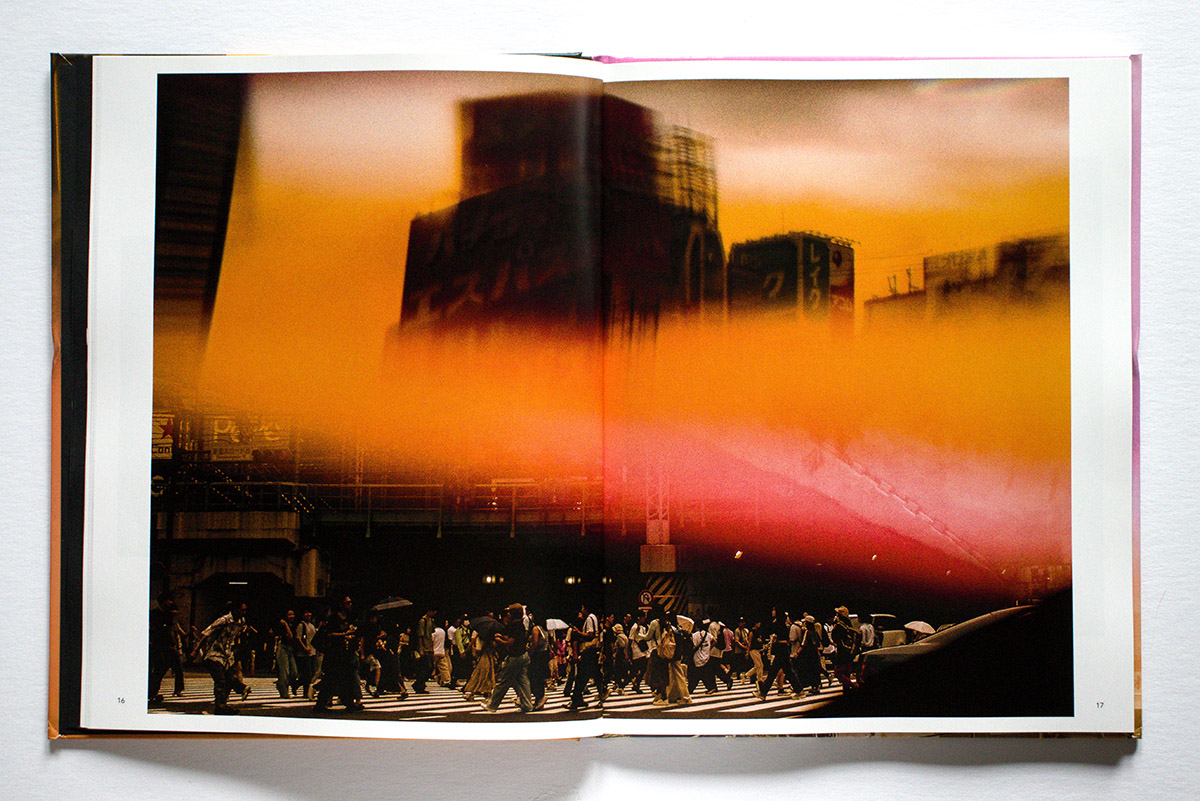
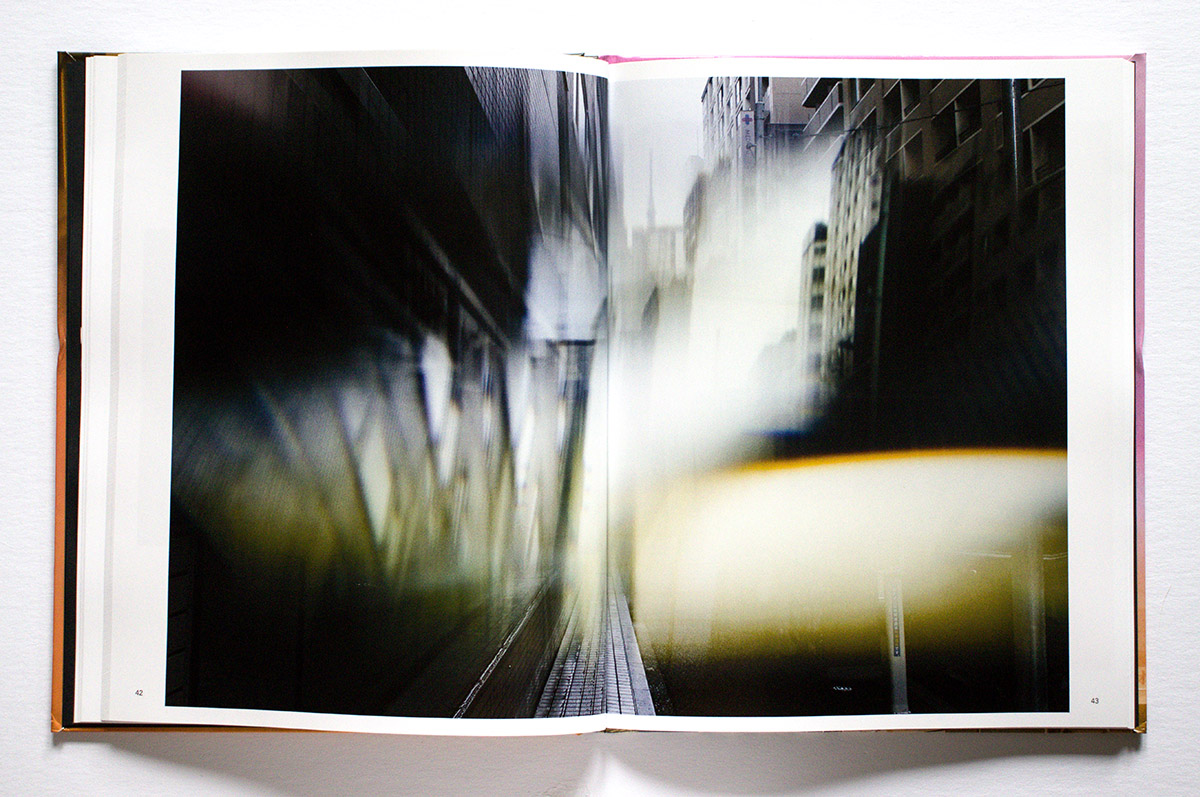
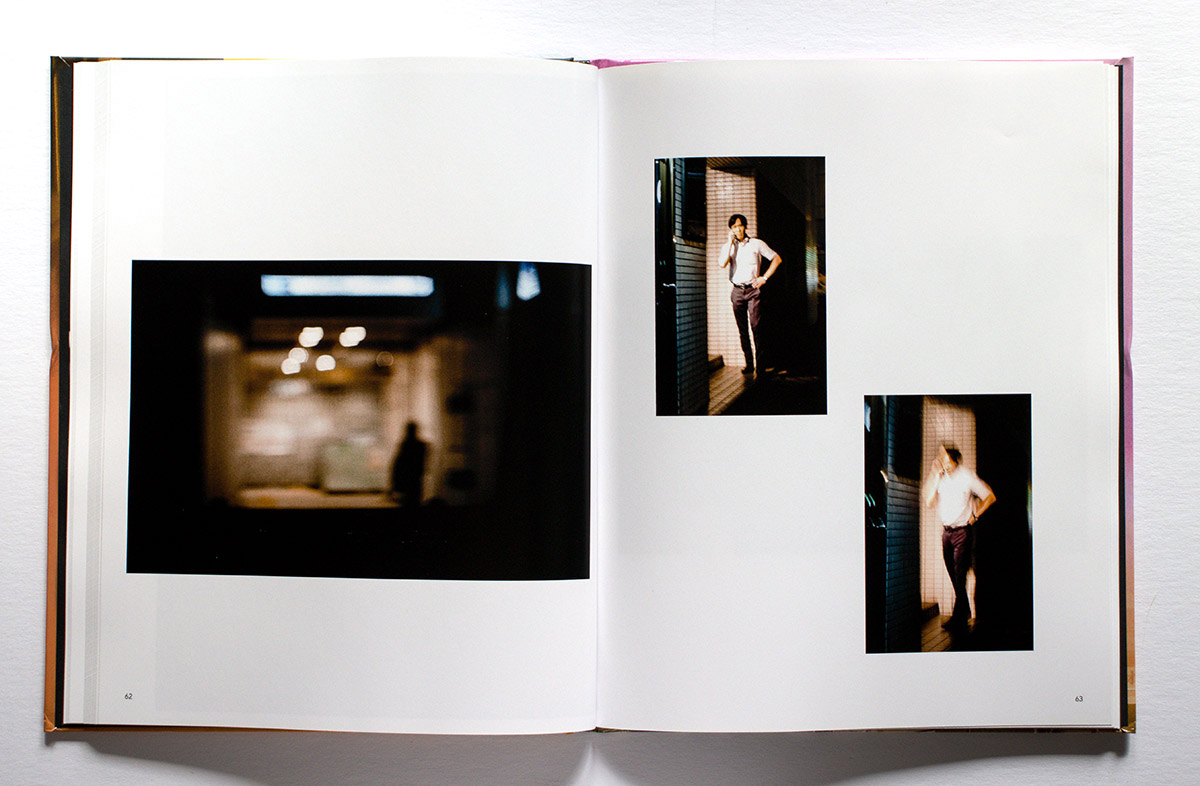
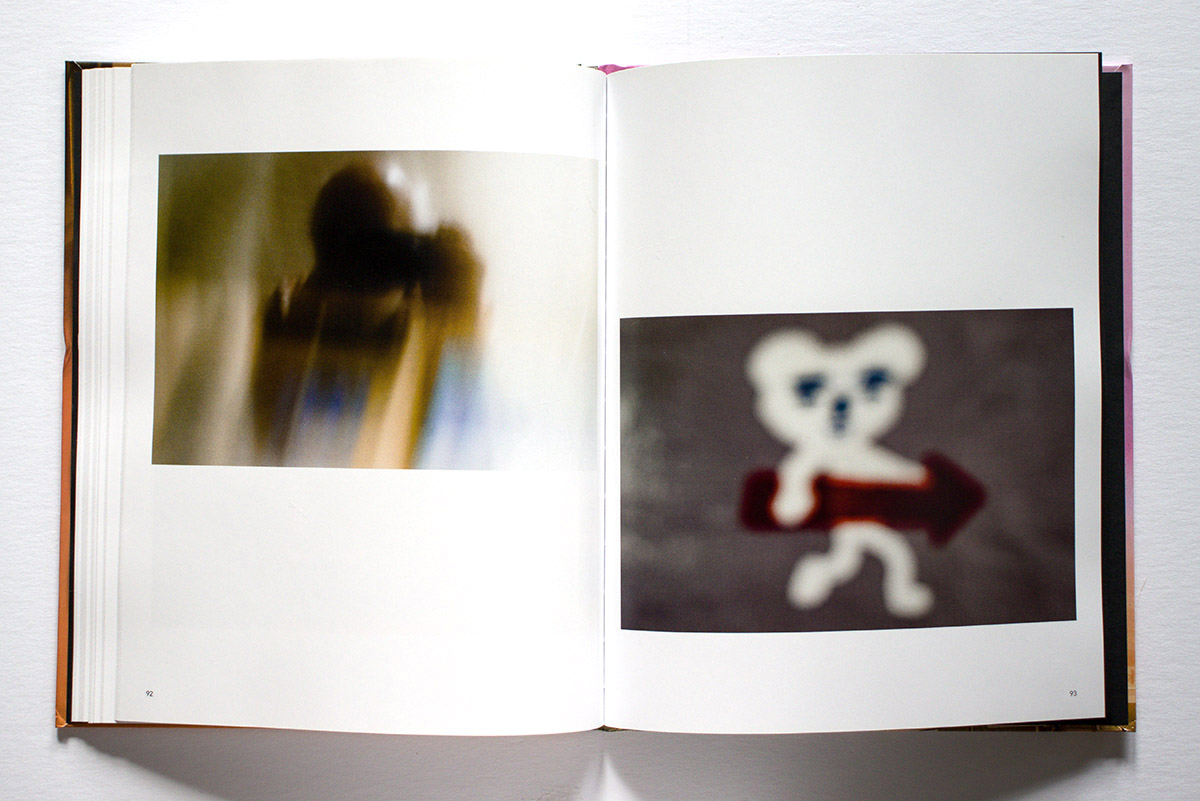
You can think of Robert Dunn’s Tokyo Cool as a challenge to solve, with different kinds of puzzle pieces that fit together. It is about Tokyo, but it isn’t just about Tokyo. It is also about using a camera to create blurred rectangles of liquid color, pattern, and movement, mostly including chunks of identifiable reality but sometimes not. Perhaps a third of the 91 photographs are expressionistic like that. Another quarter read like traditional straight street photos. They share what Dunn saw during a trip to Tokyo in 2024, specifics of place as well as human gestures, moments, and situations. So yes, a puzzle, a riff on Saul Leiter meets Garry Winogrand meets William Klein meets some other photographers, likely Japanese, whose work I don’t know.
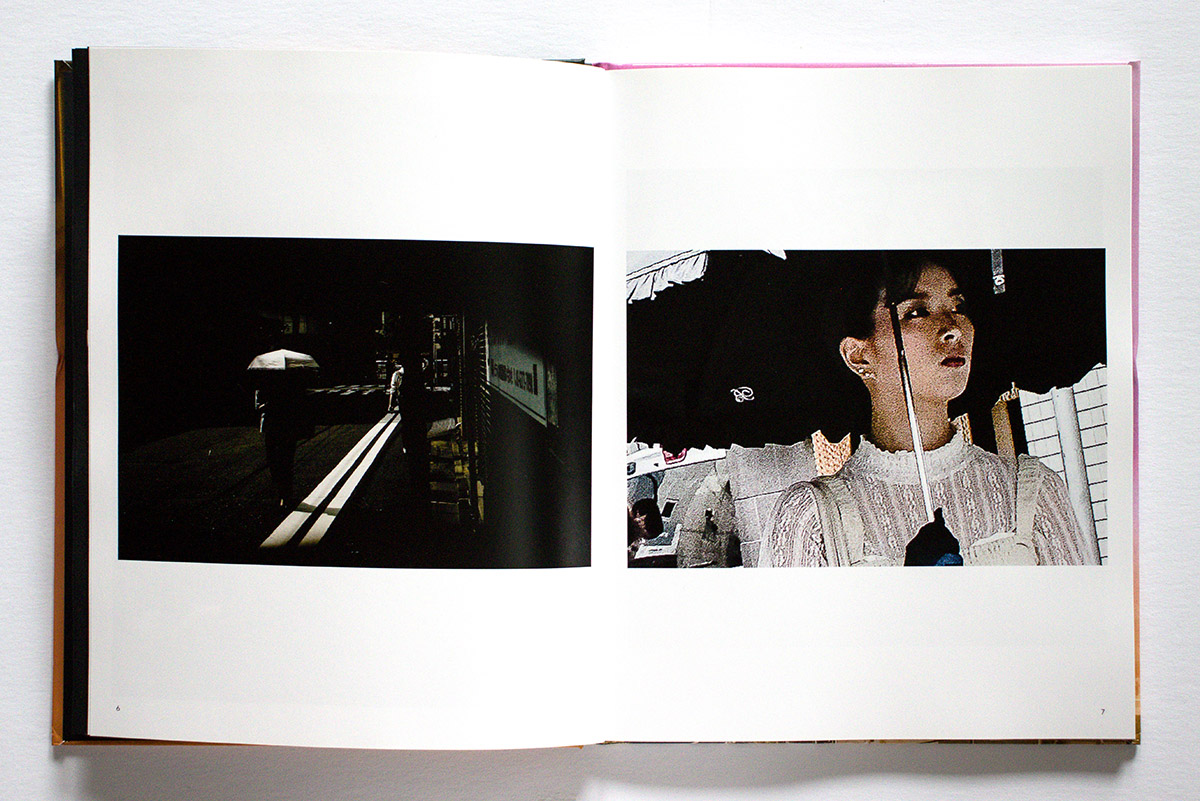
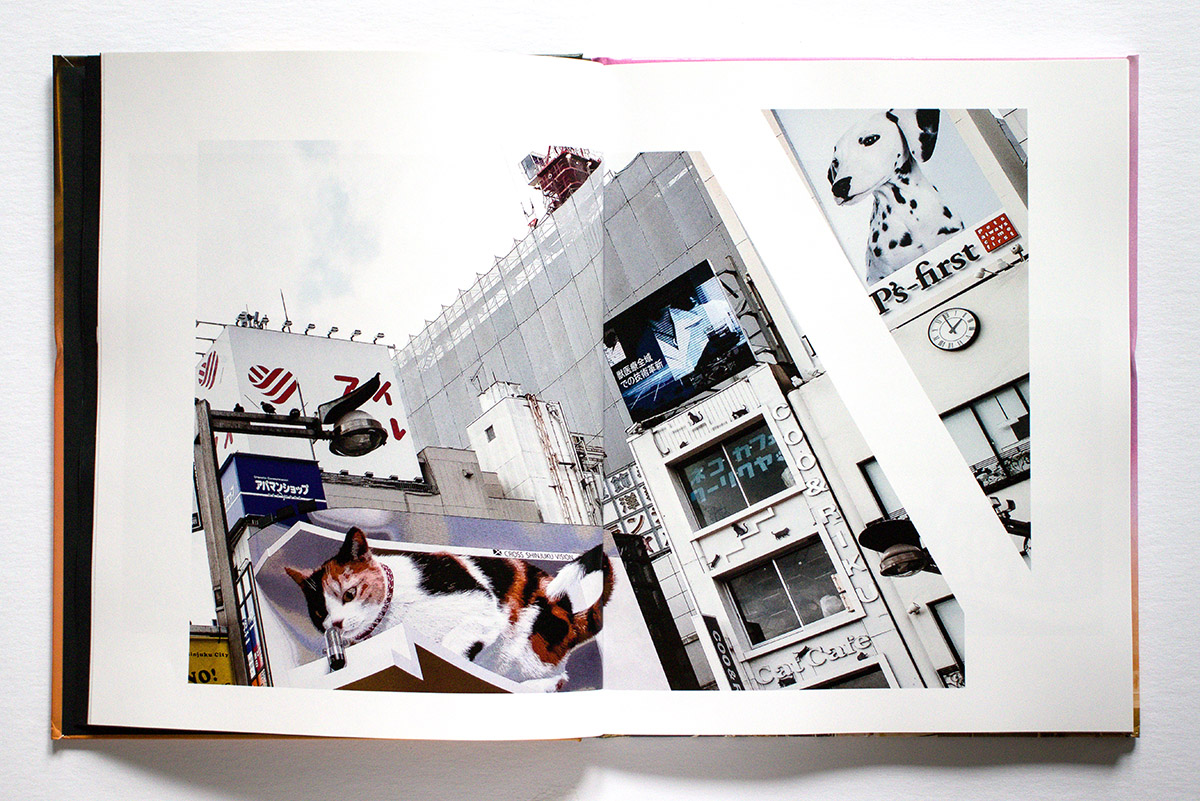
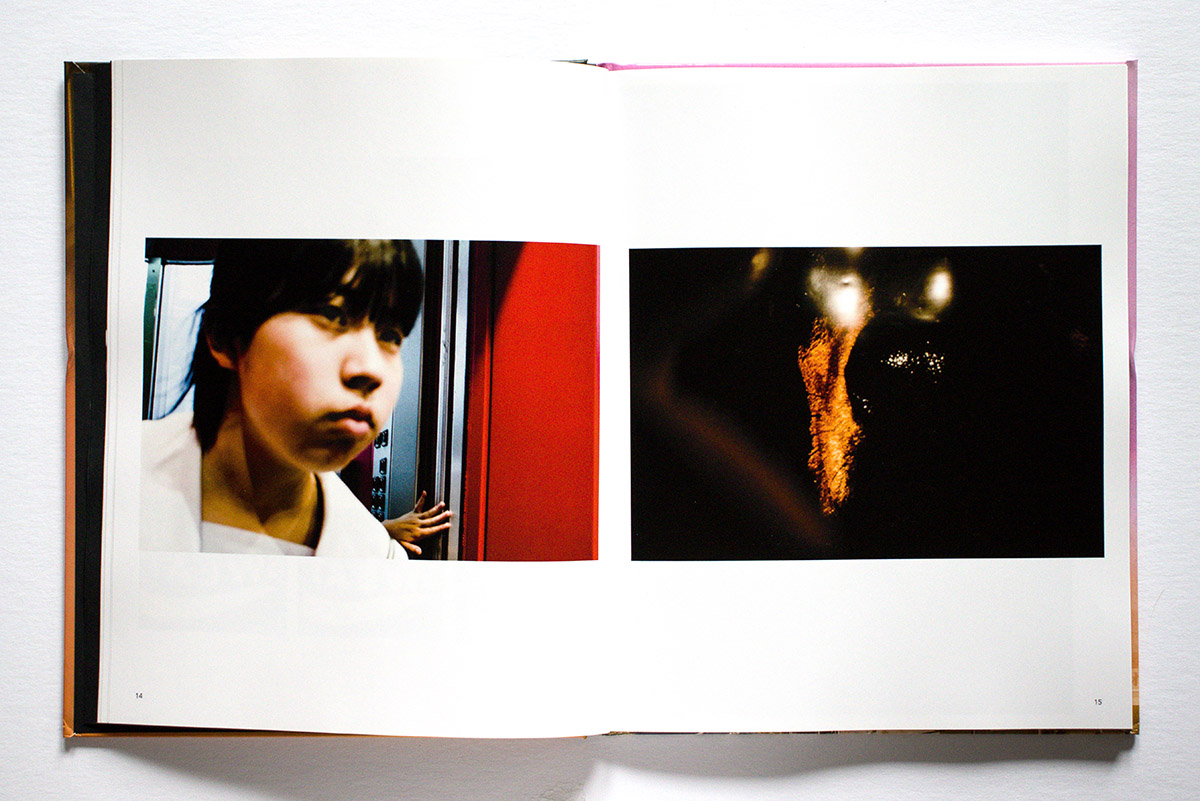
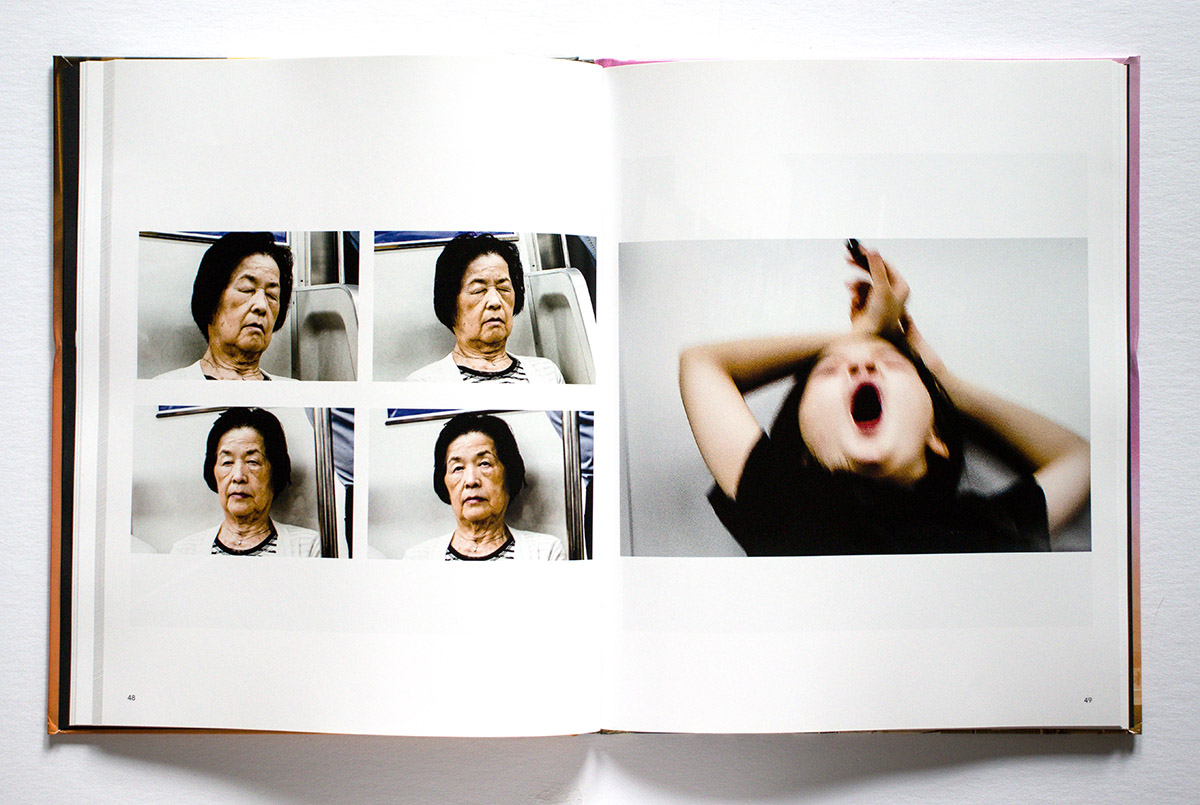
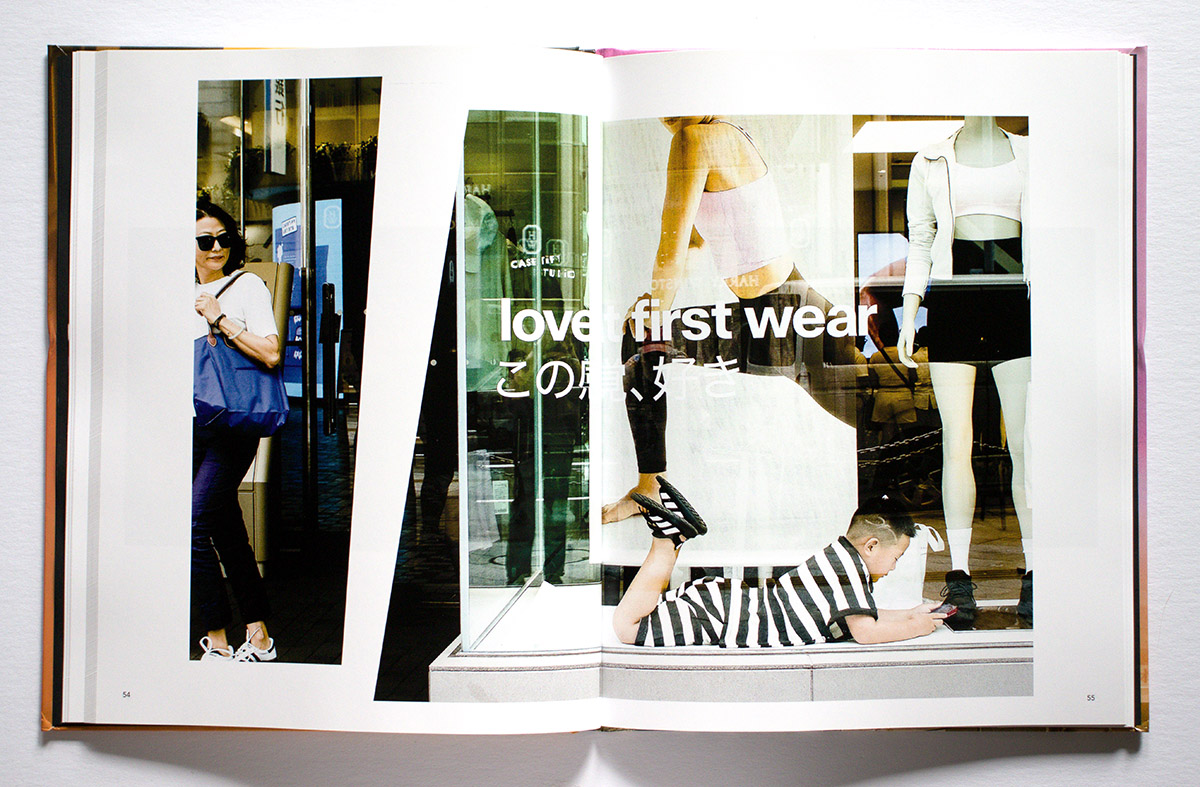
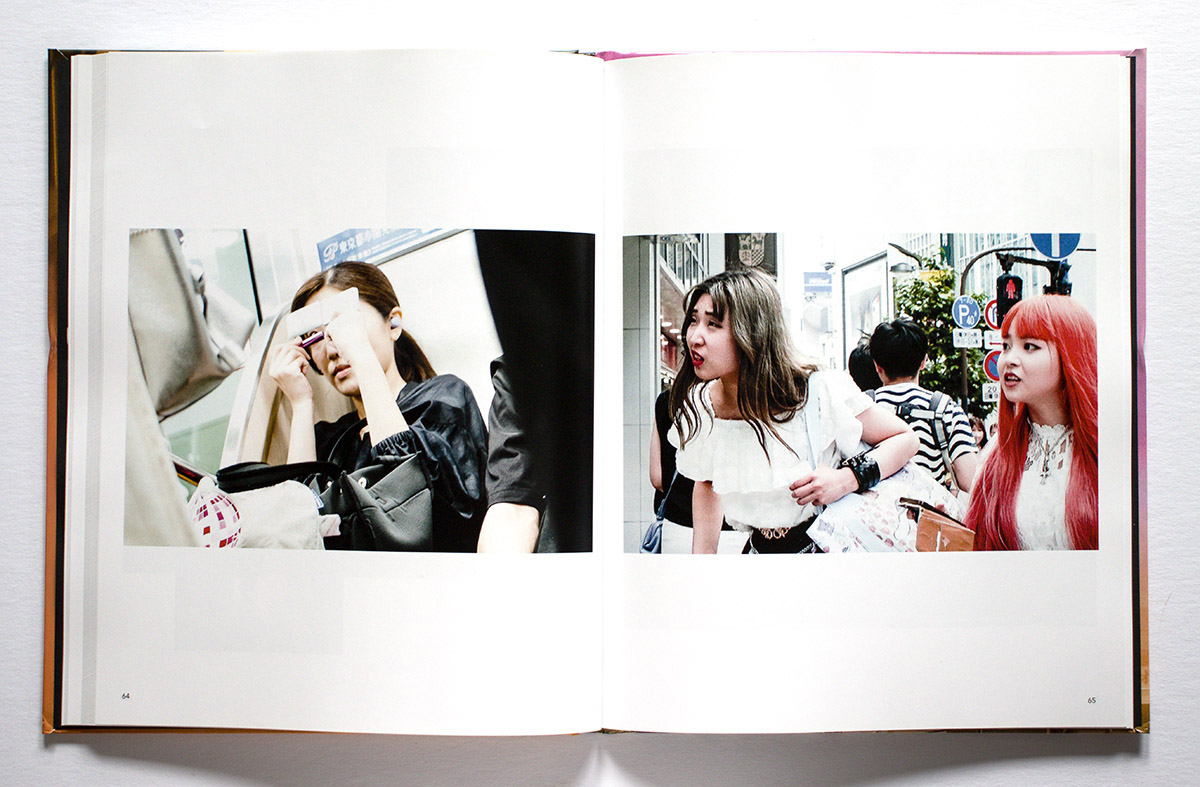
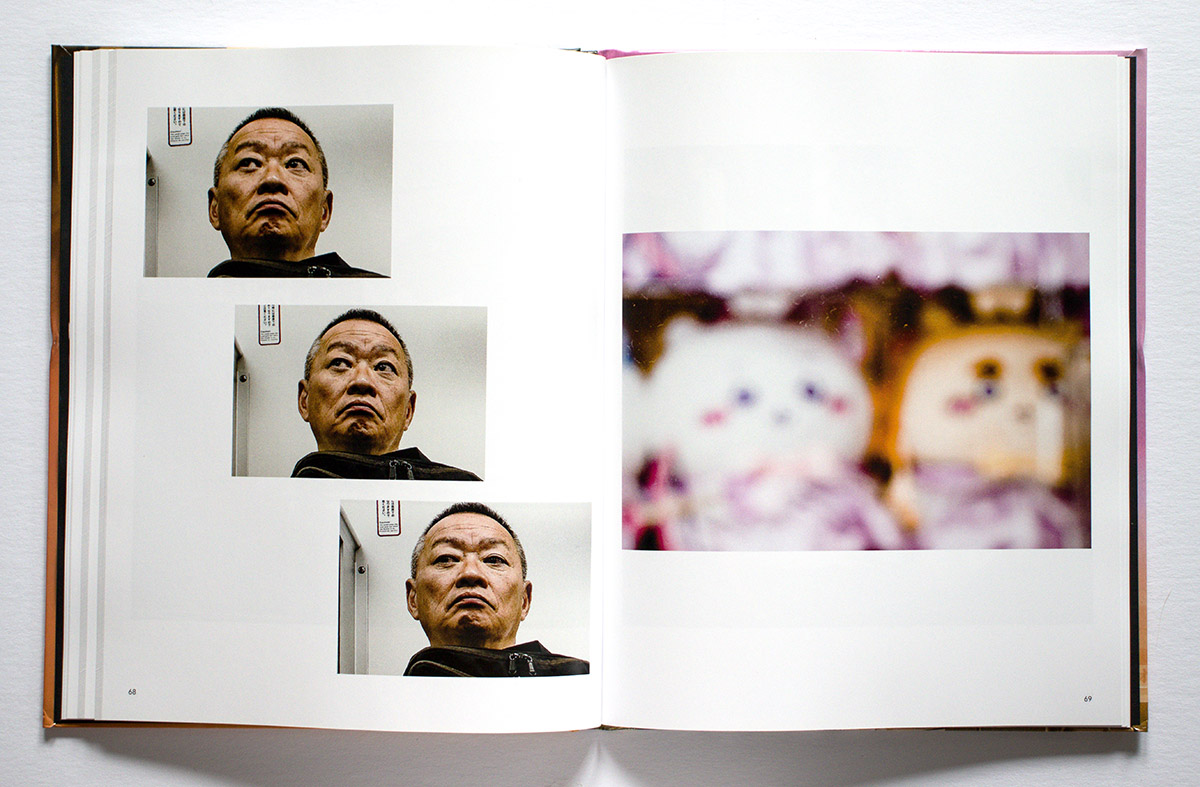
The book is a mosaic of photography and editing techniques that complicate and scramble the flow of the images. It does not allow you to settle into a comfortable routine of knowing what to expect. You see examples of conventional street scenes followed by photographs that are off in terms of color, pushed into darkness, or blown out by too much light. A couple of larger photos covering two pages have geometric chunks removed that are positioned slightly apart. Other photos stand out because they are out of focus or because of their noticeable grain. Some are shot through window blinds or layers of reflections in windows. Most photographs are one to a page, but several groups of two to five related smaller photographs are presented together as possibly Walker Evans subway-portrait-inspired series. In his book Mirrors and Smoke, Dunn mentions using crystals and other lens attachments (“a few thises and thats”) to create visual effects, and some of the compositions are perhaps the result. When you look, you can’t always tell what is the world observed by the camera and what is artistic intervention.
What seems at first to be a straightforward, albeit inflected, photographic study of Tokyo turns out to offer a buffet of approaches, techniques, and styles. One supposes that Dunn knew that he could fill a book with a single aesthetic but that he chose instead to mix it up. I have favorite images in several style categories, but I imagine that large prints of some of the blurred nighttime compositions might be especially impressive.
In terms of the book’s nominal subject, Tokyo, we see streets and shop windows, signs and buildings. We are outsiders, roaming public spaces, floating along on the light, color, and movement of the city. We see people, including a fair number of women, mostly young. We venture into the subway, we go into a building to look down at the street from an elevated perspective. We do not see the tourist sights, or if we do they are unrecognizable.
Tokyo Cool does not offer documentary-style reportage. Most of the images tune into the vibrant visual surfaces one notices when visiting a new place. Dunn does include several more conventional but striking slice-of-life images however. A girl laughing and pointing at another girl. A woman in the subway putting on make-up. A man in the street talking on a cell phone. Two attractive young women, one with her hair dyed bright red, their gazes fixed on something outside the picture frame.
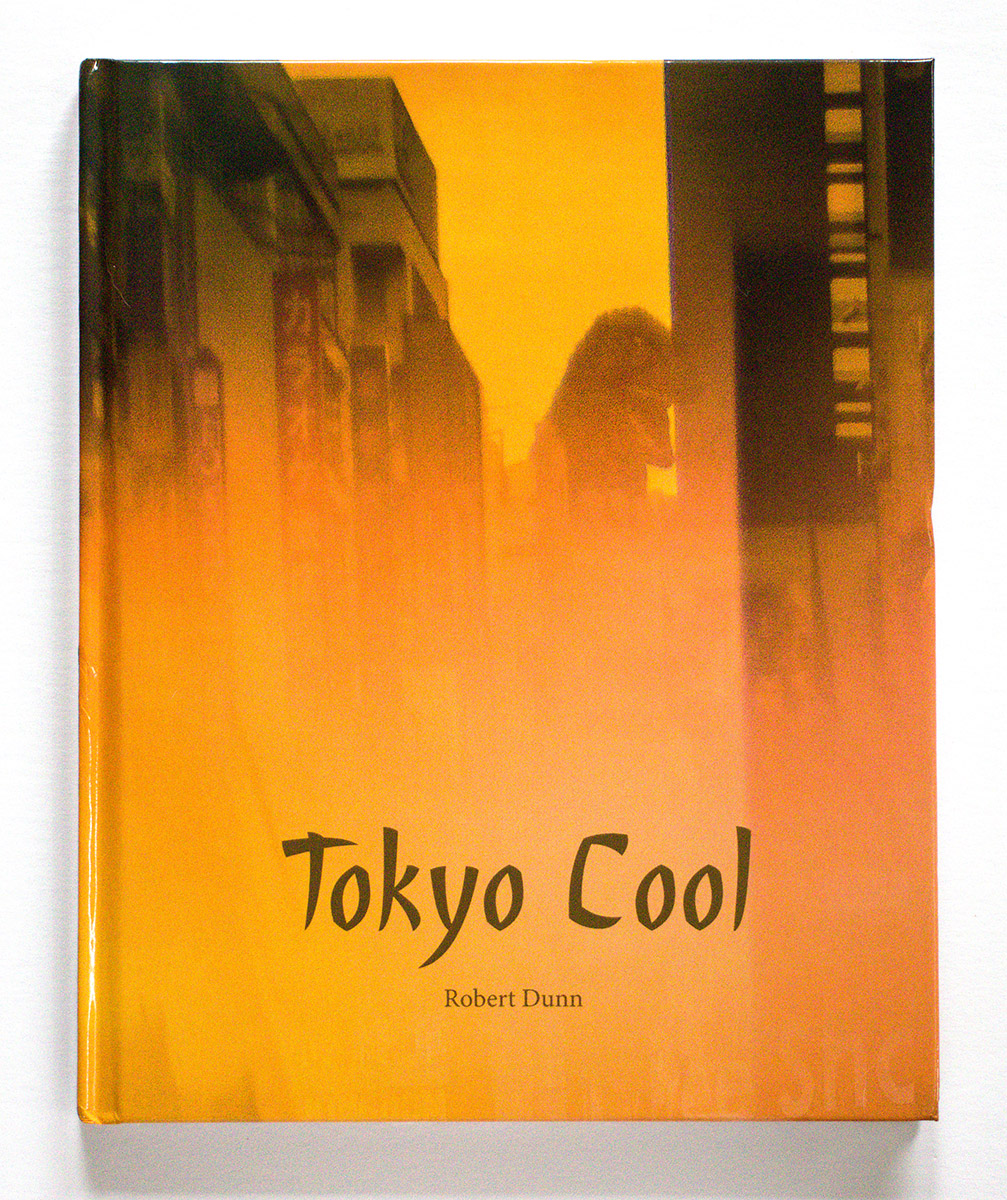
The cover took me a couple of takes to get. It is a blurry Godzilla looming above the Tokyo skyline, and it is taken from a two-page spread of three similar photos in the book. Hard to tell, but it might have been taken looking inside through a display window. The three similar photos are shaded green, peach, and pink in jarring contrast to the natural tones of the other images.
Tokyo Cool is not the product of an established mainstream publisher that depends on feeding its photobook-buying audience formulas they are familiar with. Published under Dunn’s Coral Press Arts imprint, it embraces a dynamic mix of personal vision, edginess, and open-minded exploration.
Hans Hickerson, Editor of the PhotoBook Journal, is a photographer and photobook artist from Portland, Oregon.
___________
Robert Dunn – Tokyo Cool
Photographer: Robert Dunn (born in 1950; lives in New York)
Publisher: Coral Press Arts © 2024
Language: English
Design: Jake Chill
Printing: Mixam
Printed hardcover; 91 photographs; perfect binding; 94 pages; 8 x 10 inches
____________
Articles and photographs published in the PhotoBook Journal may not be reproduced without the permission of the PhotoBook Journal staff and the photographer(s). All images, texts, and designs are under copyright by the authors and publishers.
 PhotoBook Journal
Leave a comment