Review by Hans Hickerson ·
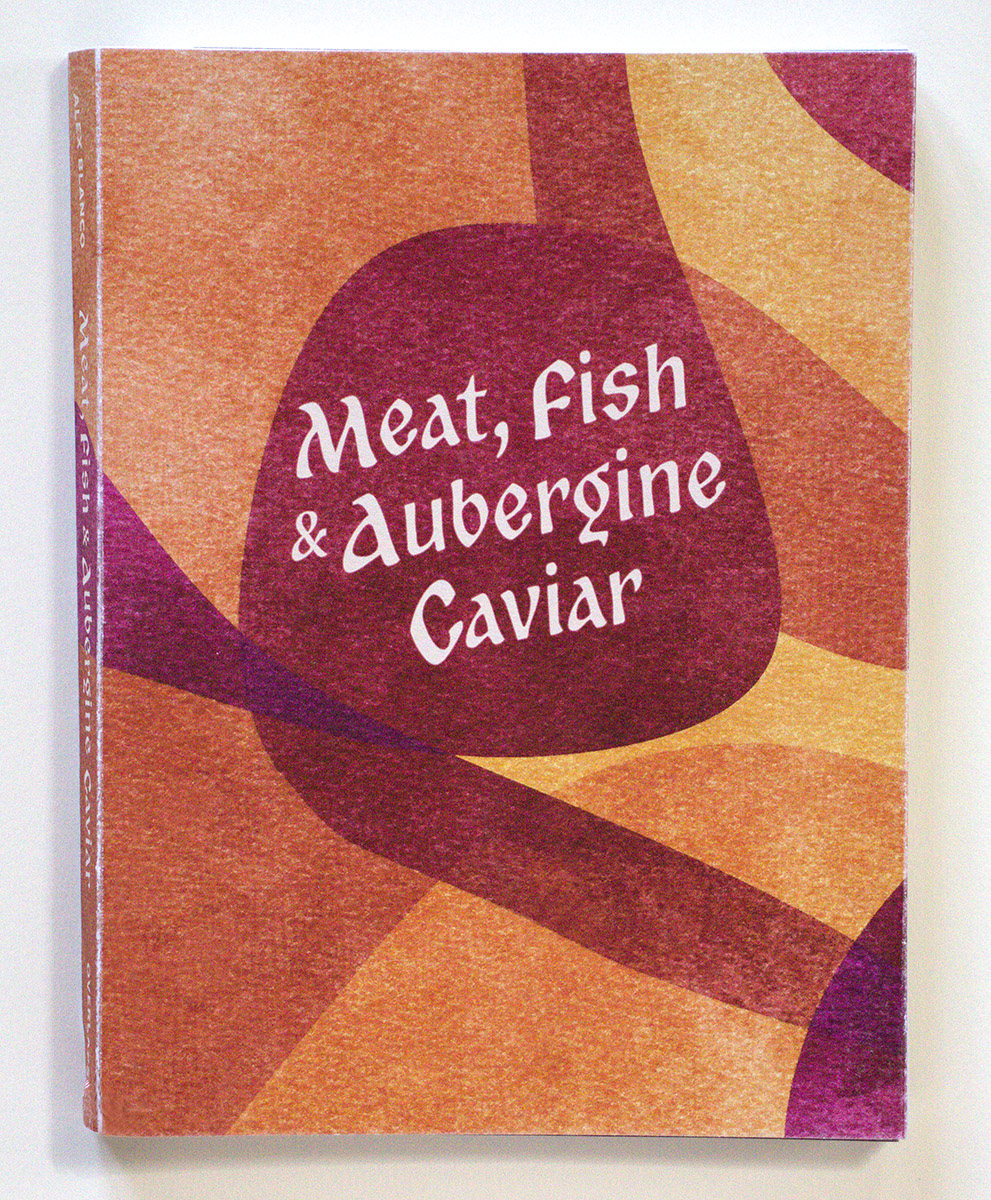
Photobooks are a great medium for telling stories, but also for re-creating emotional landscapes. Alex Blanco’s Meat, Fish, and Aubergine Caviar does both and also mixes in memories, cookbook recipes, and idealized fantasy.
If this sounds like a lot it is because the book operates simultaneously on several levels, like flavors married together in a recipe. In the case of Meat, Fish, and Aubergine Caviar, the dish is delicious. It is an audacious mixture of sweet and savory, rich with overlapping nuances that texture the photo / culinary experience.
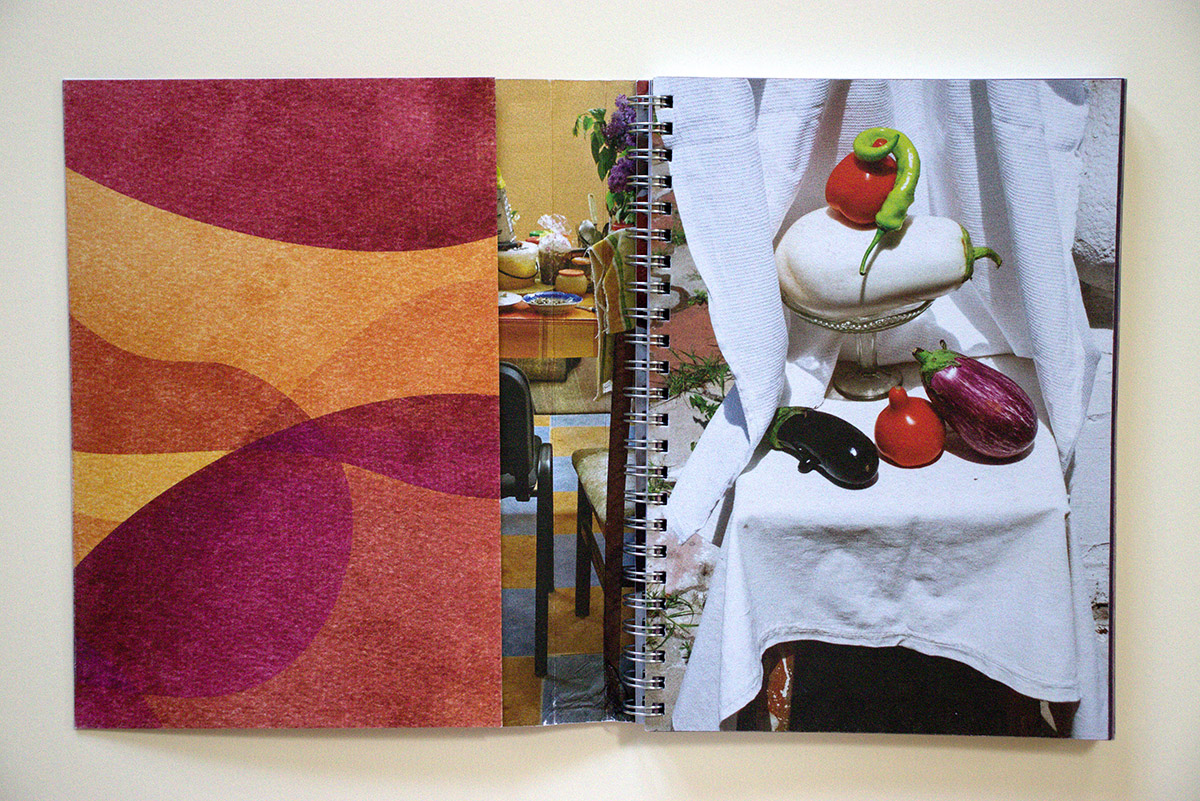
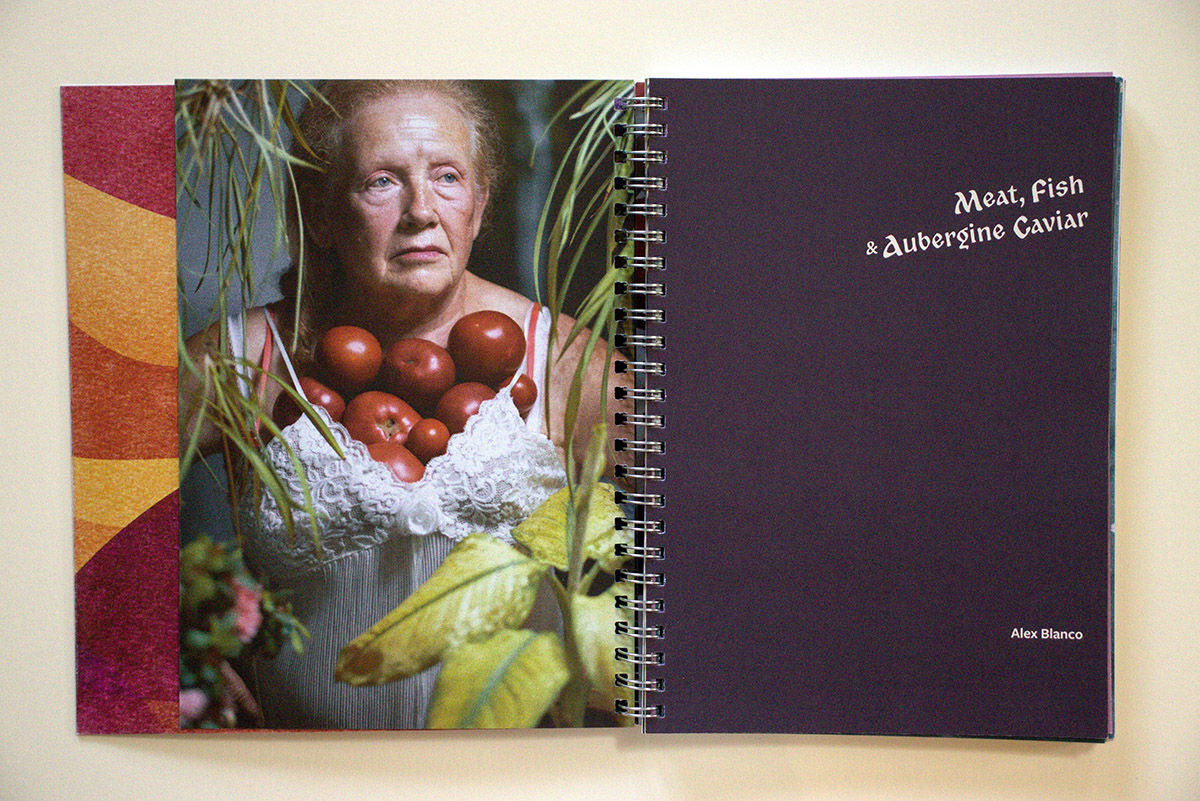
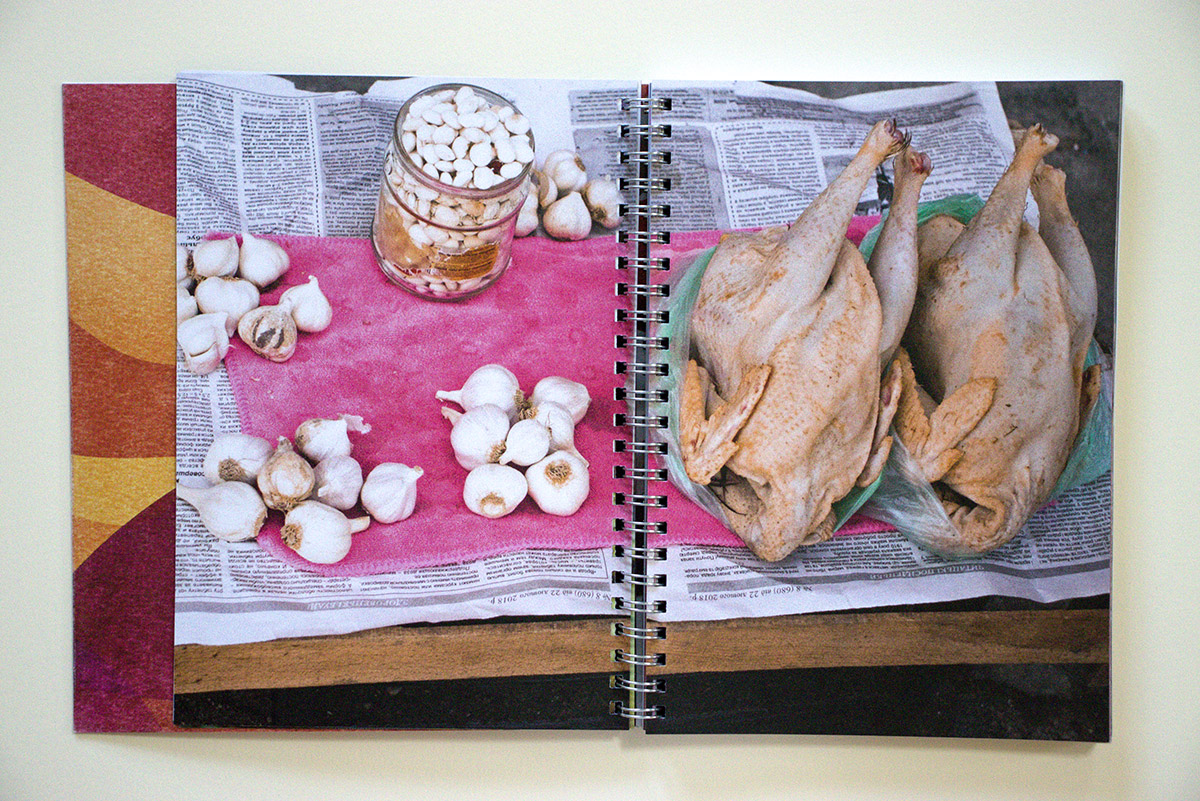
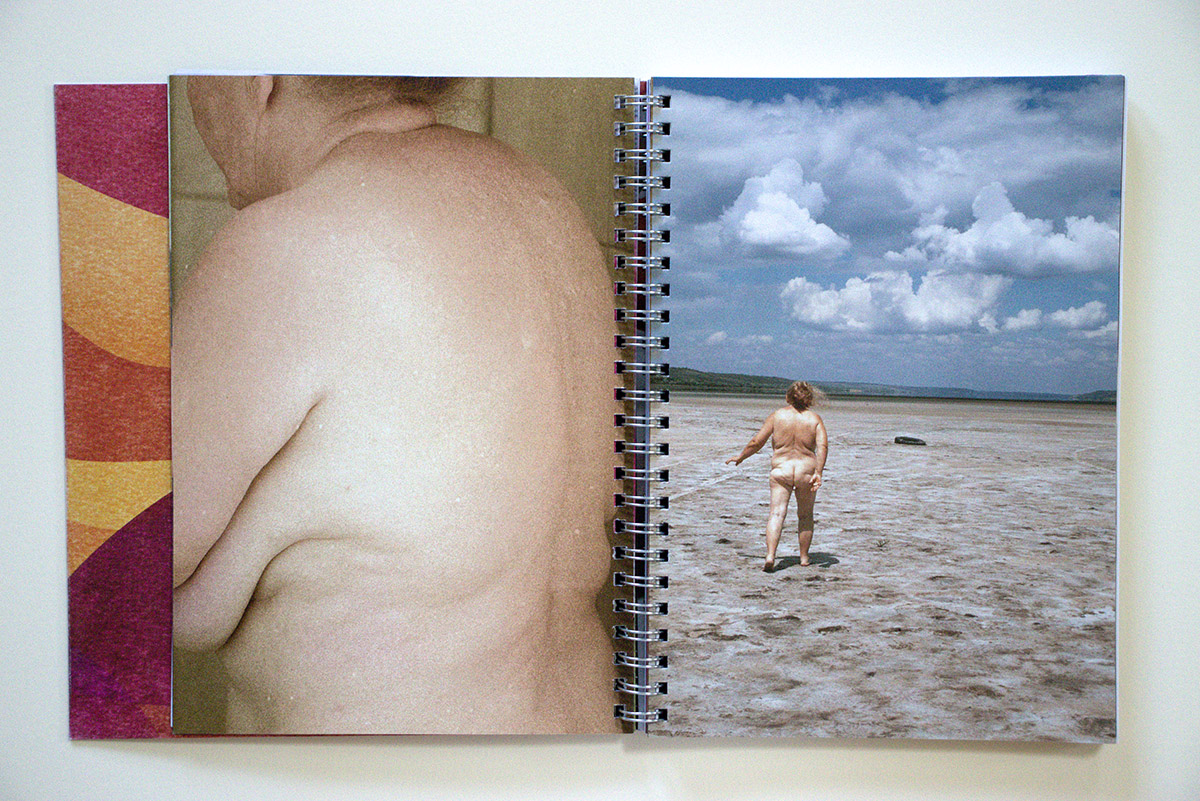
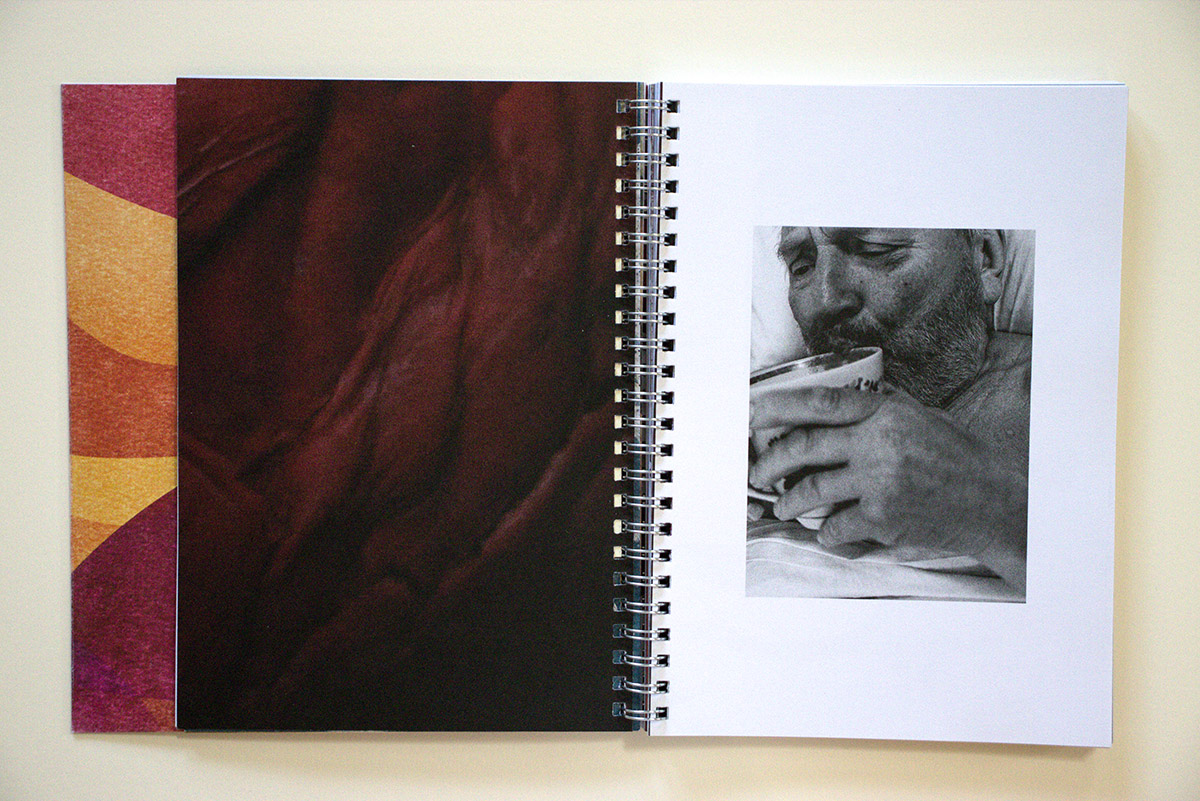
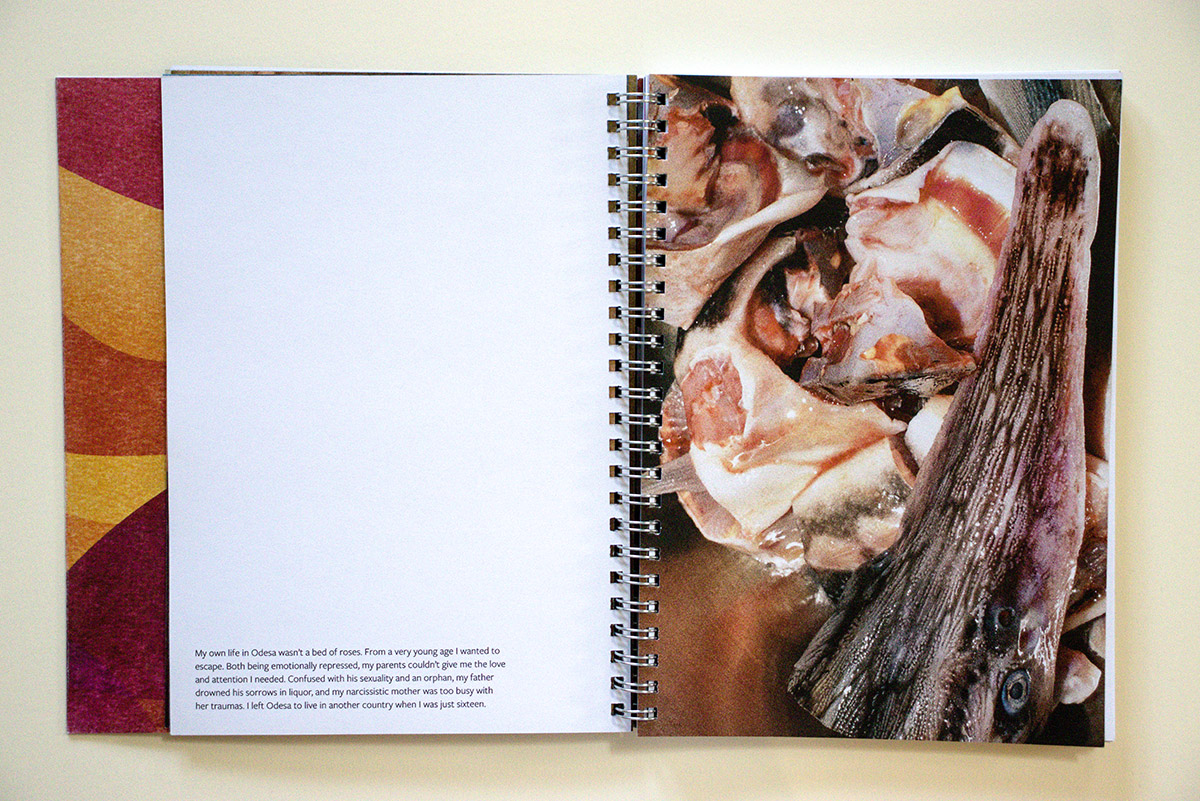
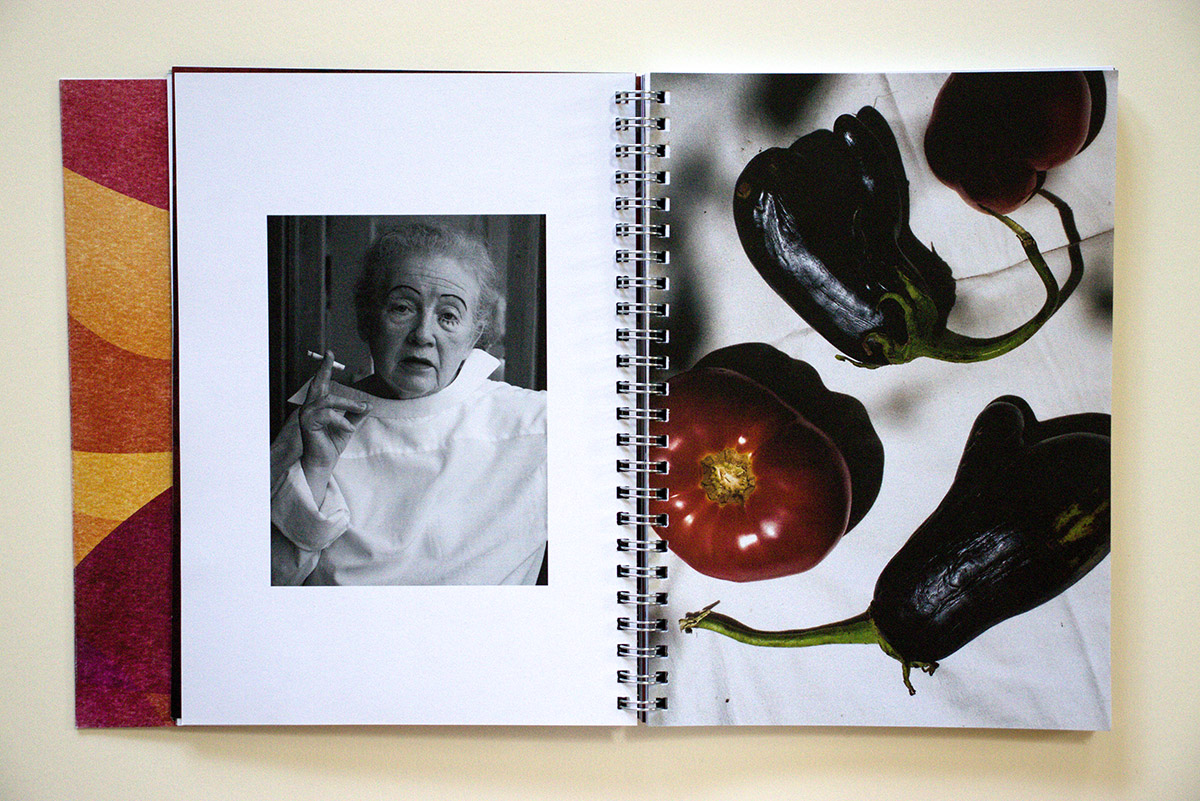
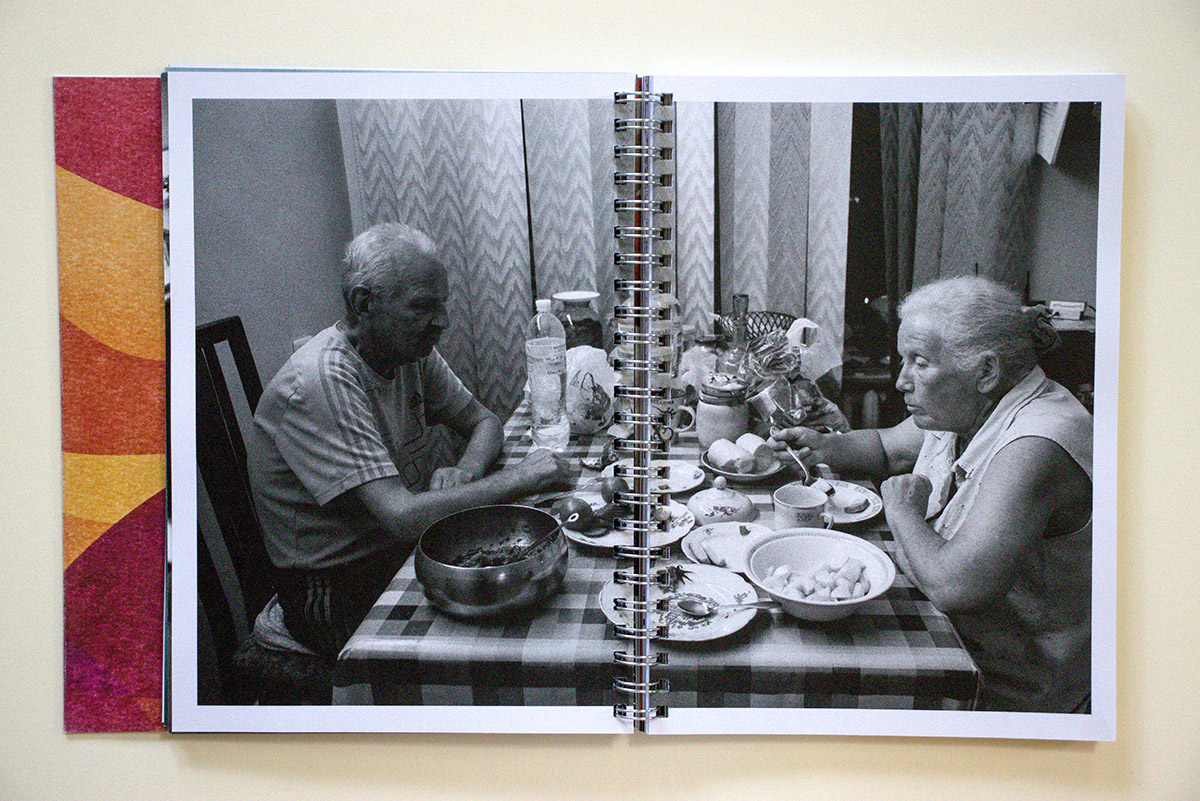
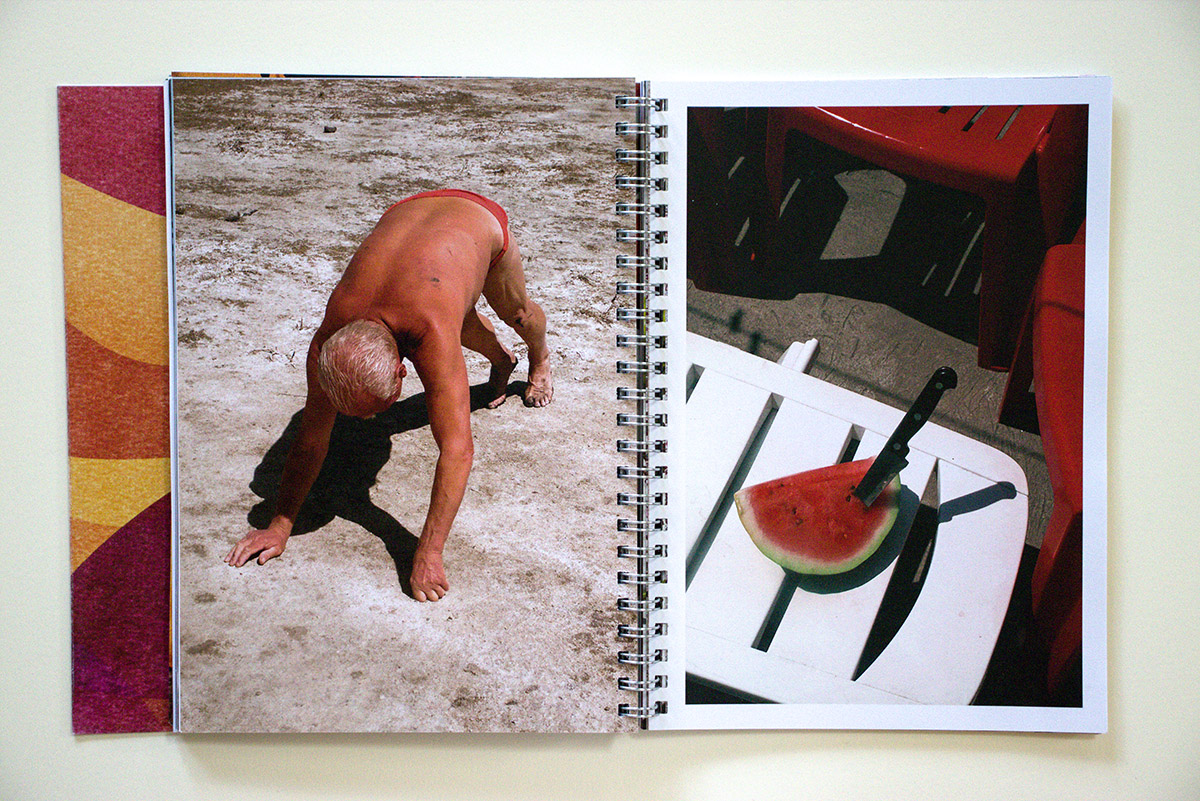
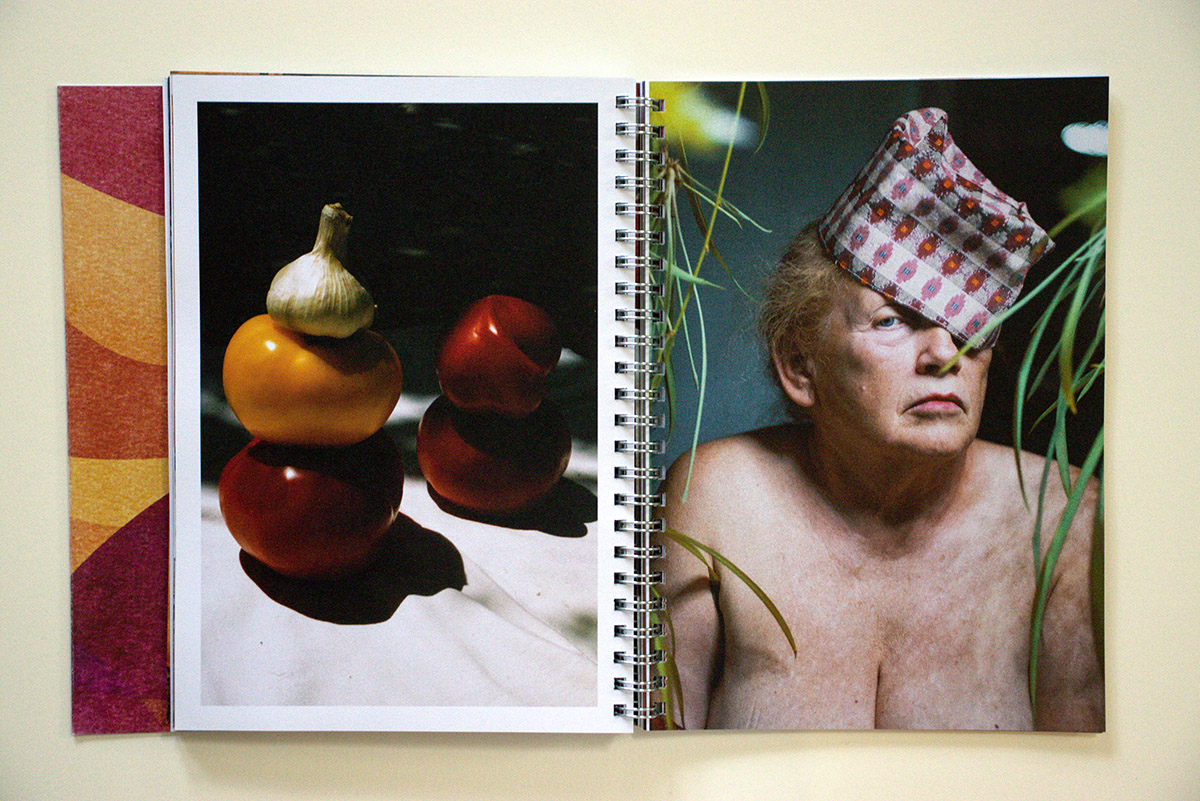
The visual themes are established in the opening pages. You see photos of a table laid for a meal, vegetables used to make aubergine caviar, and Blanco’s mother posing in a dress filled with tomatoes. In a short text, Blanco evokes her memories of living in communal housing in Odessa as a young girl and the Odessa Black Sea lifestyle, and she explains why she left at age sixteen. As she does, other visual themes emerge: the sea, the water, the beach, and more cooking ingredients – eggs, garlic, whole chickens, fish. You also see Blanco’s mother naked on the beach, caring for her ailing husband, and posing as an actress with a cigarette.
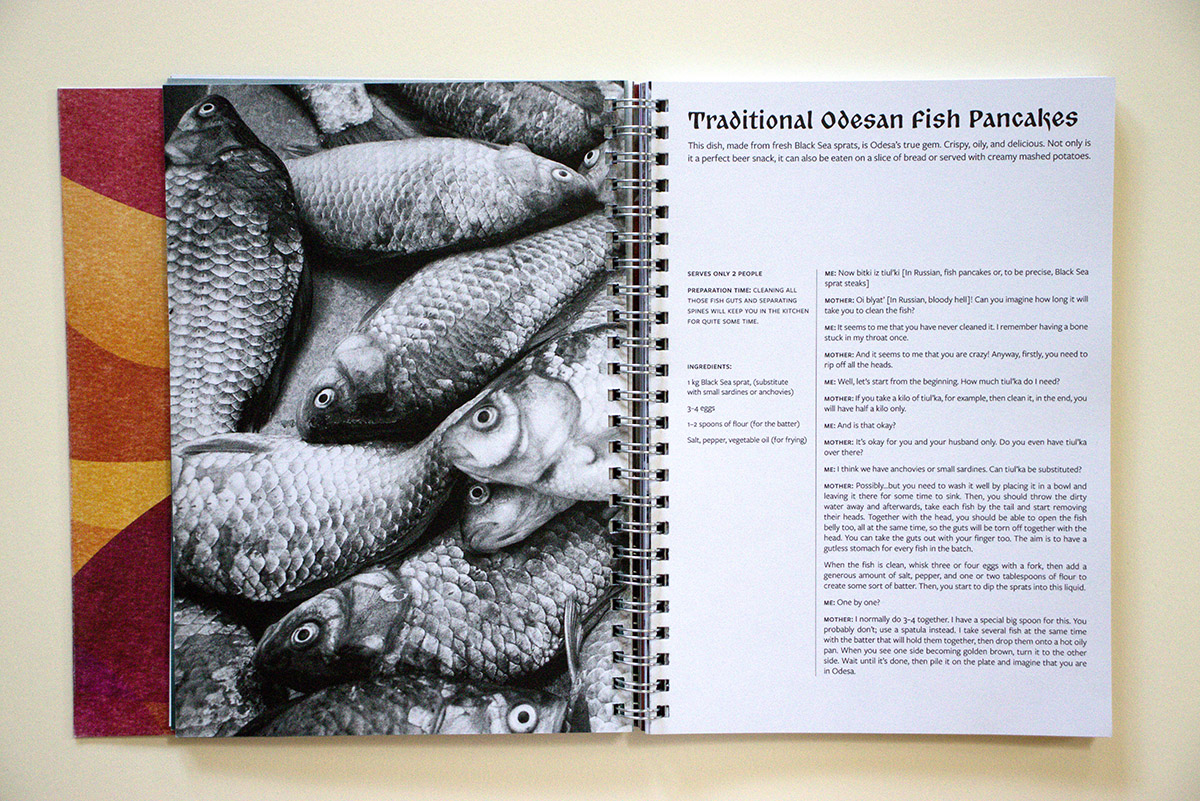
This mélange of visual themes continues throughout the book, interrupted in three places by Blanco’s mother’s recipes for fish pancakes, meat cutlets, and aubergine caviar. Rather than straightforward cooking instructions, Blanco gives us informal dialogues with her mother that give you the basic preparation instructions but also put a smile on your face.
You might think that you would get lost with so many moving parts, but in the end it all works together and snaps into place when Blanco explains the context. The context is Blanco’s extended stays with her parents in Odessa over several years to help care for her hospitalized father and support her mother. Blanco explains the whimsical, staged photographs as a means of entertaining her parents and as a way for her to deal with the unexplained childhood trauma that led her to leave her family and Odessa as a teenager. For Blanco, her memories of Odessa, its food, and her family are bittersweet, as she puts it, “touchingly tender but heartbreakingly unbearable.”
Together, images and texts give you a window into the author’s world. Blanco’s gaze is frank and unflinching. She shows her parents close up. You see their scars, their wrinkles, their varicose veins, and their sagging skin. Her mother is often seen unclothed, and you wonder if this is a cultural or maybe just a personal thing.
In terms of the book’s design, its spiral binding totally works with the idea of a recipe book. The photos are in color and black and white. There are full bleed layouts and photos with wider or narrower margins. There also appear to be several double exposures. It all meshes seamlessly to support the narrative.
The book ends on an optimistic note. We see Blanco’s father, but unlike earlier, he appears healthy. Blanco does not mention if she herself has healed, but one hopes that the process of preparing this flavorful photobook has helped.
Hans Hickerson, Editor of the PhotoBook Journal, is a photographer and photobook artist from Portland, Oregon.
____________
Alex Blanco – Meat, Fish, and Aubergine Caviar
Photographer: Alex Blanco (born in 1988 in Odessa, lives in the Netherlands)
Publisher: Overlapse © 2023
Language: English
Text: Alex Blanco
Design: Tiffany Jones
Printed in the U.K.
Folded wrap-around softcover with flaps; 91 color and B/W photographs; spiral binding; 120 pages, unpaginated; 15 X 21 cm; ISBN 9781738130009
____________
Articles and photographs published in the PhotoBook Journal may not be reproduced without the permission of the PhotoBook Journal staff and the photographer(s). All images, texts, and designs are under copyright by the authors and publishers.
 PhotoBook Journal
Leave a comment