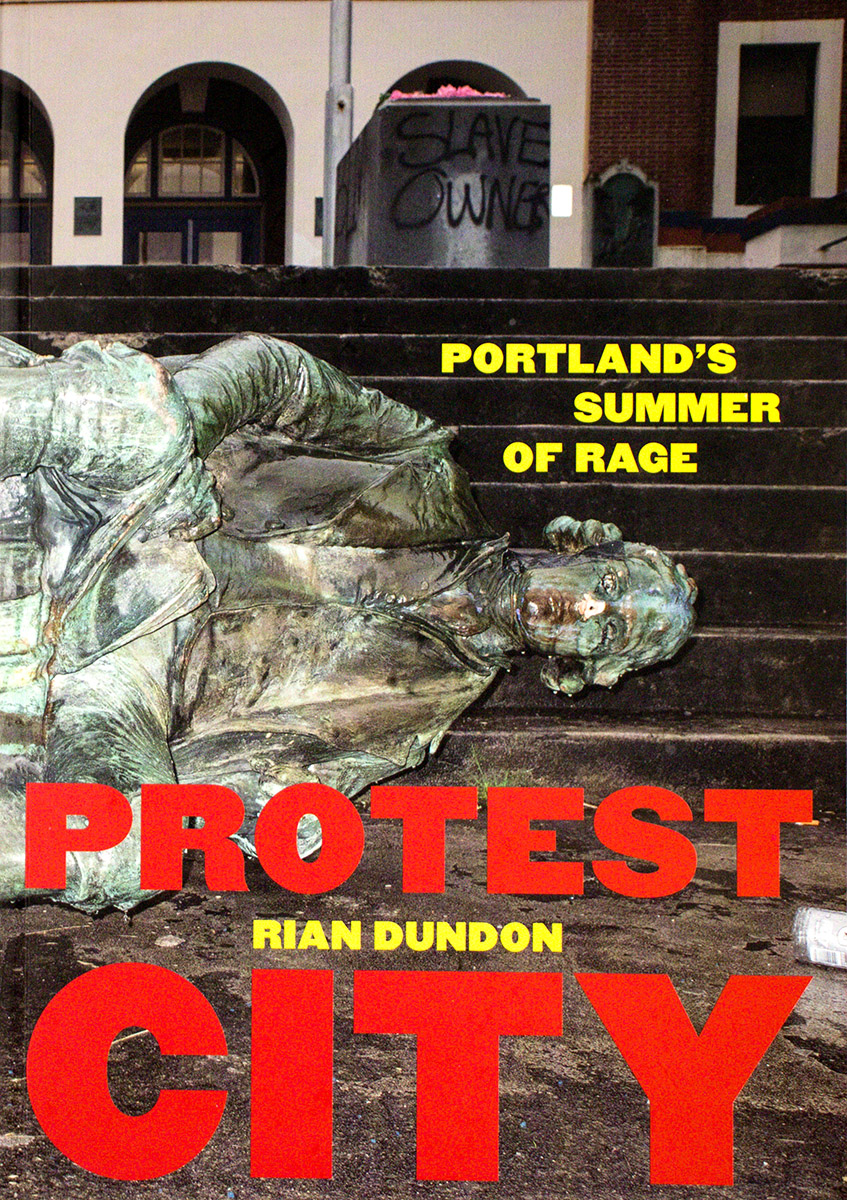
Review by Hans Hickerson ·
Having reviewed Rian Dundon’s recent photobook Passenger, I was curious to see his other books. I managed to get my hands on Changsha (2012, 2017) documenting his years in China, in black and white, full of movement, and trending dark and impressionistic, but this review is about another of Dundon’s books, his 2023 Protest City.
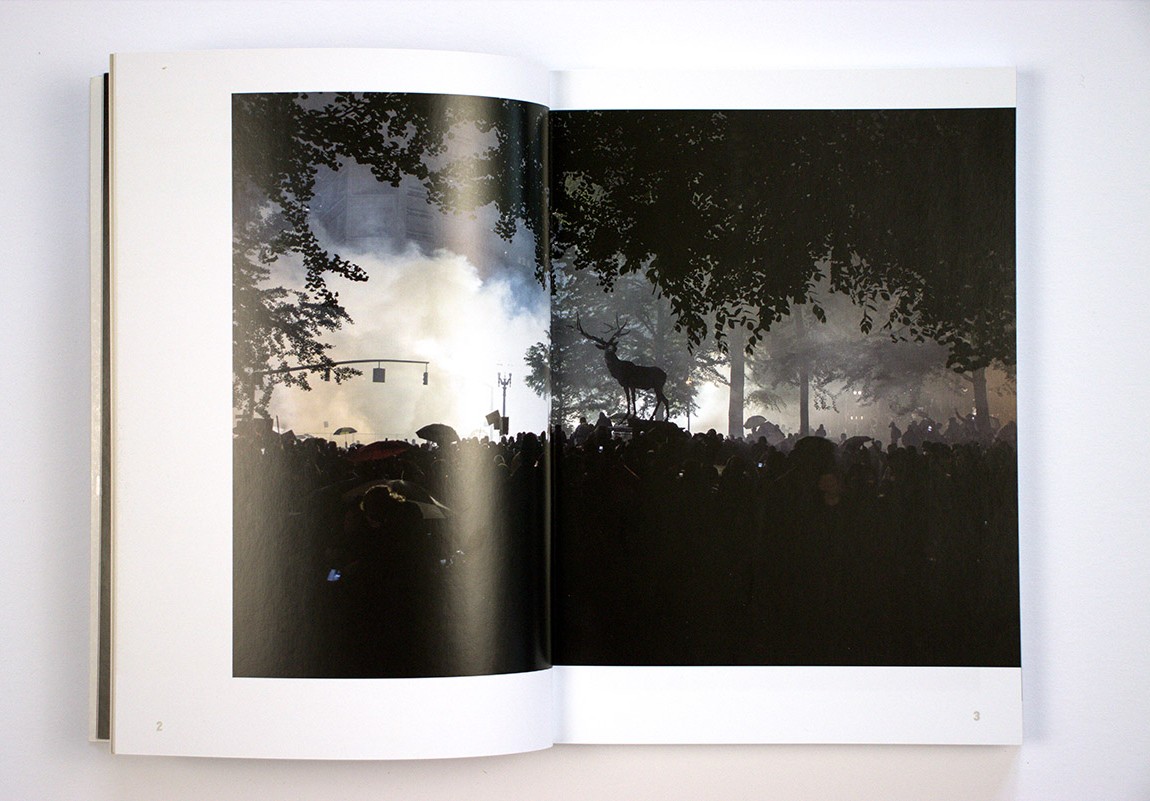
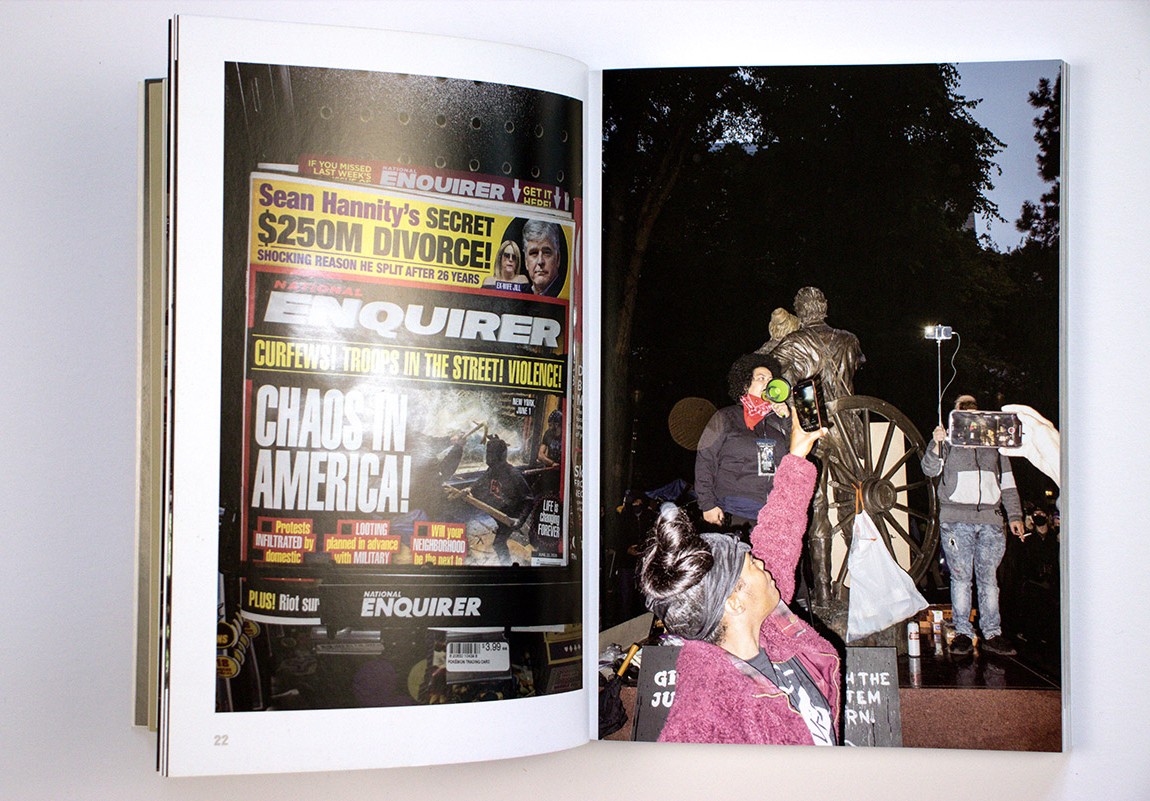
Protest City is closer to Passenger stylistically than Changsha, with photographs in color and with colors blown out or flattened by flash, as well as a point of view that takes you in close to examine telling details – a protest poster for example or an orphaned shoe. Some photographs would fit in either book, although each book frames the images in its own distinctive context and format.
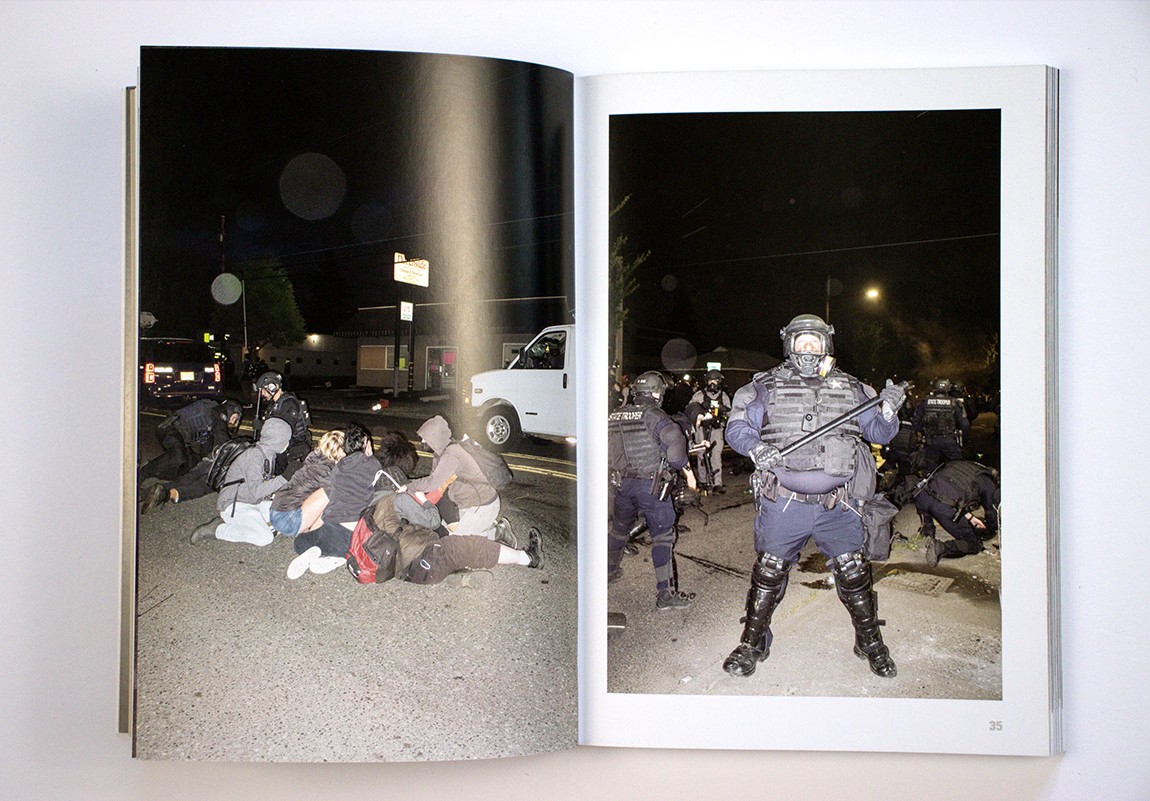
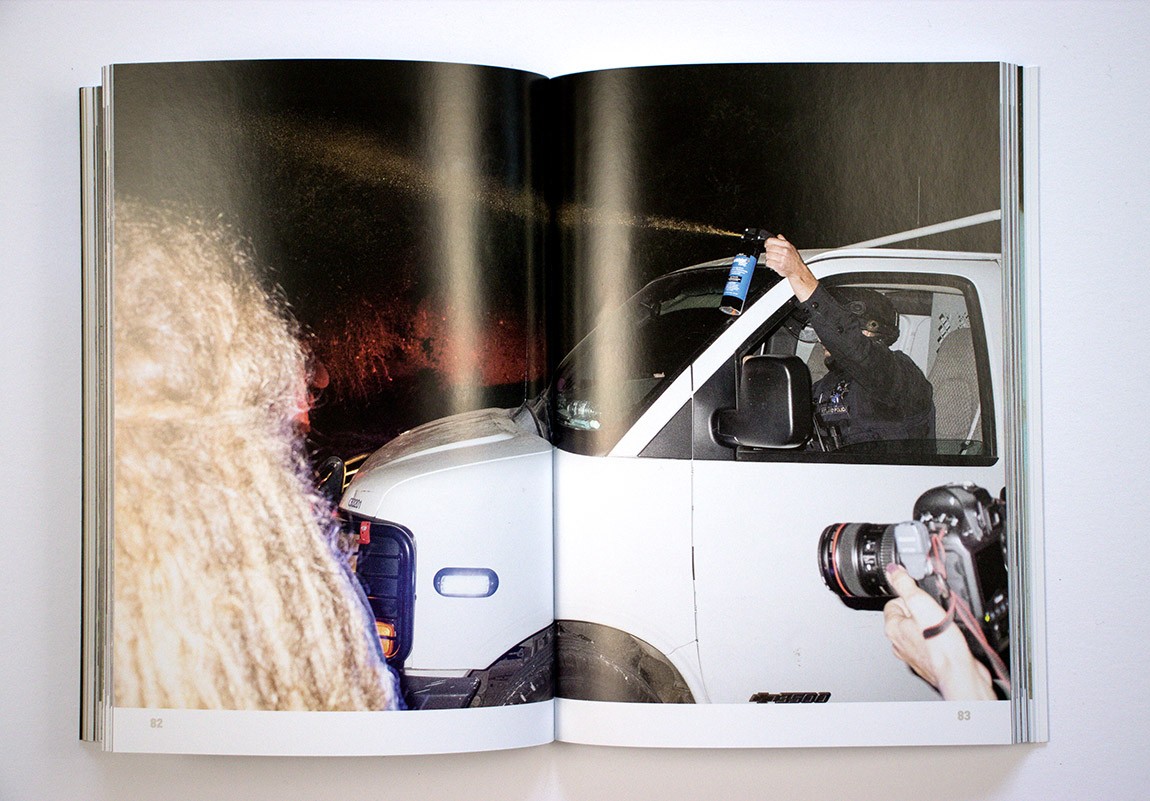
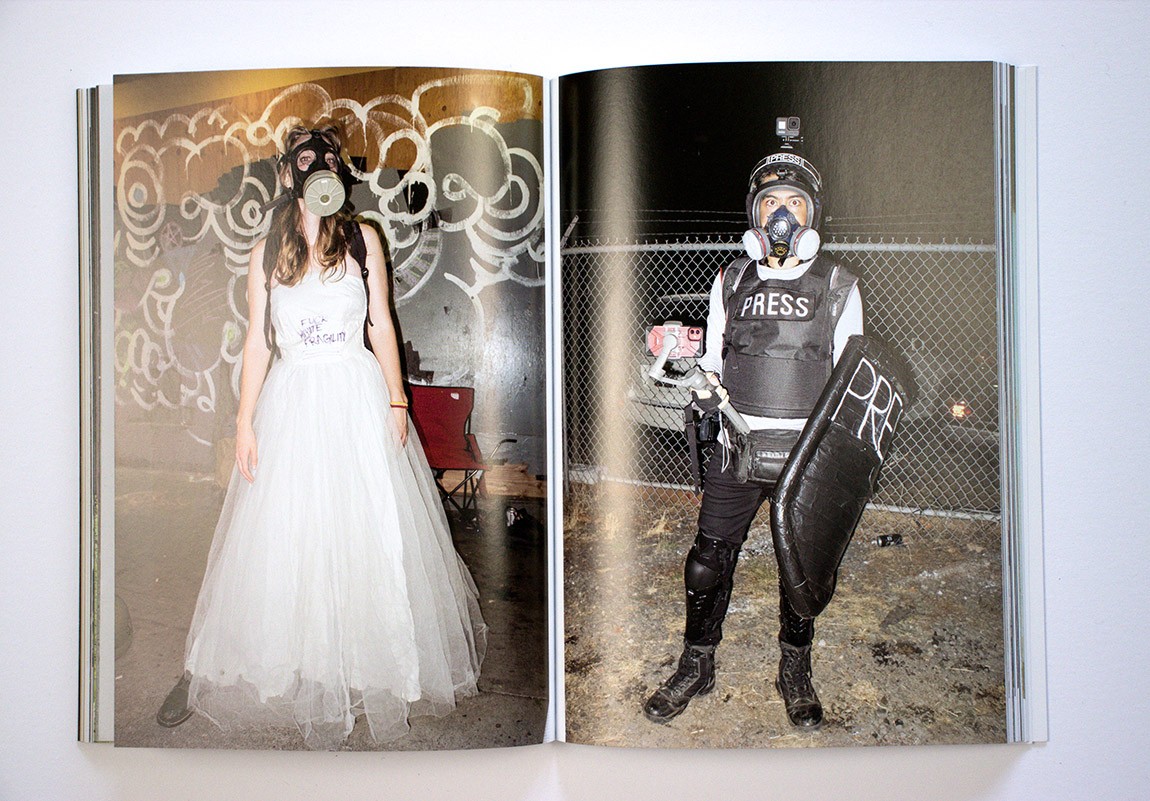
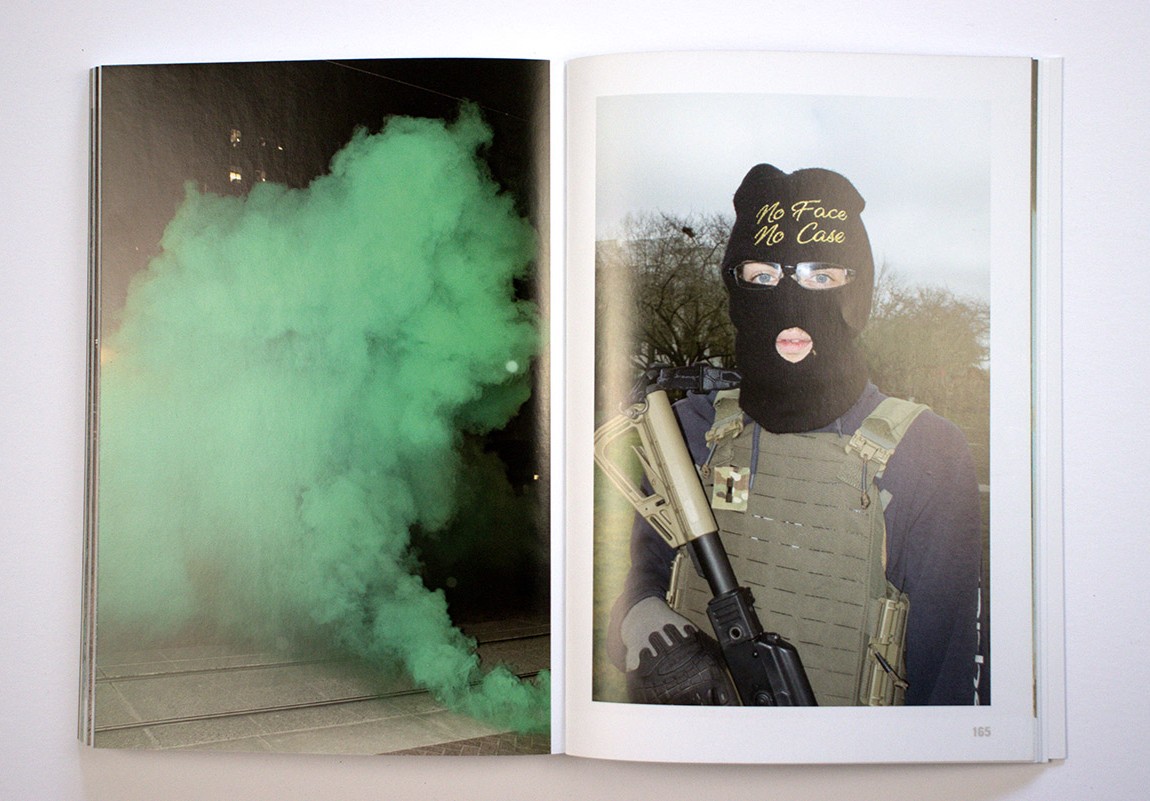
Protest City gives a thorough visual account of the Portland protests of 2020, its “summer of rage,” and it helpfully includes both a chronology and detailed captions that add up to more than enough information to understand the what of the events and at least an idea of the why as well. It serves as eyewitness testimony at a time when people seem to have moved on with their lives, putting the pandemic and the unrest behind them. Indeed, today only a few traces of the protests remain in the downtown Portland area that was once the scene of so much turmoil.
I can say this because I live in Portland myself. Although our house is close to the protest epicenter, the federal courthouse downtown, at home in COVID lockdown we lived in a different world. We saw no visible evidence of anything unusual happening, with the exception perhaps of more graffiti and BLM signs than usual. My children, then thirteen and ten, wrapped up as they were in their young lives, would be astonished to see these photographs of what was happening a few miles to the south.
As for the book, Dundon inventories wide-ranging aspects of the protests that he notices, photographs, and weaves into his chronicle. Protest City is rich, varied, and intense – a great example of skillful visual storytelling. It offers a wealth of details and visual facts that accumulate as you turn the pages.
Dundon doesn’t obviously take sides in the book but shows events without editorializing. Given that he was on the side of the street with the protesters and not with the police or the Proud Boys, however, you can intuit where his sympathies likely lie. He shows admirable restraint in this regard, as on one occasion he paid a price for being too close, thrown and pinned to the ground by a federal marshal even though he was clearly identified as press.
I was originally interested in looking at Protest City because the images themselves are so close stylistically to those in Passenger, but as I mentioned above, here the context is quite different. It goes to show how a photograph can be used in many different ways. Depending on its context it can be art, journalism, advertising, administrative record, personal souvenir, propaganda, or some combination thereof. Though not without artistic resonance, the images in Protest City to me function as journalism, embedded as they are in a narrative structure describing a defined event.
You can argue that this is a distinction without a difference, an artificial label that one can get around by talking about the art of journalism. I was curious and wondered if it is possible to define where journalism ends and art begins, and to clarify it for myself I googled it and, for what it’s worth, found the following:
“While both art and journalism can involve creative expression and storytelling, the core difference lies in their primary purpose: art aims to express emotions, ideas, or aesthetics, while journalism aims to inform and report factual events with objectivity and accuracy.”
You can agree or disagree with this, but in the end it probably doesn’t matter what it is called. However you categorize it, Protest City is a more than memorable chronicle of an undeniable summer of rage.
PhotoBook Journal previously reviewed Rian Dundon’s Passenger.
Hans Hickerson, Co-Editor of the PhotoBook Journal, is a photographer and photobook artist from Portland, Oregon.
____________
Rian Dundon – Protest City
Photographer: Rian Dundon (lives in Portland)
Publisher: OSU Press; © 2023
Language: English
Texts: Rian Dundon, Donnell Alexander, and Carmen P. Thompson
Design: Rian Dundon and Bonnie Briant
Softcover, 7 x 10 inches, 232 pages, 126 color photographs, ISBN 9780870712265
____________




____________
Articles and photographs published in the PhotoBook Journal may not be reproduced without the permission of the PhotoBook Journal staff and the photographer(s). All images, texts, and designs are under copyright by the authors and publishers.
 PhotoBook Journal
Leave a comment