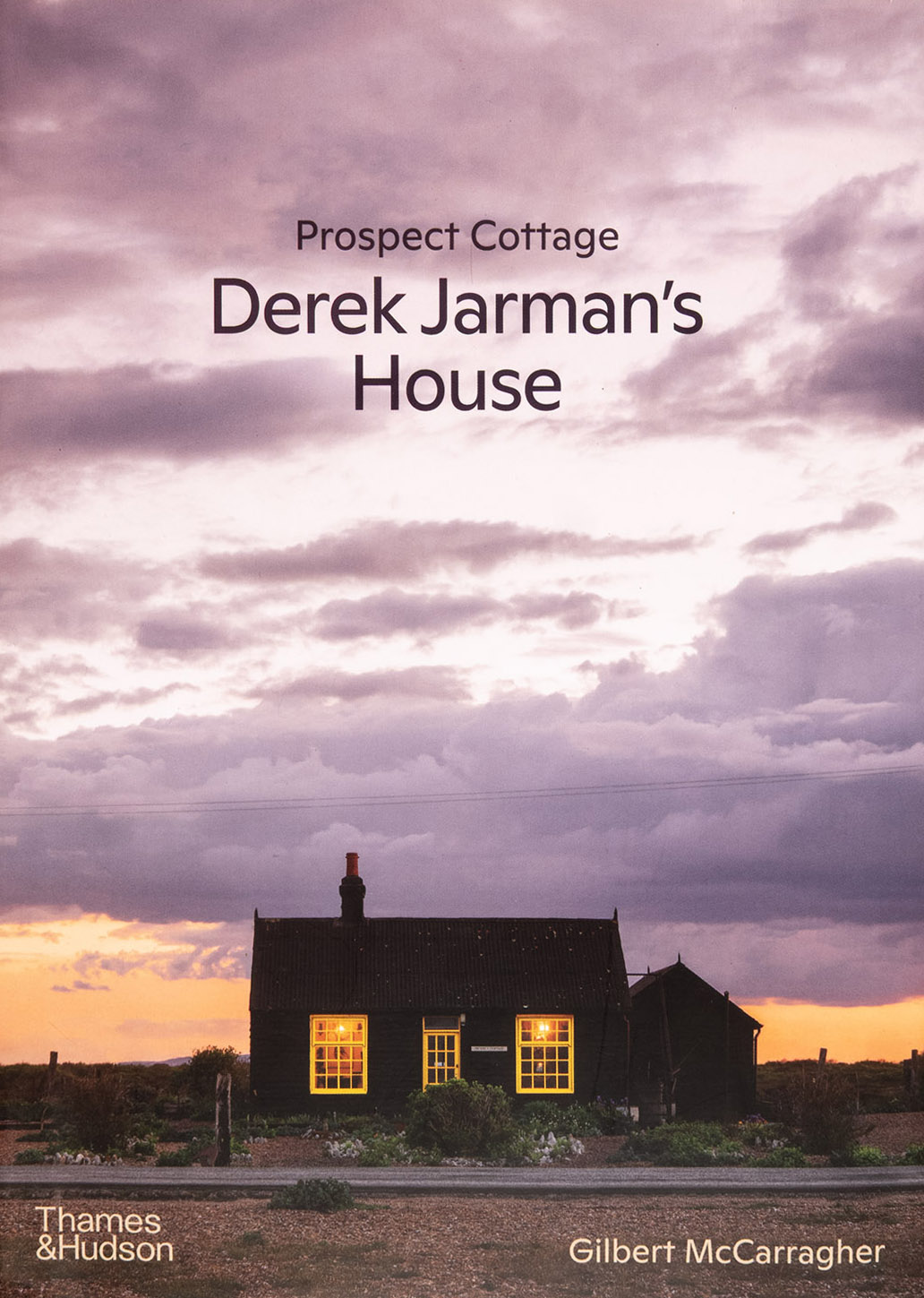
Review by Steve Harp ·
I was a bit apprehensive about writing a review of Prospect Cottage: Derek Jarman’s House. While I’ve only seen one of Jarman’s films (Wittgenstein, 1993), I’ve become increasing interested in Jarman’s output as an artist. Not only a feature film director (11 released between 1976 – 1993), Jarman was also a maker of numerous short, experimental films in Super-8, a painter, a set designer, a color theorist and a writer. Although I haven’t seen his last film, Blue (1993), I’ve read the script which I find poetic, heartbreaking, elegant and elegiac.
So, I was quite interested to investigate a book of photographs of Jarman’s living and working space during his final years, Prospect Cottage in Dungeness, England where Jarman spent the last eight years of his life (1986 – 1994) before he died of AIDS at 52. My apprehension, though, was a concern that the book would be a “better homes and gardens” type book, a book merely of fashion and design, visually pretty but with no real substance beyond the surface. And while, in one sense, it is a “better homes and gardens” type book, featuring truly beautiful interior and exterior photographs of Prospect Cottage, it is a much more insightful and compelling volume and narrative. No “merely” involved here.
I suggest that the book not be approached or seen simply as a portrait or document of a space, but rather as a narrative, a story, an attempt to photograph what’s not there, a search to find what yet remains. Writer/photographer Gilbert McCarragher, an established architectural photographer and neighbor of Prospect Cottage, was asked to visually record Jarman’s house after the passing of Jarman’s partner, Keith Collins, 24 years after Jarman’s death. In the first section of the book, “Prospect,” McCarragher describes his awkwardness at being alone in the cottage for the first time:
It was oddly quiet . . . The stillness of the space and the circumstances of my presence left me feeling a little unsure – apprehensive even. Simple thoughts of ‘Where to start?’ and ‘What next?’ amplified themselves in the silence.
He goes on to describe “com[ing] up with something of a plan for photographing it . . . preparing the space.” He:
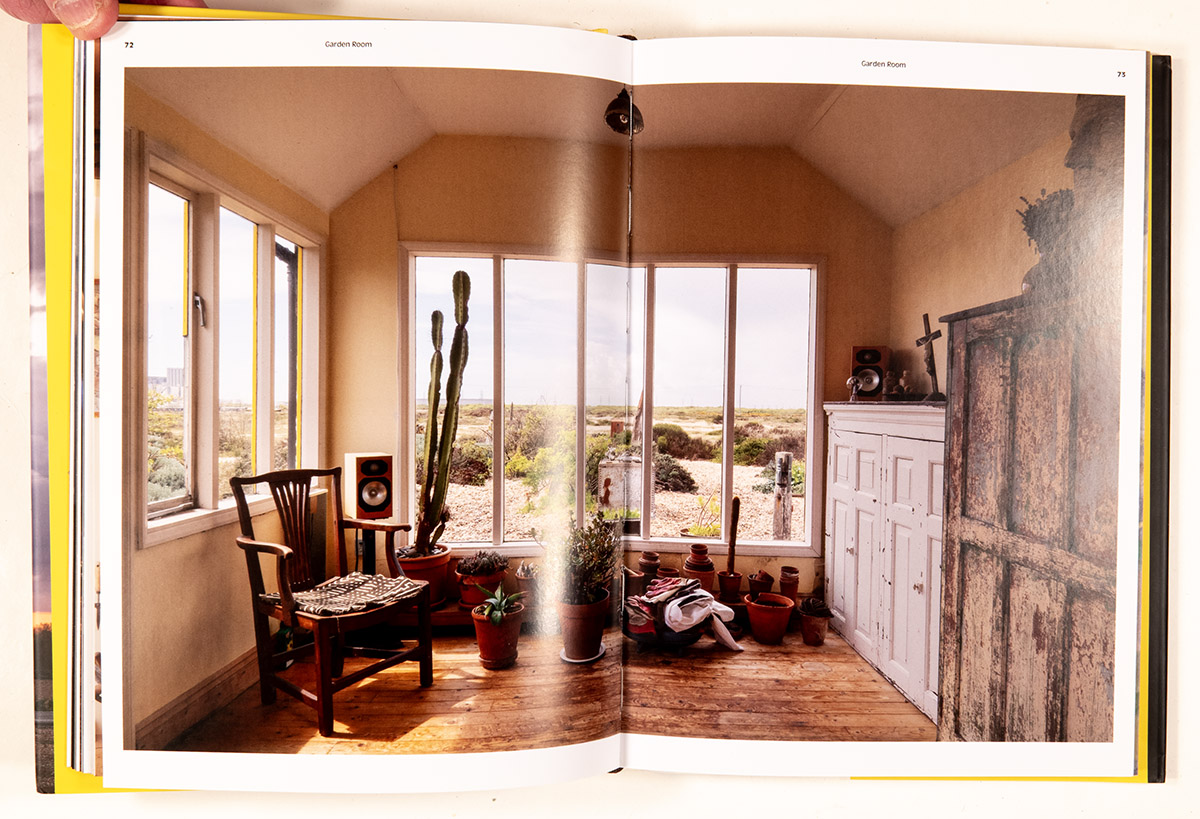
approached the task systematically, shooting each wall in perfect elevation, then each corner at a 45-degree angle, producing eight shots in each of the square rooms as I had planned. I made my way through the house in this workmanlike manner, documenting and recording what was there. In doing so I felt I was capturing everything – and yet also nothing. . . . I knew from previous visits that this was not how you should experience Prospect Cottage.
And so, McCarragher decides he needs to return to Prospect Cottage, to rethink his “workmanlike,” formulaic approach and instead, “try to preserve not only what was physically there, but also the memories that it represented.”
Consciously or otherwise, I allowed serendipity to return to my visits. I found myself being led by objects or moments of interest, moving between rooms almost haphazardly . . . I doubled back on myself regularly, revisiting pieces and places at different times of the day to see how they changed.
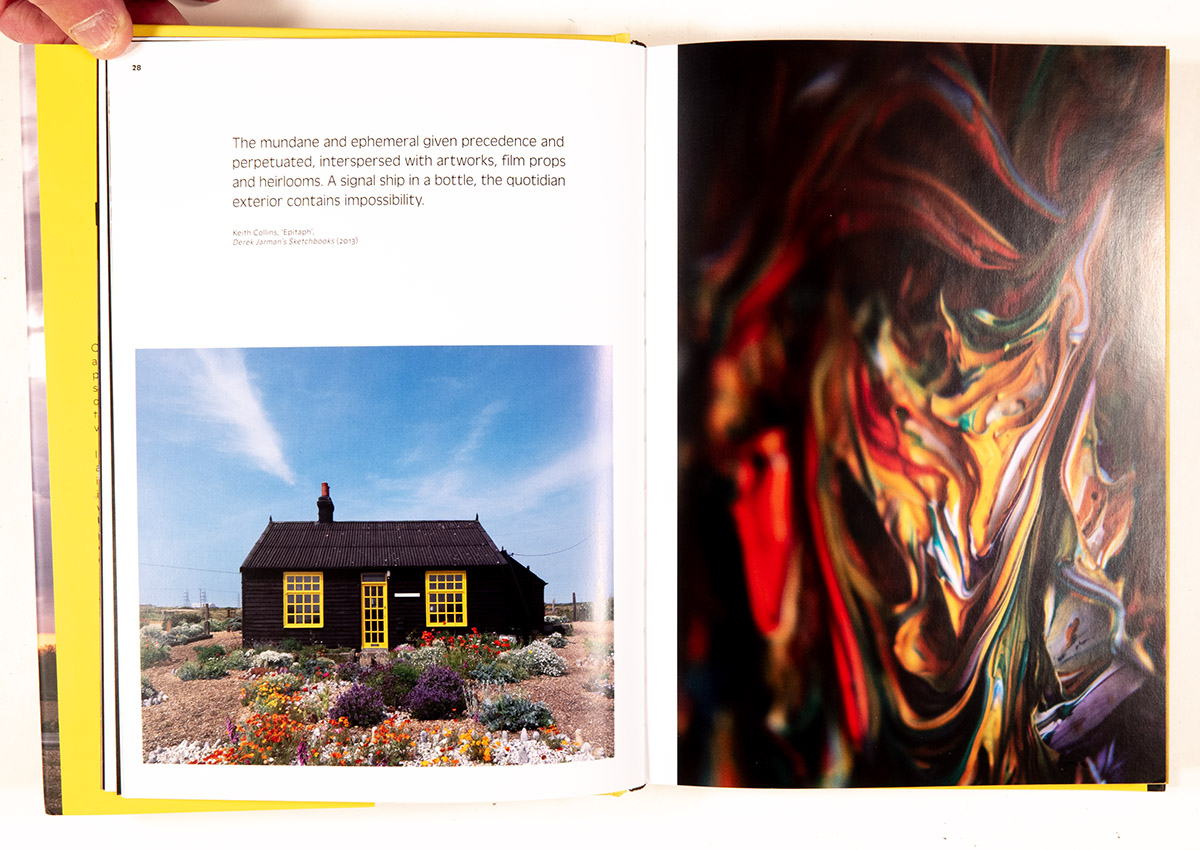
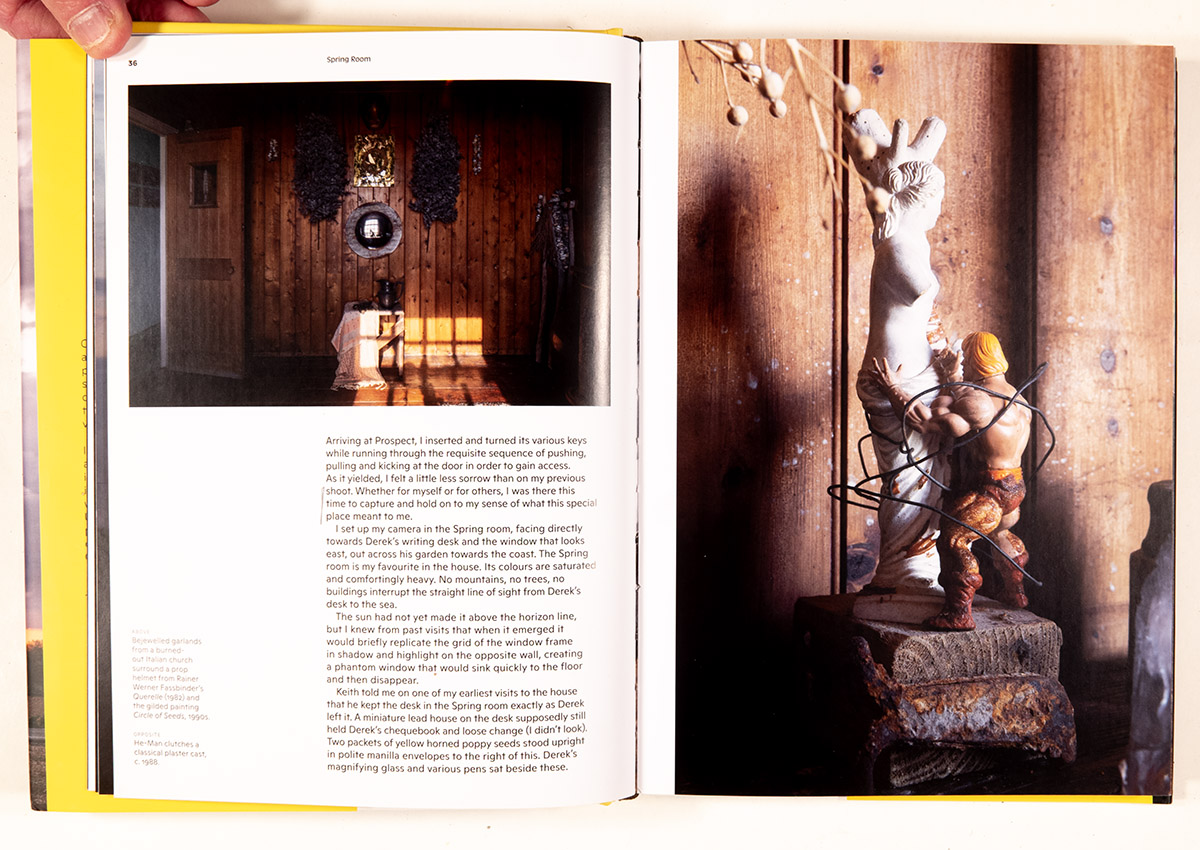
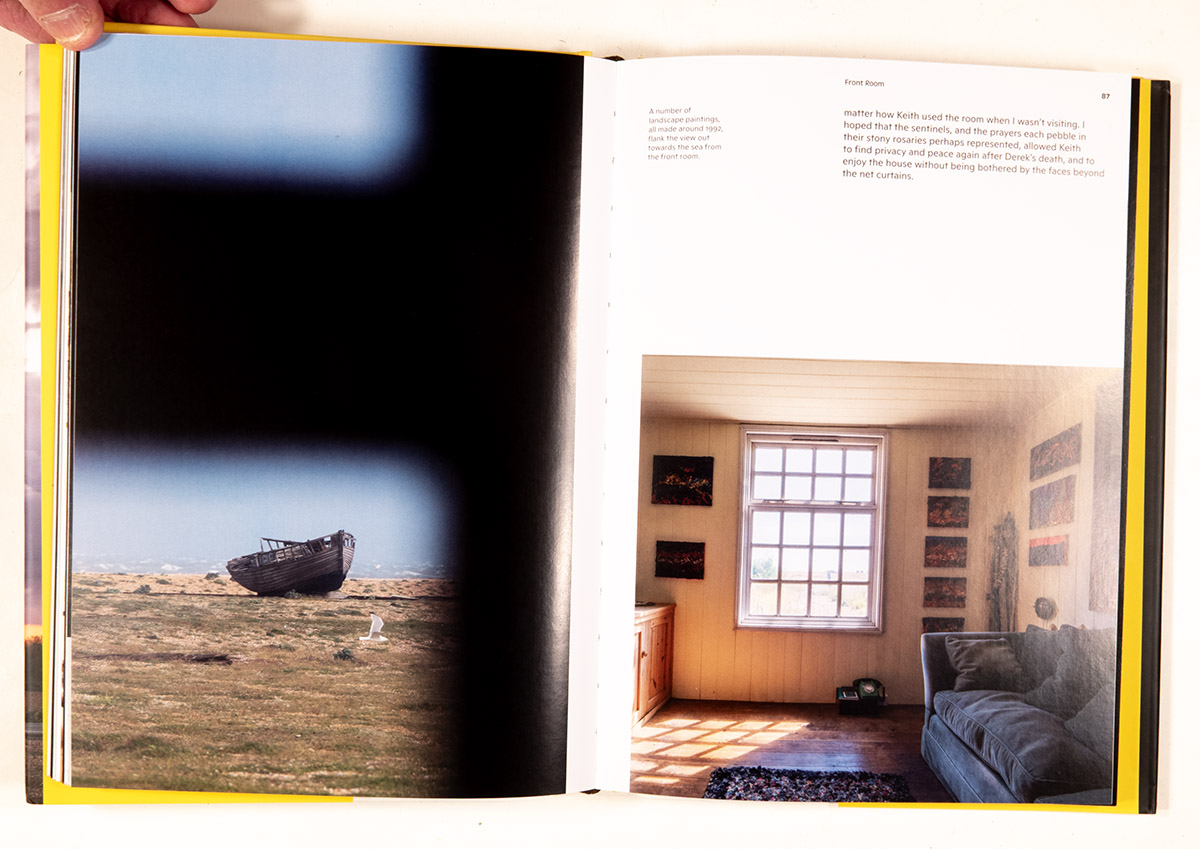
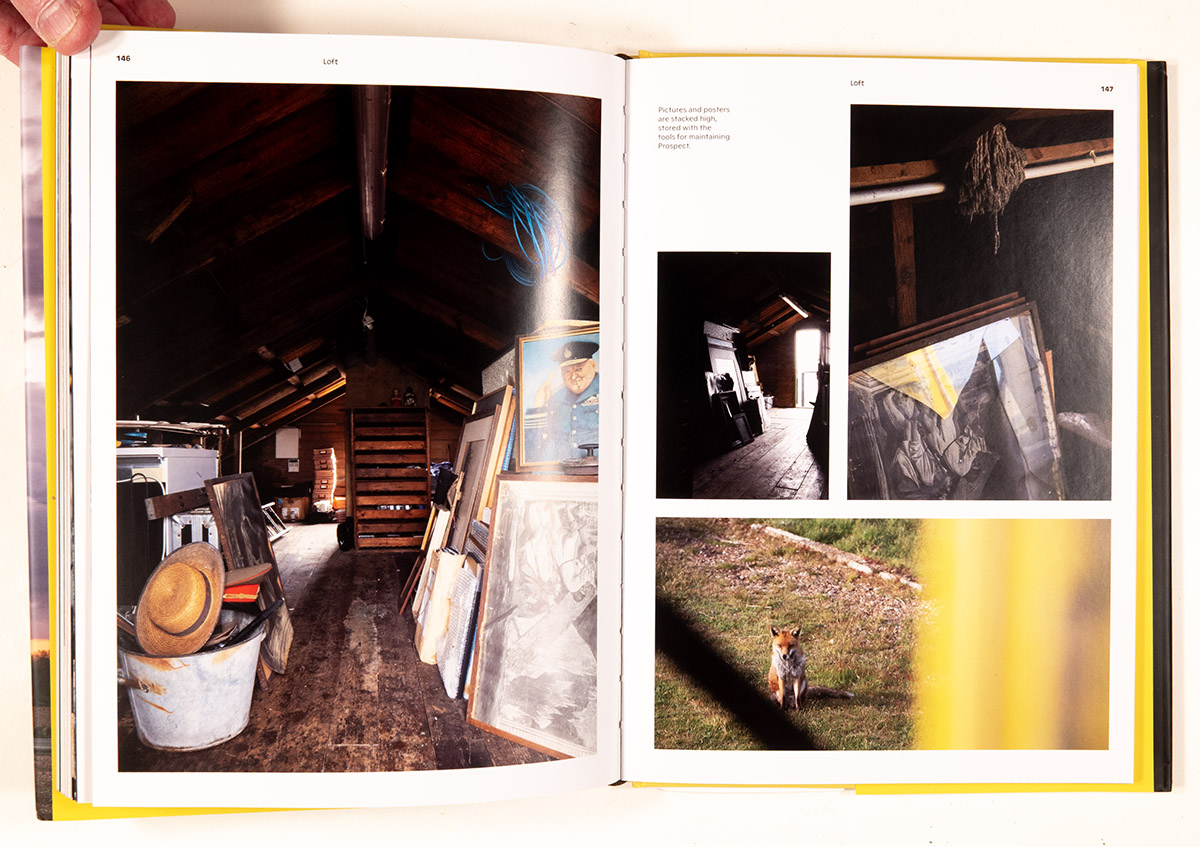
What follows, in the remaining nine sections of the book (there are 11 sections total) is McCarragher’s visual record of the space, as well as a recounting of his process and musings as he considers Jarman, Jarman’s artwork, Jarman’s use of the space and his own thoughts in photographing as it unfolds. In a very real sense, McCarragher’s narrative might be considered a haunted house tale, because every haunting involves a presence in absence, a search for what’s not there but, at the same time absolutely is (this could, in fact, describe photography itself) and the images McCarragher presents us with so powerfully conjure Jarman while at the same time testify eloquently to his absence. The museal quality of these photographs is pronounced, yet these “museum” objects are not gathered and organized by use or date or function or any other classificatory criteria but solely by Jarman’s placement of them, as if he has just stepped away for a moment and will surely soon return. I was reminded of the philosopher Peter Schwenger’s lovely book The Tears of Things (2006) in which he examines the melancholy inherent in our relationship to our objects, the preciousness of what might be considered by others to be debris and waste. In the introduction, Schwenger writes:
Things are valued . . . because they seem to partake in our lives; they are domesticated, part of our routine and so of us. Their long association with us seems to make them custodians of our memories; so that sometimes, as in Proust, things reveal us to ourselves in profound and unexpected ways.
Just as these objects seem to reveal Jarman to the viewer in profound and unexpected ways.
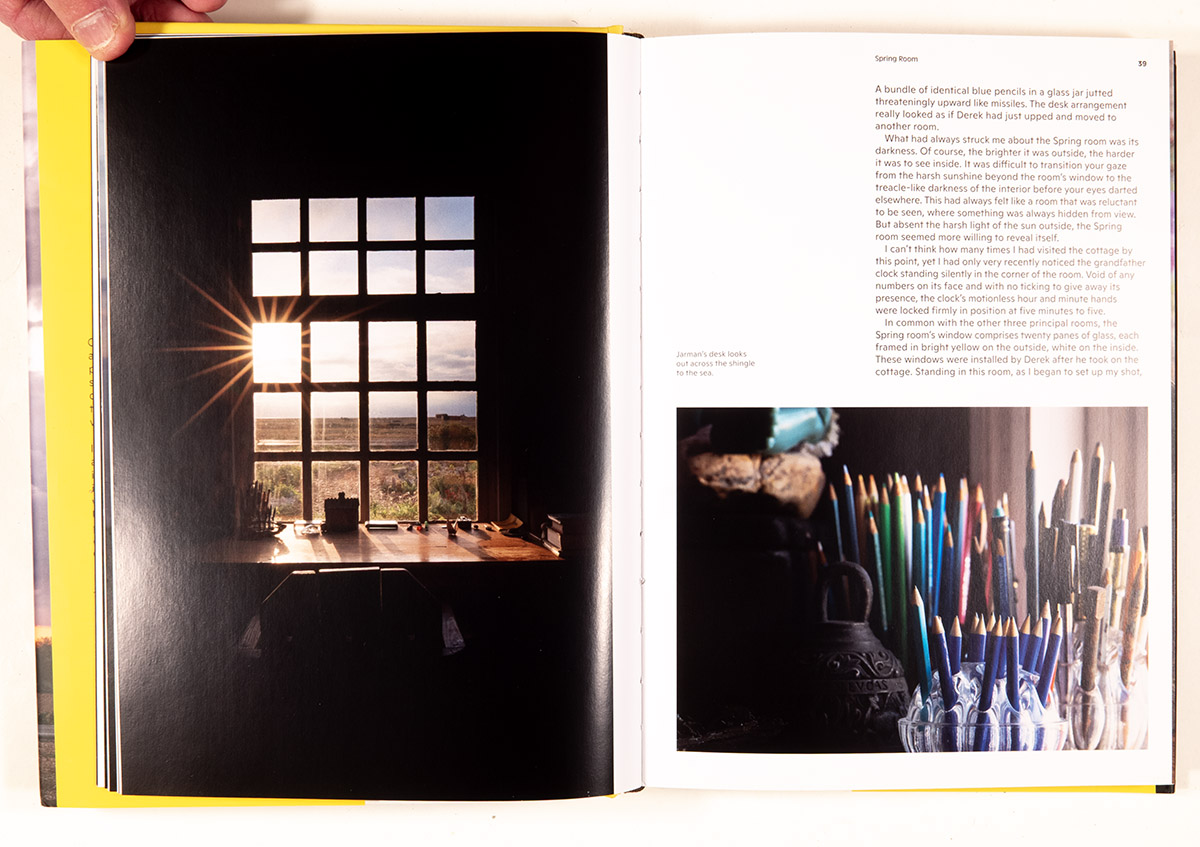
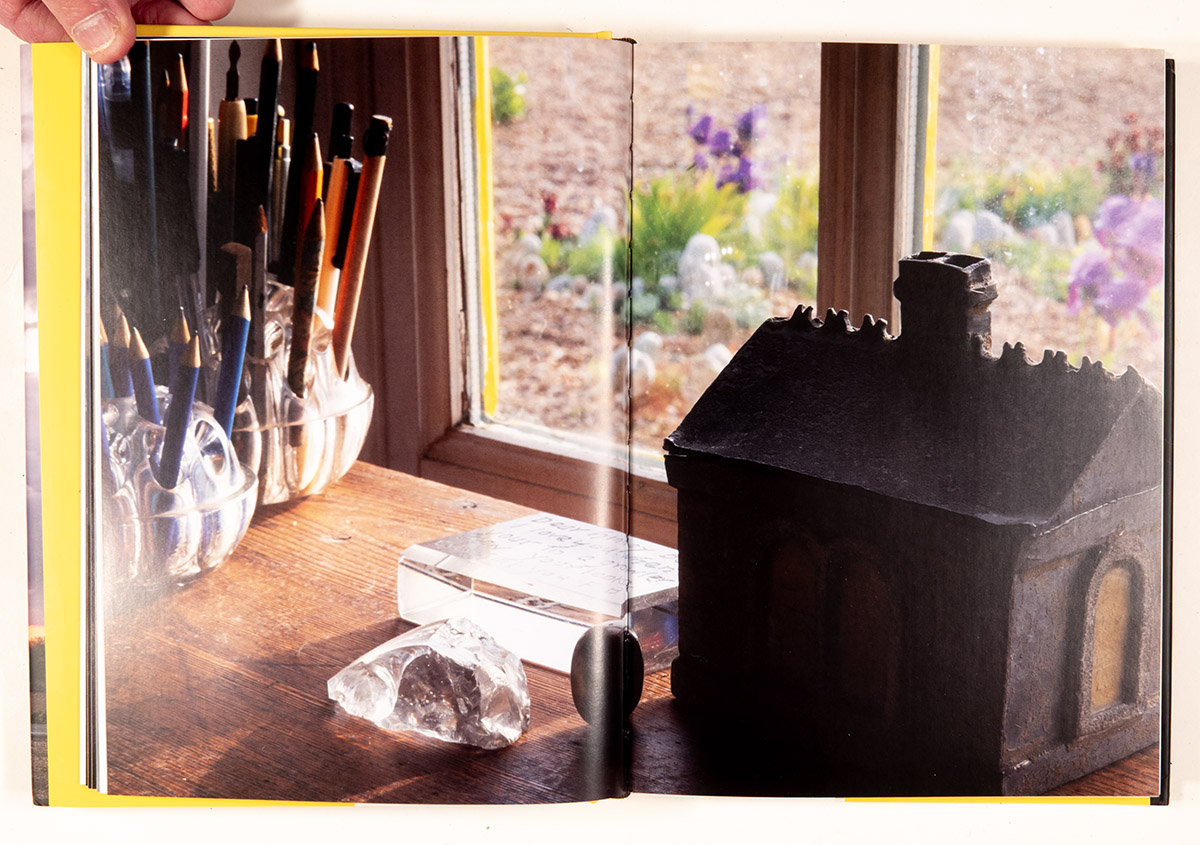
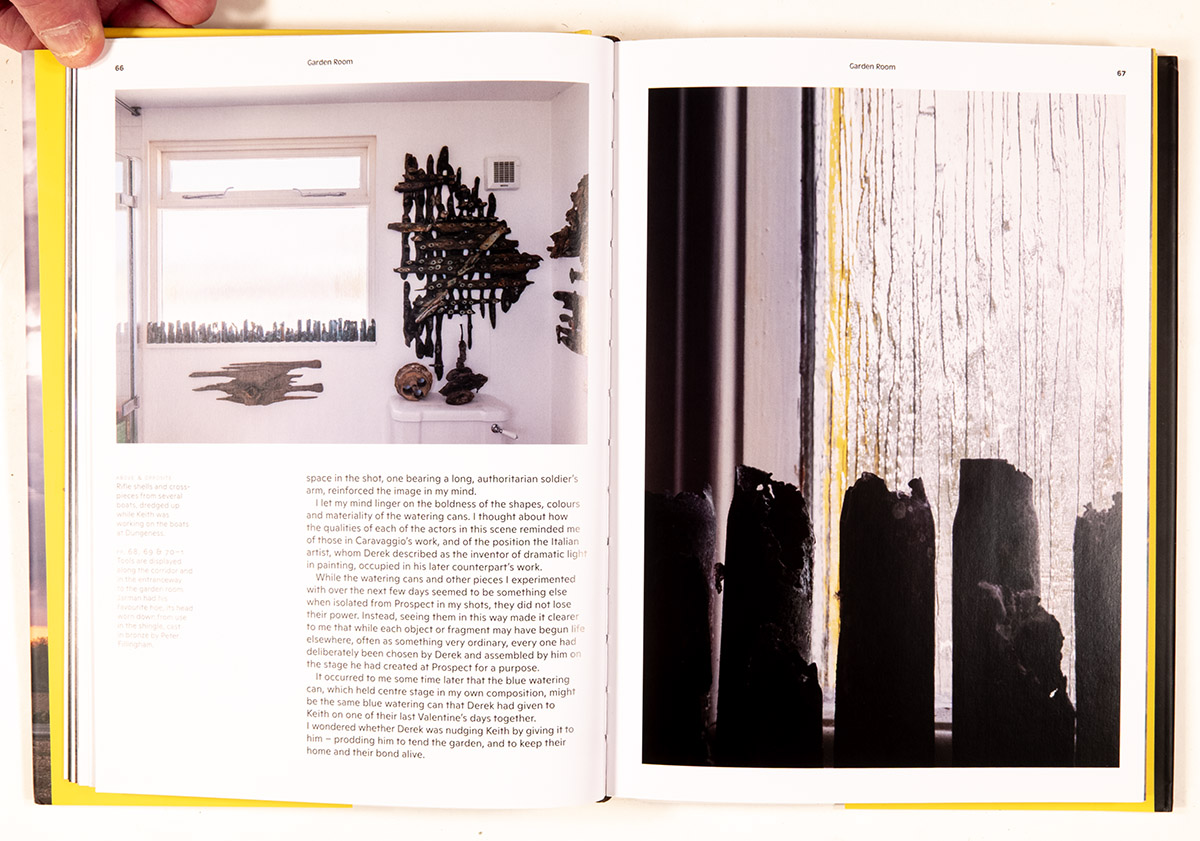
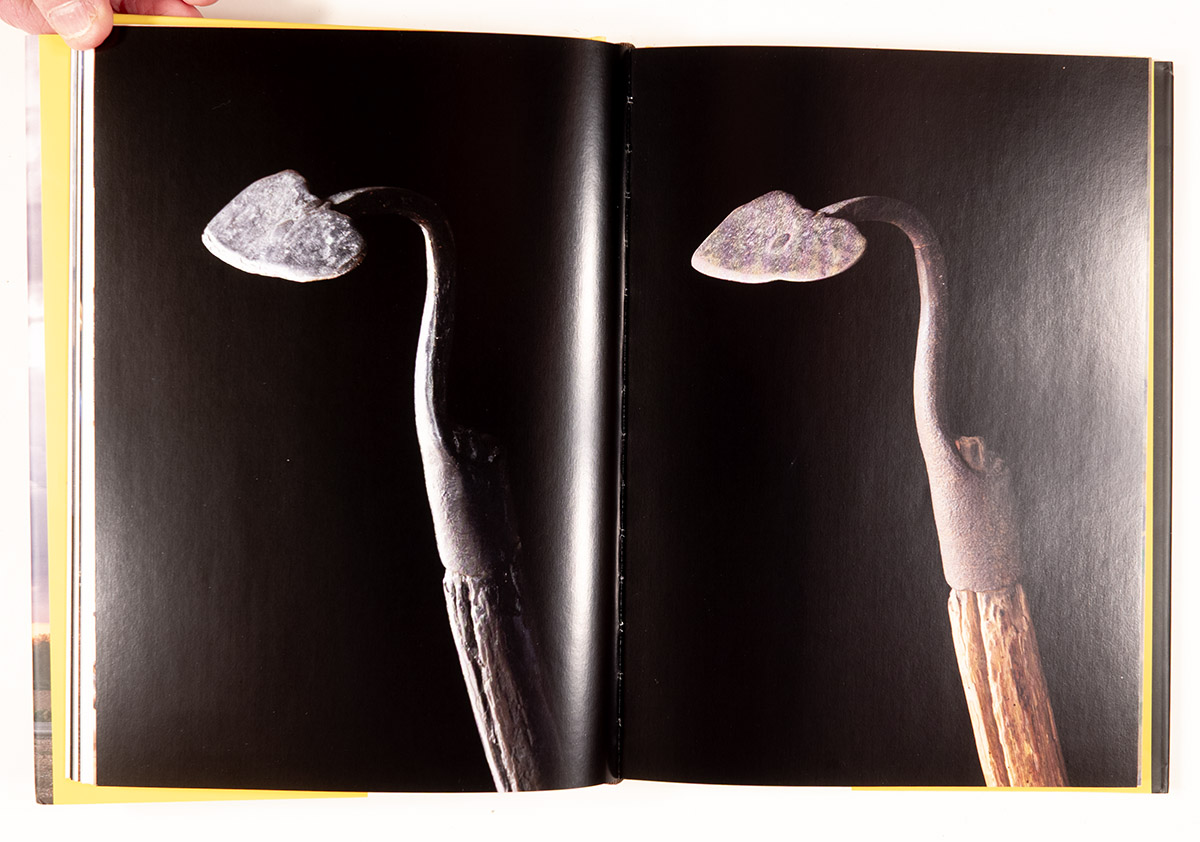
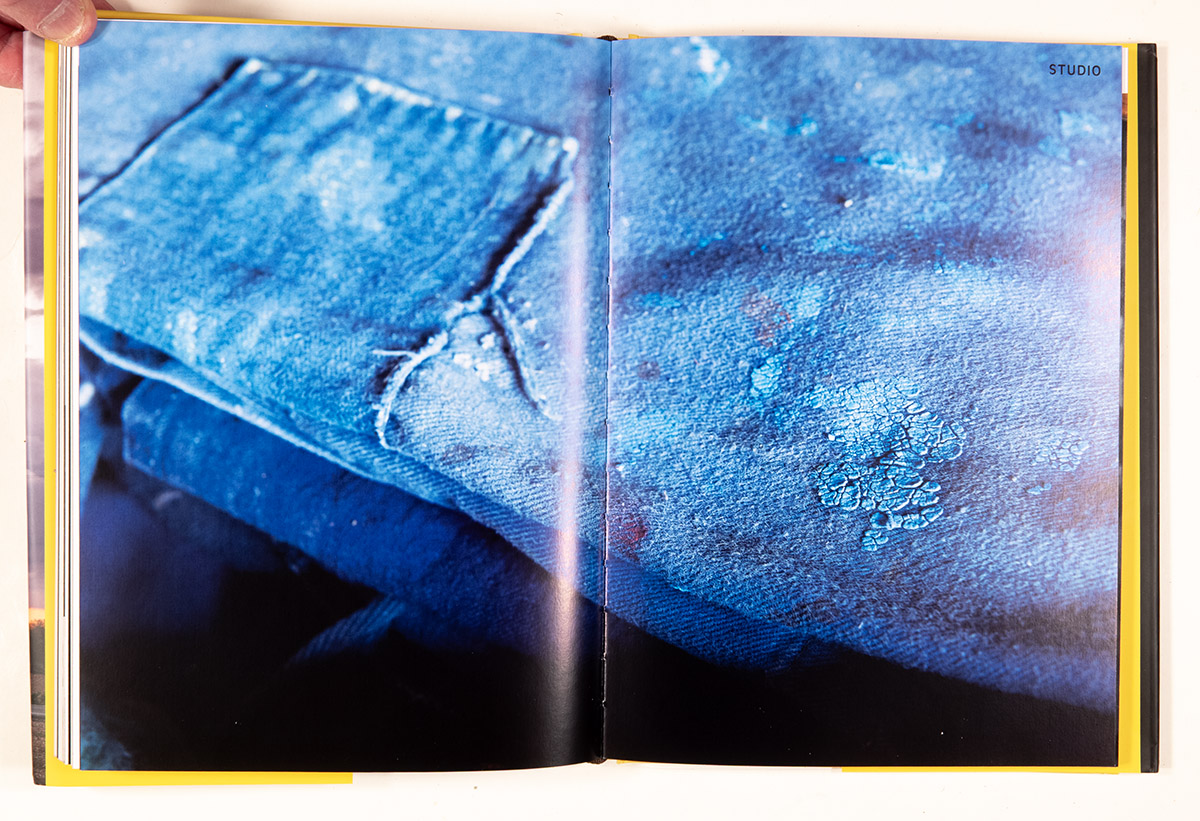
As I suggest earlier, McCarragher does not simply “record” or “document” Jarman’s objects or “stuff,” but he – dare I say – lovingly presents each object and each room as unique and precious. His choices in lighting and depth of field are beautiful and visually engaging. The colors are saturated and vibrant, many exposures seeming about 1/3 stop underexposed which renders the images and objects presented particularly rich. Again, no “merely better homes and gardens” views here. The risks he takes in some of his compositions, his use of windows as frames within frames, the close-ups of images rendering them sometimes unclear or mysterious testify to McCarragher’s talents as a photographer. As he writes in the “Bedroom” section:
Throughout the house, various mirrors and glasses break up and reflect their surroundings. The cottage brings otherwise disconnected elements together and challenges you to see them differently. Derek used reflections, optics and distortions to make you look again, to force you to open your eyes to alternative perspectives and to see connections.
Photographically, McCarragher does this as well, which, he writes, “causes one to look differently at the familiar.” His recounting of the story of photographing Prospect Cottage testifies to his talents as a writer as well as a photographer.
The book as object is a 7 x 9 3/4 hardcover. Its 192 pages contain 161 images that vary from double page full-bleeds to 2 ¼ x 3 ¼ images, fit three or four on a page. It’s divided into 11 sections, each titled usually by the space in the house being described (“Bedroom,” “Studio,” “Loft,” “Garden”) but some indicate the stage of McCarragher’s process (“Inventory,” “Return”) in photographing the house and grounds. The written text extends 37 pages. It is a significant – and necessary – part of the book.
Steve Harp is a Contributing Editor and Associate Professor, The Art School, DePaul University
____________
Gilbert McCarragher – Prospect Cottage: Derek Jarman’s House.
Photographer: Gilbert McCarragher; born in County Armagh, Northern Ireland and currently resides in Dungeness and London, England.
Publisher: Thames & Hudson, London and New York; 2024.
Text: Gilbert McCarragher, Foreward by Frances Borzello.
Text: English.
Book design: Therese Vandling.
Hardcover with case binding. Printed and bound in China through Asia Pacific Offset, Ltd.
____________
Articles and photographs published in the PhotoBook Journal may not be reproduced without the permission of the PhotoBook Journal staff and the photographer(s). All images, texts, and designs are under copyright by the authors and publishers


Leave a Reply