Review by Olga Bubich ·
Regardless of their genre, language or author, there is always something common for all the expectations we have of books – whether those are conventional ones or photobooks. It is a story. Indeed, any book ever written or assembled of images has a certain unfolding narrative, a structure suggesting the exposition, climax, and denouement, a protagonist and a reader, as well as an intellectual or emotional spark that might follow their encounter. In a way, one can say that we experience a book as a journey: starting on the first page, moving forward, and eventually arriving somewhere. And even when a book is difficult or fragmentary, its physical form guarantees an ending – the destination marked by the last page. No book can be endless.
No book can be endless, but it still can. And before spotting “Mirrors” by María Carolina Ceballos Flórez at the Berlin Miss Read Art Book Fair earlier this year, I had thought that such books could exist only in a writer’s imagination. For instance, in Borges’ “The Book of Sand” pages and images of the mysterious volume reveal themselves to the reader only once, with every subsequent address changing into something else and thus turning its impatient reader into, as the writer himself puts it, “a prisoner of the book.”
Another, this time more tangible, example is Raymond Queneau’s “One hundred Million Million Poems.” Inspired by children’s “crazy body” books, in which each page is cut into horizontal strips that can be turned independently, the French poet invites us to experiment with the creative act of sonnet-building. Since every poem in his selection follows the same rhyme scheme and maintains a safe balance between abstraction and thematic continuity, one can indeed get stuck in this game for a while – if not infinitely, then at least for long enough.
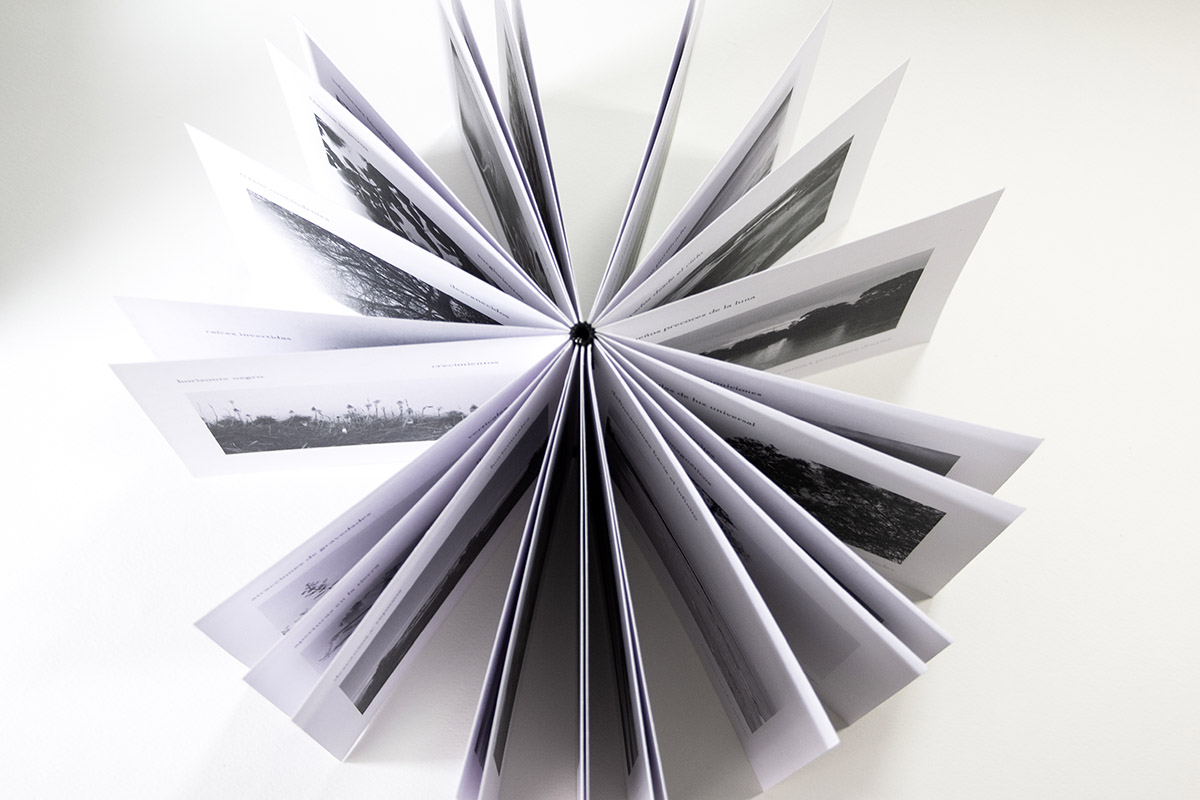
In these two cases, infinity is approached differently: with Queneau, the book is similar to the fortune-teller’s Tarot cards, where, guided by sheer chance, the reader is engaged into endless rearrangement and interpretation. Borges, meanwhile, makes infinity temptingly terrifying – his book is a complete fruit of fantasy and, in a way, one of his favourite labyrinths with forking paths, resisting both full possession and comprehension. “Mirrors” takes a place between, proposing an original elegant concept, with its infinity effect achieved by a technical solution – namely, circular binding. The logical but apparently effective trick the artist came up with allows us – once we embark on the never-ending page-turning journey – to stay inside the book as much as we want. Theoretically, also infinitely.
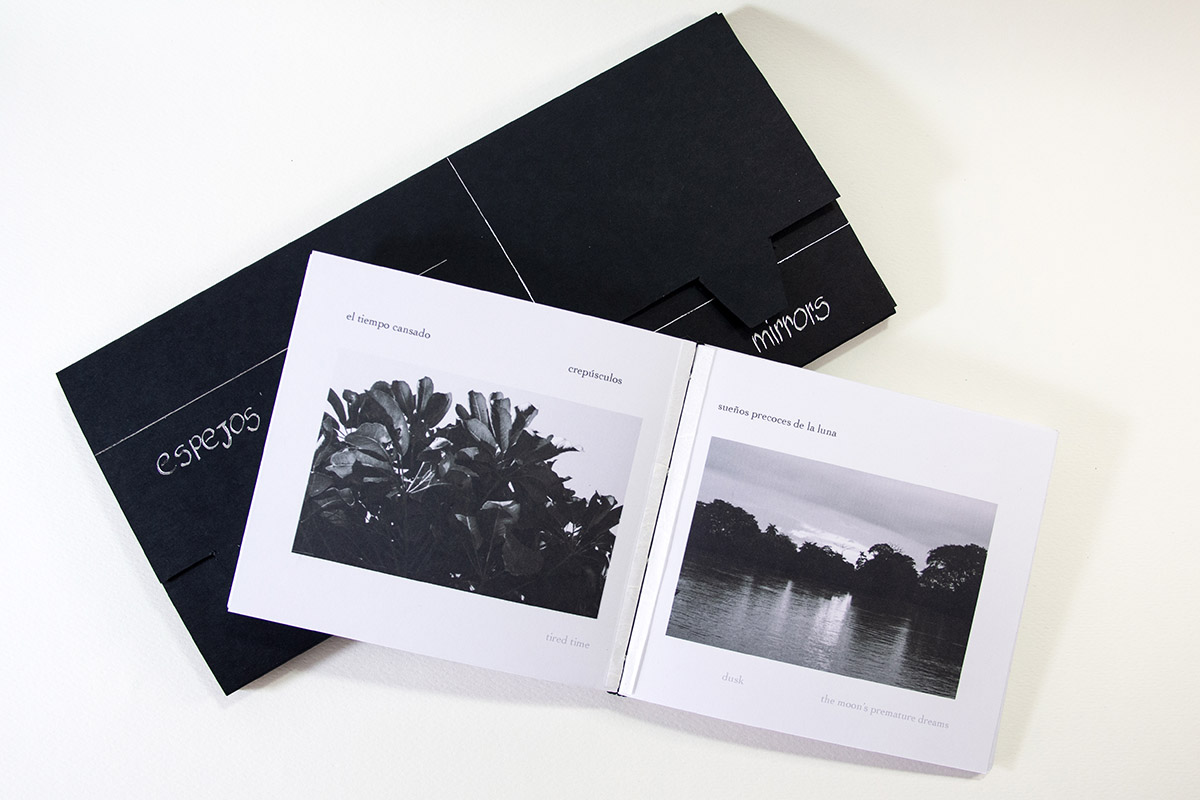
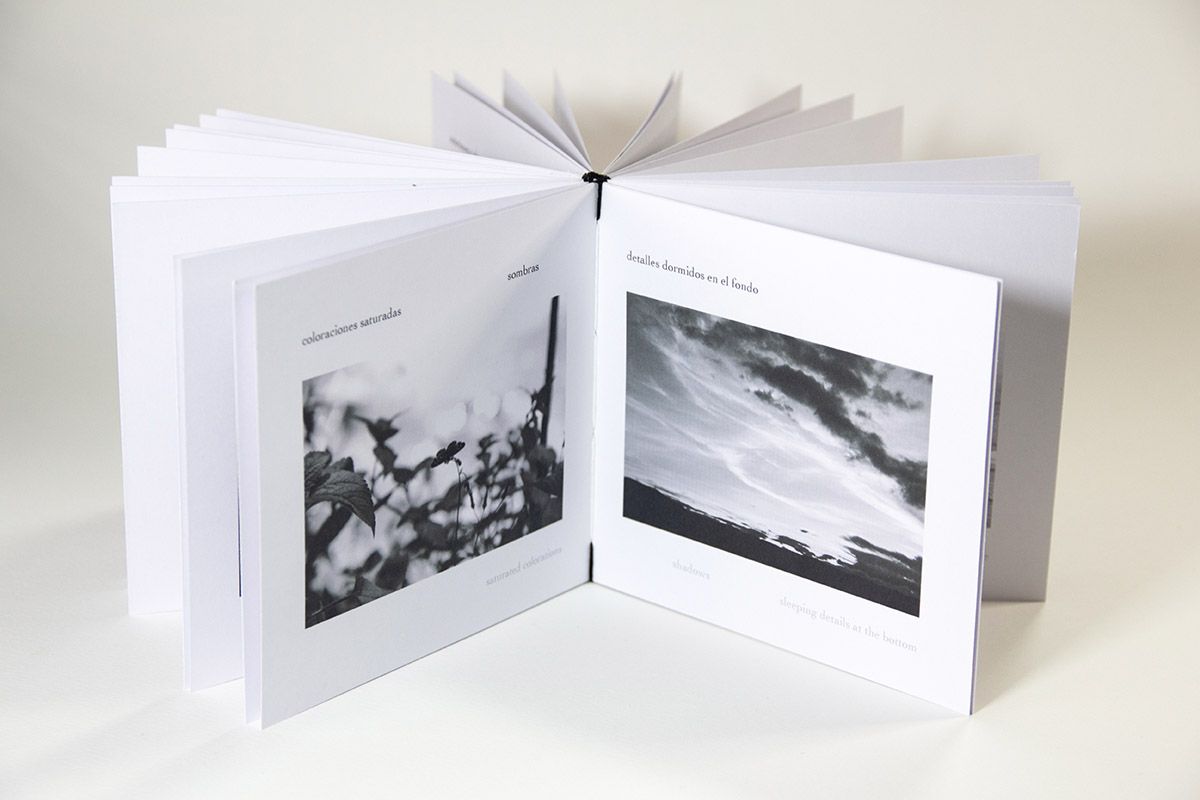
“I normally think about the idea of a book and then find or invent the structure to serve me exactly as I want it, and with “Mirrors” it worked perfectly well,” comments María Carolina Ceballos Flórez, a Columbia-born independent book artist and the owner of “Canto Press” printing initiative. “I wanted to make a book that would read endlessly, with no hierarchy of the images or text, because the series of images I had in hand were, by themselves, valuable and did not need a story. The structure of pairs of black-and-white landscape photos is accompanied by very short poems and it is rather simple, but it works well with the size of the book, and its visual poetic content, because it gives me the option of manipulating and questioning the very idea of the narrative.”
But despite the importance of binding as the key conceptual method applied in “Mirrors,” I would not underestimate the book’s visual dimension, either: fragments of peaceful panoramas, close-ups of various natural structures and textures, elements brought into one seamless flow similar to landscapes passing before the eyes of a train passenger on an endless journey – one that is, for each and every one of us, nevertheless finite. An additional inspiring entry point is the book’s title. The mirrors the artist invites us to reflect on could relate to nature – as invariably mirroring its contemplator’s mood and thoughts – to the mystery of the Cortazar-like continuity of gazes, to the infinity mirror effect, or to the dialogue constantly unfolding between the world we observe and the world we carry within ourselves in our memories and dreams.
Contributing Editor Olga Bubich is a Belarusian essayist, visual artist, and memory researcher currently based in Berlin.
__________
María Carolina Ceballos Flórez – Mirrors (Spanish: Espejos)
Artist, writer, designer and bookbinder: María Carolina Ceballos Flórez
Publisher: Canto Press
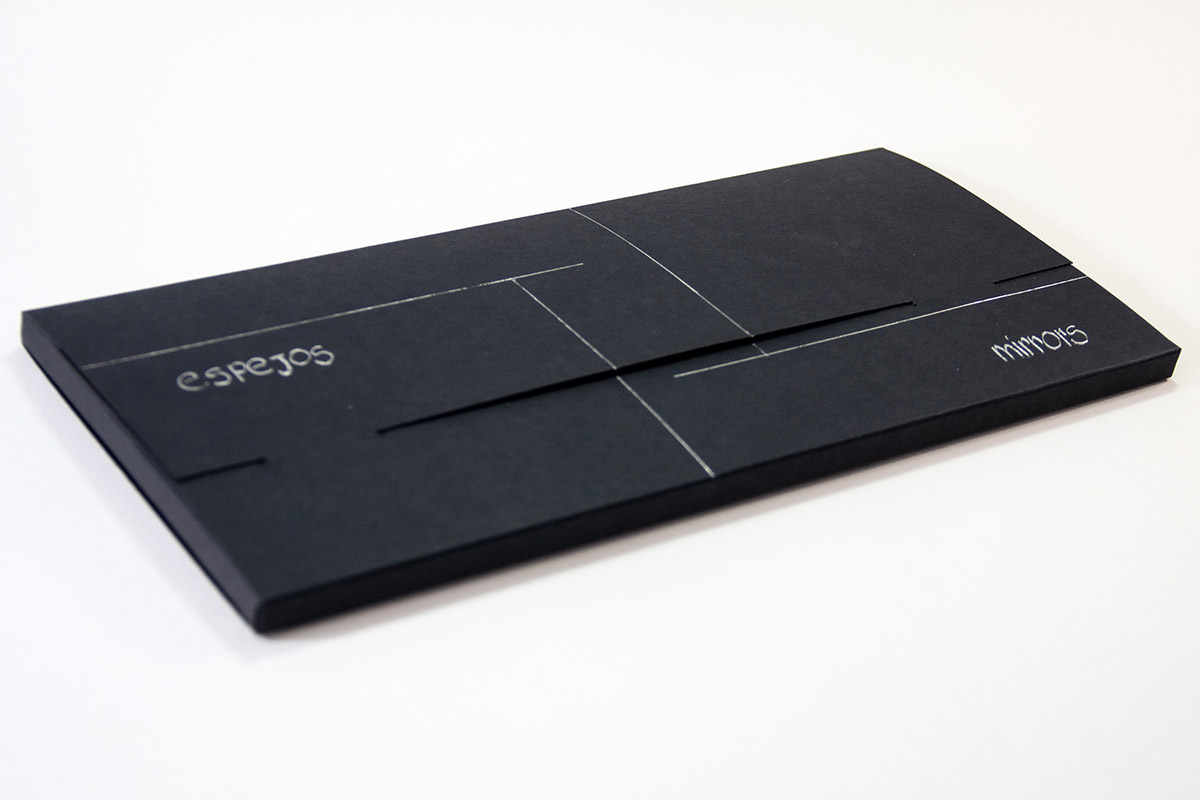
13.5 x 25 cm when flat, “infinite” binding made by hand; open edition; 28 pages; no cover, presented inside a black paper envelope
__________
Articles and photographs published in the PhotoBook Journal may not be reproduced without the permission of the PhotoBook Journal staff and the photographer(s). All images, texts, and designs are copyright of the authors and publishers.


Leave a Reply