Review by Brian O’Neill ·
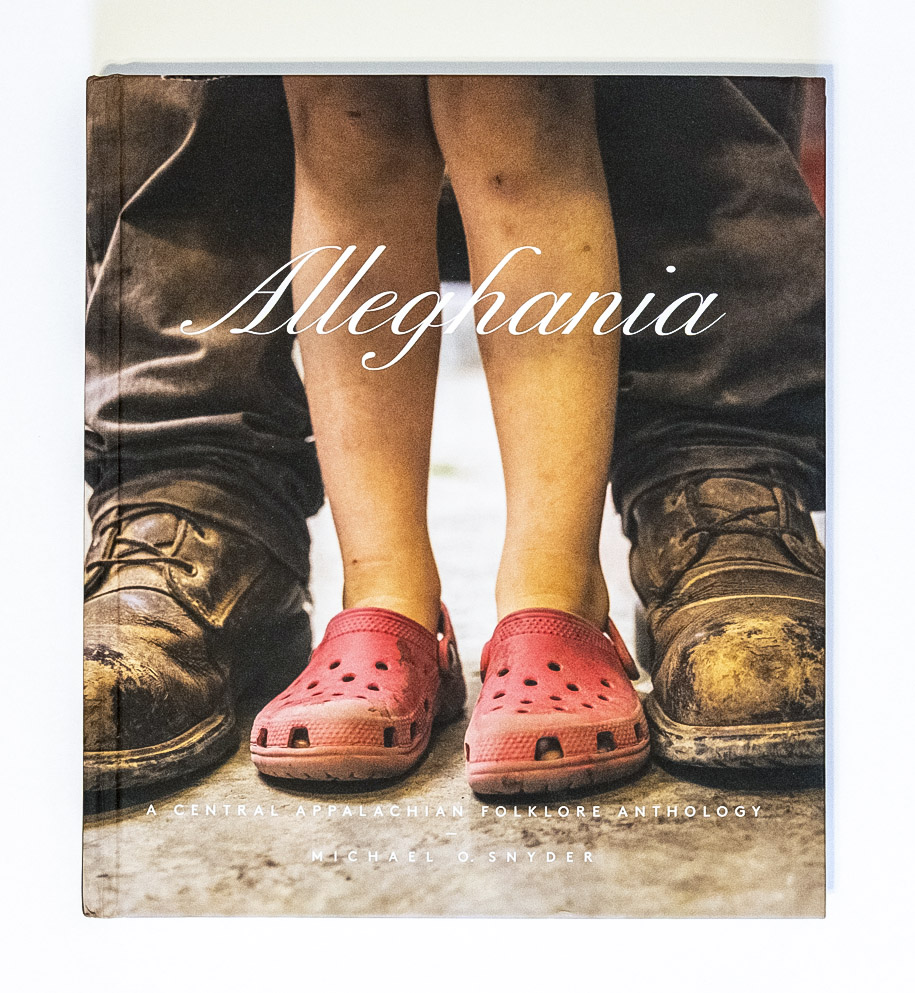
Alleghania: A Central Appalachian Folklore Anthology is Michael O. Snyder’s first major monograph, published in 2025 by The Bitter Southerner (press based in Athens, Georgia). The book is a culmination of a larger 13-year effort called “The Mountain Folk Project,” which began as a collaboration between Snyder and folklorist Dr. Kara Rogers Thomas. Over the years, the effort accumulated 86 profiles and became a multimedia project including a film. For this book, photographer and videographer Justin Dalaba provided research assistance (while completing his M.A. at Syracuse University under Snyder) for the profiles of those people described in the text. Indeed, as with any long-term projects, Snyder has slowly built up the archive that was needed, collaborating, not only with his subjects and interlocutors, but with institutions and other professionals that helped bring Alleghania to life.
Across the 77 profiles in the book, the writing is clear and the material is richly described as we learn about the lives and labors of people across the region. “Alleghania” is not a standard term, but is one that Snyder adopted for the purposes of this work to help signal his interest in the nexus of people, culture, and landscape within a subsection of the Allegheny Highlands. While Appalachia is generally understood as a series of mountains, hills, and valleys more than 2,000 miles long stretching from the American South through to Canada, Snyder chose to take both a broad cultural definition of what constitutes it, and a narrow geographical one. Specifically, the book’s subtitle indicates it is about “central Appalachia.” While it would have been impossible to cover such a vast swath of land across two countries, Snyder developed his “sample” around a 300-mile diameter with Randolph County, West Virgina as the center. As he describes it, this was also a range within which he felt comfortable working in terms of avoiding the potential pitfalls of voyeurism, having spent much of his youth, college years, and parts of his career in the region (e.g., Maryland, Pennsylvania, Virginia). Indeed, Snyder describes his interest to start the project based on his observations upon returning to Appalachia in the twenty-teens: “…God was blessing America’s troops and fetuses. And the first day of hunting season was still cause for a near complete societal standstill. But closer inspections yielded curious observations. The diner now had something suspiciously called a ‘latte’” (page 6). Going on to describe other changes, such as an openness to queer practices and the creep of consumerist ideology, Snyder writes that “something important had changed” (page 6) and part of the goal of this project is to begin to understand what that something might be.
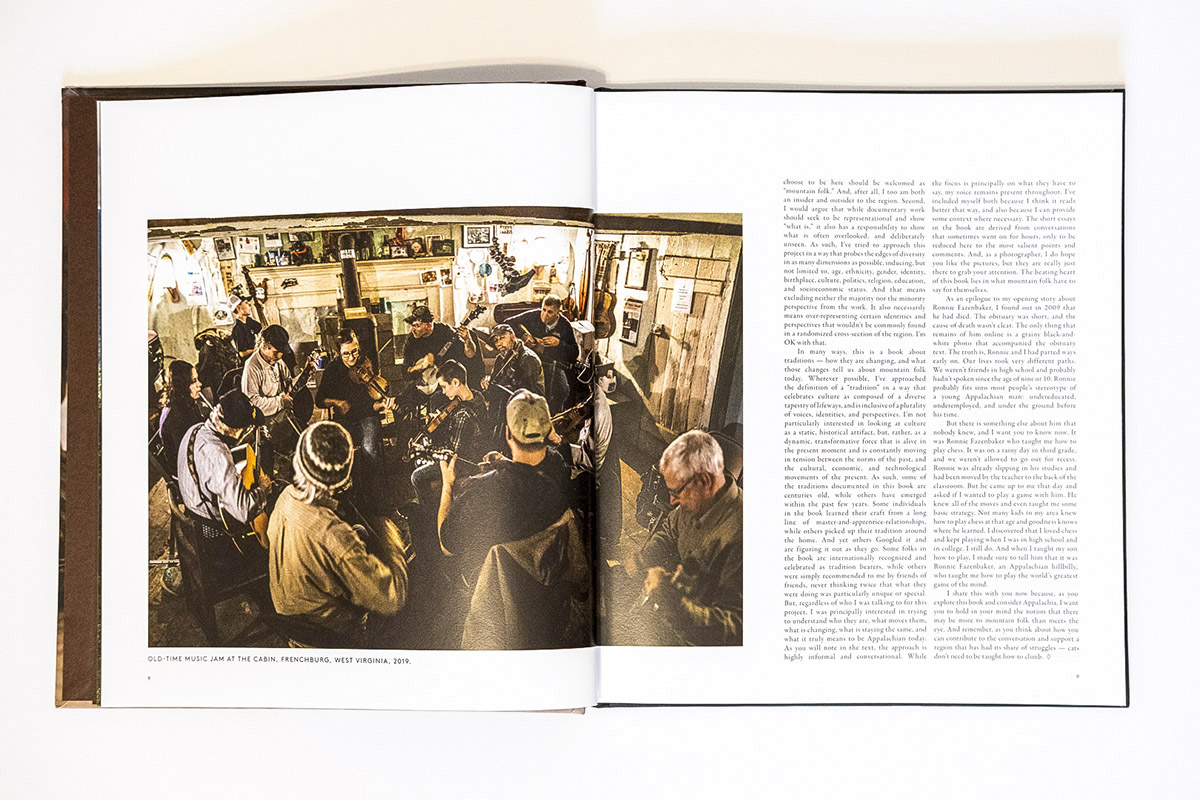
From a cultural perspective, Snyder writes that he “approached the definition of ‘tradition’ in a way that celebrates culture as composed of a diverse tapestry of lifeways, and is inclusive of a plurality of voices, identities, and perspectives” (page 9). This notion serves the concept of “anthology” (also in the subtitle) well. Typically, an anthology is understood to be a curated selection of some genre of literature. Anthologies of short stories or poems are common enough examples, which would organize the work of different authors, but pay homage or investigate a particular place, theme, or subject. As the reader discovers, while the environmental portraits are capable and fascinating in their own right, he has written about his interactions with his subjects and reported their stories in a way that minimizes his voice. The texts that accompany the portraits provide some context, but there are often large sections in which his interlocutors are given the space to be heard, uninterrupted. The strategy is effective and allows for a great deal of diversity in the narratives and styles within what is an ambitious work. Snyder mentions in the introduction that the intention of the book was not to be scrutinized as an academic text, such as for example, the degree to which it covers a representative sampling of the region. Instead, he saw it as an opportunity to uncover the less widely known dimensions of people and places in the area.
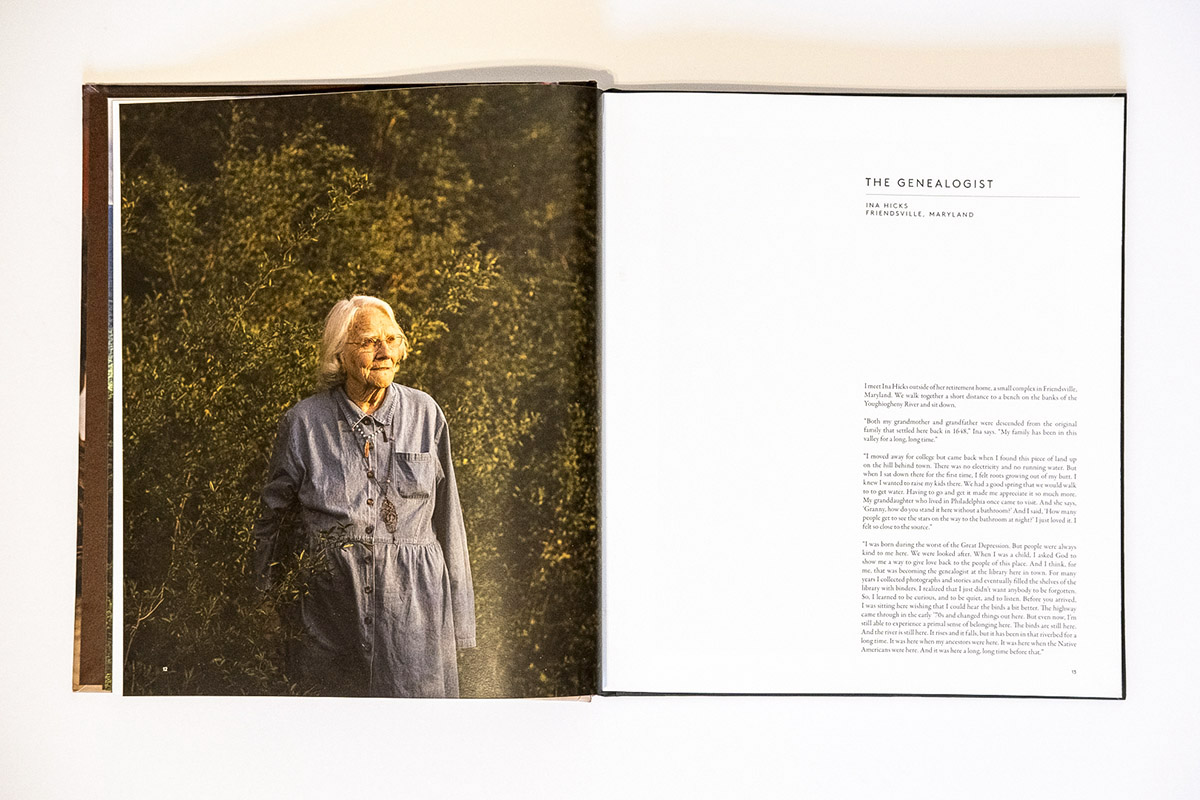
The profiles offer both variety and literary qualities that provide an overarching poetic view that mirrors the images, which often focus on either a practice or craft that the subjects are either developing or have learned and are now handing down to newcomers. The idea of listening is further emphasized by the very first interlocutor we encounter, Ina Hicks, a long-time librarian and genealogist. This spread sets the model for what the reader encounters for the rest of the book as well: we get the subject’s name, where they reside, and a moniker for them.
In terms of writing style, Snyder follows a certain formula here too, which has the effect of inviting the reader on a short kind of journey. In this case, we meet Ina at her retirement home and go for a short walk near a river in Maryland. Ina’s family roots run deep, with her ancestors having settled nearby in 1648. In the course of just a few paragraphs we learn about the connection to the land she felt when she moved to the home in Maryland where she would raise a family and work. Ina described an interaction with a grandchild thusly: “‘Granny, how do you stand it here without a bathroom?’ And I said, ‘How many people get to see the stars on their way to the bathroom at night?’” (page 13). Ina knows how to make the best of a situation and seems grateful for the lessons in resilience the place and its people have taught her through the years. By choosing to describe instances like these, one thing Synder seems to be doing is cutting through stereotypes of the region, that it is full of uncultured “hill people.” To do this, Snyder knew he had to place the words of his subjects first, an approach which is echoed by Ina. She reports on her methodology, which Snyder illustrates is inspiring his own approach: “I learned to be curious, and to be quiet, and to listen” (page 13). In terms of the images, Ina’s portrait is also one of Snyder’s best. Afternoon light illuminates her amidst a field of green. She is calm, but perhaps pensive, gazing into the distance out of the frame. Then we see the branch of a nearby tree that reaches out from the lower left hand of the frame. A few leaves are illuminated. They reach for her.
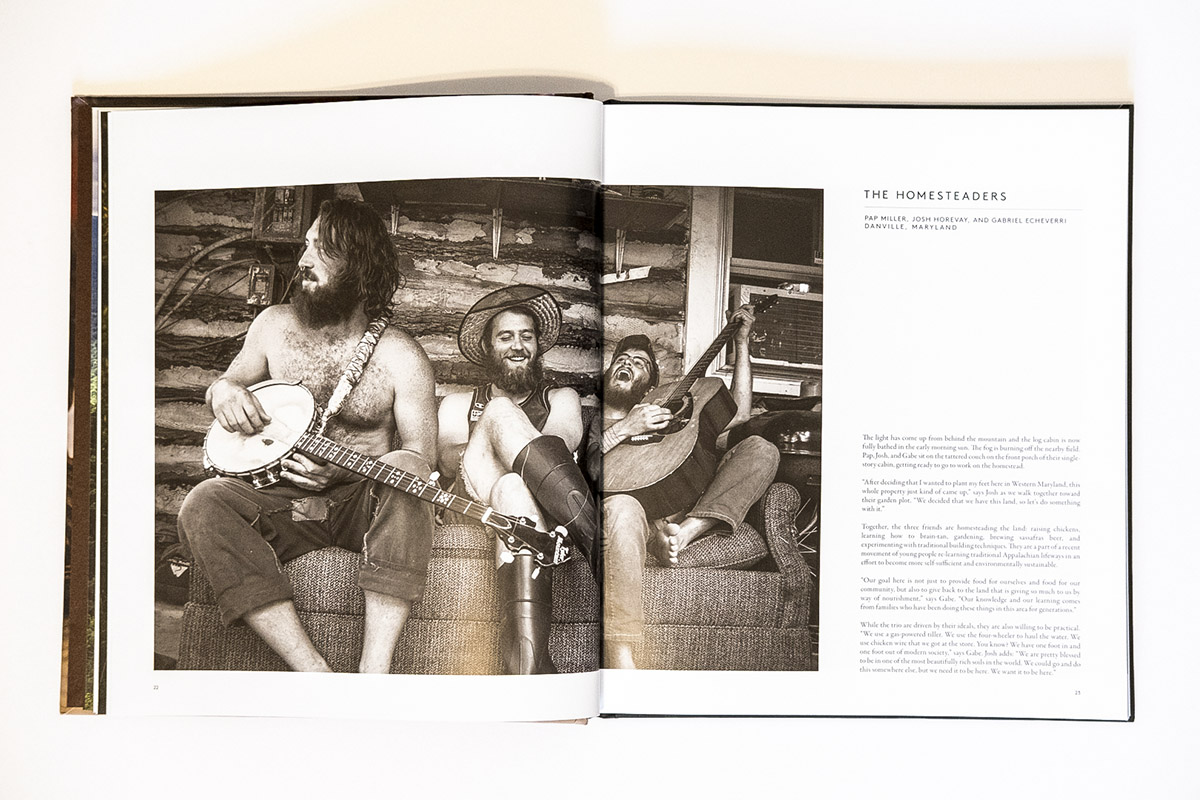
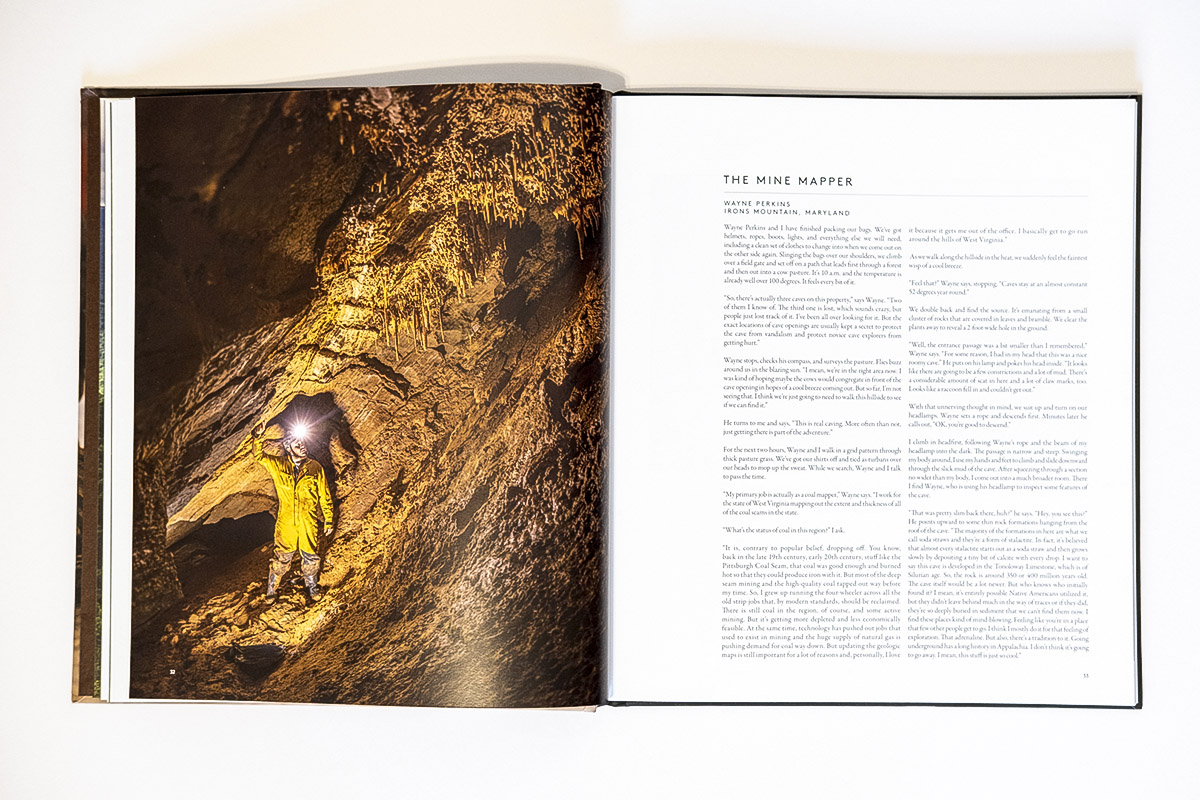
With 77 profiles, it is difficult to choose which ones to explore in detail. However, a few stand out both for the quality of the photographs and the intriguing nature of the stories. We learn about a group of homesteaders who have refurbished a log cabin in the hills of Maryland. When they are not playing guitars and banjos on their front porch, they are trying to raise chickens, garden, and brew sassafras beer. Elsewhere in Maryland, a permaculturalist also has an interest in traditional and sustainable agricultural techniques. And when Snyder was not amidst the verdant Alleghenies, he was sometimes beneath them. He takes us underground with cartographer and coal seam expert Wayne Perkins. With him, we learn about the history of mining in the region, and how, while much coal remains, it is not nearly as much, or as easy to access for industrial purposes, as it once was. Stories like these, at the nexus of the cultural traditions and political economic context of a landscape long connected to extractive practices, raise many questions about the future status of the region.
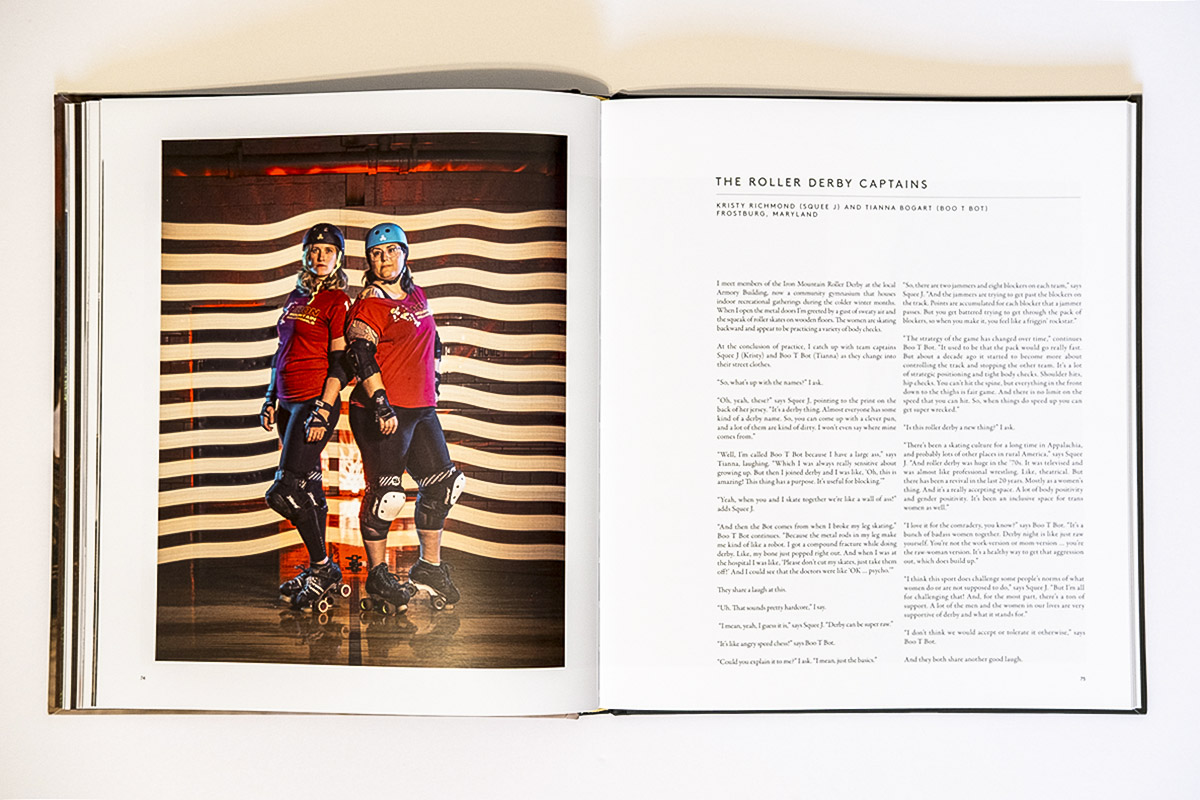
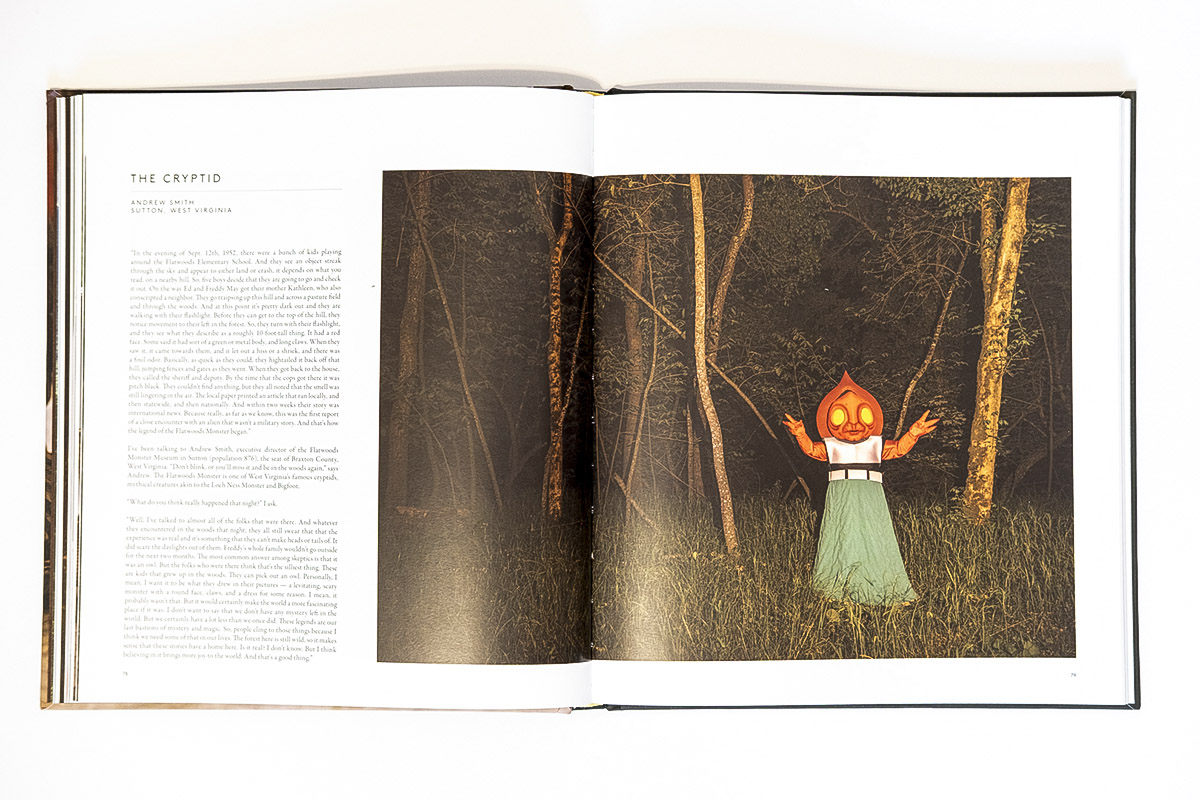
As is probably already evident from the above description, the cast of characters is wide ranging. We encounter rappers, and trappers, and beekeepers, and basket weavers, and many more. One interesting sub-theme the attentive reader will pick out is the interest among Snyder’s subjects (and based on the introduction, he exhibits this as well) in re-enchantment. In other words, there is a fascination with apparently forgotten dimensions of the cultural geography, of the practices, and the places represented in Alleghania. The poetic language used by Snyder, as well as the descriptions accompanying the portraits suggests this too (such as in Ina’s portrait above). This is further evidenced by the inclusion of figures like The Cryptid, the only individual in the portrait series whose face is completely indiscernible. Here we learn about a 1952 sighting of “The Flatwoods Monster” a purported 10-foot-tall alien with a large red head and claws, in West Virginia. As Andrew Smith, the executive director of a local monster museum who dresses up in the alien costume describes it, he asks: “Is it real? I don’t know. But I think believing in things brings more joy to the world” (page 78).
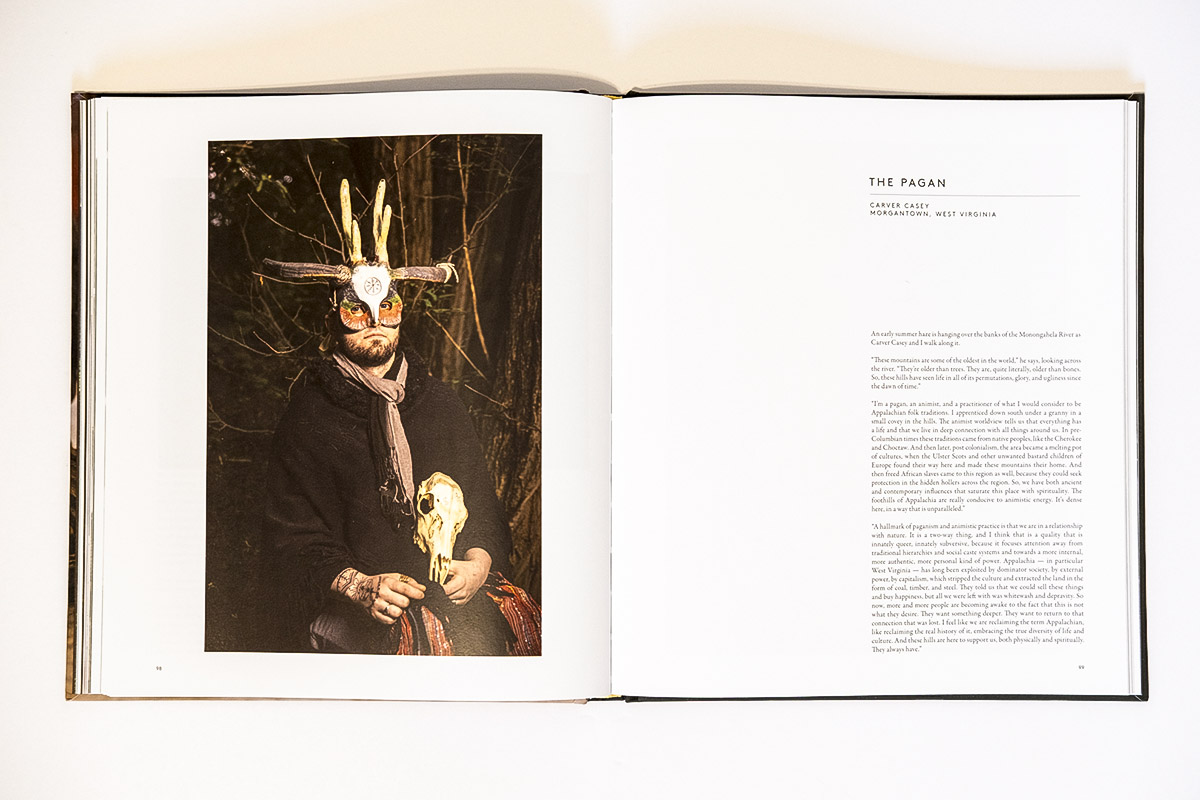
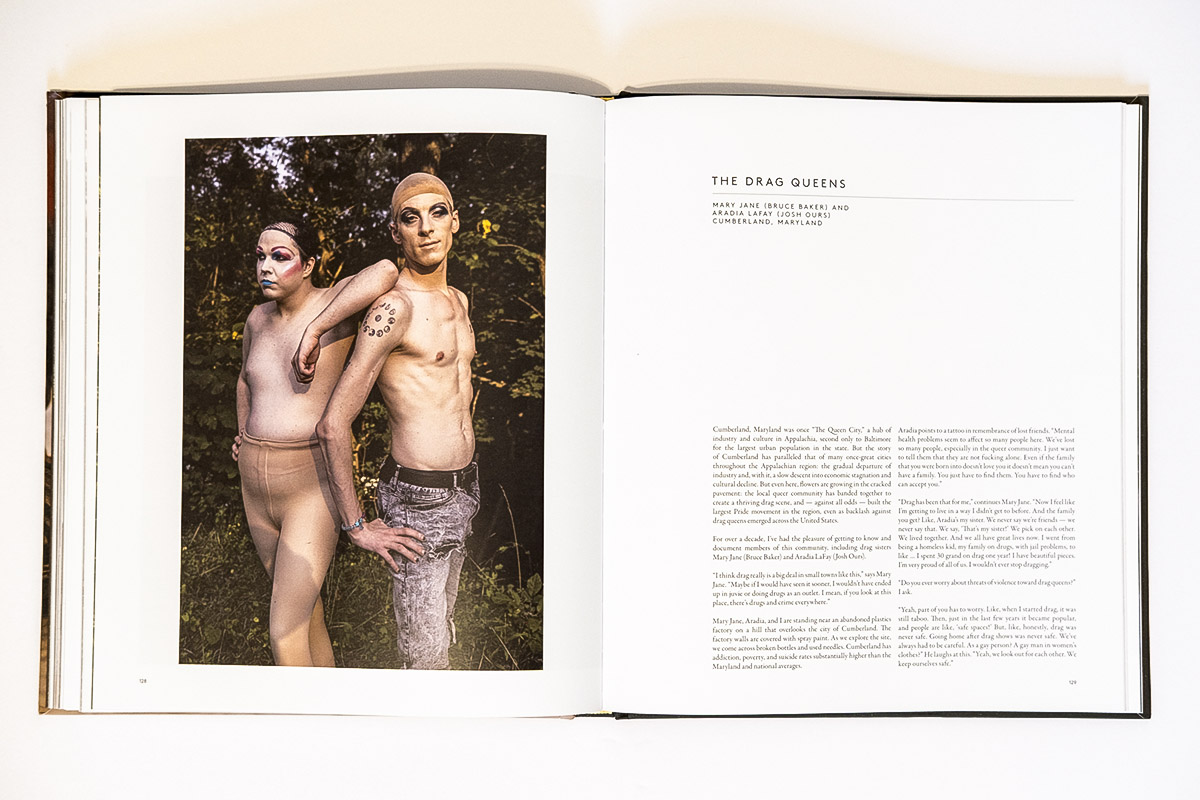
Amidst our contemporary society, which tends towards certain forms of rationality, of an emphasis in our institutions on science and strategy, some are turning away from the secular dimensions of culture in a movement to recapture some form of the spiritual, the magical, the unknowable. These aspects are further captured in the striking portrait of The Pagan, Carver Casey, also in West Virginia, who practices Appalachian folk rituals and traditions. For him, “we have both ancient and contemporary influences that saturate this place with spirituality” (page 99) and connect him to nature in a way that conventional religious practices cannot satisfy. While Alleghania does at times present as a kind of land of misfits, and while the themes of cultural appropriation go largely unproblematized (again, Snyder asserted he does not intend for this to be an analytical text, per se, but rather a celebration of cultural pluralism) the sentiment of cultural openness is palpable, and the active work that his subjects are engaging in, each in their own way, to recover traditions and reinscribe themselves with a sense of place and history, is genuinely moving, which is complimented by Snyder’s images.
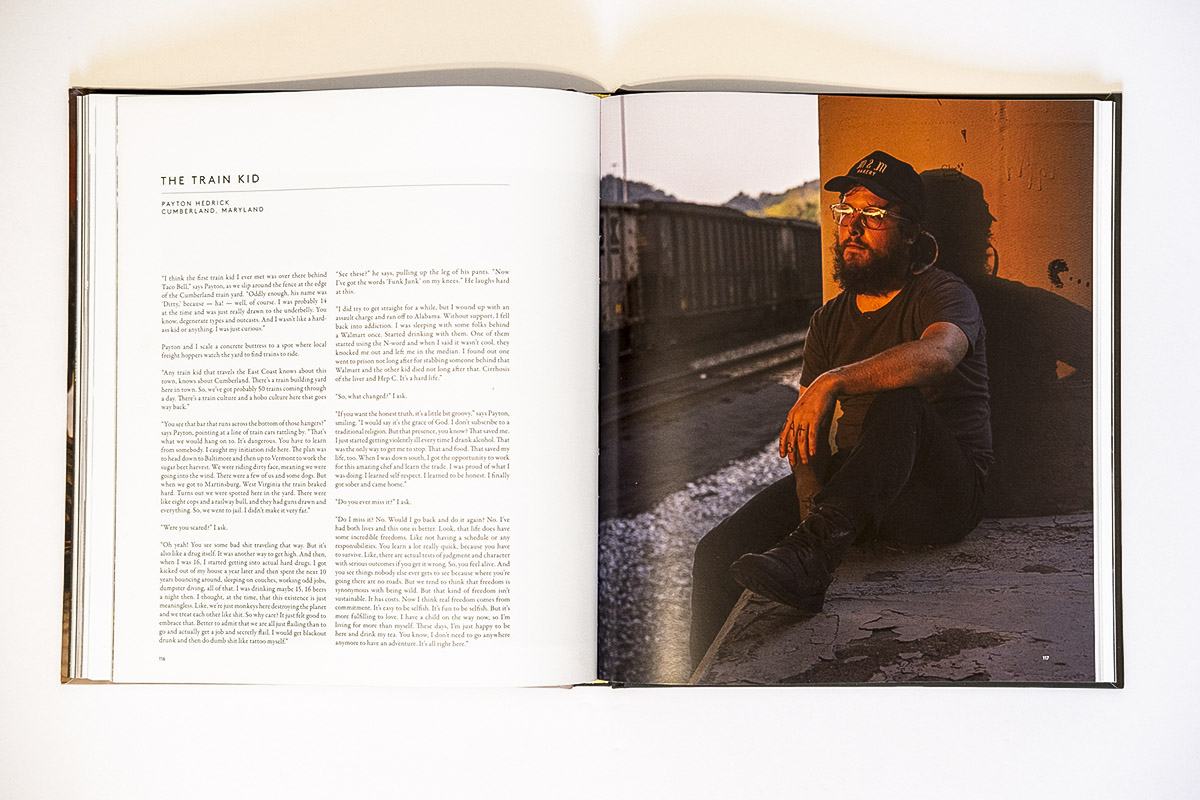
Perhaps the most affecting story though is that of The Train Kid, Payton Hedrick. Hedrick learned to hop trains in Cumberland, Maryland, with its well-known freight yard. A marginal practice in and of itself, we learn Hedrick had difficulty holding a job, and he describes how he fell into drug use and violence. Eventually, he found a turn-out when finding a job with a restaurant that taught him a trade. Interestingly, like the other interlocutors in the book, he attributes a mysterious supernatural force to his path to sobriety and a more disciplined lifestyle. While the extent of otherworldly forces on the people in Alleghania will remain unknowable, what is evident is a sense of hard-won independence and of the tireless work needed to craft a life worth living in this region.
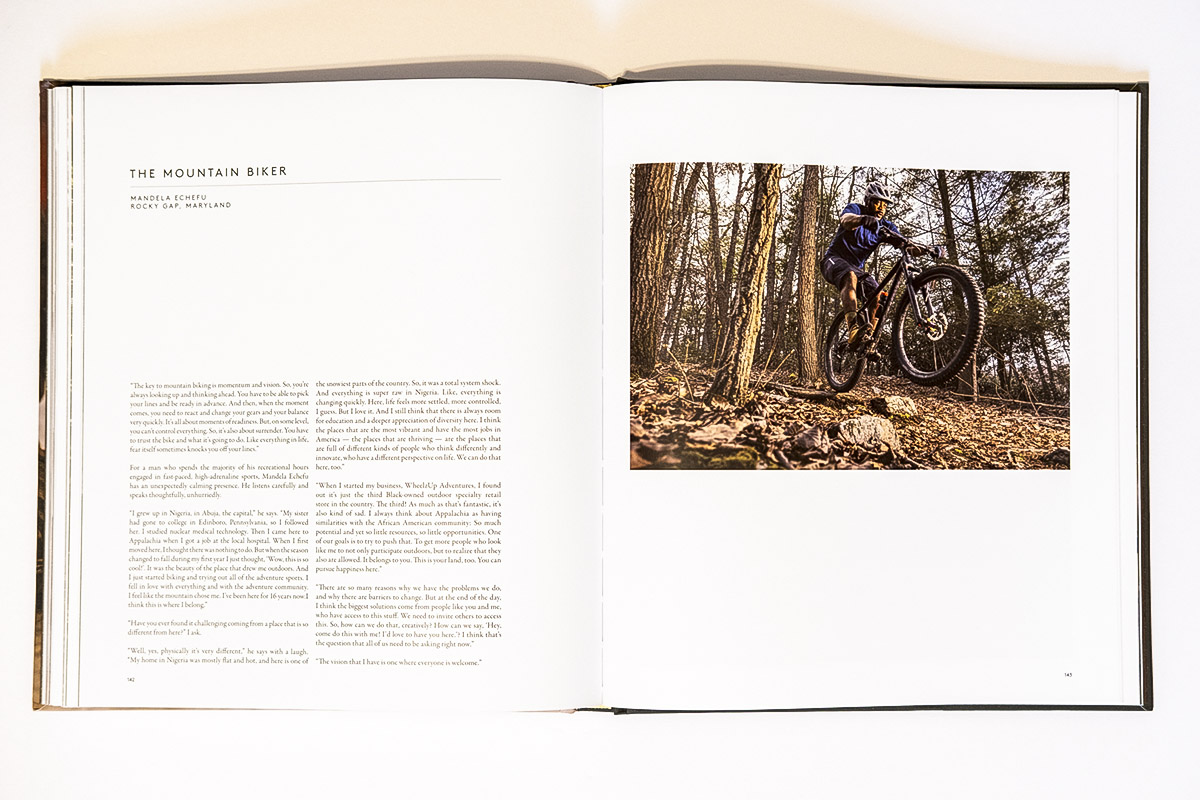
Snyder notes in his introduction that he is fascinated by the multitudinous lifeways and peoples that live and work in Appalachia. With Alleghania, he offers a thickly described and robust work that is both humble and ambitious. His choices in terms of how to tell about this place, much of which he is intimately familiar with, have been strategic and considered, and he allows his subjects to speak for themselves. Yet, he ably displays his capacity, not just as a photographer, but as a well-rounded documentarian in the way that he subtly is able to write so as to provide context in what might have, in less capable hands, turned into a disconnected array of stories. In some ways, the book is less a kaleidoscope obscuring our vision, but rather a prism focusing our attention. Further, the underlying emphasis that is mirrored in the images and the writing is on some form of cultural practice, providing thematic unity to the whole book. Again, this is smartly done, as Snyder recognizes in his introduction, this is a region that has long been at the nexus of political, social, and economic questions, and while some of these get touched on in the stories provided, the project has some boundaries around it that keep the reader from getting too far afield.
Beautifully photographed, and printed in a size that is manageable, Snyder’s book allows the pictures and texts to sit comfortably side by side. Snyder and The Bitter Southerner have produced a laudable and extensively researched work that will be of contemporary interest and remain historically relevant, perhaps not only to the region around the Allegheny Mountains, but to the country as well.
Brian F. O’Neill is a photographer and sociologist based in Phoenix, Arizona.
____________
Michael O. Snyder – Alleghania
Text and Photographs: Michael O. Snyder
Publisher: The Bitter Southerner
Language: English
Book Design: Dave Whitling
Printed hardcover; sewn binding; 175 pages; 77 photographs; ISBN: 979-8-218-65333-0
____________
Articles and photographs published in the PhotoBook Journal may not be reproduced without the permission of the PhotoBook Journal staff and the photographer(s). All images, texts, and designs are under copyright by the authors and publishers.
 PhotoBook Journal
Leave a comment