Review by Brian Arnold ·
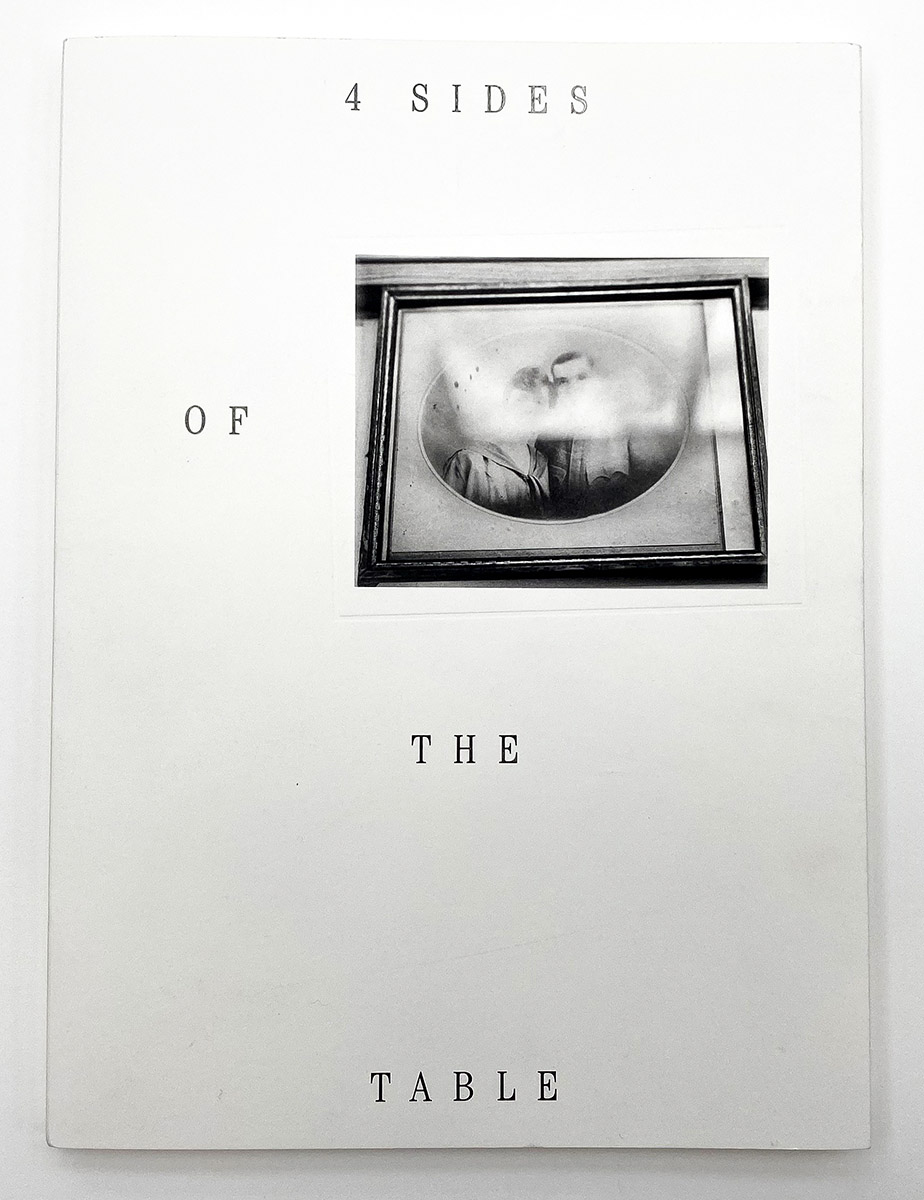
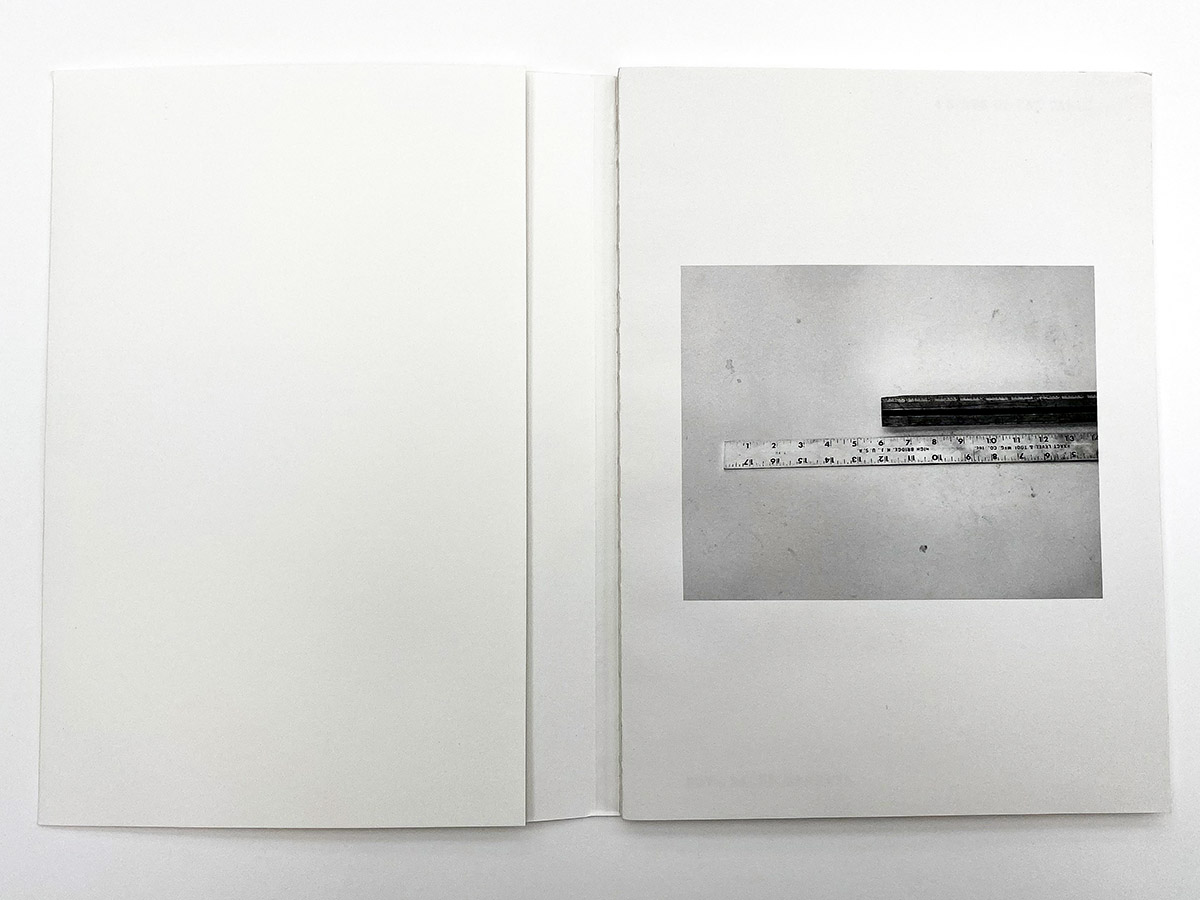
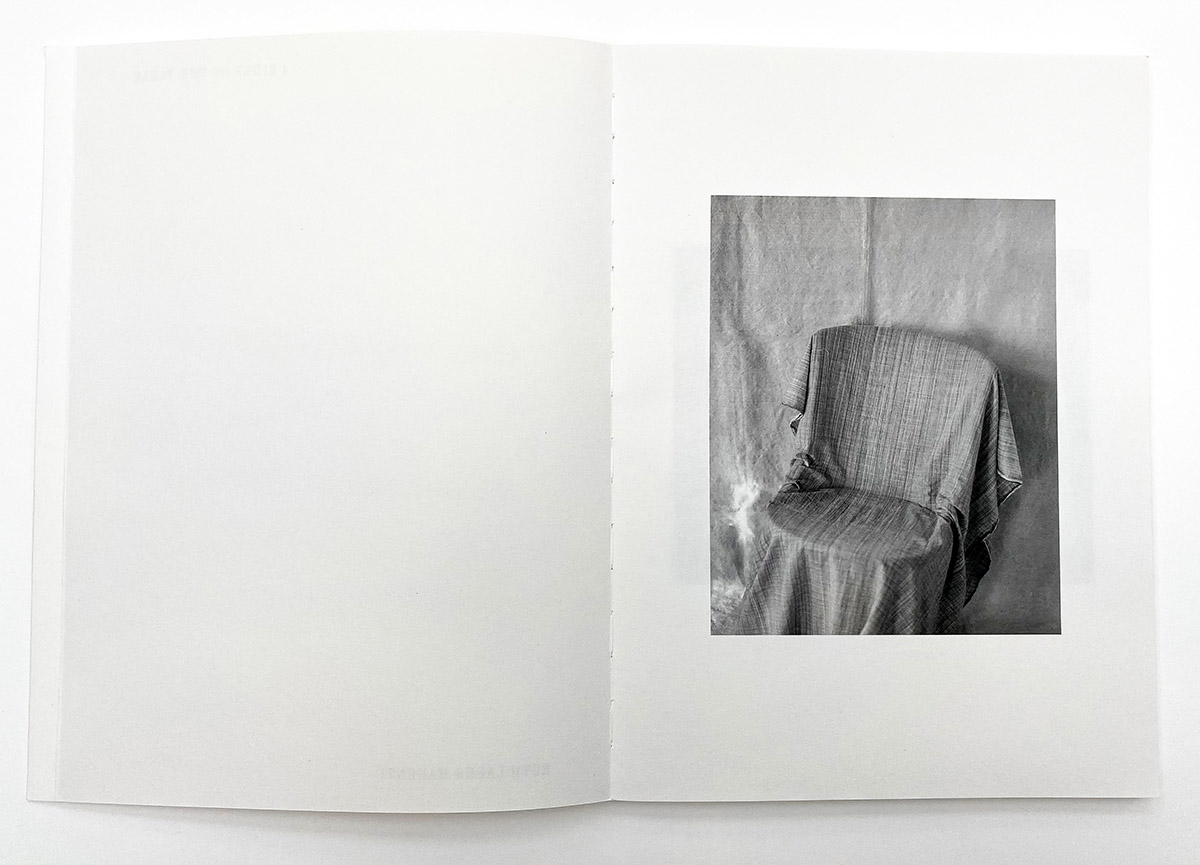
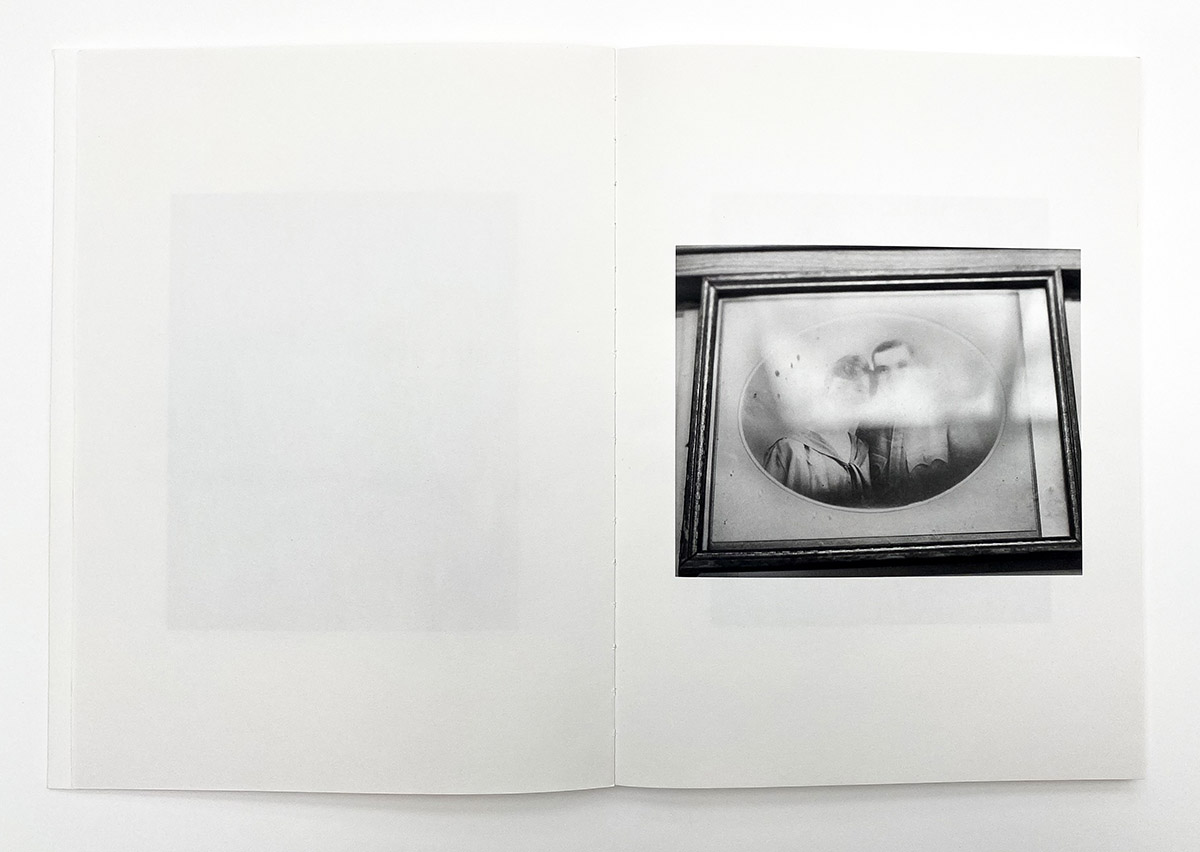
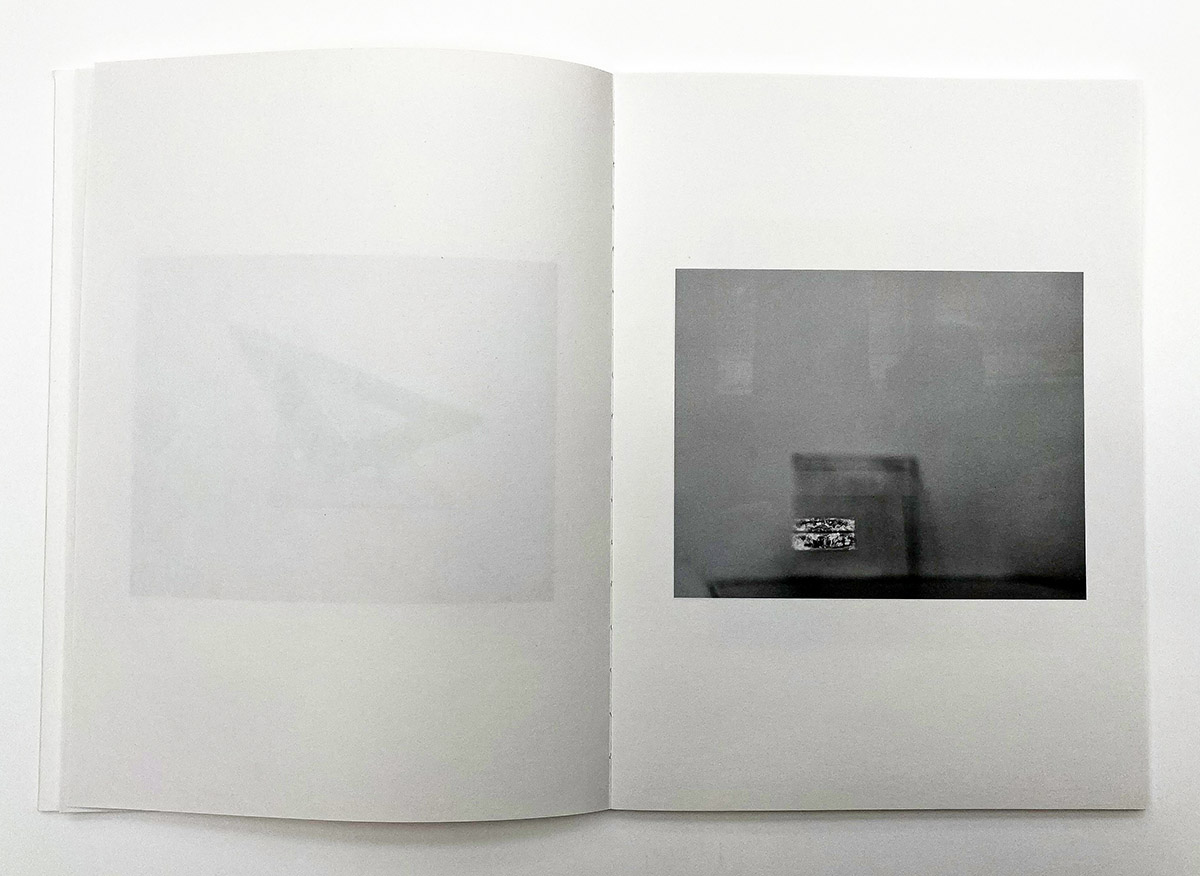
The first photograph in Ruth Lauer Manenti’s new book, 4 Sides of the Table, shows two rulers placed side by side. Both enter the picture from the right, their full-length cut off by the edge of the frame. They look as though they’ve been around for decades and are chipped and weathered with age. It’s an unexpected picture, a flat and blunt composition, but also curious and poetic. The tones are soft and rich (a defining characteristic of Manenti’s photographs), and the intention is clearly metaphoric. The two of them appear like a parent and child (a lovely idea for these tools of measure), the longer, older ruler overseeing the smaller one. The next pictures in the book show an empty chair delicately covered with an old cloth, followed by an antique portrait mounted on the wall, light distorting across the surface of its glass. In conversation with these, the first picture becomes much clearer; the rulers aren’t there to measure the faded inches marked on their surfaces, but rather to measure presence, absence, and the passage of time.
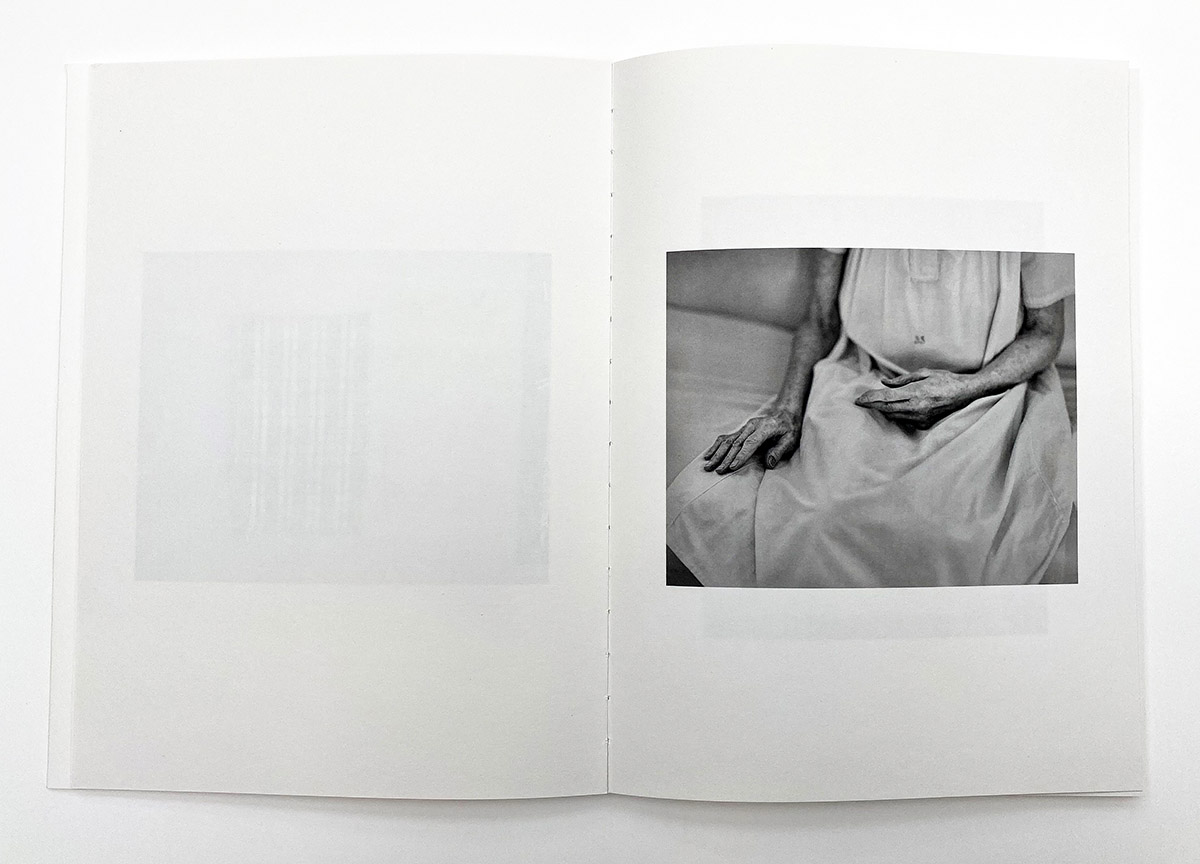
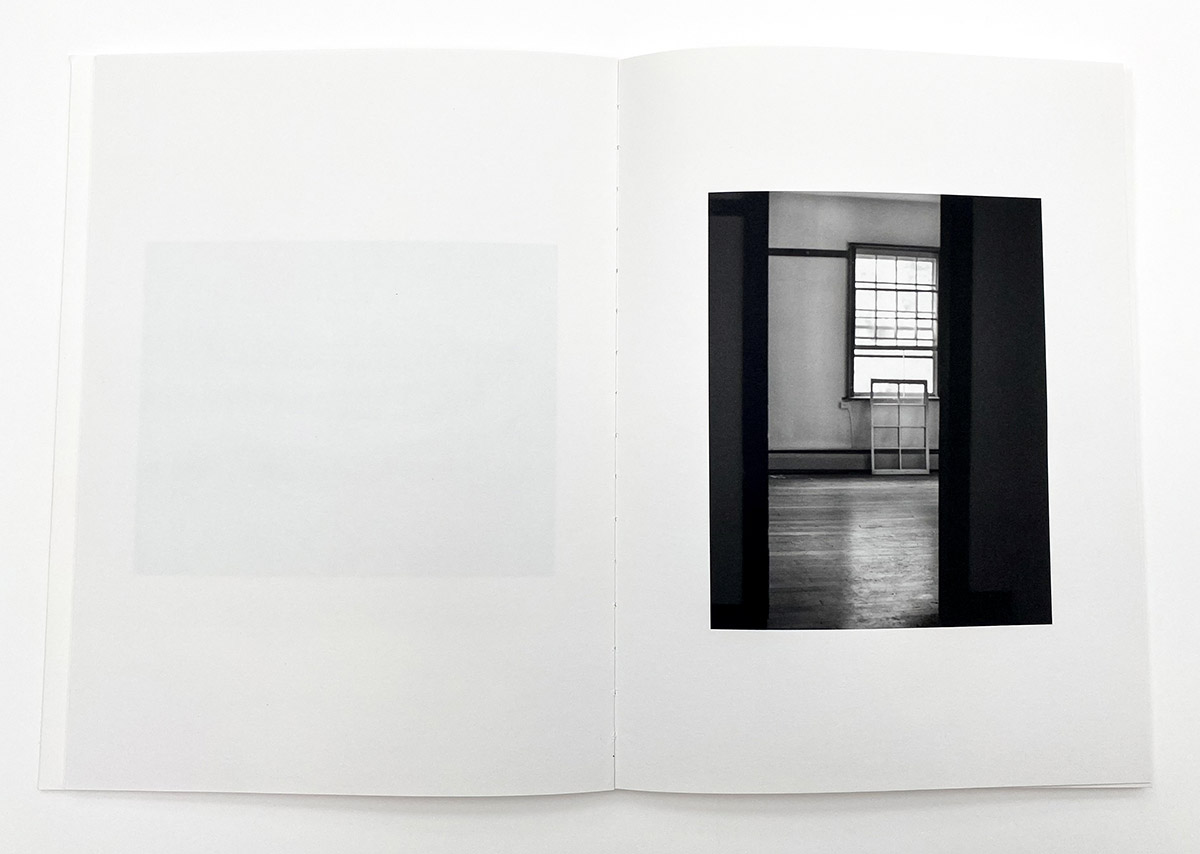
4 Sides of the Table is a subtle book, filled with humble and beautiful photographs with tremendous depth – I like to compare her work to Zen poetry, quiet but endless. The entire book is composed of beautifully visualized black and white photographs, including classic still lives, a homage to Talbot, self-portraits, an array of rulers and protractors, close-ups of an older woman’s extremities, and one of my favorite beach scenes. Lovely, layered metaphors continue throughout 4 Sides of the Table – the weathered feet and aged hands resonant deeply with the rulers, music stands left in the corner scream of emptiness, and elusive sheets of glass feel like portals leading into our psyches.
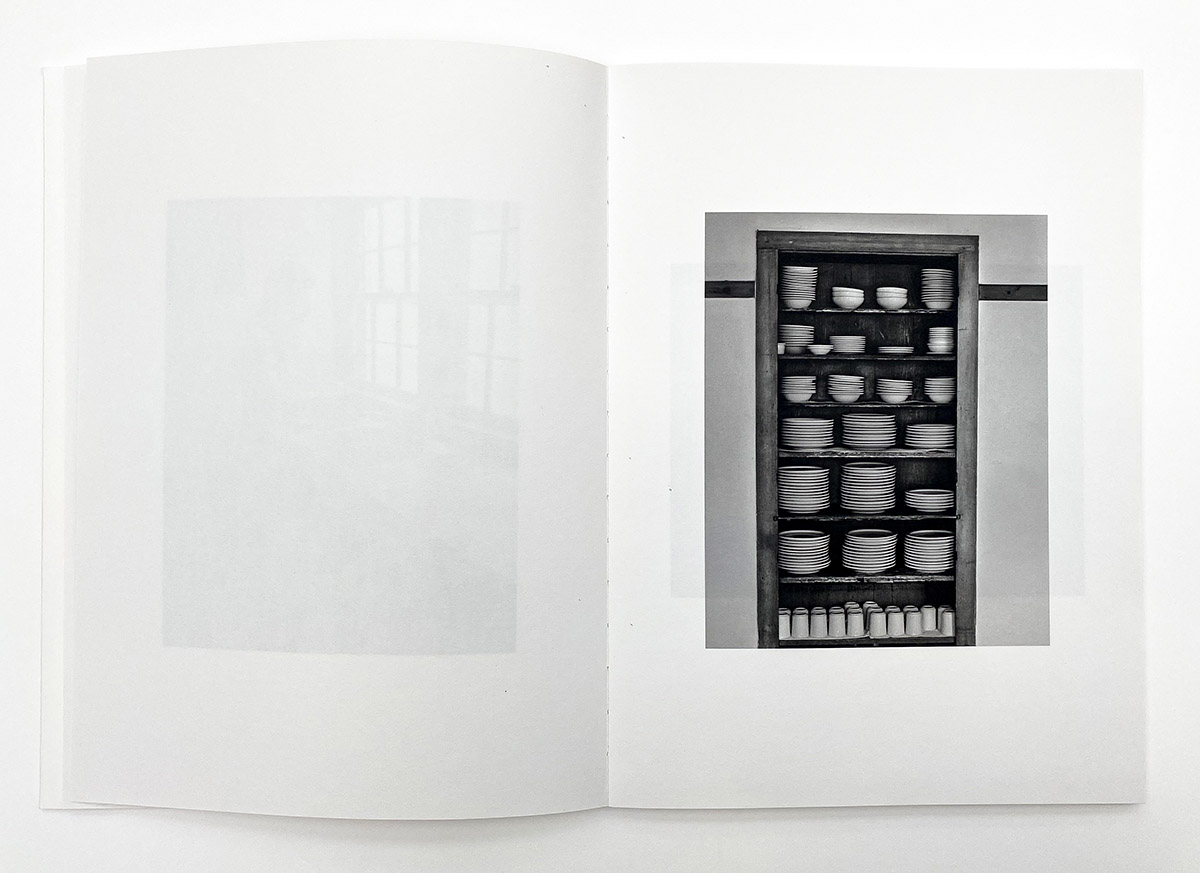
Manenti’s eye for subtlety is matched by a lovely sense for repetition. A rudimentary breakdown shows that there are basically five different types of pictures among the 39 reproduced in the book – rulers and protractors, domesticated self-portraits, classic still lives, a faceless older woman, and an array of windows and mirrors. To give a better sense for my reading of 4 Sides of the Table, I want to say more about the still lives and the faceless woman, to see how Manenti builds ideas with repetition.
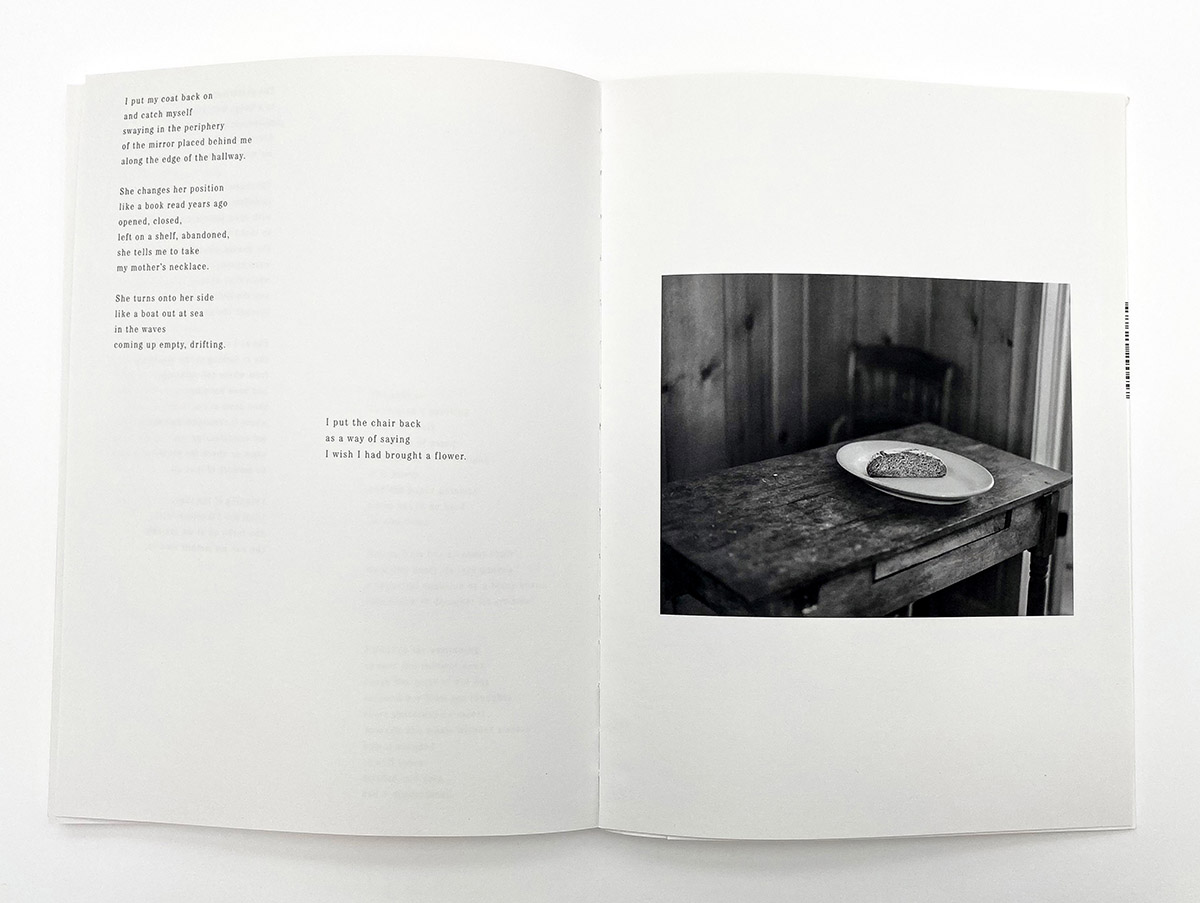
The still lives include classic bowls of fruit, kitchen shelves that feel pulled from The Pencil of Nature, and a repeated look at bread. For the last of these, we see three different loaves – the first is a dark wheat on a white ceramic plate and appears whole and intact, fresh from the oven; the second shows one freshly cut, the knife by the bread with a pair of hands, softly focused, preparing to eat two slices; and the last a cracked country loaf cut in half, a light dusting of white flour on the rigid crust. Incredibly, the layers of story these simple images carry is remarkable (as Weston said, a pepper but more than a pepper) and perfectly serve as emblems of pain and grief, as if the bread represents a cycle of death and rebirth. Moving from one of these loaves to the next feels a little like the photographs of rulers, a way to the photographer thought to record presence and absence.
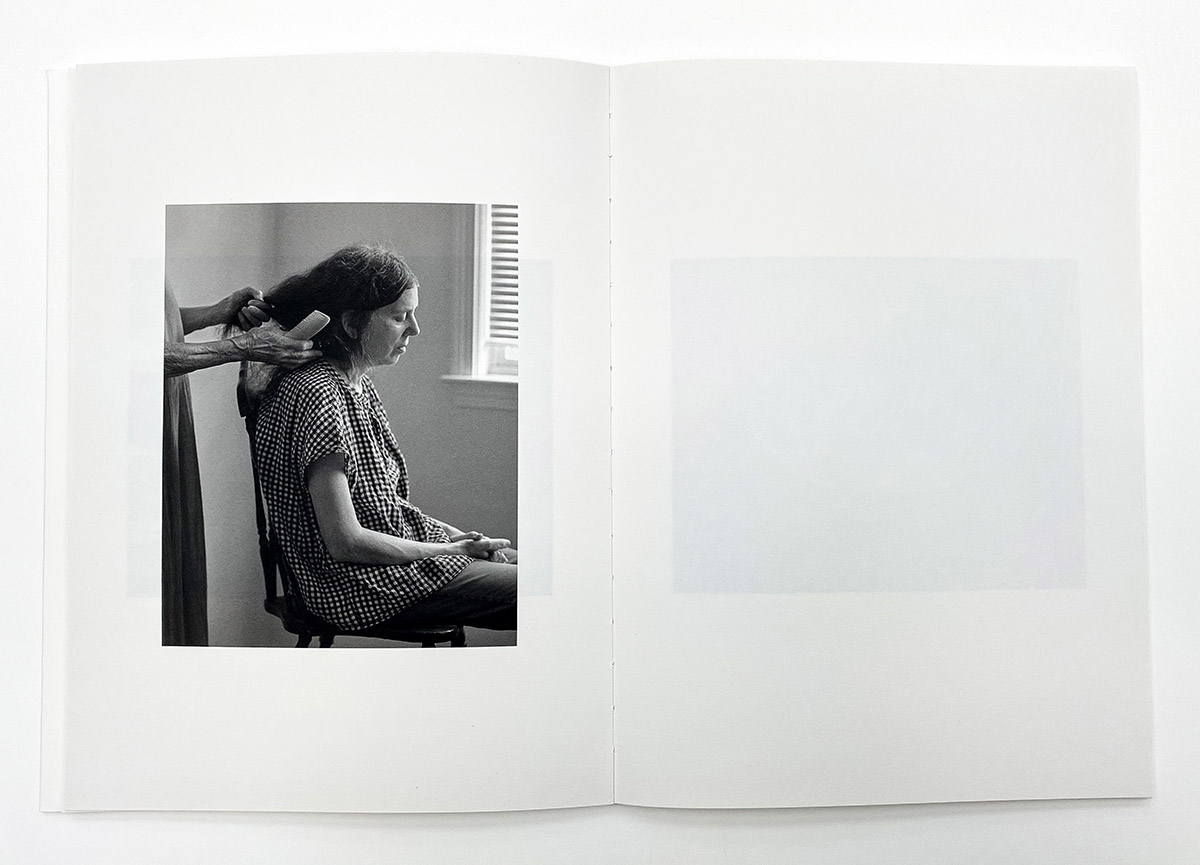
The woman is these photographs is amazing. We do eventually see her face, in the very last photograph of the book. Until then, we only see close-ups of her legs, feet, hands, and arms. Again, these pictures are endless in their simplicity – the woman appears like an aesthetic, garbed only in a drab linen dress, with her body cracked by time, sometimes her legs cropped just like the first photographs of mathematical tools. We also see her combing Ruth’s hair, sharing intimacy and affection in pictures that are remarkably soothing. In a short statement at the end of the book, we do learn a bit more about this woman and why Manenti chose to photograph her: “In the spring of 2017, I was with my mother in an empty room. The light of the sun was shining through the windows. Her best friend June was at her bedside reading poetry aloud. My mother died a few hours later.” This provides essential information for understanding 4 Sides of the Table; the woman in Manenti’s pictures is June, but photographed to recreate a connection with her mother, to help embody the emptiness, love, and grief at the heart of 4 Sides of the Table; such a lovely thing, to express in photographs crafted with deep sensitivity. The repetition provides witness of an evolving relationship, fully realized in the accumulating fragments.
4 Sides of the Table also includes two poems by Manenti, “226 Harrogate Road” and “Pearls”. Unfortunately, they are easily overlooked, but by no fault of their own; the photographs are too captivating. There are some lovely moments in the poetry, too: “She asks me/to remove a painting/from the wall./It’s made of paper/and though it looks light/it is heavy/and the paper painting/turns out to be hard/to take down.” These speak well with the photographs, similarly creating a feeling of boundless emptiness filled with beauty and grief. The poems are worth the time (I’d love to read more) but also don’t feel like they bring too much to the book; the pictures are amazing and don’t need the support, and the design strategy used for displaying the text asks too much of the words, a large font and a rejection of negative space (I wish the design left more white space around the poems, embracing the quiet found in the photographs).
I loved Manent’s 2024 publication, I Imagined it Empty, and was excited to see this new one. 4 Sides of the Table does not disappoint; indeed, it even feels like the next step in a maturing vision. Manenti’s photographs are lovely and she clearly has a great aptitude for books. I am eager to see her work continue and feel like the best is still to come.
Contributing Editor Brian Arnold is a writer, photographer, and translator based in Ithaca, NY.
____________
Ruth Lauer Manenti – 4 Sides of the Table
Photographer: Ruth Lauer Manenti
Text: Ruth Lauer Manenti
Publisher: Editorial RM
Design: Ramon Pez
Softcover with Swiss binding; 88 pages; 24 x 33 cm / 9.5 x 13 in; ISBN: 978-84-10290-45-7
____________
Articles and photographs published in the PhotoBook Journal may not be reproduced without the permission of the PhotoBook Journal staff and the photographer(s). All images, texts, and designs are under copyright by the authors and publishers.
 PhotoBook Journal
Leave a comment