Review by Olga Bubich ·
Photobooks have long offered artists a field of expanded possibilities, allowing them to move beyond a single, linear narrative and challenge conventional expectations of what a book could look like. The history of the medium, with examples ranging from the canonical works such as Robert Frank’s The Americans (1958) and Ed Ruscha’s Twentysix Gasoline Stations (1963) to more experimental statements by artists like Laia Abril, Christina de Middel or Thomas Sauvin, demonstrates how the photobook can accommodate parallel storylines, layered meanings, and visual strategies that give form to the hidden, unspoken, or (self-) censored.
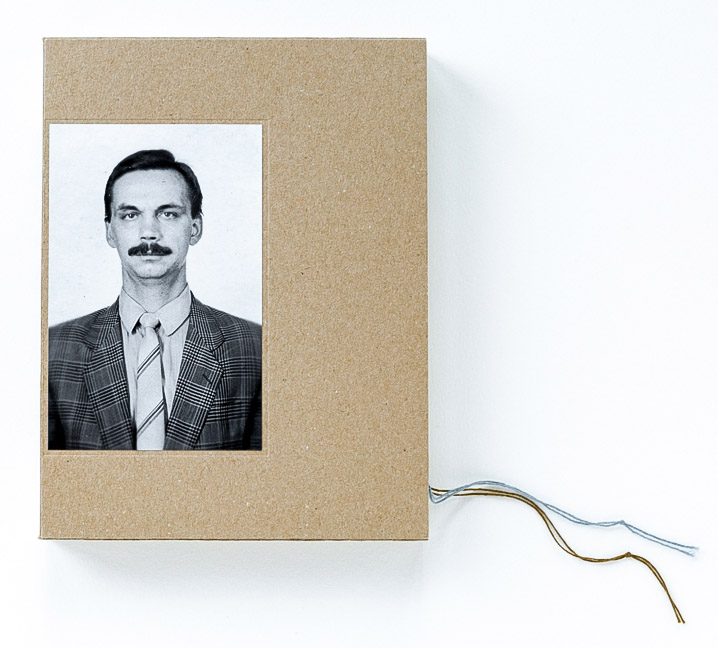
One such project is Binom, an intricately conceived archive-based photobook by Nata Drachinskaya, who turns to the medium in search for the language to hold contradictions of several levels: historical, social and psychological. Awarded this year’s LUMA Rencontres Dummy Book Award, Drachinskaya’s Binom emerges from a deeply personal story and gradually unfolds into a broader inquiry into secrecy, state-induced ideology, and the mathematics of truth. What begins as an attempt to come to terms with her father’s suicide in 2001 evolves into an excavation of a life shaped by concealment and, by extension, of the entire society conditioned to never doubt what is positioned as indisputable truth.
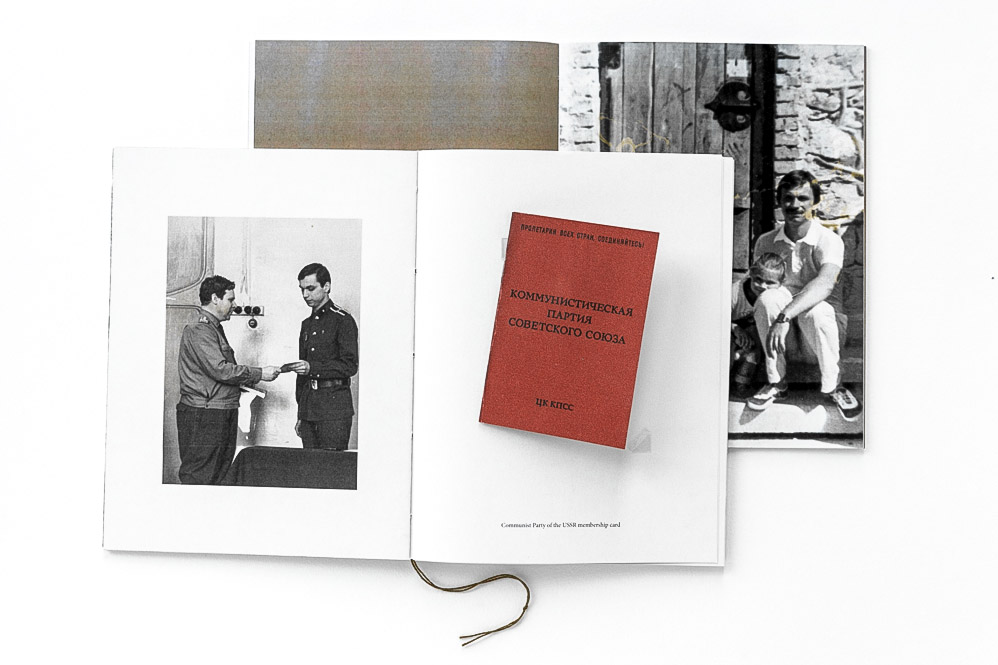
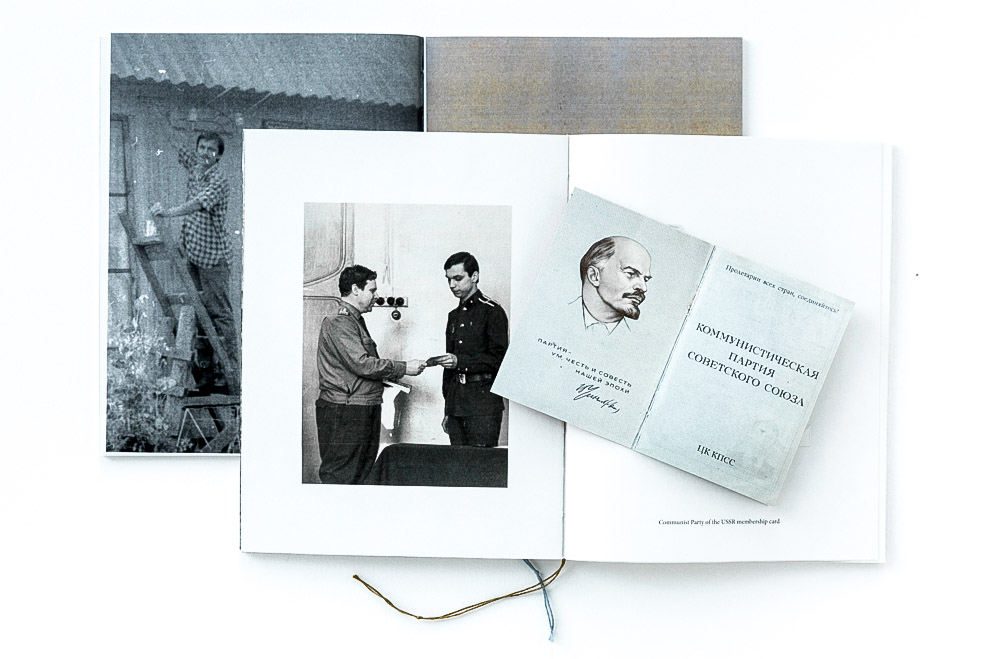
Sorting through her father’s belongings after his suicide, Drachinskaya discovered that the man she had known as a humble, hard-working computer programmer had also been a KGB cryptographer, employed for decades in a classified department unknown to his family and most of his circle. This belated revelation forced the artist not only to reconsider her father’s life, but also to question the “normality” of the country she was born and till recently lived in.
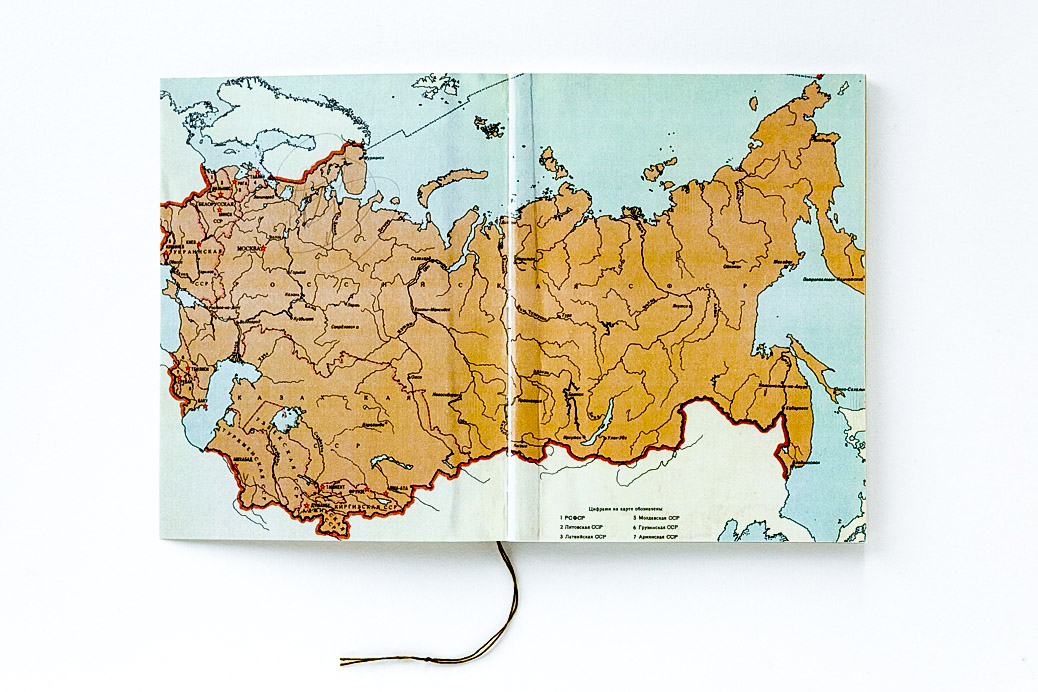
Drachinskaya treats her father’s story as symptomatic of a wider condition shaped by Soviet and post-Soviet realities. As she notes in her project statement, the work addresses the destructive force of secrecy built upon foundational lies, the power of propaganda, and the learned blindness – “the peculiar trait of Soviet and Russian citizens to live parallel domestic lives, detached from politics.” The personal archive thus mirrors a collective mode of existence which several generations adopted and made their only way of life.
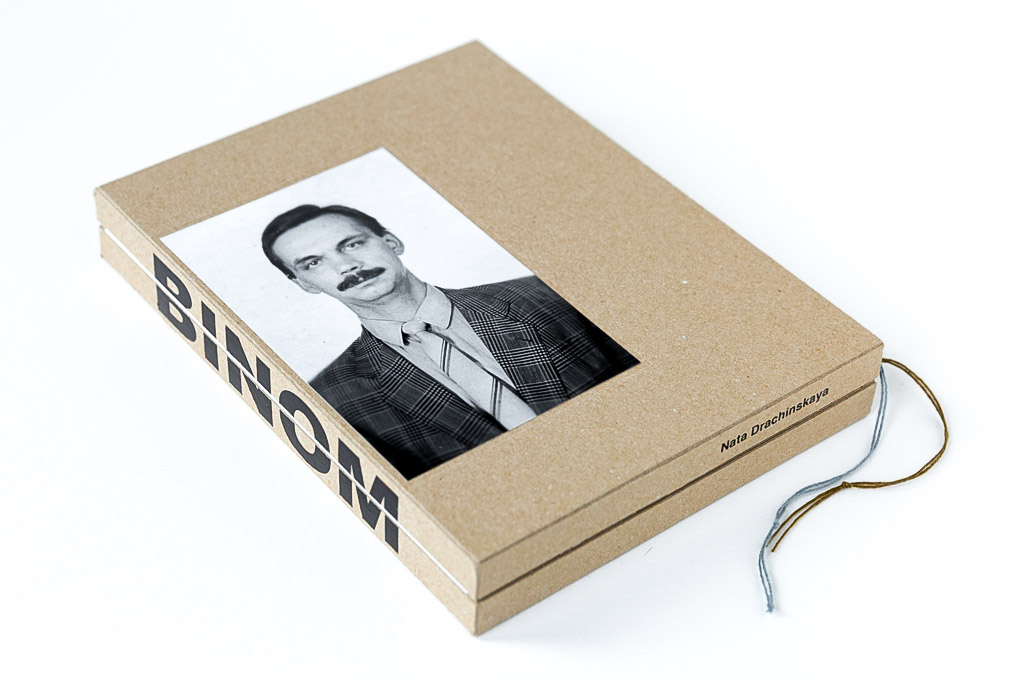
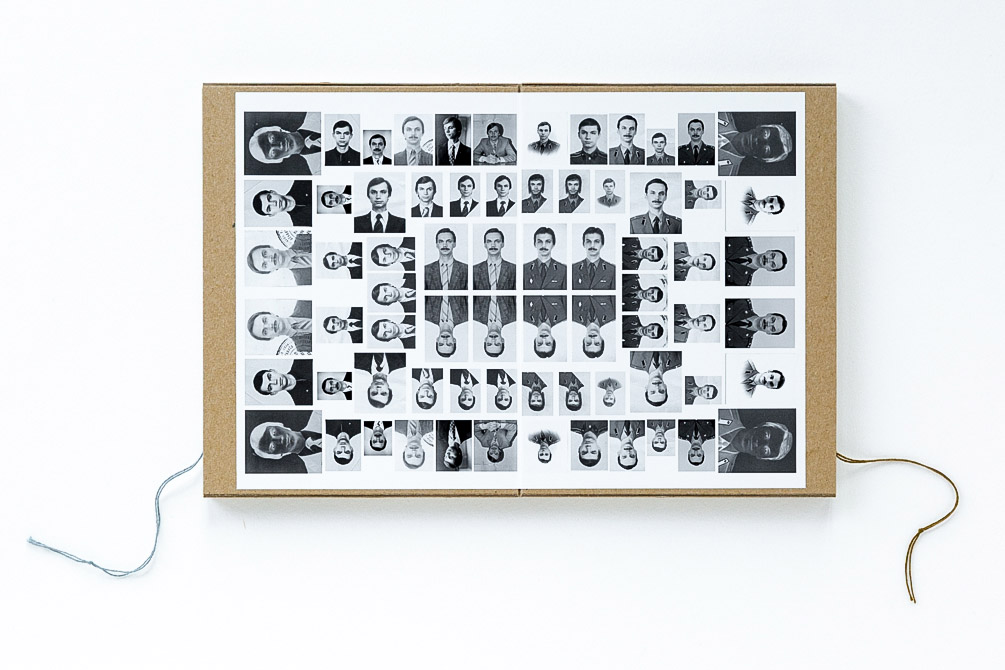
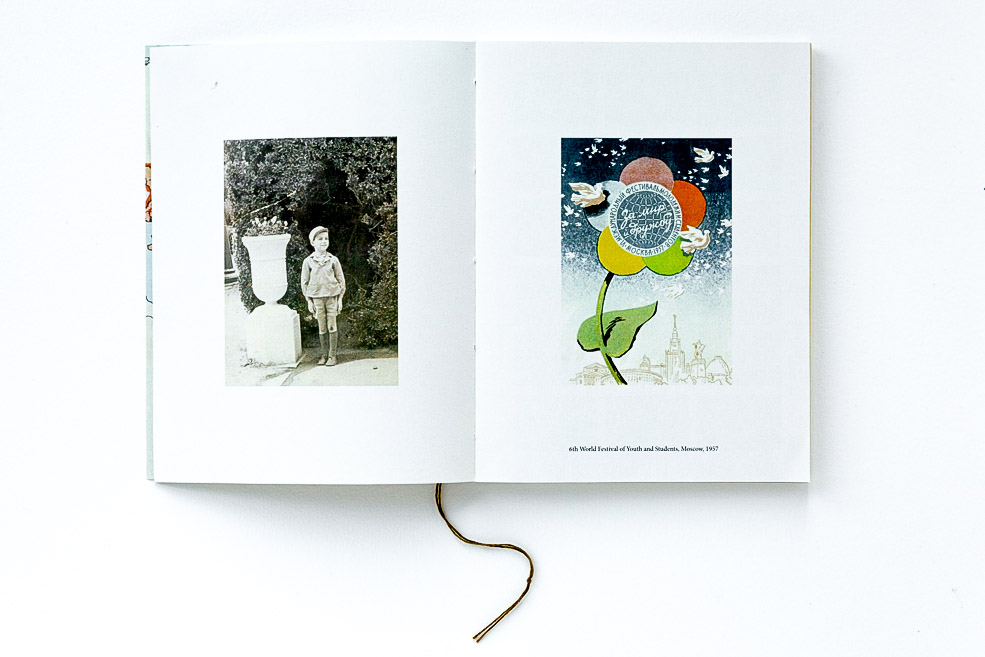
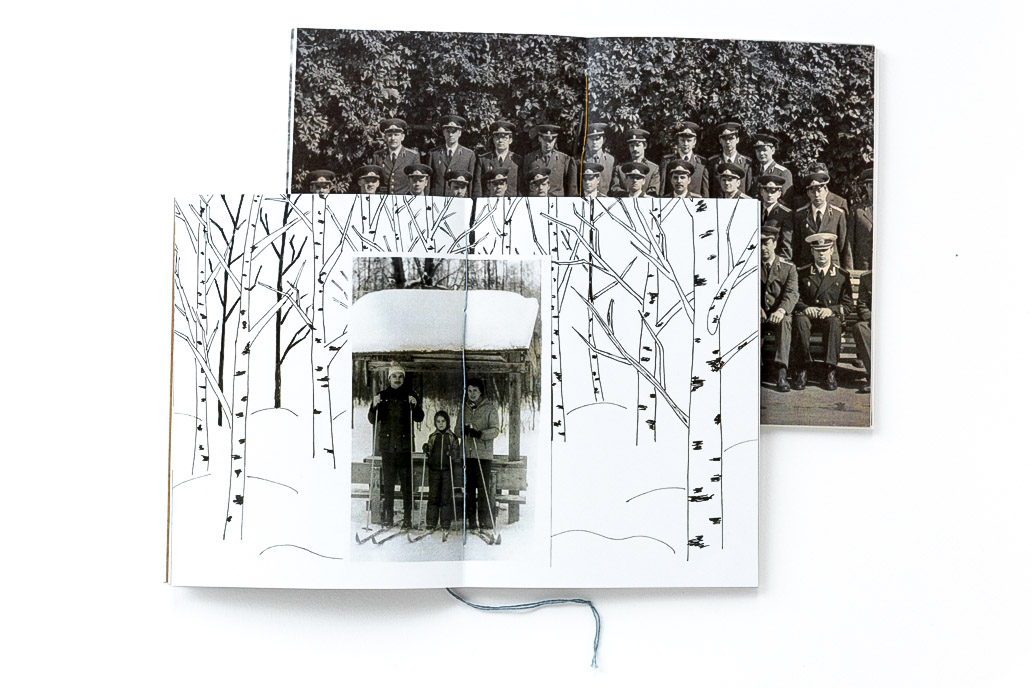
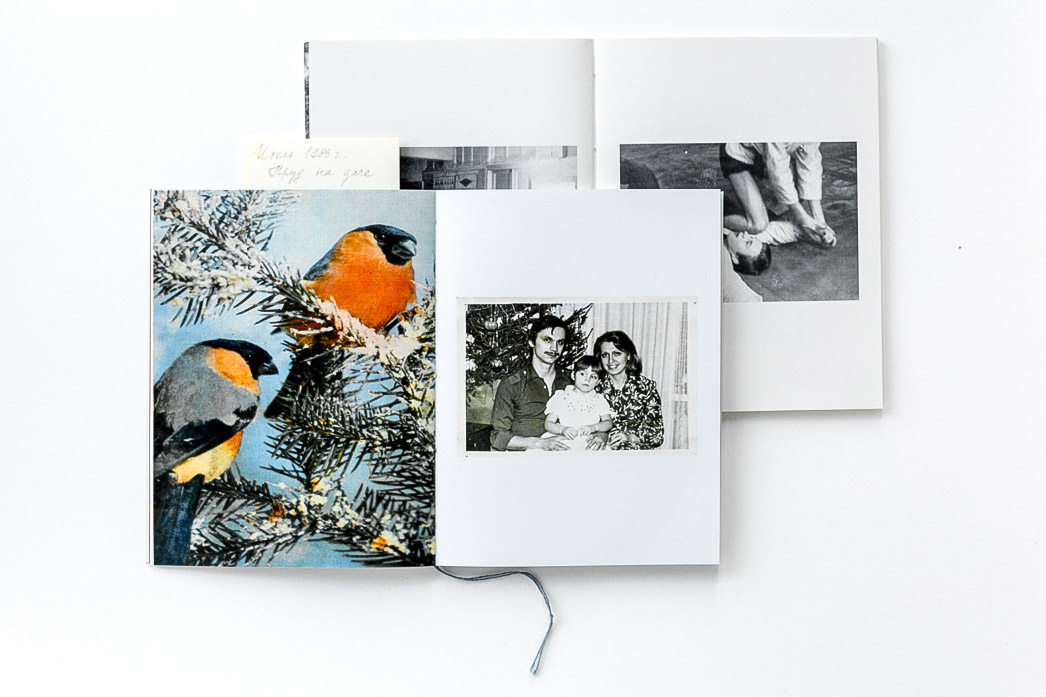
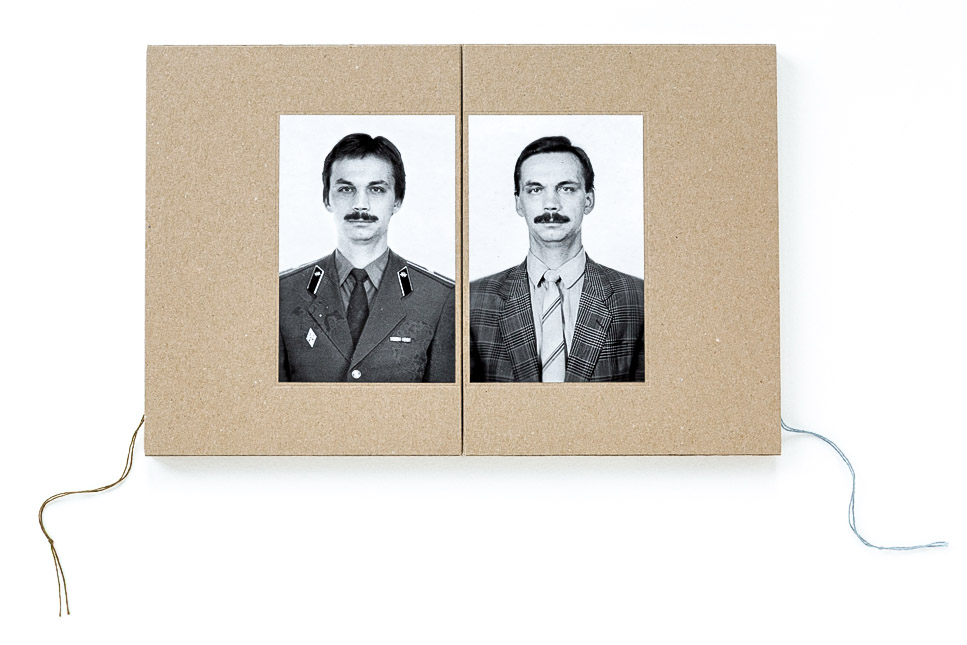
The theme of duality introduced from the very first encounter with the book through its title (Binom, derived from the Latin bi – “two” – and nomen – “name”) can be defined as the key motif of the work. The book’s structure mirrors this split: it consists of two separate volumes concealed within a single divided slipcase, each pocket documenting one side of the man’s life. Among other conceptual elements hinting at the double existence of a person under totalitarianism are family photos placed with their reverse side facing the viewer, inverted passport portraits, and endless multiple lines of code overlapping the snapshots of seemingly peaceful Soviet everydayness. When looking at these layouts, I cannot but ask a rhetorical question: which of these languages – visual, coded, computer, Aesop’s – is more precise in describing the reality of those decades? And what did that reality actually look like?
Appreciating both the originality of the artistic approach and boldness of revisiting the traumatic memory, I also see in Drachinskaya’s work a genuine effort not to put up with the inherited silence but to look for her own truth. Her book asks uncomfortable questions and even if to some of them we still do not have clear answers, the fact that they have been posed is already a lot.
__________
Contributing Editor Olga Bubich is a Belarusian essayist, visual artist, and memory researcher currently based in Berlin.
__________
Nata Drachinskaya – Binom
Artist: Nata Drachinskaya © 2025
Photo archives: Andrey Shtepa
Photos, drawings, texts, translations: Nata Drachinskaya (Shtepa)
Concept, edit and art-direction: developed in the 2022 Photobook as Object workshop by Yumi Goto and Jan Rosseel in collaboration with Reminders Photography Stronghold
Publisher: self-published
Language: English
Double softcover in folding slipcase; two volumes (96 pages each); black and white and color photographs, drawings, text; 16,5 cm × 21,5 cm × 32mm; edition of 92; hand-bound, hand-numbered, signed.
__________
Articles and photographs published in the PhotoBook Journal may not be reproduced without the permission of the PhotoBook Journal staff and the photographer(s). All images, texts, and designs are copyright of the authors and publishers.
 PhotoBook Journal
An absolutely interesting and excellent review of a dicey, subject little understood or objectively discussed, it’s so drenched in propaganda .