Review by Hans Hickerson ·
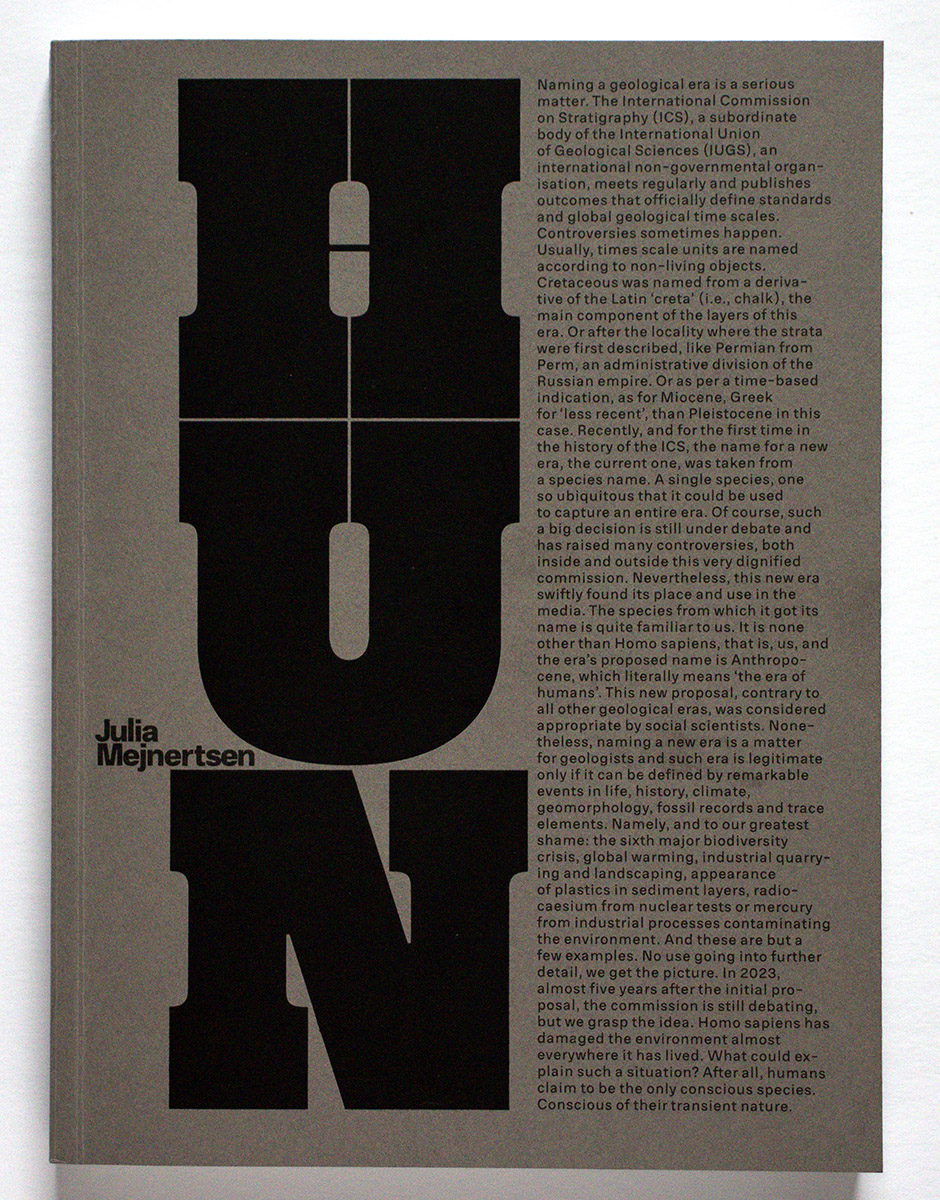
Julia Mejnertsen’s HUN explores nature, hunting, and the mother / daughter relationship. They are interconnected in the book because Mejnertsen’s mother is an avid hunter.
Interestingly, Mejnertsen’s mother appears blind to the moral dilemma of killing animals, including a threatened species such as the African elephant. For her mother, discovering hunting as an adult became a path to a new identity as a capable, self-confident individual. Mejnertsen honors this but also poses a series of questions involving the fraught ethics of our human relationship with animals, wild, captive, and domestic.
The book is organized into nine sections or chapters, each of which embodies a distinct theme and visual strategy. It is rare to see such an exceptionally creative variety of approaches in the same photobook. Mejnertsen was the winner of the 2022 Dalpine / Fiebre Photobook Dummy Award, and her project was developed with collaborators that have helped it push the boundaries of photobook narrative form. It is also the co-winner of the 2025 Maribor photobook prize.
The book logs in at 268 pages, so bear with me as I walk you through it.
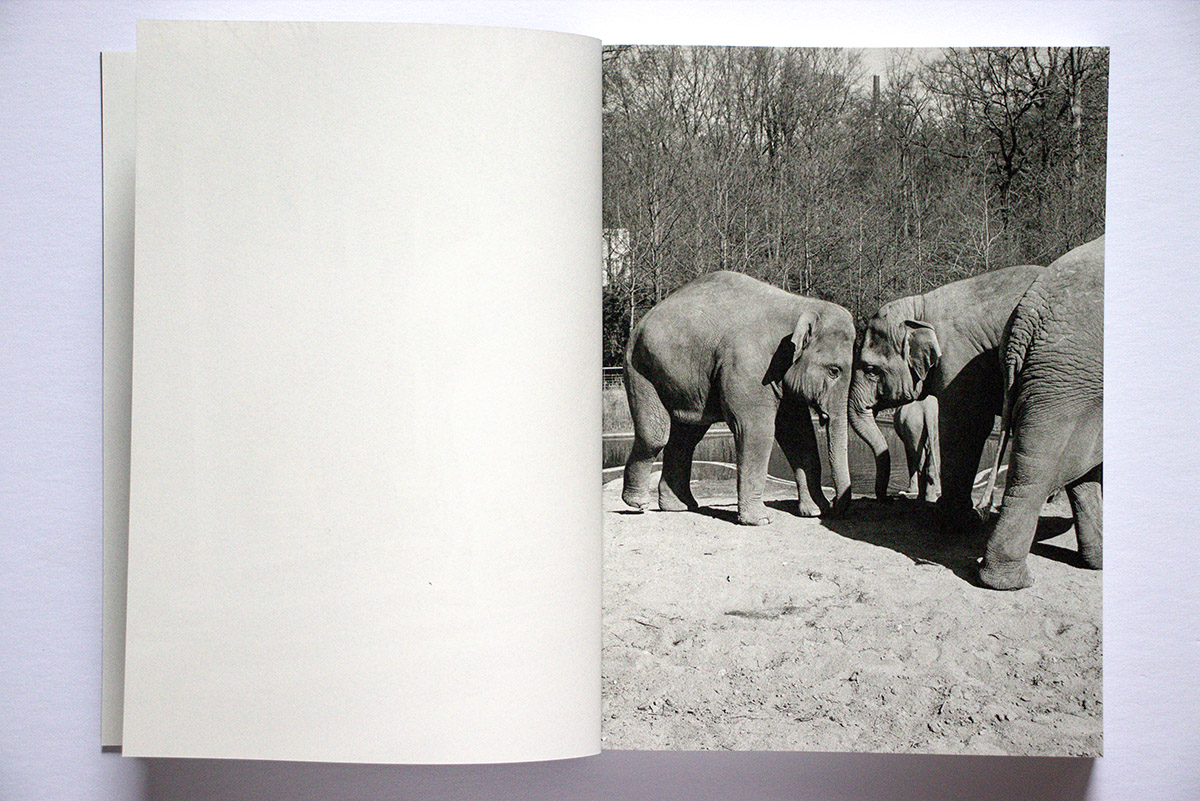
In the first section, we see matter-of-fact black and white photos of Asian elephants in a zoo. We see them eating, socializing, and interacting with their surroundings. We also see a young elephant calf exploring and with its mother.
The second section contrasts artificial, human-made zoo environments with photos from the wild, apparently in Africa.
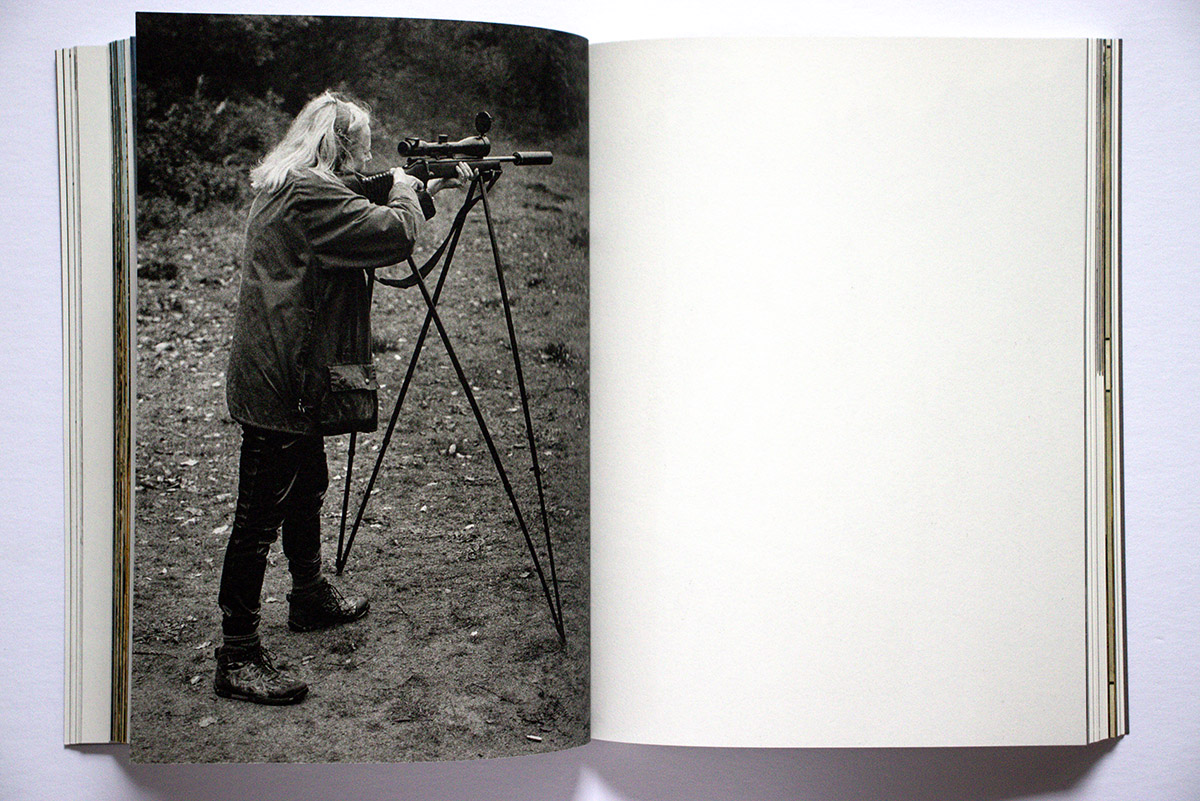
In the third chapter we are introduced to Mejnertsen’s mother – presumably the “she” in the title (“hun” in Danish translates to “she” in English) unless it refers to the mother elephant below. Mejnertsen’s mother is presented sleeping, walking her dog, and interacting with what must be her grandchildren, and we also see some images of her target shooting with a large rifle. We see enough photographs of her in different attitudes and contexts to understand that she is a complex and multi-faceted individual.
Next, we see seven connect-the-dots drawings of Disney baby elephant Dumbo, preceded by an official, politically correct Disney statement apologizing for perpetuating cultural stereotypes.
The fifth section is a series of black and white and color family snapshots, mostly including animals – cows, dogs, cats, geese, a horse, a fish – that have been cut out, leaving a blank silhouette.
To recap the themes presented so far, we have dealt with captive elephants; man-made versus natural animal habitats and environments; Mejnertsen’s hunter mother; a cute, stereotyped elephant cartoon character; and a reminder of our connections to privileged animal species that serve us as livestock and pets.
Now that we have the back story, the stage has been set for some drama. In the sixth chapter are eleven dramatic color photographs of Mejnertsen’s mother on safari in Africa, where she shoots and kills a mother elephant, orphaning its calf. The photographs are alternated with ten black and white drawings of the same scene, but viewed from the elephant’s perspective, including fuzzy, fading images representing what she sees as she dies.
Ugh. This is heavy stuff, hard to look at and harder to think about. What “sport” is there in killing a mother elephant in the wild who was busy going about her business and bothering no one? Why would a human mother deprive a fellow creature, a young elephant, of the comfort and support of its mother? Following the practice of good writers, Mejnertsen does not explain but lets the photographs tell the story and pose the questions.
Adding a stunning visual element to the design, a small, round “bullet” hole has been drilled through the rest of the book, starting at the page where the fatal shot was fired. The shot / hole echoes through the last three sections of the book:
- Black and white photos from an African safari, including dead animals and chunks of butchered meat on one side and color photos of animals in staged, museum dioramas on the other.
- Printed questions about killing and hunting, for example, “Would you kill a rat?” or “How do you feel about hunting in Africa?”
- A series of ten small photographs, that begin showing the author and that slowly morph into the mother, along with a series of texts by each. The mother writes about what hunting means to her, and Mejnertsen talks about her mother as an example and how she discovered photography.
HUN is a complex work of art with a lot of moving parts. There are many themes in play and numerous layers and details to unpack. With its memorable images and searching questions it offers a thought-provoking photobook contribution to contemporary art, issues, and ideas.
Hans Hickerson, Editor of the PhotoBook Journal, is a photographer and photobook artist from Portland, Oregon.
____________
Julia Mejnertsen – HUN
Concept, images, research:: Julia Mejnertsen (born in 1983, lives in Denmark)
Publisher: Dalpine/Fiebre Photobook © 2024
Visualization: Sergio Valenzuela-Escobedo
Art direction, editorial design, editing: Ricardo Báez
Scanning & Pre-press: La Troupe
Printing: Artes Gráficas Palermo
Text: Grégoire Loïs
Language: English
Softcover; perfect binding; 268 pages; 17 x 23 cm; ISBN 978-84-09-58677-6
____________




Articles and photographs published in the PhotoBook Journal may not be reproduced without the permission of the PhotoBook Journal staff and the photographer(s). All images, texts, and designs are under copyright by the authors and publishers.
 PhotoBook Journal
Leave a comment