Review by Hans Hickerson ·
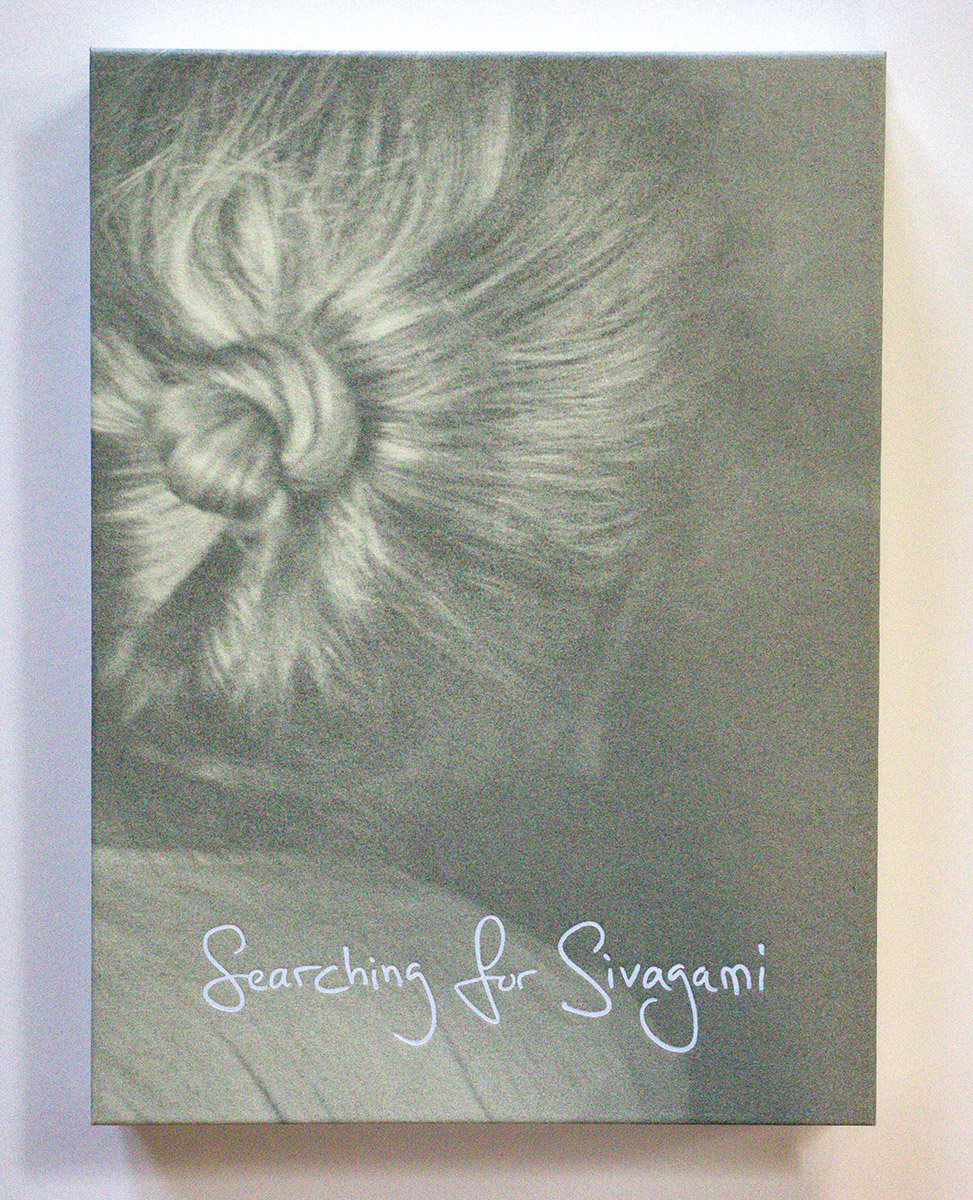
When are photographs not really about what is depicted but about something else? It happens often in photobooks when editorial direction establishes intentionality and context that frame the viewing experience, and Hannah Modigh’s Searching for Sivagami is a great example.
The book is simple and focused. The photos are of Indian women and views of India, not grandiose tourist photographs but quiet scenes and details of public and domestic life. But the actual person or place or object is not the subject. We do not know who or where or sometimes what they are. They are not what you are thinking about when you look at the book because you are thinking about something else, about the theme introduced earlier, via written texts, and the photographs are mostly the backdrop for its development, a visual echo chamber of sorts.
The title sets up the book well. Modigh lived in South India for a number of years as a young child, and a local woman named Sivagami took care of her and her two sisters. She was close to Sivagami and later in life wondered what had happened to her. The book is about her memories and her search for Sivagami in South India decades later. We gather from the afterword that apparently Modigh did find Sivagami and her family, but we never know which photographs, if any, are her, or exactly how it turned out. The mood of searching for and remembering the past is the focus.
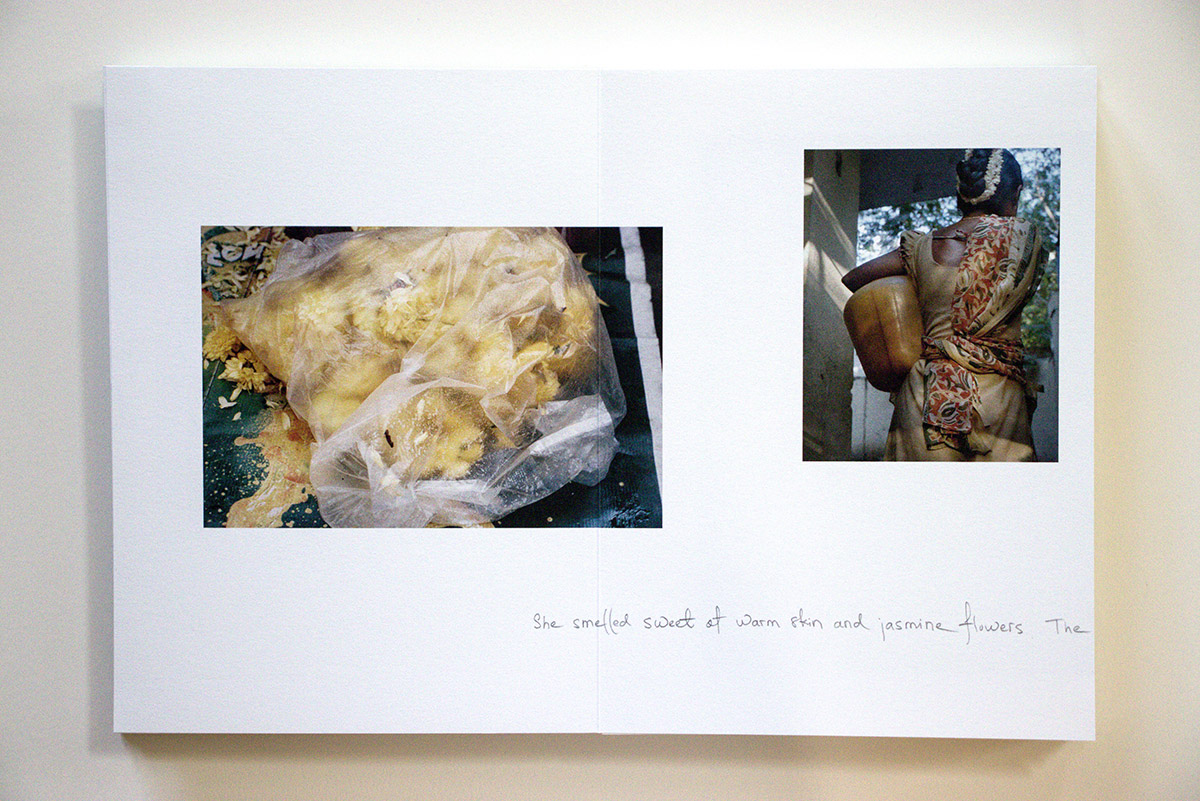
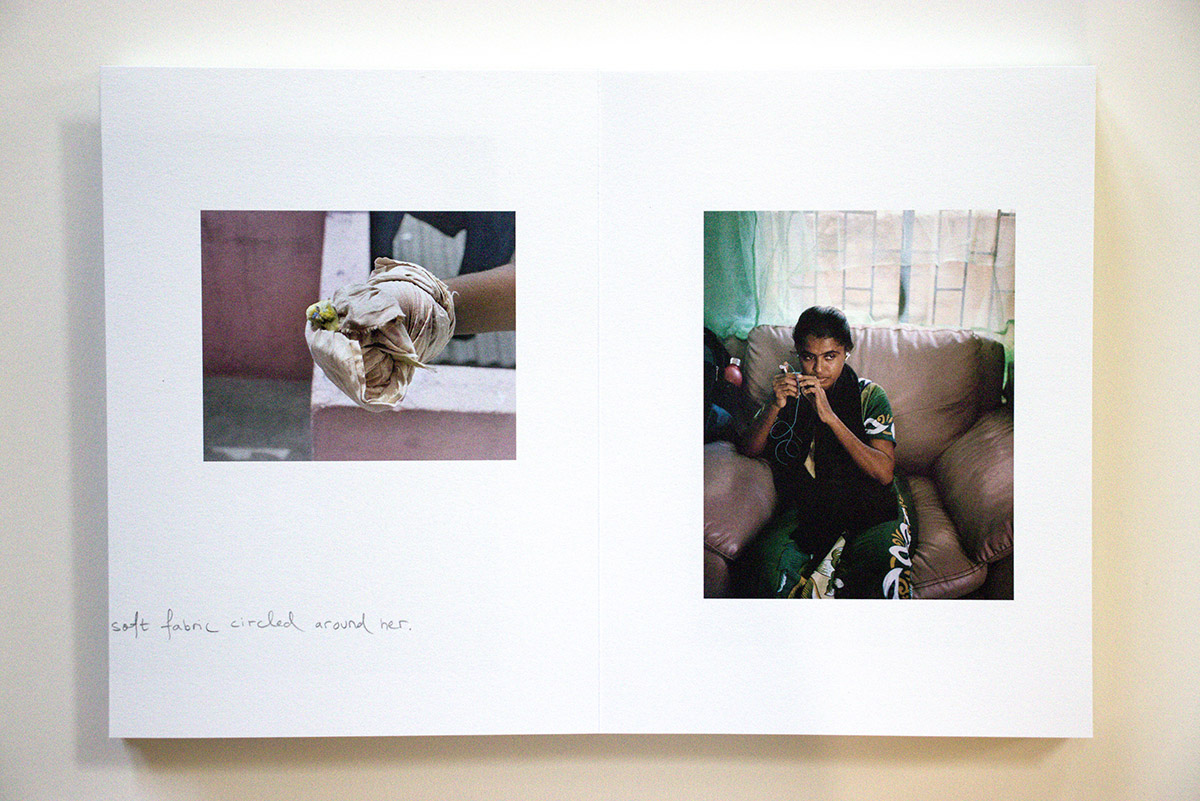
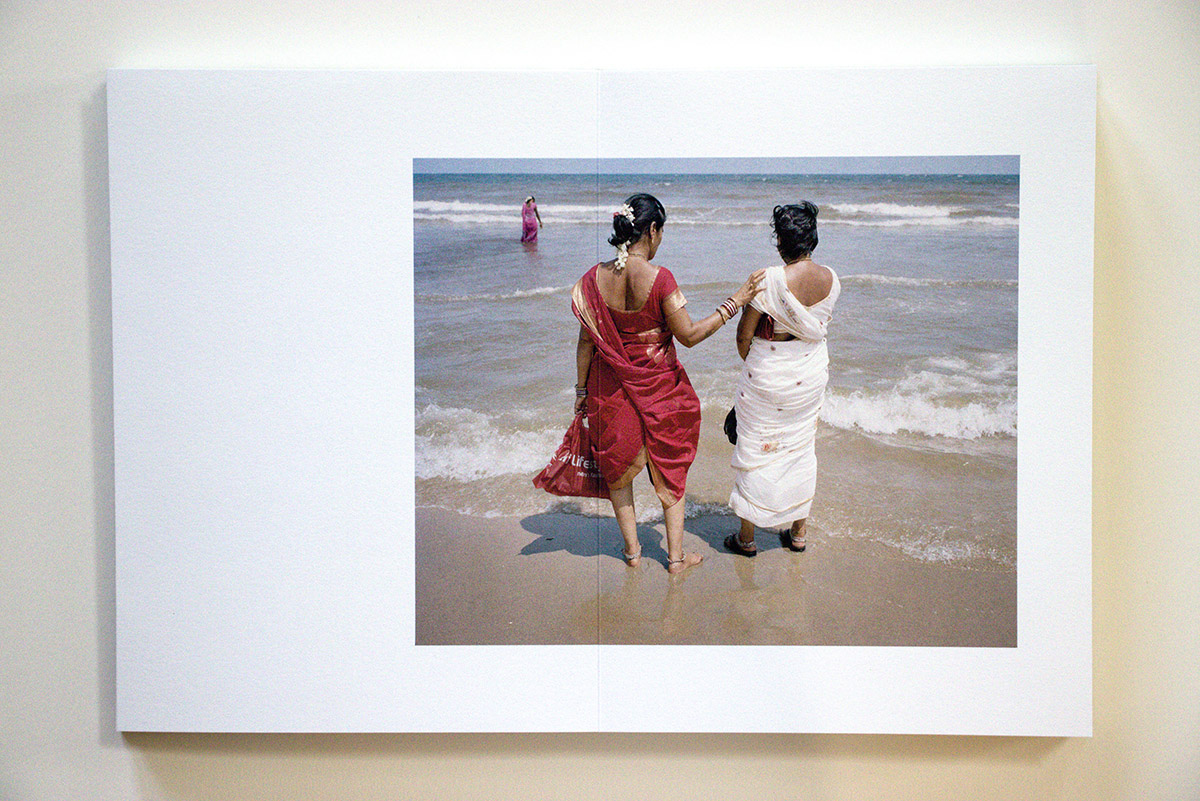
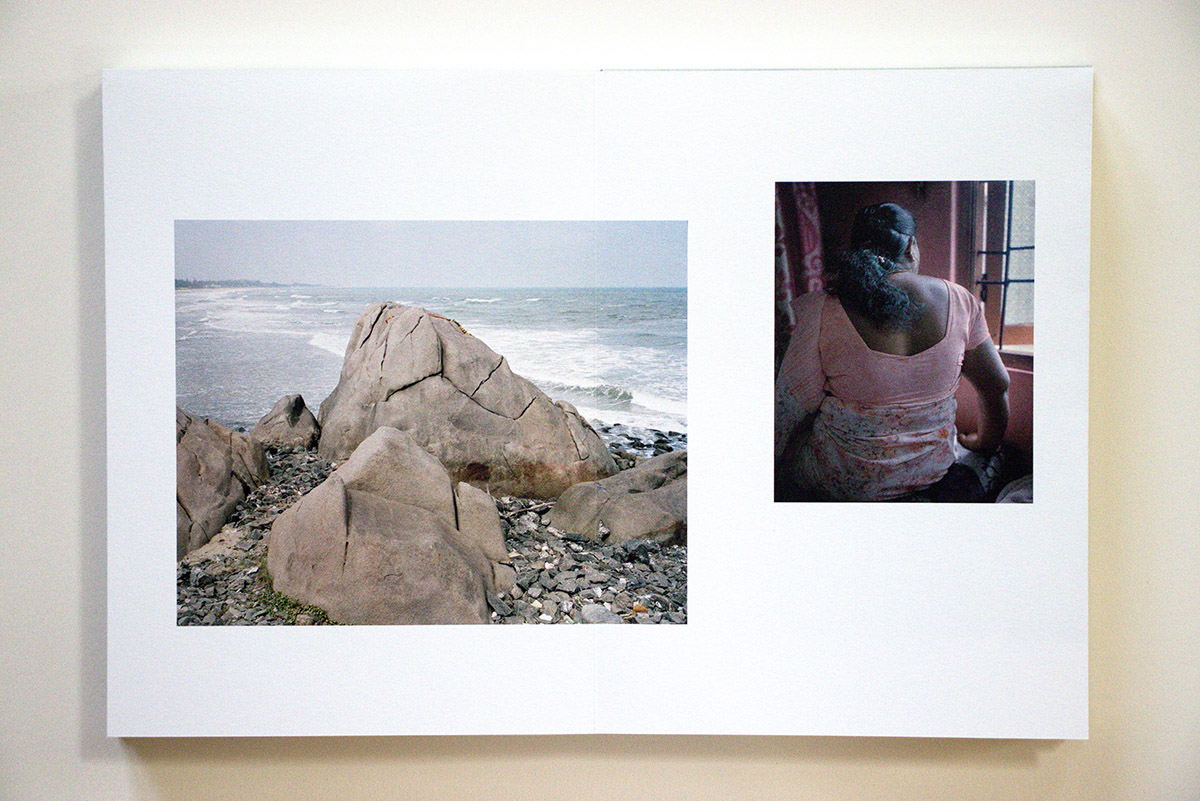
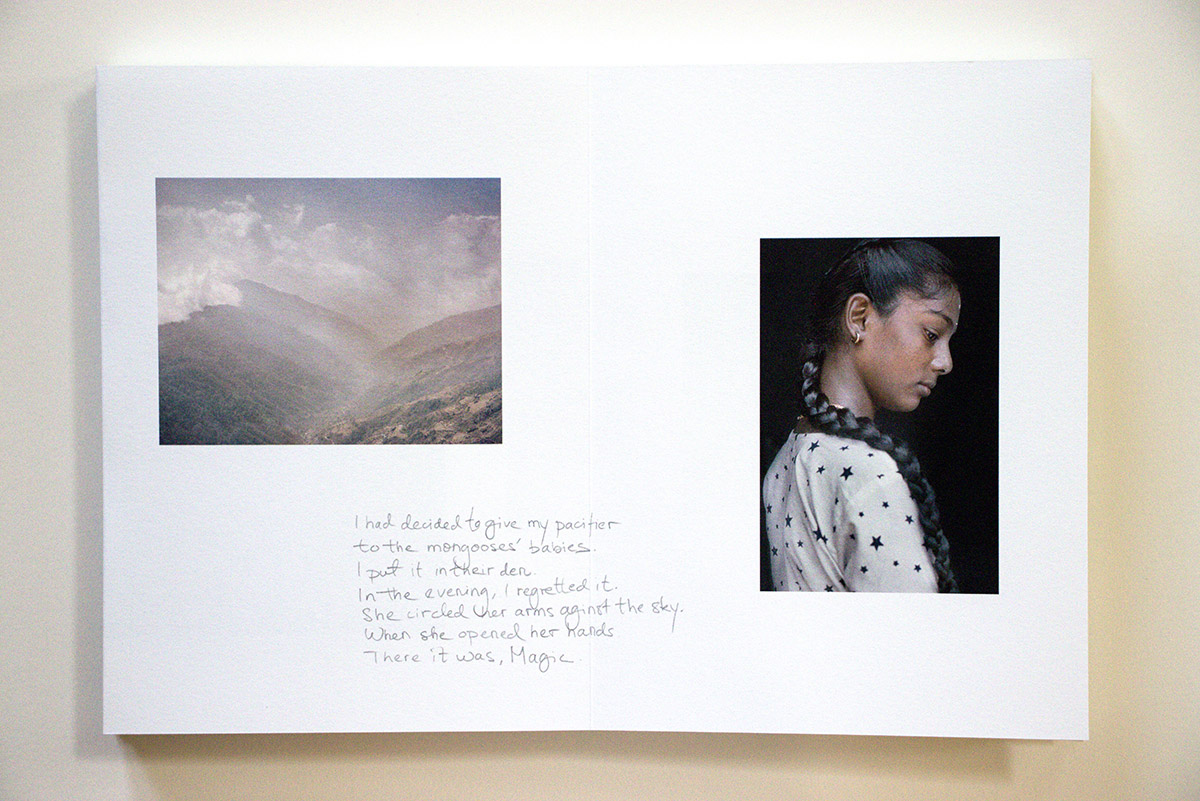
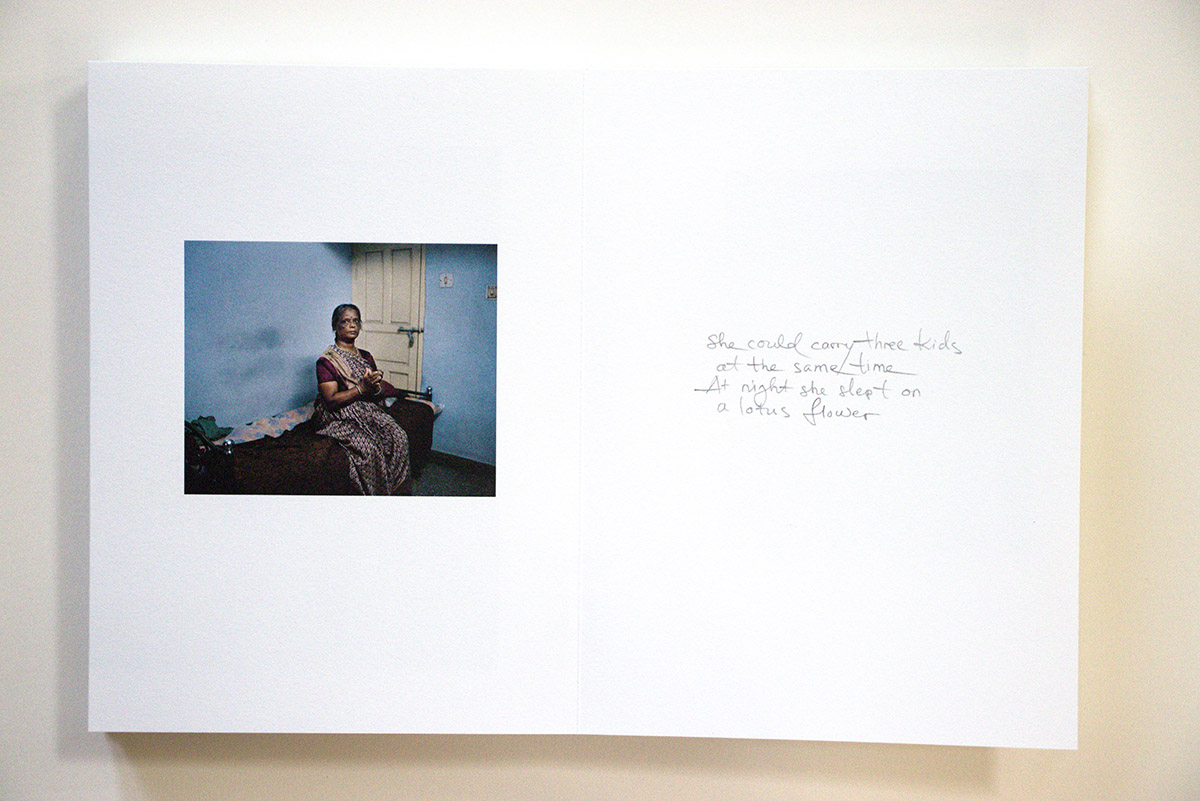
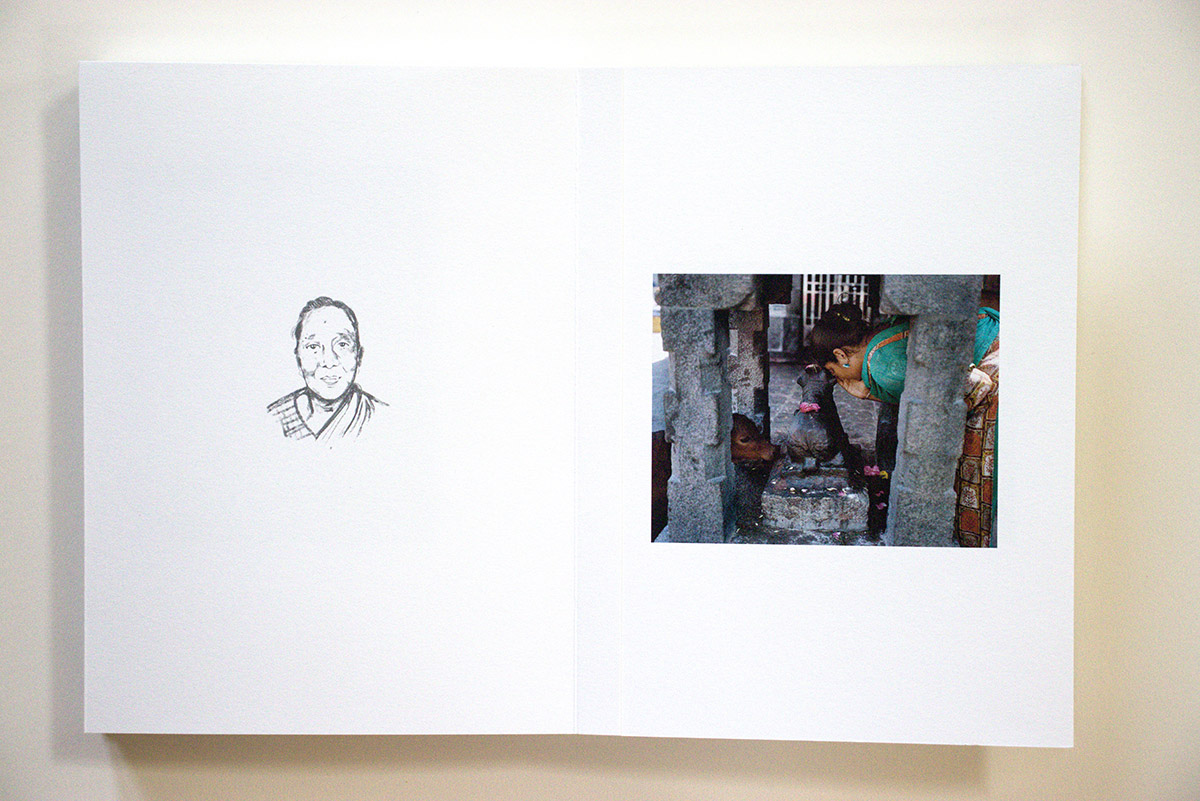
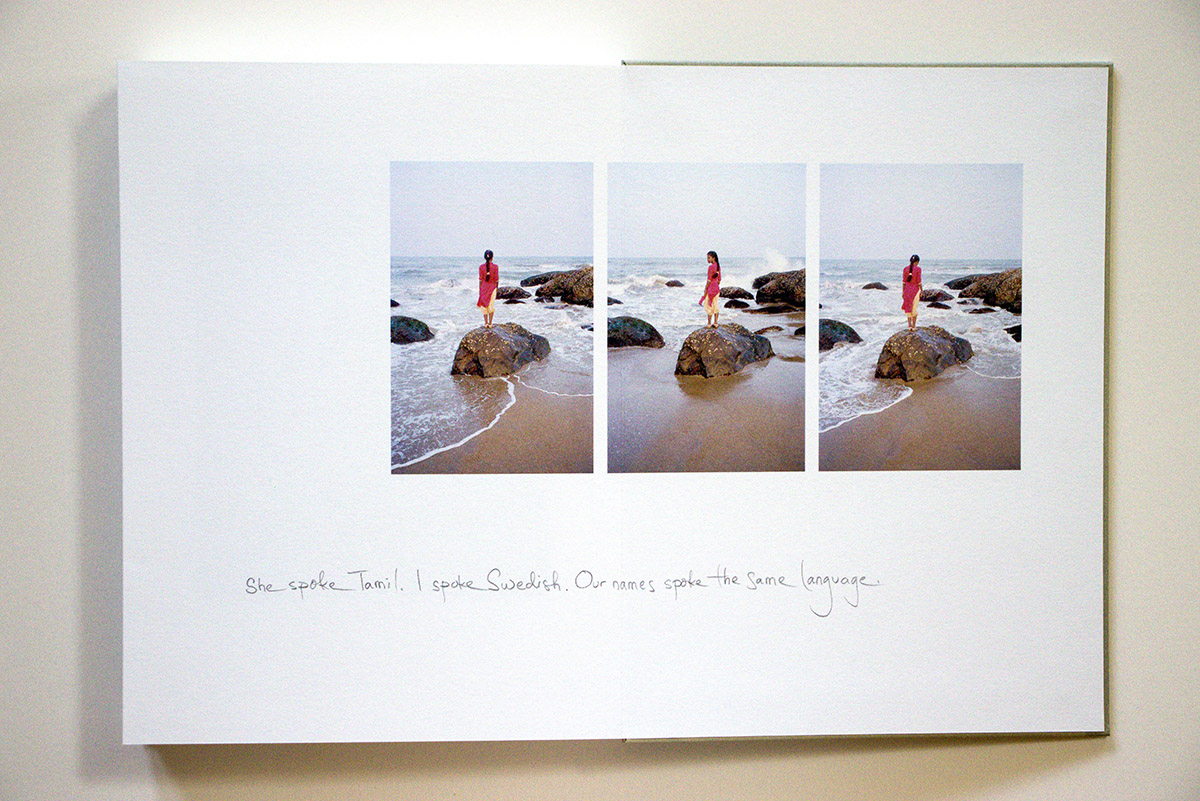
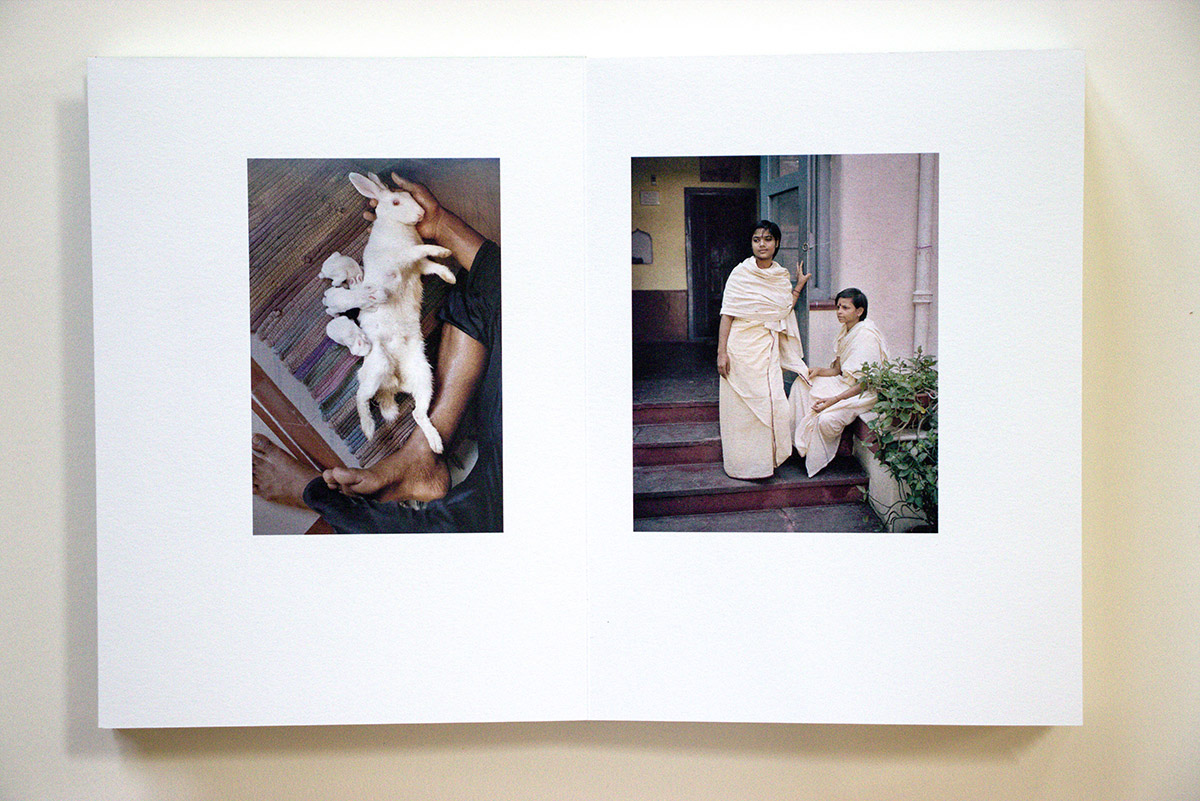
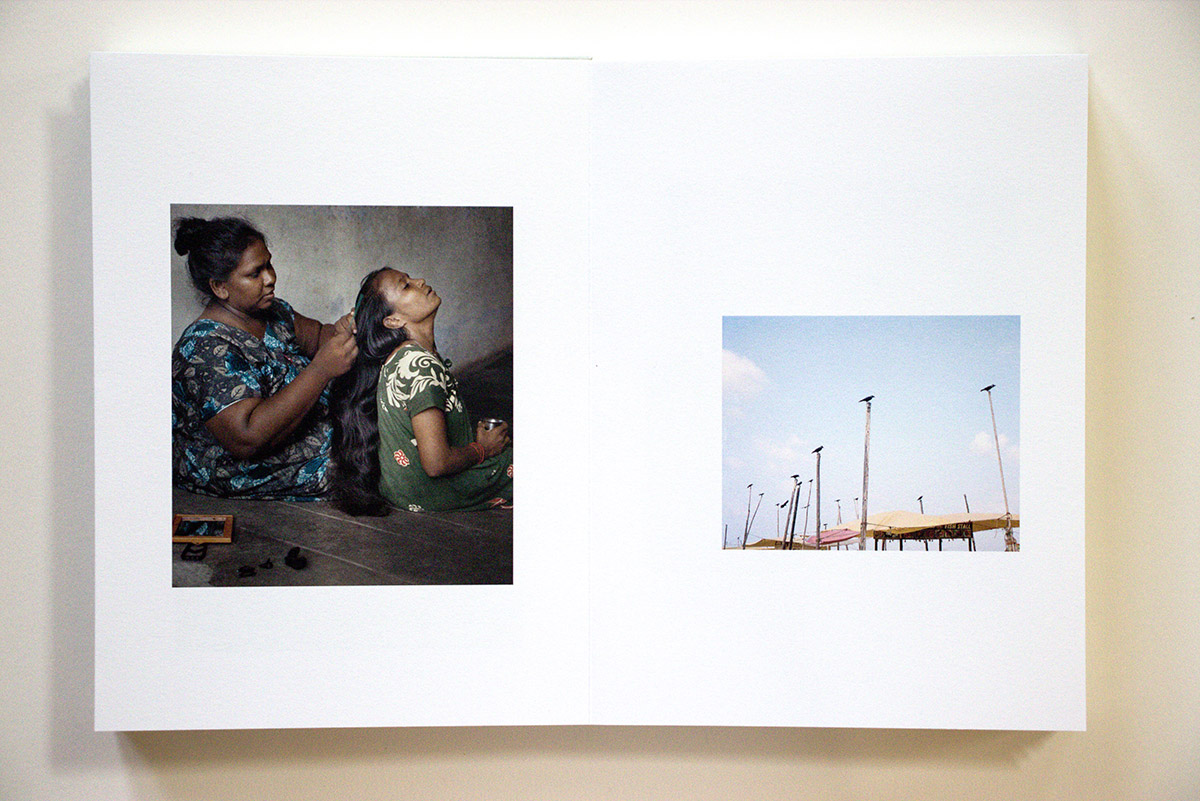
There are no images of men in the book, and only one picture of a young girl and one of an infant. Most of the photographs are of women of various ages. It is hard to tell if they are family members or domestic workers. We see them doing household tasks, sleeping, sitting together, braiding hair, and relaxing during outings at the beach. They wear flowing, colorful saris and tops that cover their shoulders but leave their backs bare. Their dark hair is in a bun or braided. They seem to be in a relaxed state of intimacy with each other and with the photographer.
We also see details from domestic and local life: a large boulder on a beach, a valley topped by clouds, a motorcycle, a bag of flowers, strips of cloth and thread hanging as offerings from trees, a faded wall painting of a woman nursing, a mother rabbit with three baby rabbits, a saddled horse on the beach, a banyan tree with long roots stretching down to the ground, sandals and flip flops gathered on the floor at the entrance to a room.
Two family photographs frame the other images in the book. The first photo in the book includes snapshots of Indian family members, and the last photo is of an old wooden trunk, opened to reveal a photo of an Indian woman and a blond toddler, perhaps Sivagami and Modigh.
The photographs are not artsy or clever or flashy. They are straightforward and uncomplicated. They do not call attention to themselves. Printed on uncoated paper, their tones are soft and muted.
The editing is strong, tight but not forced. The pacing is subtle and varied. The photos are sometimes one to a page, but there are photos that stretch across the spread or behind onto the next page. The texts do the same. Many present Modligh’s memories of specific details of her time being cared for by Sivagami, when Sivagami’s presence loomed larger than life. They evoke her nostalgia and explain her project as a search for “traces of a relationship,” and how her eyes “were drawn to sisterhood, the supportive bonds between women.”
Searching for Sivagami is many things at once. Physically it is a beautiful object, packaged in an amazing accordion-style Leporello binding. Set in India, it is a story with universal resonance that could happen anywhere, a more than memorable visual poem about women, relationships, life, growing up, and reaching for but not touching the past.
Hans Hickerson, Editor of the PhotoBook Journal, is a photographer and photobook artist from Portland, Oregon.
____________
Hannah Modigh – Searching for Sivagami
Photographer: Hanna Modigh (born in 1980 in Sweden, lives in Stockholm)
Publisher: Kult Books; © 2024
Text: Hanna Modigh
Language: English
Design: Hannah Modigh and Janne Riikonen
Printing: Wilco Art Books
Leporello in printed and foiled hard covers; 88 pages; 69 photographs; 15,5 x 21 cm; offset printed on both sides of the Leporello; ISBN 978-91-987607-5-0
____________
Articles and photographs published in the PhotoBook Journal may not be reproduced without the permission of the PhotoBook Journal staff and the photographer(s). All images, texts, and designs are under copyright by the authors and publishers.
 PhotoBook Journal
Leave a comment