
Review by Lee Halvorsen •
You’re in the eye of the storm…you’ve seen the chaos and change that just occurred and in the not-too-far distance, you see more coming. Through Gray’s images, this is the storm’s eye view of mankind’s interaction with the planet and the mostly uncertain nature of that contact. You’re standing on the high ground watching swirling images of beauty stamped with mankind’s mark. Man’s impact on the planet…is this the start of a new “Age?”
Perhaps, says Dr. Hart in the foreword. Dr Hart leads a team of scientists studying relationships between humans, plants, and their environment. He posits that the new age, Anthropocene, describes how completely humans have impacted the world around them including other species. Gray’s images are a study of that proposition…a shutter’s instant, a calm moment for the snap, but, in the eye of the storm, with slashes and gashes of humanity meeting and living in nature.
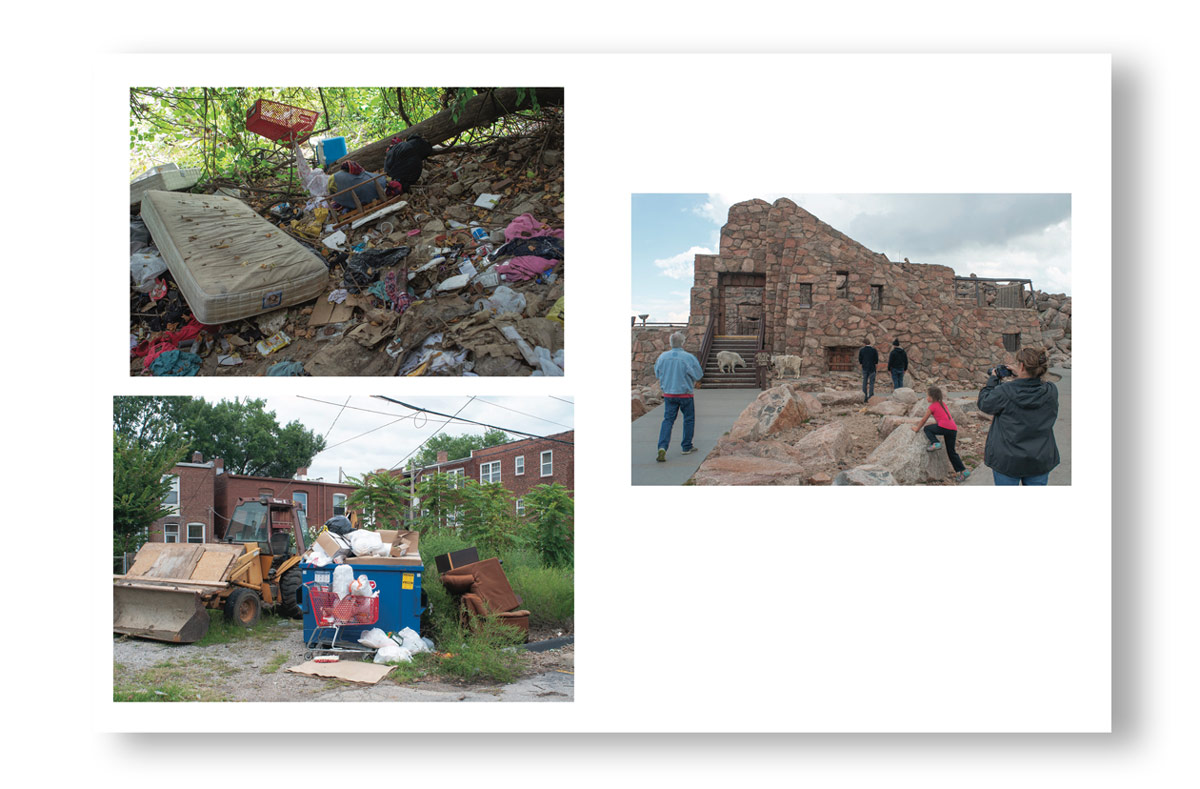
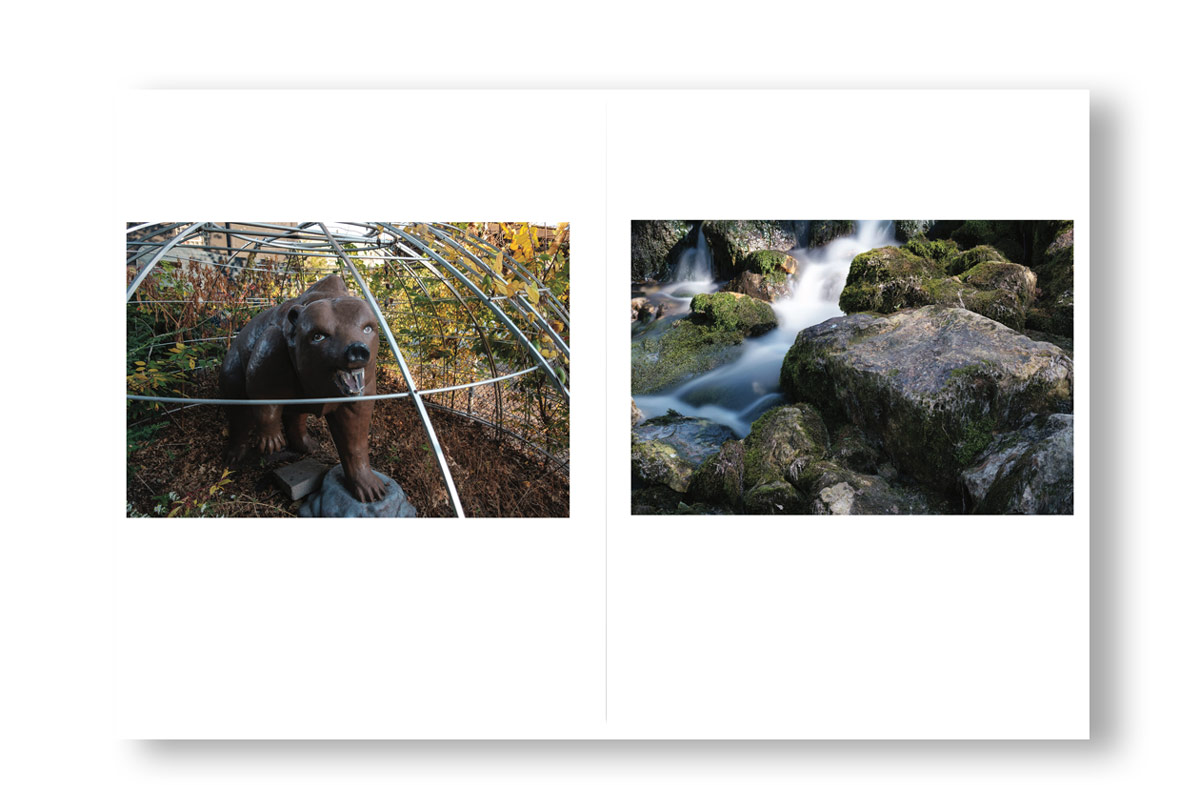
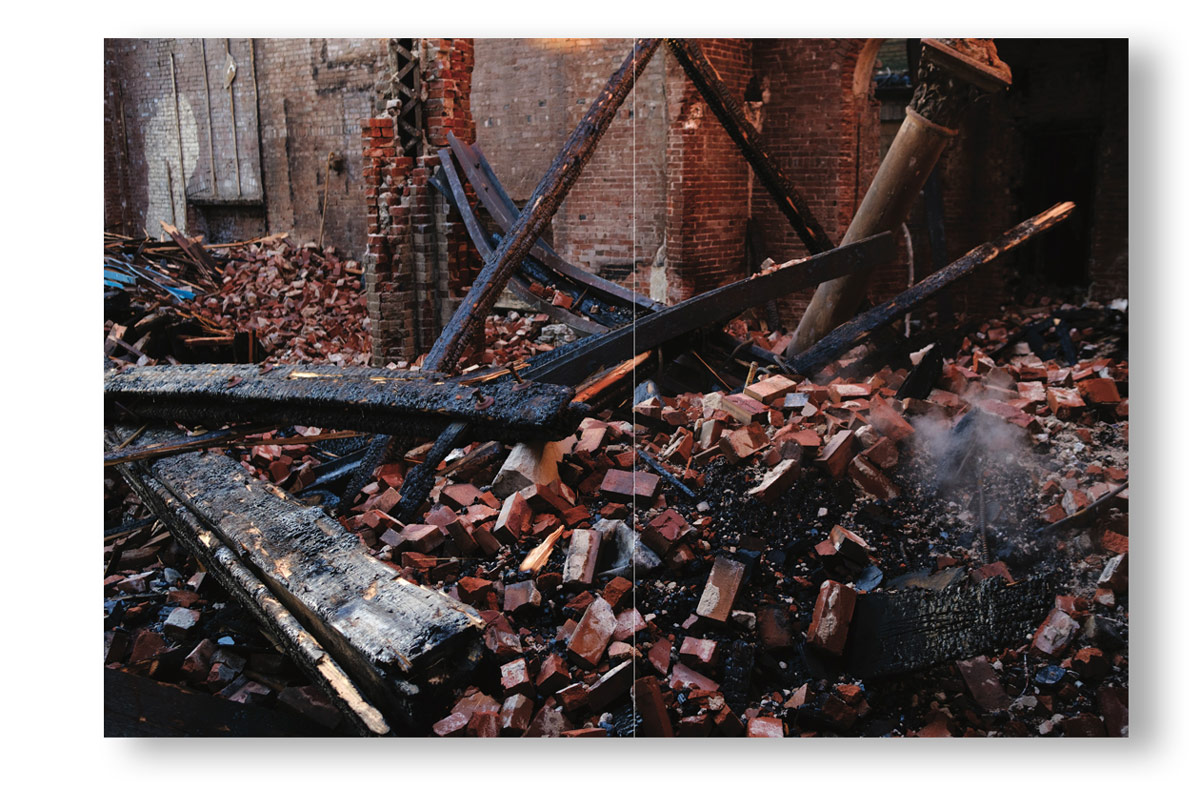
Gray’s images are seemingly random, without order or sequence. They are not related by geography or theme or color/tone…they are related by the mark of man. Trash, detritus, all sorts of human intrusion, sometimes subtle, most often in your face. Most images have some sort of “built” object, built objects are in most areas of our lives and influence where we go, how we go, when we go, and why. We come, we build. Change.
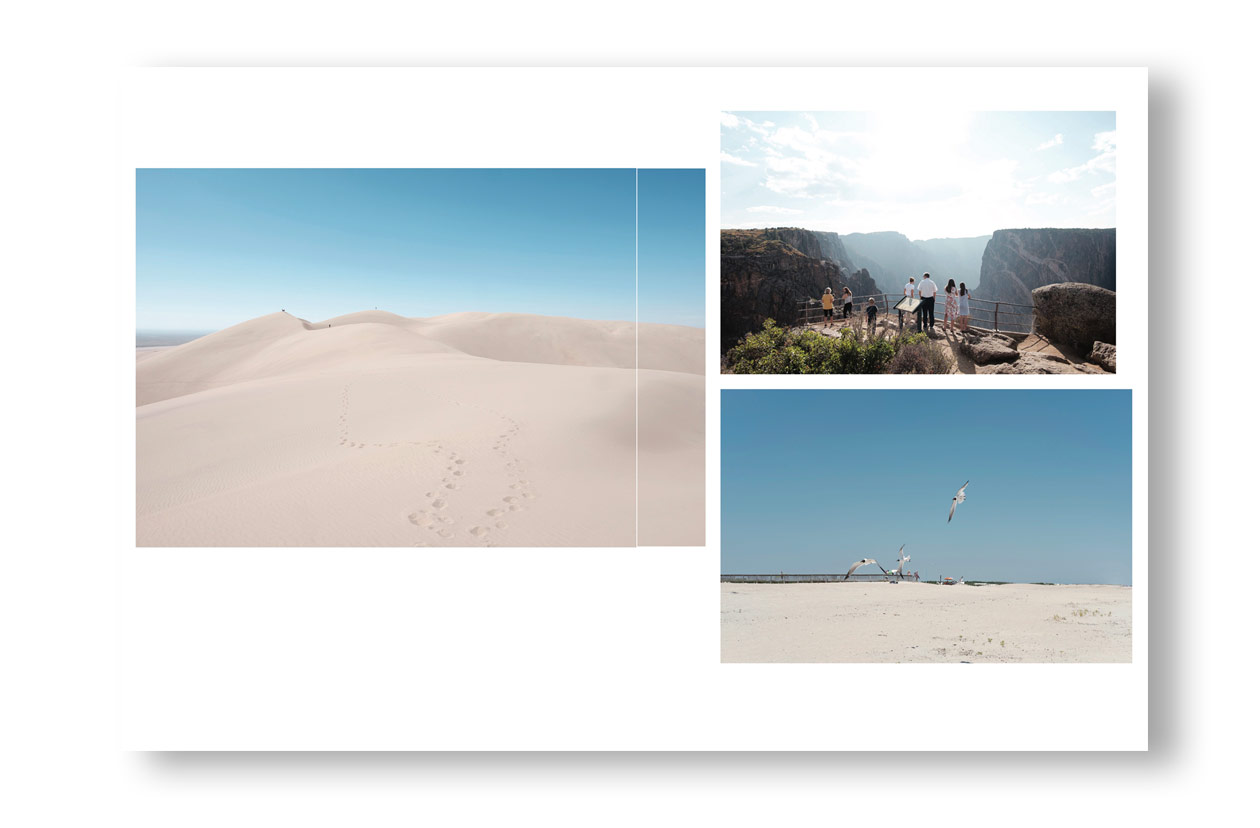
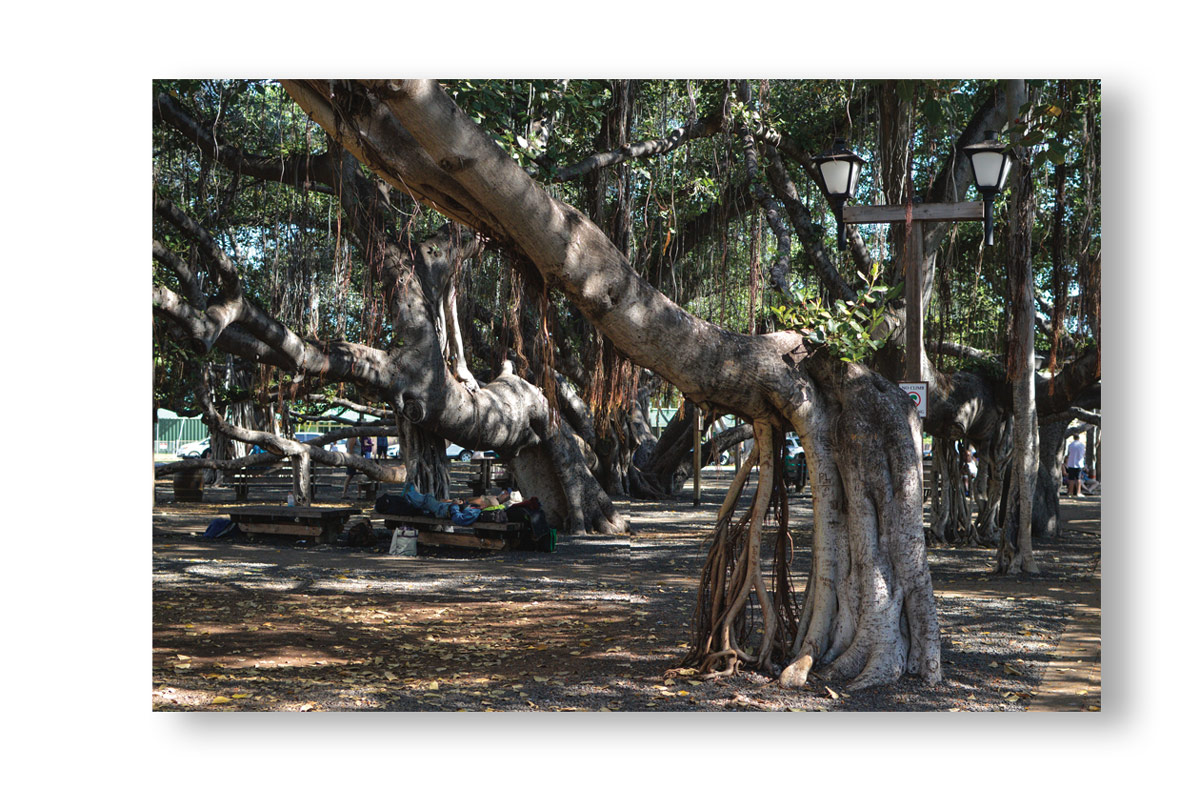
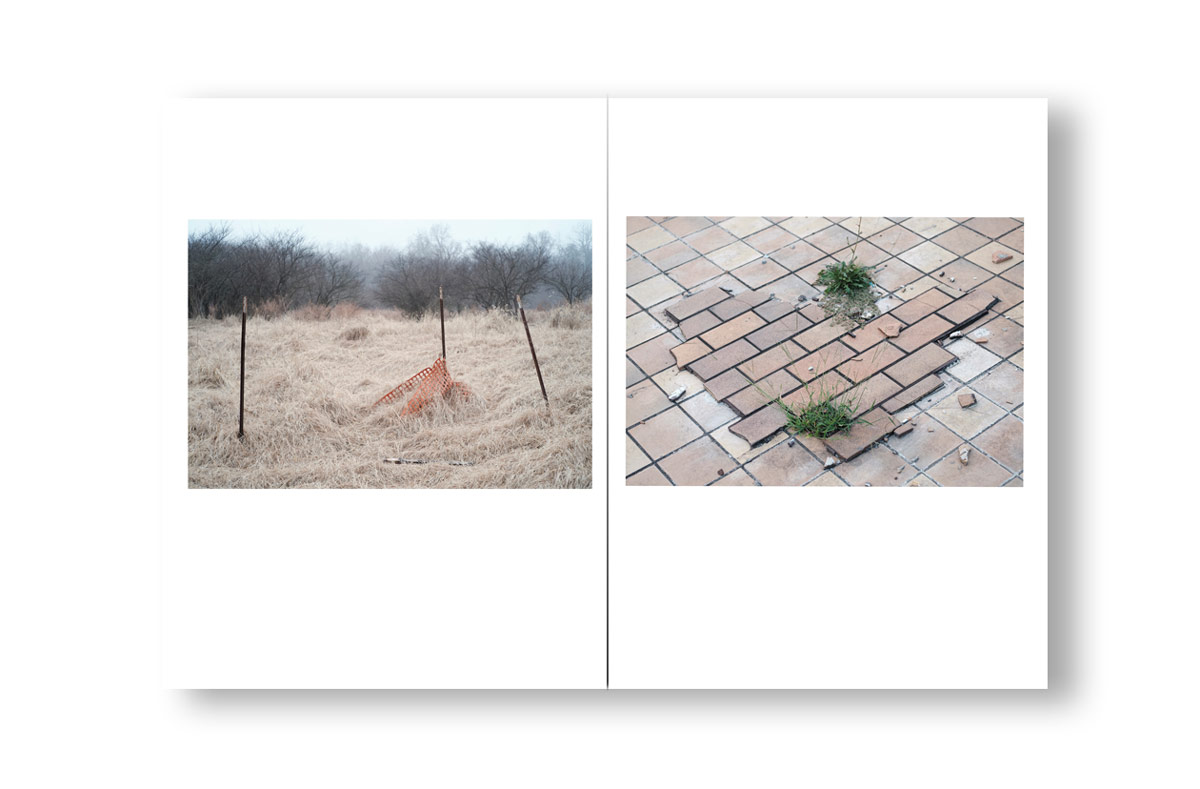
Gray’s images often juxtaposition nature’s gentle beauty with the harsh leavings of people. For instance, a street puddle containing a bag of rock salt and a plastic sheet…in the puddle a reflection of trees and an arch, maybe the Gateway Arch, maybe a McDonald’s arch. Then, weeds growing out of a tile patio, fence crumbling on a flat prairie, two wonderful ponies next to a disintegrating tile floor. Gray takes us into the woods and to the water…to elk, to caverns, to beaches…beauty, but then, old tires abandoned in the trees, graffiti on cave walls and park facilities. Building after building after building with shrinking countryside. Trash, old mattresses, fallen walls jumping out of natural tranquility. Rolling, gorgeous desert sands marked with footprints. Mountain goats trying to cope with tourists and their buildings. View from a hilltop seat of a concert…stage, lights, crowds, all in a forest. Famous, old, massive trees now with picnic tables, benches and streetlights.
Gray, however, is not giving us a tour or a story about places, people or things, rather, he’s walking through the U.S. noting and then capturing examples of mankind slowly changing the earth, other humans, and other species. I don’t think he’s asking the reader to draw a conclusion that one kind of interaction between man and environment is bad or good, rather, he’s asking us to look, recognize the process, and ready ourselves for something different.
Gray has documented the seeds of change which hint that mankind can still have a positive impact. But, if not positive, there will be an impact. And, who is to say what is positive and what’s not. By enjoying this book you’ll have Gray’s view of the environmental vortex around us and what may become the new norm, with mankind at the center of the storm.
_____
Lee Halvorsen is assistant editor, writer and visual artist.
_____
Jason Gray, Does a parasite know that it’s a parasite?
Artist: Jason Gray, currently working and living in St Louis, MO
Foreword/Introduction: Dr. Robbie E. Hart
Publisher: SAUROPOD, St Louis, MO
Book and photographs ©2025 Jason Gray
Foreword ©2025 Robbie E. Hart
Printed by Smartpress Printing
Softcover perfect bound, 100 pages (unnumbered), 90 color illustrations on 100# matter paper, 11×8.5 inches, ISBN 979-8-218-60156-0
_____

Articles and photographs published in the PhotoBook Journal may not be reproduced without the permission of the PhotoBook Journal staff and the photographer(s). All images, texts, and designs are under copyright by the authors and publishers.
 PhotoBook Journal
Leave a comment