Review by Brian Arnold ·
Michael Radford’s and Massimo Troisi’s 1994 film, Il Postino (The Postman) tells the story of an Italian mail carrier named Mario, a peasant on a small island of Italy. He befriends the famed Chilean poet, Pablo Neruda. The elder poet is exiled from his homeland for political dissent. Mario, disgruntled but inquisitive by nature, probes Neruda on the nature of his work, and as a result, the young Italian learns to really understand true passion and poetry. And by understanding the nature of poetry, Mario wins the affections of Beatrice (a clear reference to Dante and his early work La Vita Nova), a girl he grew up with and the woman of his dreams. After the young couple’s wedding, Neruda returns to Chile, exonerated of his “crimes.” Mario writes a letter to Neruda but only receives a formulated reply from his secretary. Irked, Mario sets out to compose his own poetry, to be sure that Neruda will take him seriously. His first poem, his tribute to Neruda, is a sound collage, stringing together recordings of the waves lapping against the side of boat, the joyful chatter of a coastal café at sunset, and narration by Mario reminiscing on ideas he discussed with Neruda. Neruda returns to the island five years later only to learn that Mario is dead, a casualty of a communist protest in Naples. Beatrice then shares Marion’s recording with Neruda who listens and weeps, understanding how much he both inspired and hurt the young poet, but also recognizing that this simple Italian peasant created poetry as rich as anything he accomplished.
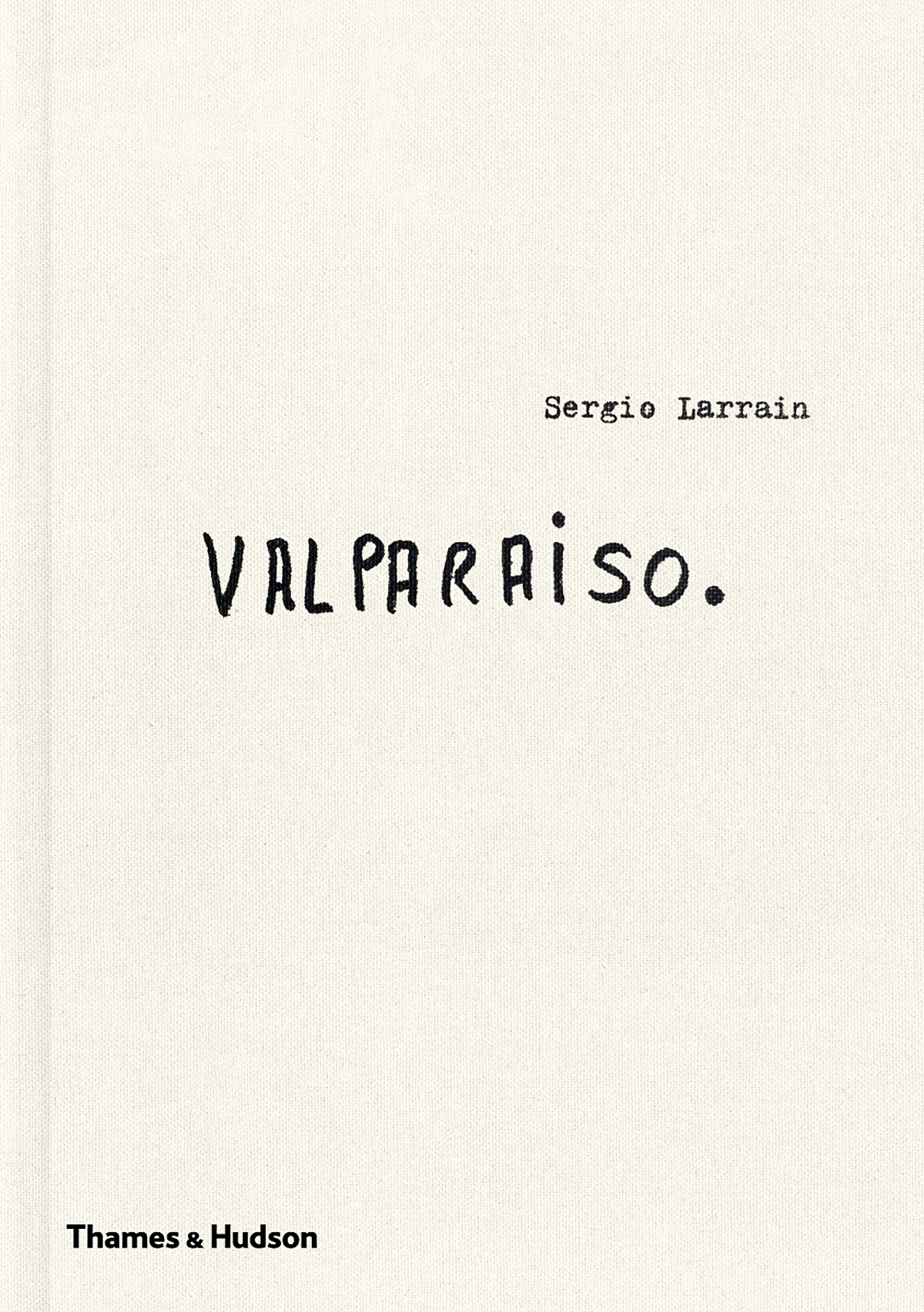
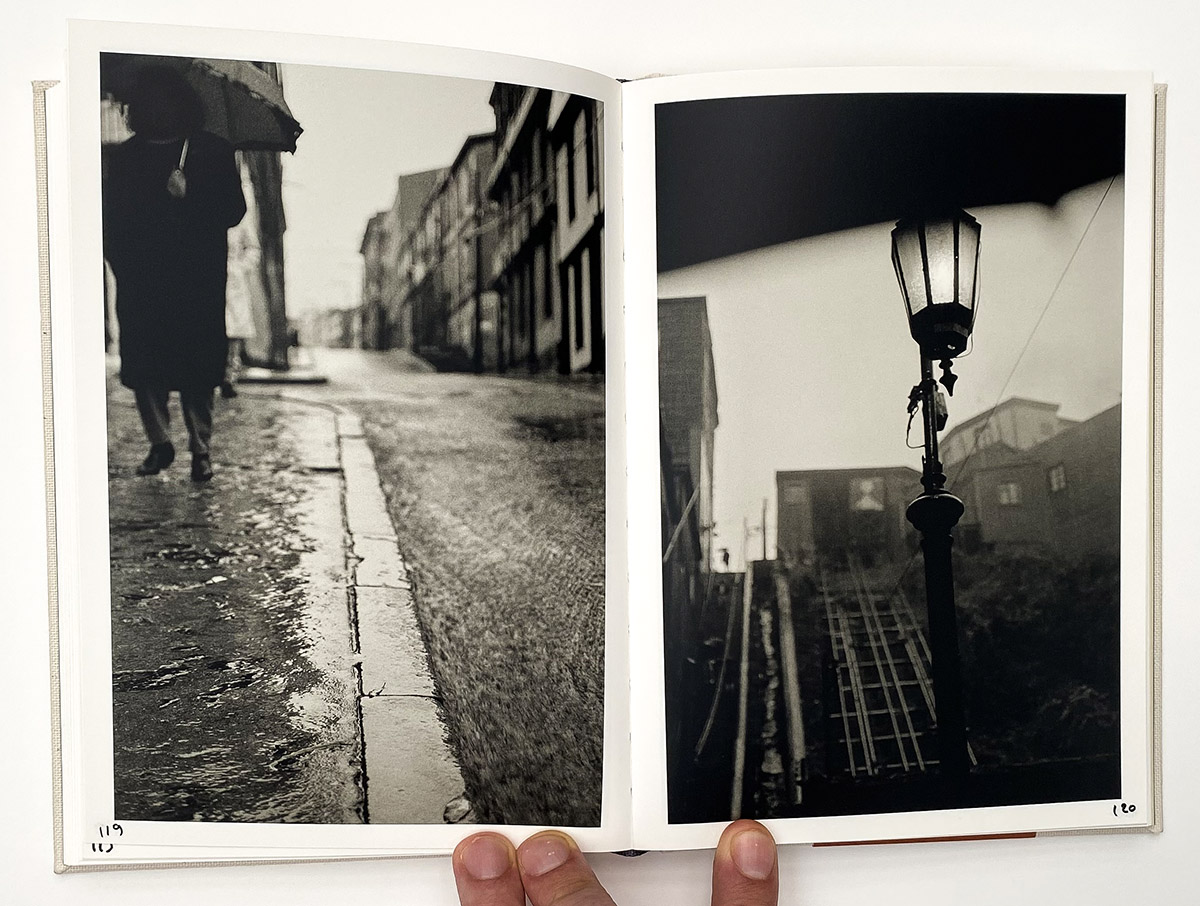
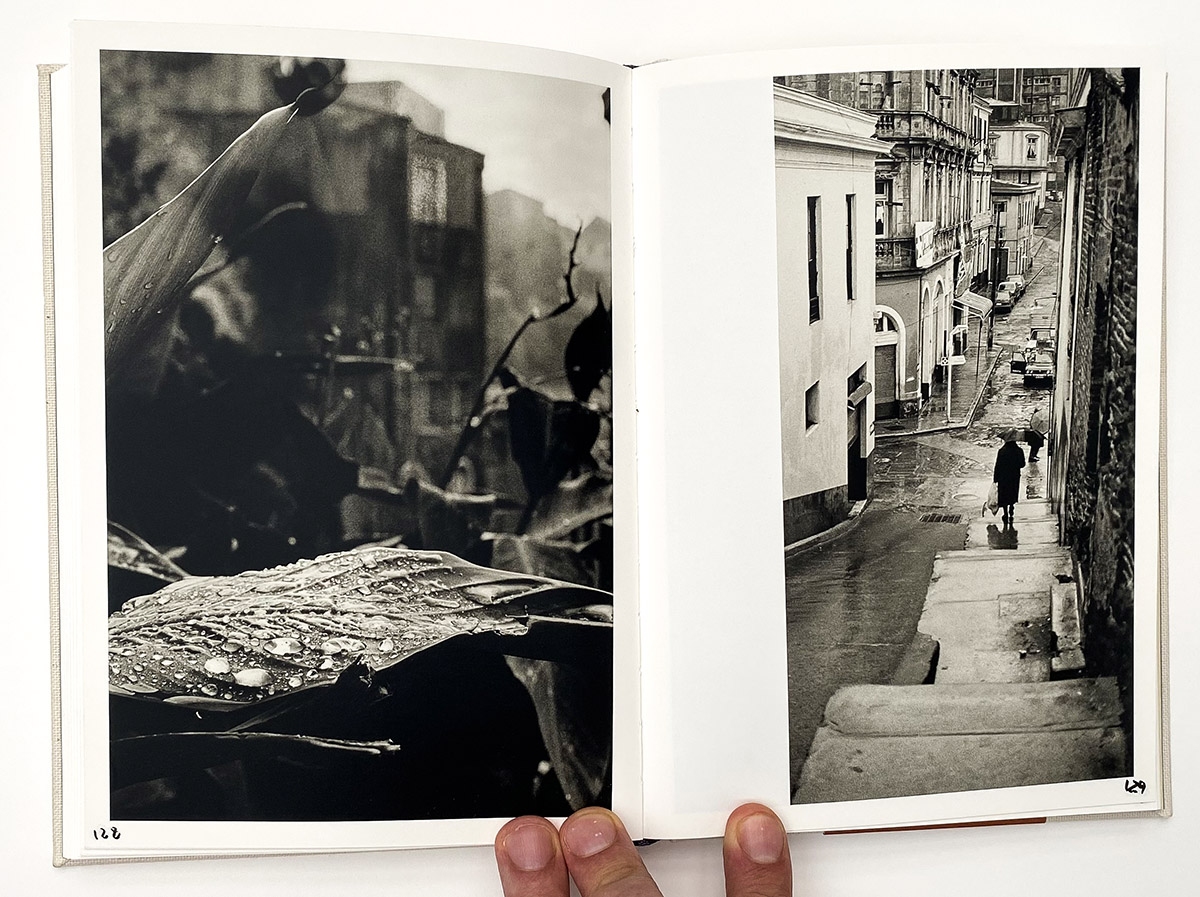
I’ll be honest and say that I knew nothing about Chilean photographer Sergio Larrain before picking up Valparaíso, his new publication with Thames & Hudson (3rd edition, the original published in France by Atelier EXB in 2016). Like anyone with a new photobook, when I first picked it up, I paged through it at random, thumbing between the spreads to get a basic understanding of the photographs. I was quickly captivated by the rich, beautifully printed pictures. I immediately thought of Cartier-Bresson, as they so perfectly embraced the decisive moment. Using a casual but incisive style, Larrain documented the theater of the Chilean port city, fully believing that the remarkable phenomenon of Valparaíso could be explained in photographs.
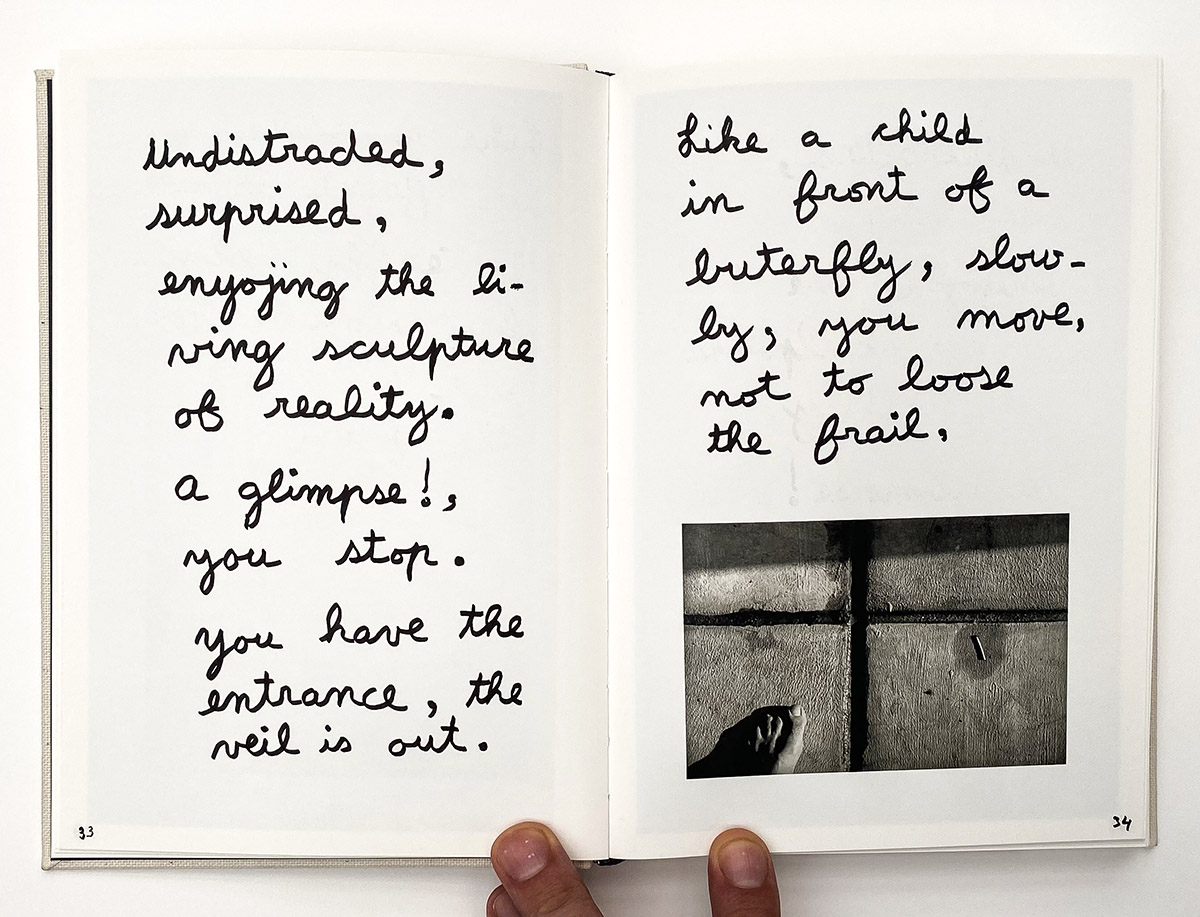
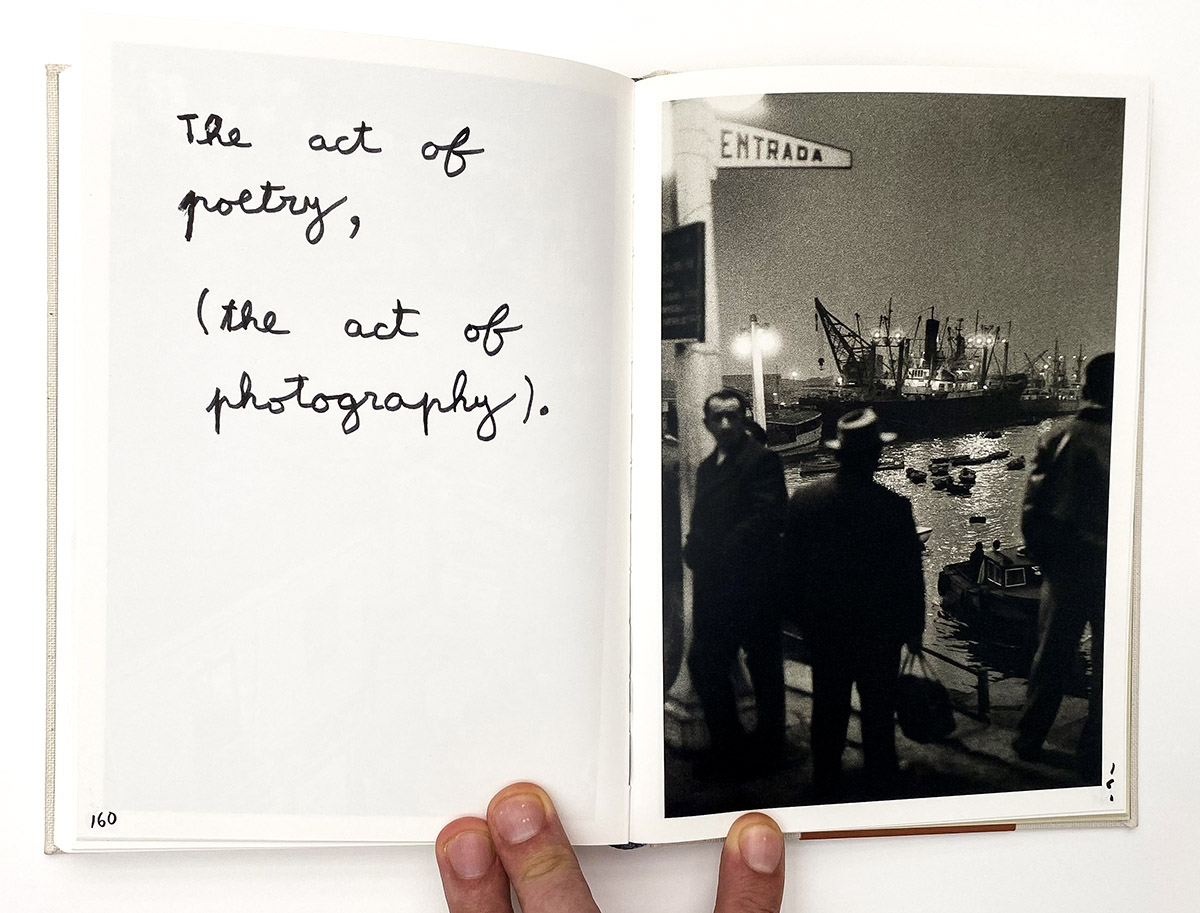
The book is beautifully designed and clearly presents the photographs. Bound in a coarse linen cover and filled with warm-tone images and an interesting array of text, its pages reveal the photographer as a lonely romantic, full of incredible love for place and the deep pain of broken dreams. This text is crucial for the book. Some of it was easy to engage during my initial thumbing, hand-written reproductions of Larrain’s fieldnotes, thoughts scribbled in a crumbled notebook or on scraps of paper, presented one at a time and randomly placed among the pictures:
OPENING THE MOMENT
WITH THE RECTACLE …
horizontal,
vertical,
.. contem.
plation.
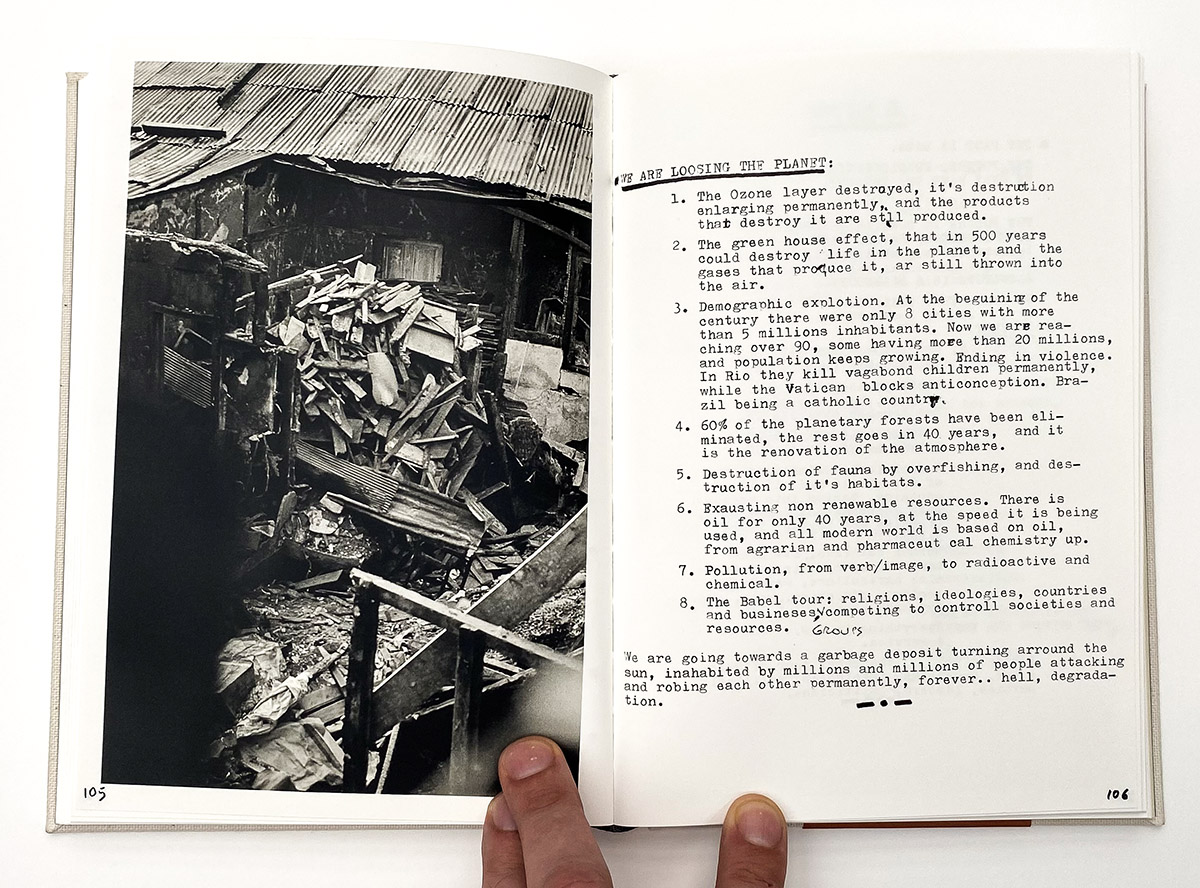
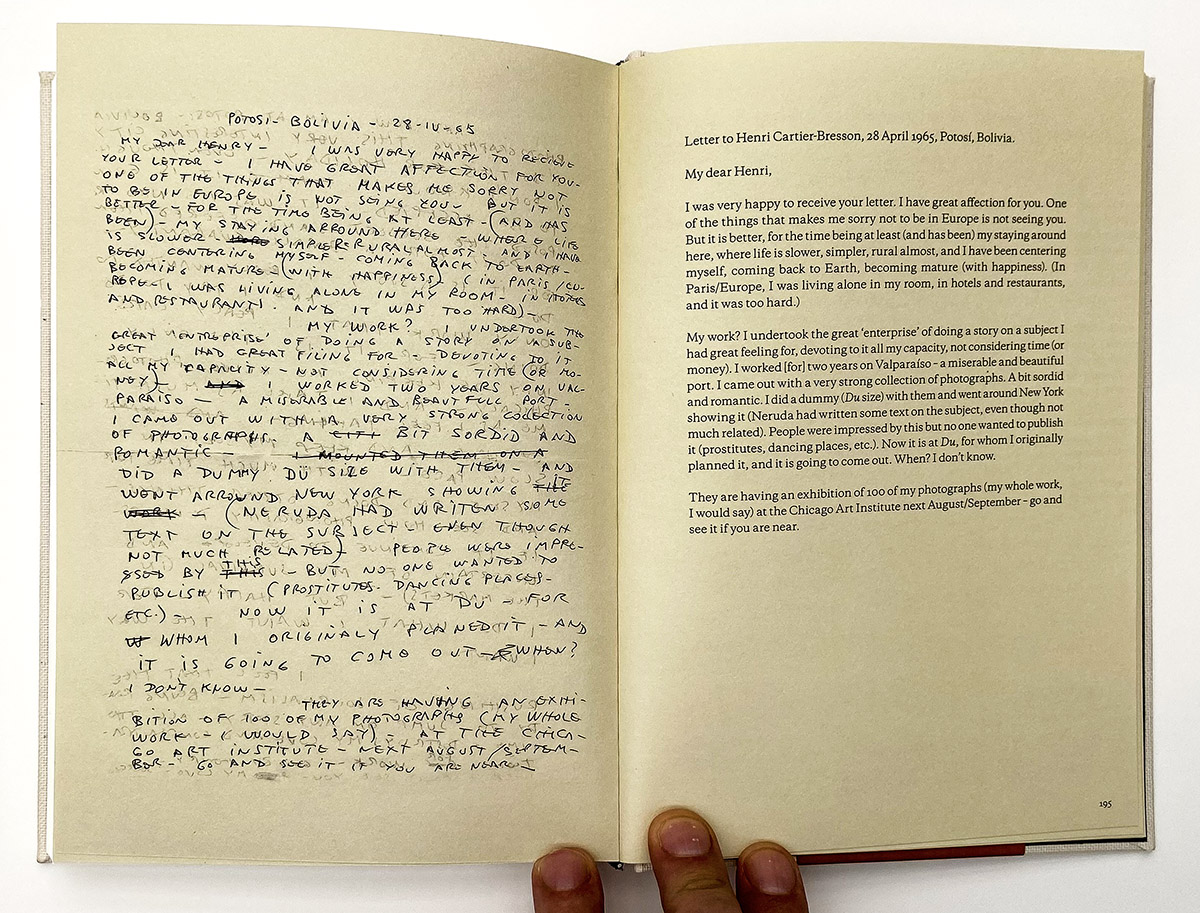
Larrain appears to have made writing or journaling an important part of his practice, because in addition to these fragments, the book also includes reproductions of hastily typed manuscripts and handwritten letters – a fun diatribe or rant about the economic collapse of Valparaíso, an existential commitment to the moment, musings on the nature of satori, and even letters he wrote to Cartier-Bresson. The last of these also offers a lovely statement about the pictures in Valparaíso:
“My work? I undertook the great ‘enterprise’ of doing a story on a subject I had great feeling for, devoting to it all my capacity, not considering time (or money). I worked (for) two years on Valparaiso – a miserable and beautiful port. I came out with a very strong collection of photographs. A bit sordid and romantic.”
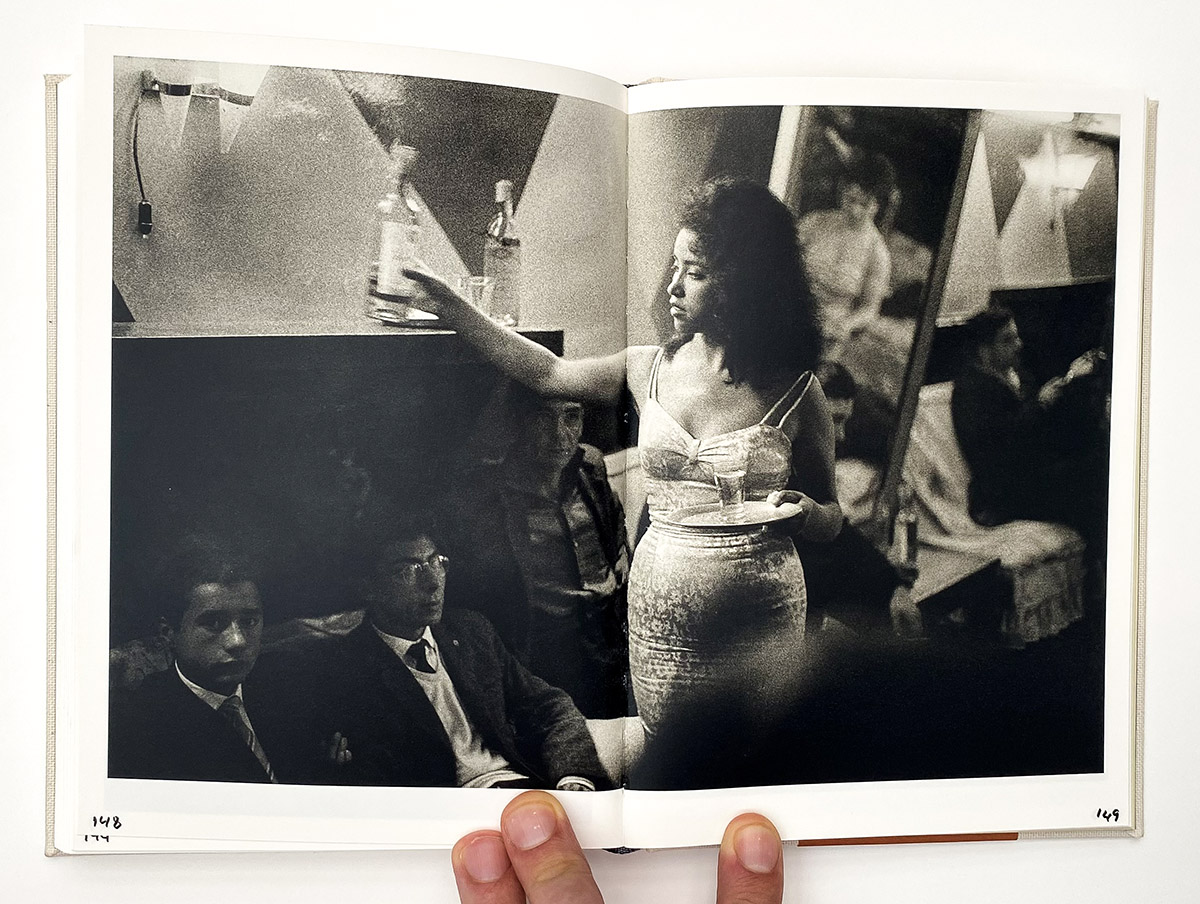
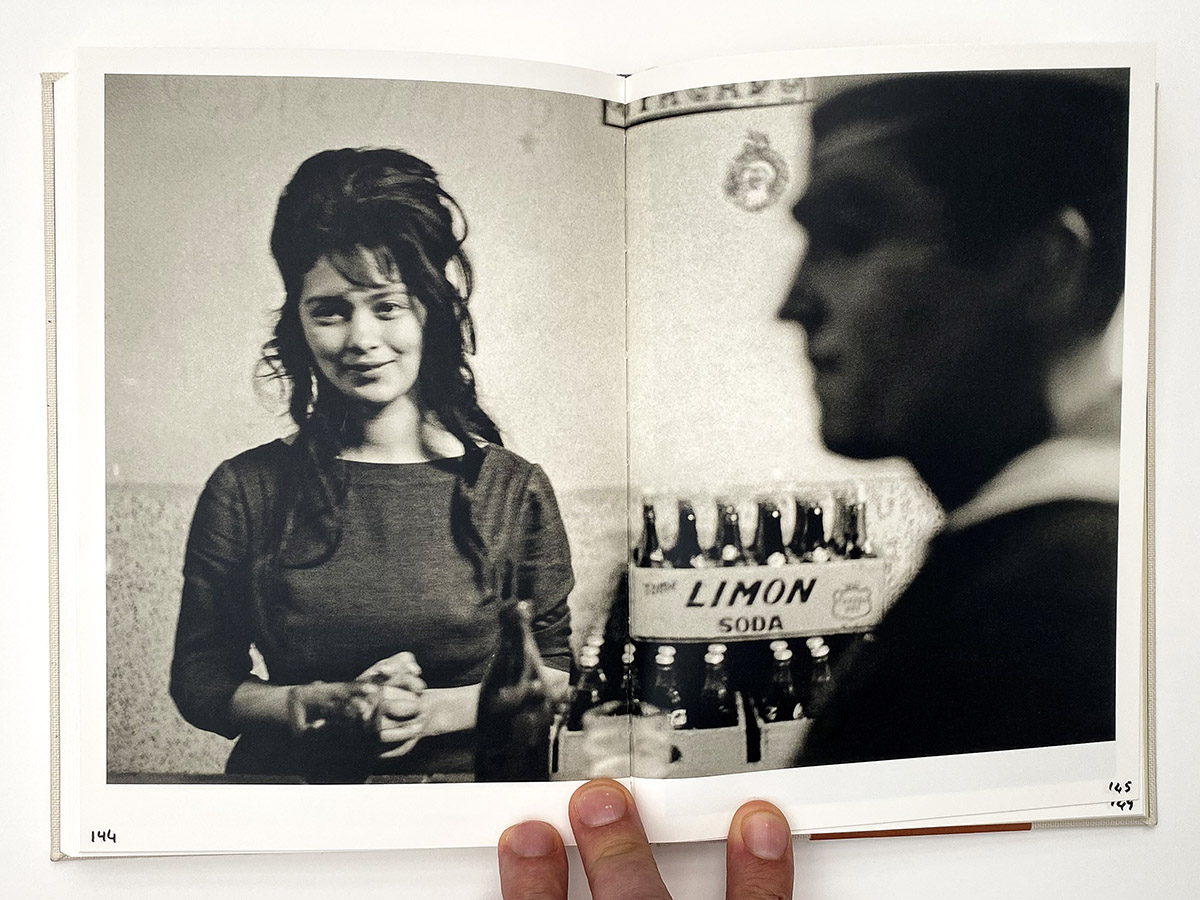
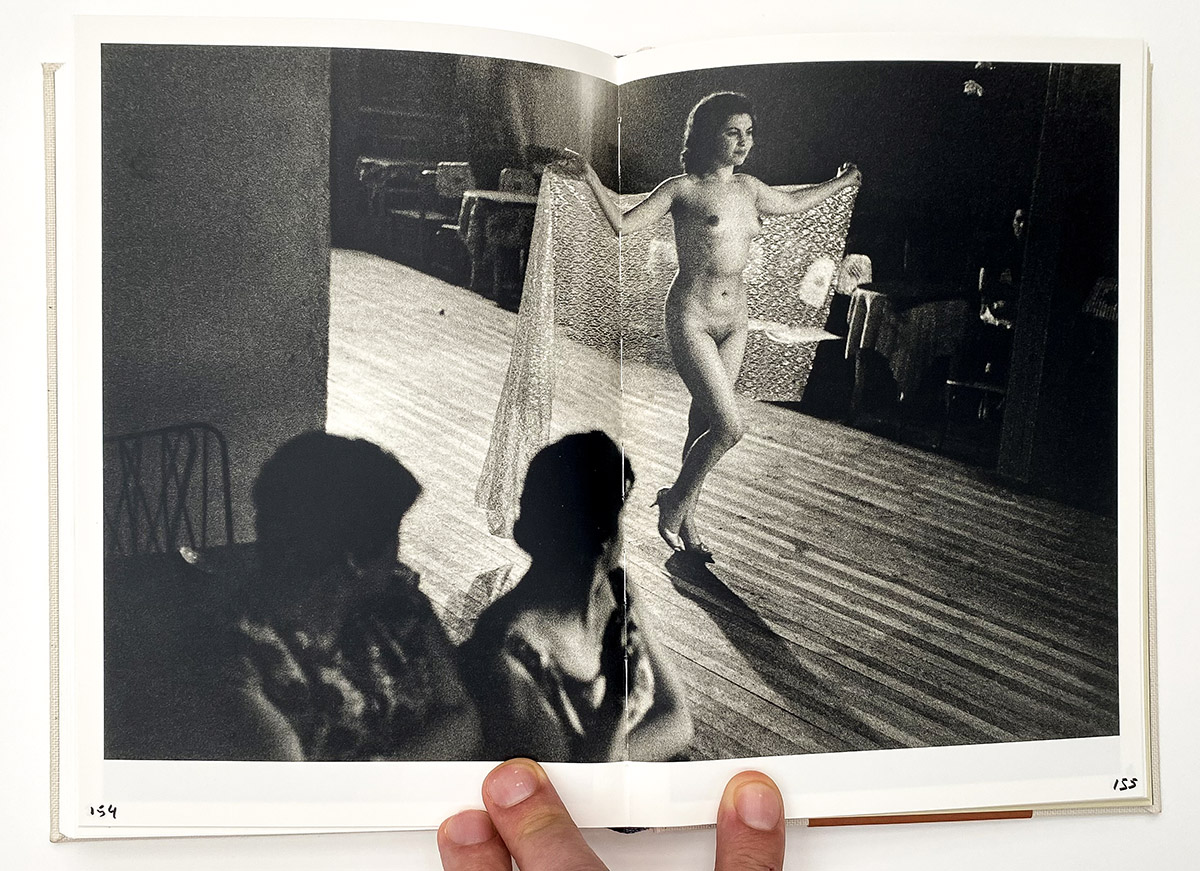
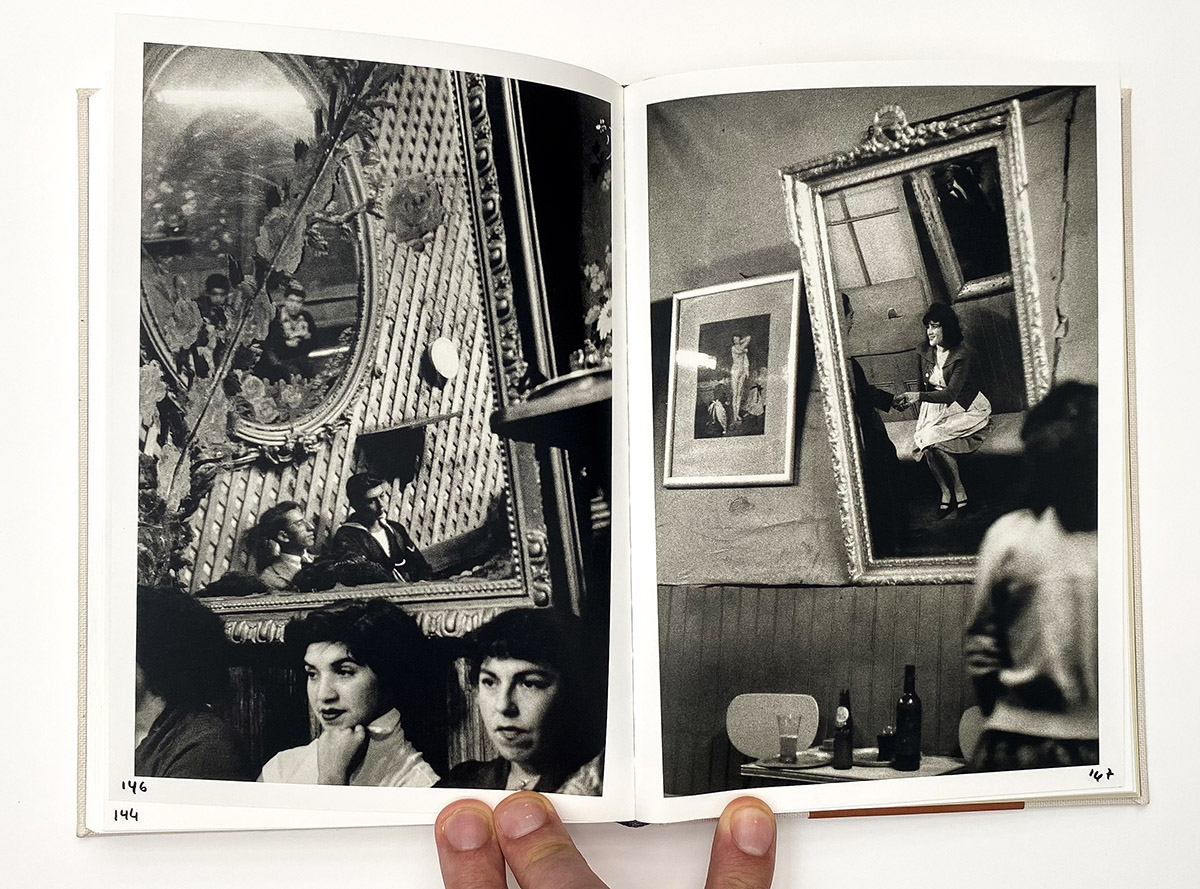
The pictures fully embrace the notion that if one is truly in the moment, like a yogi, a unique and penetrative poetry can be snatched in just 1/30th of a second. With a curious eye for shape and rhythm, Larrain masters essential black-and-white values to paint Valparaíso as tragic place, shaped with photographs of lonely docks, details of humble café paintings, charming days of rain, men desperate for the embrace of prostitutes, and a relentless number of stairs. What makes the pictures so amazing, however, is that somehow that can show me all these things while still embracing an incredible romance, acknowledging that this tragic port town is still full of dreams.
During my first flip-through of Valparaíso more than Cartier-Bresson came to mind, I also thought of Il Postino and Pablo Neruda (the Chilean poet born in Valparaíso). In Larrain’s letters to the French photographer, he mentions that he conceived of these photos as a book back when first developed in the 1960s, and in doing so he acknowledges the influence of Neruda:
“I did a dummy (Du size) with them and went around New York showing it (Neruda had written some text on the subject, even though not much related). People were impressed by this but no one wanted to publish it (prostitutes, dancing poles, etc.). Now it is at Du, for whom I originally planned it, and it is going to come out. When? I don’t know.”
Apparently, it took longer than he expected, but as a lover of photobooks I’m glad Thames & Hudson had the vision to bring it out today; my love of photography is enriched by the unique sensibility of his pictures, built with equal parts of love, anger, and a longing for transcendence. The text from Neruda (I’m assuming not the original used in his early mock-up) is a translated fragment from “The Roads of the World,” a chapter in Memoirs (Farrar, Straus, and Giroux, 1977). When I finally made a deeper investigation of Valparaíso and noticed the text by Neruda, I felt vindicated thinking of Il Postino during my first perusal because clearly there is a connection between Mario and Larrain.
Brian Arnold is a writer, photographer, and translator based in Ithaca, NY.
____________
Sergio Larrain – Valparaiso
Photographer – Sergio Larrain
Language – English
Publisher – Thames & Hudson
Text – Pablo Neruda and Agnès Sire
Hardback, perfect bound; 120 illustrations; 210 pages; 9.5 x 6.75 in (24 x 17 cm); ISBN – 9780500544808
____________
Articles and photographs published in the PhotoBook Journal may not be reproduced without the permission of the PhotoBook Journal staff and the photographer(s). All images, texts, and designs are under copyright by the authors and publishers.
 PhotoBook Journal
Leave a comment