
Review by Rudy Vega ·
The cover of Ewan Telford’s The Ecology of Dreams is solid dark blue with gold text. The text displays in dictionary fashion a brief overview of Los Angeles and then followed by the definition of dreams. An image of a skull with sickle and scythe positioned right above a thumbs down illustration completes the cover graphics. The cover provides an ominous sneak preview to the content within the pages of The Ecology of Dreams.
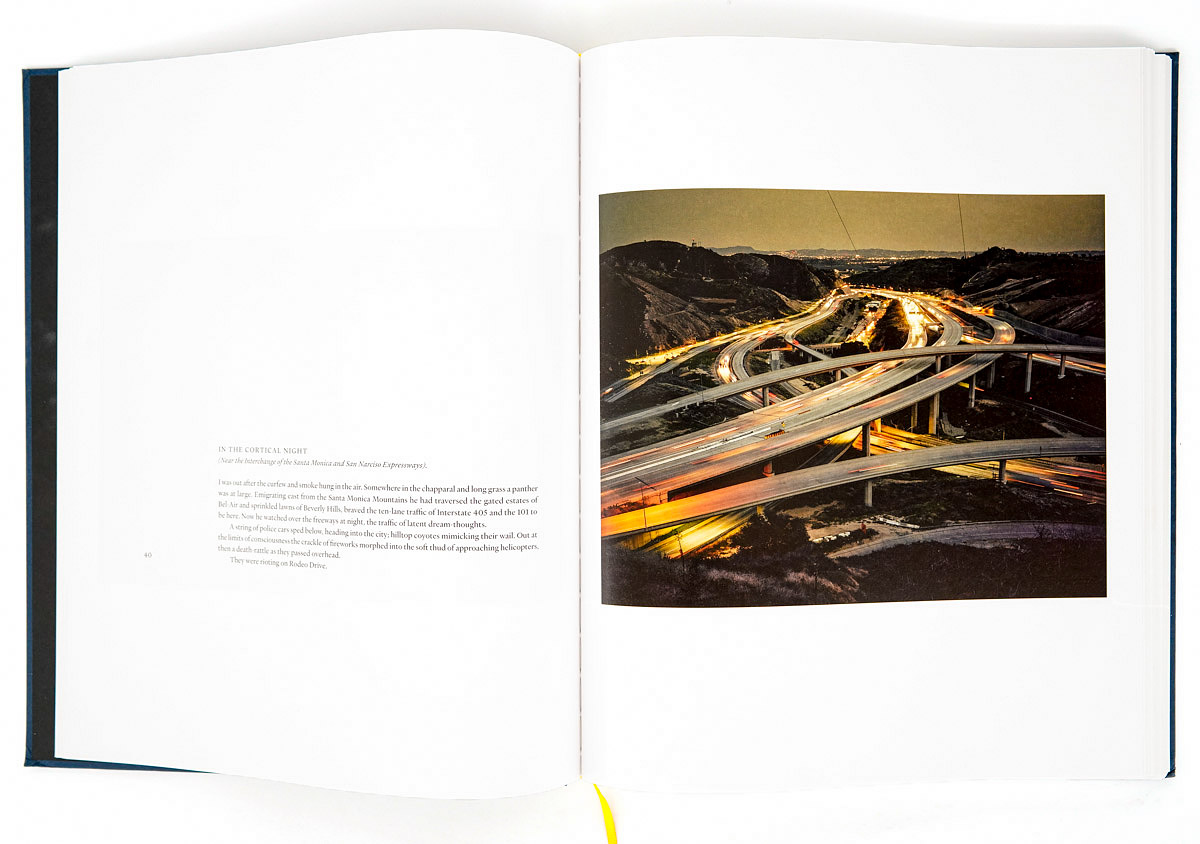
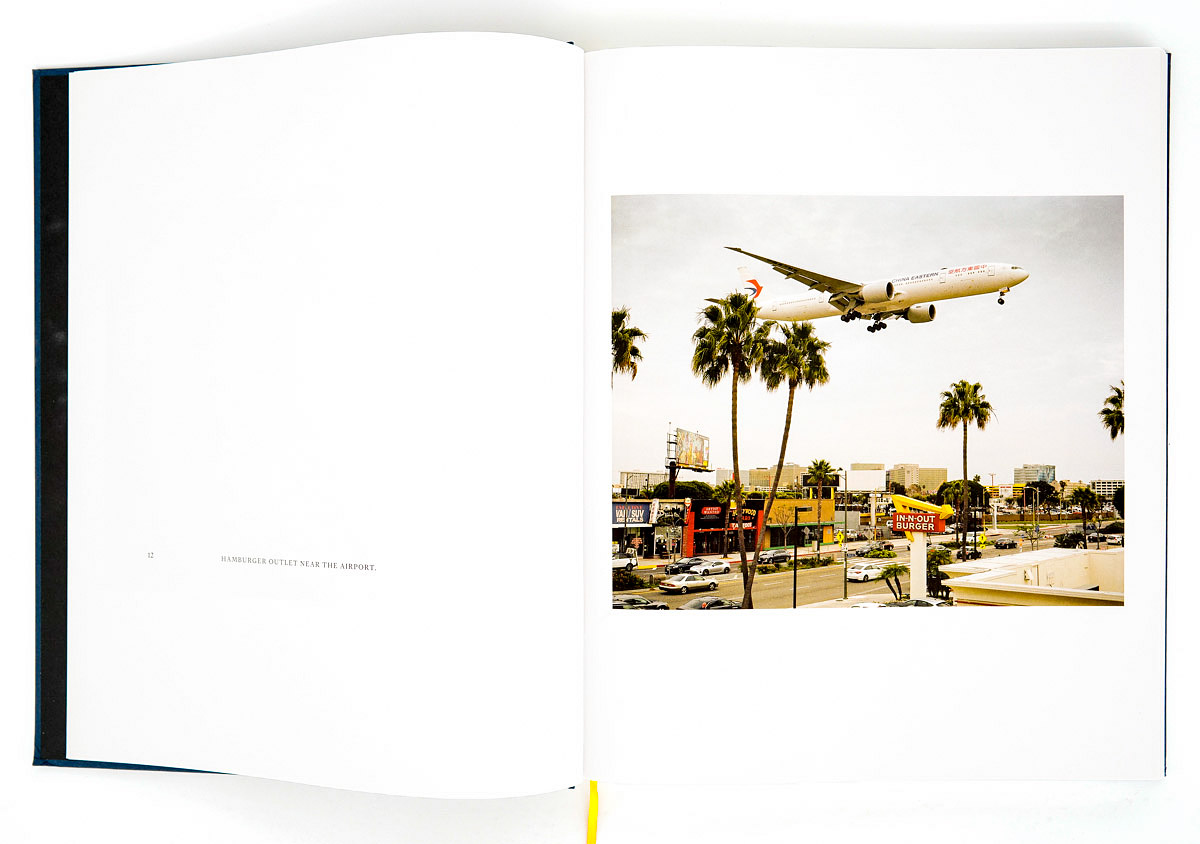
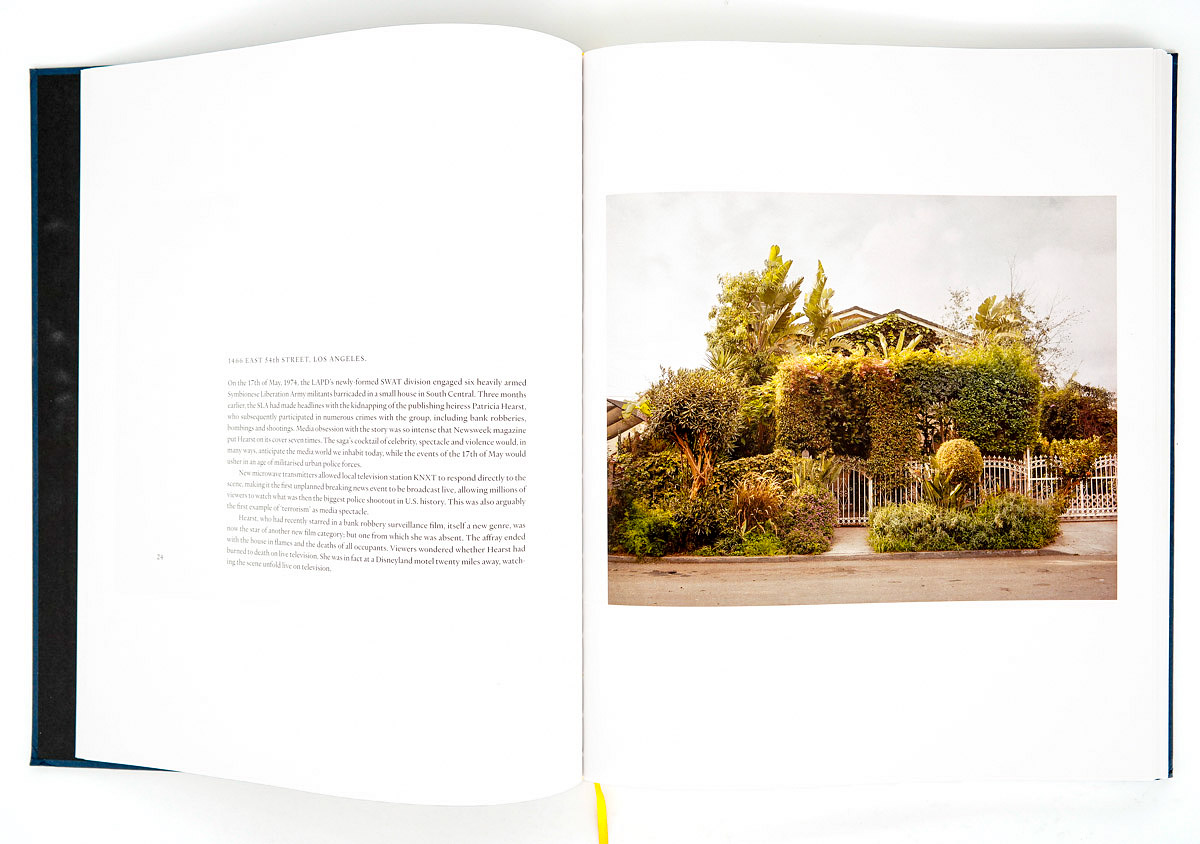
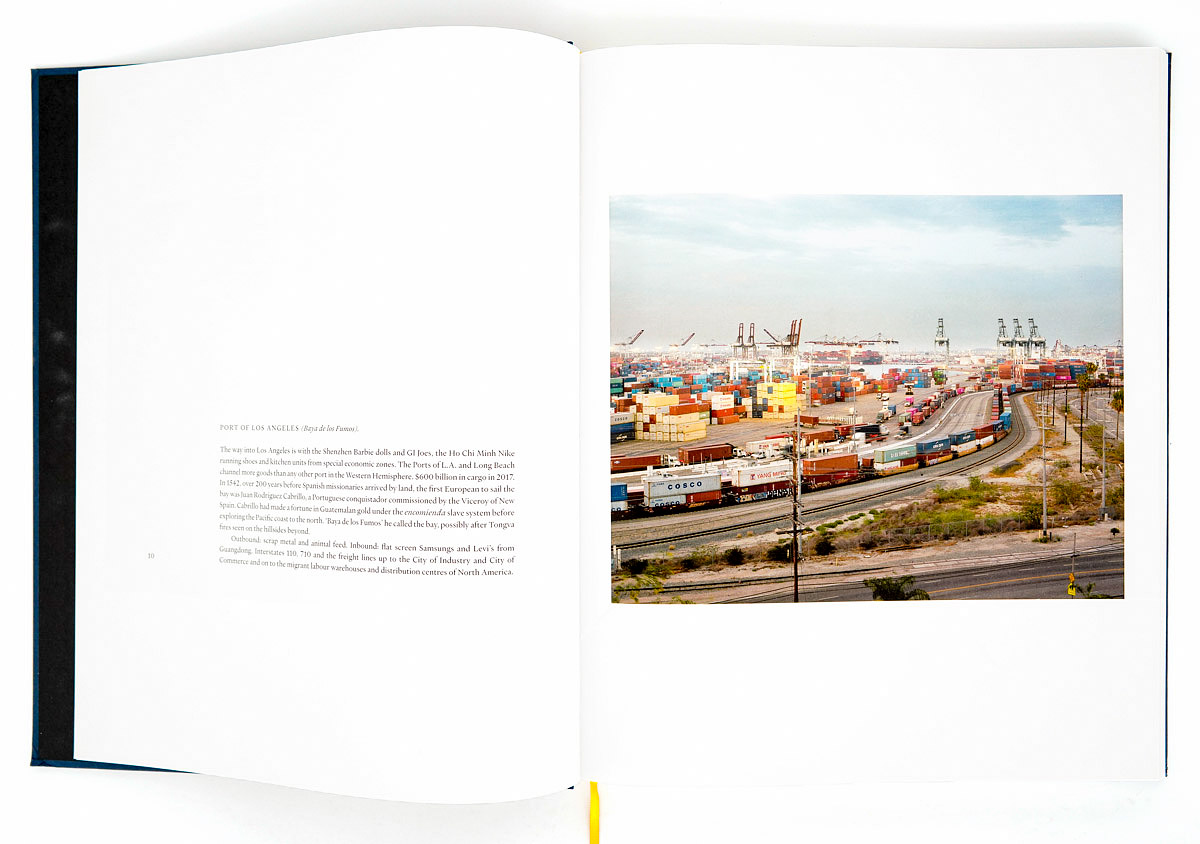
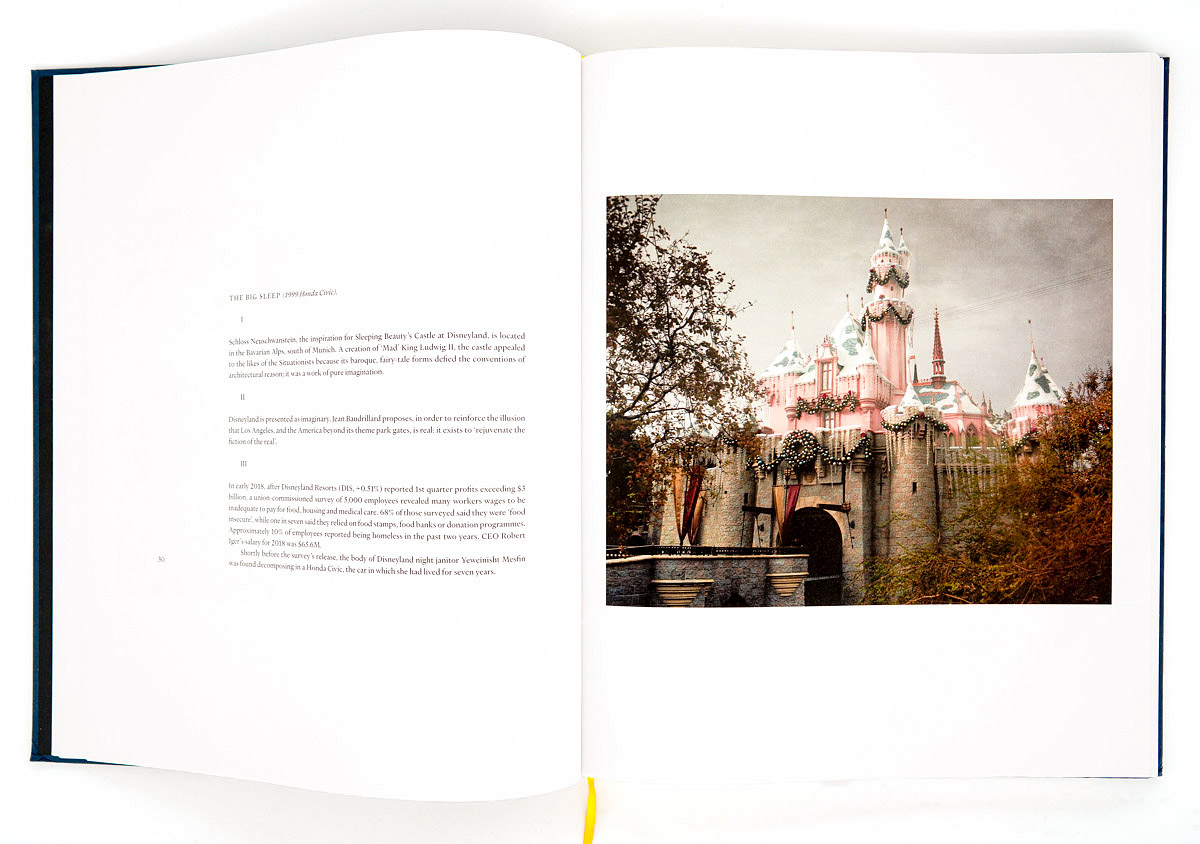
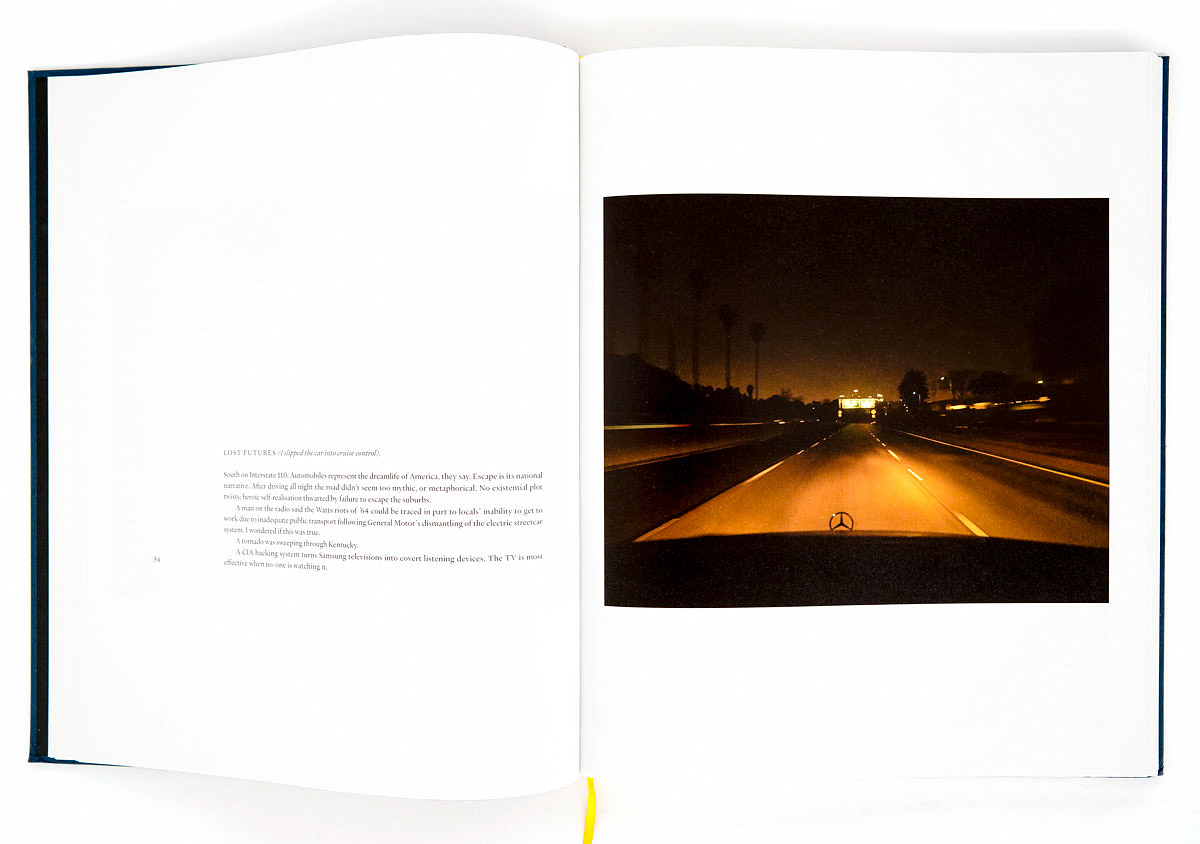
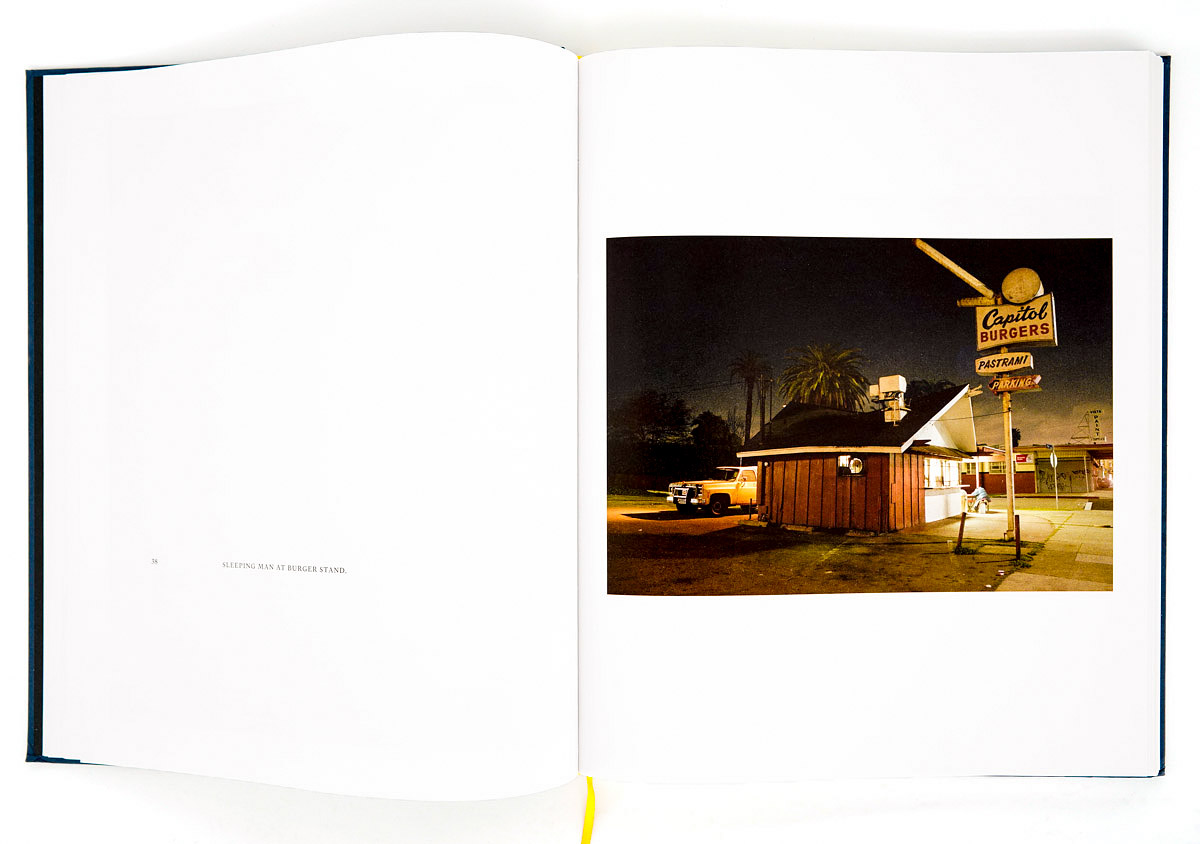
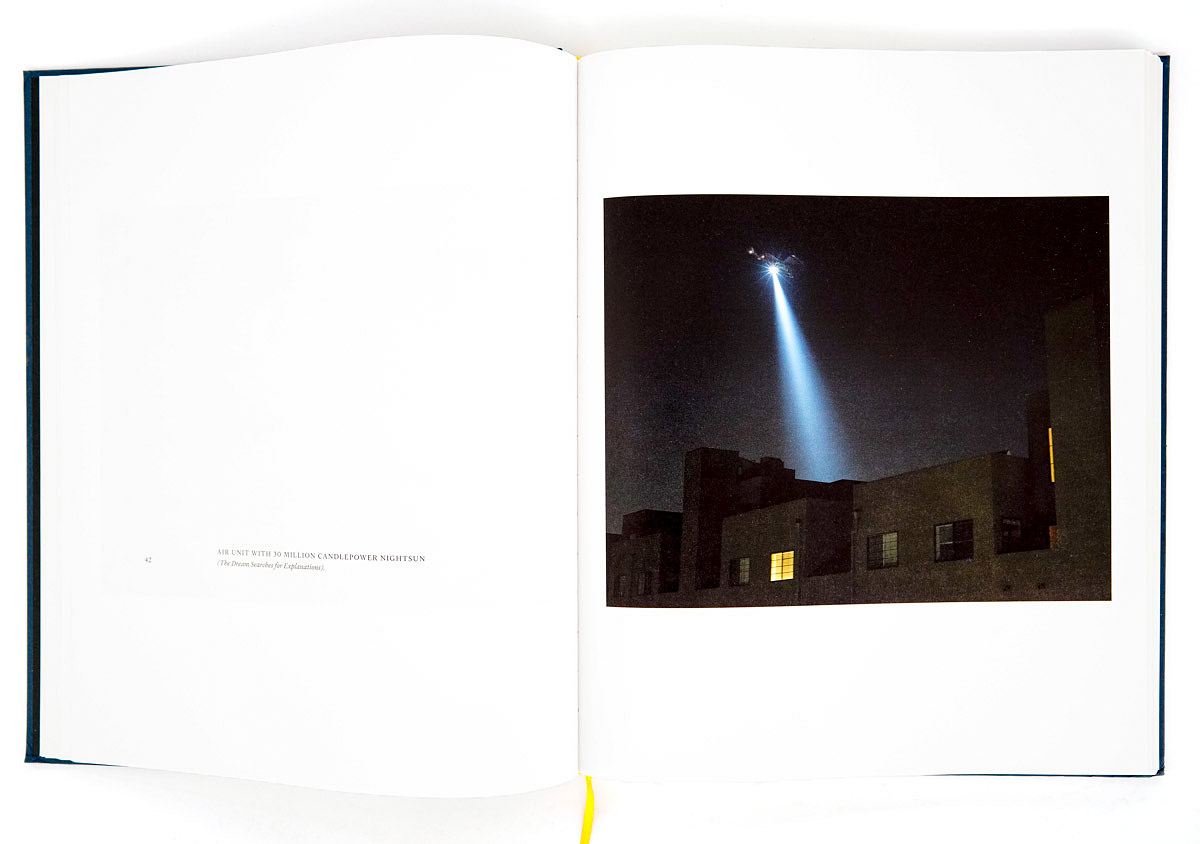
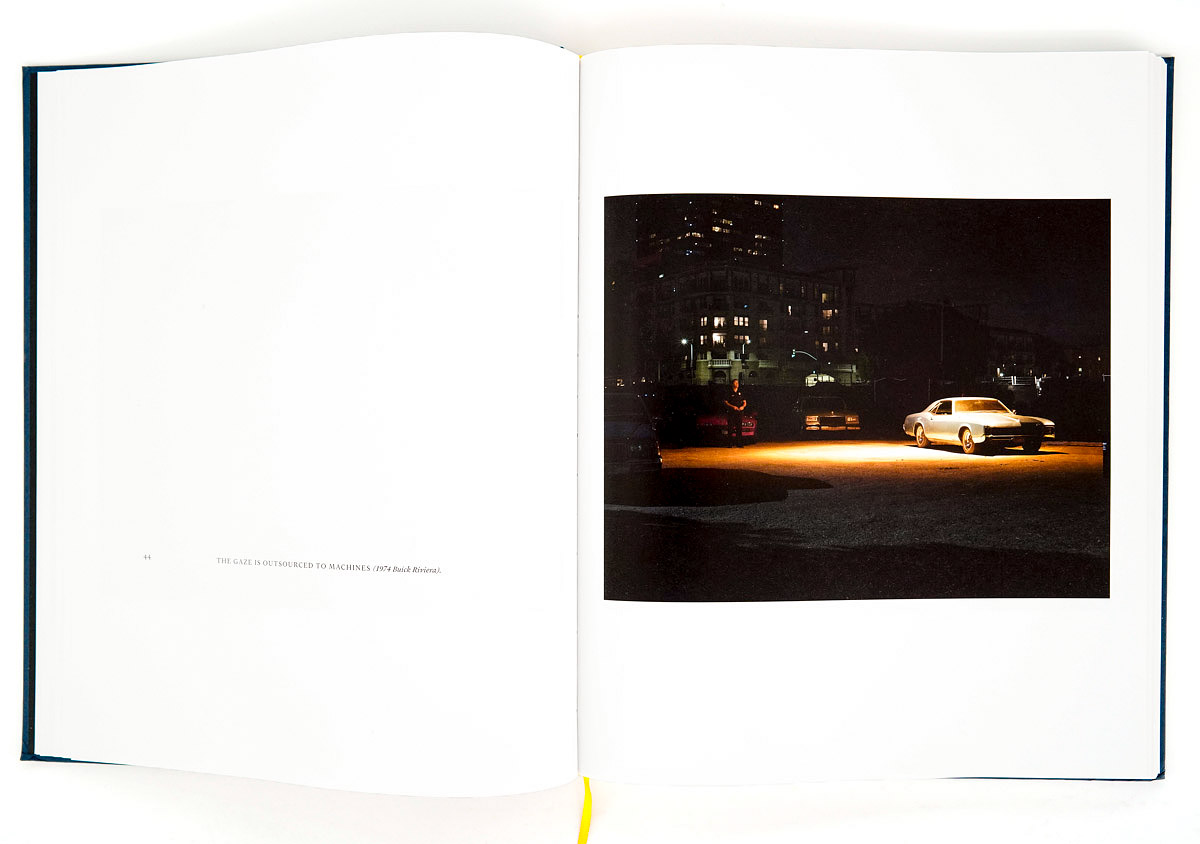
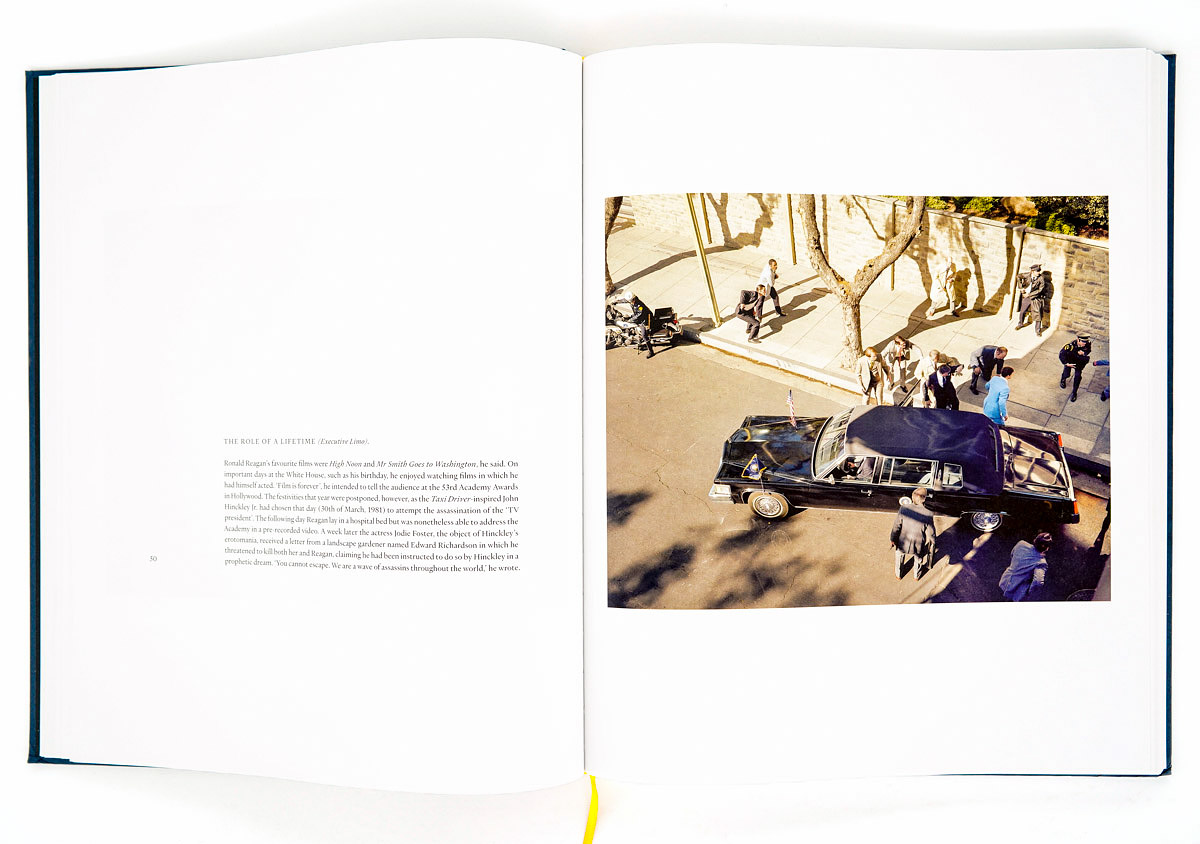
Within the pages of The Ecology of Dreams are one hundred and seventy-six pages, of which ninety-three are photographs. With the exception of the first and last photographs, the book is organized as text/image pairings. The text is often personal observations/ anecdotes, with a few historical footnotes or passages/quotes from various sources. As for the photographs–they lull one into complacency as they appear to be straightforward, deadpan images of the mundane and ordinary. However, to accept that reading would be to shortchange Telford’s photographs.
His photographs exploit his experience as a film maker and art director for maximum effect. They are, in fact sly, insofar as presenting the everyday–Los Angeles edition. Every photograph is the product of careful timing, staging and composing. Through Telford’s viewfinder, we witness the care required to finesse juxtapositions of elements to optimize the aesthetic values of light, color and form in order to give voice to the subject matter. Telford’s images are often cinematic in their rendering, while at other times he utilizes the visual language of reportage. Other images are presented as documents in the service of forensics– analyzing evidence. The variance in his personal image repertoire allows the collection of photographs to hum along, creating a rhythm and a page-to-page momentum.
The real impetus of The Ecology of Dreams lies in the associations created by the text/image pairings. Here, of course, is where The Ecology of Dreams comes to life. So, while some of Telford’s images speak to dislocation, incongruencies or contradictions, it’s the pairing with the text that steers one to read with greater depth. Here the poetry, wonder, irony and humor are given greater breath.
Telford mines the landscape of Los Angeles, taking his lens far and wide to produce an all-inclusive take on the physical and the psychological realms of the city. Telford produces a text aligning Los Angeles directly in the crosshairs of the lens of deconstruction. However, The Ecology of Dreams is no mere academic exercise. He follows the rich tradition of Allan Sekula, Martha Rosler and others to produce a text/image book that balances the dictates of an academic investigation with the aesthetic objectives of photography.
So, what of dreams in The Ecology Of Dreams? Referencing Rayner Banham’s The Architecture of Four Ecologies, whereby geography of Los Angeles is four ecologies comprising freeways, hillsides, flatlands and beaches. Telford argues for a fifth ecology–that of dreams. He makes a case for treating dreams as a tangible entity assuming its rightful place alongside the four ecologies listed above. Whether derived from organic substances and manifested as hallucinogenic visions, the dream factory that is Hollywood, or the opposite side of the spectrum – the five-dollar psychic, dreams play an outsized role in defining the historical and contemporary landscape of Los Angeles. It’s the dream of opportunities and the dream of plenty and seemingly every industry, every facet of the social strata is complicit–knowingly or not–perpetrator or victim. It matters little as dreams exist whether or not they are realized. They hover above the line of reality never to manifest itself as concrete.
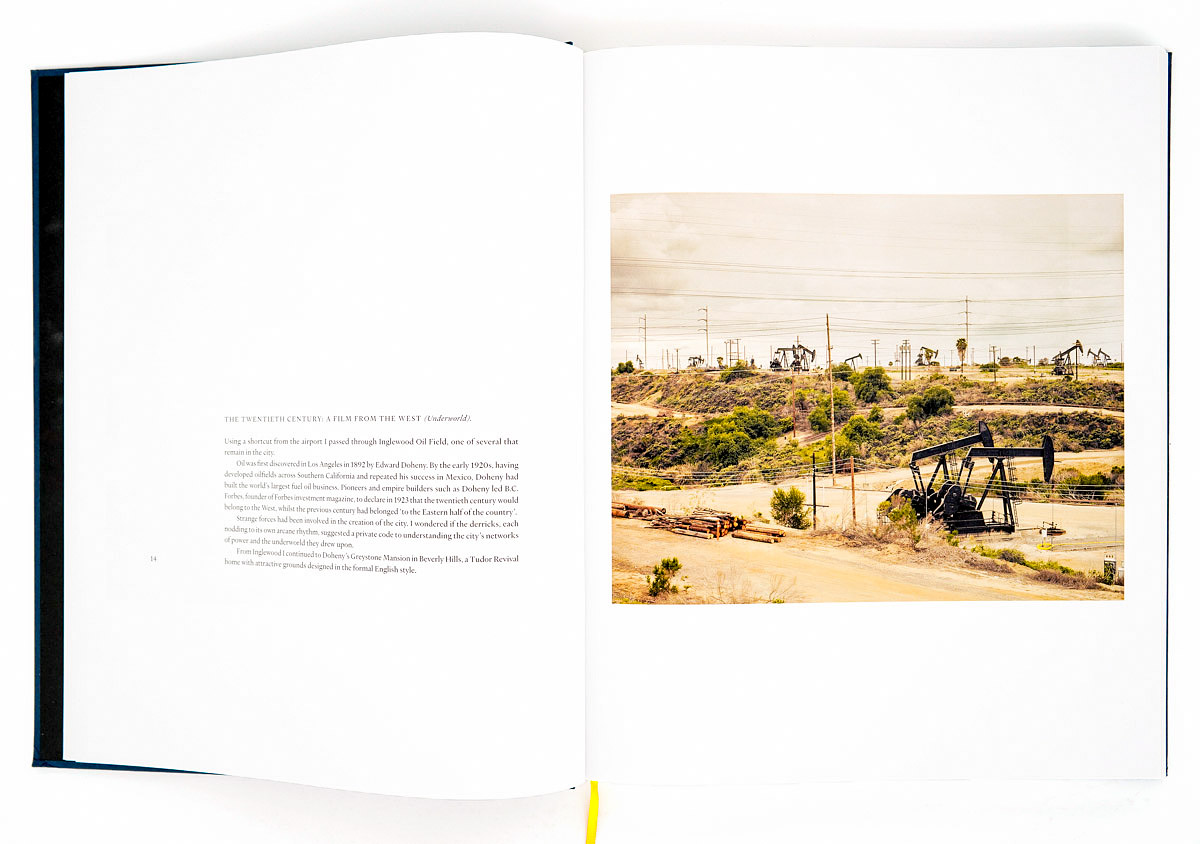
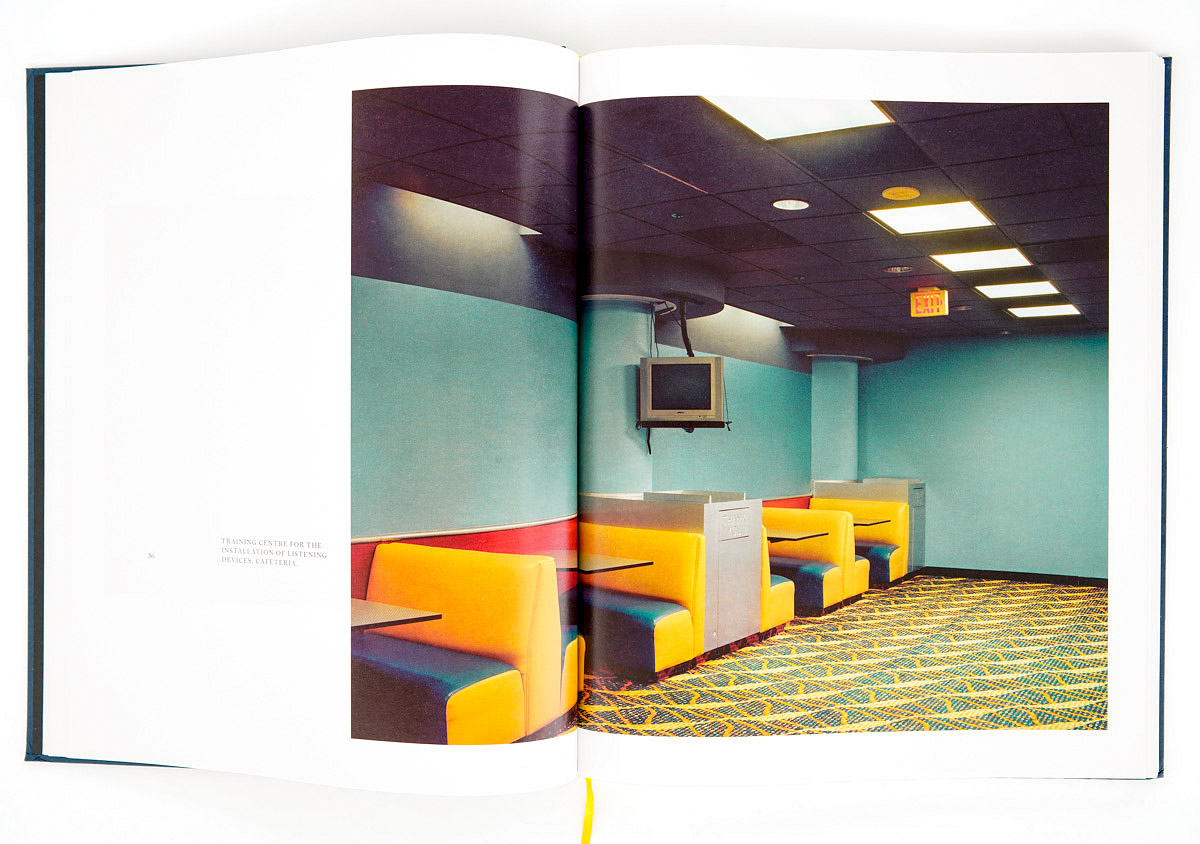
In The Ecology of Dreams, Doheny’s oil fields, the trail to the bobcat den, the cafeteria at the training center for the installation of listening devices, and others can sit side by side like scaffolding propping up the simulacra and dulling our senses–eliciting a collective shrug of complacency. Telford exposes Los Angeles as a mirage–an uneasy coexistence among the ecologies allowing the engine of dysfunction to thrive unabated.
In The Ecology of Dreams, Telford succeeds at marrying text and image to offer an insightful contemplation/critique at a city that when fully considered can only exist as Los Angeles.
_____
Rudy Vega is a Contributing Editor and resides in Irvine, CA. He is a fine art photographer and writer.
____
Ewan Telford, The Ecology of Dreams
Photographer: Ewan Telford (born in Edinburgh, Scotland, lives in Los Angeles)
Publisher: The Velvet Cell, Berlin, Germany, copyright 2022
Essay/Text: Ewan Telford primary contributor
Language: English
Hardcover book, Offset printing, 176 pages, 93 color plates. 9.75”x12”, printed by Mas Maatba, Istanbul, ISBN 978-1-908889-80-5
Editor: Ewan Telford
Book Design: Ewan Telford and Eanna De Friene
_____

_______
Articles and photographs published in the PhotoBook Journal may not be reproduced without the permission of the PhotoBook Journal staff and the photographer(s). All images, texts, and designs are copyright of the authors and publishers.
 PhotoBook Journal
Leave a comment