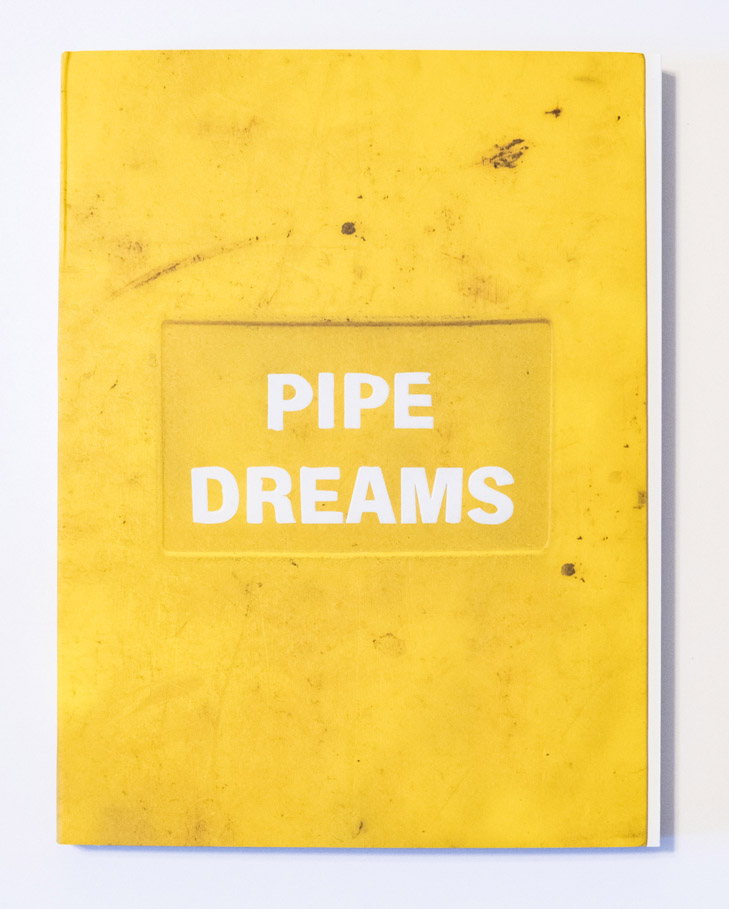
Review by Brian F. O’Neill ·
Simultaneously with the expansion of the universe of image-text photobooks, so too have we seen a rise in research-oriented photographic projects in which the photograph is not left to stand on merits apparently internal to it. In this second modality, the photographs and the larger sequence within which the individual images sit are contextualized. At its most thought provoking, the relationships between the multiple expressive qualities and the potentially diverse disciplinary traditions that are used in a project will orient the reader/viewer to understanding the work as a whole, that is, as a polysemous object. In the 2025 book project Pipe Dreams, we see a notable new expression of how a plurality of disciplines, and indeed individuals, can productively converge on a common questions and issues, exploring them through the photobook form.
Pipe Dreams is the realization of a visually oriented documentary and research endeavor by Dawning, a non-profit research laboratory headquartered in Washington D.C., founded by scholar, activist, and policy advocate Raul Roman. Now, there are many research laboratories and research arms of NGOs around the world that work on any number of topics, from environmental governance to human rights, and beyond. What is unique about Dawning is that it is a hub for humanistic social science with a specific emphasis on visual documentary methods. Not even in the academy, where the fields of visual ethnography and visually based research are sometimes allowed to linger, would one find such a concerted effort at combining rigorous data collection and captivating visual documentation with an eye towards pressing social, environmental, and geopolitical problems. Rather than shying away from the tensions that have long existed at the nexus of science, art, and politics, Dawning dives in and seeks to produce robust, non-partisan knowledge. While they have conducted work on civil war in Sri Lanka, the politics of civic engagement in Moldova, migrant labor in Kuala Lumpur, pastoralism and conservation in Mongolia, and land policy in Niger, Pipe Dreams is their first photobook.
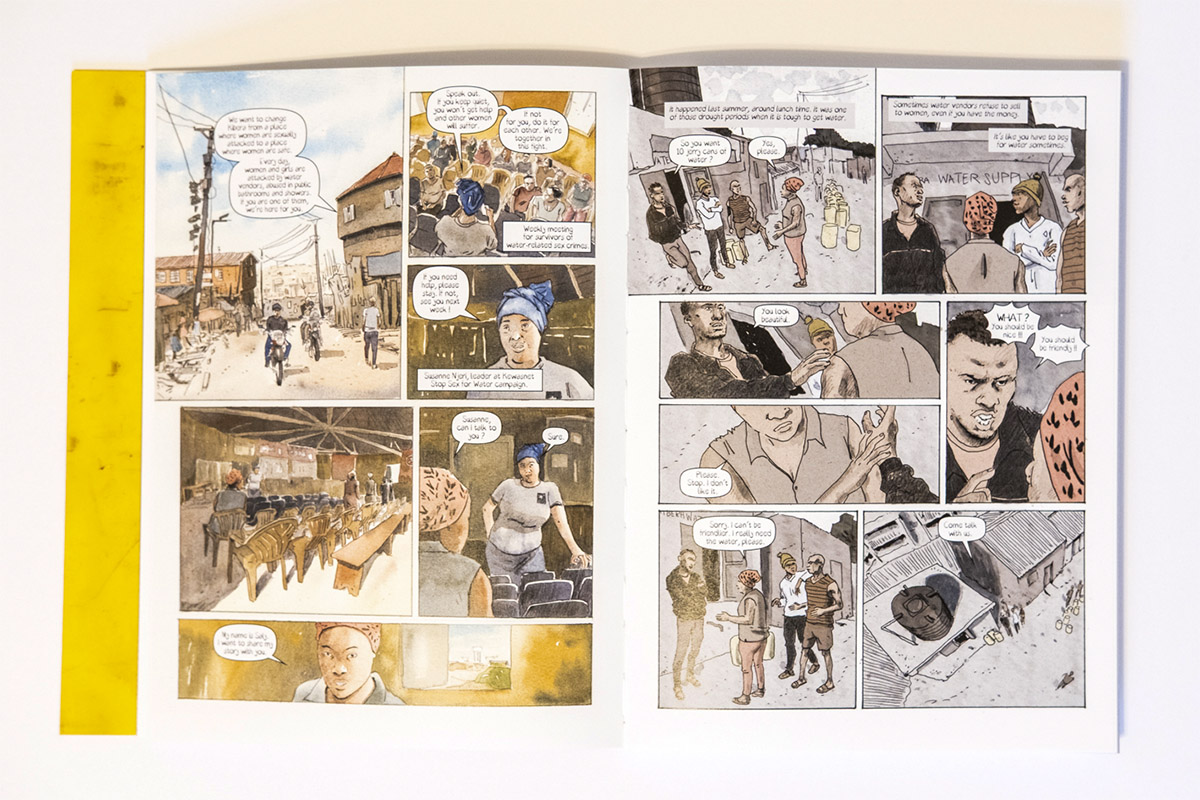
The book was developed over a period of years, but the bulk of the material is the result of a 2021 three-week fieldwork project in Kenya. 97 interviews were collected, across six languages. Tens of thousands of photographs were made, as well as ethnographic sketches across 22 locations with a 25-person team comprised of accomplished professionals in the visual arts and social sciences, as well as locals. What is also notable is the team’s commitment to an ethical approach. The pages that describe the team’s methodology often emphasize building trust and taking time to lay the groundwork necessary with their interlocutors to find ways in which people feel comfortable expressing the challenges they face. As the reader discovers, this is not canned language. The book features photographs, but also watercolor drawings and comic strip sequences that speak to this aim. As the book’s goal is to uncover and explore the intersections of gendered trauma and ecological crisis around water, visual techniques are exploited in varying ways to convey these themes. Sometimes it is a subtle photograph of folded hands at a table with water in front a woman in a navy-blue blazer that seems to meld with the black lace shirt. As we learn through the descriptive captions, this was a tense moment for the team as they were able to gain access to learning about some of the women of Marigat, who due to the flooding of their homes at Lake Baringo had eventually turned to prostitution as a means of combatting socioeconomic dispossession on top of displacement and sometimes violent relationships. Other instances of Dawning’s investigation utilize the potential of the comic strip to explore the traumas, inequalities, and processes around tribal conflict, such as between those in Lorogon and West Pokot, geographic neighbors who became embroiled in violence when droughts became severe and a dam project displaced communities. In learning about this situation, the contemporary photographs and interviewing reveal some of the aftermath – as men were killed in the literal crossfire, women were sometimes maimed, left pregnant if not with children already, and began panning for gold and digging boreholes to try to find water in dry riverbeds. These are just some examples of how each chapter makes use a variety of strategies of presentation in a way that suits the subject matter.
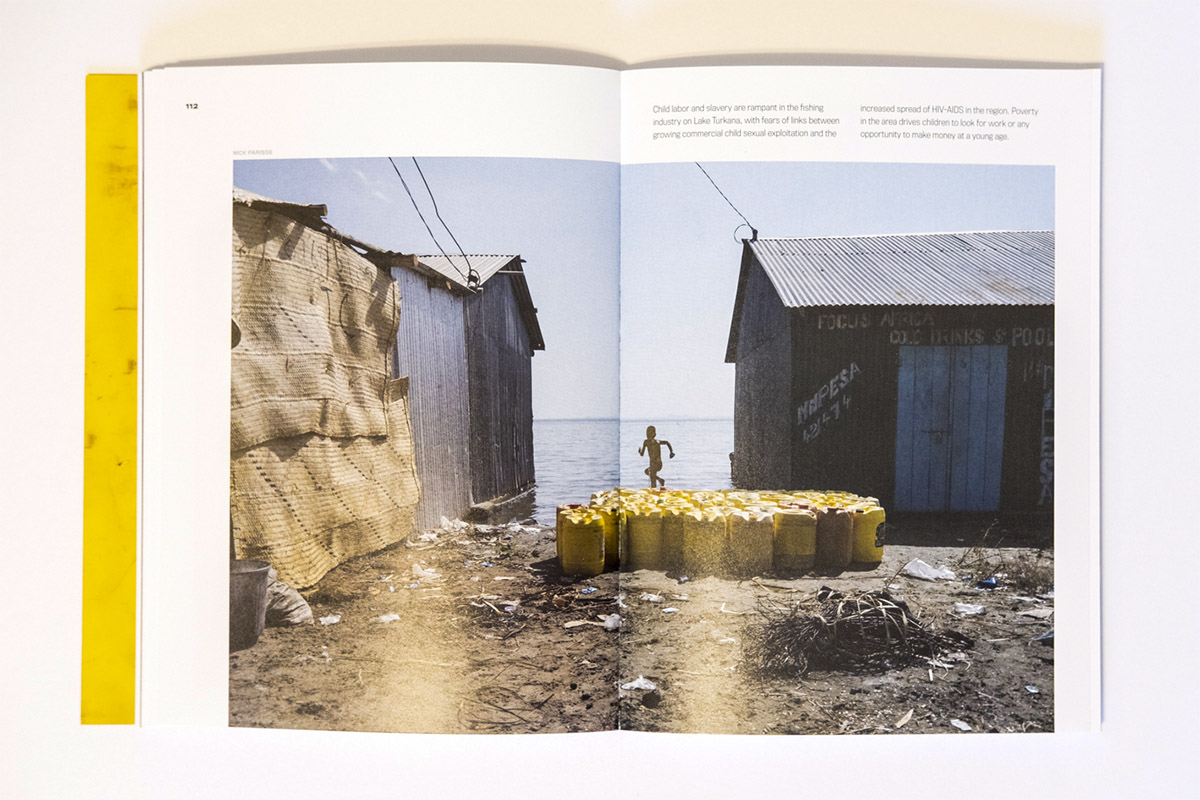
The book contains five chapters and an epilogue. The epilogue emphasizes (although it does so in a refreshingly sober way) the resilience of some of the individual women that the team met. While there is never enough rain or groundwater to fill the jerrycans (the 20-liter yellow container ubiquitous to the region, and which inspired the cover of the book), many of the subjects speak about trying to realize what some might consider their pipe dreams – of making sacrifices towards education or vertical mobility for their children. While the epilogue functions as a cautiously hopeful conclusion, each chapter explores specific local and regional problems.
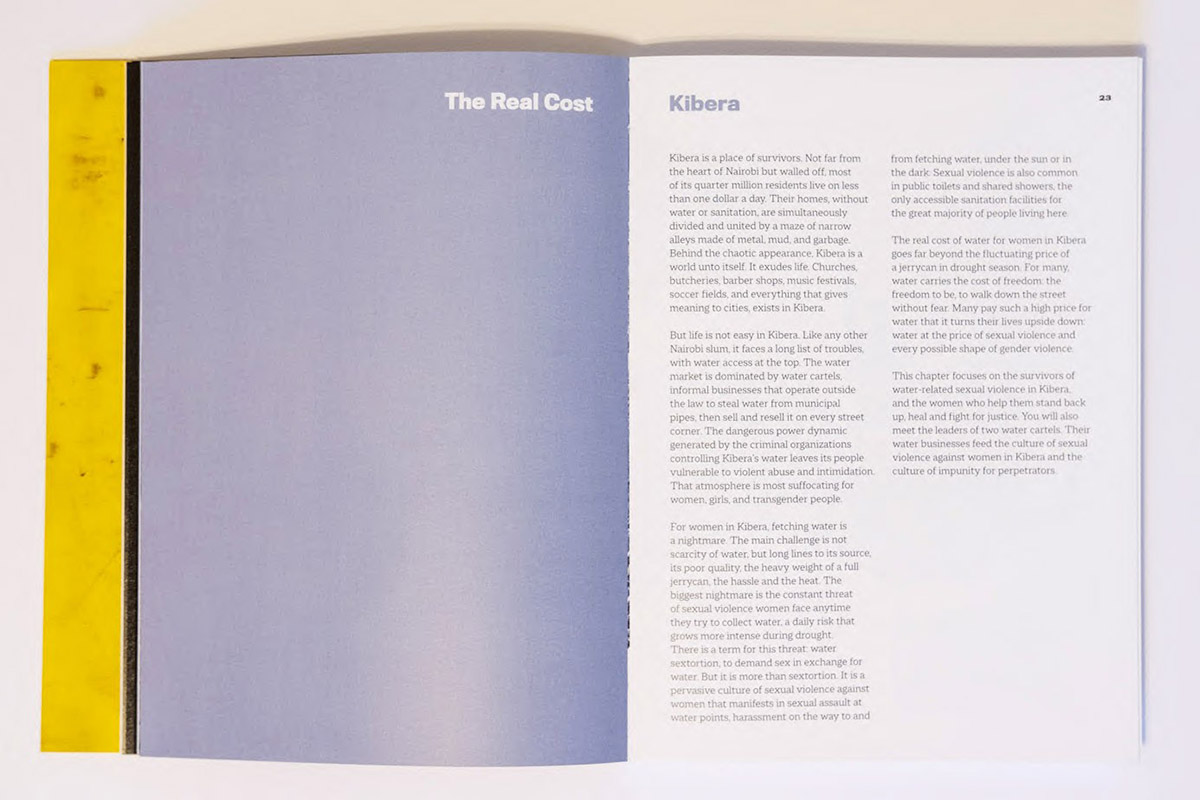
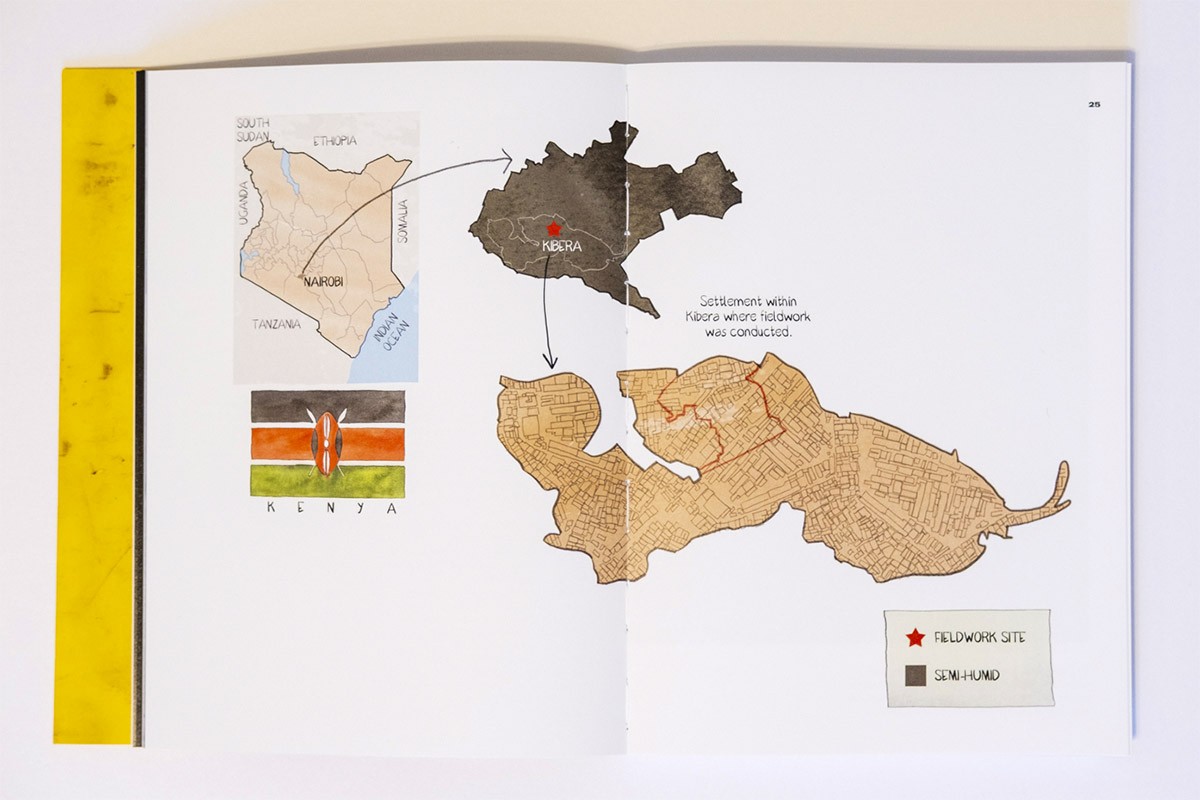
The first chapter takes us to Kibera, generally considered the largest slum in all of Africa, where nearly, if not more than, a million people are living in extreme poverty just a few kilometers from Nairobi. The chapter showcases two aspects that become characteristic of the book. One is that the visual and research teams were able to gain impressive access to sensitive situations and people who could tell challenging stories. The other is the careful portrayal of the context of subordination and environmental crisis. For example, one strategy of working in this context might be to interview and photograph the victims of the described “sextortion” that takes place around the visibly decaying water distribution infrastructure and kiosks. But instead we get very capable contextual imagery that offers a variety of instances and subjects. As we learn, among the other duties pertaining to the family, nutrition, education, and childbearing, women spend hours each day walking to and from, and waiting to fill their jerrycans. In Kibera, and other even more rural contexts though, wherever there is water, the fragility of the social situation can be exposed by cartel logics. Cartels control kiosks and infrastructure, and in addition to demanding financial compensation, they will take it in the form of sexual violence too. As one cartel boss explains, “Nothing is free in Nairobi.”
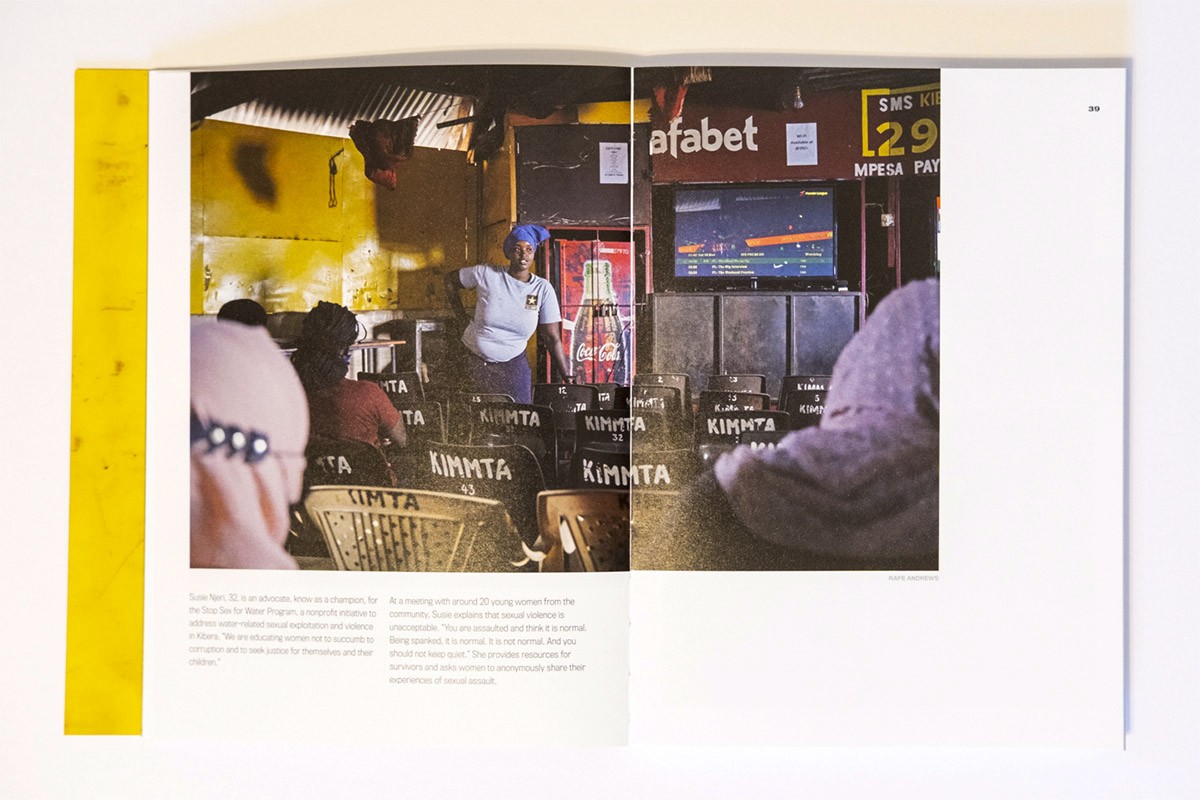
While it would be easy to halt the story here, to incite the consciousness of the reader to a new level of moral indignation that people cannot find water (which is a human right and necessity) un-harassed and unmolested, the Dawning team goes further. They attempt to unpack the question of why this dynamic has developed. Through the accounts of cartel leaders, we learn that they feel they are providing a valuable service to a population of dispossessed and ignored residents. For perhaps many reasons, the state does not have the capacity to provide reliable access, and so the cartels tap the system and decide about how to distribute it. Then, from other interlocutors we learn about a countermovement – the Stop Sex for Water Program, led by women who have been victims of this multifaceted situation. Through educational workshops and community meetings, the concept is to teach women to become bearers of their rights, thus resisting the cycle of gendered domination the pervades the settlement. Soberly reported and photographed with an eye to this political economic context, the reader gains insight and sympathy. The sequence of images is also carefully done to emphasize the dynamic of domination and resilience. In a striking multi-layered image, women bend to the tap, filling their jerrycans at the “Kibra Water Supply” kiosk, a large black water tank sits above them on a concrete platform on the left side of the frame. To the right, women with their children look on and dry clothes on lines while standing on a makeshift balcony of wood and sheet metal paneled homes. Then, Wycliffe, a cartel boss, works with his team to attach new piping to the waterworks on another hot day in Kibera amidst a crumbling concrete trench. Later, Susie discusses the Stop Sex for Water Program at a local restaurant.
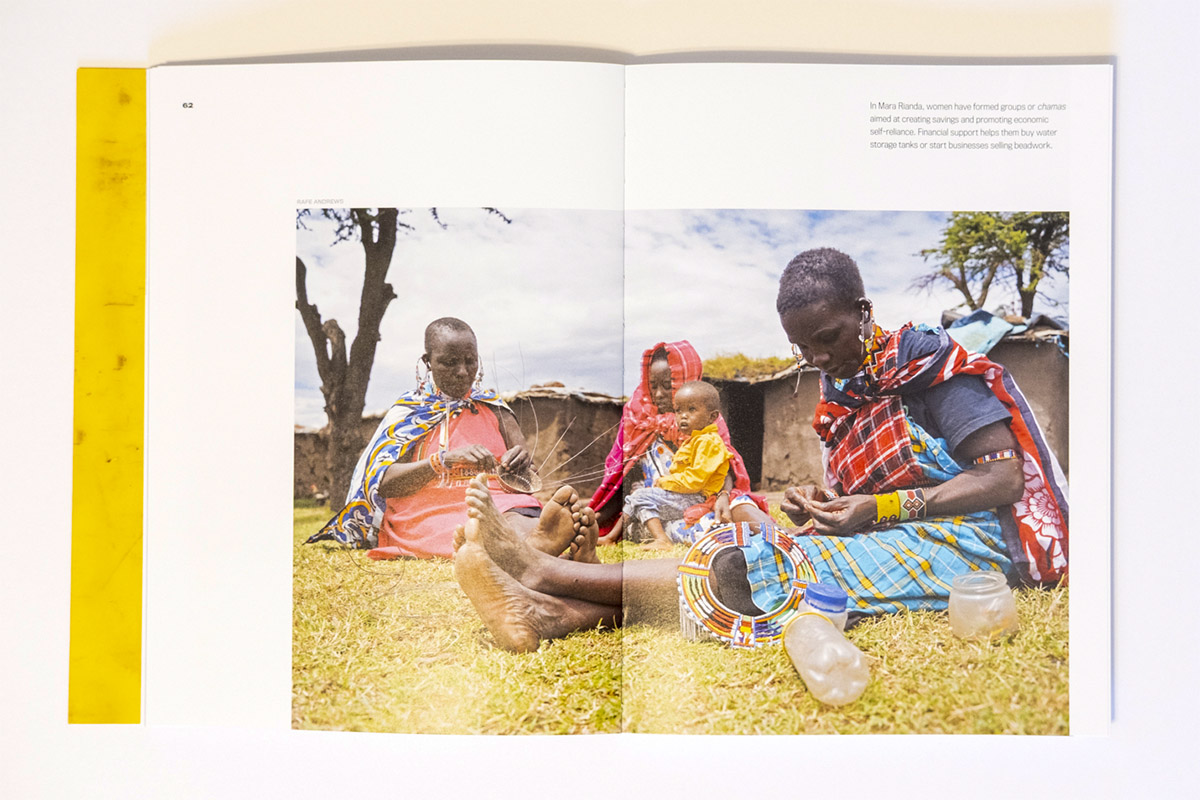
Constrating with the urban context of Kibera, the second chapter explores the more rural setting of Narok and the conflicts around the Maasai Mara Nature Reserve. Here herders are routinely venturing inside the reserve boundaries searching for water. Drought has created long-standing problems like this, where the nature reserve staff, who are themselves under-resourced, try to protect the flora and fauna that remain. However, even here, a kind of transactional relationship has emerged, as the herders form groups to trespass together so, if fined, they can pool their funds to lessen the burden. Meanwhile, the women form chamas, small groups to create social and economic support for beadwork business, buying water storage tanks, etc. While women do not have to face the same threats in obtaining water as in Kibera, here they are subject to brutal cultural norms and low status in their villages. The Dawning team has done well to take each context seriously, and through the interplay of the lengthy captions and the images we learn more about the imbrication of social inequalities that undergird the existing social structure here and in the other fieldsites as well.
Nick Parisse and Rafe Andrews, the two photographers on this Dawning project, have again done well to avoid the tropes in the Narok chapter. The Maasai and this reserve are favorite photographic subjects of tourists. Yet, we get a more complicated story, not just of the colorful beadwork, but of the human labor involved and the economic tensions associated with certain dependencies on a tourist economy. The photographers focus, not on the diverse and impressive megafauna of the park, but the pastoralists and their fears of attacks from large cat species when they trespass with their herds.
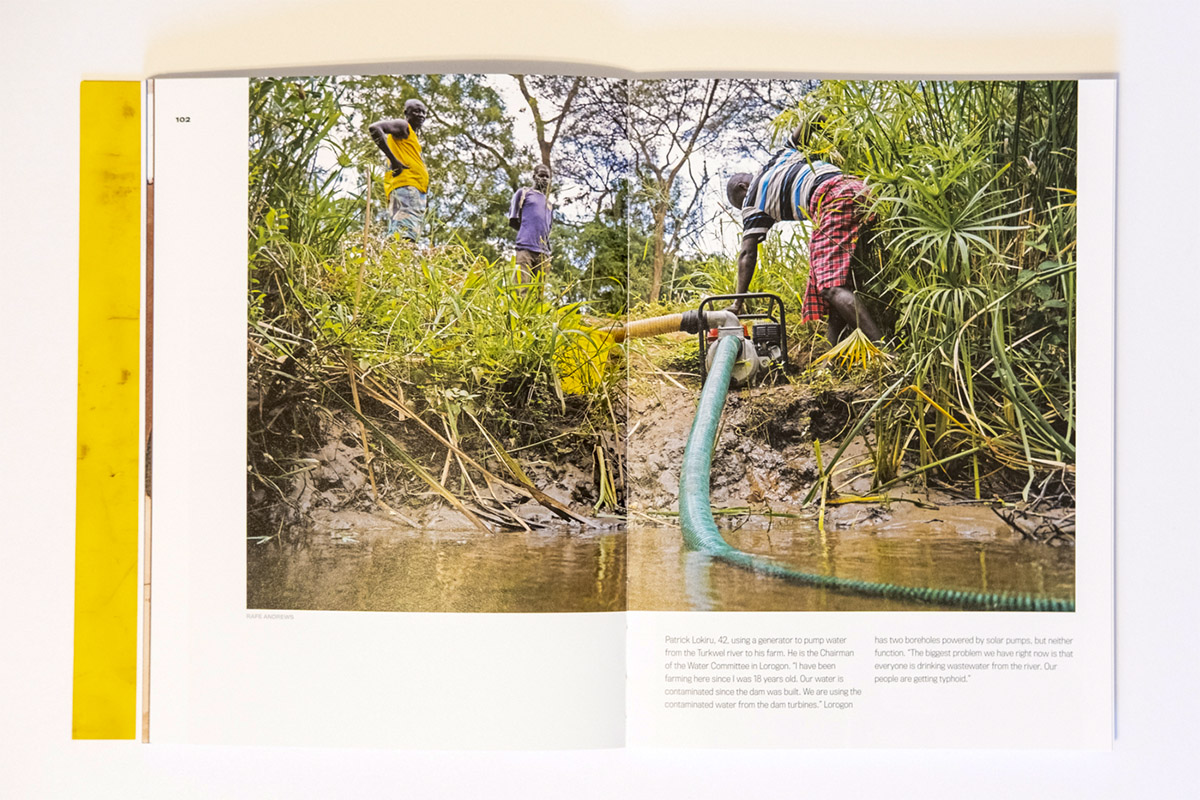
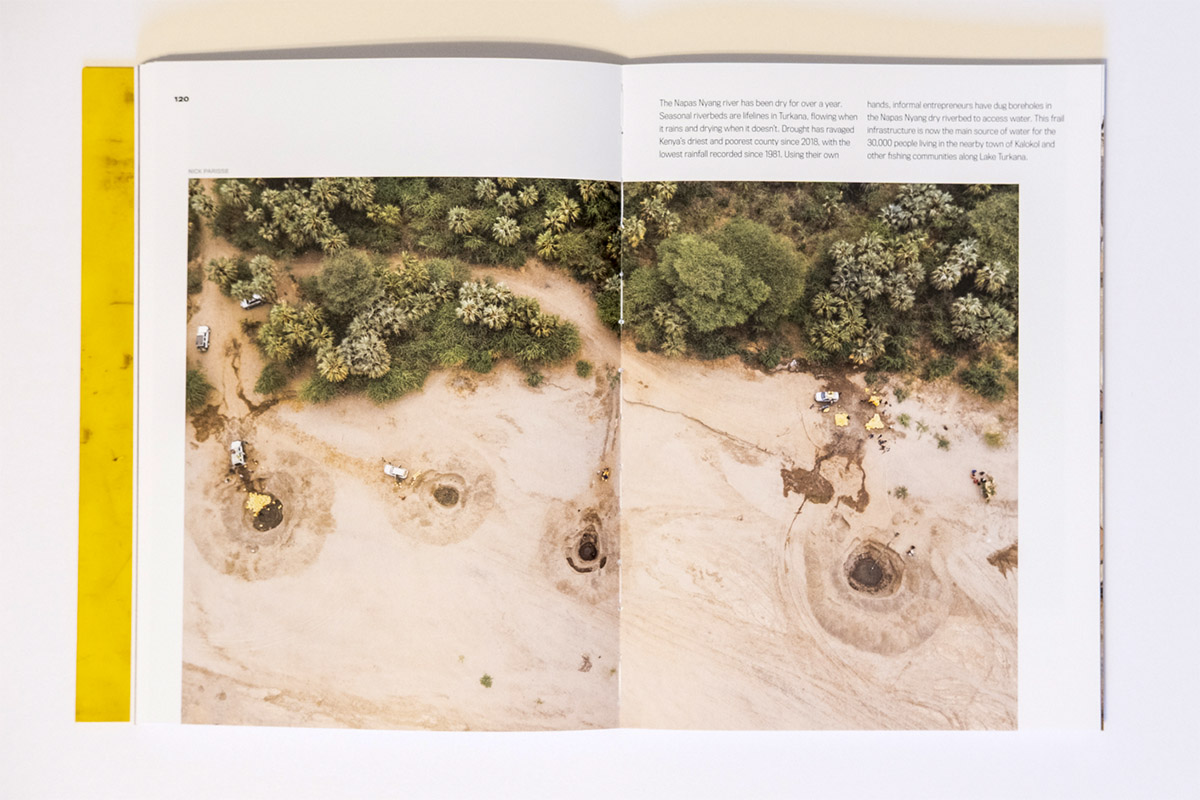
The third chapter focuses on a rural context as well, but one where the failures of infrastructures connect with tribal conflict and the search for new water frontiers in Turkana. This location of the fieldwork also includes a series of more disparate locations (the team often visited multiple areas within a single region). For example, near the Turkwel river, people pump their own water and pan for gold after a 1991 dam building project has left water from that infrastructure polluted. The dam also displaced the people of West Pokot, which eventually, after drought and resource contention, fomented tribal violence and competition. Miles away near Lake Tarkana, by contrast, we see different struggles for water and other forms of subordination and dispossession. There a traditional fishing industry struggles and child labor, slavery and HIV-AIDS continue to be persistent problems. Then, at the Napas Nyang river, cartels organize borehole businesses, pumping groundwater. A strict division of labor is upheld. Men dig boreholes and women deal in their perceived traditional responsibilities, while also needing to find sources of income to support families, sometimes alone, as when men have been victims of tribal clashes. As with the other chapters, here we see and come to appreciate the complexities of both the material and symbolic violence that either radiate from, or are exacerbated by, water crises. Through the use of aerial photography, the reader also reckons with the scale of some of these problems. Boreholes appear as tiny dots punctuated with the yellow jerrycans in a dusty fluvial landscape. In another image, people stand by a borehole, reflected in a pool of water as a green pipe snakes down into it, and one wonders, perhaps like the photographer’s interlocutors, how deep can they go?
Kajiado is the subject of the fourth chapter, which follows on the theme of water stress exacerbated by climate change. It also reveals more issues around state provision. We learn that Kenya’s constitution details how county governments are responsible for water conveyance. However, in practice, this has led to a system of largely ineffective public-private partnerships in which many people have faucets, but they are rendered useless. At Lake Magadi, where there was historically a soda ash factory, harvesters have seen less and less yield and rains are inconsistent. Pastoralists search for grazing territory in a seemingly impossible landscape of rocky earth. In this context, young women and girls have become commodities in as far as they can be married away for livestock and used as bargaining chips for filling jerrycans. As climate predictions indicate an intensifying of current trends, one wonders how these problems could change for the better.
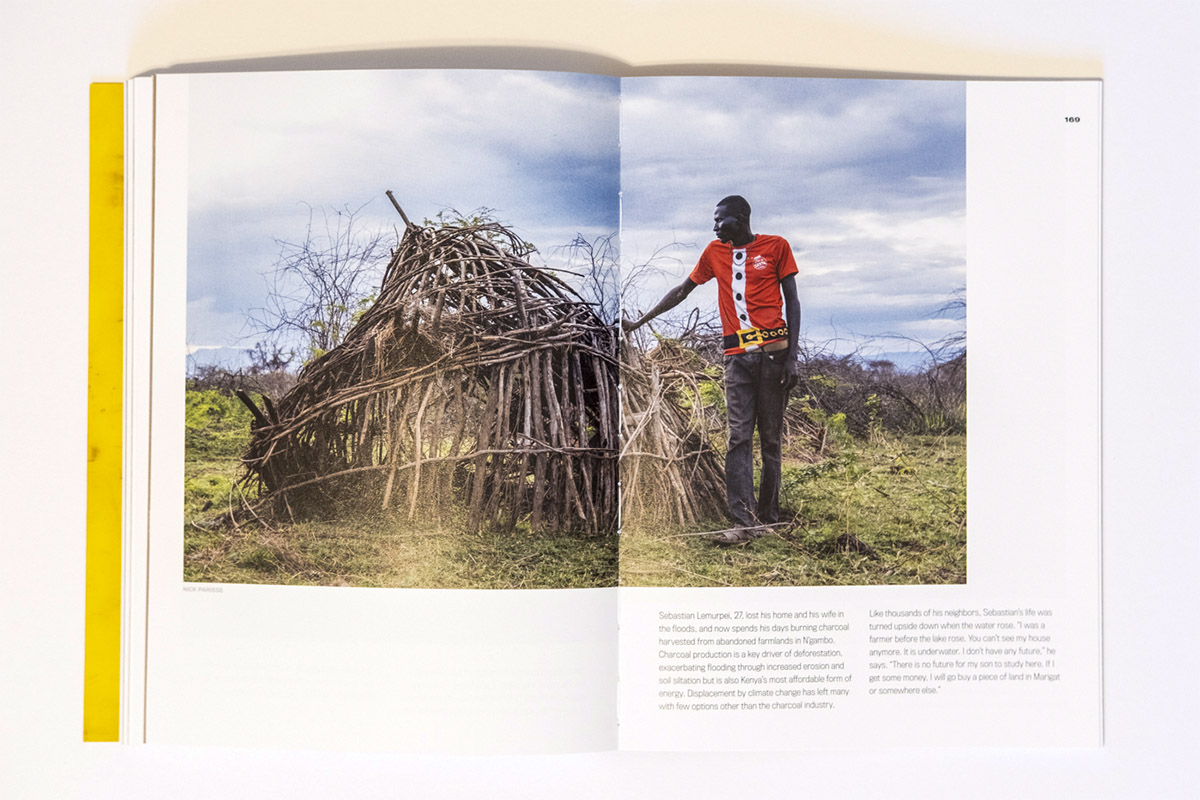
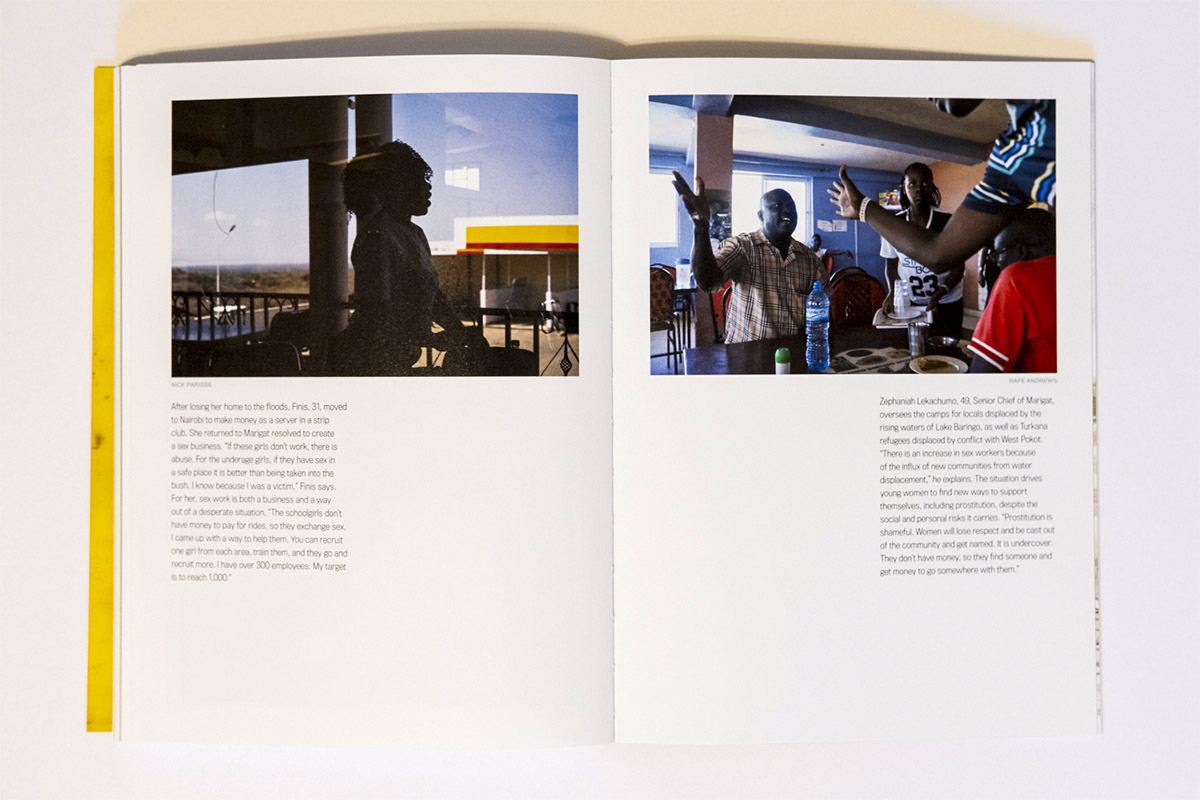
Baringo is the subject of the subject of the fifth chapter, featuring some of the strongest stories and images of the book. The chapter opens with an aerial image of N’gambo, or at least, what is left of it. Aggregating ecological crises have contributed to create a social one here in clear ways. Deforestation and heavy rainfall led to erosion in nearby hills and as the lake swelled due to silt build up within it, it overflowed, covering the town. Many lost their loved ones, as well as means to an income. Some turned to the illegal charcoal trade (which of course has its own costs to the environment and human health), while others, especially young women and even girls have turned to prostitution. We learn about the severe hopelessness that leads to people’s decisions, yet the Dawning team has also done well to complicate our understanding of the circumstances described as the reader learns how the interlocutors sometimes reframe their experiences and find ways to recontextualize their lives, not as victims, but as resilient entrepreneurs. For instance, one of the most striking images of the book is Nick Parisse’s portrait of Finis, a kind of business-minded madam. The figure of Finis is almost entirely in shadow, set on a dark balcony. In the distance of the right frame of the images, we see a building with a bright white, yellow and red rectangular motif too ambiguous to clearly make out. Shot through a window, a small, angled rectangle of light, from another window, appears in the line of sight of Finis. The image poses the questions that perhaps neither we, nor the research team could. She explains that she has built up contracts with more 300 women and girls for sex work in Marigat, a trade she entered after losing her home to flooding. As she explains, without work, there is abuse – and she sees organized sex work as offering a “safe place” that is “better than being taken into the bush.” Rather than unquestionably valorizing a concept of resilience, here the Dawning team poses it as a question through the combination of imagery and text. The notions of victim, resilience, hope, dreams, and even violence cannot be understood from a distant circumscribed vision, but only through one of direct confrontation and engagement with the murky qualities of social existence.
The book is attractively presented and cleverly designed. The size of the object at 6.25 by 8.5 inches, and with a sewn binding that offers clear view of the imagery, enhances the intimate experience of learning about the people featured in the text in a way that seems respectful, not ostentatious. While each chapter is clearly set off with a site description text and map, there is enough irregularity in terms of the interplay of the ethnographic drawings, comics strips, and photographs that keep the presentation of the material from being overly predictable. The emphasis was clearly placed on how to best preserve the realities of the fieldwork and the stories therein rather than rigidly adhering to an ideal book structure. The cohesion of the book is something that is also surprising considering that multiple photographers, artists, and other professionals all had a direct hand in this. The book retains a singular authorial voice even in the image edit, where it would be presumably more difficult to achieve than with the written texts. This speaks to the documentary ethic of the photographers, Nick Parisse and Rafe Andrews, who by and large favored normal focal lengths, environmental portraits, and capturing scenes as opposed to set up shots. From an ethnographic and research perspective this is laudable as well, and consistent with practices in anthropology and sociology, which stress the possibility of prising open the context of photographs and their meaning, not just for the artists or ethnographers who may have scientific or aesthetic commitments, but for the subjects themselves. For example, the image sequence of a women from Turkana panning for gold and men on the banks of the Turkwel River pumping water because the water from a nearby dam is a polluted show human effort and labor that one has a hard time imagining on a gallery wall. Of course, that is not the point, and this is not a traditional art book. Here we have images of quotidian instances of people’s lives at the frontlines of ecological collapse and social struggle. We get careful description, not dramatization. The images do not fall prey to any visual cliches, and the researchers have avoided common tropes.
Empathically written, soberly photographed, and attractively designed, Dawning has both shed a light on the often-unseen struggles for dignity, respect, and water in Kenya, and also on the possibilities for aggregating the real insights of the social sciences and the arts in Pipe Dreams. It is a book that can be as much a pedagogical tool, as it is an engaging and truly hybrid object that should interest social scientists, photographers, and artists, and perhaps, even inspire those with the power to change the circumstances described to do so.
Brian F. O’Neill is a photographer and sociologist based in Phoenix, Arizona.
____________
Dawning (Directed by Raul Roman): Pipe Dreams
Photographers: Nick Parisse (born in 1981, based in New York) Rafe Andrews (born in 1989, based in New York)
Publisher: FotoEvidence, Montpellier, France, copyright 2025
Text: English
Artwork: Eric Adrianstialonia
Design: Melike Tascioglu Vaughan
Printing: Ofset Yapimevi, Istanbul
Softcover book; sewn layflat binding; 6.25 by 8.5 inches; 224 pages; ISBN 979-8-9865952-6-9
____________
Articles and photographs published in the PhotoBook Journal may not be reproduced without the permission of the PhotoBook Journal staff and the photographer(s). All images, texts, and designs are under copyright by the authors and publishers.
 PhotoBook Journal
Leave a comment