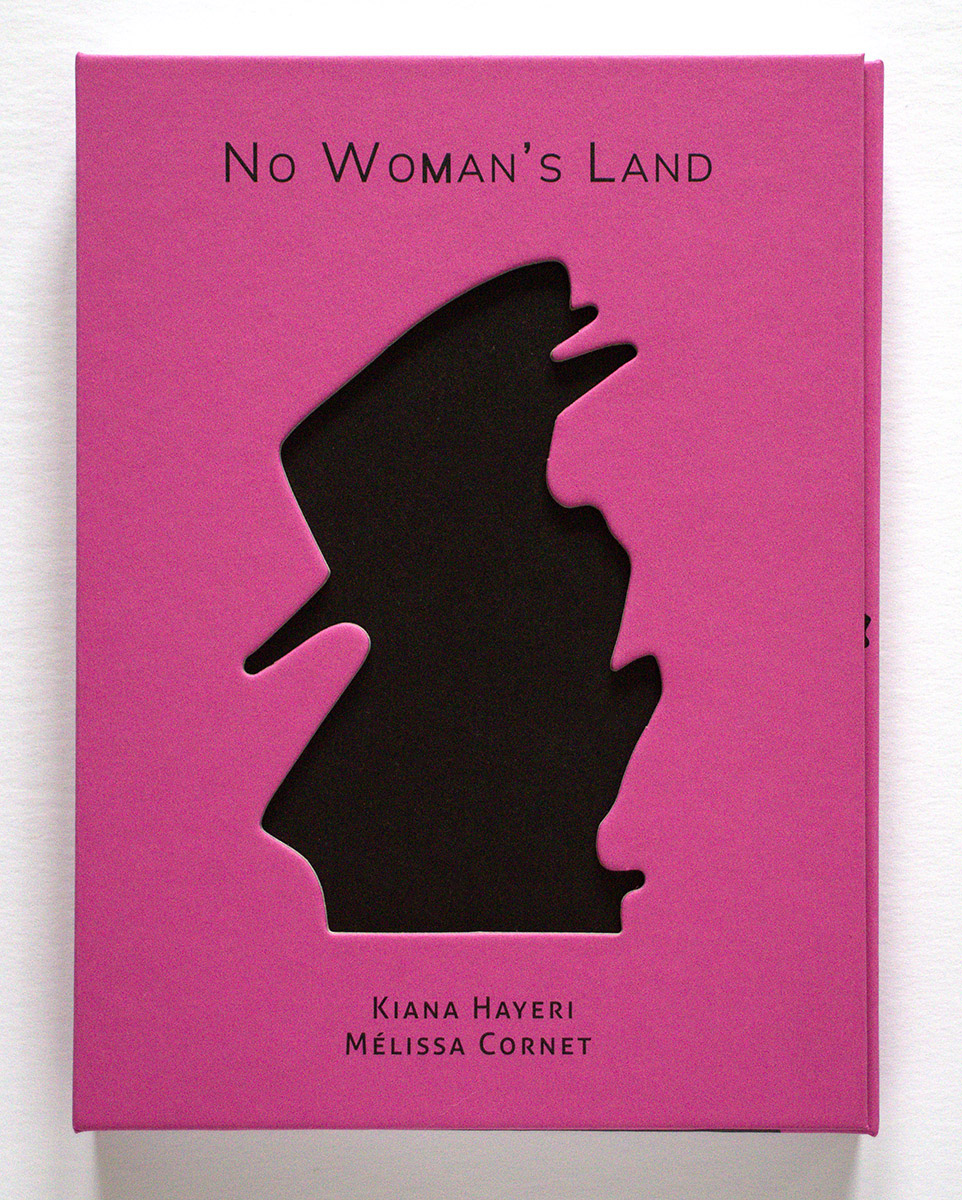
Review by Hans Hickerson ·
An unflinching, comprehensive exploration of the current situation of women in Afghanistan, No Woman’s Land is an important book. It reminds us that while we take our personal possibilities for granted, women and girls in Afghanistan are treated barely better than slaves.
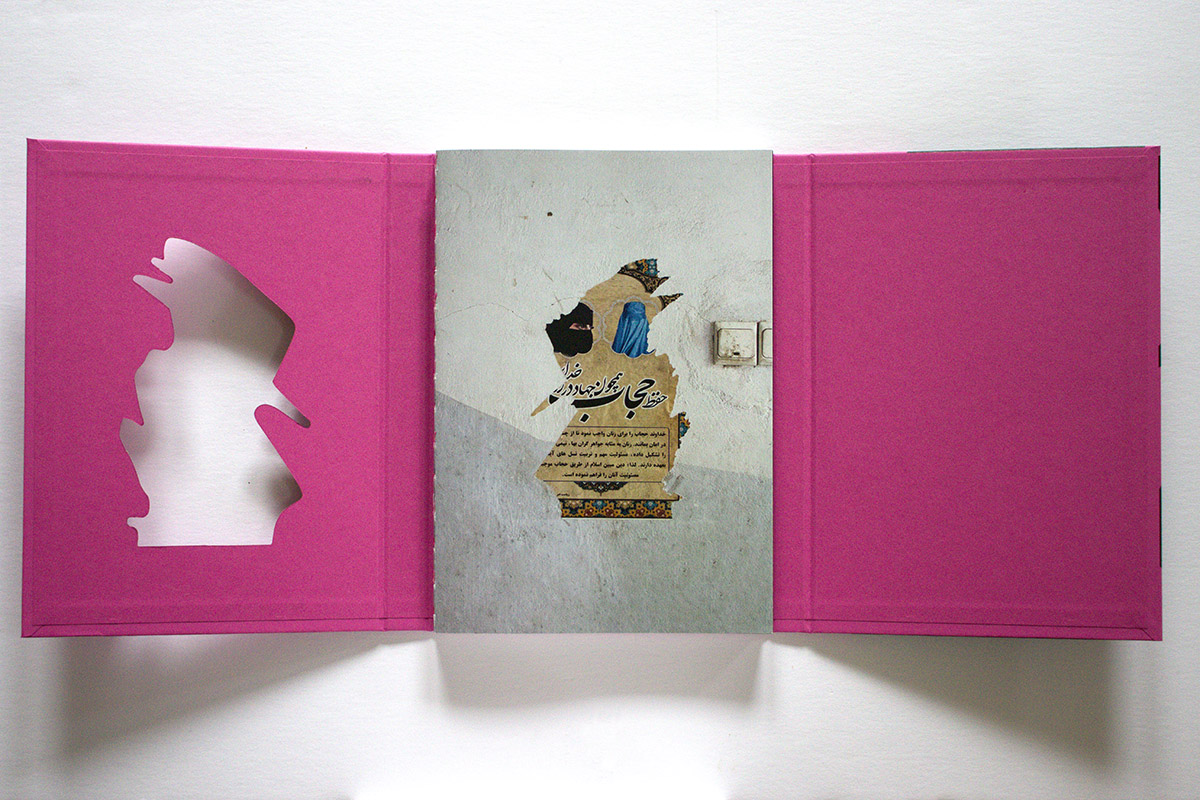
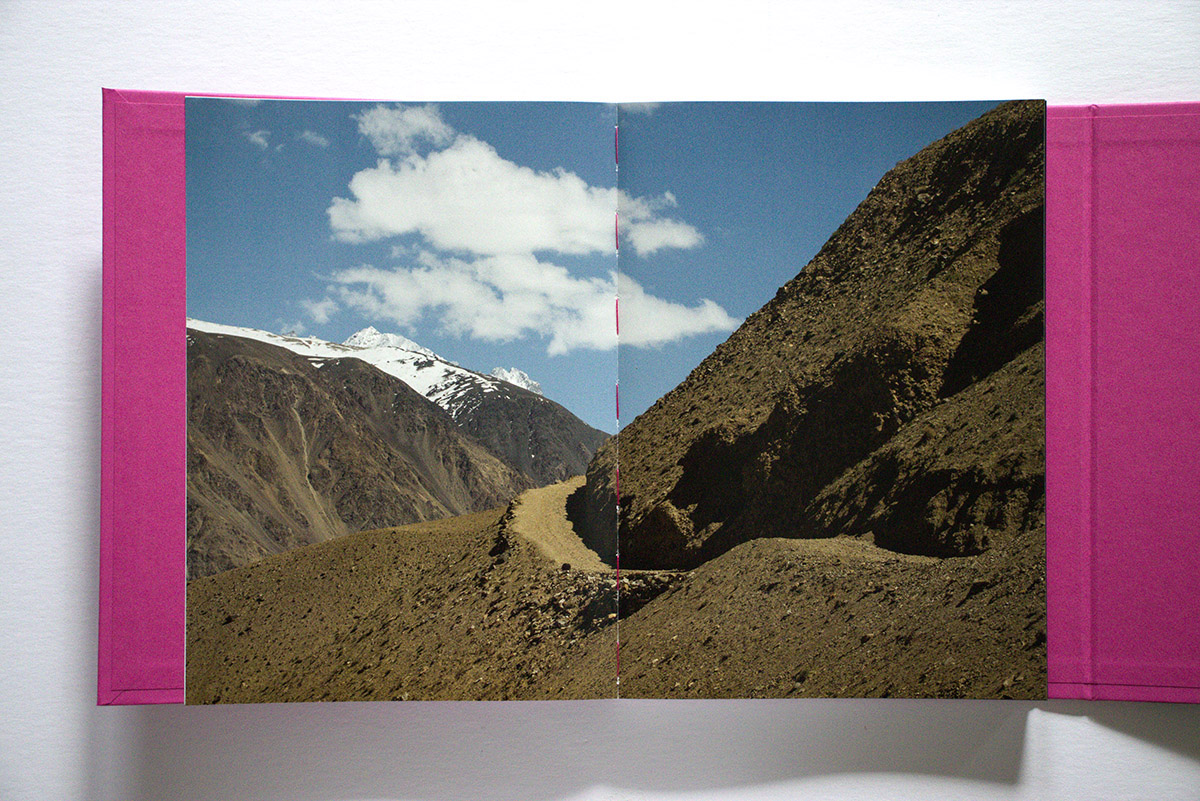
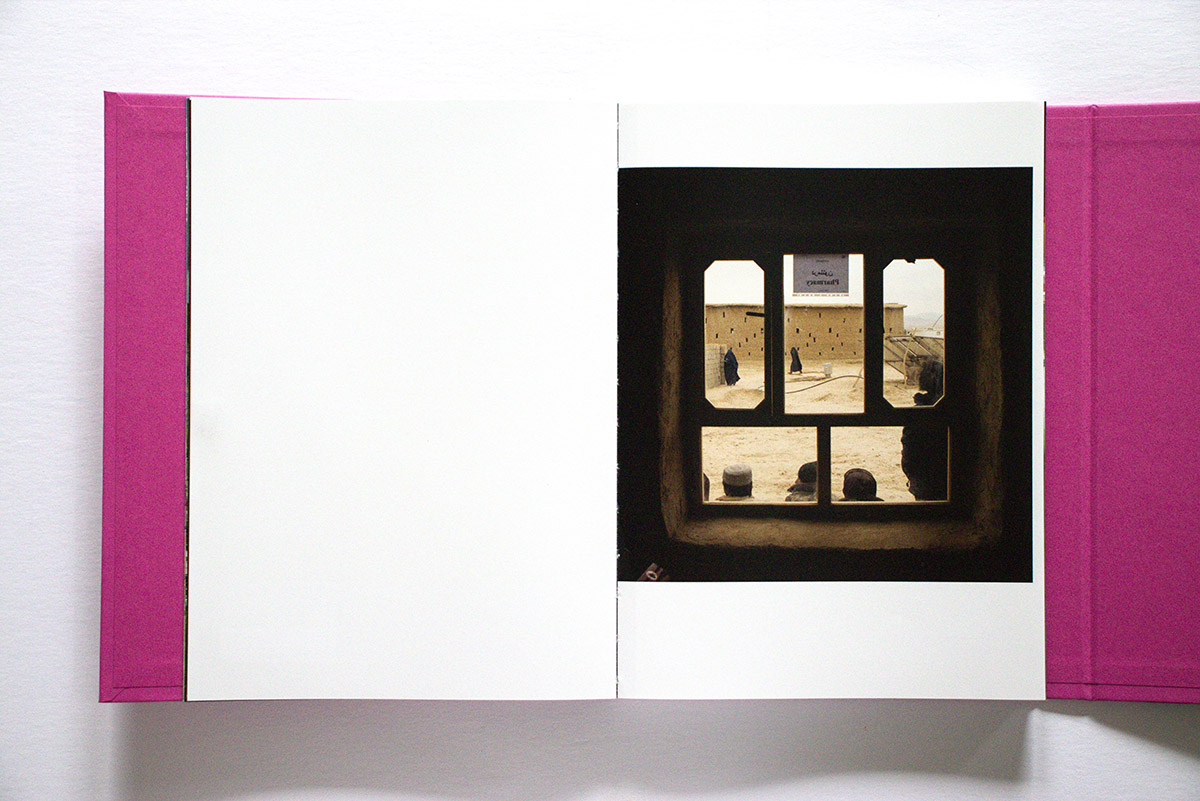
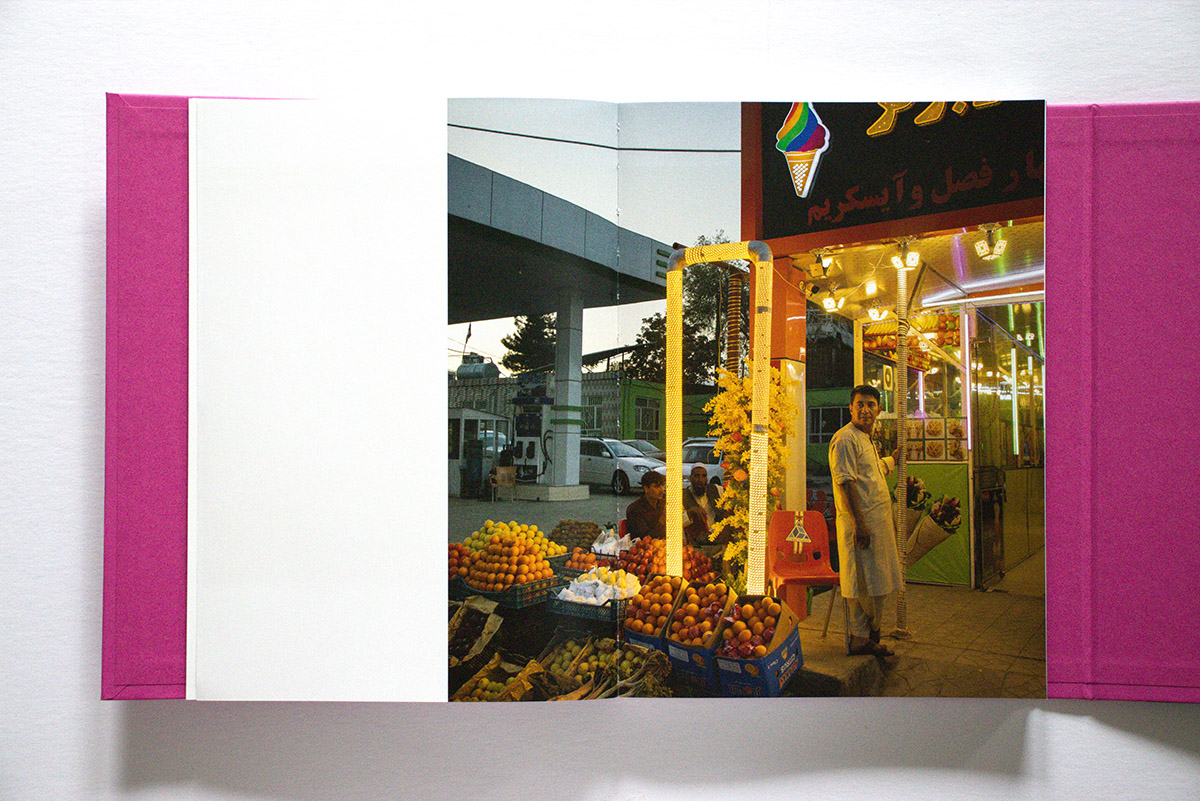
Along with mutually reinforcing images and texts, the book employs a satisfyingly varied menu of formats, layouts, and design choices that keep the narrative moving. The photos are not intentionally artsy but function as illustrations in service to the story.
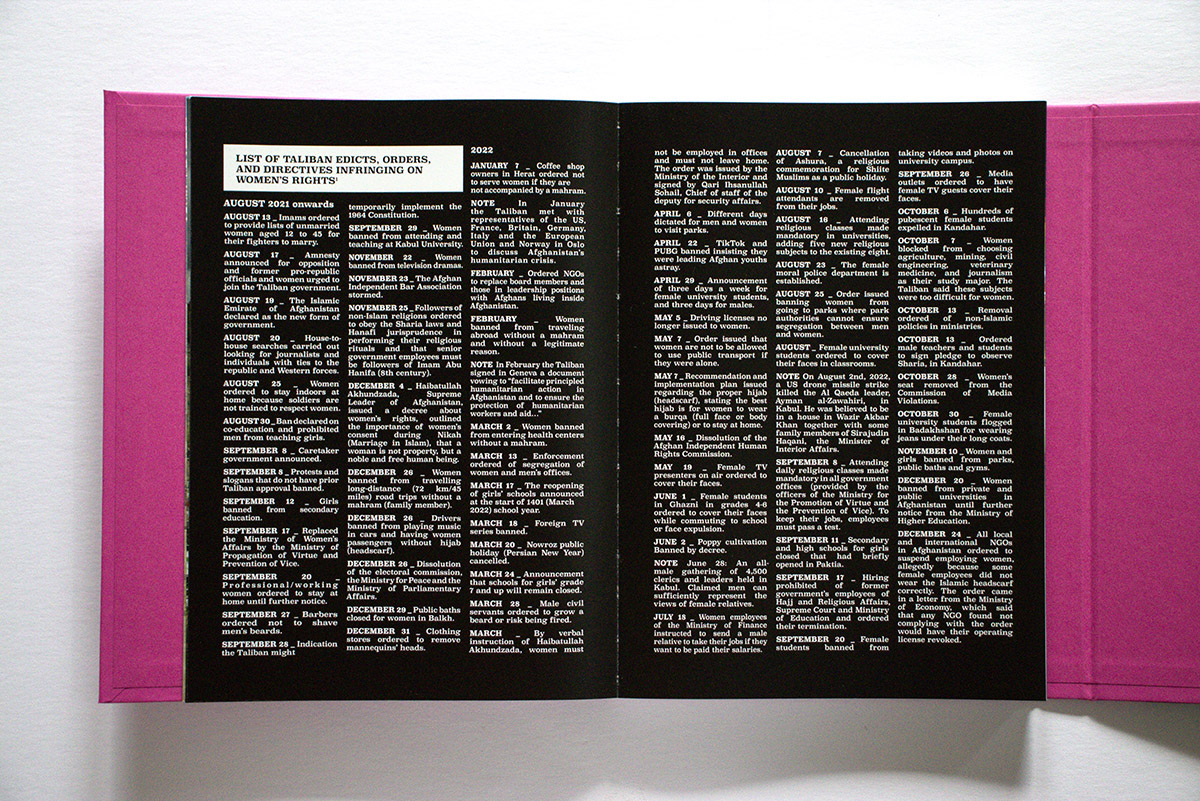
The book begins with several two-page spreads of single landscape photos and a spread with two portrait photos. Next is a damning four-page list of Taliban edicts, orders, and directives that limit women’s rights. For example:
April 6, 2022: Different days dictated for men and women to visit parks.
May 19, 2022: Female TV presenters on air ordered to cover their faces.
February 22, 2023: Girls over 10 years barred from education in Kandahar.
March 24, 2023: Taliban’s supreme leader issued a message to resume stoning women to death.
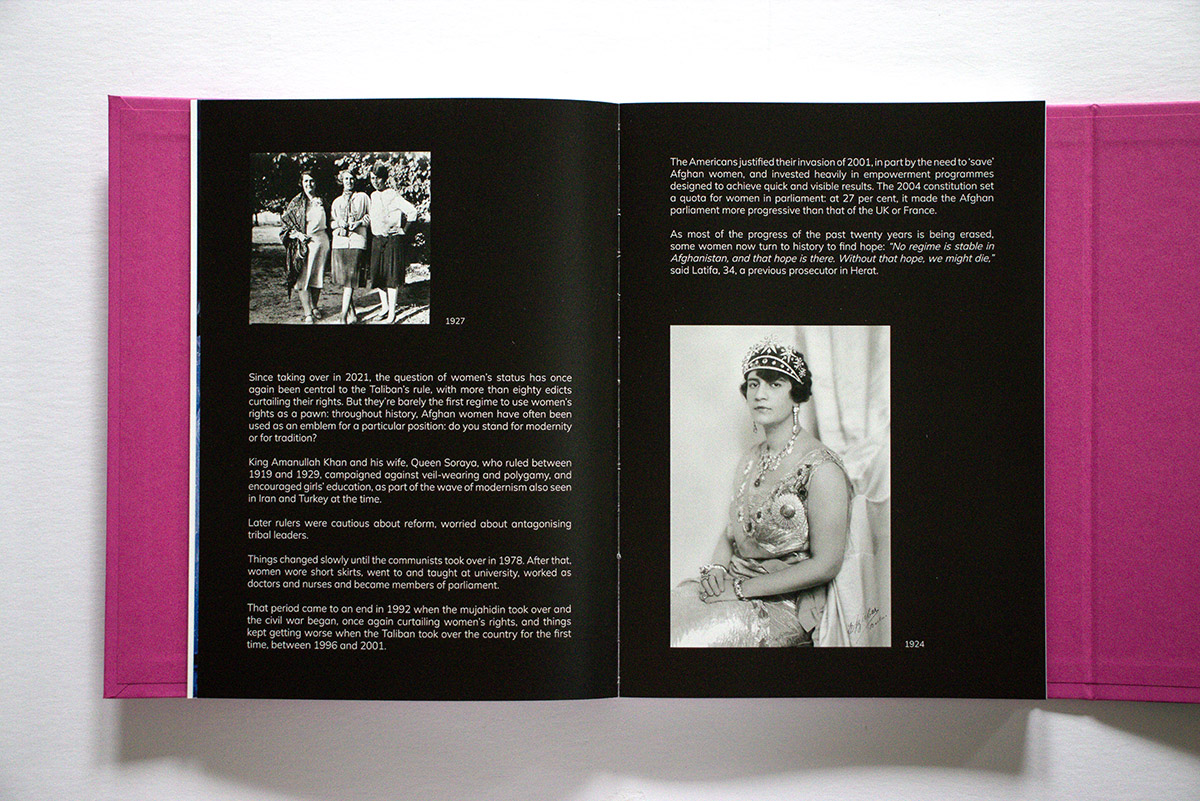
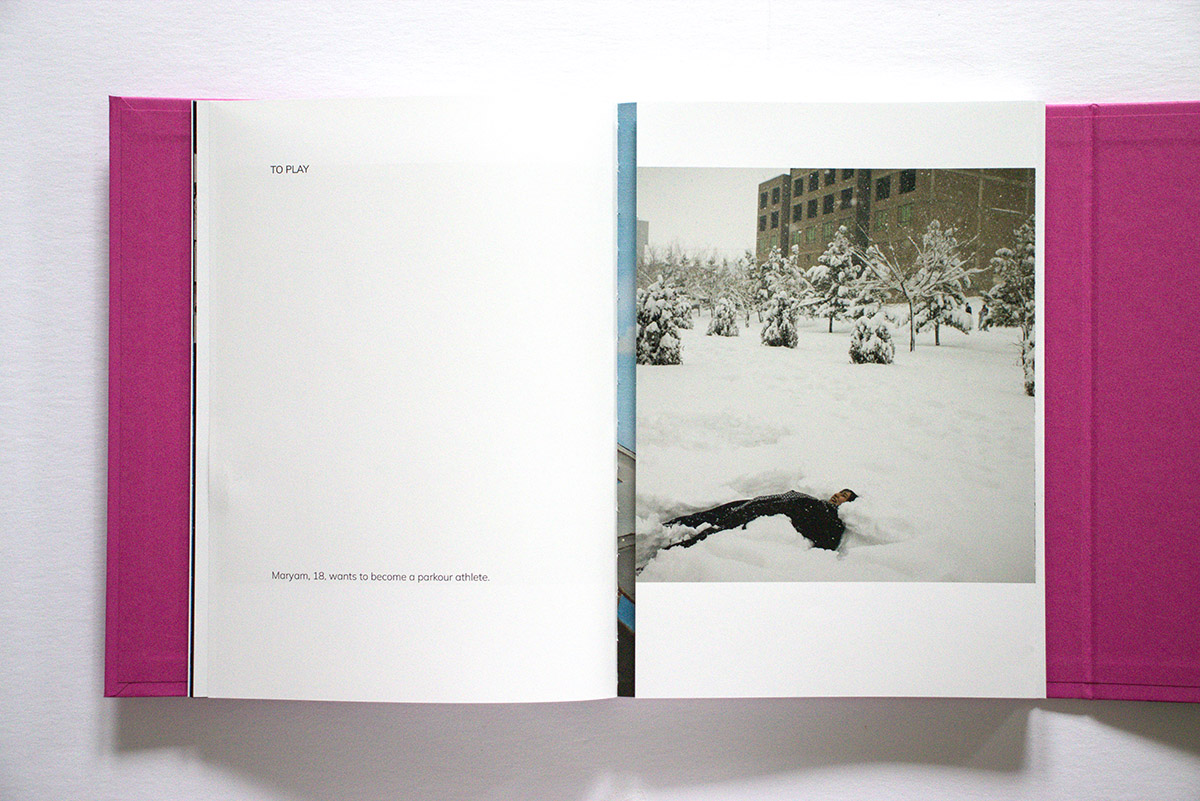
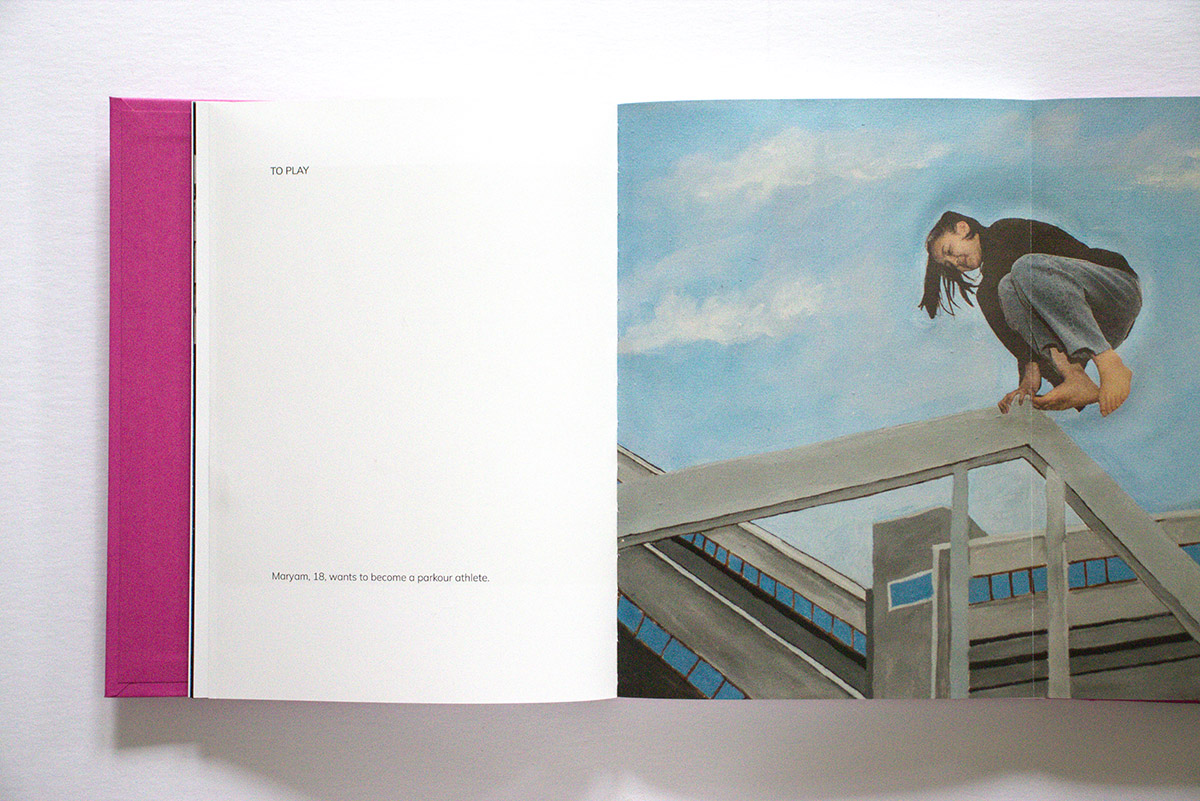
Next, and also spaced throughout the book, are fold-out pages of photo-illustrations (see images 7 and 8 below) of young women acting out their forbidden, unrealizable dreams to become globetrotter, parkour athlete, journalist, painter, surgeon. Then in several pages of street scenes we do not see women but only men. Then come pages of vintage black and white photos accompanied by text where we see Afghan women dressed in modern clothes out and about in public and in professional settings, showing what life was like (at least in the urban areas) before the Taliban.
Next we are taken into more intimate settings with women and girls, probably due to the fact that the authors, Kiana Hayeri and Mélissa Cornet, both women, were allowed to be alone with Afghan women in private spaces.
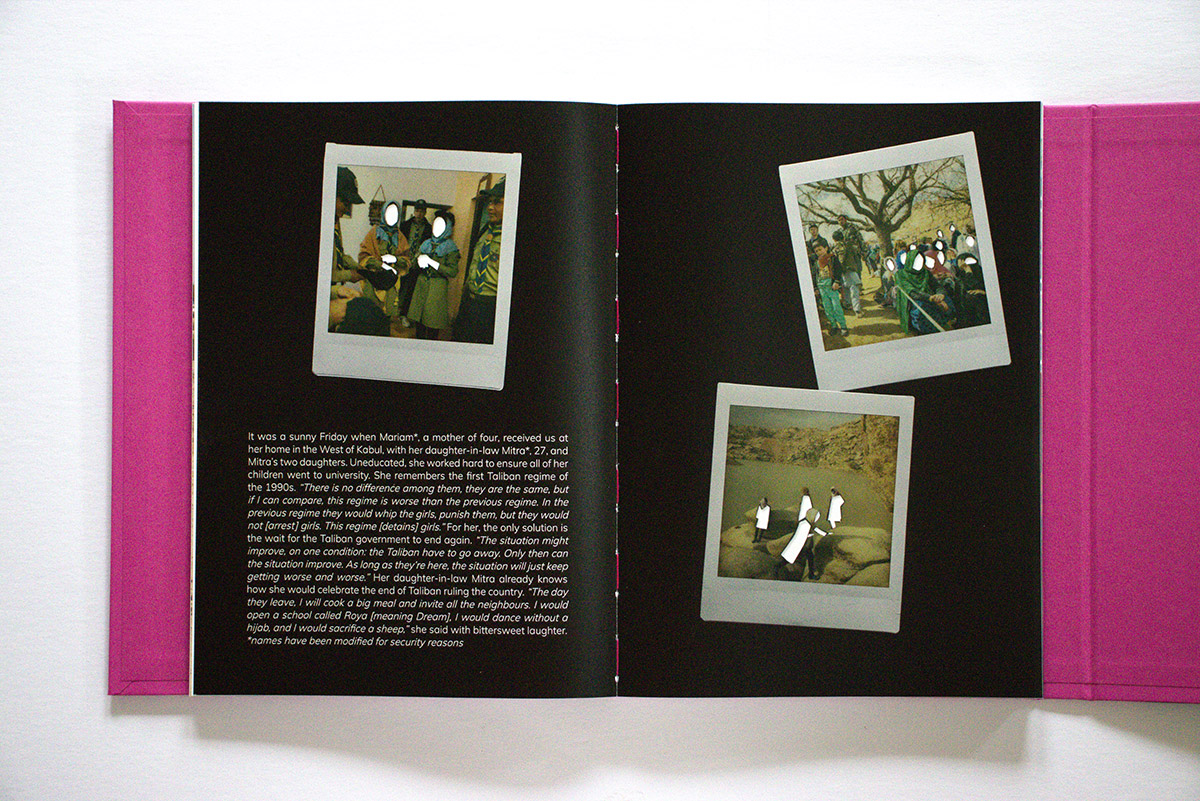
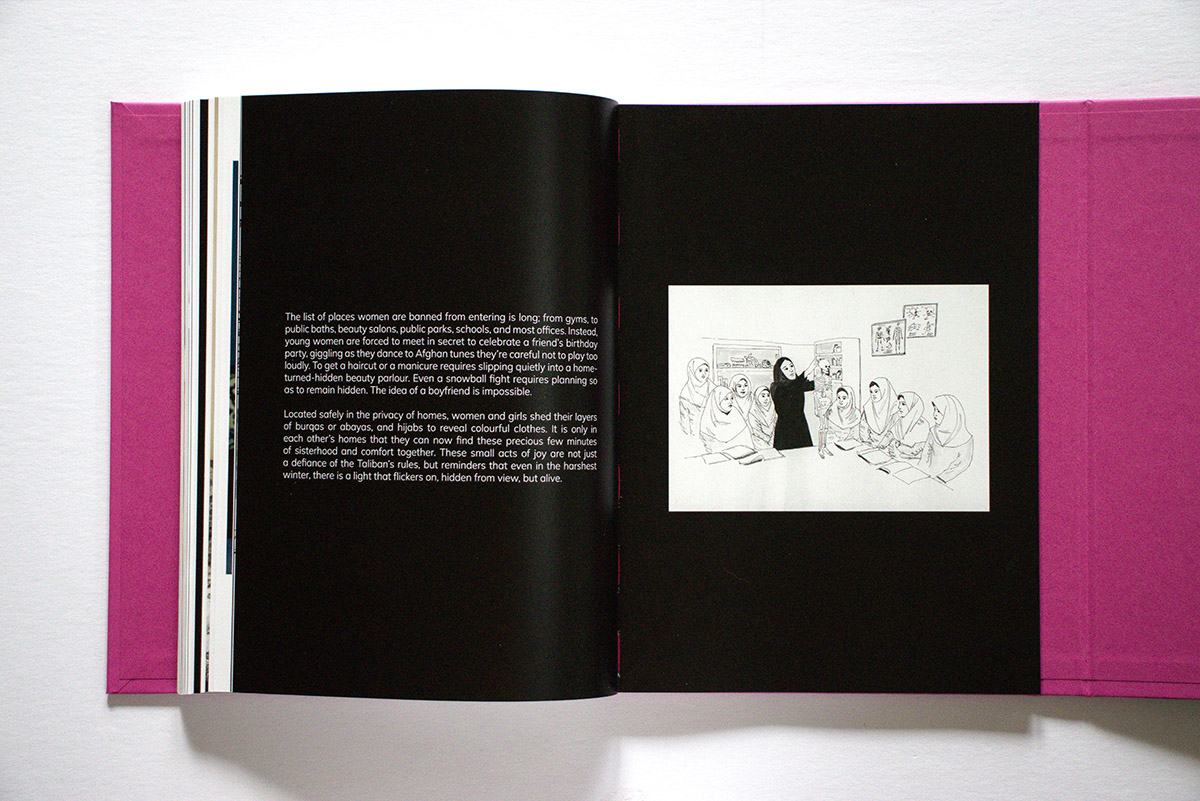
Hayeri contributed the photographs, and Cornet was responsible for the texts as well as the other illustrations. Cornet’s visuals include the photo-drawings of women’s dreams mentioned above, pen and ink sketches of school scenes, and also Polaroids with women’s faces cut out.
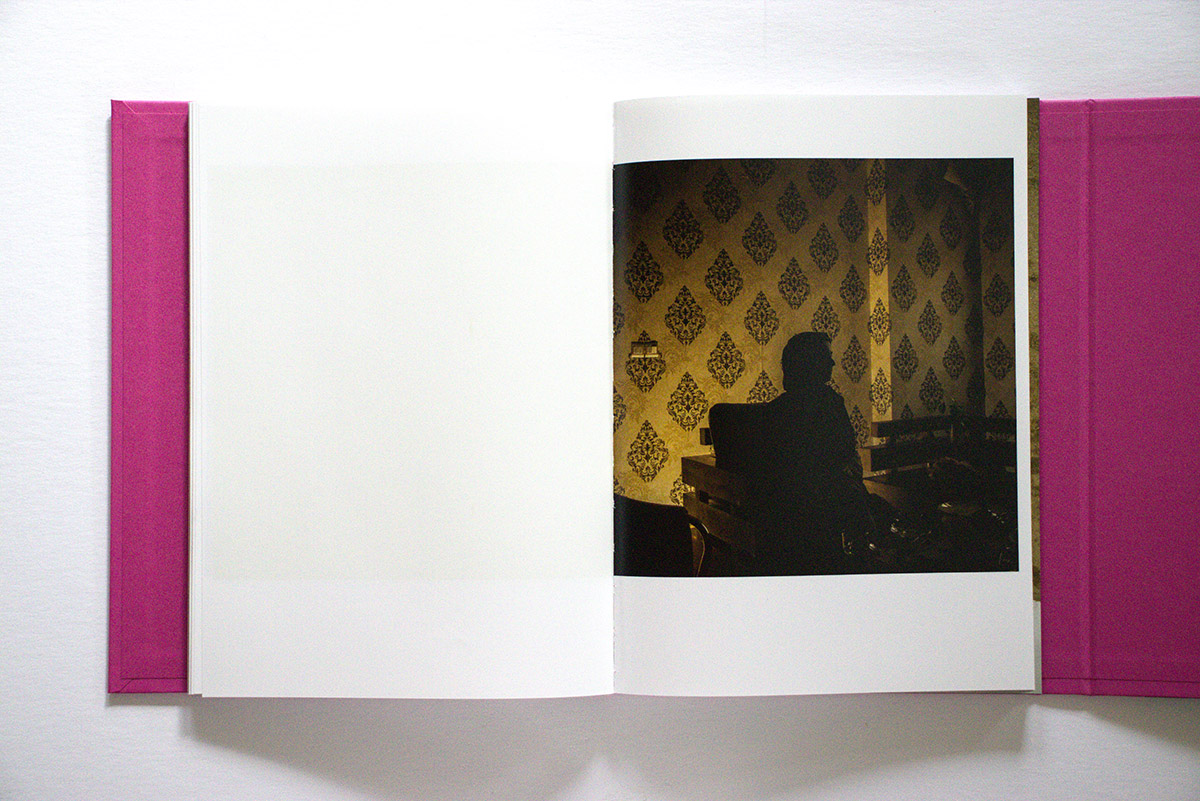
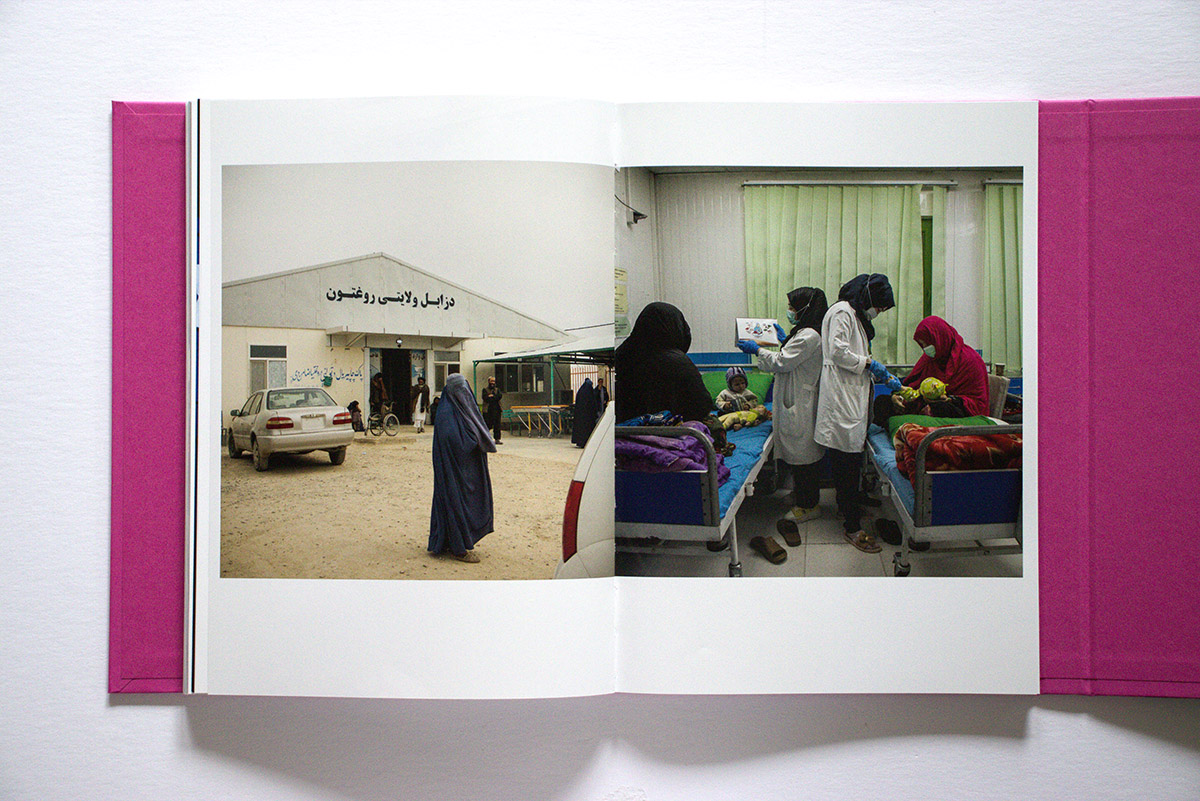
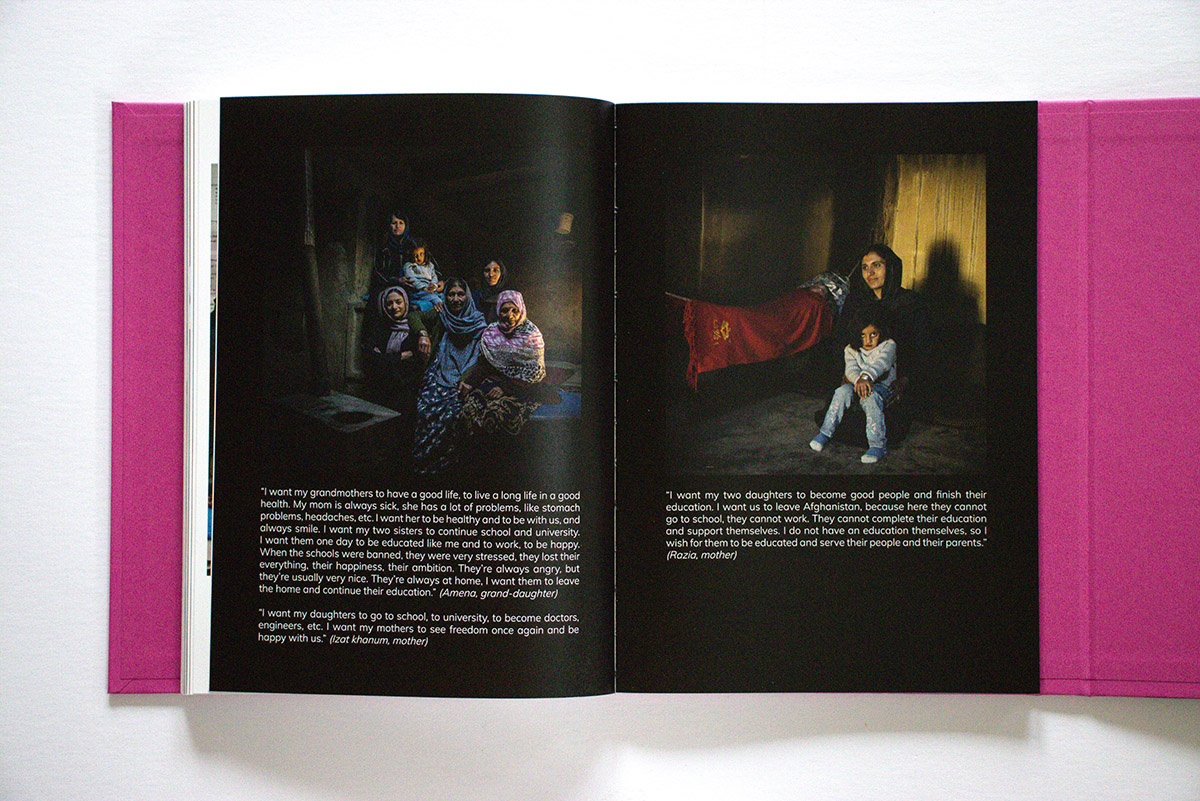
Photos of women in interior and more intimate settings make up the bulk of the book. We see photos of groups of women doing the kinds of limited, menial work that they are allowed – sorting saffron, sewing clothes, weaving, beading. We also see women, mostly with their faces hidden, working underground as writers, journalists, and radio hosts. We visit women’s work collectives, health centers, clandestine schools, secret art centers, and a private birthday celebration. In the health center we see young girls suffering from malnutrition because boys are favored and girls are not cared for or valued. We also see a series of formal, dignified portraits of women that are accompanied by quotations from them describing their hopes and dreams for freedom and a better life.
This book packs a powerful punch, and it will not leave you indifferent.
As the text concludes, “In Afghanistan today, women can’t live, and can’t leave. We can and must do better to support them. Their fight, our fight, is far from over.”
Hans Hickerson, Editor of the PhotoBook Journal, is a photographer and photobook artist from Portland, Oregon.
____________
Kiana Hayeri and Mélissa Cornet – No Woman’s Land
Photographer: Kiana Hayeri (born in 1988; lives in Sarajevo)
Texts and Illustrations: Mélissa Cornet (based in Kabul and Istanbul)
Publisher: Raya Editorial © 2025
Language: English
Design: Santiago Escobar-Jaramillo
Printing: NPN Printing, The Netherlands
Folding cut-out printed hardcover; 122 photographs; Swiss binding; 17 X 23 centimeters: unpaginated; ISBN 978-1-7380935-1-9
____________
Articles and photographs published in the PhotoBook Journal may not be reproduced without the permission of the PhotoBook Journal staff and the photographer(s). All images, texts, and designs are under copyright by the authors and publishers.
 PhotoBook Journal
Leave a comment