Review by Hans Hickerson ·
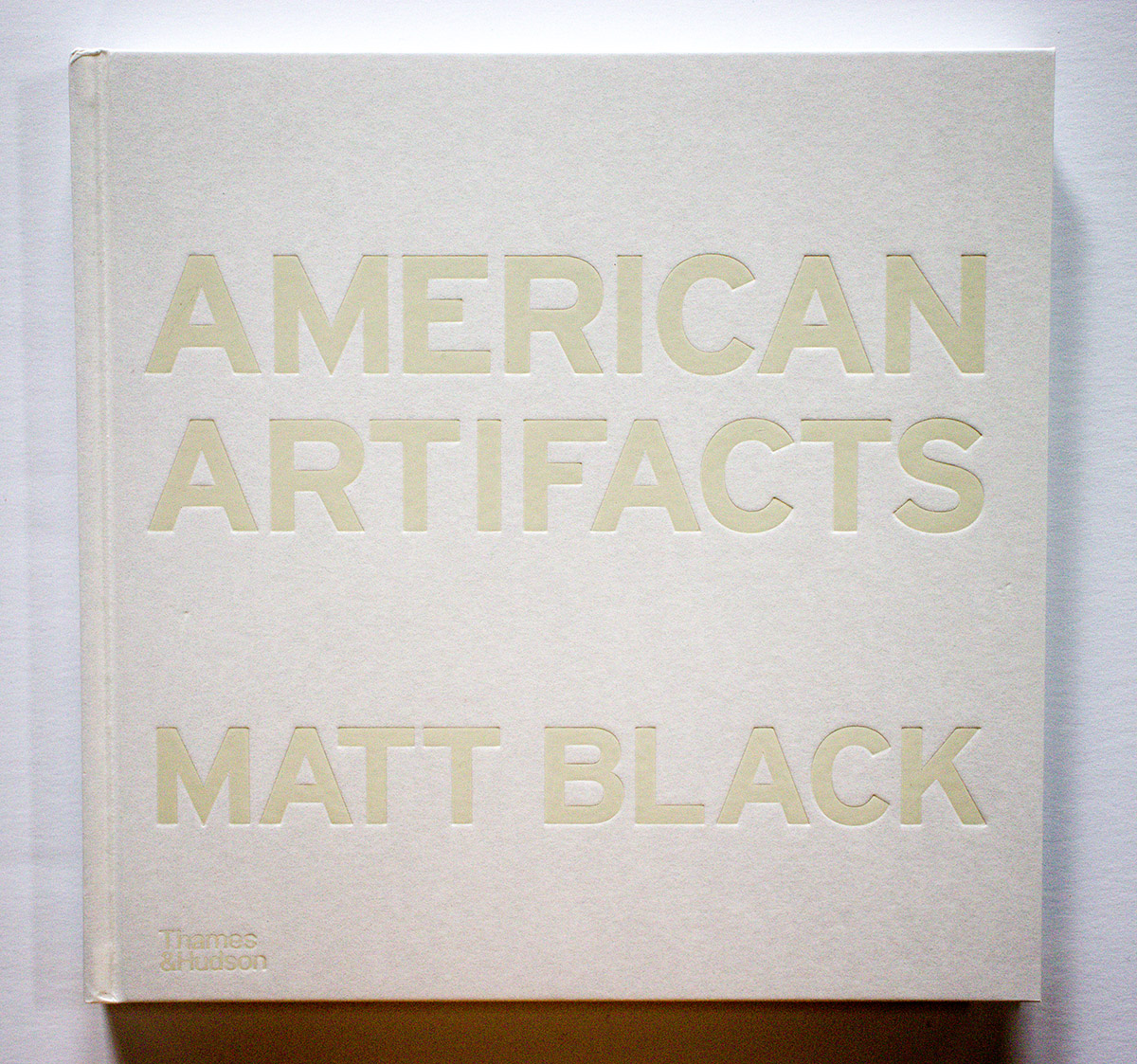
A heartfelt plea, a cri de coeur documenting the ravages of poverty in the United States, Matt Black’s American Artifacts reads like a contemporary complement to Let Us Now Praise Famous Men.
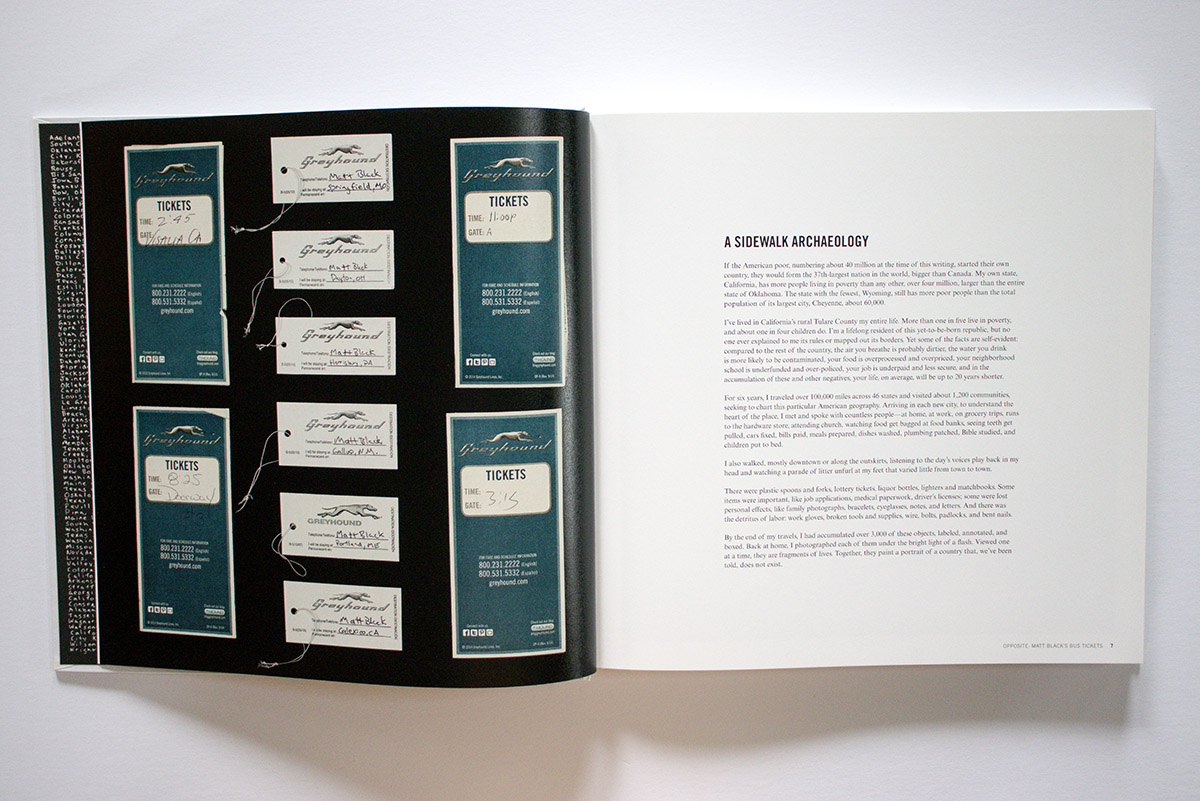
Unlike the single location of the Evans / Agee book, Black traveled over 100,000 miles around the US for six years. He visited 46 states and 1,200 communities in his effort to discover and document the face of poverty. He describes poverty as its own separate country, a place where life is dirtier, more expensive, less secure, and shorter.
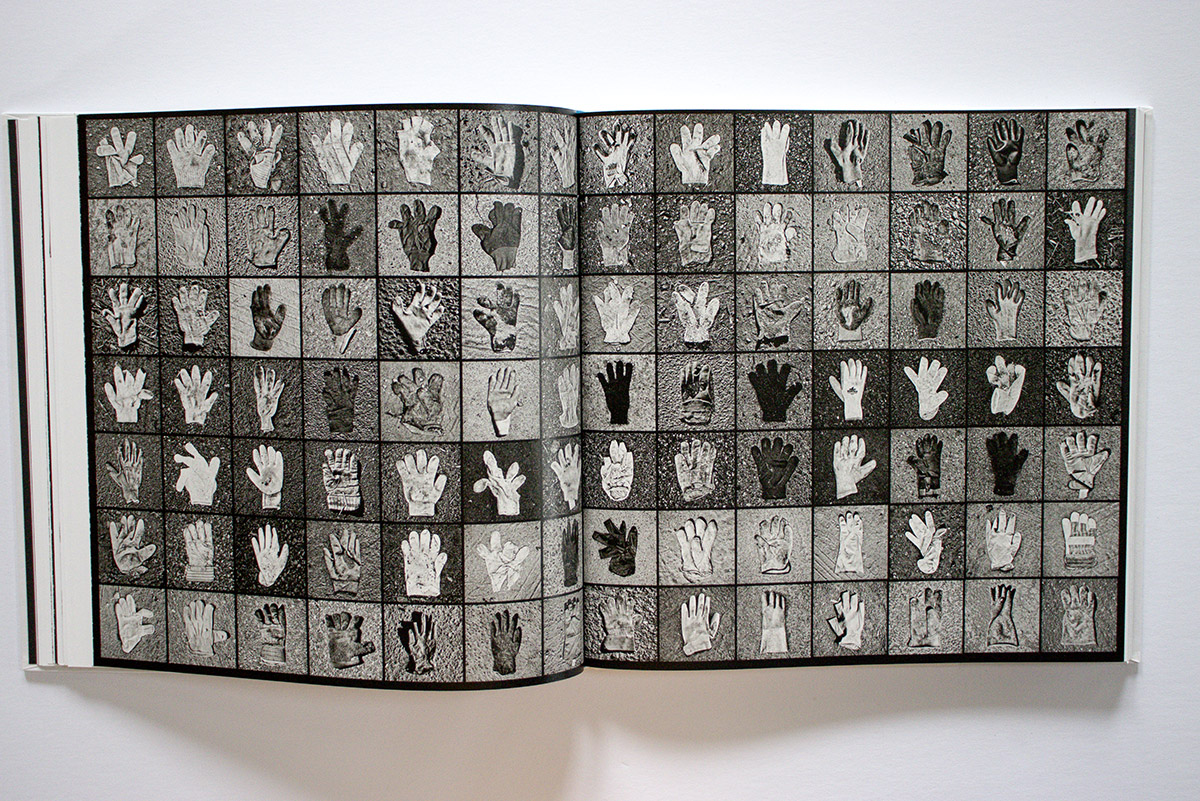
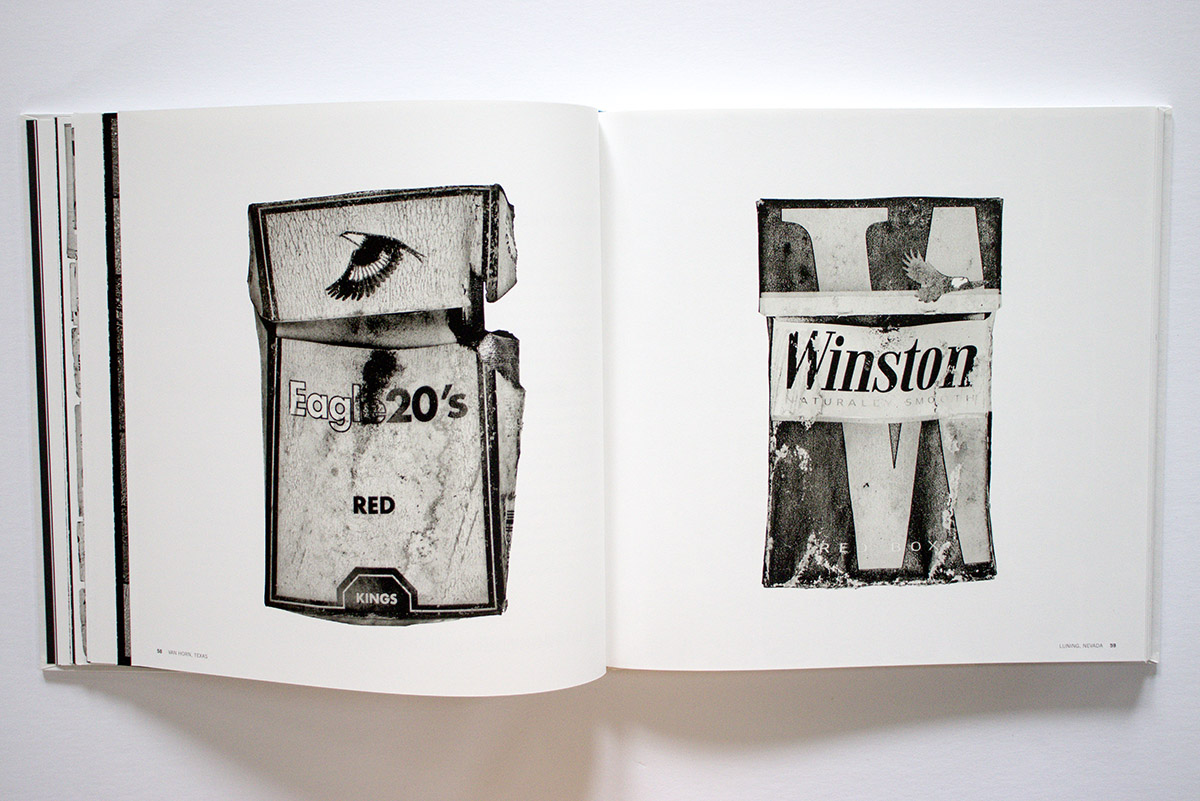
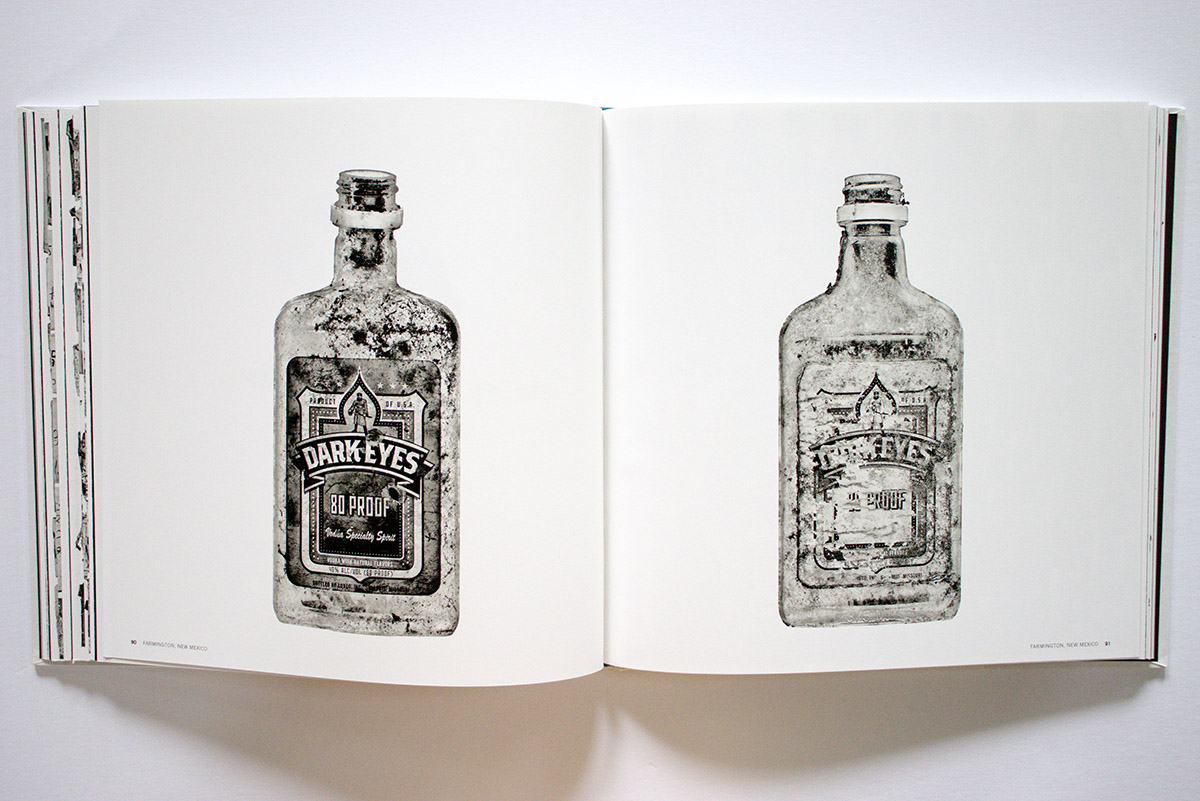
When he arrived in a community, often by Greyhound bus, Black would walk around, photograph what he saw, and speak to the local people. He also took photographs of and collected things he found on the ground – torn-up gloves, plastic utensils, cigarette packs, discarded liquor bottles. He photographed them on the ground and also later at home under the harsh light of a flash. He likens his work to that of an archeologist, but instead of examining the remains of ancient civilizations he researches the struggles and living conditions of the poor.
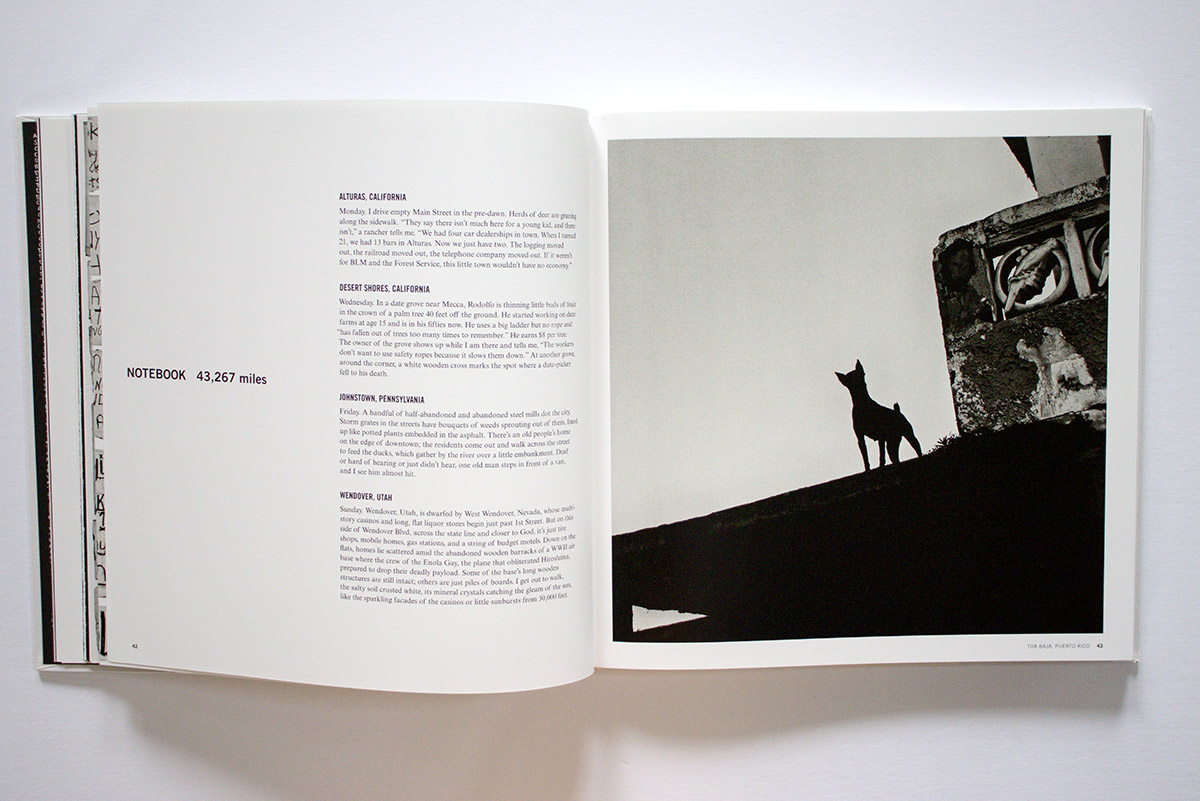
American Artifacts is organized into five similarly structured parts or chapters, along with introductory and concluding sections. Each chapter begins with a “Notebook” that chronicles miles traveled and highlights places visited, along with Black’s notes on people, places, and events.
Next there is an “Interview” spread of two pages that focuses on a single person’s story of navigating poverty, then a “Voices” section with notable quotes from various people he met.
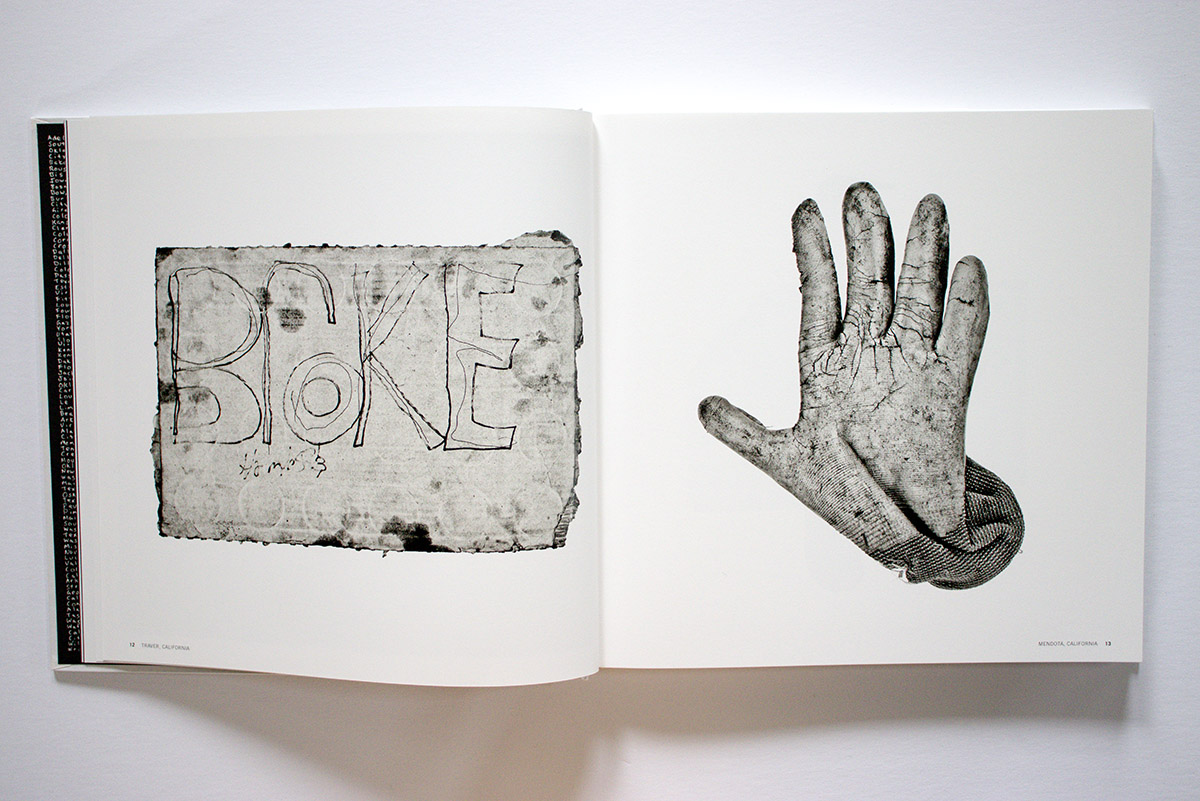
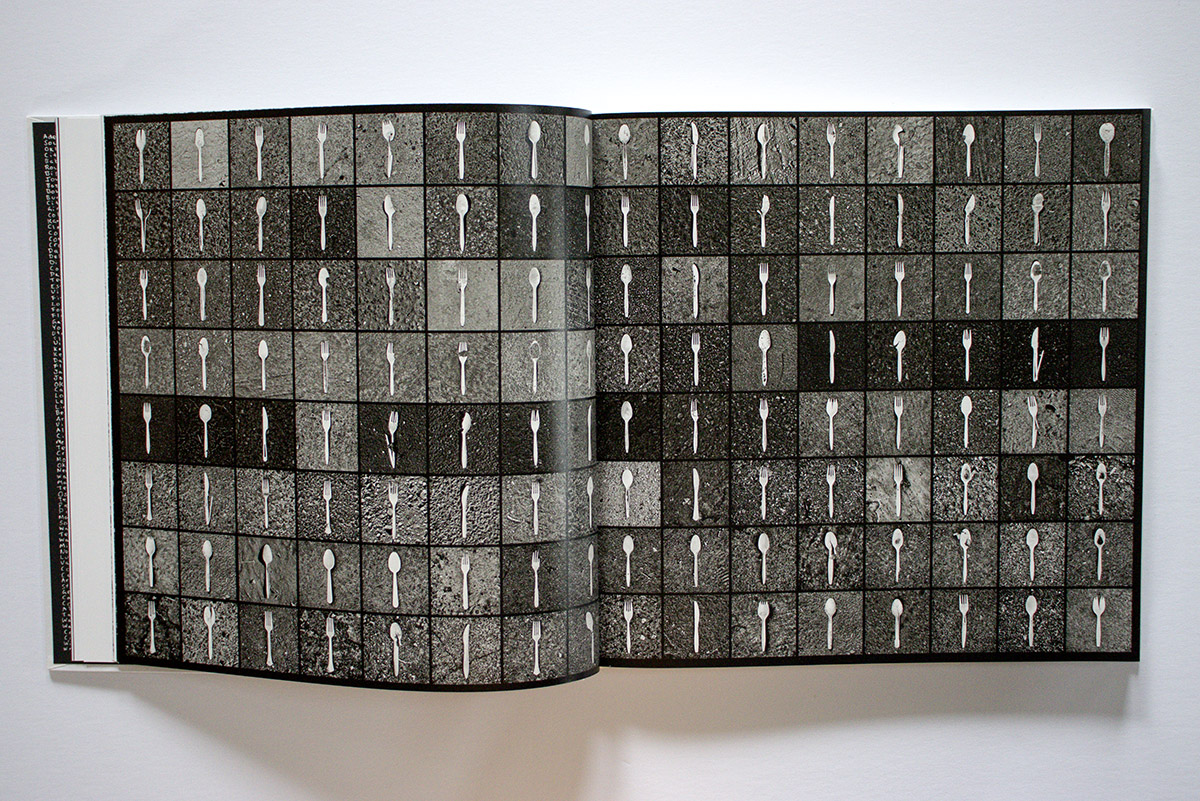
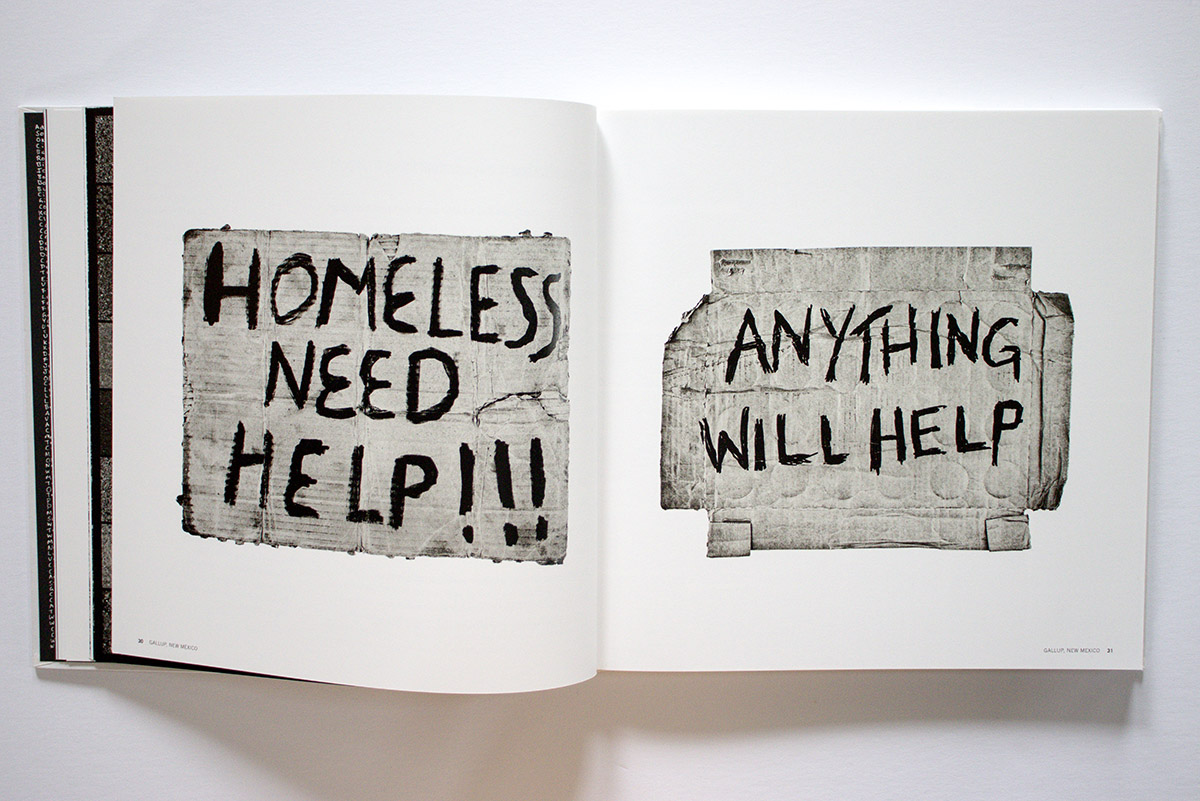
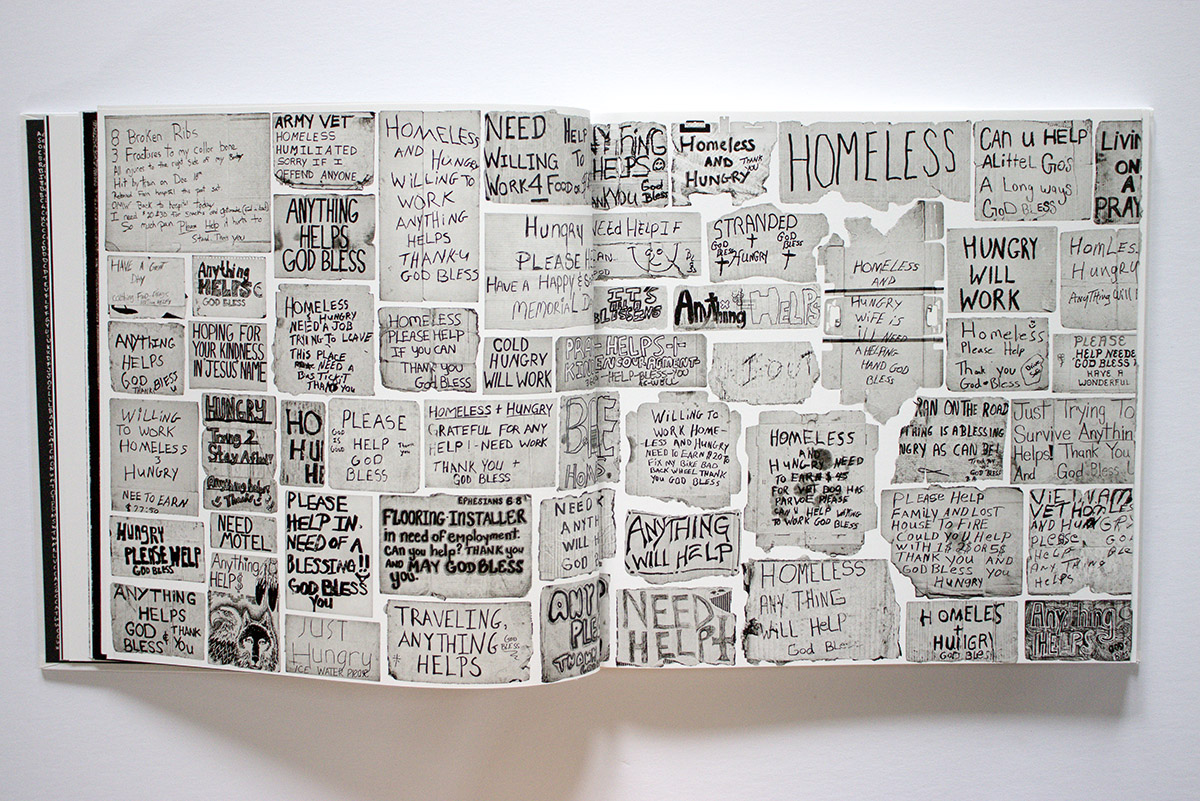
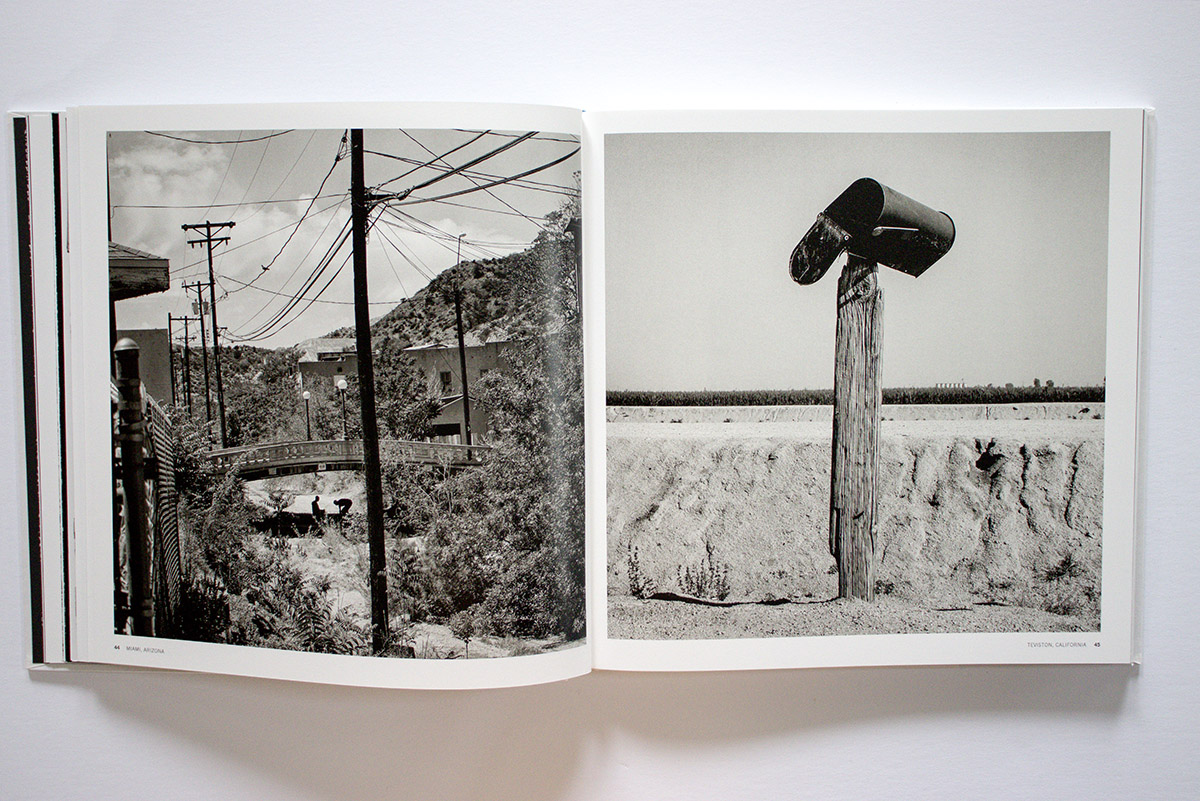
Woven between these sections are Black’s photographs. They are black and white and are presented in a variety of formats. There are large photographs, one to a page; photos of objects on the ground as he found them; single, flash-lit studio close ups of individual objects; grids of multiple examples of similar found objects; and also page spreads of multiple individually cut out objects – gloves, utensils, bottles, panhandling signs, cigarette packs. Their artiness recalls Irving Penn’s closeups of similar found objects, but contextualized in the book, embedded in Black’s narrative of poverty, you don’t spend much time marveling over their sculptural qualities.
The cumulative effect of the text and its visual counterpoint is overwhelming, particularly the texts. For example:
“It’s like you stepped into the Devil’s Triangle, women peeing on the sidewalk, people beating each other with bats, bars, sticks. I’m a heavy equipment operator. I haven’t seen a $20 bill in my hands in eight months.”
“Even though you’re old and you’re no good for nothin’ any more, you still got bills. You still have them bills; they don’t go away, so it’s kind of hard.”
“This is a place of poverty. Who’s going to notice? Who cares? It’s a big battle, trying to find hope in the midst of a city where there is no trust.”
As for the images, they contextualize the narrative and provide a stark visual counterpoint. Notable for a book on poverty, pictures of people are largely absent. Instead we see a few urban and rural views as well as many, many discarded / worn-out / broken / busted / beat-up / abandoned items. The accumulation of so many examples turns them into stand-ins for people in poverty. Each of those 98-odd flattened gloves was worn by somebody. Each of those two hundred-odd crushed boxes of cigarettes was bought and consumed by somebody. Every one of the seventy-five-odd hand-written signs used for panhandling was written and used by somebody.
By the way, how did Black collect so many examples of panhandling signs? They are not something you usually find on the ground like gloves. It is crazy to think of how much time and effort he must have invested in his seemingly obsessive travel and research – maybe more akin to a quest. Six years. 100,000 miles. 46 states. 1,200 communities. 3,000 objects collected and photographed. Geez. The scale is hard to imagine.
Hans Hickerson, Editor of the PhotoBook Journal, is a photographer and photobook artist from Portland, Oregon.
PhotoBook Journal previously reviewed Matt Black’s American Geography.
Matt Black – American Artifacts
Photographer: Matt Black (born in 1970; lives in the Central Valley of California)
Publisher: Thames and Hudson © 2024
Language: English
Text: Matt Black
Design: Yolanda Cuomo
Printing: Artron Art Group Co., China
Hardcover; 120 illustrations; sewn binding with fold-outs; 172 pages; 26.4 X 26.2 cm; ISBN 978-0-500-02775-2
____________
Articles and photographs published in the PhotoBook Journal may not be reproduced without the permission of the PhotoBook Journal staff and the photographer(s). All images, texts, and designs are under copyright by the authors and publishers.
 PhotoBook Journal
Leave a comment