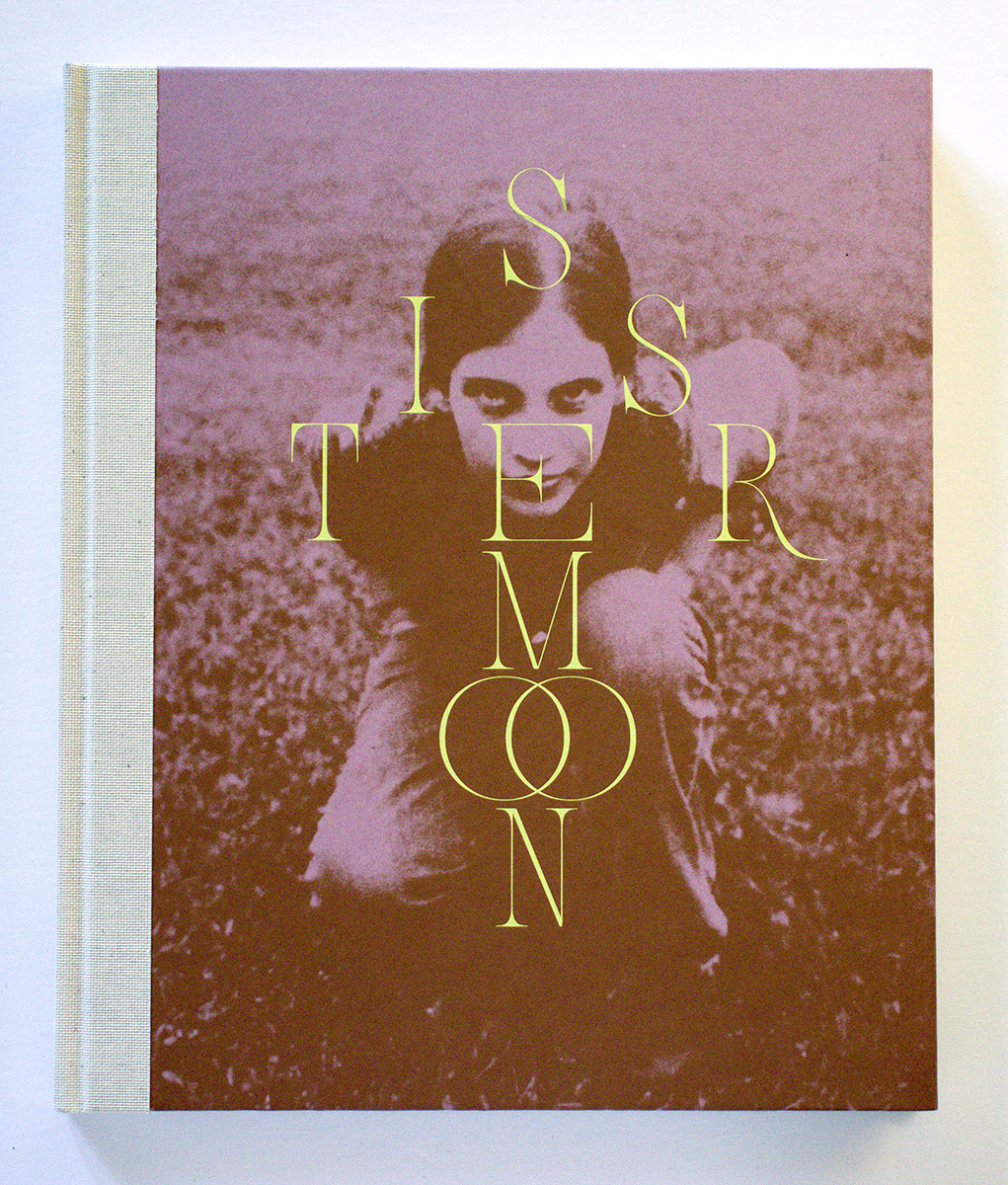
Review by Hans Hickerson ·
How do you determine what a photobook means? Do you read the publisher’s press release and then look at the book? Or do you look at the book to see what’s there and ignore the PR? That’s what I usually do. I figure the book is the final authority, that if the author had wanted you to know something they would have – should have – included it in the book. Plus publishers make all kinds of claims in their efforts to promote their books.
When I look at photobooks, my approach sometimes gets me into situations where I can’t figure out what is supposed to be going on in the book, even after some visual due diligence. Let’s say, for example, that you are looking at a book of photos of people from a marginalized social group. Does this mean that the photos are about strength and resilience, identity and inclusion – or about something else totally different? How would you know? Photographs are mute and can signify anything. In the absence of written context you can read into them whatever you want.
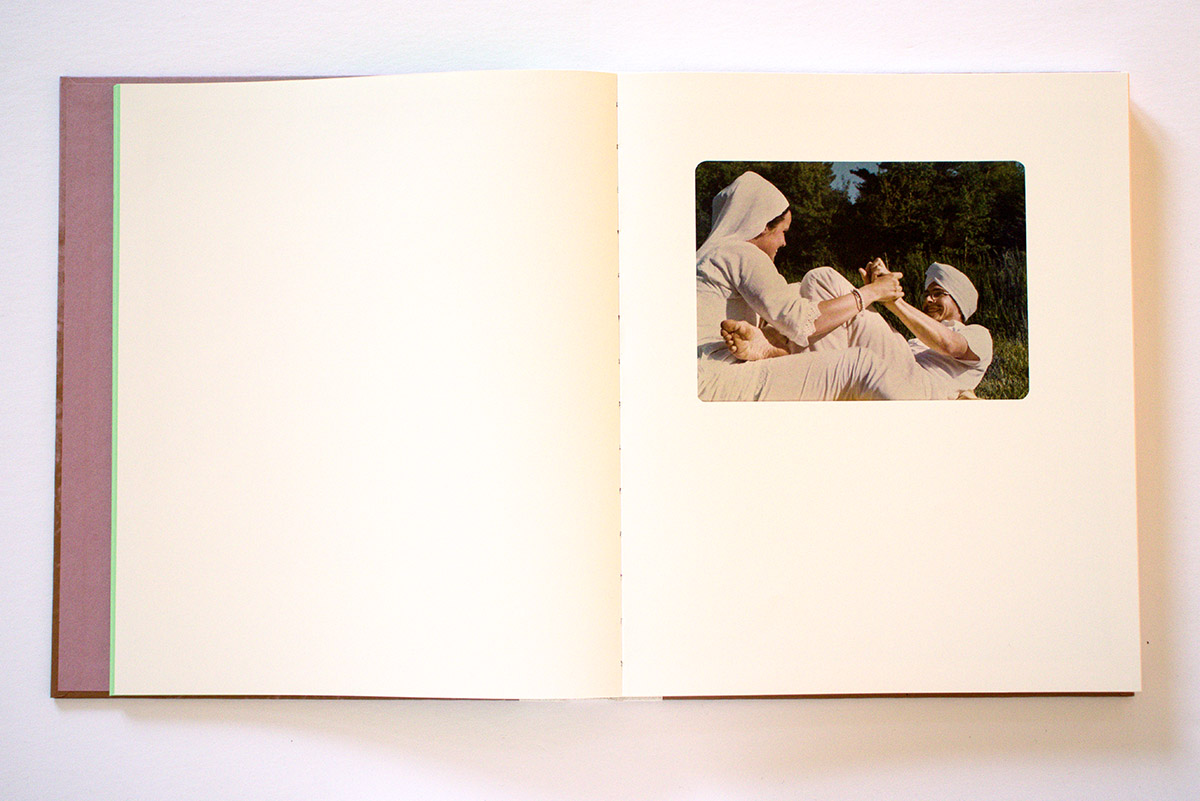
The fact that you can’t tell exactly what is happening in a book, however, does not mean that it is not engaging, that it does not cast its spell over you. Open Siri Kaur’s Sister Moon, for example, and you open a portal to another place. Look at it and you enter what reads like a family album of relationships and memories and events. But there are no captions, and you can’t be sure where you are, who the people are, or in many cases what things are. You are a stranger, an outsider, a guest. What decade is this? Why is there a picture of Stonehenge? Who is the couple in turbans in that faded photo? Is this picture the same woman as in a previous photograph or someone else?
If you are looking for answers to these questions, you will be frustrated. There is an extensive text at the end of the book, a dialogue between Kaur and her younger sister (presumably the “sister” in Sister Moon, although there is no explanation for the “moon” part) but in it they explore issues in their relationship and discuss their feelings about beauty, body image, and being photographed. So no, no specifics. Sister Moon is not set up to work in a logical, linear fashion. It has been assembled as an intuitive rendering of images and personal associations.
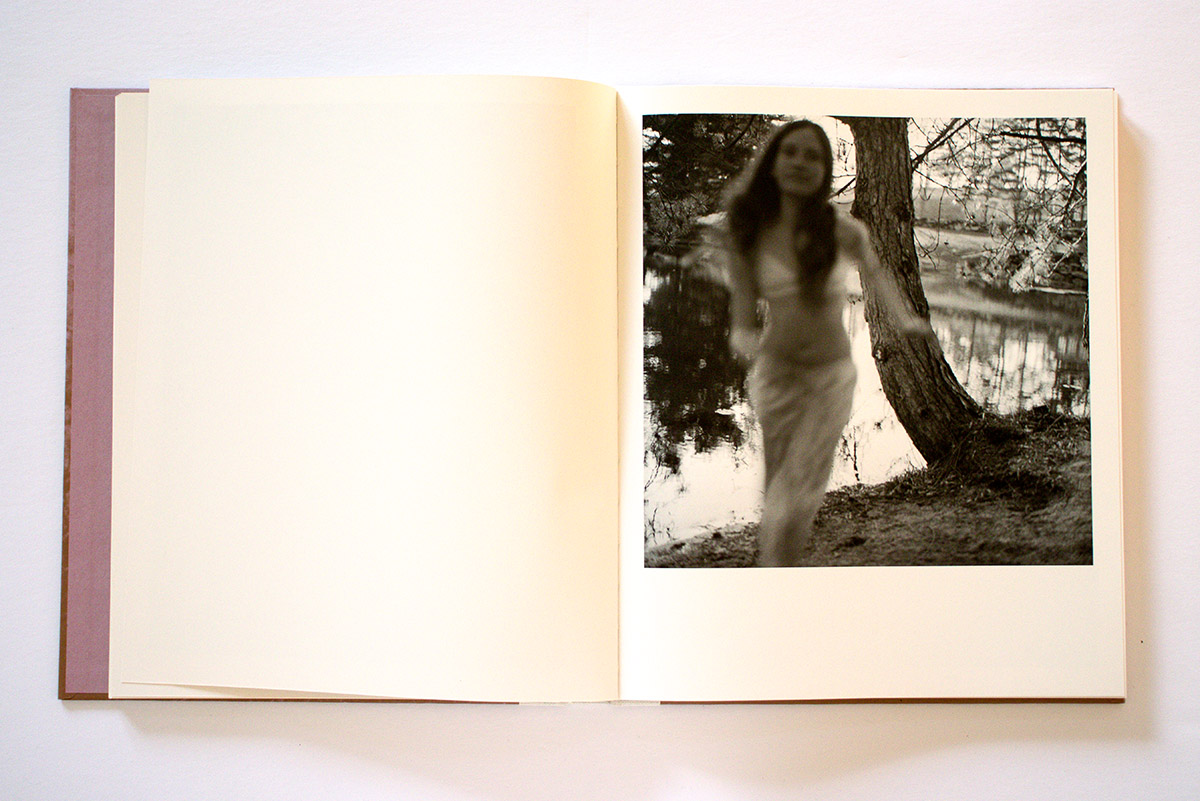
The book starts with a short sequence of images that set the tone. We see a young girl with a mask, an ocean cave, a scraped knee, a girl (the same one? the sister?), then a pastel-colored swirl pattern (a strawberry milkshake? a distant galaxy? the esophagus of a tropical toad?), and then two blurry black and white photos of a girl.
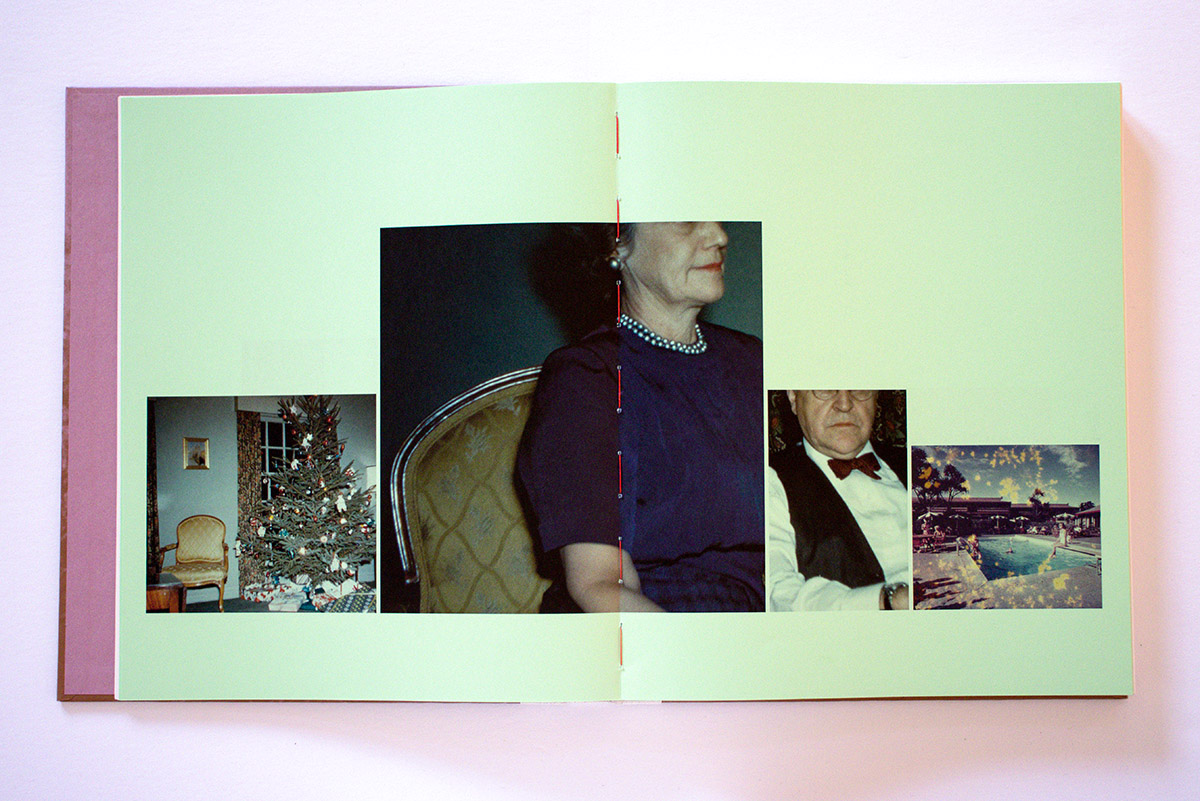
Next comes a 16-page book signature on green uncoated paper. We see what look like family photographs, possibly from the 1950s, with formally dressed grandparents, women with long dresses and jewelry, babies on knees, and Christmas decorations.
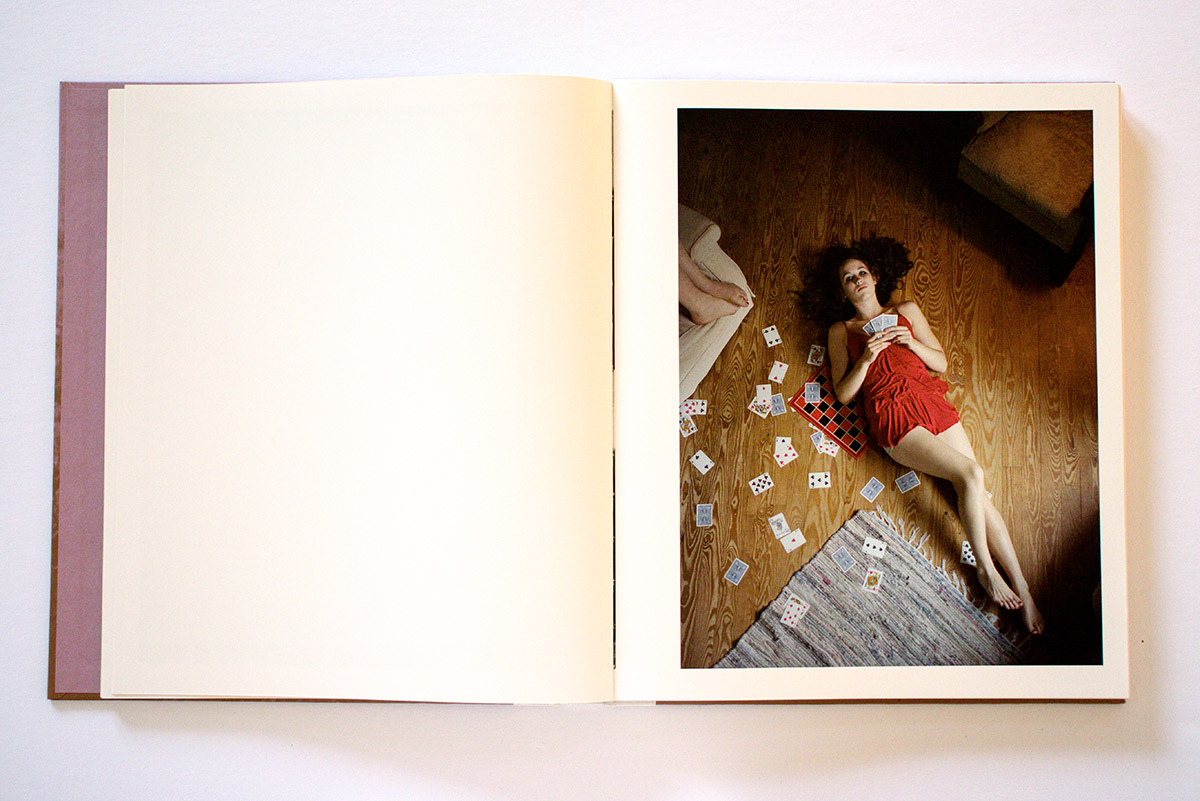
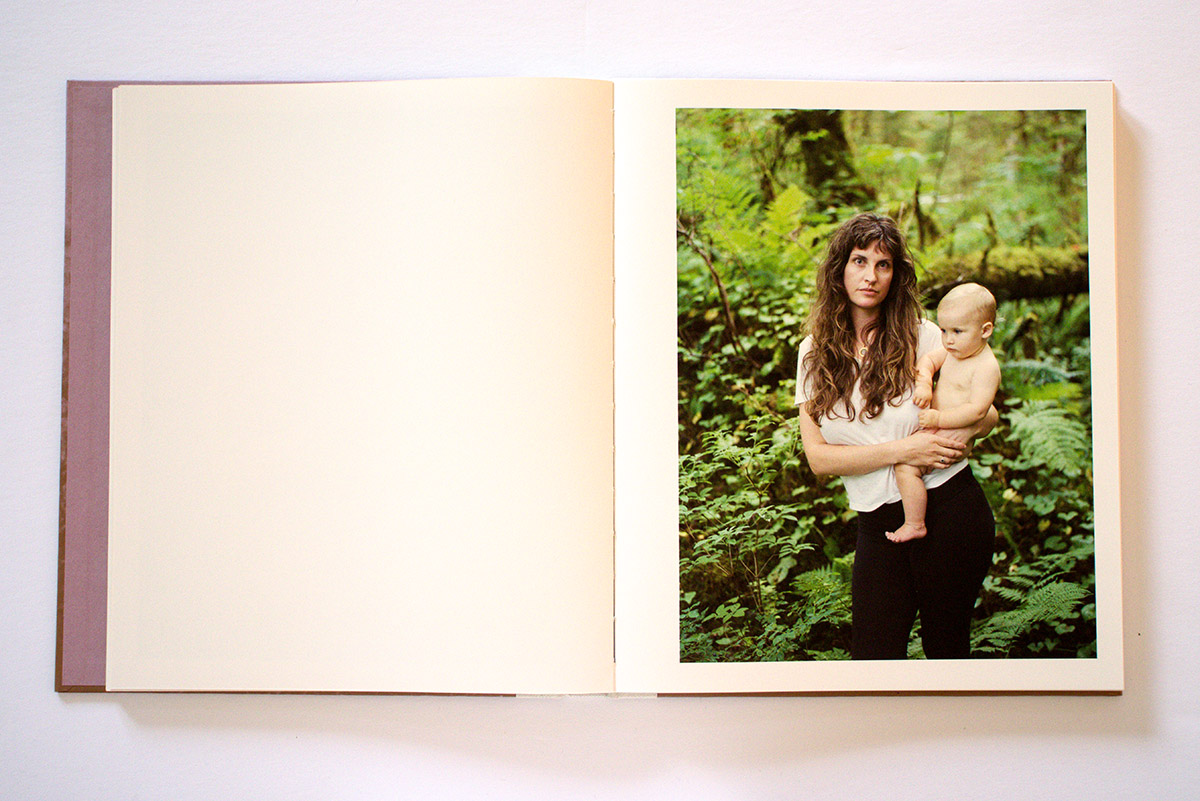
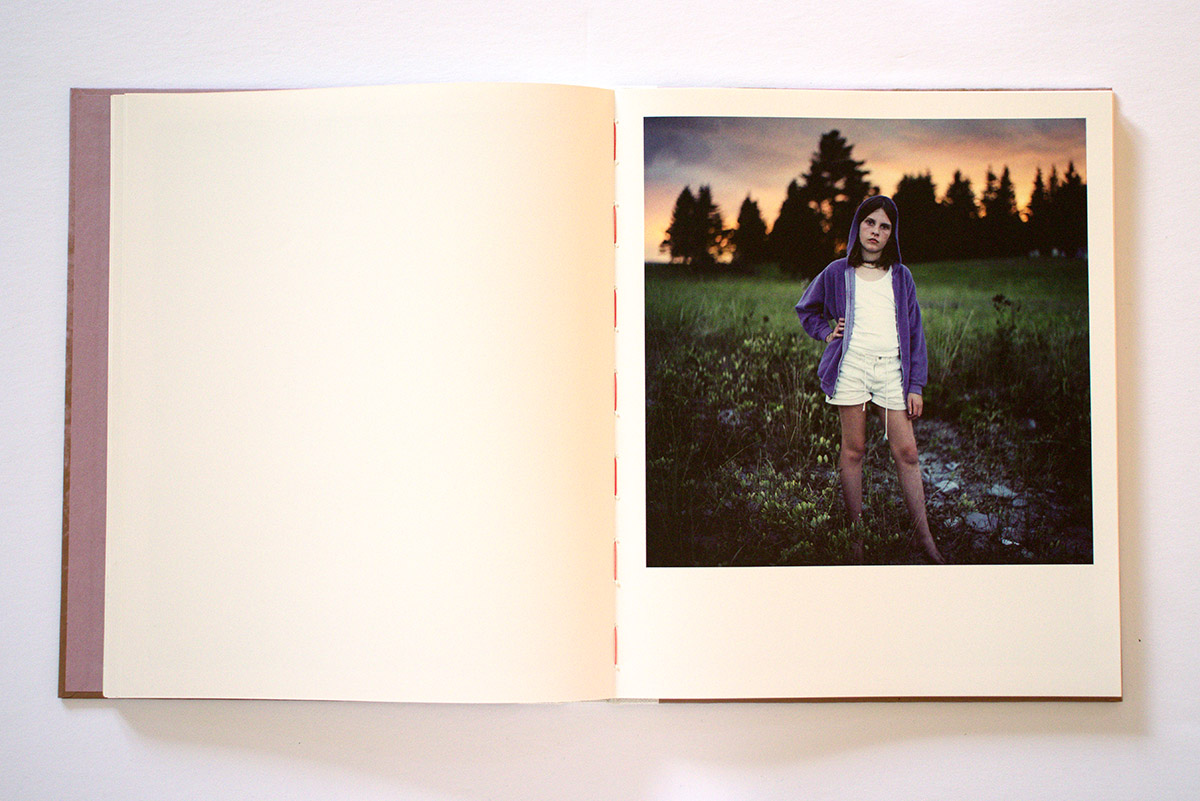
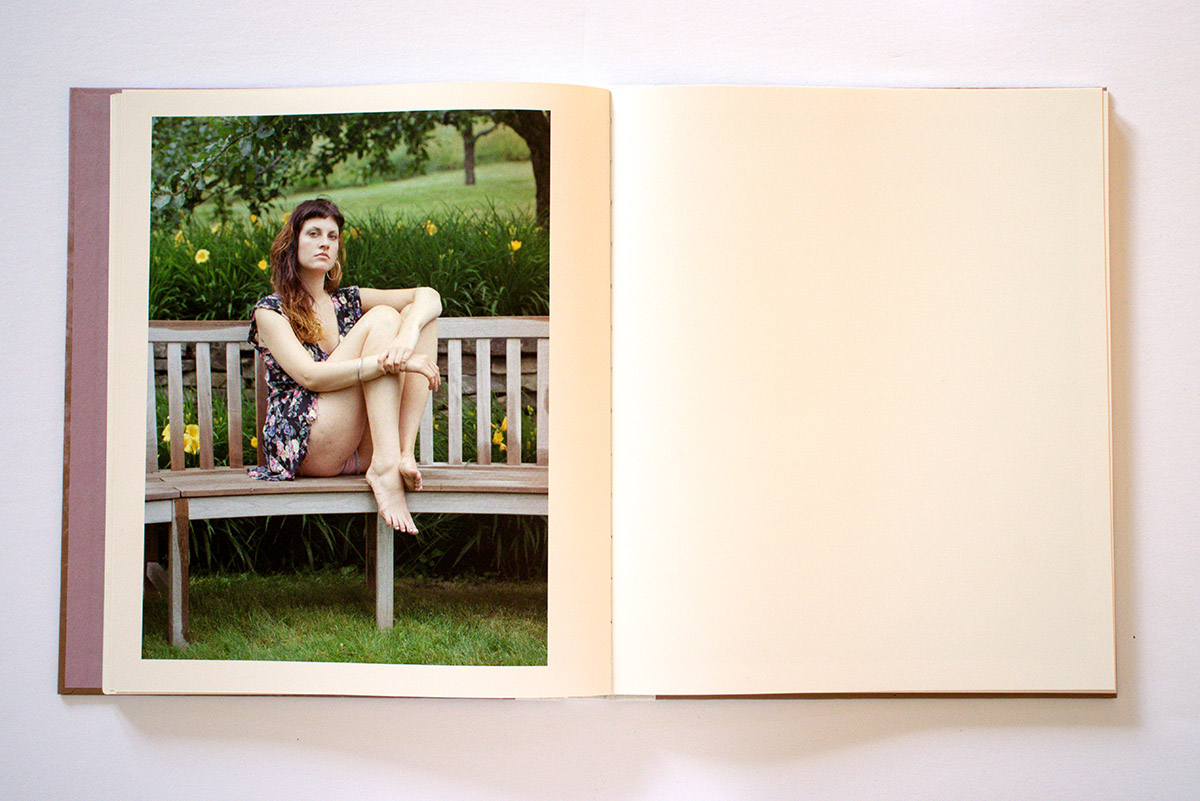
The photographs that follow come in various sizes and page placements. Repeated themes are Kaur’s sister, or at least a girl and woman we take to be her sister, although sometimes you wonder if it is not a different person. We see her in various places and poses, older, younger, pregnant, nursing, on a park bench, posed in nature, and being held by her father (maybe). Formal portraits are contrasted with snapshots, black and white with color.
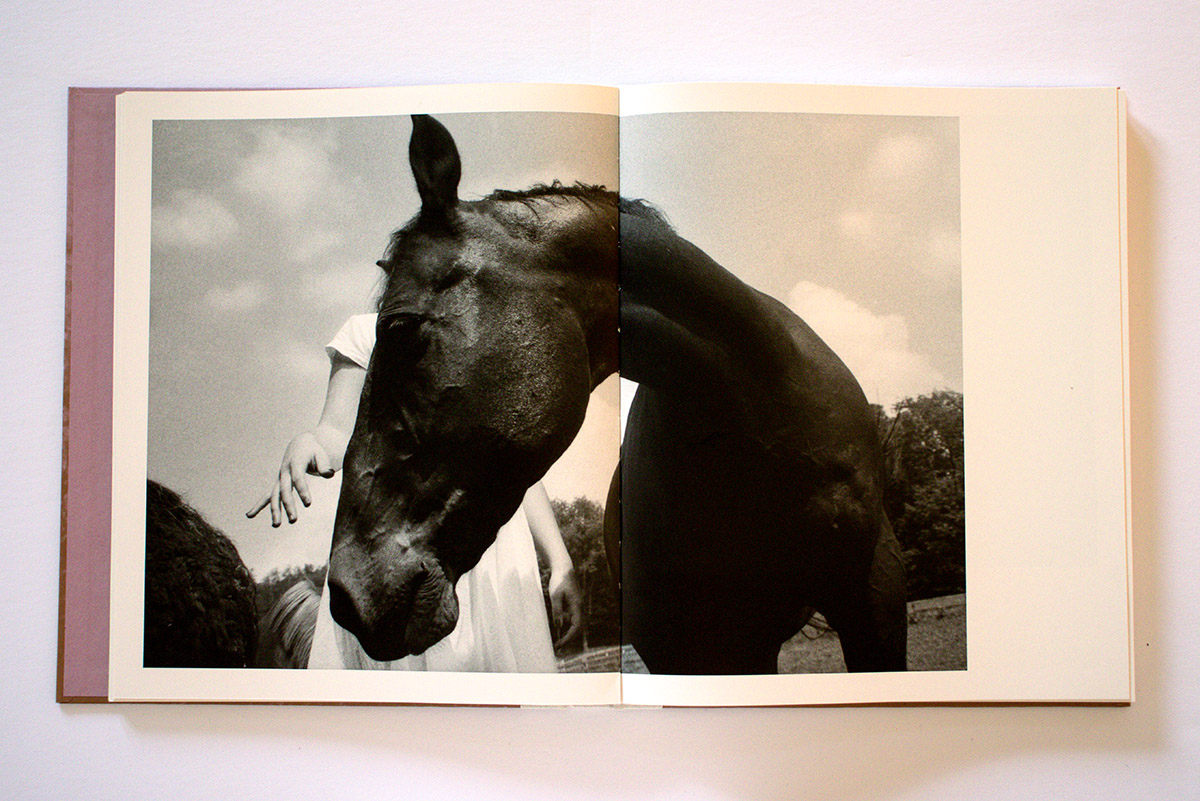
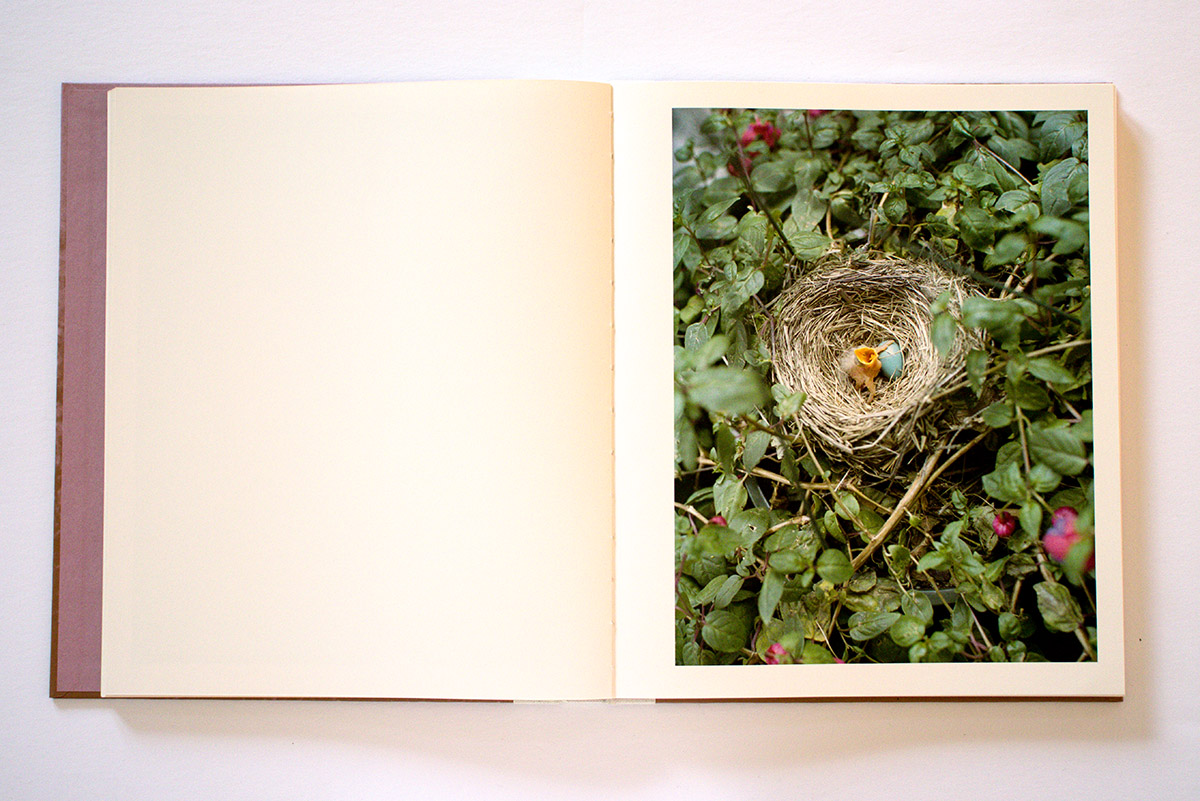
Another theme is children, especially children playing in nature. It seems like the same children appear in many of the photographs, but who they are and what their relationship is to each other or to Kaur we do not know. We see them fooling around with masks, jumping, swimming, exploring, and interacting with nature, including animals – a horse, a dog, a rabbit, two salamanders in a bowl. We see other animals – an owl, a frog among lily pads, a hungry baby bird in a nest, a wasp nest, and an octopus in a tank. The natural world also appears in photographs of forest, water, clouds, and coastal rocks.
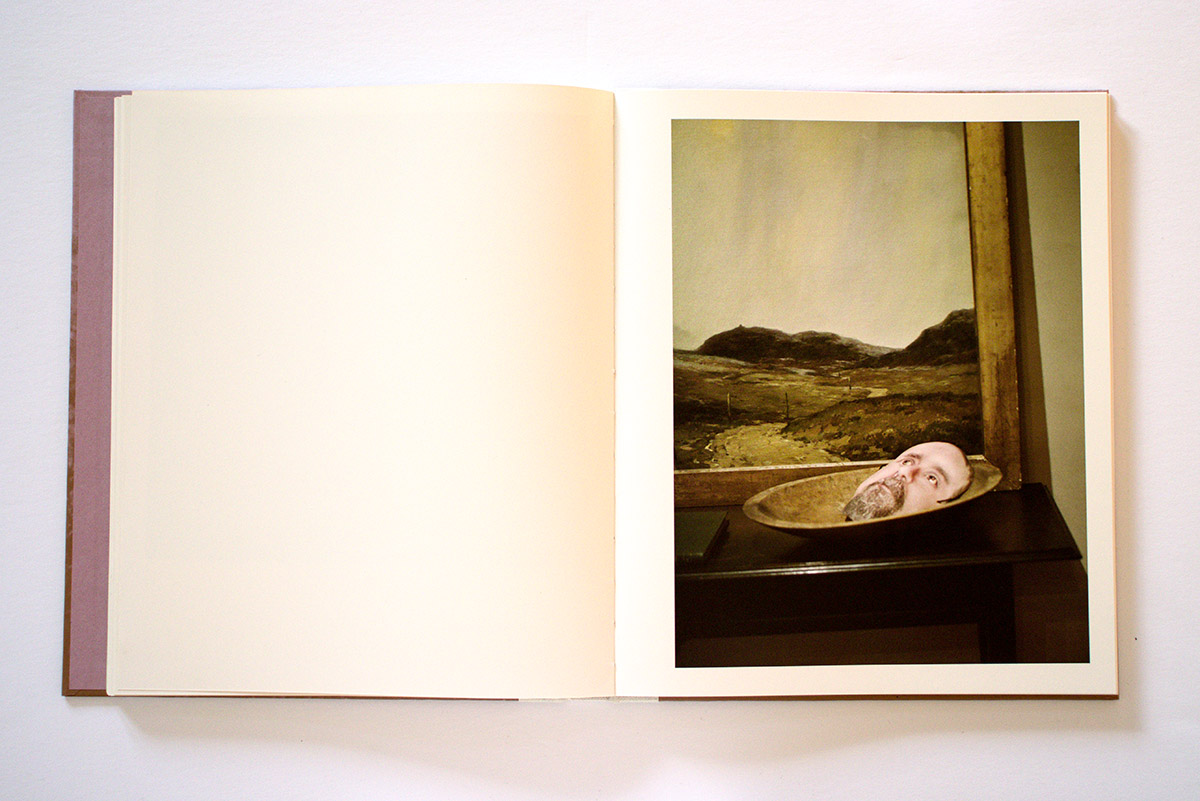
Some of the photographs are staged tableaux or still lifes, including a number of strikingly memorable stand-alone images. A boy’s torso covered in mushrooms and mollusks. A plate of cut watermelon beside a trout in a bucket of water. The lifeless mask of a man’s face in a bowl staring up at a barren landscape in a painting. Strawberries and shells laid out on a dishcloth.
There are also a number of images where you can’t tell what they are. They read like abstract compositions of liquid color, pattern, and texture. Are we looking at water, melted plastic, or ectoplasm? Who knows, but they add an element of “othering” to the visual flow.
The book concludes with seven pages of text and eight of proof sheets of various sizes with images of Kaur’s sister. The text is a Molly Bloom-like dialogue between the two sisters where it is hard to tell at times who is speaking, Kaur or her younger sister. The text helps contextualize the images and focus them on issues of beauty, femininity, family relationships, photography, time, and more.
Packaged without identifiable particulars such as captions or explanations, to the uninitiated viewer the people, places, and objects depicted in Sister Moon default into existence as universal archetypes. Artfully embedded in a visual discourse as poetic elements, they manifest multiple layers of meaning.
Hans Hickerson, Editor of the PhotoBook Journal, is a photographer and photobook artist from Portland, Oregon.
____________
Siri Kaur – Sister Moon
Photographer: Siri Kaur (born in 1976, lives in Los Angeles)
Publisher: Void, © 2025
Text: Siri Kaur
Language: English
Design: João Linneu, Myrto Steirou
Printing: Jelgavas Tipografija
Printed hardcover; Swiss binding; 160 pages; 116 photographs; 9.25 x 11 in; ISBN 978-618-5479-43-3-5
____________
Articles and photographs published in the PhotoBook Journal may not be reproduced without the permission of the PhotoBook Journal staff and the photographer(s). All images, texts, and designs are under copyright by the authors and publishers.
 PhotoBook Journal
Leave a comment