Review by Hans Hickerson ·
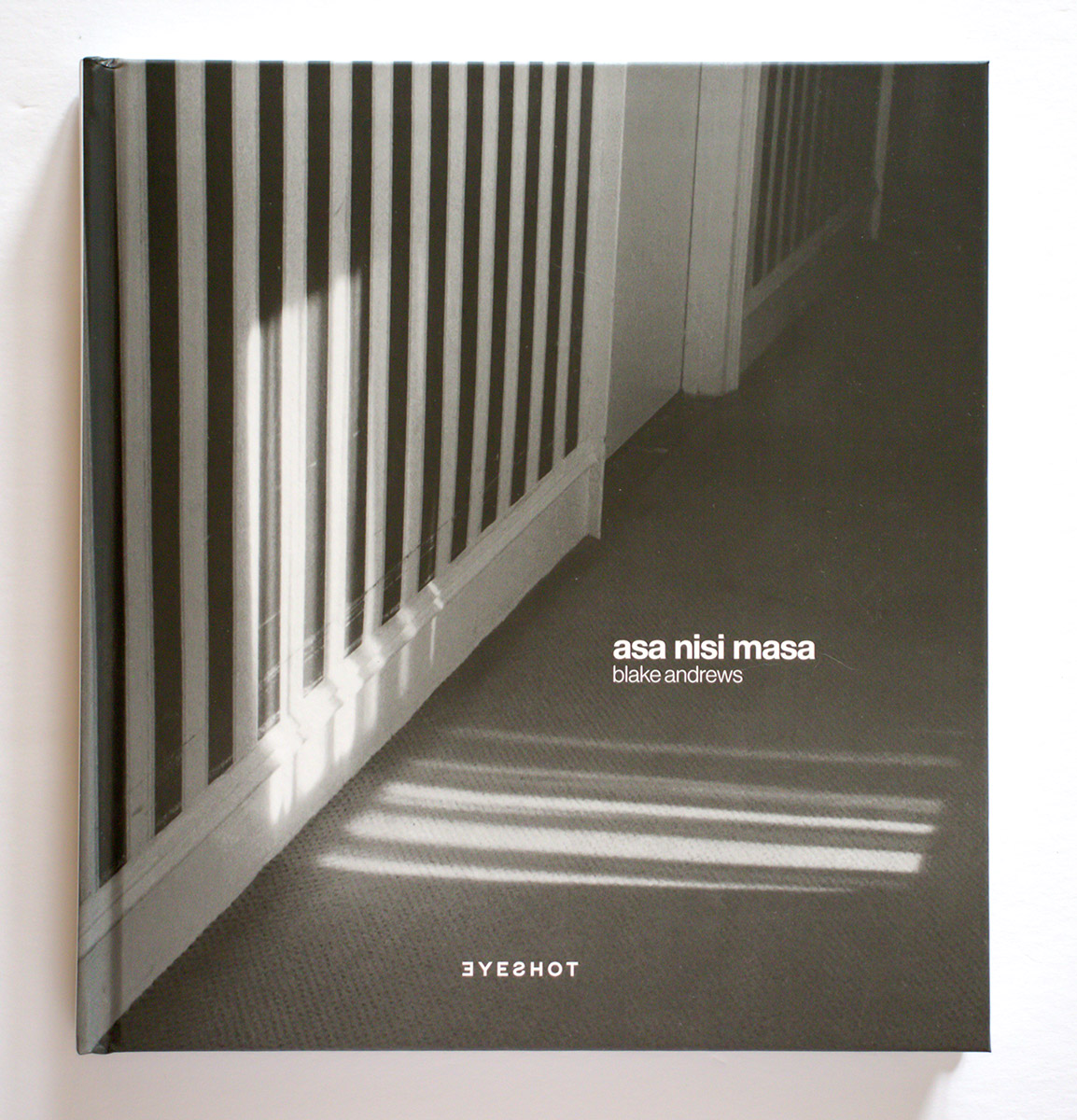
Some readers of this review might know what “asa nisi masa” means, but most of you presumably do not. I definitely did not, and so I Googled it, and here is what I found:
“Asa nisi masa” is a phrase from Federico Fellini’s film 8½ (1963) that is a code for the Italian word “anima,” meaning “soul” or “spirit.” The phrase was created using a childhood game similar to Pig Latin, by adding “si” and “sa” syllables to the word anima. In the film, it is used as a magical incantation that triggers memories and connects the protagonist’s past and present.
In terms of Blake Andrews’ photobook asa nisi masa, the phrase suggests the magic of seeing photographically.
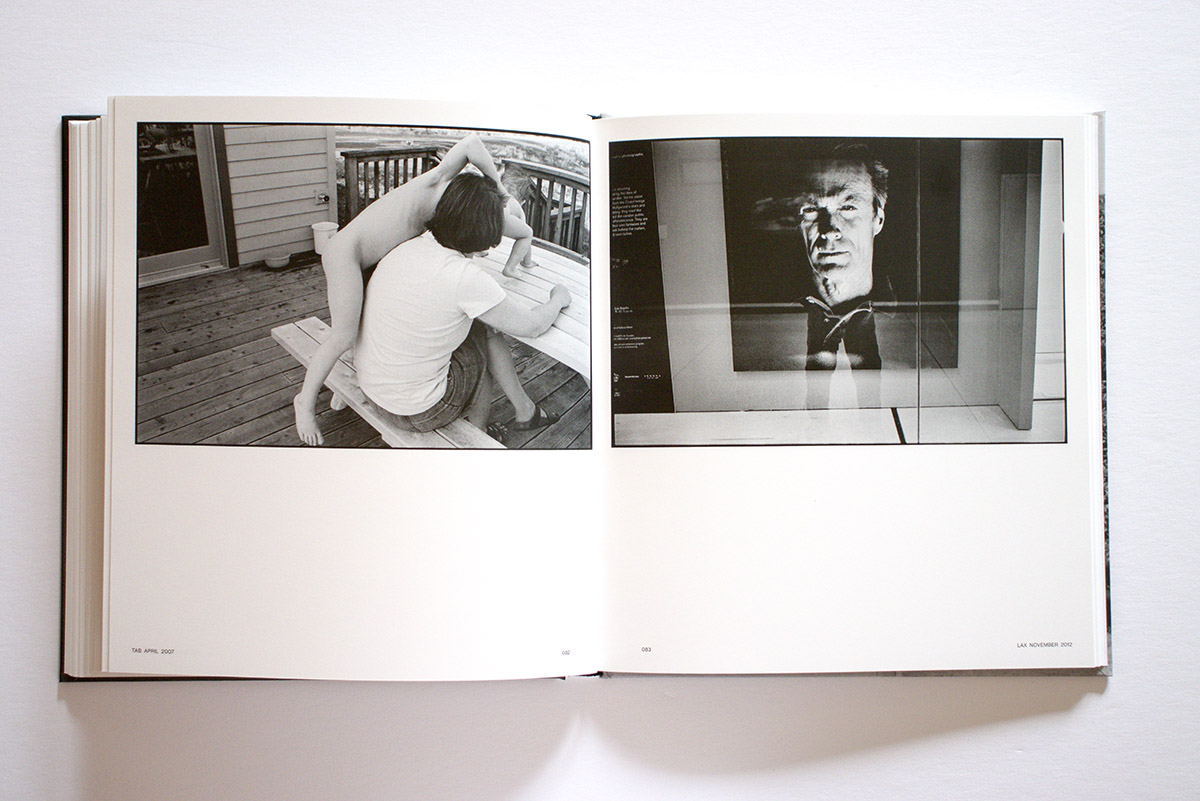
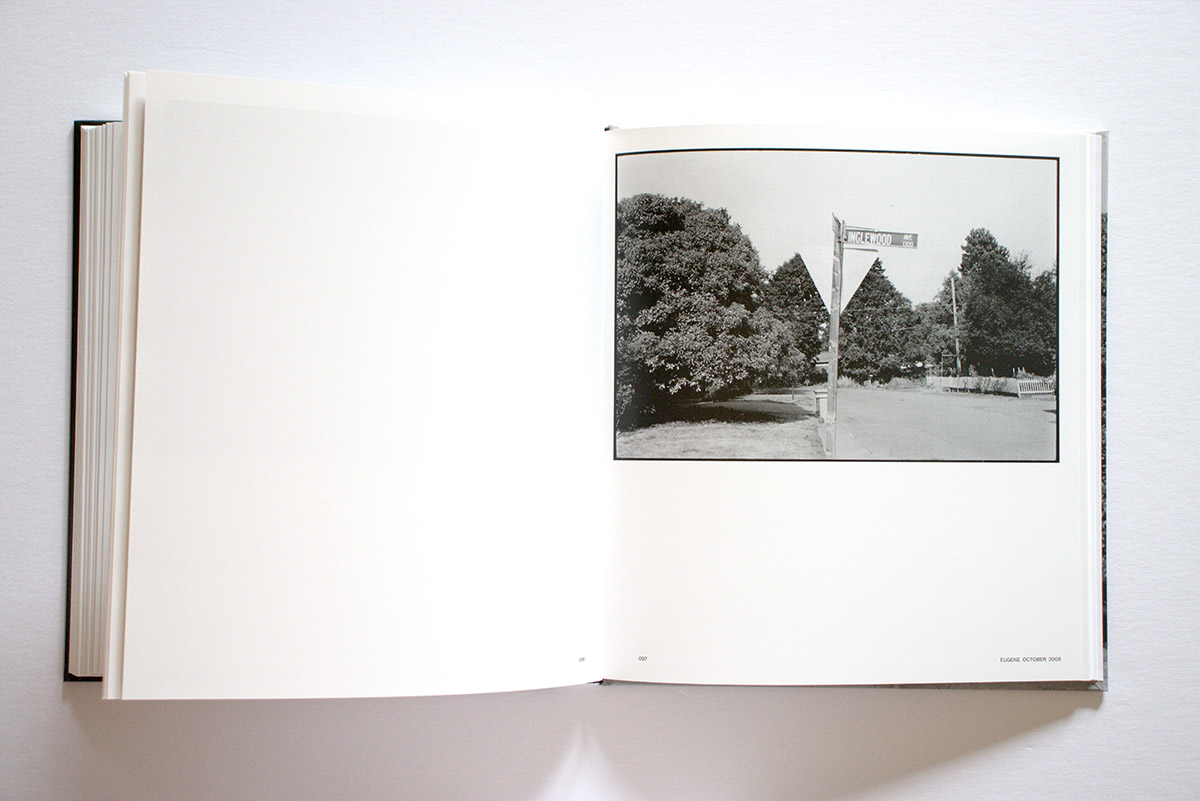
Andrews’ photographs are indeed all about photographic magic. They are black and white photographs in the tradition of Elliot Erwitt, Lee Friedlander, Garry Winogrand, and Mark Cohen. Visual puns and moments observed, they focus on looking at and seeing the world and engaging it visually.
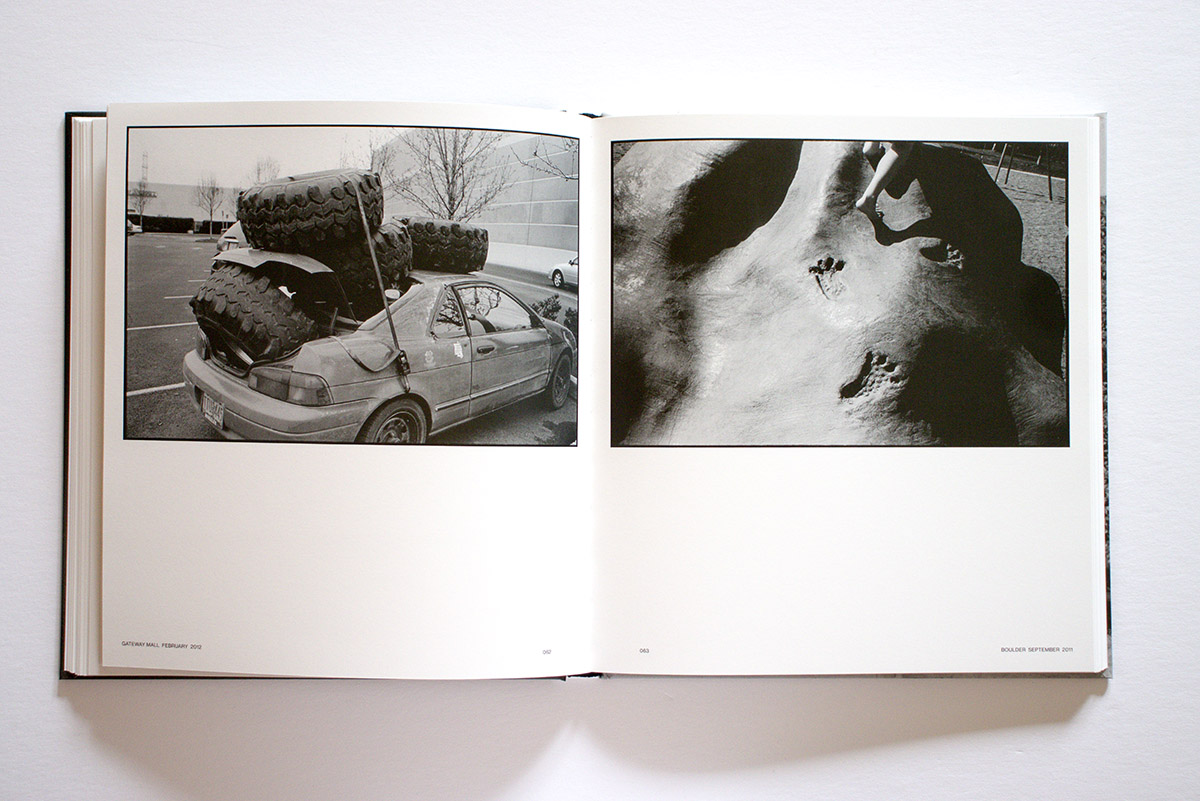
Trying to inventory and neatly catalogue the photographs, however, was an exercise in frustration. One possible way to think about them is by subject: children and family, travel, public events, signs, and so on. I came up with my own, admittedly artificial, groupings: Juxtaposition; The Thing Itself; How Things Look; Lines, Planes, and Tones; and Moments. Some of Andrews’ photos aligned more or less clearly with certain categories, while others were hybrids or defied easy classification.
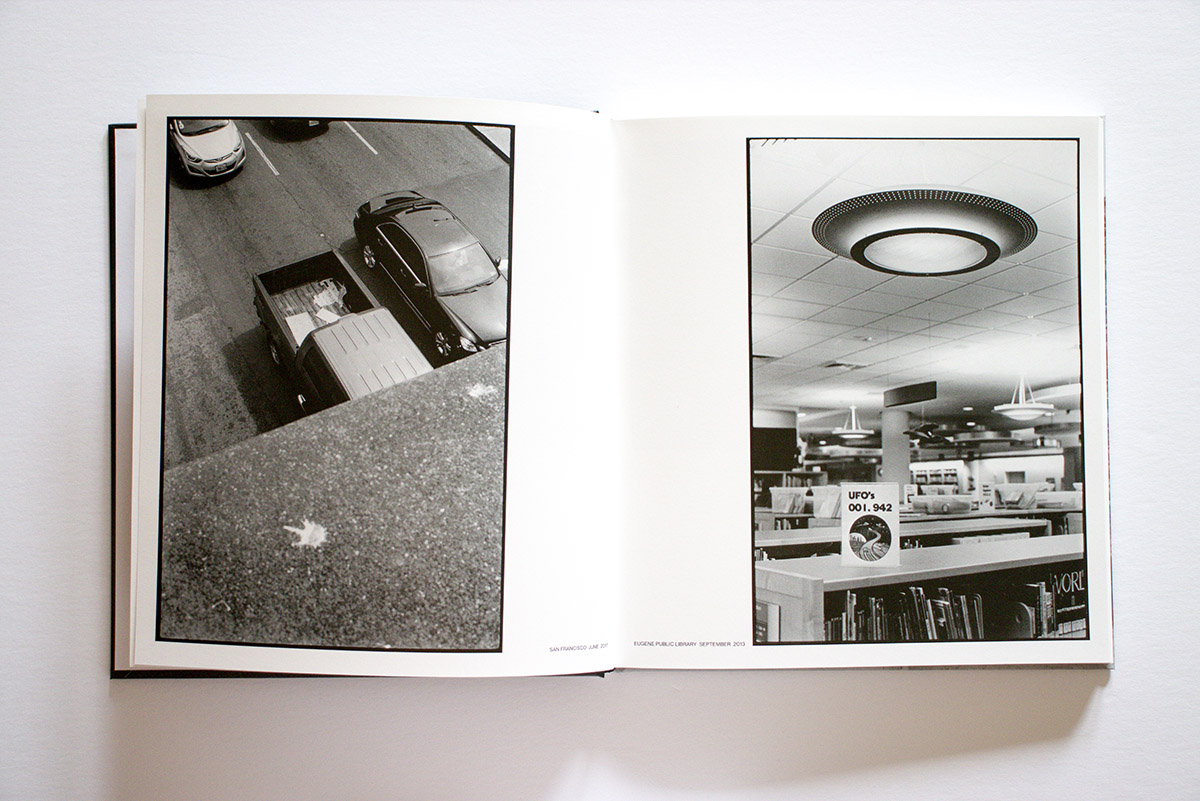
Examples of Juxtaposition can be seen in the photographs in the first page spread below. In the photo on the left we see a white spot, presumably a bird dropping on a wall, echoing a patchy, flattened white object in the bed of a pickup truck below. In the photo on the right a saucer-like light fixture hangs – hovers – prominently above a library sign for UFOs.
As for The Thing Itself, in the right-hand photo of the third page spread, we see two boys interacting with a seated woman, their mother presumably. One boy ruffles her hair but the other lifts up her skirt to peek underneath. A cheeky and very true observation of kiddo behavior. Blurring my neat analytical lines, this image also involves Juxtaposition as well as Moment.
In fact, thinking about it, when is a photograph not about a moment? Most photographs are, although maybe less so for those that stand still, seemingly outside of time.
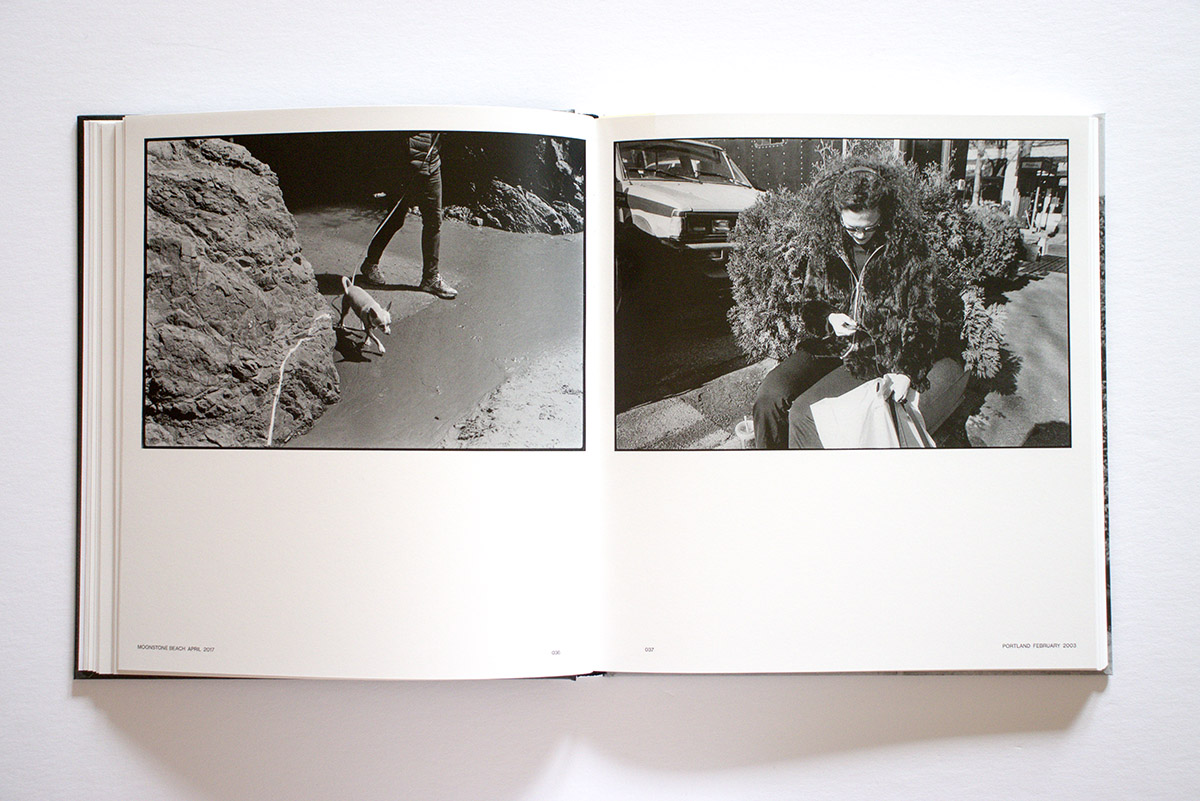
The photograph in the fourth page spread is the perfect illustration of Lines, Planes, and Tones. In this case it’s about how the tone and textures of a seated woman’s hair and coat dissolve into the similar shades and forms of the bush behind her: clever and neatly observed.
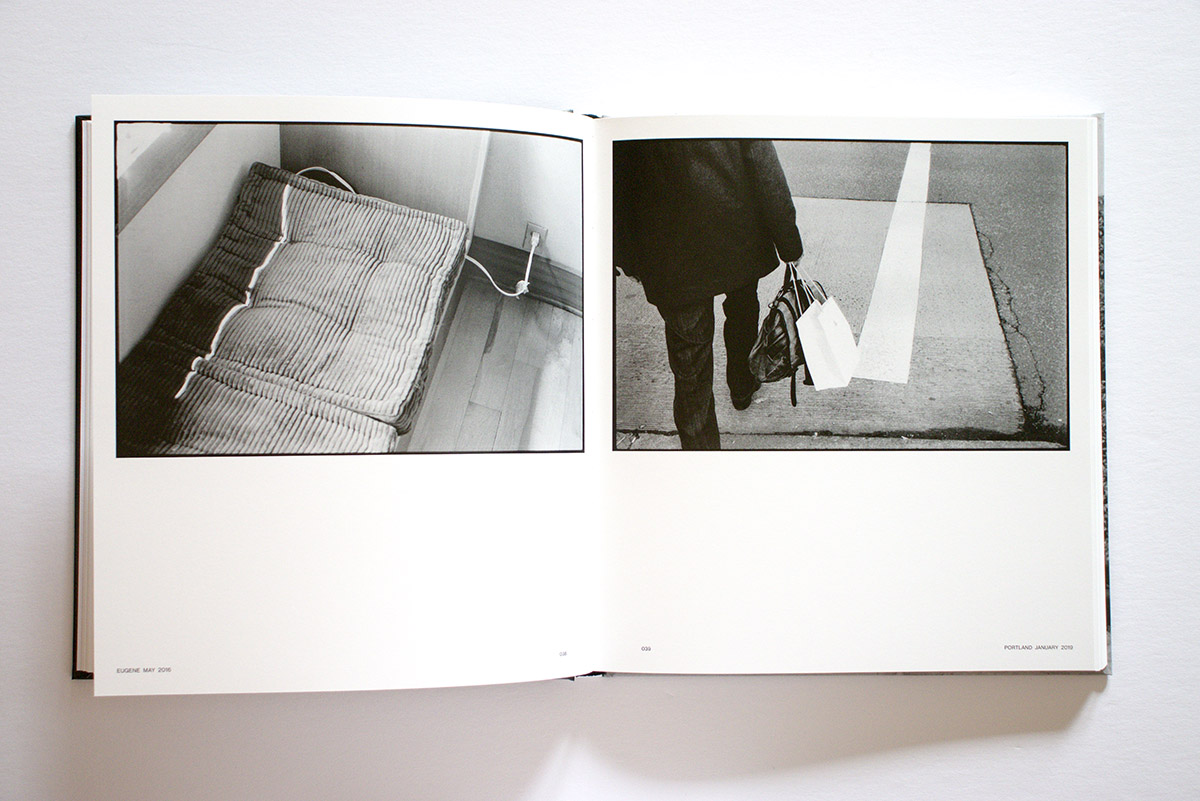
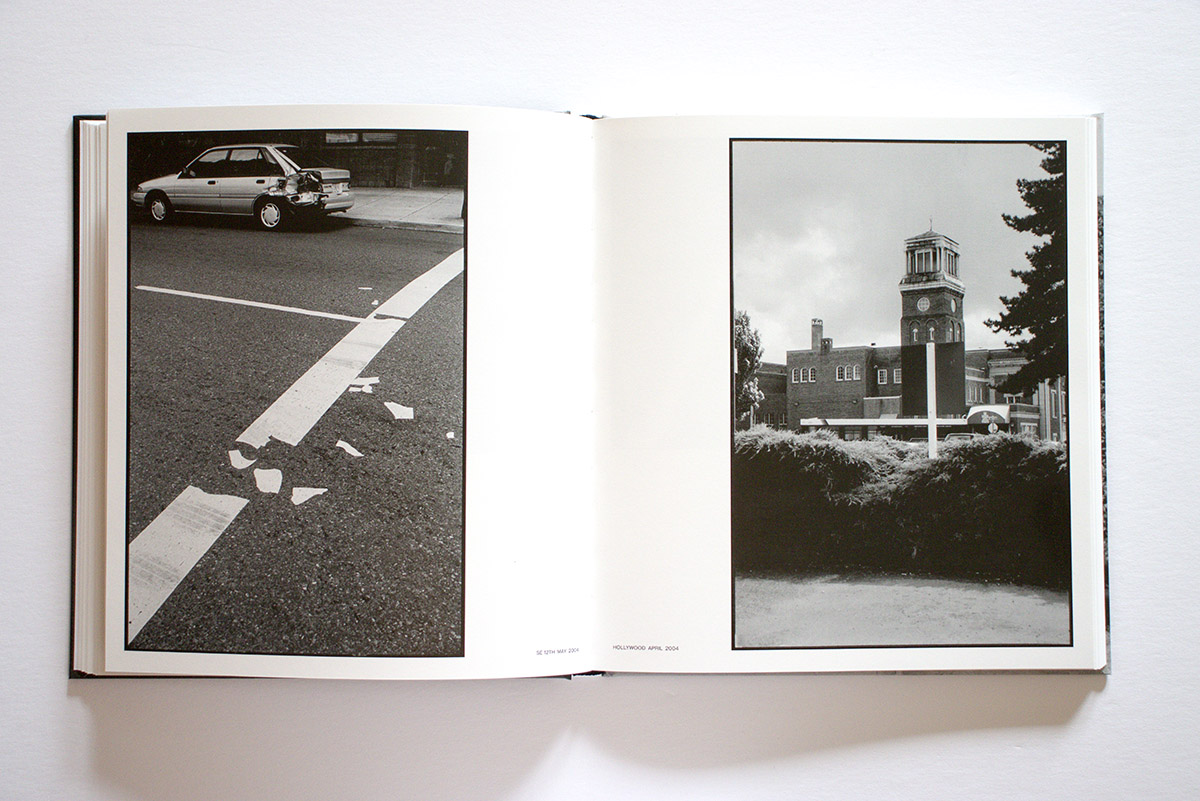
The two photographs on the next spread also arguably fit into Lines, Planes, and Tones. But again, they are also about the Moment as well as How Things Look.
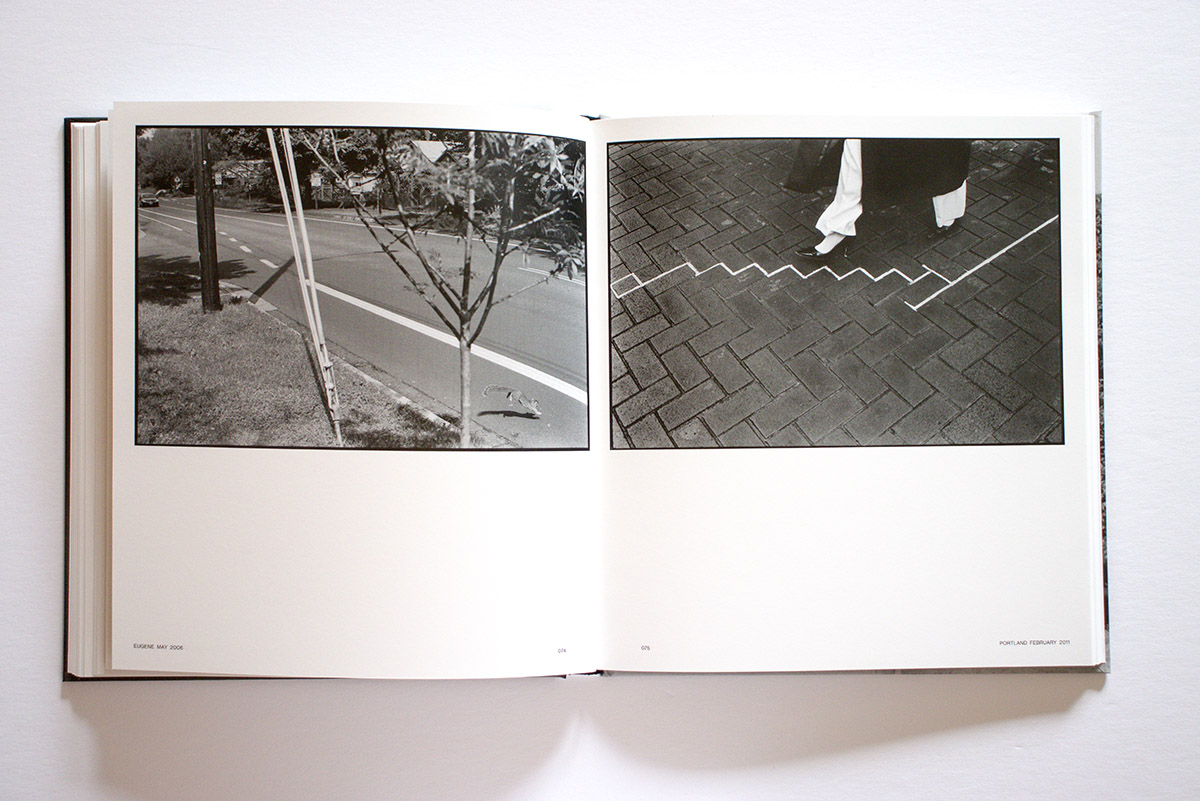
A good example of Moment is the photo on the left on the eighth page spread below. An obvious Lines, Planes, and Tones image, with a leaping squirrel captured mid-hop in the lower right-hand corner, a classic decisive moment.
In the end, however, what matters is not classifying the photographs in asa nisi masa but enjoying them, and there is a lot to enjoy. They look obvious and easy to make, but any photographer can tell you how much effort and practice goes into training your eye and imagination to see this way. The photographs in the book are distilled from some twenty years of making pictures, which tells you something about the investment involved. Andrews is well known as a photography book reviewer and blogger, and this is his first book. In his CV / Bio timeline, he mentions that from 1993 to the present he has made “700K negatives and counting…” so perhaps we can expect more books of images culled from his archives in the future.
Straight photography is not dead. It is very much alive in the visual magic of Blake Andrews’ images. Refreshingly agenda-free, they remind us of photography’s primary power to capture the world.
Hans Hickerson, Editor of the PhotoBook Journal, is a photographer and photobook artist from Portland, Oregon.
____________
Blake Andrews – asa nisi masa
Photographer: Blake Andrews (born in 1968, lives in Eugene, Oregon)
Publisher: Eyeshot © 2025
Language: English
Text: Lucrezia Bonarota
Design: Liza Barbakadze
Editor: Marco Savarese
Printed in Italy
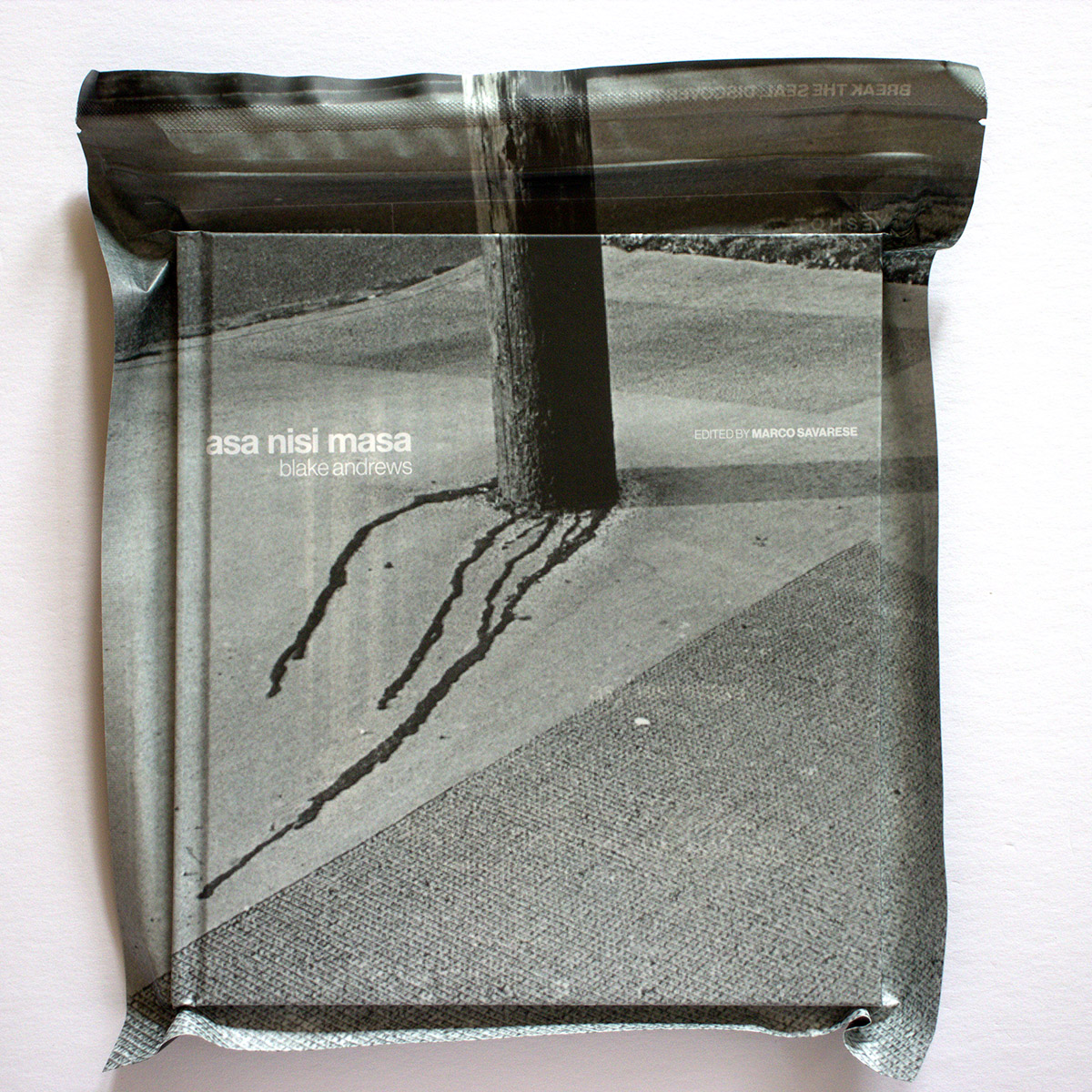
Hardbound with printed cover; 99 black and white photographs; sewn binding; 128 pages; 8.5 x 9.5 inches; ISBN 979-12-80238-64-1
____________


Articles and photographs published in the PhotoBook Journal may not be reproduced without the permission of the PhotoBook Journal staff and the photographer(s). All images, texts, and designs are under copyright by the authors and publishers.
 PhotoBook Journal

Leave a comment