
Review by Henry Kallerud ·
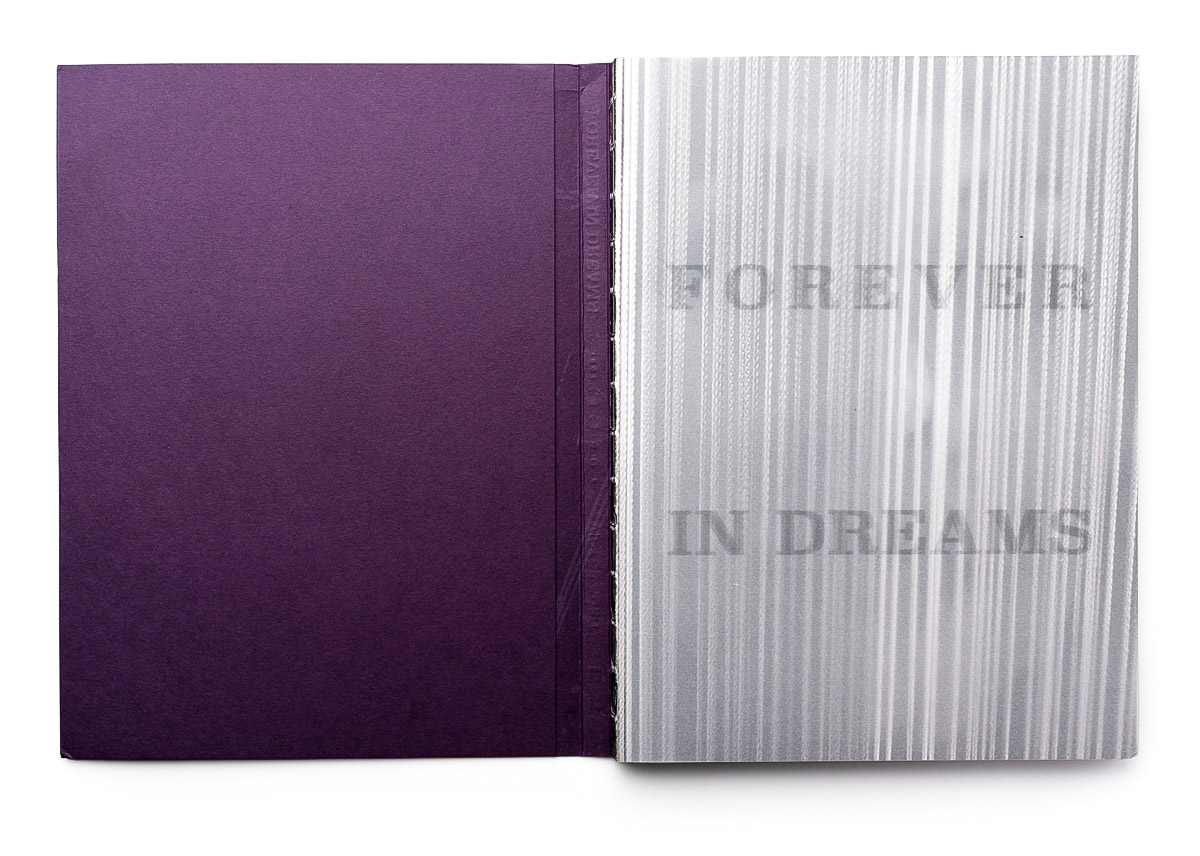
Victor Cobo holds a strong personal connection with the eponymous Roy Orbison song “In Dreams”. He grew up listening to Orbison’s music with his father’s side of his family: coal miners, from Kentucky. Later in life, he watched and felt a deep resonance with the David Lynch film Blue Velvet which prominently features “in Dreams.” Forever In Dreams appropriately presents a rough, nostalgic, unsettling, intimate, and surreal sequence of images. “Similarly to the subjects I work with,” Cobo writes, “I live on the fringes of society between dreams and memories.”
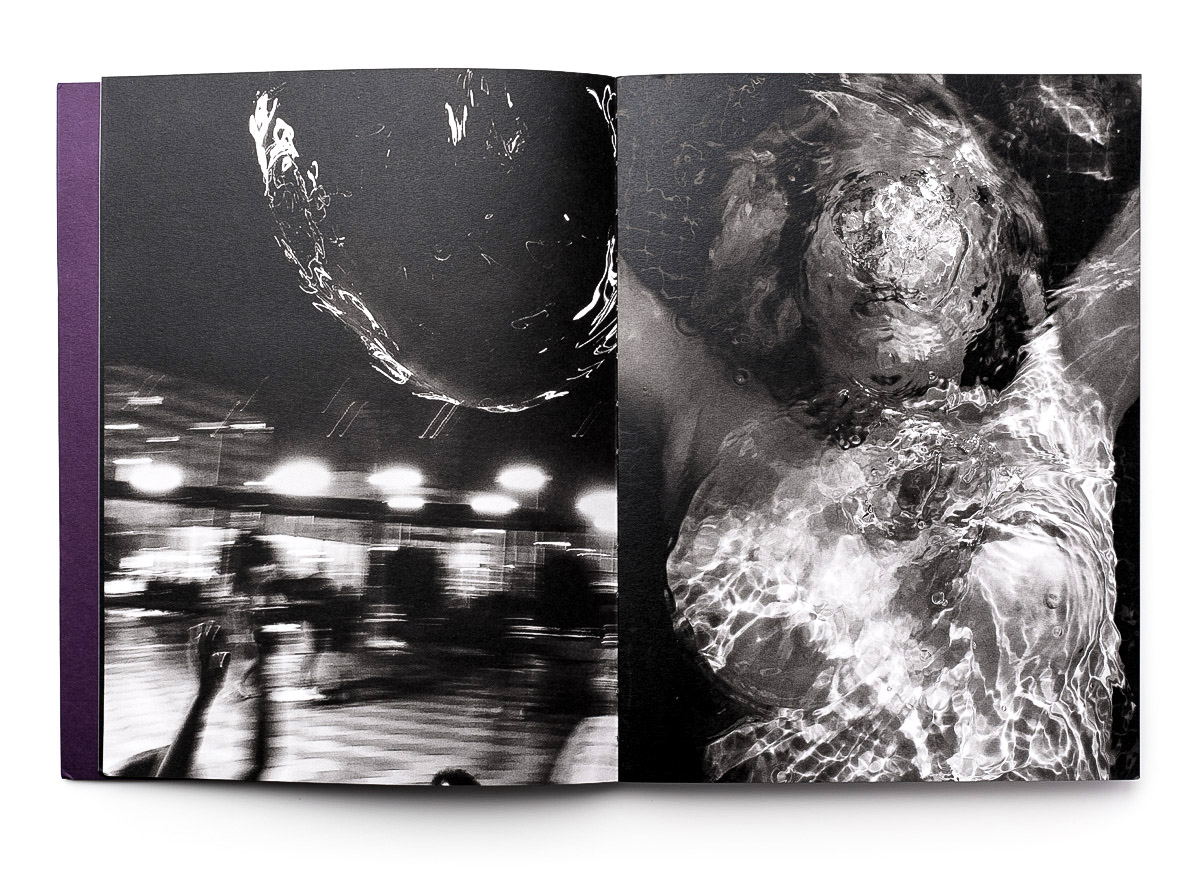
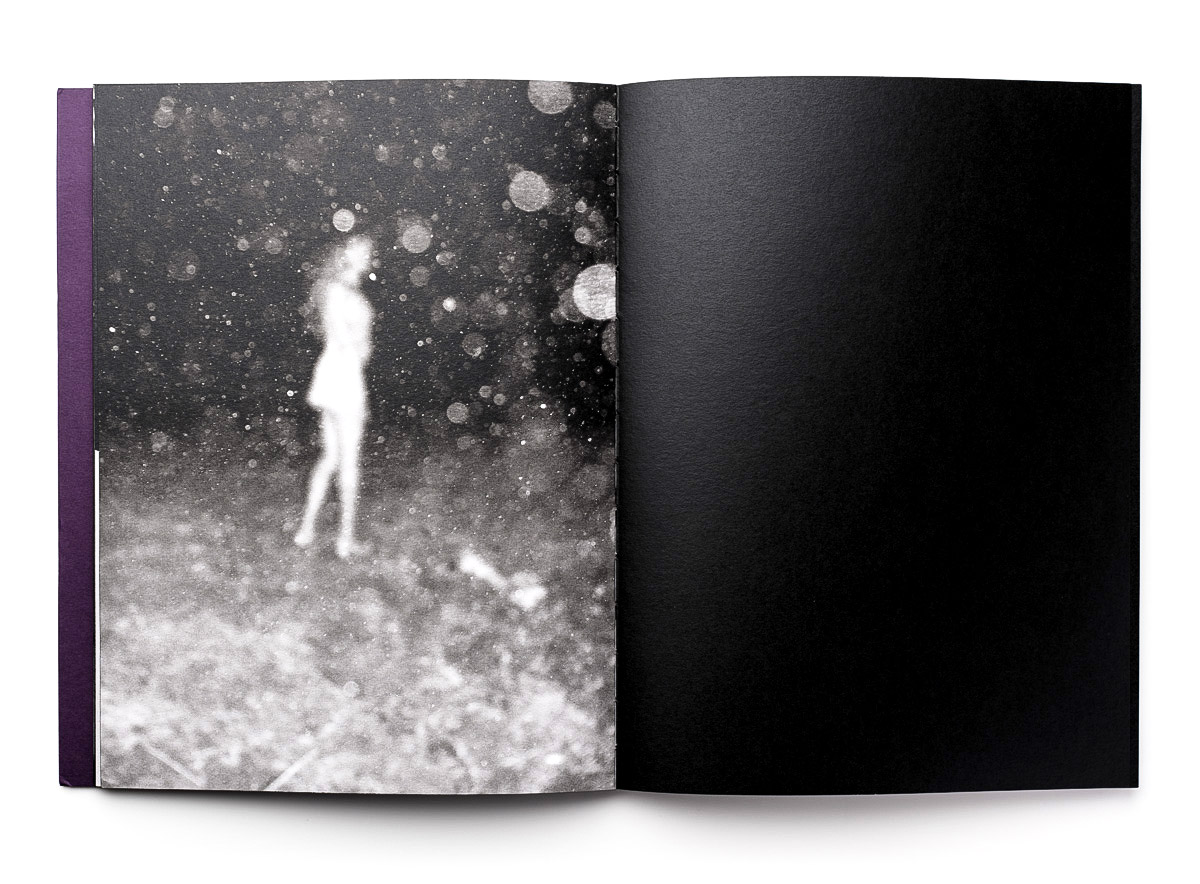
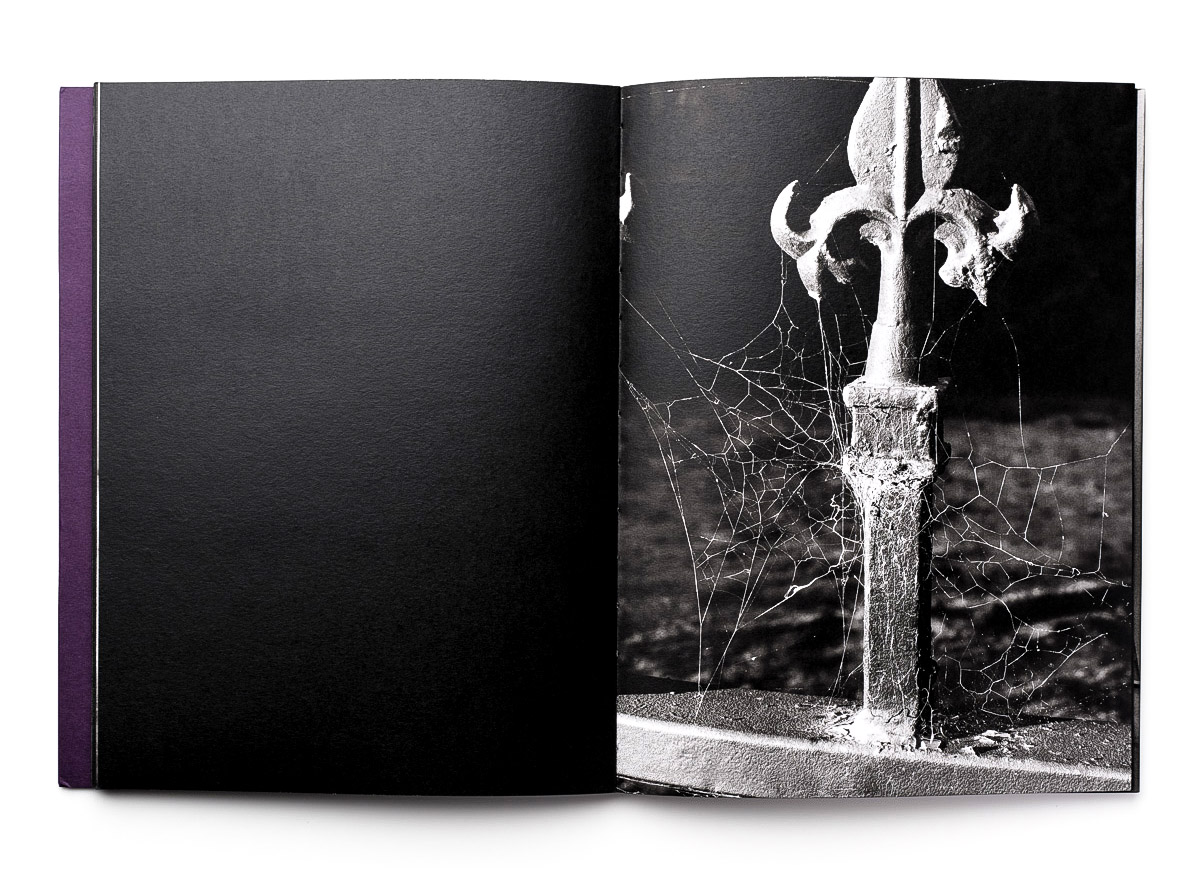
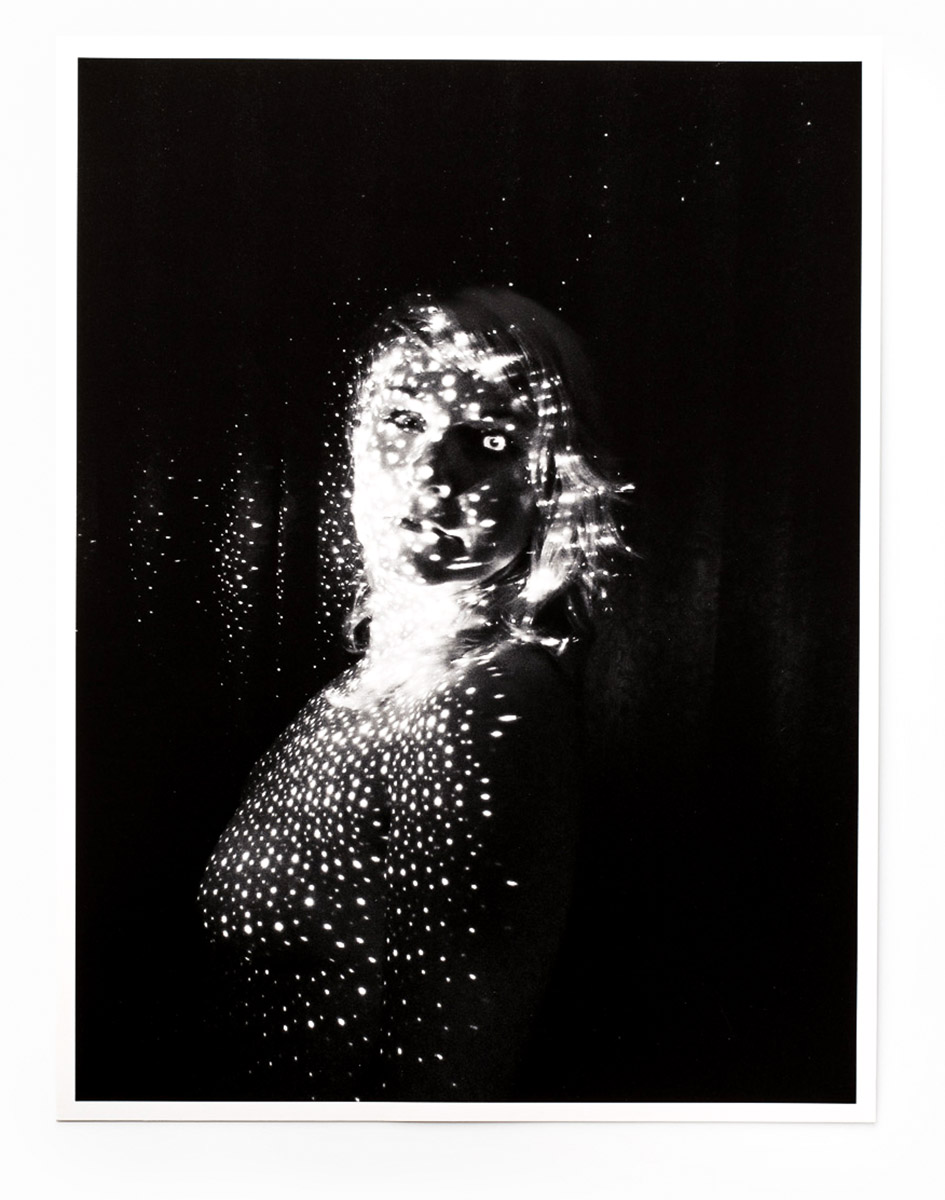
Darkness dominates the images of Forever in Dreams. Instead of sitting in relief against a white backdrop, Cobo’s high contrast black and white images blend and merge with each other across black pages. Cobo’s recurring nude portrait of a woman, only illuminated by dozens of small points of light, dissolves the relationship between photograph and page. The black backdrop of this photograph provides no contrast with the black page, leaving the only variation in luminance across the entire page in the small spots of light scattered across the woman’s body. These perceptibly borderless images, along with frequent full bleed spreads, subsume the viewer; Forever in Dreams forgoes the distance and formality of the white gallery wall. In lieu of a neatly sanctioned viewing, we are brought in close to intimately view the strangeness of Cobo’s images.
The design of Forever in Dreams further dissolves the expected stability of frames. Cobo’s facing images amalgamate through texture and pattern. A nude of a woman submerged in rippling water sits next to a motion-blurred photograph of a boy reaching for a large soap bubble floating through the air. The bulbous form of the bubble echoes the uneven surface of the water, allowing the viewer to almost ignore the faint line differentiating the two photographs.
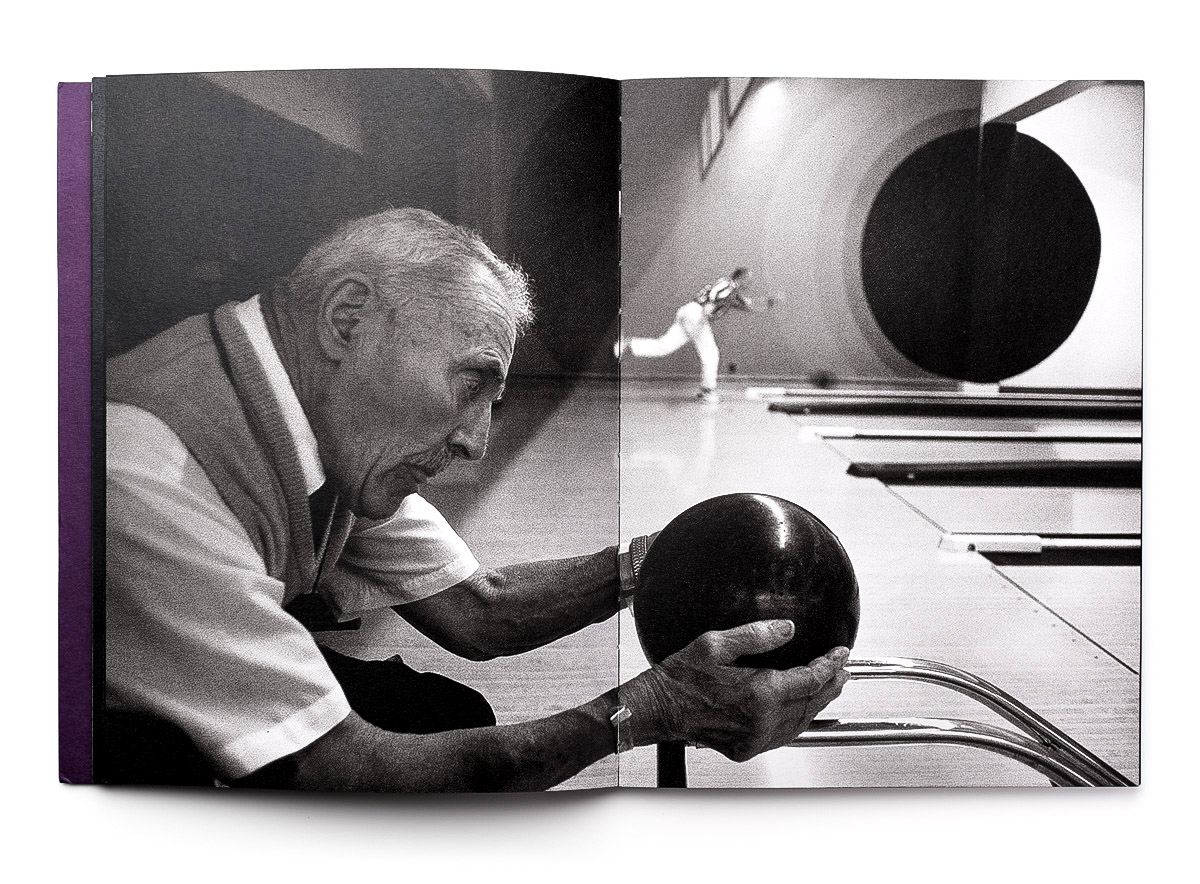
This dissolving of frames and blending of images causes Cobo’s images to interact with each other formally and dramatically. For example, on one spread, the lefthand page displays an image of the sun with a strong lens flare radiating from the center of the frame. On the righthand page, a woman retreating up the back of an armchair falls under the beam of a spotlight. While taken at different times and places, Cobo implies an interaction between the subjects in the photographs: the sun appears, impossibly, responsible for the light cast on the woman. On another spread, Cobo juxtaposes a photograph of a spider with double exposure that makes a woman appear to have four arms. This pairing asks: Is the woman becoming spider-like? Or do a spider’s legs resemble the thin limbs of this woman? One of Cobo’s gatefolds opens to reveal an image of a man silhouetted against a window curtain juxtaposed with a woman lying on a table, gazing off the edge of the frame. While literally unrelated, Cobo’s pairing implies a drama: Is the sneer across the woman’s face in response to the sight of the ominous silhouette?
It feels that the absence of the ceremony of neatly framed photographs symptomatizes the subject matter of Forever In Dreams. These photographs are strange, and instinctively feel like they should not be exhibited, public, or even seen. This is the quality that gives them such great allure.
Henry Kallerud is an English major at Reed College and photographer based in Portland, Oregon.
____________
Victor Cobo – Forever In Dreams
Photographer: Victor Cobo (& Instagram)
Publisher: Red Hook Editions, Brooklyn, New York; 2025
Designer: Alexander Paterson-Jones
Swiss binding with open spine and soft cover; 118 Pages; 21 x 28 cm; printed in Greece; ISBN: 978-978-1-7376814-4-1
____________


Articles and photographs published in the PhotoBook Journal may not be reproduced without the permission of the PhotoBook Journal staff and the photographer(s). All images, texts, and designs are copyright of the authors and publishers.
 PhotoBook Journal
Leave a comment