Review by Brian F. O’Neill
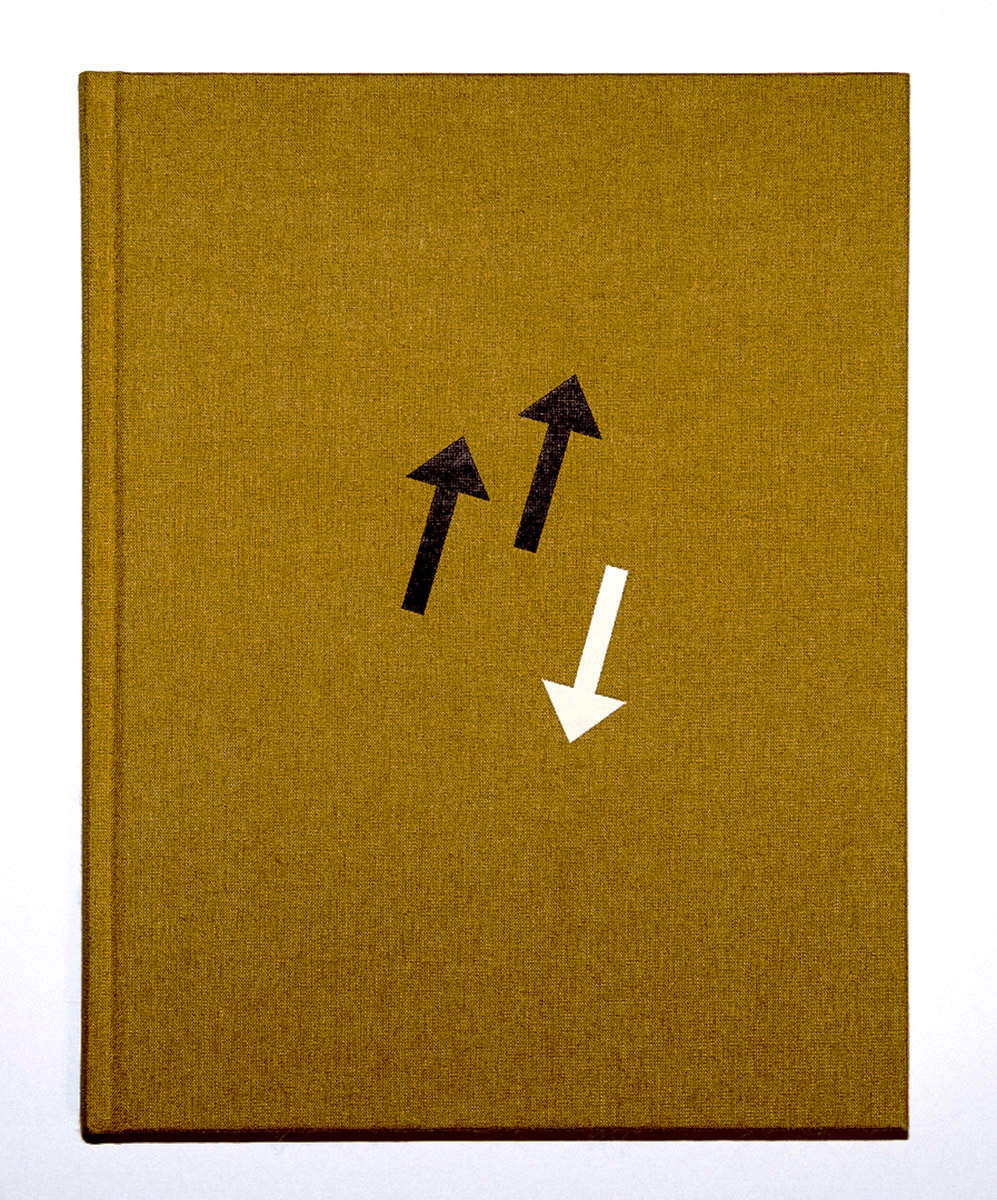
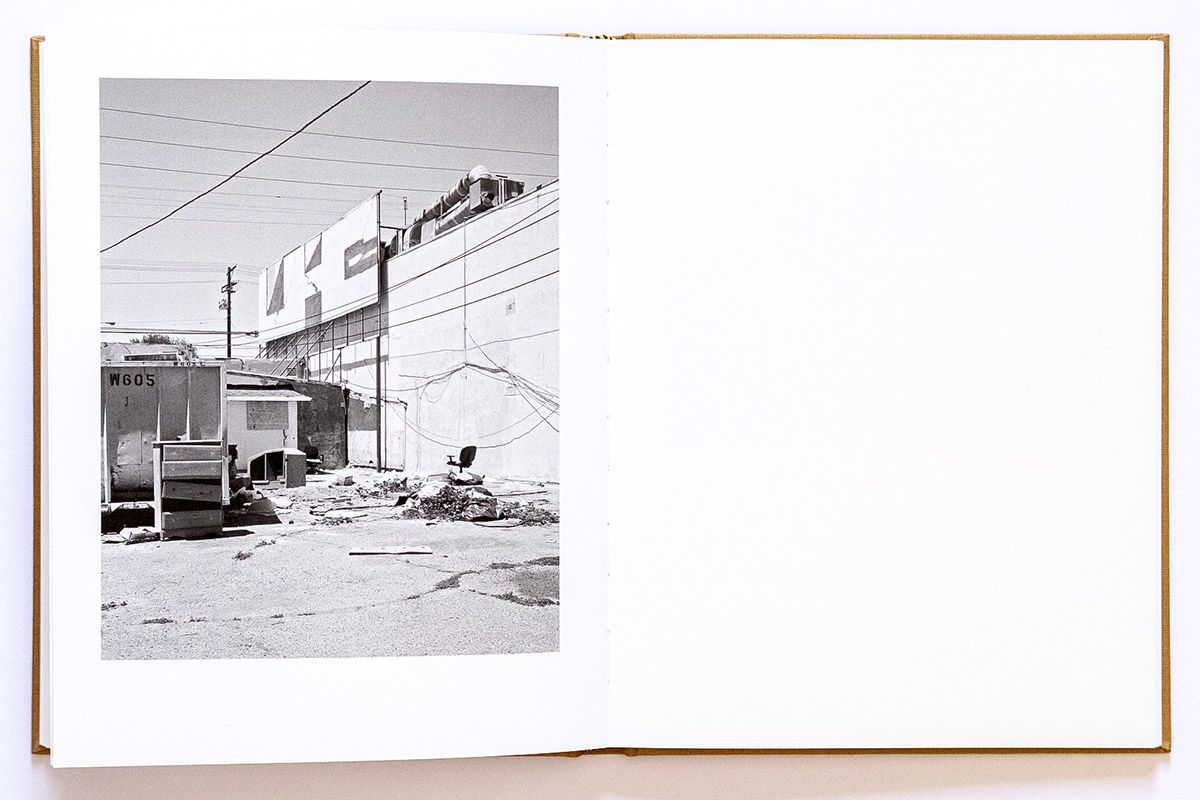
North North South is Iranian American photographer Ayda Gragossian’s first major monograph, published in July of 2025 by London based GOST books. In it, Gragossian takes the viewer on a walk through the back alleys and side streets on a kind of tour of Los Angeles. While the 52 images made between 2019-2023 that are stretched across the project are reproduced here with the use of a judicious monochrome palette, printed on an appropriately thick paper that gives the images a hint of warm and a sheen, the unsettlingly quiet scenes recall certain visual moments of dereliction at the edges of the city in films like William Friedkin’s To Live and Die in L.A. Yet, they are also mixed with the spirit of wandering in Raymond Moore’s quotidian “uncertain places.”* This is to say, Gragoassian’s images, in their visualization of traces of humanity, assemblages of (post) industrial objects, and the interventions made into the Los Angeles landscape impart a knowledge that is difficult to capture – the atmosphere of L.A. This dimension of her work refuses both the glitz that the city is known for, yet it also does not engage in producing a hyper-focused account of the utter squalor to be found across the sprawling territory. Instead, and smartly, North North South presents a contemplative interpretation of a city that defies simple classification, while recognizing the urban problems there.
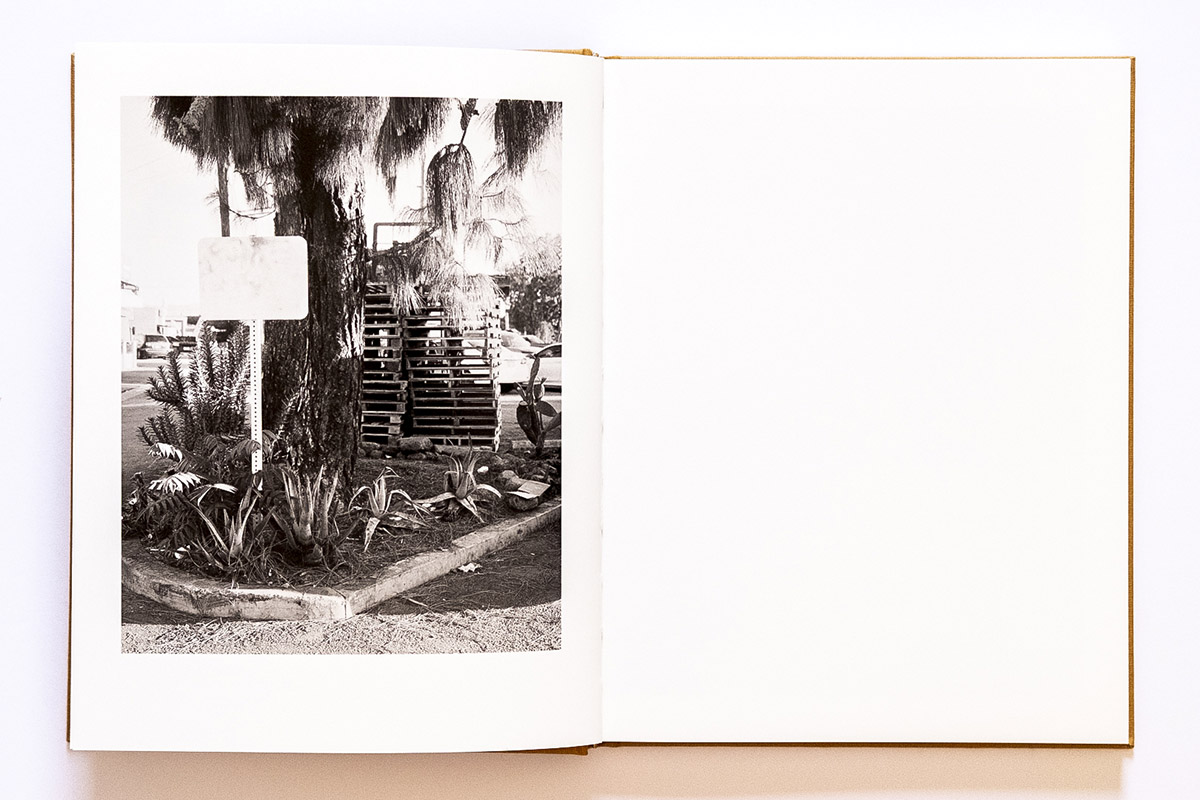
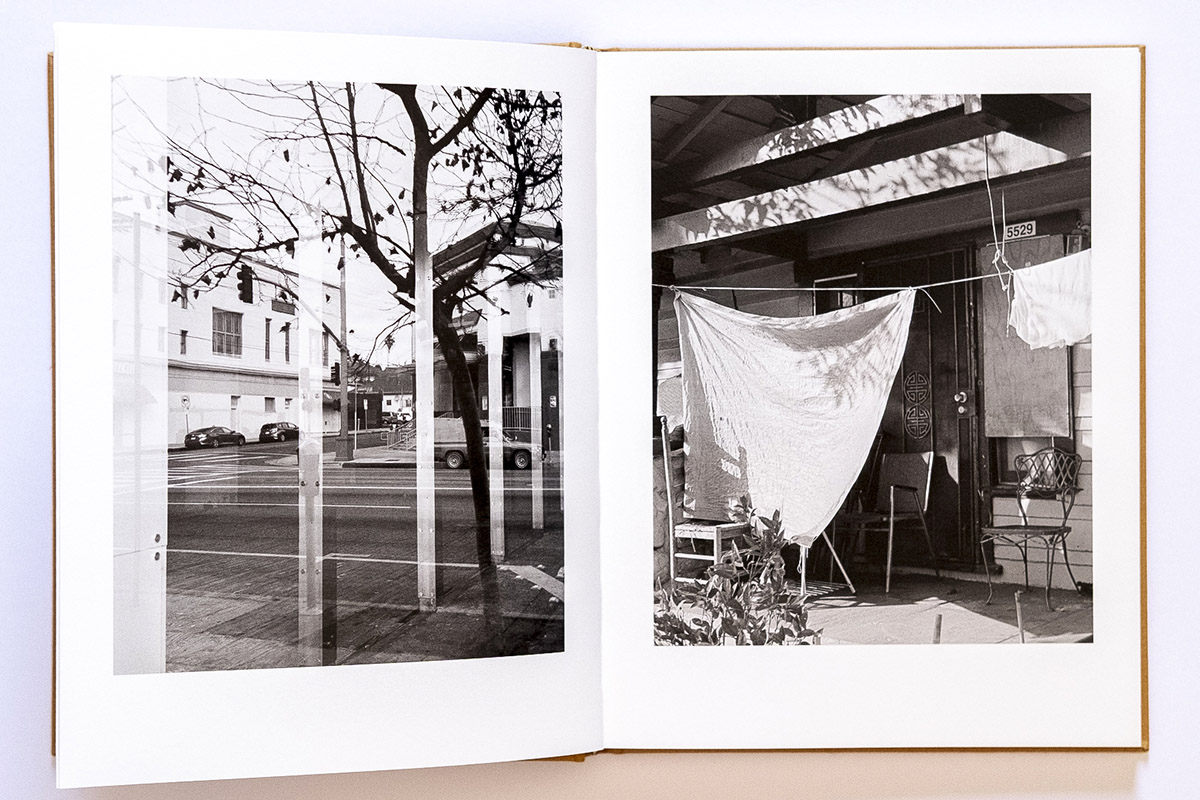
To take in North North South, and with no context, it may not be immediately apparent that the project is about Los Angeles. A field of mixed plants is surrounded by low-rise apartments. In the distance a small boat and van seem to have landed. Towels dry on the line. Car routes overpass…what, exactly? Territory, some of it badly paved, concretized, or left to go wild, covers the ground below. Not far away though, people work on banged up cars in ranch homes on the cul de sac. Get some Mexican foods and wash it down with donuts, on your way to get a cell phone plan. None of these things scream L.A., and there are no landmarks here. Nor would the book entice anyone to visit. But, this is the point. It is a place where people live, where dreams and ideas live and die, and where people try to get along.
Part of Gragossian’s overarching project concerns a tension about observation and perception. If observation is to be understood as seeing what is there, in this case, objects and scenes in Los Angeles, then perception concerns some grasping of the meaning. On the one hand, the repeated motifs of cars and overpasses signal some of the main symbols of the largesse and global importance of the California economy. The theme of dwellings operates similarly, decades on from Lewis Baltz’s treatment. Repetition of chairs adds further interest. But this is not Kertész’s Tuileries Garden. Not in one instance is anyone sitting in them. Office chairs, sun burnt, chipping wooden platforms, and rickety aluminum structures all sit, waiting.
Taking in this work within its wider historical context is an important way that we can understand the sequence of images, which also adds to the quiet, yet unsettling quality. The images cannot quite be described as calm. Perhaps calm can be attributed to black and white imagery, but Gragossian’s work tends more towards the realm of haunting. And indeed, LA is a haunted place, by the lives and aspirations spent there, but also by its very recent past. The time period of the work’s production spans the COVID pandemic, the election of a new president, and also that of the California state governor. Trauma and loss have followed these moments, casting long shadows, like those one might see as the morning arrives or the day fades in always sunny Southern California.
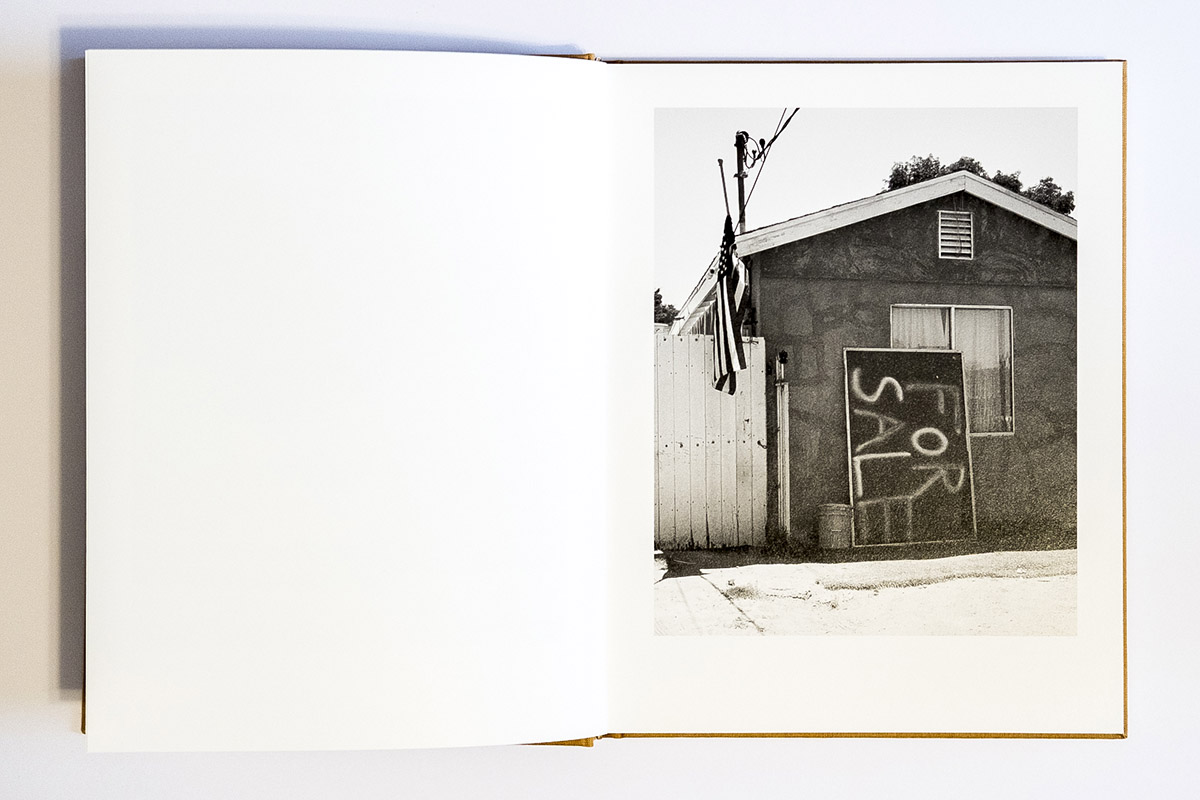
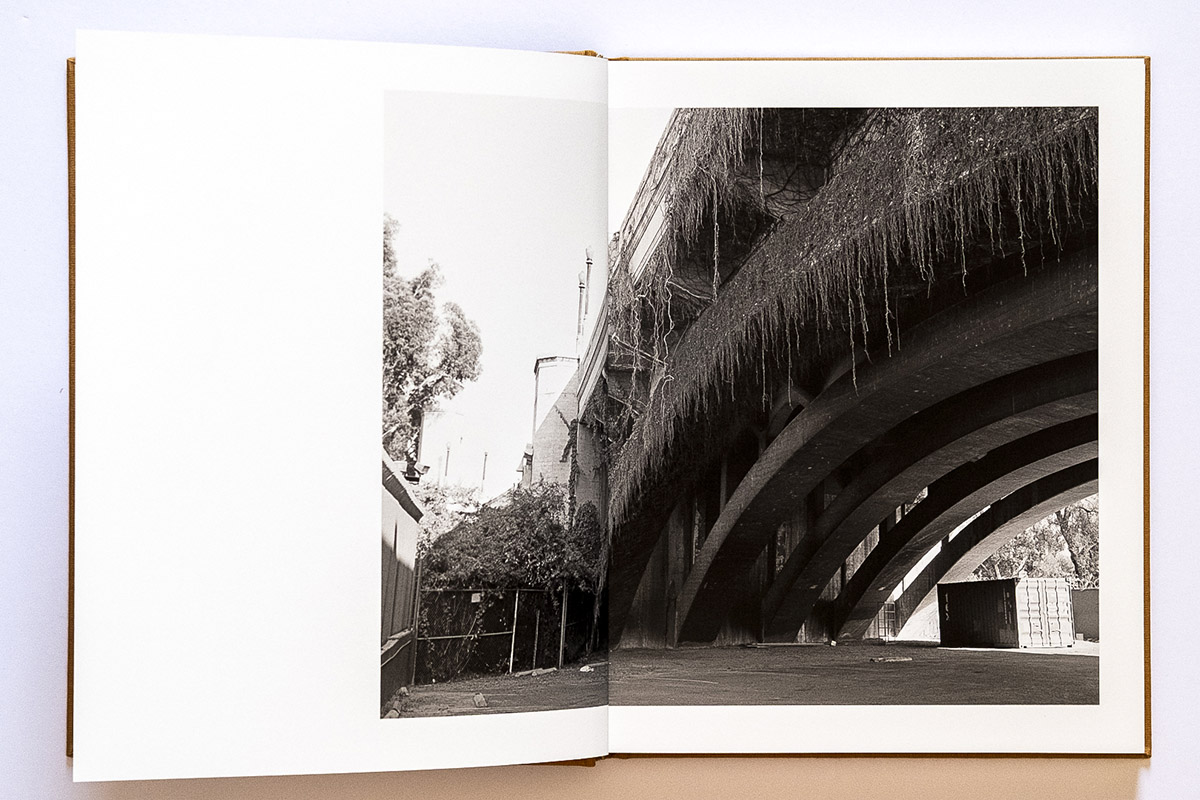
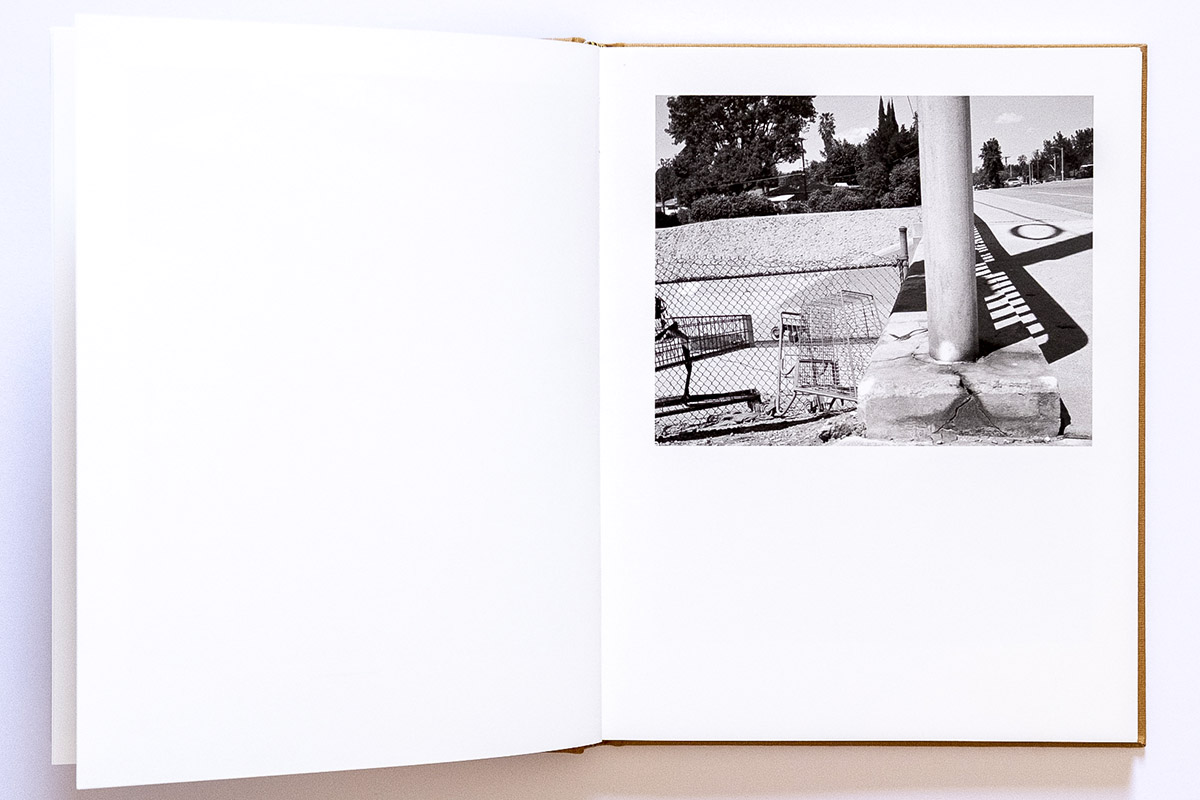
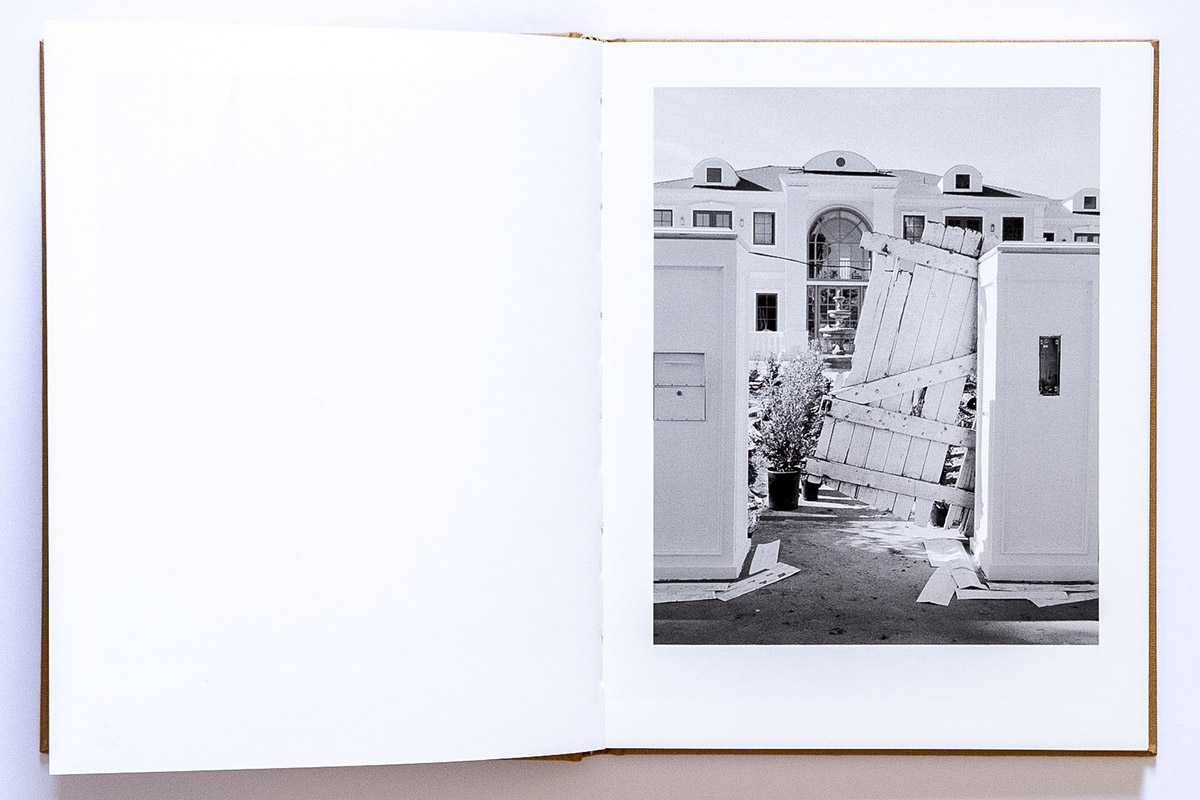
In North North South, Gragossian often exposes for the shadows. An old wooden fence sits in the shadow, torn open, revealing a new luxury living space. Old post-war era homes show their age, but now they are just sitting there, maybe awaiting demolition, still running window air conditioning units, and ultimately unable to be saved, having fallen into disrepair. Not worth it. Highway underpasses are conspicuously clean, providing cover for, well, storage containers. Capital lies dormant. Moments of pause presume later action. New condominiums emerge on hillside embankments, far out of town. At Aura Ave. a high chain link fence guards a building with barred windows, behind which sprouts a tree, no, a telecommunications tower. Grocery carts full of material line concrete canals. Deeper in the hills, people set up lawn chairs under the brush. Others pack up their car and stay there. These images haunt LA, and the country with it. In the distance, you can almost hear the roar of the infamous LA traffic. Elsewhere, a one-story stucco structure is flanked by an uninspired, hand sprayed “FOR SALE” sign as an American Flag fails to catch any wind.
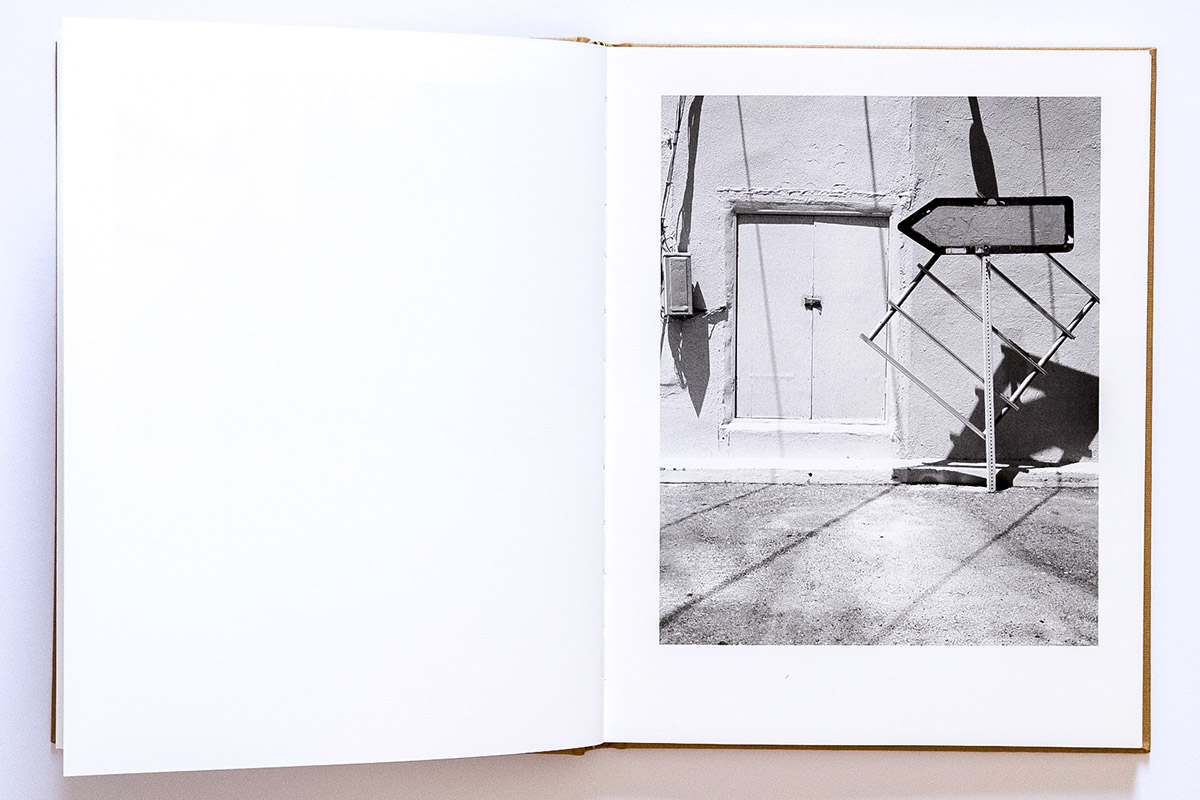
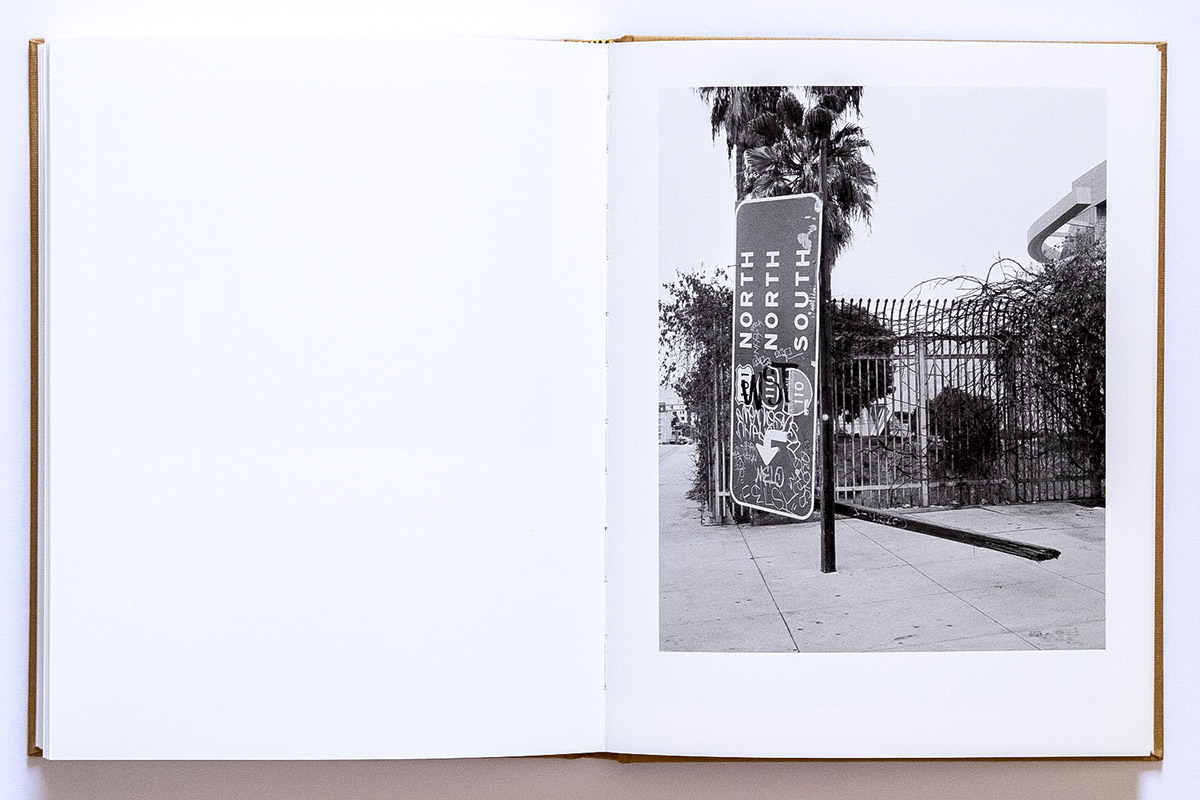
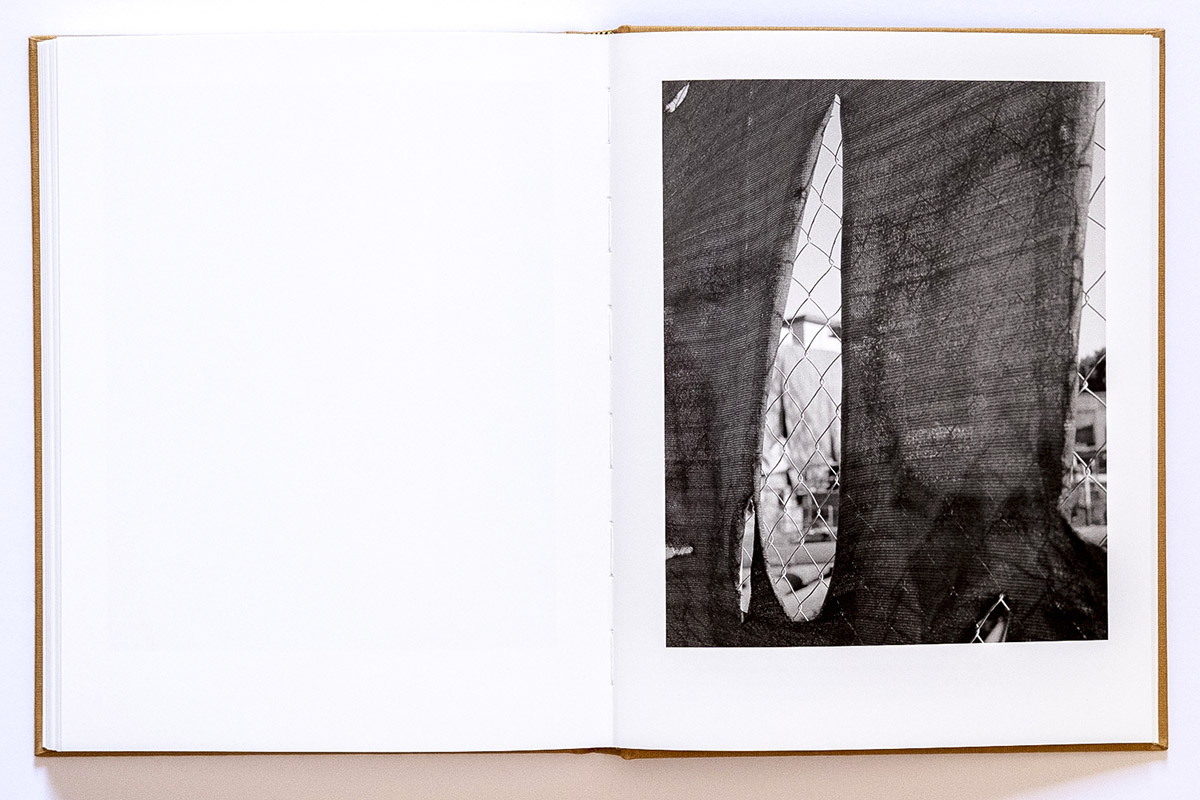
While the sequence manages to strike a certain unsettling tone from the very first image of two burned out windows, making one recall something like eyes or a face, the arc of the book still leans towards an opening. The final image consists of a chain link fence, covered in light tarpaulin, where the viewer can see, if only slightly, through one of the holes, cut so as to prevent the fences from blowing over in the wind: a space of breath, a view to the horizon. After moving through a collective mis-en-scène of urban edge zones and apparent peripheries, we arrive at an outlet. Such a sequencing strategy reflects the idea of the book’s title, taken from one of the images of a toppled highway sign “North North South.” The path through destruction, desertion, and abandonment offers a redemptive trajectory via iterations. One must push forward to sometimes realize that there is much to be made of the present situation, that redeemable opportunities can be found where one is, even if it is not always where one wishes or wants to be.
Contributing Editor Brian F. O’Neill is a sociologist and photographer based in Phoenix, Arizona.
____________
Ayda Gragossian – North North South
Photographs: Ayda Gragossian (IR/Am, b. 1986)
Publisher: GOST Books, 2025
Essay: Peter Lunenfeld
Editing and Design: Rosella Castello, Katie Clifford, Gemma Gerhard, Justine Hucker, Allon Kaye, Eleanor Macnair, Claudia Paladini, and Anna Rocha
Printing: EBS (Italy)
Hardcover, linen wrap, Smyth sewn; 104 pages; 52 monochrome images; 195 x 250 mm; ISBN: 978-1-915423-81-8
____________
* For an interesting discussion of the late British photographer’s work, considered a pioneer of topographic photography, see John Scanlan’s 2022 article “Raymond Moore’s Uncertain Places”
Articles and photographs published in the PhotoBook Journal may not be reproduced without the permission of the PhotoBook Journal staff and the photographer(s). All images, texts, and designs are under copyright by the authors and publishers.
 PhotoBook Journal
Leave a comment