Review by Douglas Stockdale •
Today is 2025 World Cyanotype Day and I am very honored to share this biographical book review of Anna Atkins (Anna Children, 1799 – 1871) now known as the first person to publish a photographically illustrated book in 1843. She is also a historical enigma. It is purported that if it was not for the fanatical interest by a Scottish book collector, William Lang Jr., in the late nineteen century, Atkins may have been sidelined to oblivion. All the more striking as Lang’s book collecting curiosity was piqued by a brief mention about a woman’s (Atkins) publication in the biography of William Henry Fox Talbot, the inventor of photography.
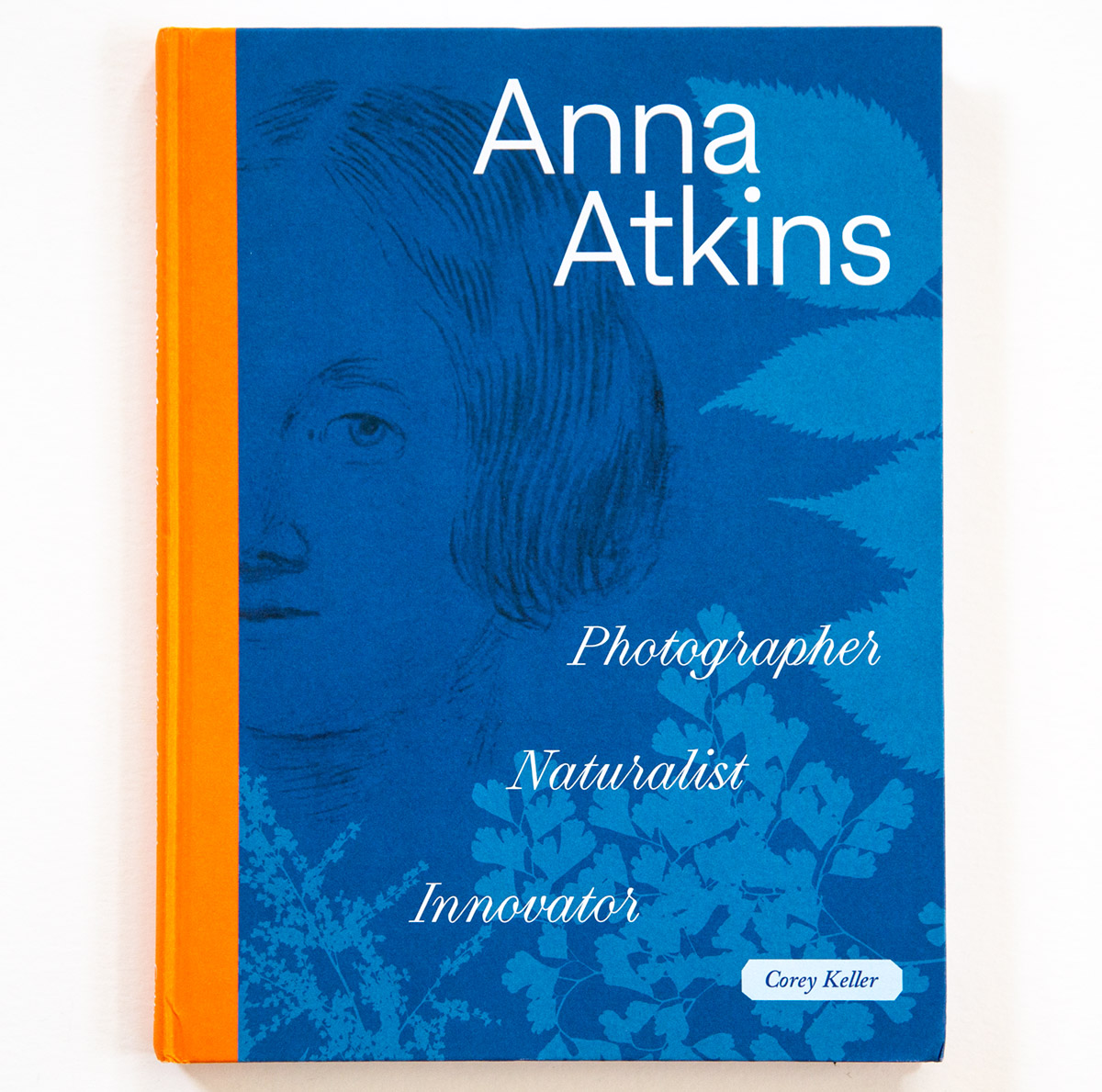
This book, Anna Atkins – Photographer – Naturalist – Innovator, is a charming and informative biography of an intriguing artist of whom little is known, which as the book’s editor, Corey Keller, elaborates, is perhaps not unusual for a woman who lived in the Victorian age. As a cyanotype artist I now realize that even as how well-known Anna Atkins is within our group of cyanotype practitioners, I had numerous informational gaps as to Akins varied accomplishments. Second, I also realize how few of her cyanotypes that I was familiar with, especially those associated with the second and third volumes of her famous photobook and her subsequent cyanotype work.
As a biography, this book progresses chronologically, while providing some background context as to the period of time she lived; the Regency followed by the Victorian era (1811 – 1870’s), the Industrial Revolution, Technology in the Garden, Sea-Weeders and Scientific Daughters and profiles of those who had a profound effect on her endeavors, such as Sir John Herschel. As Keller details for her readers, the life of a woman was much different than it is today, which is why so little is known about Akins life and her many accomplishments.
“It was the best of times, it was the worst of times”.., a suitable quote from Charles Dickens of about the same area, seems equally applicable to Akins life. Although her family was wealthy, her mother passed soon after child birth and she was raised by her father and grandfather. When her father’s family subsequently went bankrupt, Atkins married into another wealthy family. Fortunately, her father was a gentleman-scientist who ensured that his only daughter would be well educated, and when her father was inducted into the Royal Society that would provide a personal scientific network that would eventually lead to Atkins fame as we know it today.
What I found very interesting were Atkins accomplishments leading up to her remarkable book, that Atkins, due to her intricate drawing skills completed a comprehensive set of sea shells drawings. Her drawings were converted into engravings to illustrate her father’s translation of Lamarck’s Genera of Shells in 1823, with a byline “with plates from original drawings by Miss Anna Children”. That may have been her first brush with the publishing world. In the context of the Victorian age, in which life was ‘strictly divided along gender lines” which is all the more remarkable to have her artwork recognized.
The world of photography was about to unfold in front of Atkins and it’s amazing how she was swept up in the resulting vortex. William Henry Fox Talbot was a friend of her fathers in the Royal Society, while John Herschel, who discovered the science and print making of cyanotypes and hypo to ‘fix’ photographic prints, lived near Atkins and was a frequent guest at her house. About 1841 Atkins father bought her a photographic camera for her and her father to experiment with, while perhaps she became the first woman to own a camera. Nevertheless, there are no surviving photographs from their scientific venture. After experimenting with Talbot’s calotypes with her camera, she then went on to work with the trademark Prussian blue of cyanotypes.
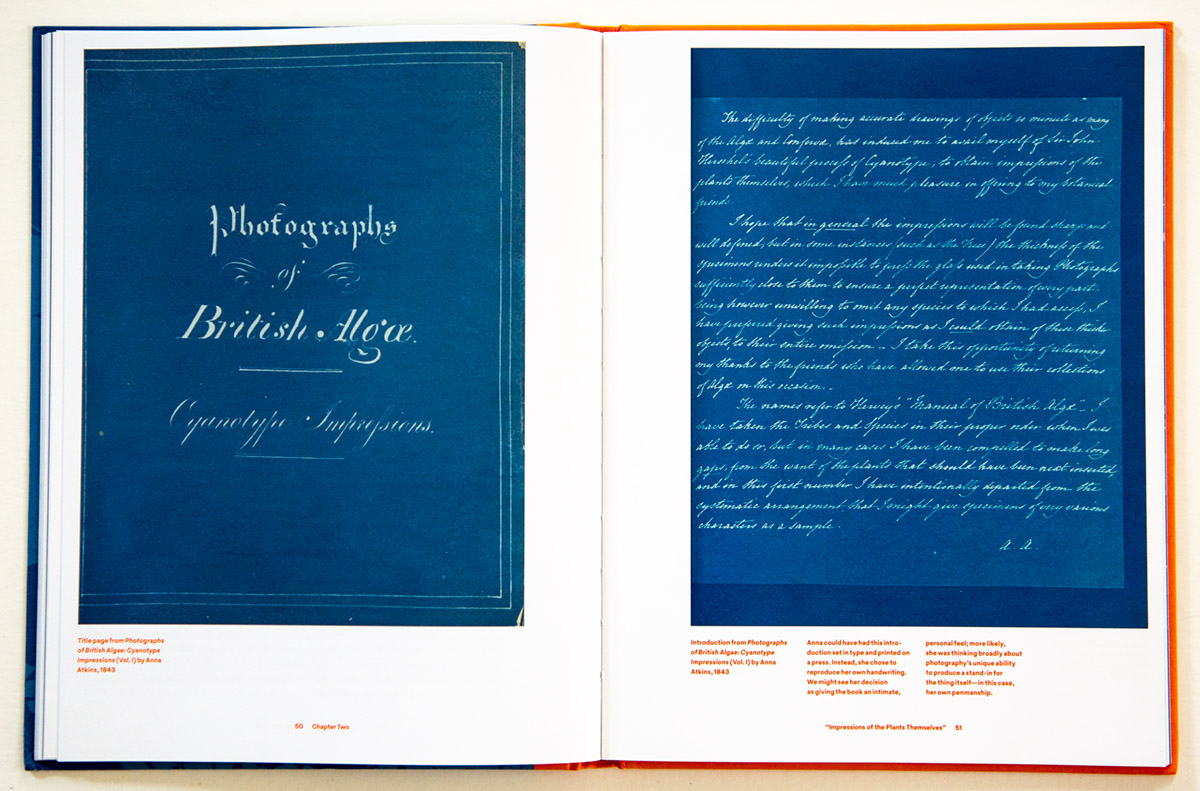
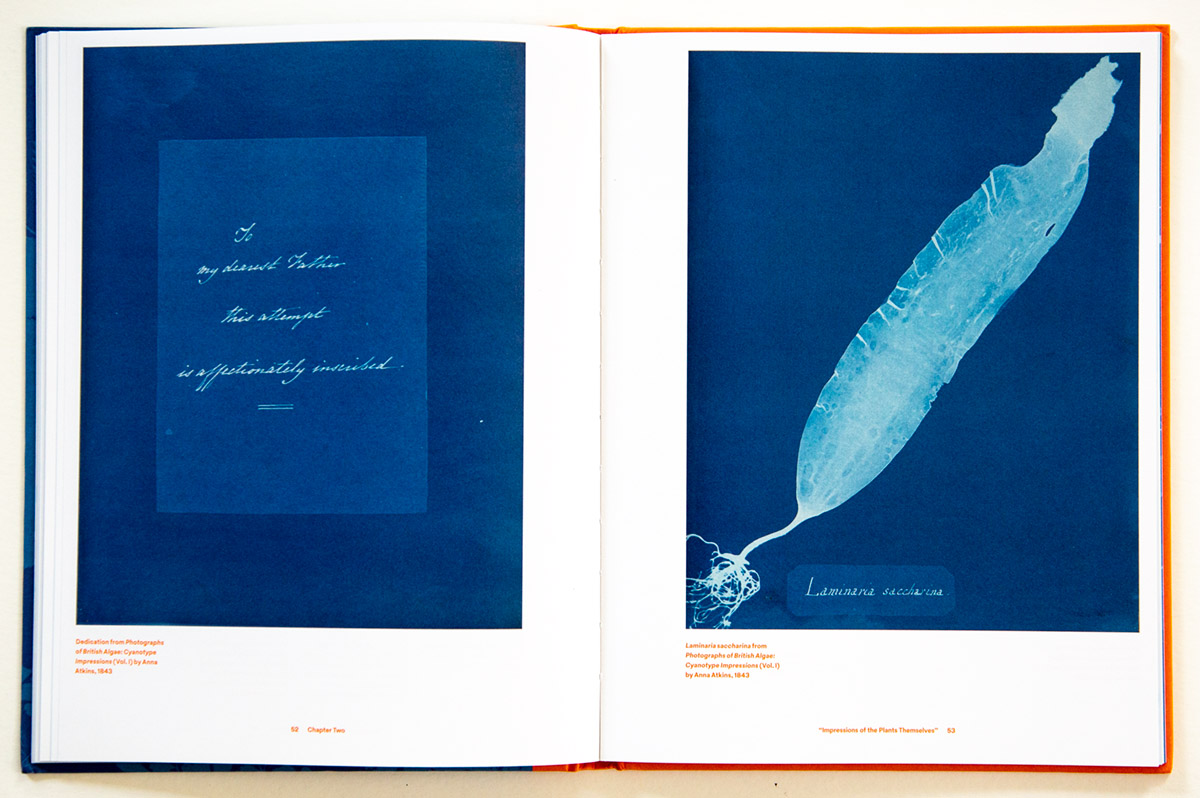
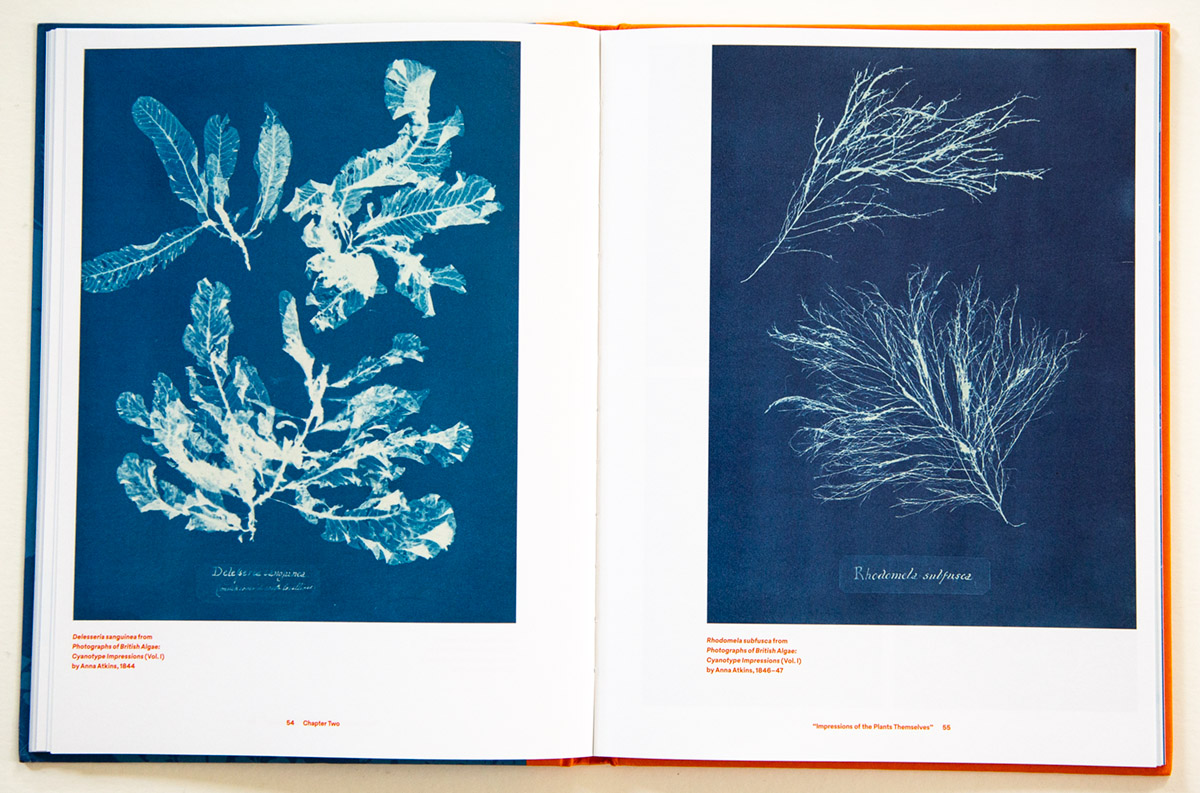
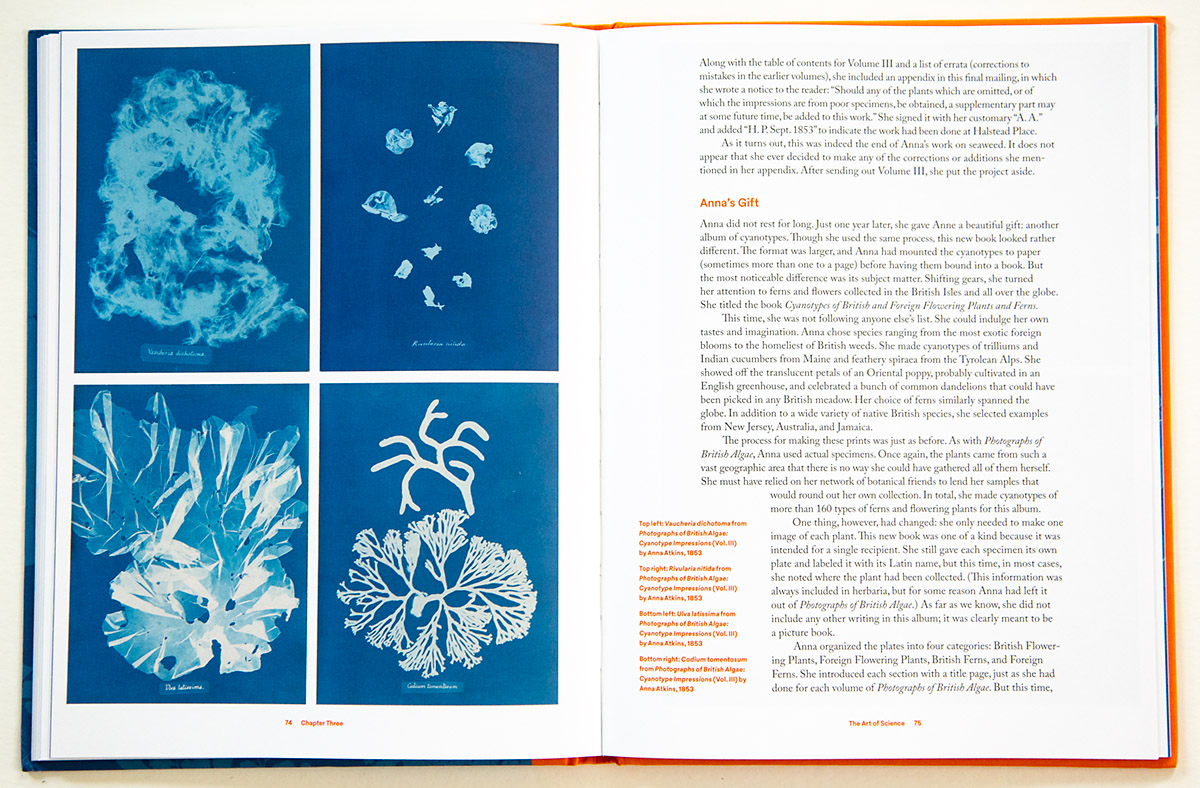
In 1843 she self-published the first part of what would be her famous three-volume artist book Photographs of British Alge: Cyanotype Impressions, published as segments, booklets or fascicles, which was common for this period. It would take her ten years to complete the three volumes and each booklet segment was composed entirely of hand-printed cyanotypes that included eight cyanotype plates (pages) per booklet, hand-sewn together. What confounded those who later attempted to find the author of these artist books is that the volumes were only attributed to A.A., not by her full name.
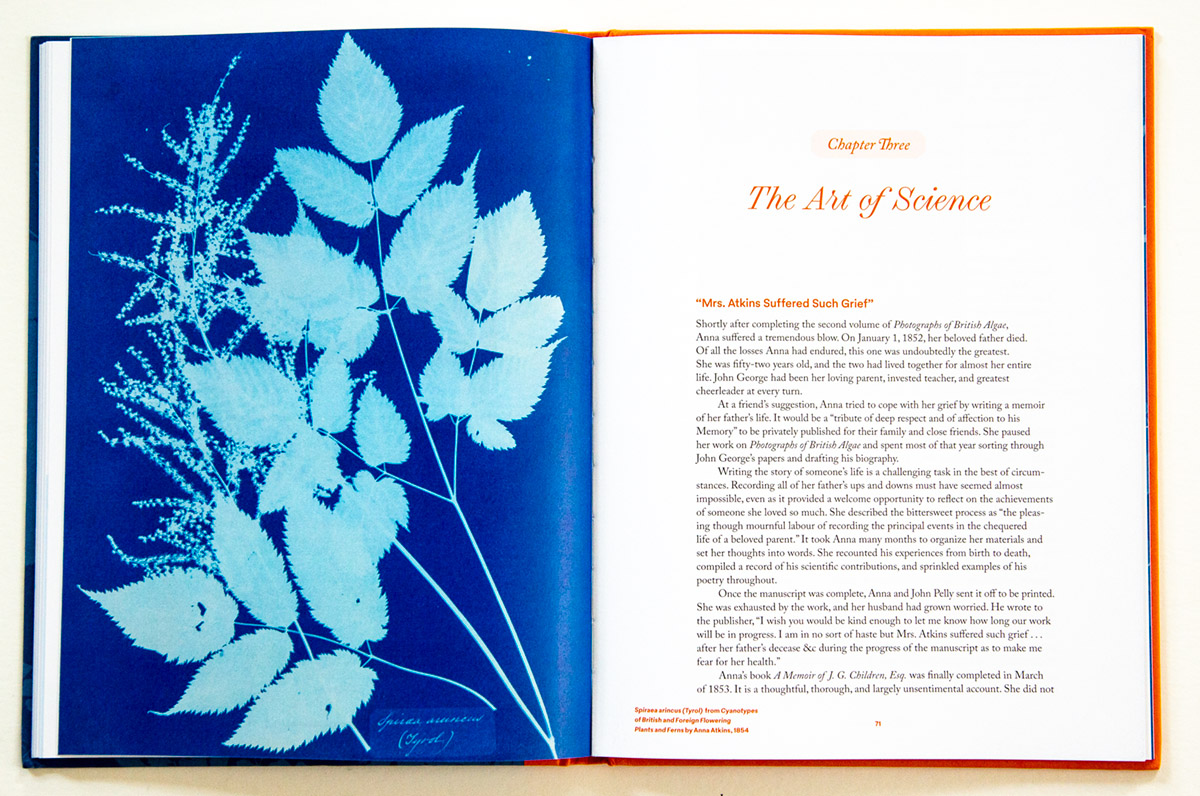
Akins had a flair for design in how she laid out her subjects on the cyanotype paper and incorporated a process that allowed her to include hand scribed captions of her subject, which in itself, may have been another of her inventions related to this new photographic process. As might be expected at the very beginning stage of the understanding the cyanotype process, the resulting books have a full range of Prussian blues and shades of whites, with each cyanotype print being unique.
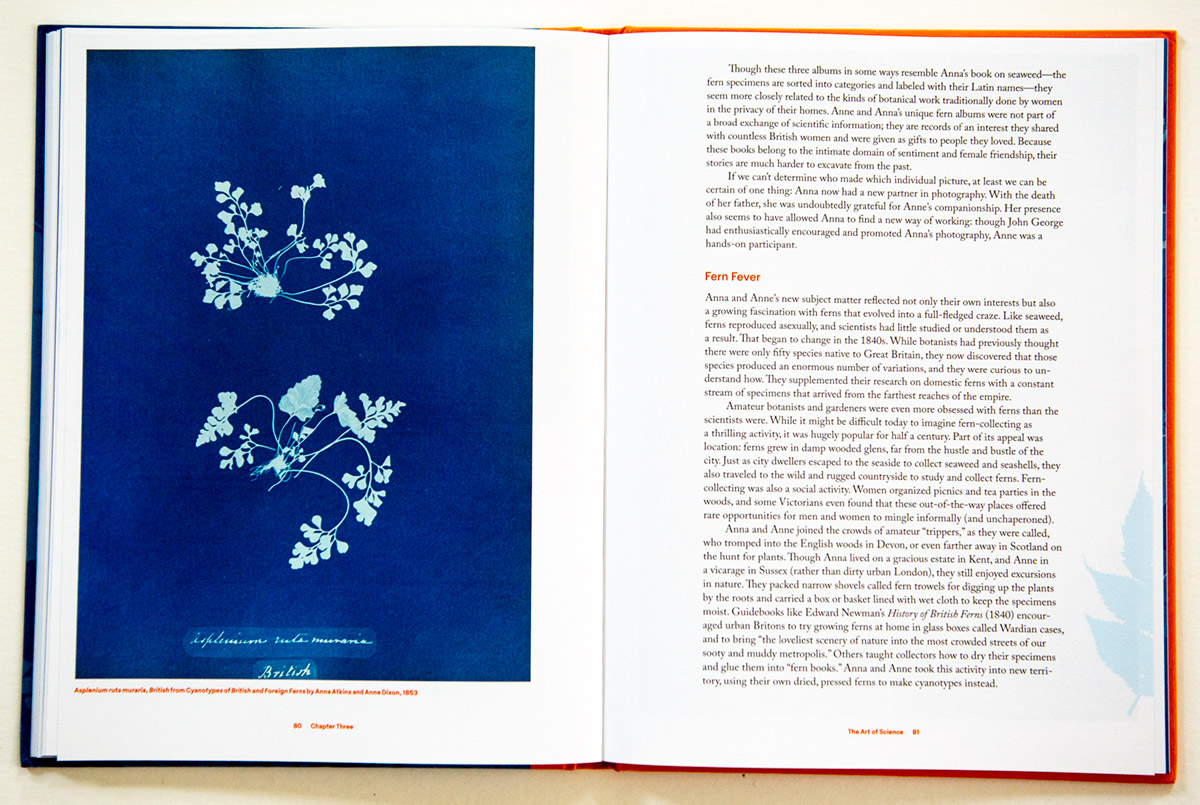
From what others have been able to reconstruct, there were other cyanotype artist books published by Atkins with some authorship being blurred with and by her later co-contributor, Anne Dixon (e.g. A.A. to A.D.), such as Cyanotypes of British and Foreign Ferns.
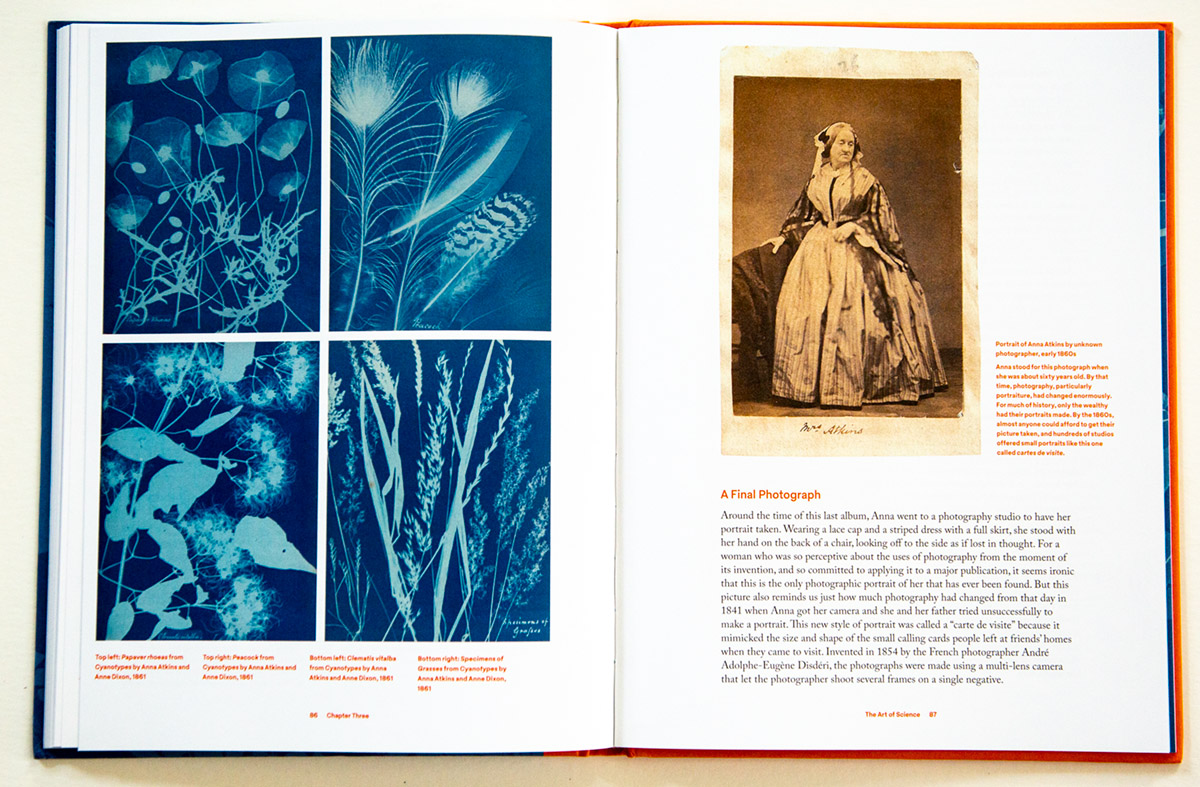
Atkins was an innovator, a botanist, one of the first photographers, an early cyanotype artist and the first photobook publisher. As interest continues to build about her many accomplishments, I suspect that we will hopefully learn more about this wonderful artistic woman, while this delightful biography is a delightful read and provides a wonderful overview encapsulating what we know of Atkins today.
____
Douglas Stockdale is the Founder and Senior Editor of PhotoBook Journal and recognized with three Photolucida Critical Mass Finalist awards (2023, 2024, 2025) for his cyanotype series, Entanglement.
____
Anna Atkins – Photographer – Naturalist – Innovator, Corey Keller, Editor
Photographer: Anna (nee Children) Atkins, b. March 1799, Tonbridge, England, d. June 1871, Halstead, England
Publisher: Getty Publications, Los Angeles, copyright 2025
Essays: Corey Keller
Text: English
Hardcover, 112 pages, 8 x 10 1/2 inches, 86 color illustrations, Glossary, Notes, Bibliography, Acknowledgements, Illustration Credits, and Index, ISBN 978-1-947440-11-1
Photobook Designer: Dani Grossman
____

____
____
____
____
____
____
____
____
Articles and photographs published in the PhotoBook Journal may not be reproduced without the permission of the PhotoBook Journal staff and the photographer(s). All images, texts, and designs are under copyright by the authors and publishers.
 PhotoBook Journal
Leave a comment