Review by Hans Hickerson ·
There are many ways to make a photobook. One is to use photographs to construct meaning through carefully curated repetition and association. You introduce photographs to establish a theme or mood, you develop, and you introduce other themes and variations and build a narrative or story.
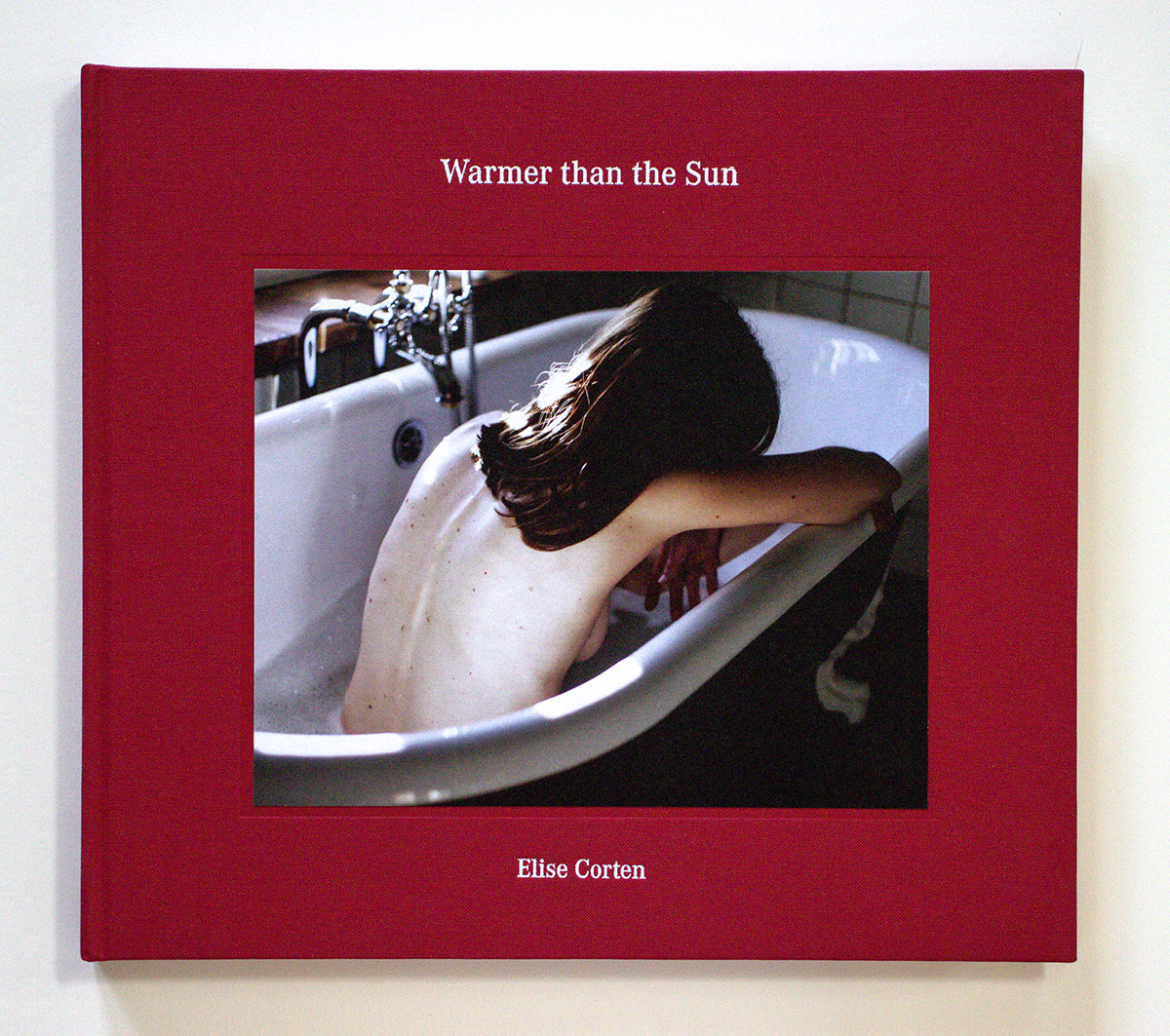
Photographer Elise Corten’s Warmer than the Sun works like that. The book celebrates Corten’s mother and explores Corten’s relationship with her, but it also works metaphorically on other levels.
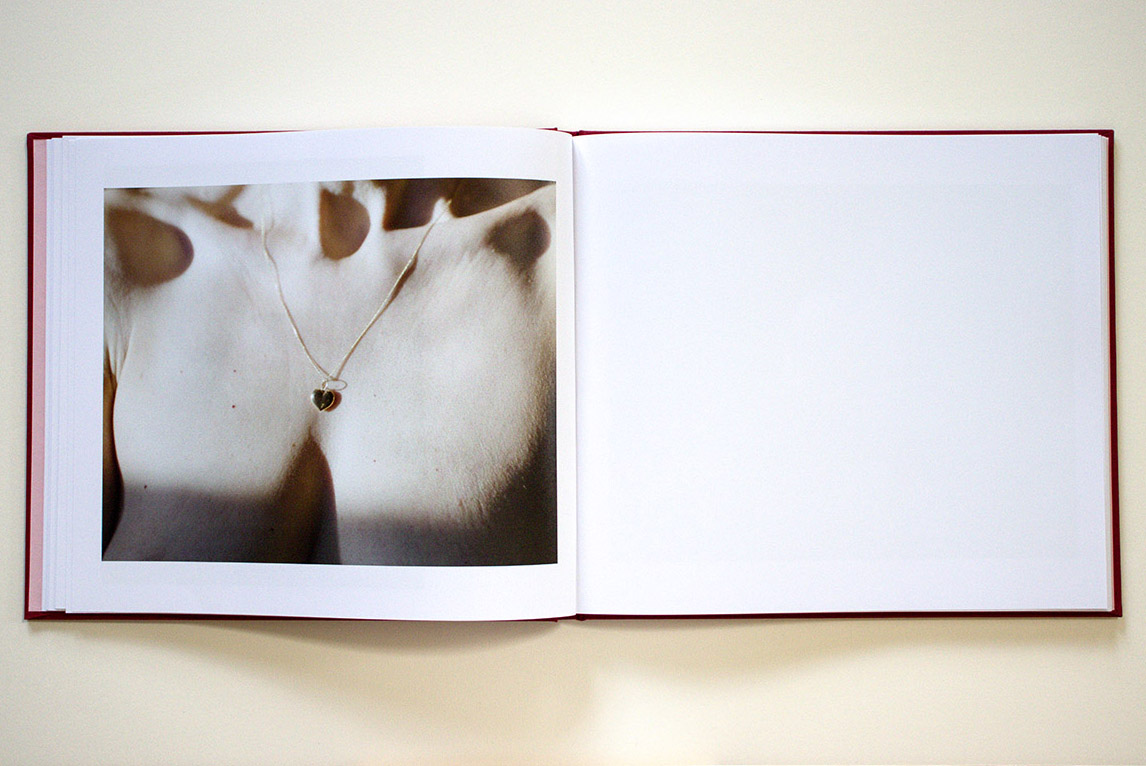
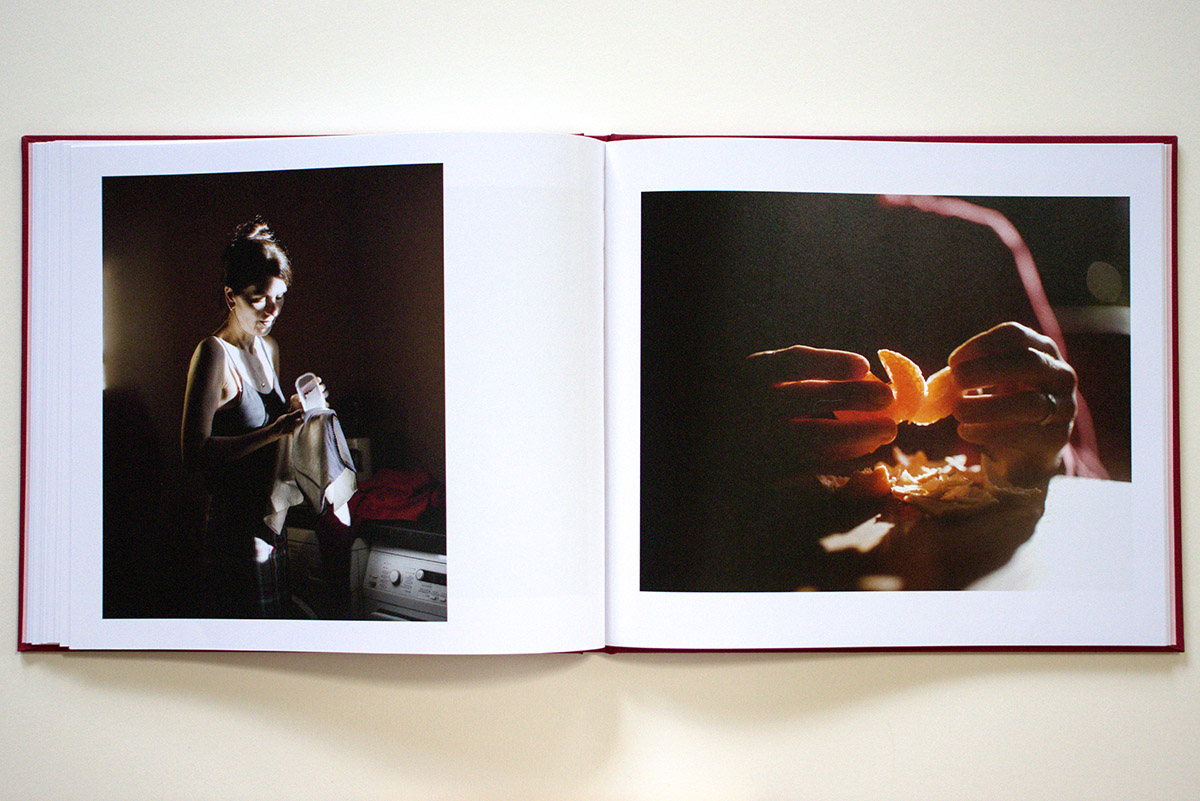
Let’s start with Corten’s mother. There are some two dozen photographs of her. She, or perhaps the mother / daughter relationship, is presumably what is “warmer than the sun.” We see Corten’s mother partially clothed or nude in many images. We see her back, her neck from behind, her wet hair, her upper chest with a heart pendant. We see her looking in a mirror, dressing, using tweezers to remove facial hair, drying dishes in the kitchen, holding a white dress, writing in a notebook, and lying in a field with red poppies and in the snow in a red coat. In only one photograph does the hint of a male figure appear, in the form of a set of hands on her shoulders.
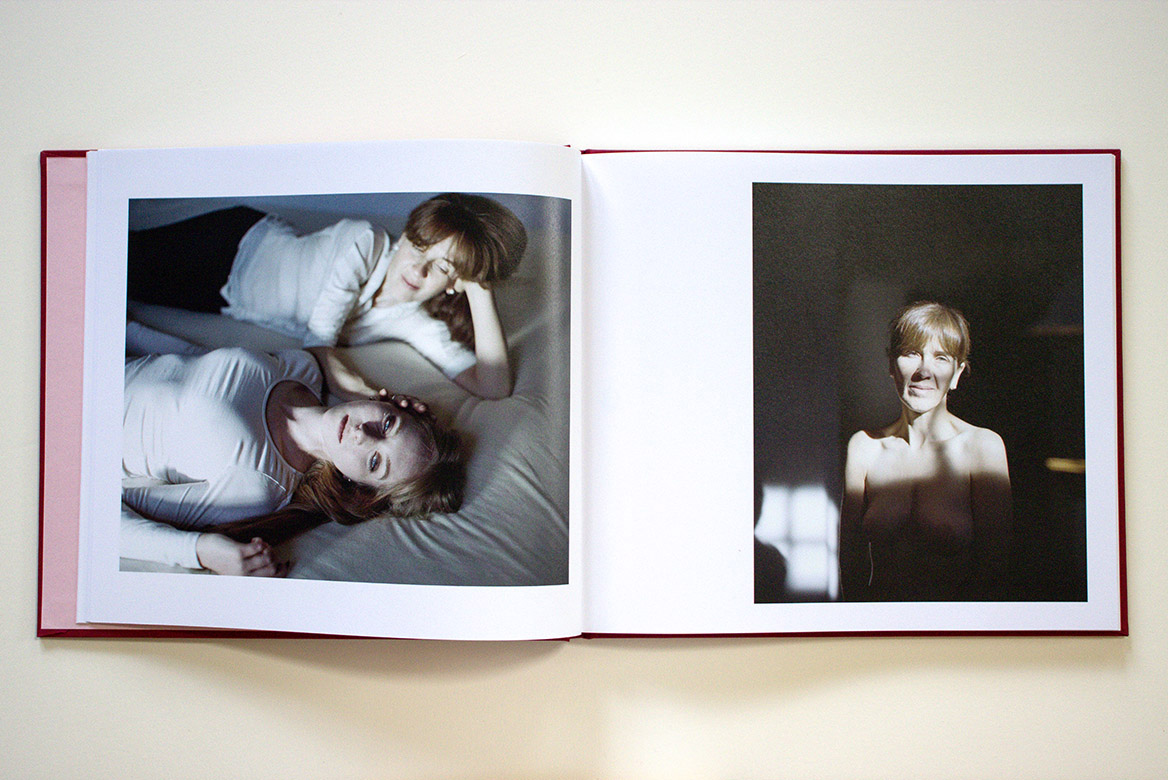
There are some dozen photographs of Corten and her mother. She brushes her mother’s hair, she hugs her mother, her mother hugs her. They sit on a bed facing a window, they lie together on a wood floor, they rest together on a bed, her mother looking at her. She takes a picture of her mother reflected in a mirror. She stands with her mother near a window, her mother looking out and she away.
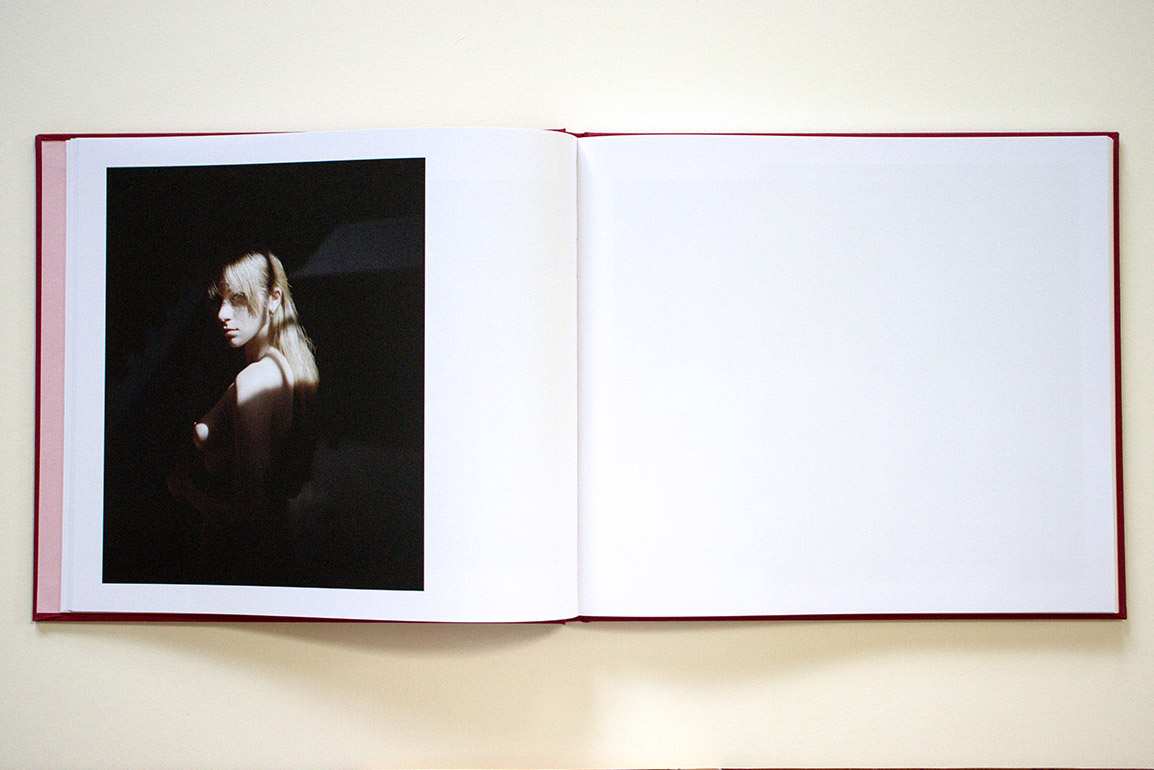
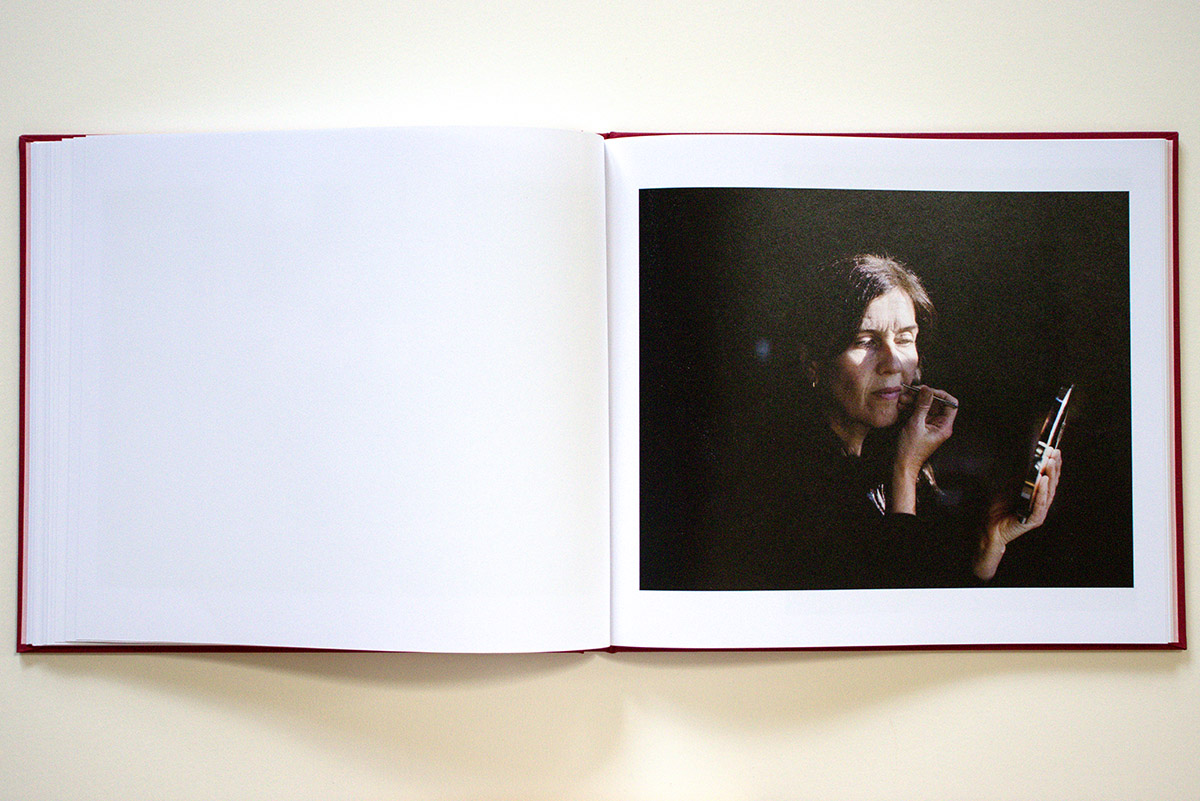
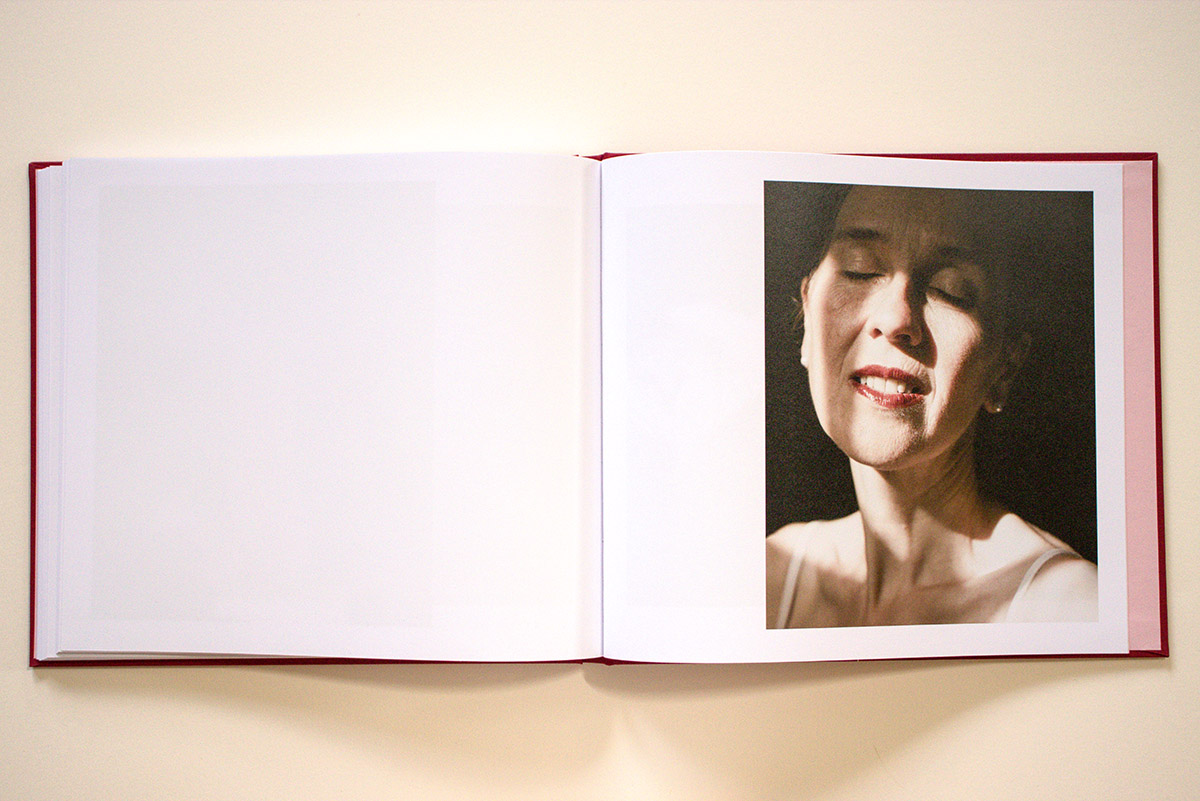
Another half-dozen or so photographs are of Corten, self-portraits. She is seen nude or partially clothed in some, fully clothed in others. Echoing her mother, we see Corten’s bare back in the tub and on the bed. We see her taking a photograph of herself in a mirror. We see her getting vegetables out of the refrigerator. And in what for me is a particularly memorable image, reproduced on the second page spread below, wrapped in shadow she aims a level, confident gaze at the camera.
When I look at this photograph I can’t help but think of impressive self-portraits by other young artists, in particular Albrecht Dürer and Rembrandt. Here I am, she seems to say. This is me. This is the portrait I have made of myself. This is what I have accomplished as a person and artist.
Speaking of artists, I pick up echoes of Vermeer as well as early Eileen Cowin. The dramatic light from windows, the repeated locations (bedroom, kitchen, bathroom) as in Vermeer, the meaningful tension captured in what are otherwise staged family photographs for Cowin.
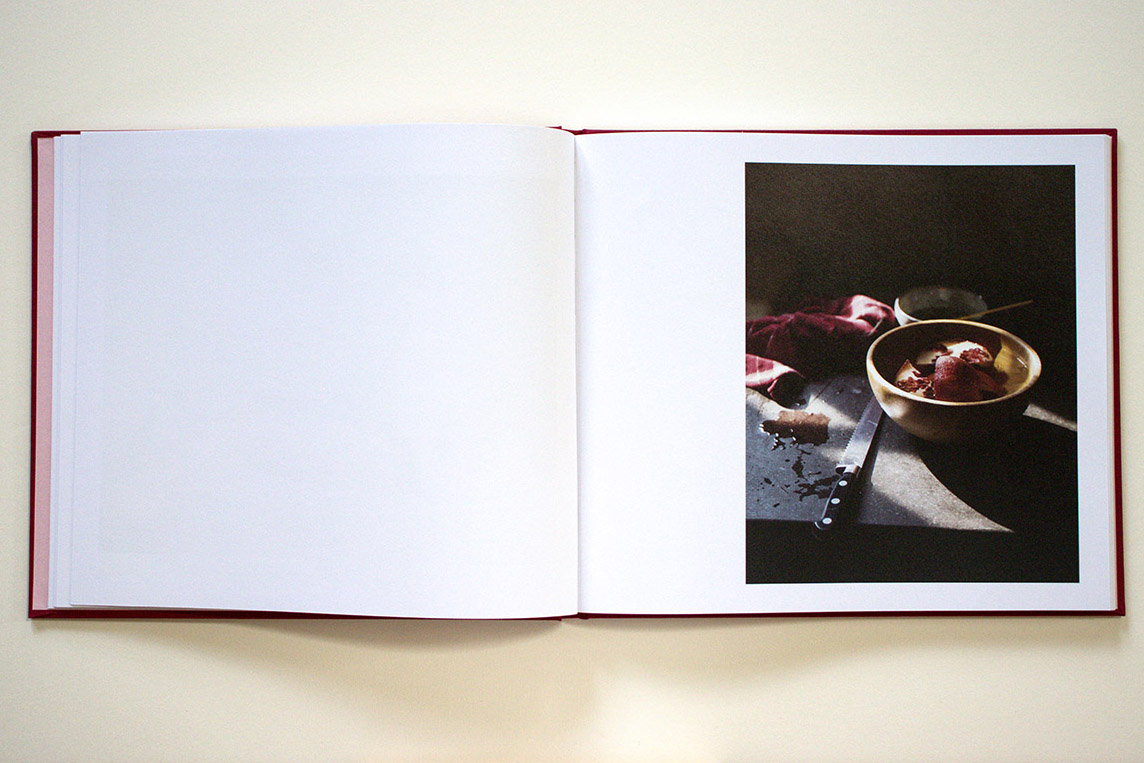
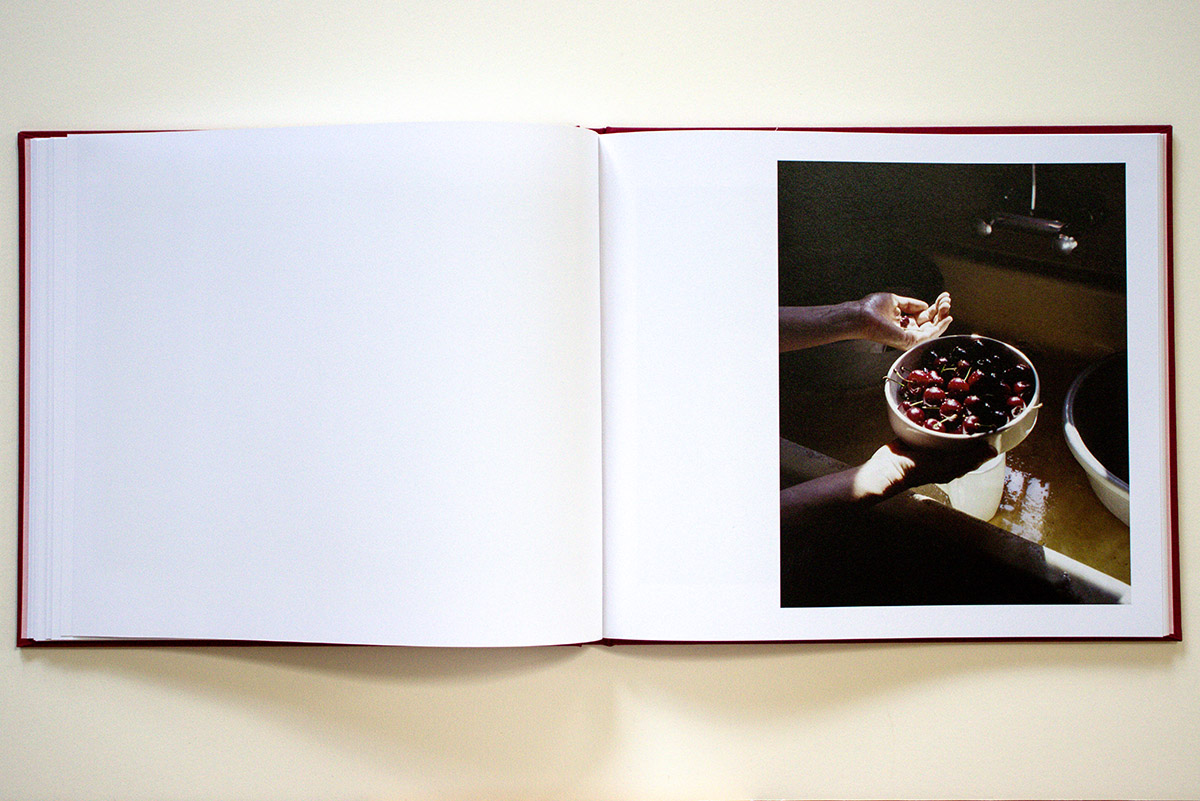
Other photographs are not of Corten or her mother, but they introduce elements and ideas that add to the narrative flow. A low sun viewed through some bare trees, a pregnancy test on a white blanket, a knife and a cut red pomegranate, nylons hanging to dry, a bowl of red cherries alongside the pit of one that has been eaten, pills or vitamins, a kitchen sink, someone eating a mandarin, a family photo album, a tube of red lipstick. The themes evoked include femininity, the passing of time, ripeness, aging, and the nurturing role of women. More generally, when you put them all together, the photos in Warmer than the Sun explore the exclusive, somewhat claustrophobic closeness of the mother / daughter bond, the strength and fragility of their fraught and constantly evolving relationship of joy, worry, caring, and conflict.
Thoughtfully composed, intense in its stillness, Elise Corten’s Warmer than the Sun resonates in multiple directions. Like with other successful photobooks, the more you look the more you see.
Hans Hickerson, Editor of the PhotoBook Journal, is a photographer and photobook artist from Portland, Oregon.
____________
Elise Corten – Warmer than the Sun
Photographer: Elise Corten (born in 1994, lives in Belgium)
Publisher: Hopper and Fuchs; © 2025
Texts – Elise Corten, Deanna Dikeman, Hilde Leeters
Language: English, Dutch, French
Design: David Boon
Printing: Zwartopwit (Belgium)
Embossed cloth hardcover with inset photograph; 53 color photographs; stitched binding; 98 pages, unpaginated; 27 x 24 cm, ISBN 9789464002676
____________


Articles and photographs published in the PhotoBook Journal may not be reproduced without the permission of the PhotoBook Journal staff and the photographer(s). All images, texts, and designs are under copyright by the authors and publishers.
 PhotoBook Journal
Leave a comment