Review by Hans Hickerson ·
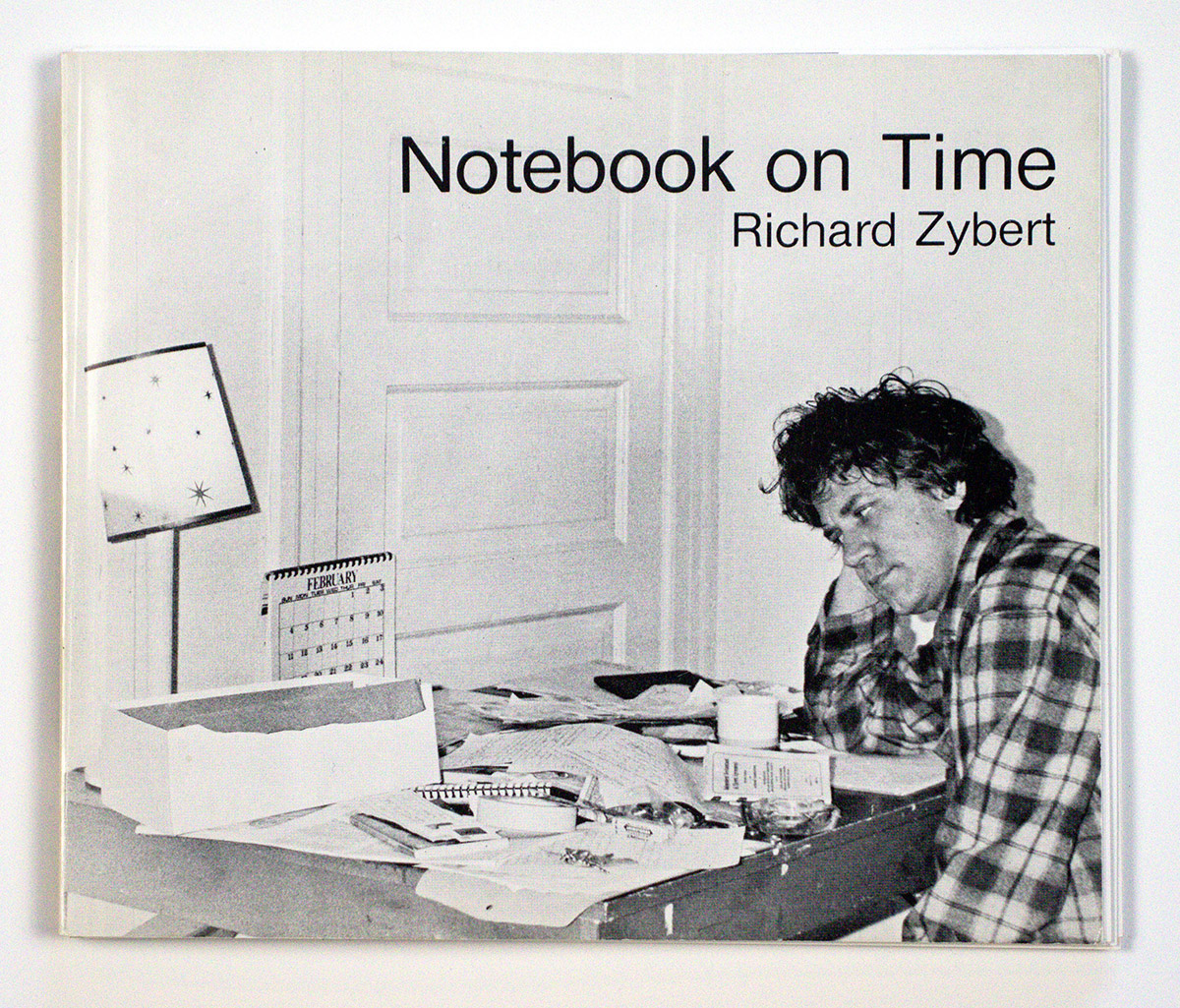
Good things come in small packages. Grenades come in small packages too, and you can compare Richard Zybert’s 1981 photobook Notebook on Time to a small explosive charge.
Notebook on Time is the story of Zybert coming to terms with his dysfunctional family and in particular with the legacy of his abusive, alcoholic father, and Zybert is brutally honest and disarming as he narrates the story in photographs and texts.
I acquired my copy of the book in the early 1980s, I can’t remember where, and I found it captivating and memorable, a highly successful example of book form. I am reviewing it here not only because it deserves attention but also because I think it offers an important lesson on value in art.
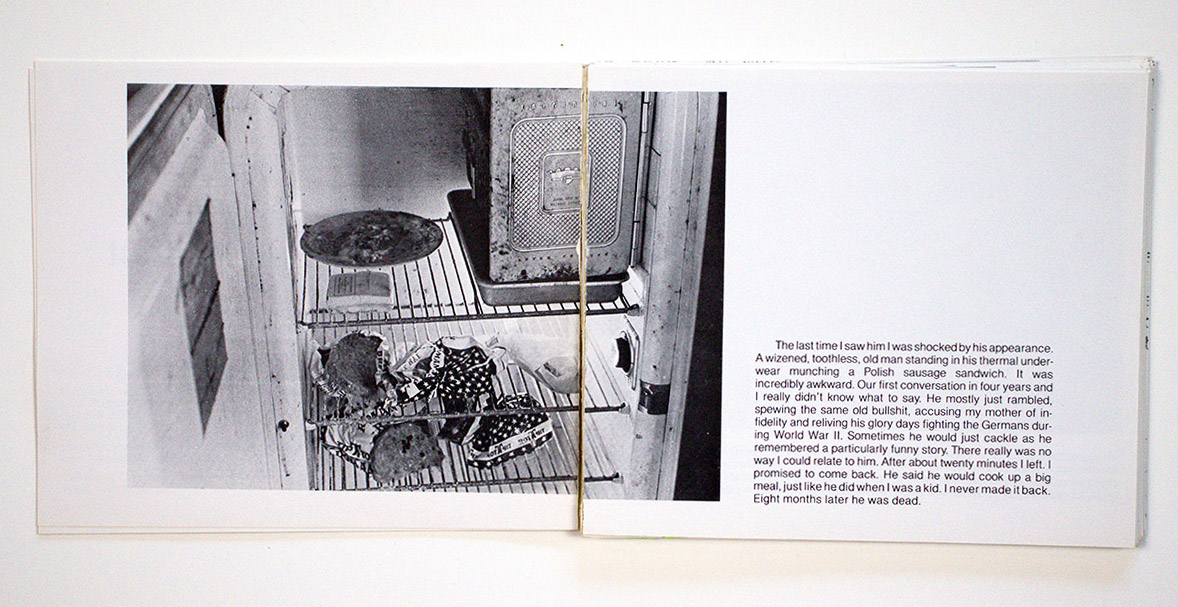
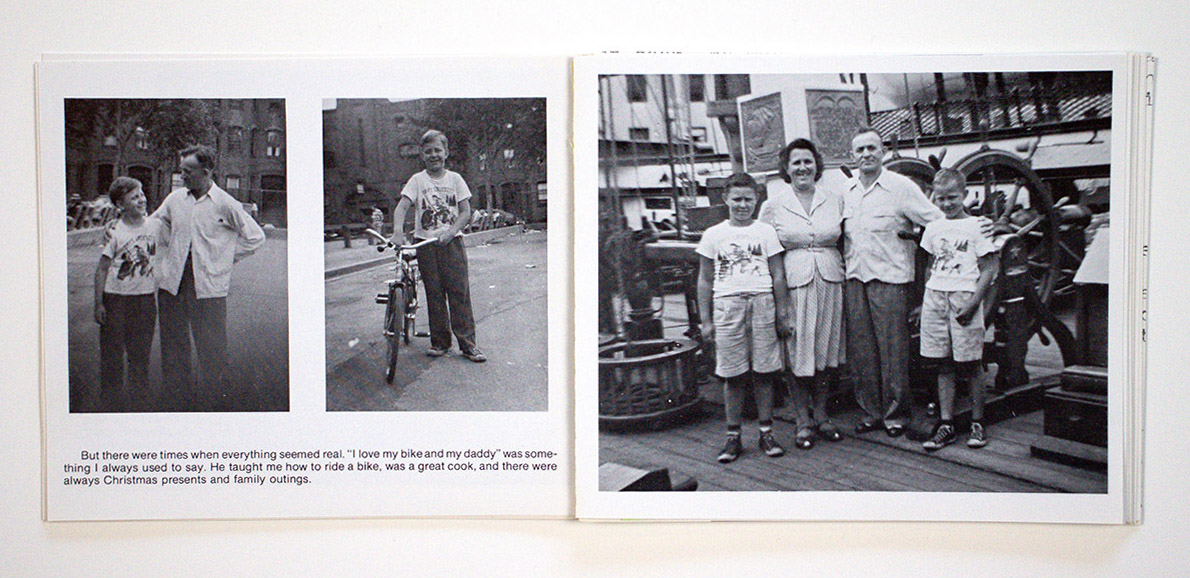
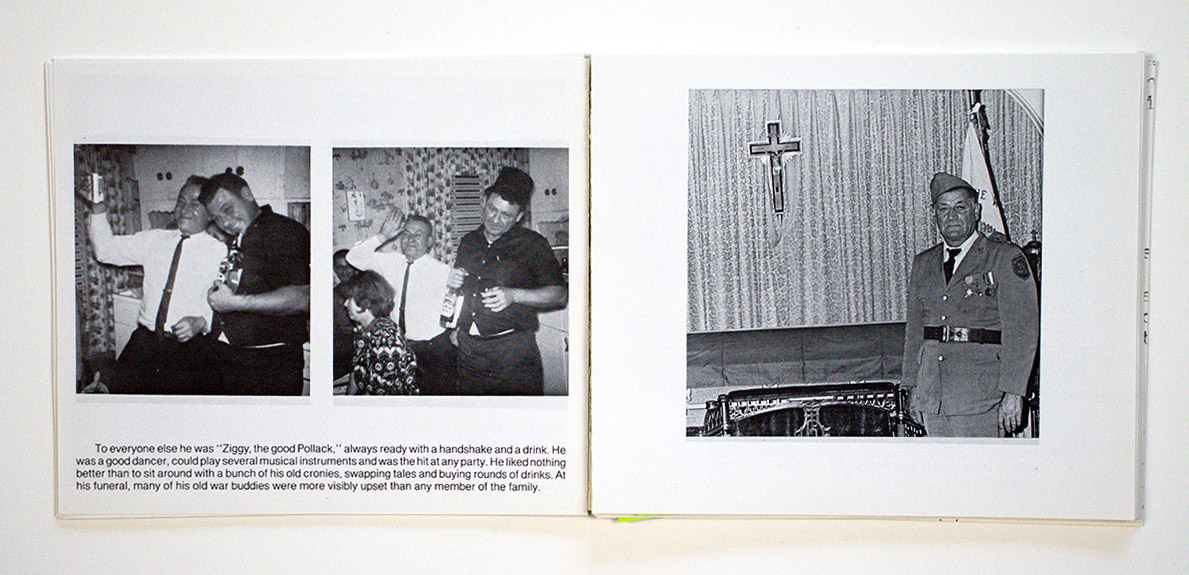
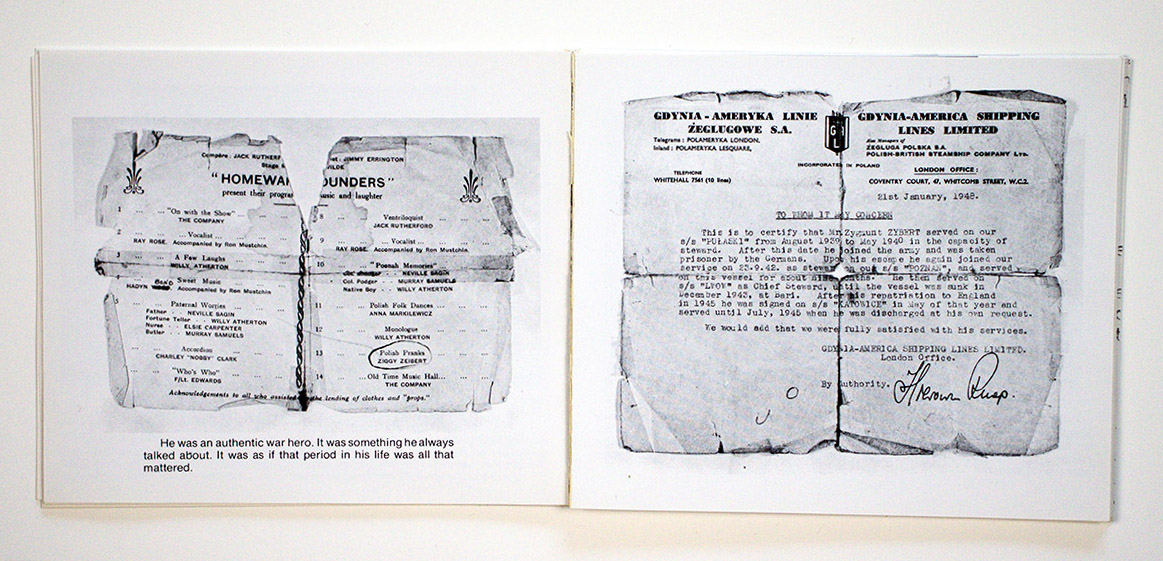
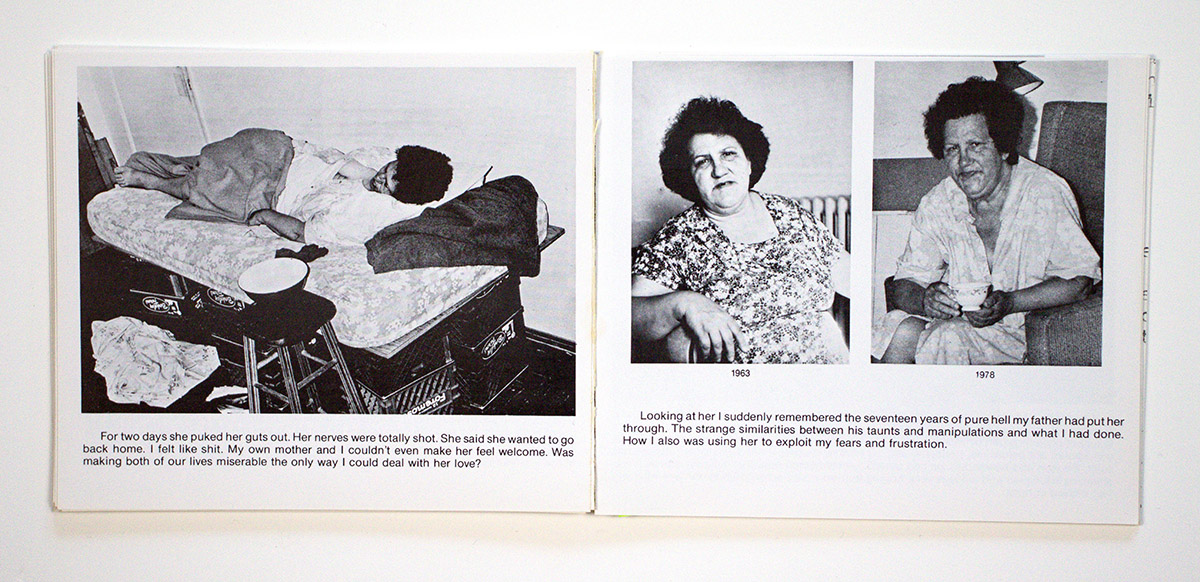
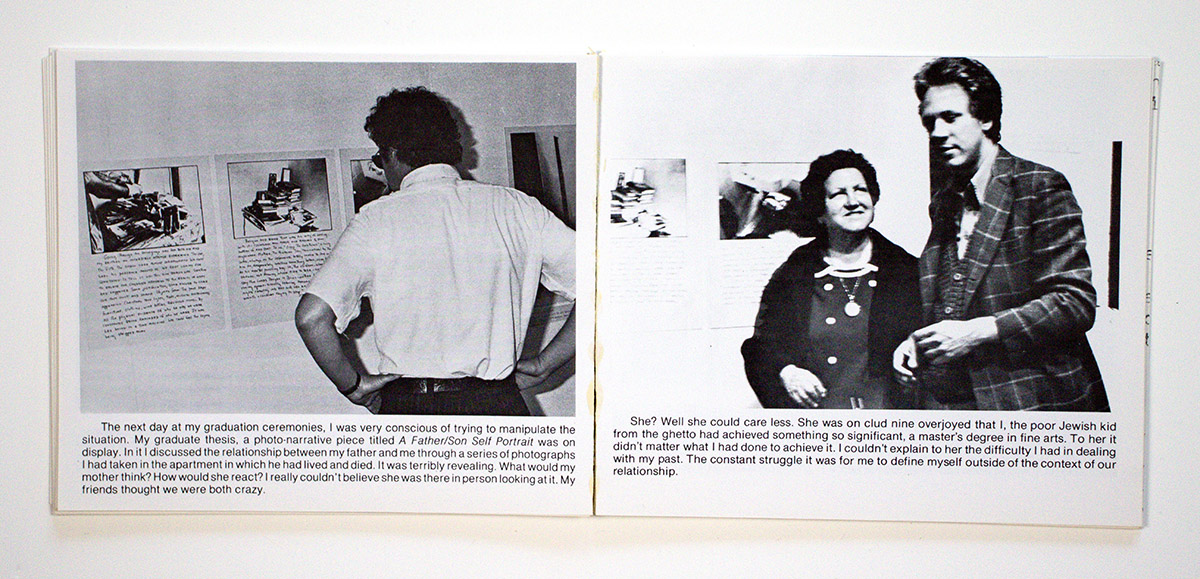
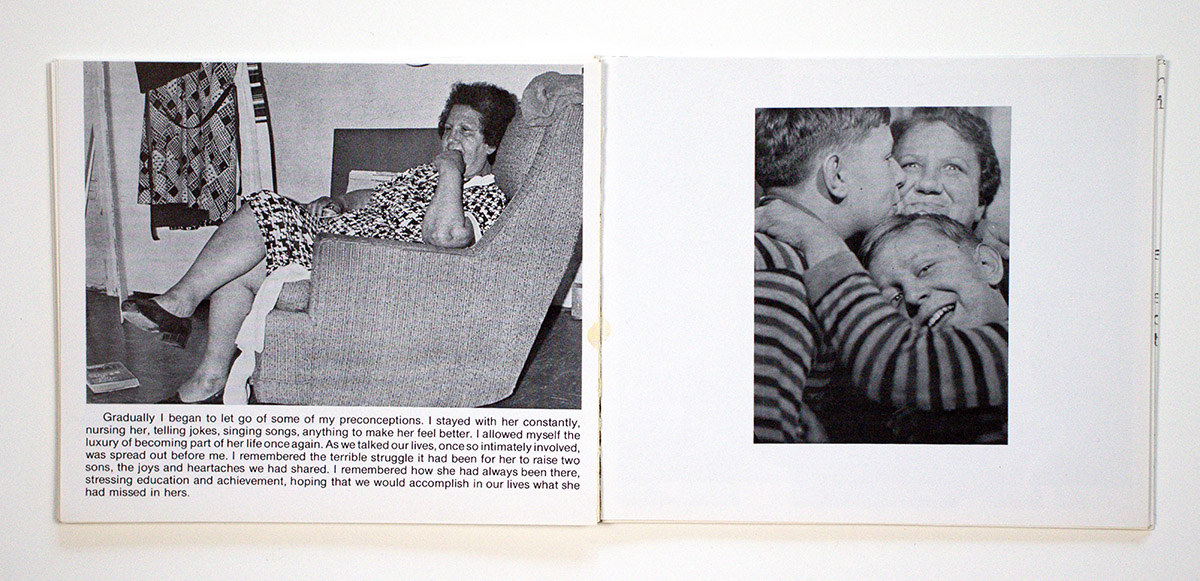
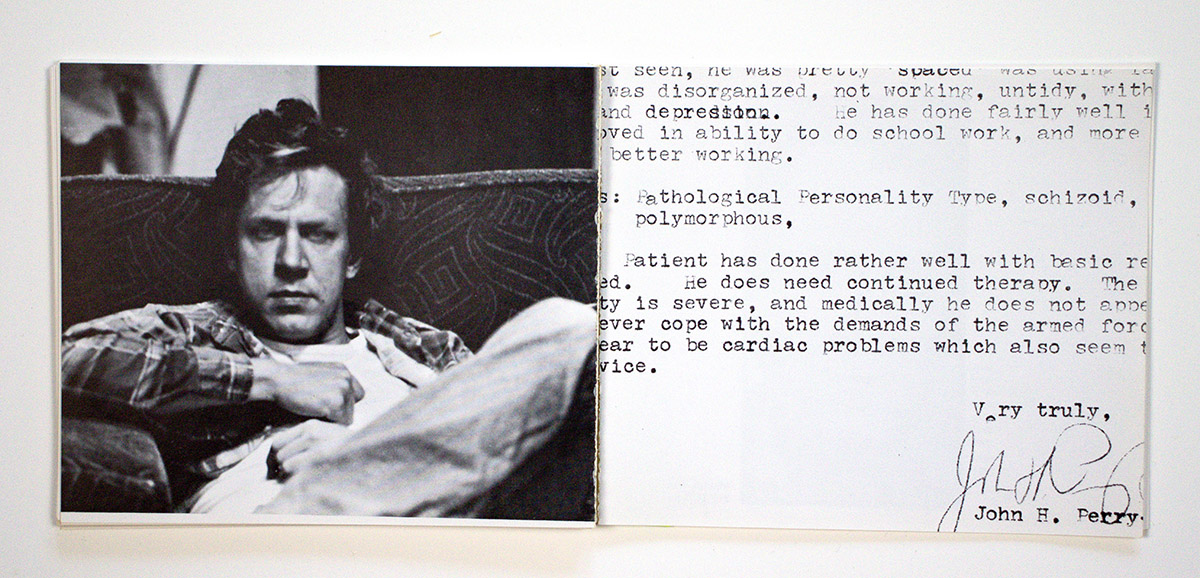
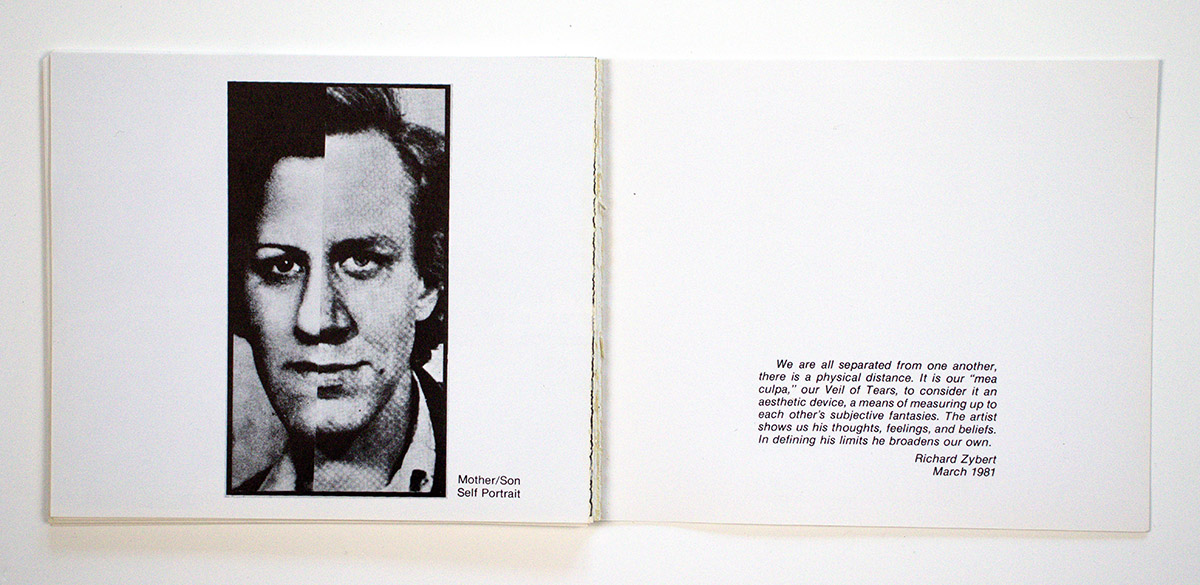
Notebook on Time is organized into four chapters. In Father/Son Self-Portrait Part One Zybert deals with the aftermath of his father’s death and describes what it was like growing up with him, surviving the emotional trauma and family dysfunction. Father/Son Self-Portrait Part Two is a two-page spread comparing the stain left by his father’s corpse with the stain left by his own sweat. The third section is called The Visit, and it describes Zybert’s mother visiting him for his graduation from the San Francisco Art Institute. Her two-week visit is by turns enjoyable, awkward, and stressful. The last short section, Epilogue, shows a picture of his sleeping mother, a picture of photos assembled for the book, and a final picture of Zybert. Opposite each of these photos are parts of a typed doctor’s letter describing Zybert’s anxiety and depression. The book ends with a split-screen mother/son self-portrait.
Except for the Father/Son and Mother/Son self-portraits, none of the photographs are self-consciously artsy.
Notebook on Time is notable for its inventive editing and its use of contemporary pictures, old family photos and documents, and photographs taken of Zybert by others, and this some eleven years before Larry Sultan’s use of similar techniques in his widely acclaimed1992 Pictures from Home.
The book uses both images and extensive text to tell the story. Zybert’s writing is conversational and direct and does not pull any punches. He shares unpleasant and embarrassing details as well as happy moments, seamlessly narrating events past and present.
The quality of the printing is bad. There is no shadow detail in the blacks, the whites print as grey or sometimes wash out, and some of the photographs are out of focus. But here’s the thing: it doesn’t matter. The book’s success does not depend on high-end printing and high-end printing would not have made it more impactful, in fact maybe the opposite. The book succeeds because of its powerful emotional wallop, because of the raw heartfelt experience it shares. Think punk or grunge music. Short on refinement, long on impact.
The lesson here is that the achievement of a book as art is not determined by how much you can spend on paper, printing, binding, and design, no more than the quality of a restaurant dining experience depends on cloth napkins, fine silverware, and plush surroundings. They can add to it, and make it more enjoyable, but what is important is the food. And in the case of Notebook on Time the food is the story and how well it is told.
One way to judge a work’s impact is by how it affects you. Was it memorable? Did it communicate an important experience? Did it help you understand something better? Did it wake you up, delight you, make you laugh, make you cry, show you something new? Viewed this way, Richard Zybert’s Notebook on Time passes the test.
It is hard to forget a book that punches you in the gut.
____________
Hans Hickerson, Associate Editor of the PhotoBook Journal, is a photographer and photobook artist from Portland, Oregon.
____________
Richard Zybert – Notebook on Time (out of print)
Photographer: Richard Zybert (born London 1947, died San Francisco 2017)
Publisher: Marginal Press 1981
Language: English
Softcover with printed cover; perfect bound; 45 B / W photographs; ISBN9780960426003; 60 pages; 6.5 X 5.5 in.
____________

____________
Articles and photographs published in the PhotoBook Journal may not be reproduced without the permission of the PhotoBook Journal staff and the photographer(s). All images, texts, and designs are under copyright by the authors and publishers.
 PhotoBook Journal
Leave a comment