
Review by Hans Hickerson ·
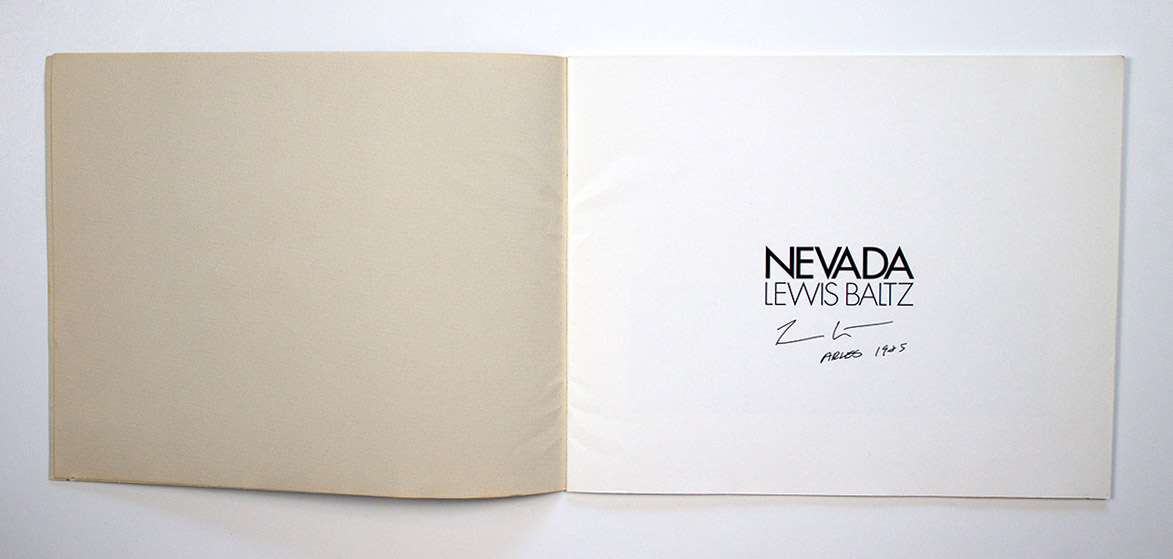
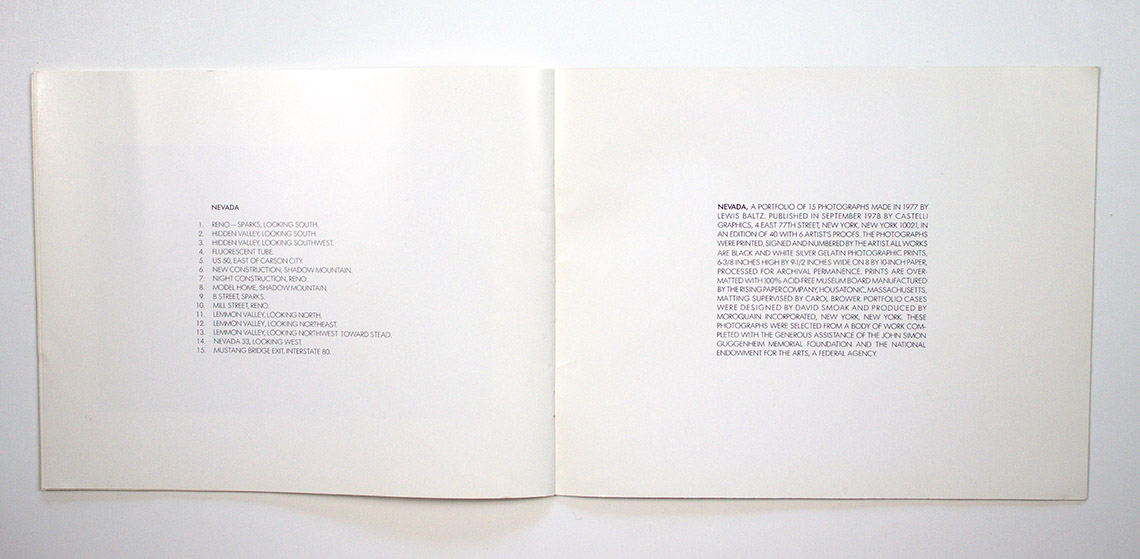
A zine before there were zines, Lewis Baltz’ Nevada is also a print portfolio of the book’s 15 photographs. It was published in 1978 by Baltz’ gallery, Castelli Graphics, and was presumably intended as a marketing tool for the 600 8” X 10” prints that Baltz produced for the project – 40 copies of each of the 15 images.
When you view Nevada however it does not feel like you are looking at a catalogue. Nevada reads like a carefully considered work in its own right. Coming between two of Baltz’ major projects, his Irvine industrial parks (1974) and his Park City series (1980), it is a transitional piece that shares his concerns from earlier and later work.
Why write a review of Nevada today, almost 50 years after it was published? No good reason, other than a desire to share a photobook that may not be well known, or that may not even be considered a legitimate photobook compared to Baltz’ weightier tomes.
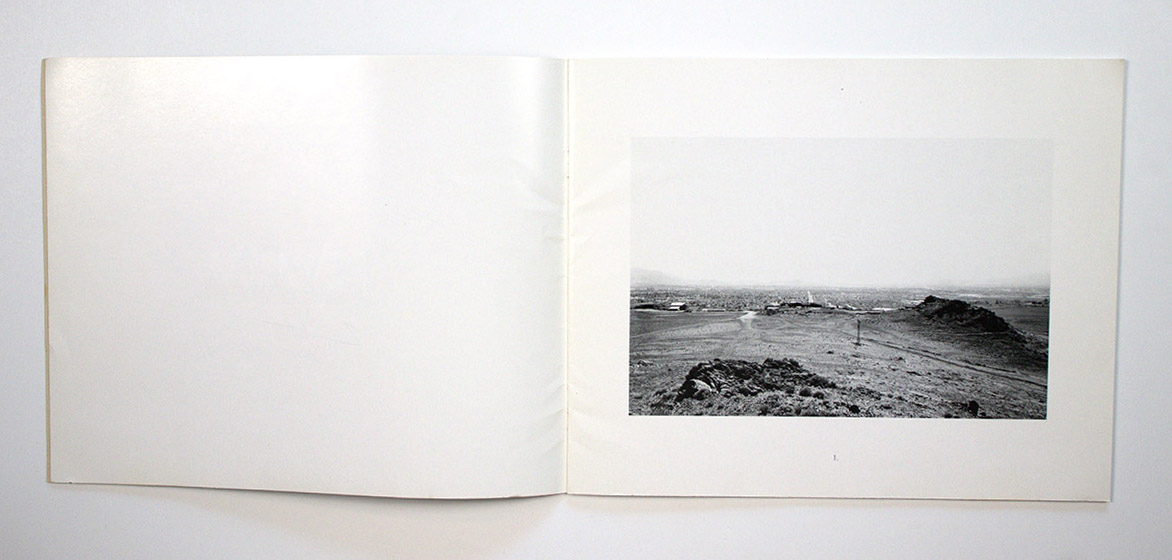
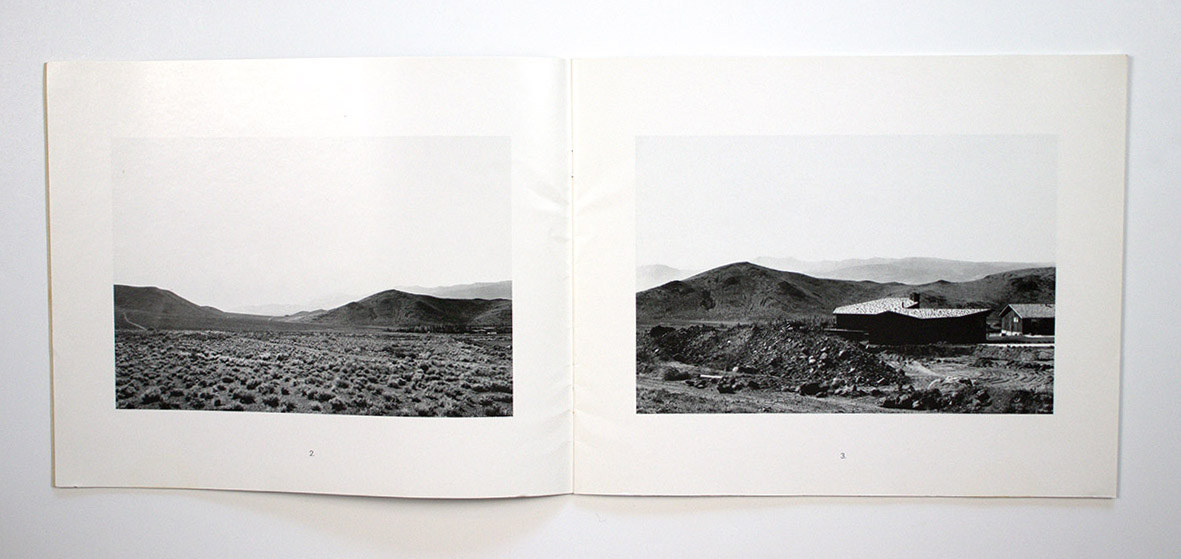
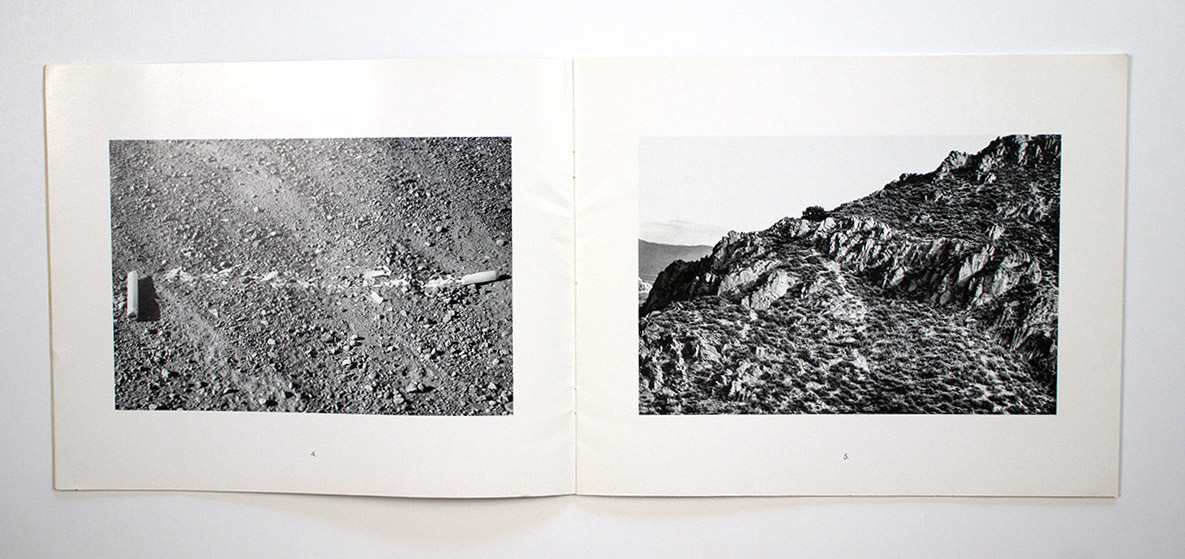
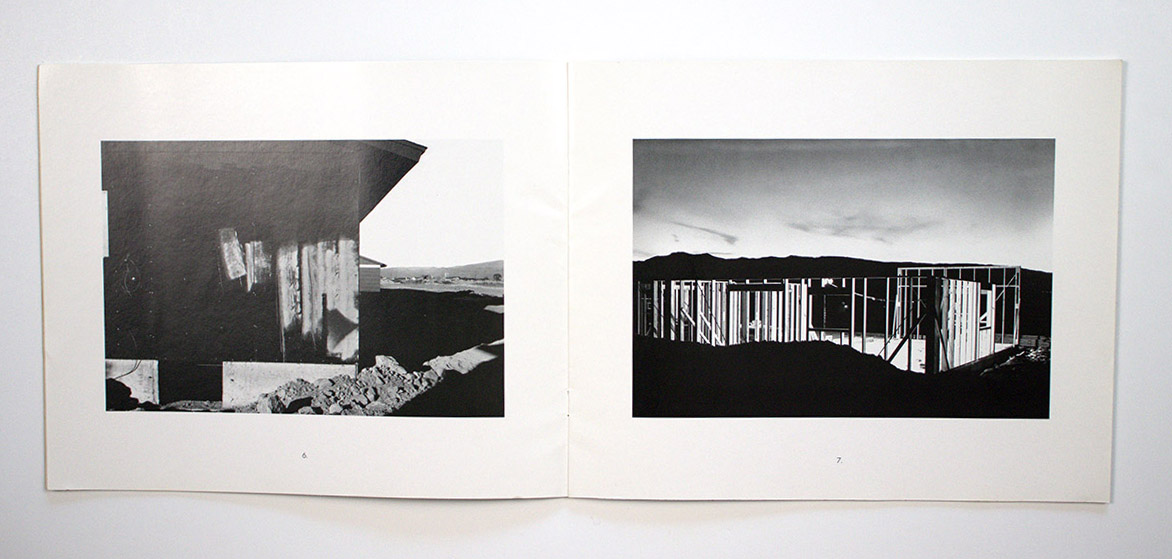
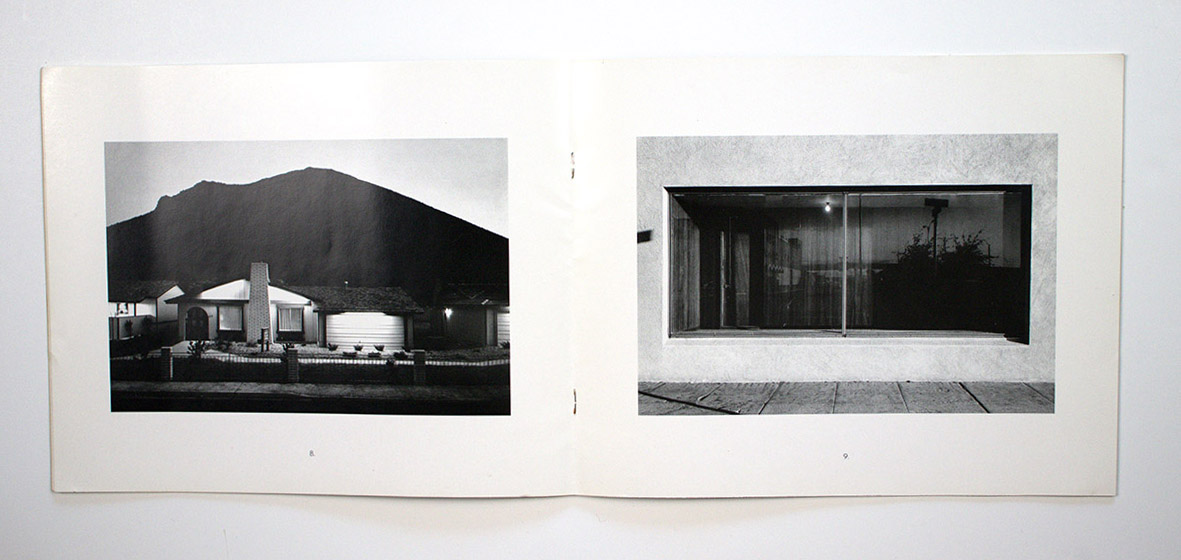
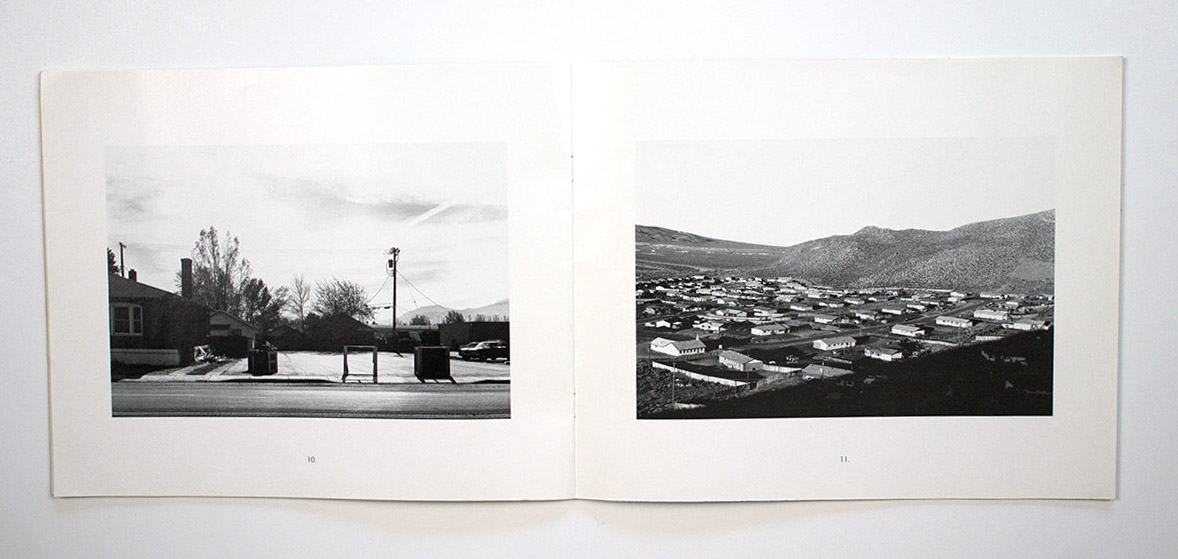
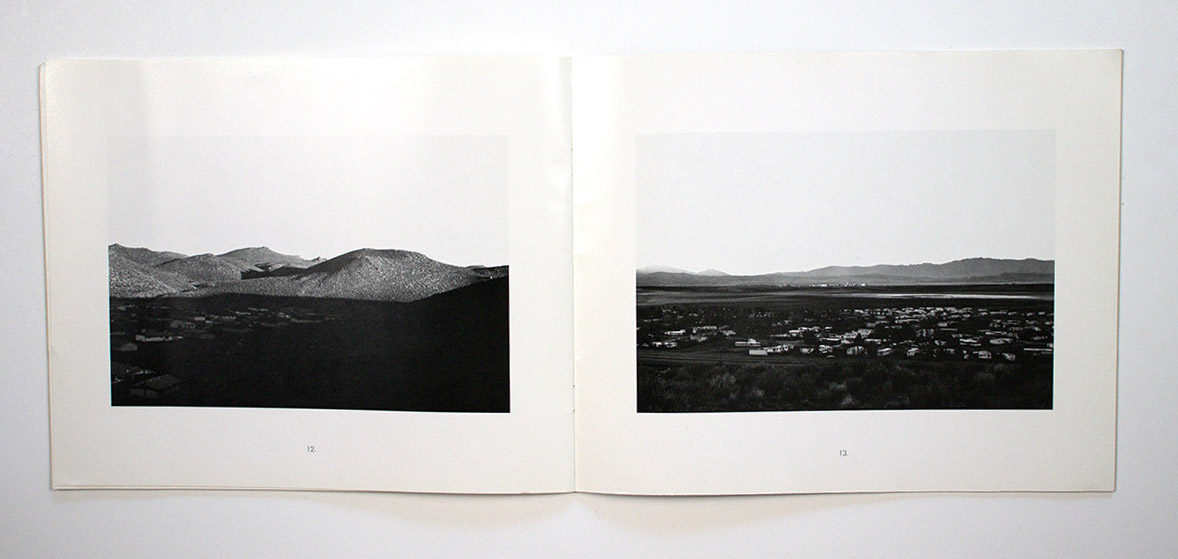
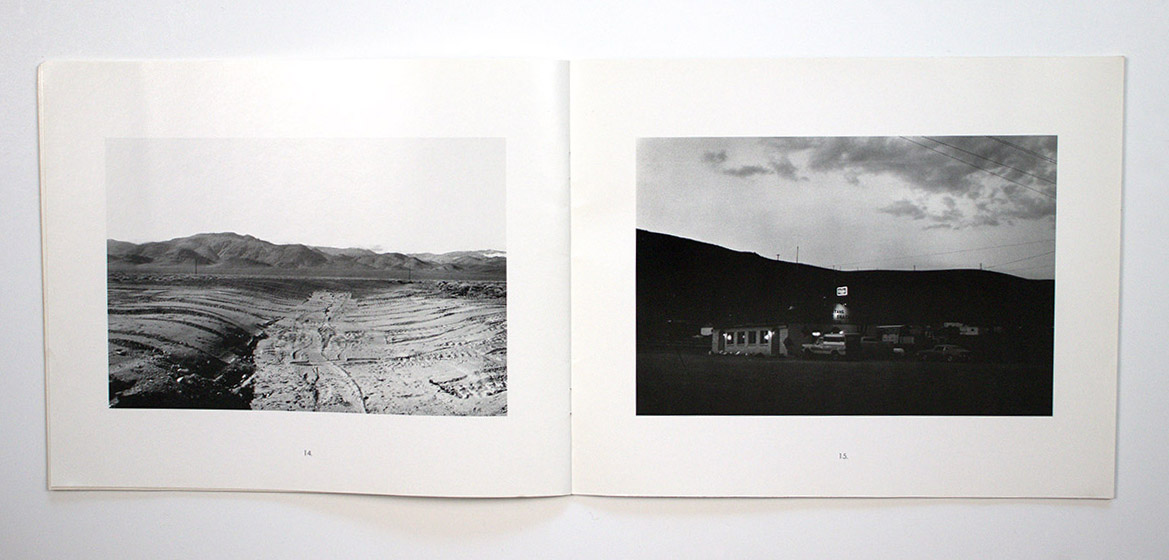
The printing quality in Nevada is high, with rich, solid blacks and finely tuned highlights. The fifteen photographs are the same size, one to a page. In total there are just 20 pages, all of which are reproduced below. The sequencing is varied – long open landscape vistas mixed with closer shots. The page spreads offer complementary or contrasting pairings of subject matter, planes, tones, spaces, compositions, and light. Speaking of light, Baltz mostly favors dramatic late afternoon and evening skies and shadows.
In Nevada Baltz is exploring human traces on the high desert landscape, but dispassionately, without turning it into argument or propaganda. No people appear in the photographs, a typical feature of Baltz images. Instead he presents buildings, roads, a broken light bulb, tire tracks on raw land, an empty parking lot, frame house construction details, the frontal view of a tract house, a subdivision in a valley. Why has Baltz chosen these things to photograph? Given the book’s title you can guess that they are intended as icons meant to represent Nevada. And when you think about it, what could be more typical of modern-day Nevada than parking lots, tract houses, bulldozed land, subdivisions, and isolated cafes on interstate exits?
Baltz’ lens is restrained and formal – almost clinical – and he eschews unnecessary lyrical inflections. Ironically, however, his noble detachment at times hints at a hidden well of underground passion: the elegant minimalist line of a broken fluorescent tube on page 4, the looming dark hill on page 8, the creeping shadows filling the valley on page 12, the cozy warmth of the lighted buildings on page 15. It is as if he knows that he has to make his photographs engaging and edgy. If they are ungraceful and ugly no one will look at them, no matter how true.
If you did not know who took them, you could think that some of the individual Nevada photographs were the work of Robert Adams, especially given the similarities of their western landscapes. But sequenced in a series as a book the difference is obvious. Robert Adams would not pass up the chance to contextualize his photographs with written text. He would have a clear message to go along with his visuals. And he would not adopt a position of seemingly unconcerned ambiguity the way Baltz does, distancing himself from his subject even while presenting it. Which confirms the truism that the same subject viewed by two different photographers typically produces two different visions.
Baltz thought of his sequenced series of photographs as distinct individual works. Given the care he took to make the photographs in it function as a unit, he must have felt the same about Nevada.
____________
Hans Hickerson, Associate Editor of the PhotoBook Journal, is a photographer and photobook artist from Portland, Oregon.
____________
Lewis Baltz – Nevada (out of print)
Photographer: Lewis Baltz (1945 – 2014)
Publisher: Castelli Graphics 1978
Language: English
Designed by David Smoak
Softcover with embossed cover; 15 B / W and photographs; stapled binding; 20 pages; 10.5 X 8.5 in.
____________
____________
Articles and photographs published in the PhotoBook Journal may not be reproduced without the permission of the PhotoBook Journal staff and the photographer(s). All images, texts, and designs are under copyright by the authors and publishers.
 PhotoBook Journal
Leave a comment